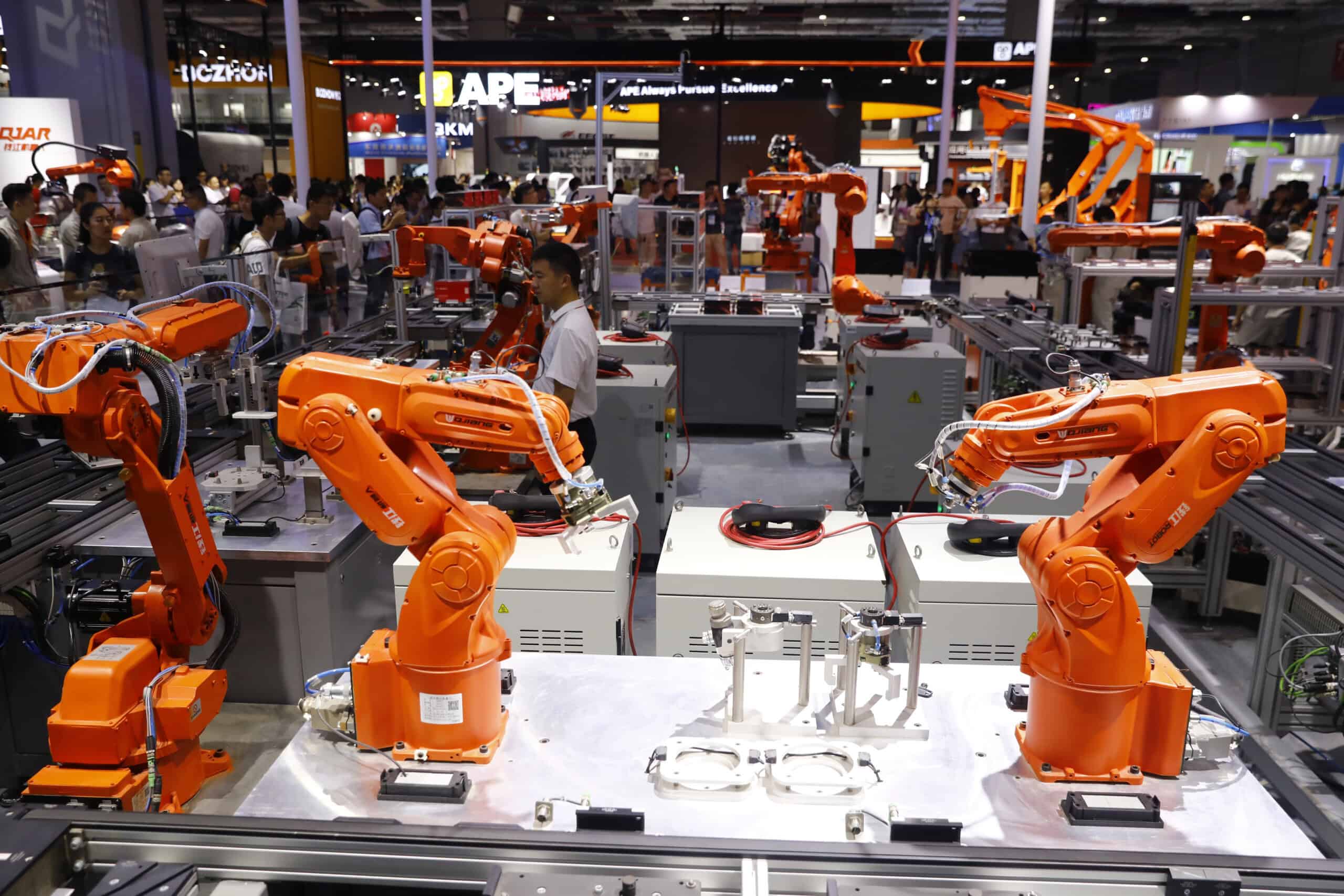
Good evening America and good morning China. During his 14 years in power and counting, President Xi Jinping has waged one battle after another against perceived financial and economic risks. These include the overseas investments of “grey rhino” conglomerates Anbang, Fosun, HNA and Wanda; the growing financial clout of Jack Ma’s Ant Group and other online platforms; and overleveraged property companies such as Hui Ka Yan’s Evergrande. As Xi enters the final stretch of his third term, another risk is coming to the fore: the venture capital investment activities of local governments across China. As Rachel Cheung writes in this week’s cover story, more than 2,000 local government funds are estimated to control assets totaling 12 trillion yuan ($1.8 trillion). Recently published draft rules, aka State Council Document 54, betray the Chinese Communist Party’s increasing concerns about this pool of capital, which many companies have come to rely on for funding. Suzhou-based Dreame Technology, founded by 39 year-old serial entrepreneur Yu Hao, epitomises the trend.
Other items in this week’s issue: Can Xiaohongshu export itself?; the Big Picture’s Company in the News is Pentagon-blacklisted Zhongji Innolight; Katrina Manson on future wars; and why it is time for the EU to finally confront China.
And in the latest Wire China podcast, Andrew Peaple and Savannah Billman discuss the many long arms of the Chinese Academy of Sciences.
Want this emailed directly to your inbox? Sign up to receive our free newsletter.

A Child of His Times
Yu Hao was a child during China’s economic free-for-all of the mid and late-1990s. It was an era of easy credit and also one in which, it seemed, any manufacturer could succeed in any new product market, foreign or domestic. It was an economic era, in other words, starkly different from the grind Xi Jinping now presides over, characterised as it is by “party-building”, the retreat of the private sector and the advance of the state, endless regulatory crackdowns, “lying-flat” youth, and destructive competition or “involution”. But the irrepressible Mr Yu is letting none of that hold him back as, for better or worse, he channels the go-go energy of 90s China into his Dreame Technology conglomerate.
Just Don’t Call it “Little Red Book”
For a brief, shining moment in early 2025, China’s Xiaohongshu became an unlikely facilitator of “people-to-people exchanges”, as they are known in Sino-U.S. diplomatic-speak, between Chinese and American users. American TikTok addicts, worried that the video platform’s then Chinese-owned U.S. operation would banned by the Trump administration, flocked to Xiaohongshu (or RedNote as it calls itself outside China) as a potential alternative. But as Peiyue Wu writes, when these concerns proved unfounded, Xiaohongshu’s “TikTok refugees” faded away. Was this a missed opportunity for the company, which is pursuing a Hong Kong IPO, or can the company eventually build a lasting international following to complement its Chinese fanbase?

Company in the News, Zhongji Innolight
Savannah Billman profiles another Chinese company that you have never heard of yet still depend on for things you can’t imagine living without, like all those World Cup games you are streaming. Zhongji Innolight, created from the merger of a Suzhou-based company and a Shandong firm, makes optical modules without which the routers that direct Internet traffic cannot function. Be that as it may, the Pentagon has recently added Innolight to a list of companies that are banned from supplying the U.S. military directly or indirectly.
A Q&A with Katrina Manson

Katrina Manson began her journalism career in Africa, where covering the continent’s many small wars is a big part of the job. She later became a Pentagon beat reporter for the Financial Times and Bloomberg.
In a new book, Project Maven, Manson explains American efforts to transition to the coming era of AI-centric warfare. In an interview with Eliot Chen, she talks about how American concerns about China drove the project, the key U.S. military officers involved and the central role played by a Pentagon “Breakfast Club”.
Katrina Manson
Illustration by Lauren Crow

Time to Act
It is time for the European Union to take a unified stand against unfair Chinese trade practices, writes Grzegorz Stec. If they fail to do so, many of the continent’s mainstream political parties will lose ground, if not power, to rivals from the political far-right.
USA Liberation Day
The Wire China will not publish on the July 4 weekend. Our next issue will come out on July 12. So Happy 250th America! Just another 18 years to go before you officially outlive the Qing dynasty.
SOPA 2026 Awards
The Wire China’s Rachel Cheung was a finalist in two categories of this year’s Society of Publishers in Asia awards: Young Journalist of the Year and Excellence in Arts and Culture Reporting. Rachel was cited for her writing on Chinese quantum computing, robotics, a Hong Kong investment craze, healthcare AI and the technological, economic and political pressures that are bearing down on China’s books publishing industry.
All of Rachel’s nominated articles will be free-to-read on thewirechina.com until July 6.
Subscribe today for unlimited access, starting at only $25 a month.