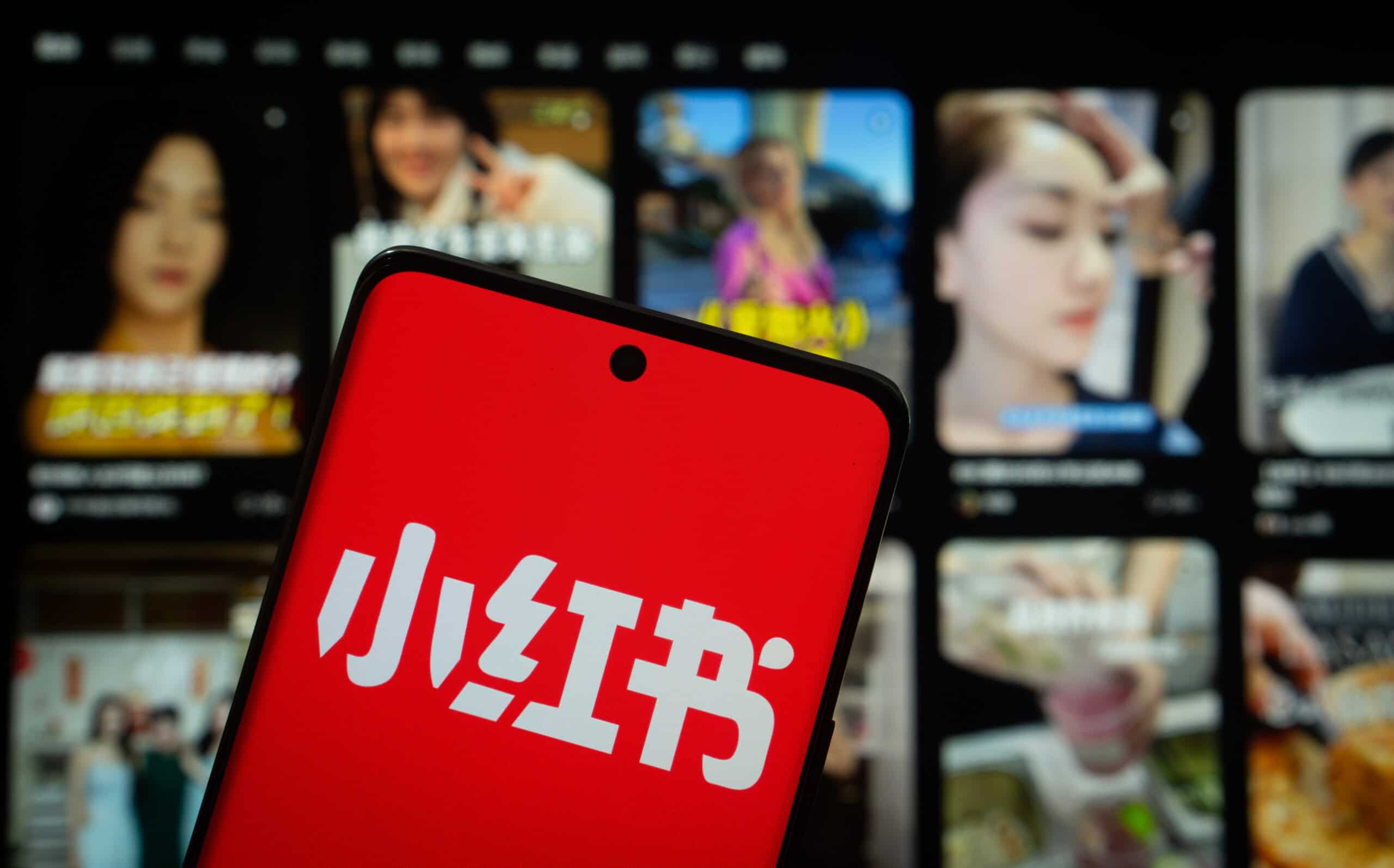
In January last year, millions of Americans facing the prospect of a TikTok ban flocked to Chinese social media app Xiaohongshu — creating a brief moment when Chinese and Western users, long separated by China’s internet firewall, interacted directly on the same platform. Users exchanged language lessons, shared pet photos, and compared everything from healthcare costs to grocery prices.
The market section on RedNote. Credit: RedNote
For Xiaohongshu, the episode offered a glimpse of a global audience far larger than the Chinese diaspora community it had previously targeted overseas. Since then, the company has looked to expand in the U.S., building U.S.-based teams and opening offices in Palo Alto and New York in April. This month it has launched a marketplace within its app serving the U.S., UK, Australia, and Canada.
Now, the company is hoping to take advantage of its overseas growth by preparing for an initial public offering in Hong Kong by the end of June, according to a Bloomberg report.
The question for Xiaohongshu — and potential investors in its flotation — is whether it has got its timing right. For its potential filing comes as Chinese consumer internet companies face a challenging geopolitical environment.

In January, TikTok was forced to sell its U.S. operation to American investors over national security concerns. Fast-fashion giant Shein last year failed to clinch regulatory approvals to go public in New York and London. Temu’s growth model has been challenged by U.S. tariffs and the removal of de minimis tariff exemptions on Chinese imports.
“Global success attracts global scrutiny. TikTok and Shein showed that regulatory and political risks can grow faster than revenues,” says Han Lin, a director for the Asia Group, a consulting firm, and a former senior Wells Fargo banker in China. “Xiaohongshu must convince investors that it can scale internationally without becoming the next geopolitical lightning rod.”
But, Lin adds, Xiaohongshu may also miss its chance if it hesitates. “Companies don’t get rewarded for waiting indefinitely for perfect conditions,” he says.
Founded in 2013 by journalism graduate Miranda Qu and venture capitalist Charlwin Mao, Xiaohongshu began as a guide for wealthy, mostly female Chinese travelers seeking shopping recommendations. Over the past decade, it has evolved into one of China’s most influential social media platforms, blending elements of Instagram, Reddit, and TikTok.
Search results for ‘tiktok refugee’. Credit: RedNote
Unlike traditional online marketplaces such as Amazon, Xiaohongshu’s business model integrates social media and e-commerce, with products introduced organically through creators’ content. The company turned profitable for the first time in 2023, and it now has some 400 million users, according to the company.
Unlike some Chinese firms that have attempted to reduce political risk by relocating headquarters overseas, Xiaohongshu remains unabashedly Chinese, with its content ecosystem, user base, and corporate identity tied to its homeland. While that authenticity helped it attract curious foreign users during the ‘TikTok refugee episode’ last year, it has also invited greater scrutiny from regulators.
“The original sin is the same one TikTok can’t shake, and neither can Xiaohongshu: China affiliation,” says Ivy Yang, founder of the New York-based consultancy Wavelet Strategy.
In Taiwan, where Xiaohongshu has amassed 3 million users — nearly 1 in 7 of the population — the government ordered a one-year block on the app in December, citing its failure to cooperate with authorities over fraud-related concerns. The ban sparked a backlash from Taiwanese users, with some using a virtual private network (VPN) to come back to Xiaohongshu, where they complained about the government’s measure as an infringement on freedom of speech.
Xiaohongshu may believe its international story is strongest today. The wave of overseas interest generated by TikTok users exploring alternatives won’t last forever, creating a sense that the window is open now.
Han Lin, a director for the Asia Group, a consulting firm
In the U.S., meanwhile, Google search interest for RedNote — the English name for Xiaohongshu — soon diminished after January 2025, according to Google Trends data. With monetization tools such as livestreaming still unavailable to American users, few major TikTok creators have fully committed to Xiaohongshu. And among the “TikTok refugee” accounts, many stopped posting soon after the Xiaohongshu viral moment.

There was a brief resurgence of TikTok refugee accounts in January, when many of them posted under the theme ‘one year anniversary as TikTok refugee’. The trend soon overlapped with the news that the ownership of TikTok’s U.S. operations had officially been transferred to an American entity.
Following that deal, U.S.-based TikTok claimed the right to collect sensitive data from users, including their race, religious beliefs, and citizenship or immigration status.

In the wake of these changes, many ‘Tiktok refugees” came back to Xiaohongshu, although the second wave was far quieter than the year before, and quickly subsided. Even so, some believe the Chinese company may want to do its IPO soon, with its overseas following having reached a possible high point.
“Xiaohongshu may believe its international story is strongest today,” says Lin. “The wave of overseas interest generated by TikTok users exploring alternatives won’t last forever, creating a sense that the window is open now.”
Over the past year, Xiaohongshu has strengthened its e-commerce infrastructure and introduced tools that help merchants manage stores, analyze customer behavior, and find suitable influencers, making brands more willing to invest in the platform, according to industry observers. Previously, users often found products on Xiaohongshu but completed purchases on rival platforms such as Taobao or Douyin, which offered better payment and logistics systems.

“For Xiaohongshu, it is critical to prove cash flow and profitability before its listing,” says Bonnie Ma, founder of Aquarc, a Shanghai-based consultancy firm specializing in social commerce strategy. “E-commerce is a very attractive business model and now its profits mainly come from merchant advertising and service fees.”

Xiaohongshu is also pushing to grow its daily active users from 170 million to 200 million in mainland China. It has secured broadcasting rights inside China for this summer’s soccer World Cup, in an effort to attract more male users beyond its traditional female base.
Experts say the company has likely picked Hong Kong for its listing, as the city is the closest thing Xiaohongshu can have to a geopolitical safe harbor.
“It [Hong Kong] gives companies access to global capital without the political baggage of a U.S. listing,” says Lin. “But it doesn’t eliminate Western concerns over data security, regulatory transparency, or China-related risk.”

Peiyue Wu is a journalist based in New York City, where she mostly writes about China’s technology and business.