During the last three Democratic administrations, Lael Brainard has wrestled with China economic issues in different senior government roles. The daughter of a U.S. diplomat posted in then-Communist Poland, she has focused on international issues for most of her life. During the Clinton administration, she was a top international official in the National Economic Council as Washington negotiated a World Trade Organization deal with Beijing. During the Obama administration, she was the Treasury undersecretary for international affairs as the U.S. sought to get China to revalue its currency. From there, she moved to the Federal Reserve, first as a governor and then as vice chairman. Later, she became director of the National Economic Council under President Biden as the U.S. imposed steep tariffs on a host of Chinese high-tech imports.

Illustration by Lauren Crow
Q: At an August China conference at the University of California at San Diego you talked about how what Trump is doing might erode what you called ‘dollar dominance.’ There has been a lot written lately, though, about how the position of the dollar is in reality unchallengeable. Can you explain your thinking?
A: First, it’s really important to recognize that the dollar is globally preeminent and dominant. Ninety percent of international trade is priced in dollars. Central banks that hold big reserves hold between 55 percent and 60 percent of their reserves in dollars. That is because of the attractiveness of having the dominant currency, not because the dollar has official status any longer as a reserve currency.
Why is it attractive? It’s because the Federal Reserve has established a good track record for decades of keeping inflation close to 2 percent. It has also been the case, until pretty recently, that fiscal sustainability was relatively assured in the United States. It was a low-risk strategy to buy Treasurys.
| BIO AT A GLANCE | |
|---|---|
| AGE | 63 |
| FORMER POSITIONS | Biden National Economic Adviser, Fed Vice Chair, Obama Treasury Undersecretary for International Affairs |
| CURRENT POSITIONS | Distinguished Fellow, Georgetown Psaros Center, and Senior Fellow, Harvard Kennedy School Mossavar-Rahmani Center |
The advantages of that for the U.S. is what is called the ‘exorbitant privilege’ — we get to borrow cheaply. By virtue of foreigners being willing to hold long-term Treasury securities, we probably save $140 to $200 billion worth of debt service costs every year. Lower interest rates on long-term Treasury yields also means that Americans borrow more cheaply for things like mortgages. And it also means that the United States can borrow expansively at moments of crisis.
But this is predicated on a few expectations. One is that the Federal Reserve will continue to be able to keep interest rates at a level that keeps inflation running close to 2 percent — and that is being challenged right now. Second, that the United States will continue to be a strong supporter of international agreements and the international order. But now there are questions being raised about the United States’ international credibility, and also whether the independence of the Federal Reserve will continue.
| MISCELLANEA | |
|---|---|
| FAVORITE BOOK | I read Ron Chernow’s Hamilton three times and that was before Lin Manuel Miranda’s brilliant musical. |
| FAVORITE PERFORMER | Caelan Campbell, Frontman for Boy Phase |
| FAVORITE FILM | Saving Private Ryan |
| MOST ADMIRED | I greatly admire Frances Perkins, the architect of the new deal, unemployment insurance, Social Security, and critical national statistical systems. |
An alarming scenario would be if you had a Liz Truss-type moment, where bond markets look at the $4 trillion of increased debt that is associated with the One Big Beautiful Act, and look at the attacks on Federal Reserve independence, and then worry about higher inflation. Perhaps investors would want to be disproportionately less invested in Treasurys in that scenario than they are currency.
The flip side is there is no good alternative to the dollar. The obvious alternative might be the euro. The problem is that euro area-wide jointly guaranteed debt markets just aren’t likely to grow big enough to provide as much liquidity as the Treasury market.
The Chinese have meanwhile taken what was initially a technocratic agenda of liberalizing their exchange rate regime and opening their capital markets, which they call RMB internationalization, and have turned it into a geostrategic imperative. It’s now much more about trying to increase the share of global trade that’s denominated in RMB, and increasing the amount of RMB held by foreign central banks and foreign investors.

The Chinese are undertaking very ambitious projects like developing a payment system based on the RMB with some of their allies, as well as investing in standards and rules for central bank digital currencies to promote the digital yuan. But because their capital markets are still relatively closed, investors are not going to consider RMB government securities as safe and liquid as U.S. dollar Treasury securities.
So, there are still quite limited prospects in the near term for any single currency to displace the dollar, although the centrality and the dominance of the dollar could diminish.
If, for all the reasons you listed, the yuan is probably not going to replace the dollar, would you expect it to play a more central role in the coming decade or two?
The Chinese government and the Party are determined that it will play a more central role. And they have a very active set of international initiatives to push in that direction. They are using their soft power, their growing foreign investments, their extensive foreign trade, and the fact that they are willing to push forward on central bank digital currencies, whereas the U.S. is not. They will make inroads, almost certainly.

If they do make inroads, does that matter to the U.S.?
Government debt held by the public in the United States is now at 100 percent of GDP. Over the next 10 years, the Congressional Budget Office estimates that’s going to increase by roughly 25 percent. We have lowered our tax base considerably in previous tax bills, and we have an aging population, which means that expenditures for our entitlements [will grow] and we’re going to have to borrow a lot. If our interest rate costs go up, that exacerbates the fiscal sustainability challenges we face.
Let’s say a Democrat wins the next presidential election or a Republican who’s very different than Trump. How reversible is this?
It’s important to look at China and the U.S. in terms of our relative shares of global transactions, trade in particular. Given that China is now so dominant in manufactured goods trade and is scaling the heights of some of the most advanced industries, we want to carefully husband our incumbency advantages. We need to protect the crown jewels associated with dollar dominance in terms of lower interest rates on the expansive holdings of our securities.
…when you erode the independence of the Federal Reserve, inflation will likely run higher for a period of time because people start to expect higher inflation. It becomes a sort of self-fulfilling prophecy. A new administration could restore confidence in the Federal Reserve, but it might take some time.
Instead, what this administration has done is treat those advantages as assets to deplete for short-term gain. By increasing tariffs from about 2 percent to about 18 percent on average across a large number of countries, they will get American consumers to pay a lot of revenue into the Treasury in the short run. But in the longer run, we face a lot of countries that are going to look to exclude the United States from their supply chains.

And when you erode the independence of the Federal Reserve, inflation will likely run higher for a period of time because people start to expect higher inflation. It becomes a sort of self-fulfilling prophecy.
A new administration could restore confidence in the Federal Reserve, but it might take some time. And it might need Congress to help lock down [Fed independence] a little tighter.
Let’s go back in your career to the Clinton administration when it was negotiating China’s entry into the World Trade Organization. You were at the National Economic Council. What pushed the negotiations forward?
The intensification of negotiations happened on the back of the Asian financial crisis [in 1997]. In part, it was based on the role that China had played in that crisis. China, for its own reasons, did not follow other countries in the region in devaluing its currency.
We were trying to prevent massive beggar-thy-neighbor currency devaluations. The team at Treasury, in particular, was really positively affected by its interactions with China. Trade disputes involving autos and intellectual property also had been resolved and WTO negotiations really started in earnest.
At the UCSD conference, you talked about China’s WTO accession as a bet. Did the U.S. win or lose?
Early in the Clinton administration the judgment was made that encouraging China to integrate into the global trading system would help liberalize its economy and have some beneficial effects on the political system and would help push China onto a trajectory that looked more like South Korea.
With the benefit of hindsight, not enough weight was put on the alternative possible outcomes — that the Chinese economy could gain tremendous dynamism but that it would not continue to evolve into a more open, pluralist, democratic direction politically. And second, that the benefits to trade would be more one-sided than anticipated. That was because of China’s ongoing strictures on capital flows which led to it having an increasingly undervalued exchange rate relative to the dollar, and its massive intervention in industrial policy, which led to a lot more export success.
So, the U.S. lost the bet?
I don’t think it’s as simple as that. Clearly the risk judgment turned out to have missed the likelihood that China could chart a course that would strengthen an authoritarian regime, and lead to massive dominance of manufacturing trade without true reciprocal access. Of course, there was tremendous cost in terms of deindustrialization all around the world. For us, it was very costly in terms of factory towns across the United States.
There were different strains within China in the 1990s as to whether the Party itself might be open [to liberalization]. But if we look now and see the kind of mythology they have about the Soviet Union’s failure, they made a clear decision that they were going to open the economy to the extent that it was beneficial to the Party but suppress political liberalization.
You have talked about a provision in the WTO accord that would have made it easier to shut off Chinese imports through what was called an ‘import surge.’ The Bush administration, which was in power when China joined the WTO didn’t use it. Would that have made a difference?

[Section 421 of the U.S. law that effectively endorsed China’s entry into the WTO allowed the U.S. to block imports from China due to ‘market disruption,’ a much easier standard to prove than the one used in traditional dumping cases. Complaintants then must prove ‘injury’ to their industry, which can be difficult to show if the U.S. economy is prospering. The 12-year market-disruption clause came into effect in 2001 when China joined the WTO during the George W. Bush presidency and ended in 2013 under President Obama.]
That provision was extremely important. It allowed the United States to impose safeguards only against China, whereas other safeguards had to be done across all members of the WTO. Second, it had a much lower standard of proof.
During the Bush administration, China’s exports to the United States tripled. It’s pretty clear there was a lot of market disruption going on, and we know what happened to employment and manufacturing in the United States. It was devastating. But the Bush administration did not use Section 421 once.

Was it that they were ideologically opposed? Was it because they were preoccupied with the Iraq war? I honestly don’t know. But it was enormously damaging.
By the start of the Obama administration, China’s current account surplus had surged to 10 percent of its GDP, from 2 percent. Our imports from China had surged earlier under the Bush administration but then there was a financial crisis, which modified that. [Imports from China declined sharply in 2009 during the financial crisis but bounced back in 2010].
The Obama administration invoked the safeguard for tires [in 2009], which was a politically sensitive and important industry but not a strategic one. We had a lot of debates about using it strategically too for areas that were core to U.S. international competitiveness. I advocated for doing so.
Generally speaking, if we can get what we need in terms of policy changes by giving other countries their storyline for their own domestic politics, that’s a pretty good deal. That is not the approach of the current administration. They may be more effective at domestic messaging as a result.
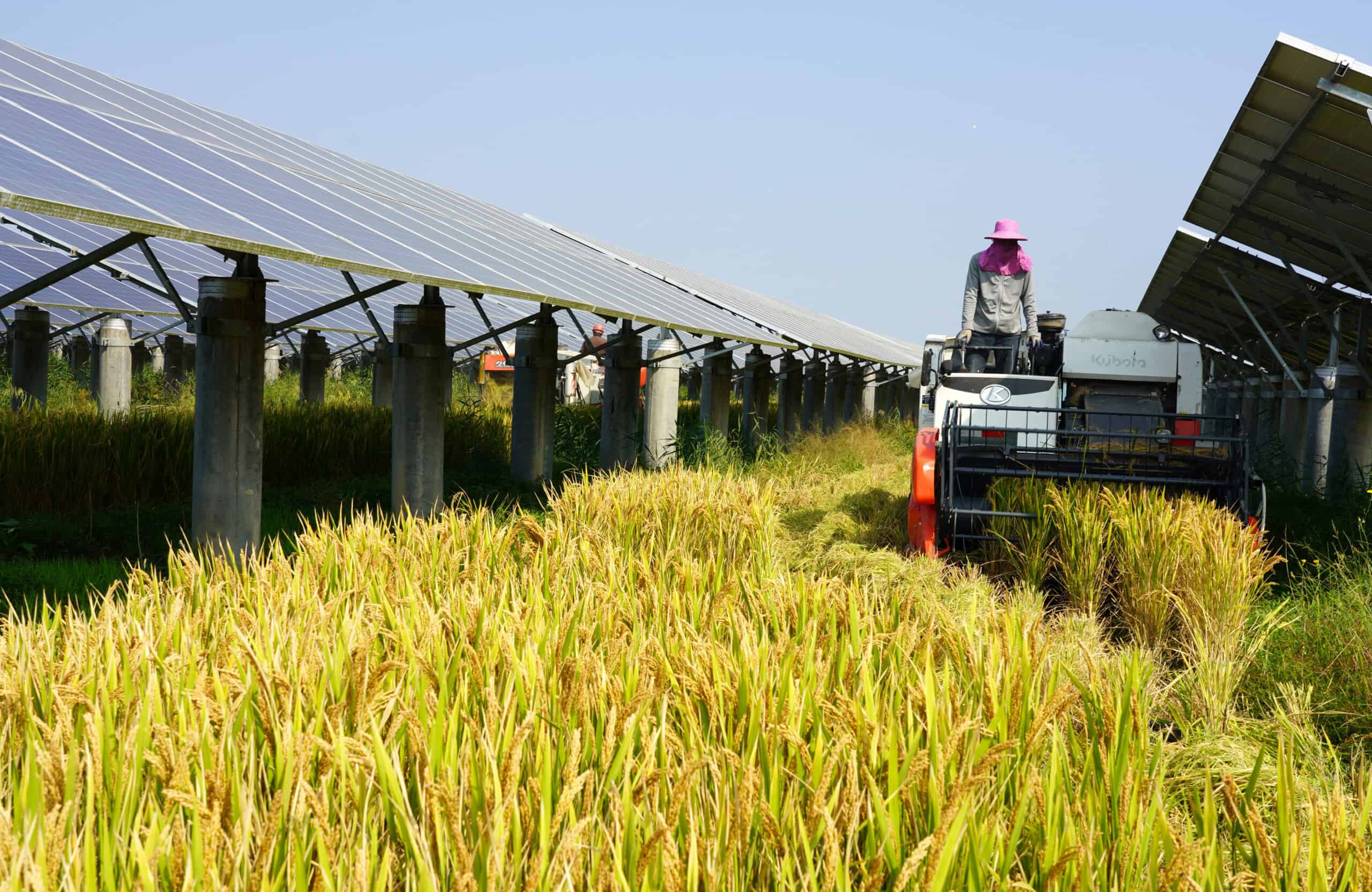
Solar and auto parts were two of the areas that would have been important to address. This was the beginning of the shift of the solar industry to China. Solar was invented in the United States, and we had a serious level of production. That was decimated by China’s dumping. We should have used the import surge tool, but that position was not accepted for reasons to do with broader foreign policy considerations. The surge provision expired in 2013, so it had a very short shelf life in the Obama administration.

In an earlier interview, I asked former U.S. Trade Representative Robert Zoellick why he didn’t use the import surge tool. First, he said there were only picayune cases that didn’t rise to any significance, and second the Bush administration didn’t want to seem protectionist at a time when it was developing a post-WTO relationship with China. I also have spoken to Charles Freeman, who was then the person at USTR in charge of looking for cases. He said companies weren’t looking to come forward with cases.
We looked at this very carefully. We absolutely should have self-initiated with solar. It’s a very significant industry, and we should not have allowed China to pick it off. [The U.S. government can initiate trade-restriction cases rather than wait for complaints from companies, which may fear Chinese retaliation.]

When market-based firms are competing with companies in a non-market-based system, which have tremendous domestic advantages in terms of subsidized land and capital and direct subsidies, trade protections are not sufficient. You need to correct the unlevel playing field. You need to engage in some support so companies can raise capital at the scale necessary to build production facilities.
That was the approach that the Biden administration took, where you were very involved. Would you say that approach was part of lessons learned from earlier?
Absolutely. If you have a serious non-market competitor and the trade system is not going to seriously penalize the non-market economy aspects, then you need to have some countervailing policies to allow your firms to compete fairly. That’s a very important lesson.
Would you argue that even though Gary Hufbauer, a veteran trade analyst at the Peterson Institute for International Economics estimated it cost the U.S. economy $900,000 per job saved in higher consumer prices for tires? Even if trade actions raise the costs for American consumers, would you argue that they are still important?
I question how much it really raises the cost of each individual import. Companies are very good at getting alternative supply chains. China was not the only game in town and the 421 was narrowly targeted at China. Second, you have to choose the industries strategically.
Today there is a very different approach. The Trump administration has decided to use tariffs across all of America’s trade partners. Instead of choosing a few sectors where it is worth putting in place a set of protections and combining them with a set of support, what the Trump administration has done is just raise prices across the board in a way that doesn’t penalize China relative to other countries.
Let’s shift to the Obama years. You were Treasury undersecretary for international affairs. During that time, the U.S. was trying to get China to revalue what was seen as its undervalued currency. That happened in the leadup to G20 in Toronto in June 2010. You also were trying to get an agreement at the G20 in Seoul in November 2010 to name-and-shame any country that had a more than 4 percent current account surplus. From those experiences, what did you learn about dealing with China?
[The effort in Seoul failed because of opposition from Germany as well as China and other trade-surplus nations.]

I think we were actually successful. China’s current account surplus came down from 10 percent at the beginning of the Obama administration to 2 percent midway during the administration. That was part of a very concerted behind-the-scenes pressure campaign that we undertook. At the same time, the Chinese currency became 16 percent stronger vis-a-vis the dollar. Those two things came hand in hand. At the same time our current account deficit also came down below 3 percent. Although Chinese President Hu Jintao would not agree to say it in the leaders declaration at the G20 Summit, in fact we achieved it.

[According to International Monetary Fund data, China’s current account surplus fell from 9 percent of GDP in 2008, before Obama took office, to 1.5 percent in 2013, midway through his term, and rose to 2.6 percent in 2015, his last year in office. The U.S. current account deficit fell from 4.7 percent in 2008 to 2 percent in 2013 and rose to 2.2 percent in 2015.]
In terms of dealing with China, I learned the same thing that I have seen over a number of administrations. Sometimes you need to be very tough and willing to take on some costs to secure certain outcomes. There is always a complicated interplay. Diplomatic concerns sometimes argue for a more nuanced approach and maybe pulling our punches a little bit. I think now national security and economic concerns are much more aligned than they have been.
When you say that you are willing to accept some costs when it comes to China, what do you mean? How do you influence China to move in a direction that you want them to move?
I would have self-initiated trade cases. I would have imposed unilateral trade measures in areas where China cared a great deal. I argued for doing it at the time. Of course we had section 421. And for the first nearly four years of the Obama administration, we had the capacity to make much more aggressive use of it. That didn’t ultimately win support, but it’s something that I argued for. It was an option that was on the table.

When China announced that it was revaluing its currency in 2010, it came in the context of the G20 in Toronto. Were you working with other countries on this, and the G20 was the final push? Or was it that China needed the cover of an international conference to make the concessions you thought were necessary?
The truth is that most of the pressure on the exchange rate, the current account surplus and distortions in their system that led to excess reliance on exports came from us bilaterally. Other countries were afraid. I talked to some of my European counterparts, and they were very happy to let the United States carry their water. They had a similar interest but had concerns about retaliation from China.
We did most of the heavy lifting, but it helped to talk about some of these changes in the context of international rebalancing. China doesn’t like to be singled out obviously, so the G20 had some advantages for them.
It’s important from China’s perspective to argue domestically that they didn’t yield to U.S. pressure?

Absolutely. Generally speaking, if we can get what we need in terms of policy changes by giving other countries their storyline for their own domestic politics, that’s a pretty good deal. That is not the approach of the current administration. They may be more effective at domestic messaging as a result.
Let’s talk about the Fed. Around 2016, as a Fed governor, you were reluctant to raise interest rates as quickly as some of the others on the Fed. How much did China factor into how you looked at the economy?
When we did our first rate hike at the end of 2015, I thought it was a mistake. I wouldn’t have done it if it had been my choice, but of course, I was happy to support the consensus at the time. It was important, I thought, for me to be in line with the chair and the board in general.
In my early time in the Federal Reserve, the incremental demand from China in the global economy mattered. And the fact that it was weakening substantially starting in the 2015-2016 period also mattered a lot. As we got further away from that… China became more of a drag than an uplift and less important in my thinking.
But I did see the [economic] drag from China as being material. There was also some rupture in financial markets around the same time. As it turned out, we did one rate hike and then quickly messaged that we were going to wait and see how the economy progressed before contemplating additional rate increases. We didn’t see another one until the end of 2016.

During your tenure in the Fed [from 2014-2023] how much did your experience with China affect what you thought about what the Fed ought to do?
The United States had a very significant shock during the global financial crisis [in 2008 and 2009]. As it came out of that shock, the recovery was somewhat weak for many years. The United States was more sensitive to global demand conditions than it had been.
Because China undertook a massive domestic investment program during the post-global financial crisis years, it was a very important source of marginal demand for the global economy. China was playing a bigger role than it had traditionally, and I would argue than it is playing today.
In my early time in the Federal Reserve, the incremental demand from China in the global economy mattered. And the fact that it was weakening substantially starting in the 2015-2016 period also mattered a lot. As we got further away from that, and we had more self-sustaining momentum in the U.S., China became more of a drag than an uplift and less important in my thinking.

Then you were head of the National Economic Council in the Biden administration. At the China conference, you said that when it came to advocating subsidies you had a 70 percent rule. What does that mean?
One of the analytic tools we used to think about whether U.S. producers were vulnerable to shocks from China was how much of global production was dominated by China. In each stage of the solar value chain, for instance, China controlled more than 70 percent of global production. Having seen China’s increasing use of leverage when it had global dominance in areas like rare earths, and having seen what happened during the pandemic when Covid shutdowns in China led to massive supply disruptions in the United States and contributed to price pressures, we had an objective of diversifying supply chains and making them less vulnerable to any single point of failure.
So, when China had a global share in excess of 70 percent, it was like a red flashing signal because the global supply chain was excessively dependent on China for that stage of the supply chain. There was a strong strategic reason to work with allies and partners and to create domestic production and investment incentives to try to diversify away from China.
How did you decide what industry was strategic?

It was important to think about technological spillovers to other sectors. With electric vehicles, they are important not just for that technology, but because they have important spillovers in battery technology and to autonomy. There was also an important national security overlay. We were thinking about which industries would help our military have some advantage relative to China. That is why AI became such a focal point and why the most advanced chips, which are used in AI, became so focal, and why the equipment used to produce those advanced chips became so important. We used a national security lens and a technological innovation lens as we thought about these issues.
You mentioned national security. You have been married for a long time to Kurt Campbell [Biden’s former Asia chief and Deputy Secretary of State]. He’s been involved in China national security issues for many years. Given that you focus on economics and he does national security, how do you work together, or do you keep things separate?
We have very different backgrounds that we bring to these issues. There are moments where our views are aligned and there are moments when our views haven’t been aligned at all.

He has a very different view of China’s and America’s role in the region and that broader perspective is very beneficial. I tend to come at things from the perspective of the domestic economy and the effects on our workforce in a way that’s just different from national security considerations. So sometimes we disagree. We have been on opposite sides of some trade issues and, early on, sometimes on China. I think more recently our views have converged a bit more on China.
Recently, I interviewed Biden Treasury Secretary Janet Yellen who complained fairly bitterly that she didn’t feel that there were what she would consider full NEC meetings about significant economic issues regarding China. In her view that would have involved calling in cabinet officials or sub-cabinet officials, have them talk out the issues and have the President ask questions. She said that didn’t happen.
I came to the Biden administration pretty late. [Brainard became NEC director in February 2023.] I was at the Fed prior to that. Similarly, I would have liked to have spent a lot more time debating economic issues with the President. I agree with her that that would have been very beneficial. But for a variety of reasons that were well-established by the time I got there, the President spent more time in discussions of national security with his cabinet members than he did on economic matters.
That was certainly different from my preference, but I didn’t have the ability to make those determinations. Previous presidents I worked for had very fulsome meetings on the economic side, which I thought were very important.

Now, China is different. China spans economics and national security. Those conversations would have been joint national security and economic discussions. The view was that those issues should be deliberated at the level of the National Security and National Economic Council. So, the National Security Advisor and I hosted some meetings together for the cabinet. We put forward a joint recommendation to the President on China economic issues but not in a meeting with the President.
The former president has been criticized as diminished over his term in office, especially at the end. Do you think it had anything to do with it?
I inherited a cadence to meetings with the President. This pattern was established before I got there. The people who made decisions about how to allocate his time decided how those meetings would be allocated. Similar to Secretary Yellen, many times I suggested that we do more meetings with the President on economic issues. We had a few but nothing like the frequency on the national security side.

On industrial policy, Biden decided against Nippon Steel buying U.S. Steel and Trump reversed that. Do you think the U.S. should invite foreign participation in industries like batteries and EVs? Trump has been signaling that he would be fine with a company like EV maker BYD coming in and setting up a factory here. Do you think that would be useful?
The general approach I take is that foreign investment in new factories in the United States that employ American workers and help promote innovation and productivity in the United States is very positive. With the Chips and Science Act, the Biden administration lured important producers of advanced semiconductors to the United States to push technology and innovation further in the United States and to diversify our supply chain.

Would it be useful for China to invest in the United States?
We have a good framework for thinking about acquiring existing companies. Giving thought to greenfield investments might make some sense. We would need to make sure that national security concerns are carefully vetted and create a process for greenfields that is comparable [to foreign acquisitions of existing companies].
The Biden administration started the Connected Car Initiative, which still exists. [Under the proposal, EVs would be barred if they were seen as capable of transmitting data to Beijing and other countries considered adversaries.] To my mind, that means you’d never be able to buy a Chinese car here. Is that right?
We learned that China has forced American companies to use Chinese software for all of their connected components. China has exercised their sovereignty that way because they recognized early on how sensitive the information is. Connected cars are like little computers on wheels. They’re constantly pinging back and forth.
Some countries are going to experience both intensified competition from diverted imports from China as well as a squeeze on their export earnings because of tariffs imposed by the United States. At least that’s the initial effect. Over time, if they engage with us, we may see increasing investment from those countries.
If they’re in a city, they’re exchanging information on the power grid. Of course, your personal information is also being uploaded every time you connect your phone. If a Chinese connected car manufacturer wants to operate in the United States, they should similarly have to use non-Chinese information systems — American or other information systems that are not associated with countries of concern — so that they’re not gathering that kind of national security and personal sensitive information.

You’d be okay with, say, a BYD car outfitted with U.S. software?
That’s the way that the rule is written.
Let’s use BYD as an example because their cars are supposed to be very good — maybe better than Teslas — but American consumers can’t buy them here. Would it be a positive thing to have a greenfield BYD plant in the United States, or would you worry that would drive GM and Ford out of business?

The conditions that were imposed on them would matter tremendously. Of course, China imposes very significant strictures on American investors in China, and those change over time. The question is whether we can or should impose strictures to protect American technology, American workers, personal information, and national security. Under the right circumstances, it might make sense.
You have studied the global economic system for many years. We now have a situation where the U.S. is raising tariffs on everyone, including poor countries. And those poor countries are still importing goods from China at prices that their domestic companies have trouble matching. Meanwhile those countries find it difficult to increase tariffs or respond to China because of fear of retaliation. That’s an incredible squeeze.
I think that’s right. Some countries are going to experience both intensified competition from diverted imports from China as well as a squeeze on their export earnings because of tariffs imposed by the United States. At least that’s the initial effect. Over time, if they engage with us, we may see increasing investment from those countries.

Last question. Inflation is rising, but the predictions had been that we would see a huge jump in inflation because of tariffs which we haven’t seen. Why do you think that is?
We haven’t seen the full effect of the tariffs yet. They are just beginning to work their way through the pricing system in the United States. In the first quarter, we saw a massive increase in imports as companies stocked up on a lot of goods to avoid the tariffs. Now we are hearing from some of the largest retailers like Walmart that that process will play itself out as those inventories are depleted. When the process of depleting those inventories comes to an end, it will be necessary for them to start passing through the higher prices of the new imported goods associated with the new high tariffs.
When the last Trump administration spiked tariffs on China, it took six to nine months for those tariffs to push prices up. But we did see a full pass-through of those tariffs into prices. We are not yet very far into that process. The tariffs really did not get finalized for most countries until the last month or so and tariffs have not been finalized with China even today.
The final reason is that some companies had higher [profit] margins because of the strength of the economy in 2023 and 2024. You will see some compression of those margins before price increases are passed on to consumers, if they are in a competitive industry.

Bob Davis, a former correspondent at The Wall Street Journal, covered U.S.-China relations beginning in the 1990s. He is the author of Broken Engagement, a collection of The Wire China interviews. Earlier, he co-authored Superpower Showdown, with Lingling Wei, which chronicles the two nations’ economic and trade rivalry. He can be reached via bobdavisreports.com.