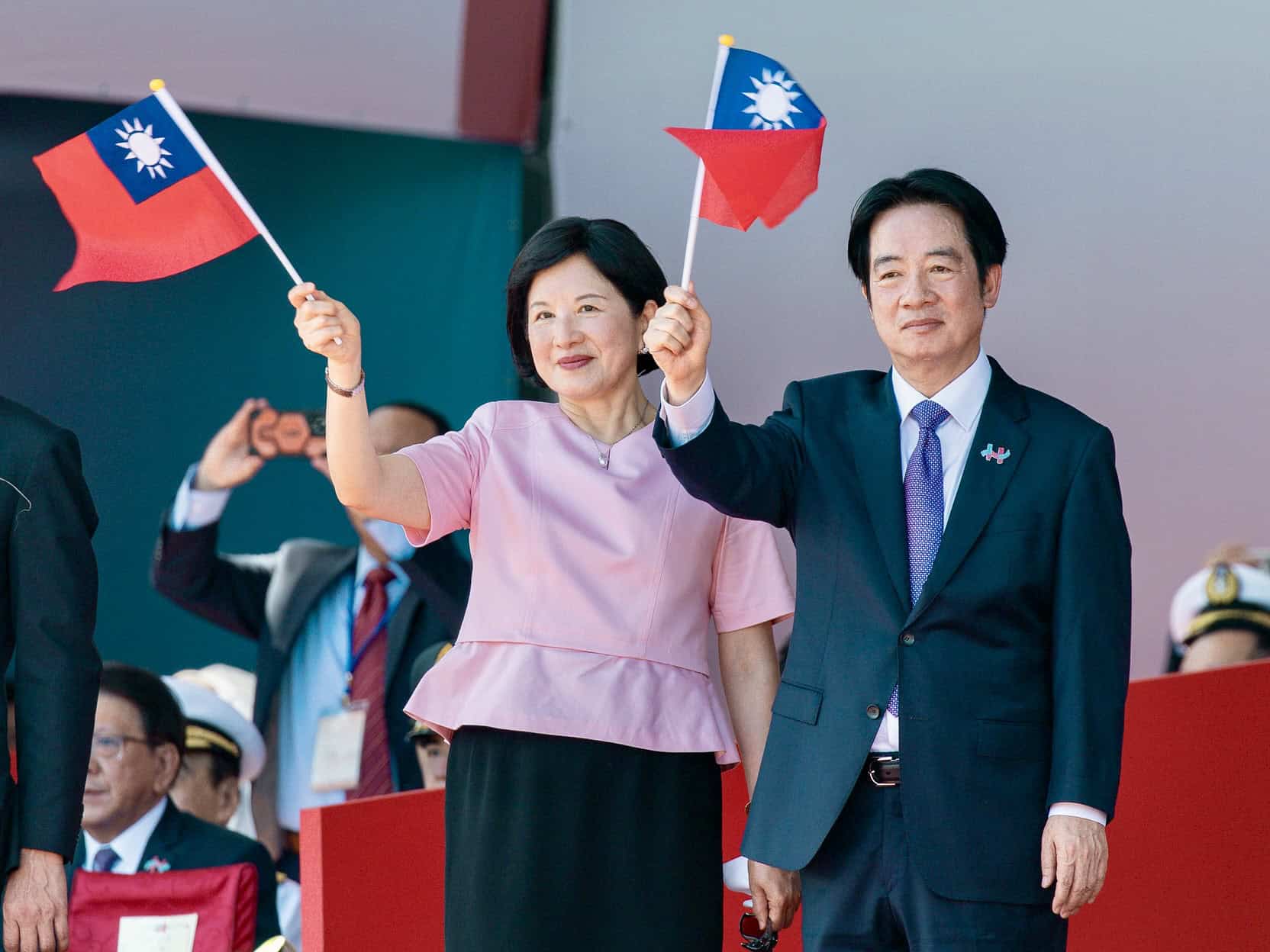
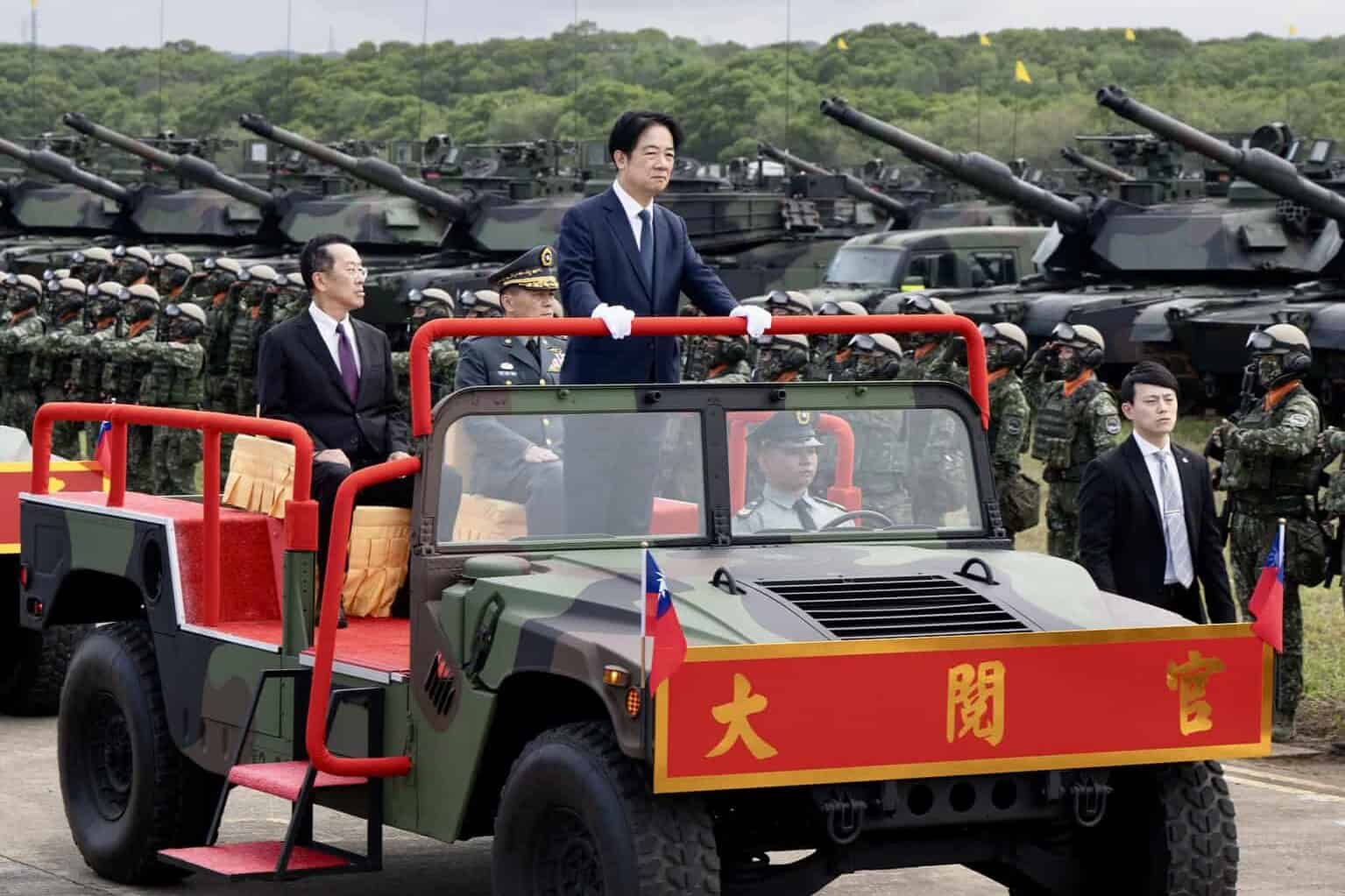
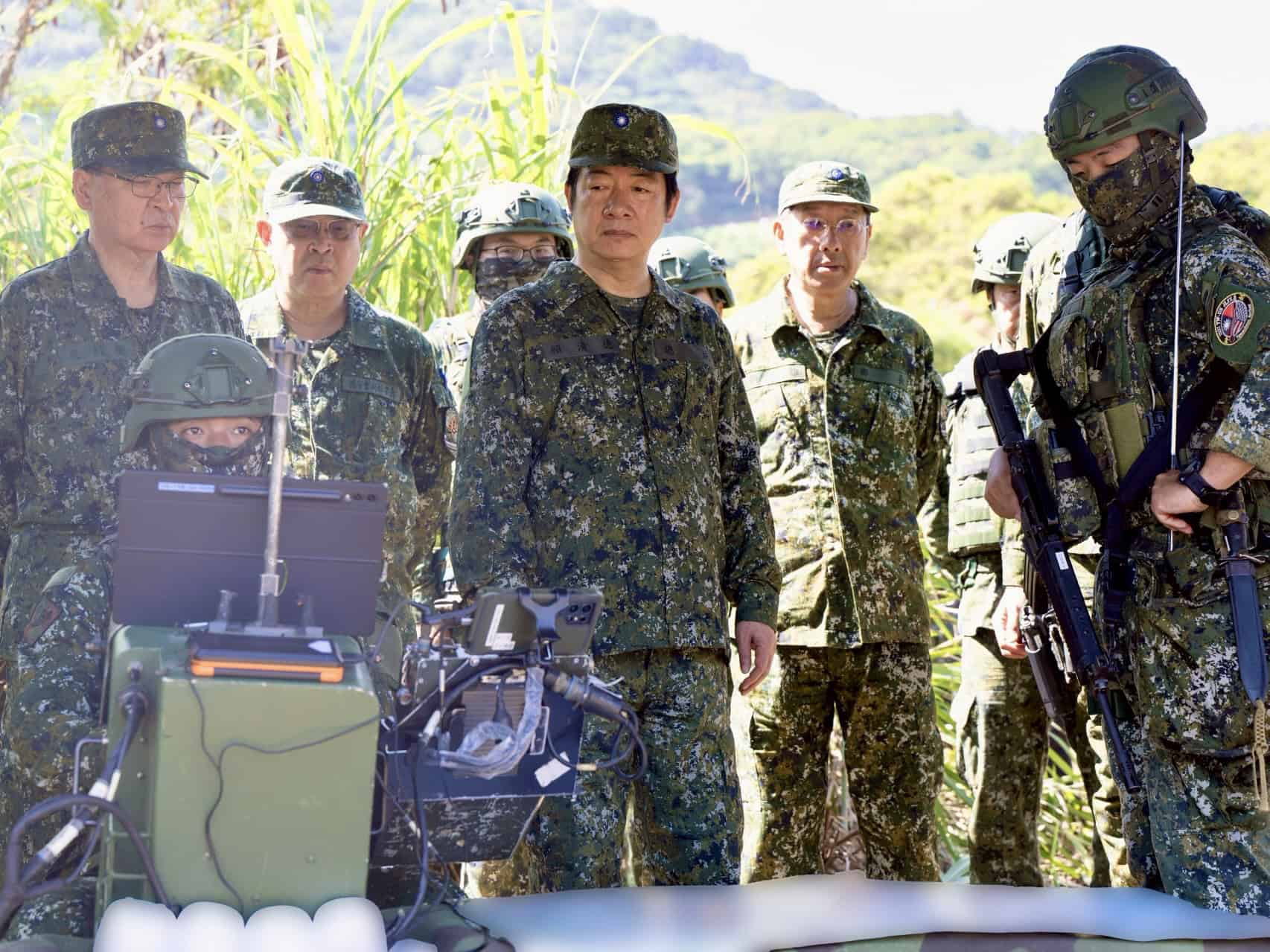
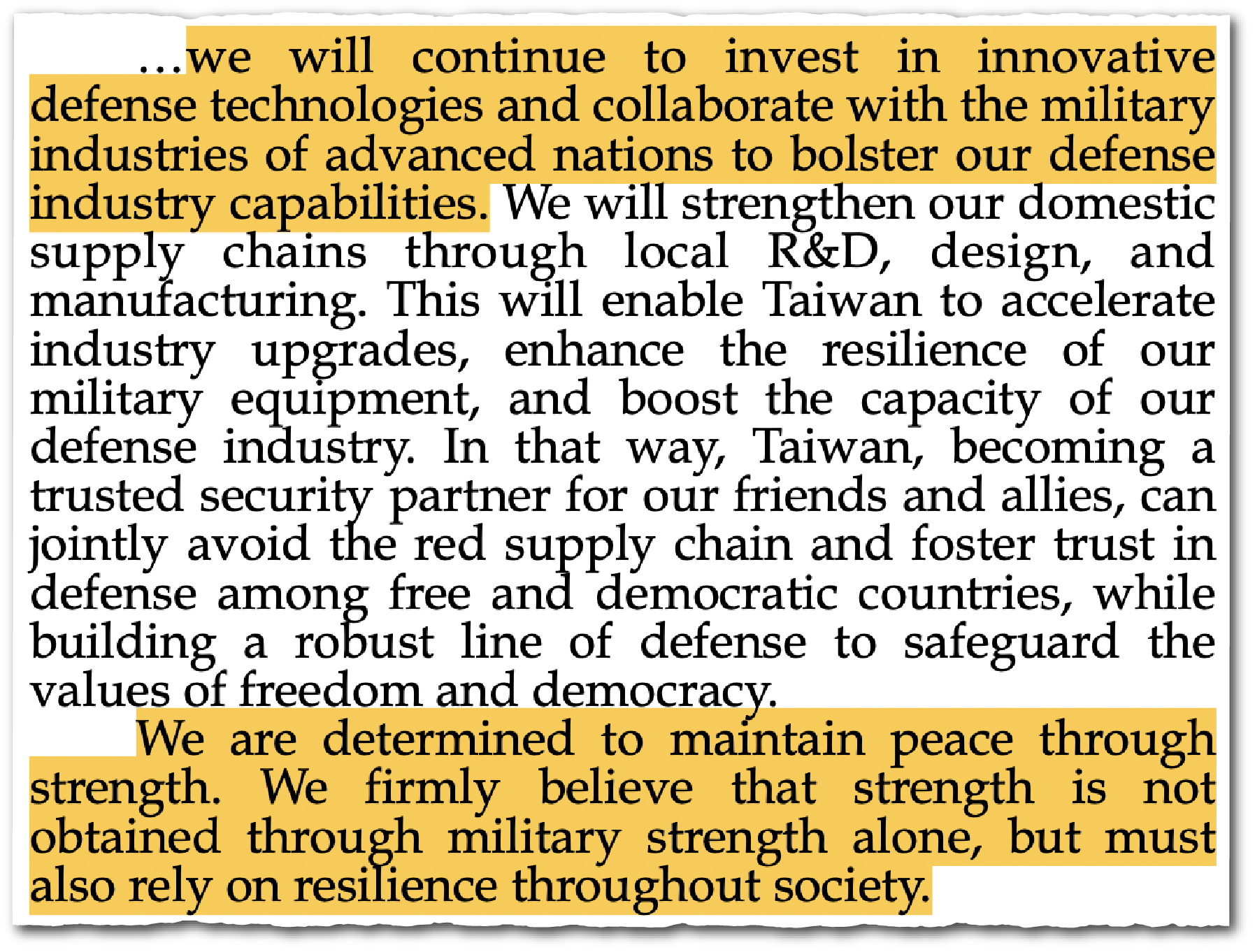
One sweltering morning last month in Taipei, Taiwanese President William Lai Ching-te spoke before a sea of supporters in matching white baseball caps and a regiment of solemn soldiers. It was Taiwan’s first National Day, he noted to applause, in which the island had spent more days as a democracy than under authoritarian rule. “We firmly believe that strength is not obtained through military strength alone,” the president proclaimed. “But must also rely on resilience throughout society.”
The Republic of China, an independently governed democracy of 23 million people, is claimed by Beijing as its own. Since the Chinese Communist Party sent its civil war rival, the Kuomintang (KMT), fleeing there in 1949, Beijing has coveted the island. China has repeatedly maintained that it reserves the right to take it by force. “We absolutely will not renounce the use of force and reserve the option to take all necessary measures,” said a spokesperson for China’s Taiwan Affairs Office, speaking at a press conference last month in Beijing.
For decades this has been the case. But recent years have provided a steady drumbeat of military and political warnings that Beijing may actually follow through on its threats — and do so sooner rather than later.
The best way is really not to wait for war to occur but to work together to prevent war. But I know Taiwanese people will fight. I cannot guarantee that we will win. But we will fight.
Wu Chih-chung, a Taiwanese deputy minister of foreign affairs
“Taiwan is not Ukraine — it’s small. When war breaks out there will be no safe place,” says William Chung, a former Taiwan military officer and researcher at the Institute for National Defense and Security Research, a government-funded think tank. “This is why we emphasize ‘societal resilience.’”
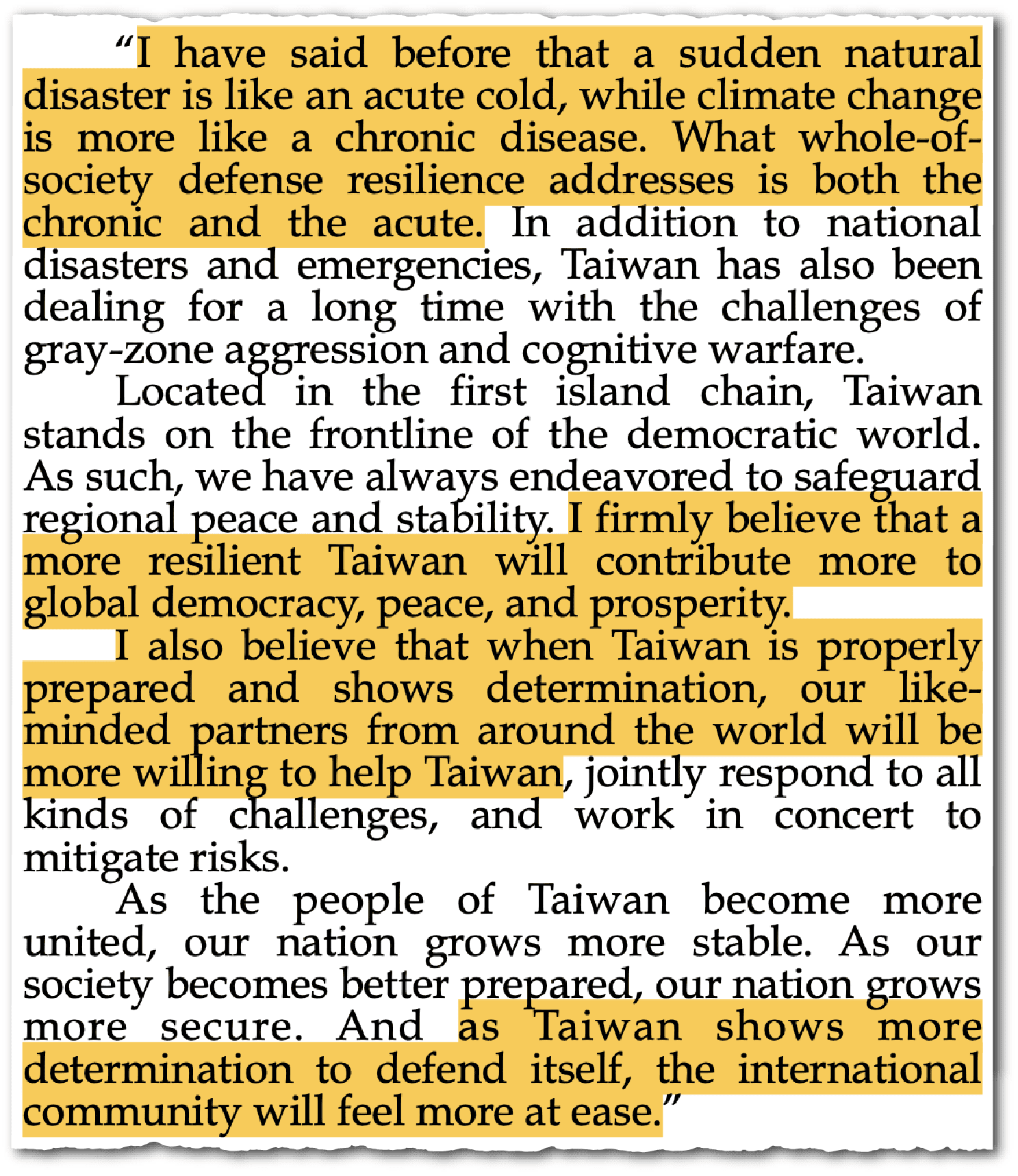
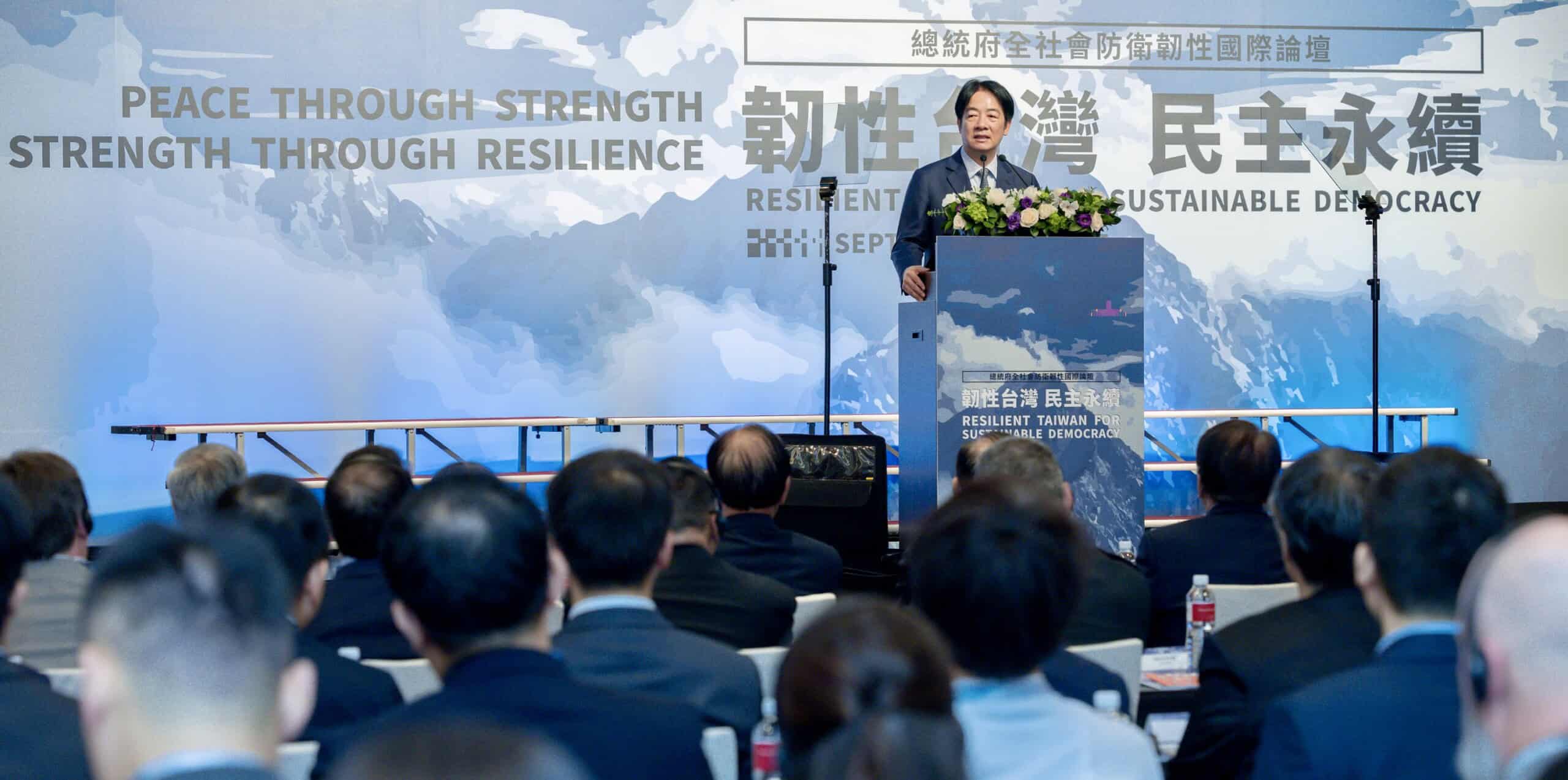
“Societal resilience”, alongside “whole-of-society defense resilience”, is heard often across Taiwan today. Introduced during the previous administration of President Tsai Ing-wen, her successor Lai has made it a key component of his political platform, establishing a national-level committee to promote it.
Both Tsai and Lai were presidential candidates for the Democratic Progressive Party, which emphasizes Taiwan’s distinct identity. The latter’s victory in 2024 marked the third straight presidential term for the DPP — the longest winning streak since Taiwan’s president was first selected through competitive elections in 1996. The Chinese Communist Party prefers dealing with the less antagonistic KMT, which has promoted closer ties with China.
The results of an invasion would be catastrophic not just for Taiwan but the entire globe, with as much as $10 trillion in annual losses to the world economy, according to a recent analysis by Bloomberg Economics. It could wipe out over ten percent of global GDP, largely because Taiwan produces more than 90 percent of the world’s most advanced semiconductors, the technological bedrock of our digital era.
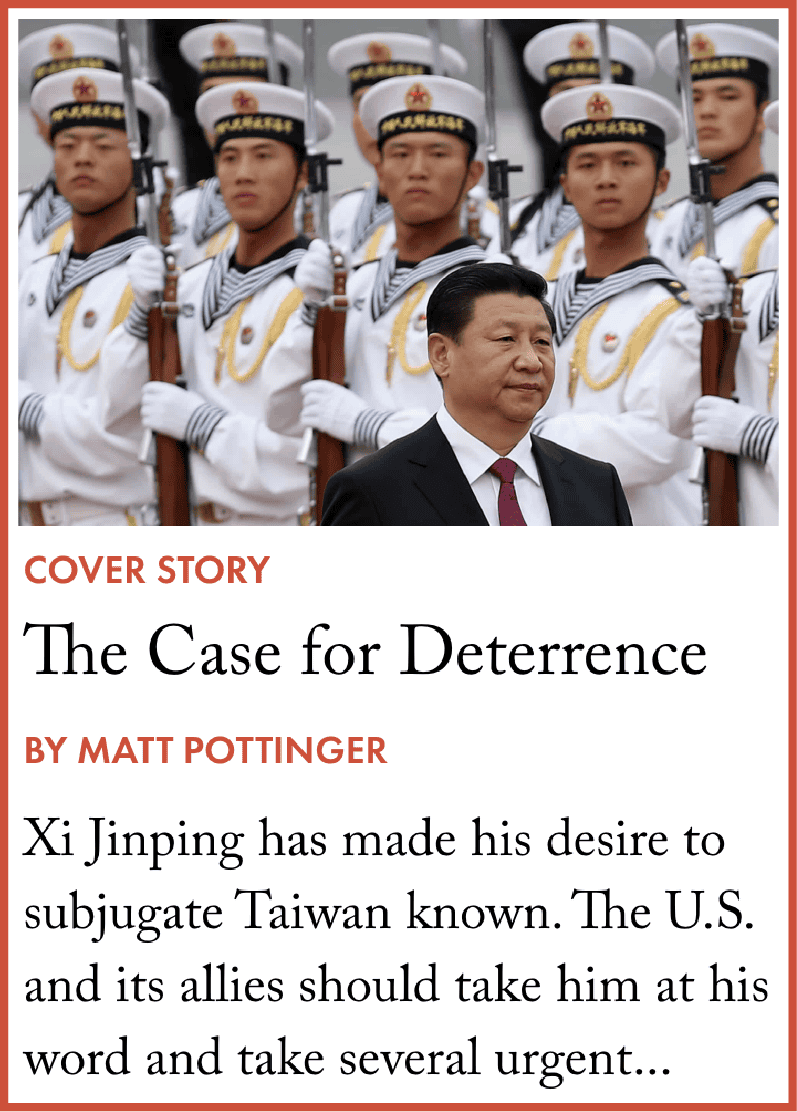
Since coming to power in 2012, Xi Jinping has framed unification with Taiwan as essential to “the great rejuvenation of the Chinese nation.” He has reportedly instructed the People’s Liberation Army to be capable of pulling off a successful invasion by 2027.
Under Xi, who chairs the Party’s all-powerful Central Military Commission, the PLA has undergone the largest peace-time military expansion ever. Today the Chinese military conducts near-daily incursions into Taiwan’s Air Defense Identification Zone and routinely crosses the median line separating the Taiwan Strait. Within its borders, Taiwan is saturated with political disinformation campaigns and high-level espionage plots. It receives over two million cyberattacks per day, according to Taiwan’s Digital Affairs Ministry.
“For decades, China could saber-rattle all it wanted but it couldn’t do anything,” says David Sacks, a fellow for Asia studies at the Council on Foreign Relations. “Now China has real military capabilities and we see that in the Taiwan Strait on a daily basis.”
Vladimir Putin’s full-scale invasion of Ukraine in 2022 was a further wake-up call. It demonstrated “that these types of authoritarian, cult-of-personality leaders might do things that, in our book, seem irrational,” says J. Michael Cole, a former Canadian intelligence analyst and author based in Taipei. “It showed that there is still a possibility that Xi Jinping could do the unthinkable and decide to use force against Taiwan.”
Many Taiwanese are rallying accordingly, trying to encourage an atmosphere of wartime readiness.
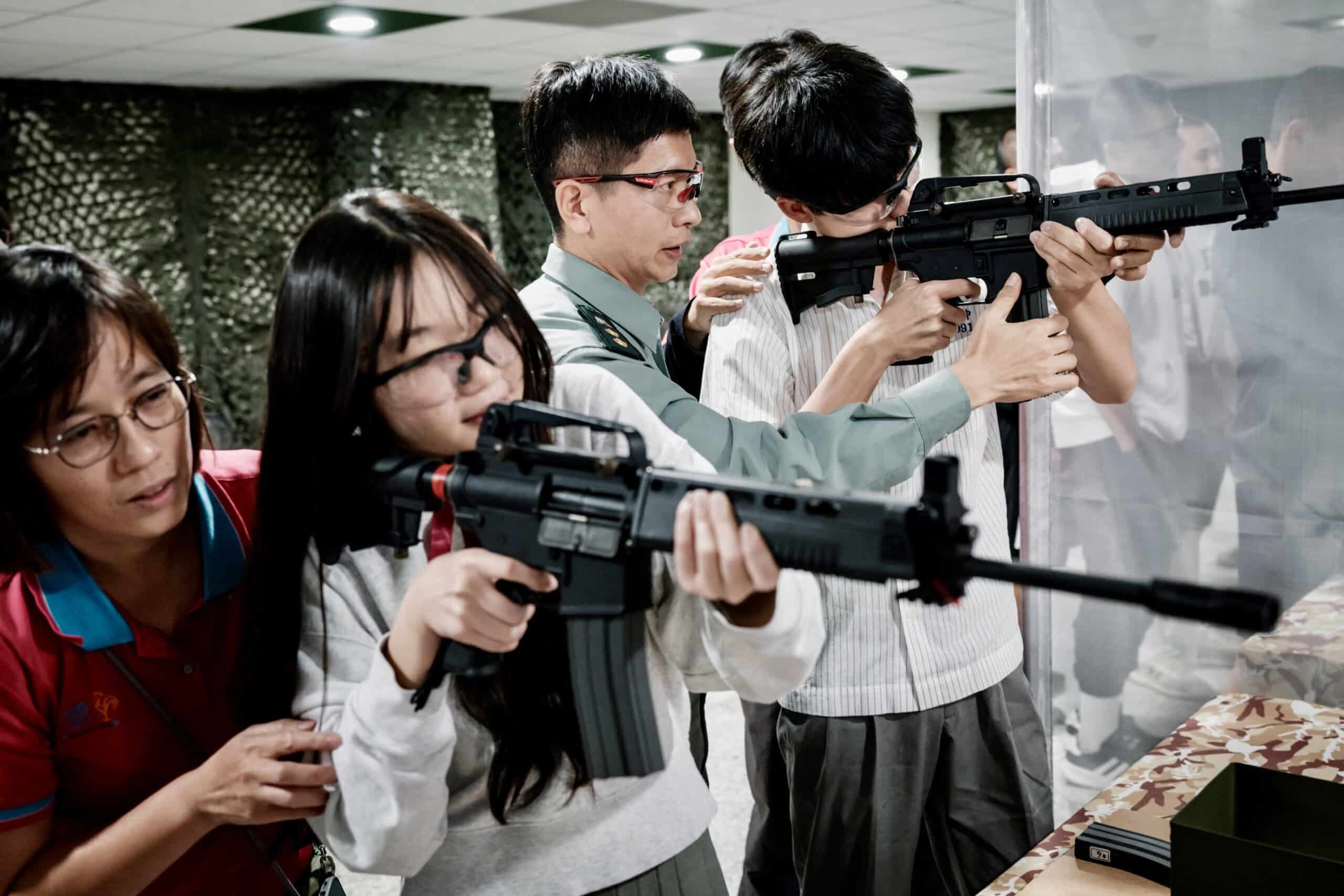
Civil society groups like Kuma Academy, the Citizens’ League and Forward Alliance teach disaster response, media savvy and first-aid to civilians, while defense-oriented companies in cybersecurity and drones are bolstering Taiwan’s indigenous defense capabilities.
Mandatory male military conscription has been extended from four months to one year; military pay and recruitment is up; and there are plans to reinstate military tribunals to prosecute Chinese spies. Around Taipei, signs pointing to designated bomb shelters are increasingly common outside metro stops.
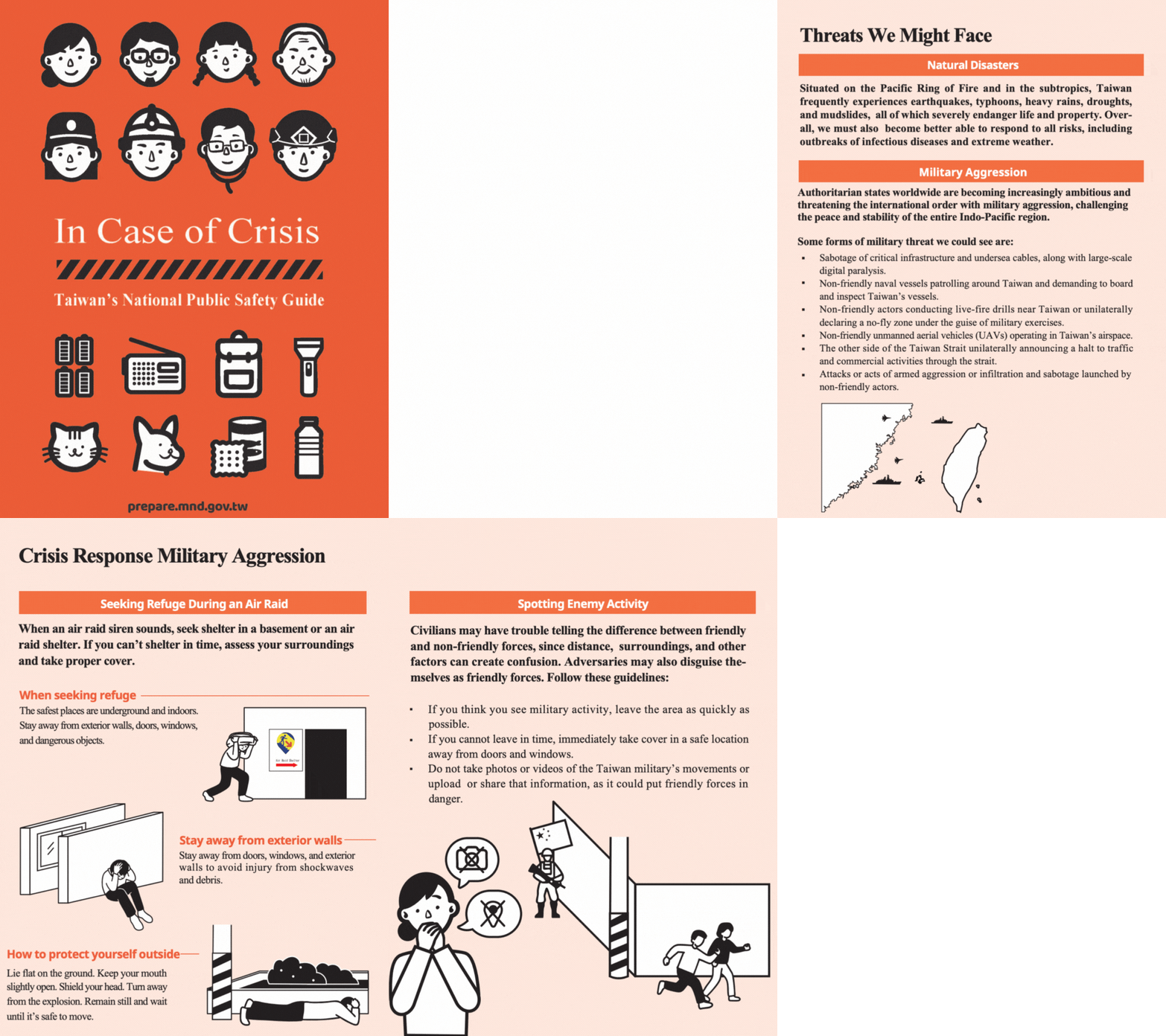
“Societal resilience” was emphasized repeatedly throughout the 2025 National Defense Report, an annual assessment of Taiwanese defense policies. Civilians, the report noted, should be prepared for a “war of attrition” with China. In July, at Taiwan’s annual Han Kuang military exercises, civil defense groups were incorporated for the first time. In September, Taiwan’s All-out Defense Mobilization Agency distributed civil defense handbooks for use in the event of a Chinese attack, alongside a website. The agency was formed in 2021 to mobilize military reservists.
“It’s about trying to emphasize that, when war happens, it’s not just the armed forces’ responsibility to defend the country,” says Chung. “The whole of society will need to get involved.”
International observers wonder if they will. Periodic polling on the question is mixed. Around 72 percent of Taiwanese say they would fight to repel an “unprovoked” PLA invasion, according to a 2021 poll published by the state-funded Taiwan Foundation for Democracy. But according to another poll that year, by Global Views Monthly, a Taiwanese magazine, only 40 percent were willing to fight and 51 percent were not.
Views are further distorted by Taiwan’s increasingly polarized politics. Much of the divide centers on cross-strait relations, with the DPP-leaning “greens” emphasizing distinct Taiwanese identity and sovereignty, while the KMT-leaning “blues” favor closer economic engagement with China while maintaining Taiwan’s separate governance. As in other democracies worldwide, social media has accelerated Taiwan’s polarization trends.
Of course, official analysis on issues of national resolve can miss the mark. In just the last five years, the U.S. government got the question wrong twice — overestimating its Afghan allies pitted against the Taliban, and underestimating the Ukrainians. American observers hope that, if worse comes to worse, Taiwan more resembles the latter.
“Taiwan should not be underestimated,” says a western diplomat in Taipei who requested anonymity because she is not authorized to speak to the media. “Taiwanese people have shown huge resilience and solidarity in the face of recent disasters like earthquakes and typhoons.”

“A lot of people in Ukraine weren’t aware of their willingness to fight back against a Russian invasion until the Russians invaded,” adds John Dotson, a former U.S. Navy officer and director of the Global Taiwan Institute, a pro-Taiwan think tank in Washington. “Prior to that point, they really preferred not to think about it.”
So, if China does invade, will the Taiwanese emulate the Ukrainians?
“The best way is really not to wait for war to occur but to work together to prevent war,” says Wu Chih-chung, a Taiwanese deputy minister of foreign affairs. “But I know Taiwanese people will fight. I cannot guarantee that we will win. But we will fight.”
It was not lost on Taiwan that the debate was shifting and that there were questions about how seriously Taiwan was taking its own defense. I see this ‘whole of society resilience’ campaign as a way of proving to the United States that Taiwan is taking this seriously.
David Sacks, a fellow for Asia studies at the Council on Foreign Relations
“It would probably be quite contingent on the nature of whatever attack might take place,” adds Andrew Yeh, executive director of the China Strategic Risks Institute, a British think-tank, who previously served as Secretariat Manager at the Inter-Parliamentary Alliance on China. “The circumstances of the attack, how feasible a defense looks and how the rest of the world responds.”
THE AMBIGUOUS EAGLE
How Taiwan — and the rest of the world — responds to a Chinese blockade or invasion will very much depend on how America does. Absent U.S. military might, Taiwan would be outgunned by its gargantuan neighbor. In table-top wargames conducted by the Center for Strategic and International Studies last year, Taiwan was overrun by the PLA in a simulation without U.S. involvement, losing its entire navy and suffering 85,000 casualties.
“If Taiwan’s plan is to fight the Chinese on Taiwan, they’ve already lost,” says John Culver, a former CIA officer focused on cross-straight affairs.
Rather, Taiwan needs to make the 110 mile-wide Taiwan Strait hell for Chinese forces to cross — a “boiling moat” as per the title of a 2024 book edited by Matt Pottinger, a senior national security official in the first Trump administration.
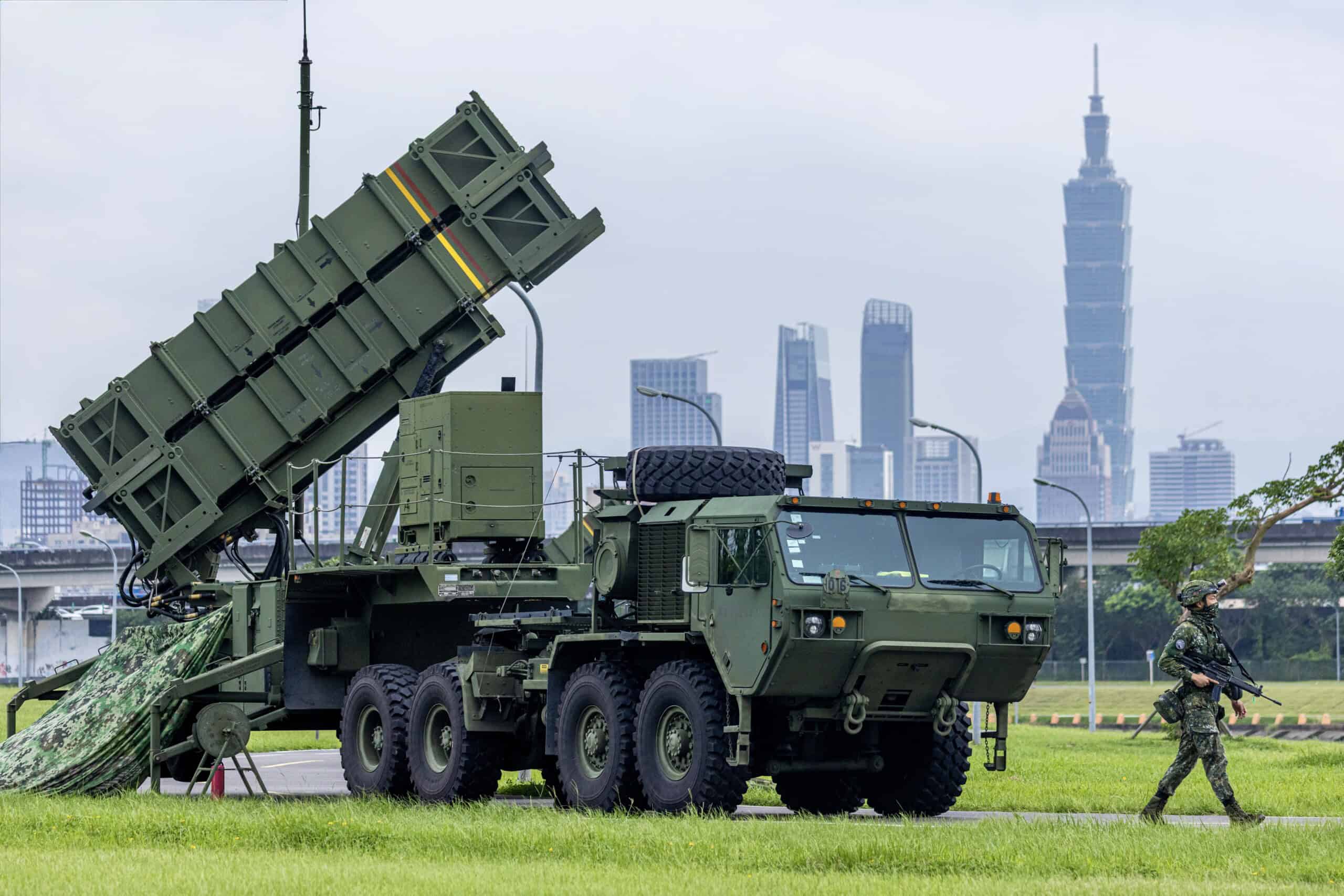
It is also known as the “porcupine” strategy, coined in a 2008 U.S. Naval War College paper, and it involves vast amounts of sea mines, drones, anti-ship missiles and other weapons of denial. It’s about keeping Chinese forces at bay until American and other allied forces arrive at full strength.
“The assets that we have in the region are going to have to fight their way in,” explains Michael Hunzeker, a former U.S. Marine and associate professor at George Mason University who worked with Pottinger on Boiling Moat. “The ability for America to really mobilize and rapidly deploy decisive force would take two months.”
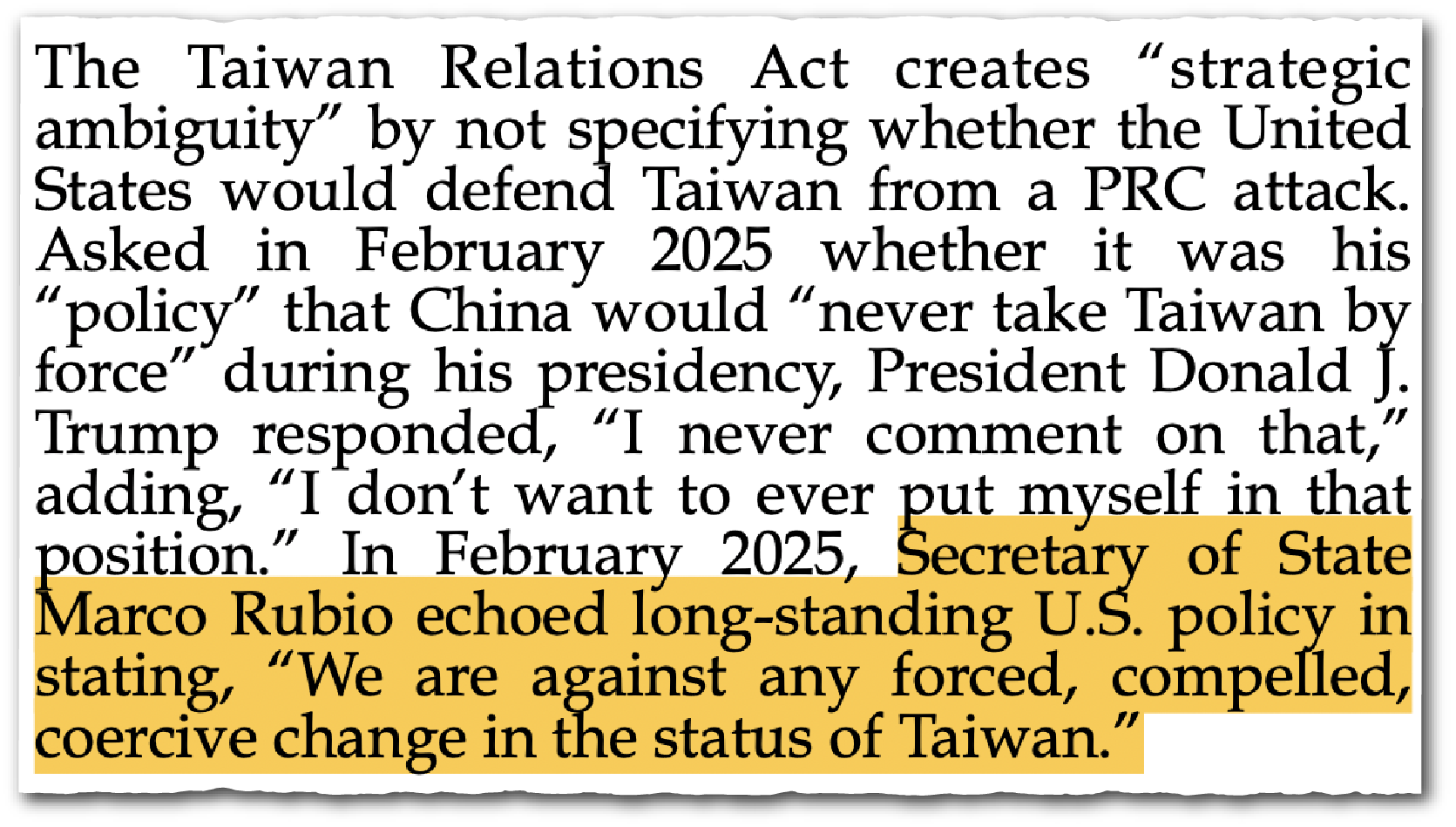
While Washington has long maintained “strategic ambiguity” around deploying such forces, Trump 2.0 has observers truly perplexed. “Taiwan is Taiwan,” the U.S. president remarked last month, cryptically, when asked about the issue before meeting Xi Jinping in South Korea. In the run-up, officials within the administration worried that Trump might strike a grand bargain with Xi at the expense of Taiwan. But afterward, Trump told reporters that cross-straight issues “never came up.”
In a subsequent 60 Minutes interview, Trump claimed that China would not invade Taiwan during his presidency “because they know the consequences.” Still, observers wonder if Xi might try to extract a political concession on Taiwan when Trump visits Beijing in April.
“Trump has professed to be confident on this score,” says Stephen Wertheim, a senior fellow in the American Statecraft Program at the Carnegie Endowment for International Peace. “But another possibility might be that, having called a truce in the economic war between the United States and China, Trump and Xi will now turn to cross-strait relations.”
The new Japanese prime minister, Sanae Takaichi, also stirred things up earlier this month when she said any Chinese use of force against Taiwan could be a “survival-threatening situation” for her country, in comments that implied the Japanese military would defend Taiwan. Takaichi’s remarks sparked a furious reaction from Beijing and a diplomatic crisis that appears to be spiraling out of control.
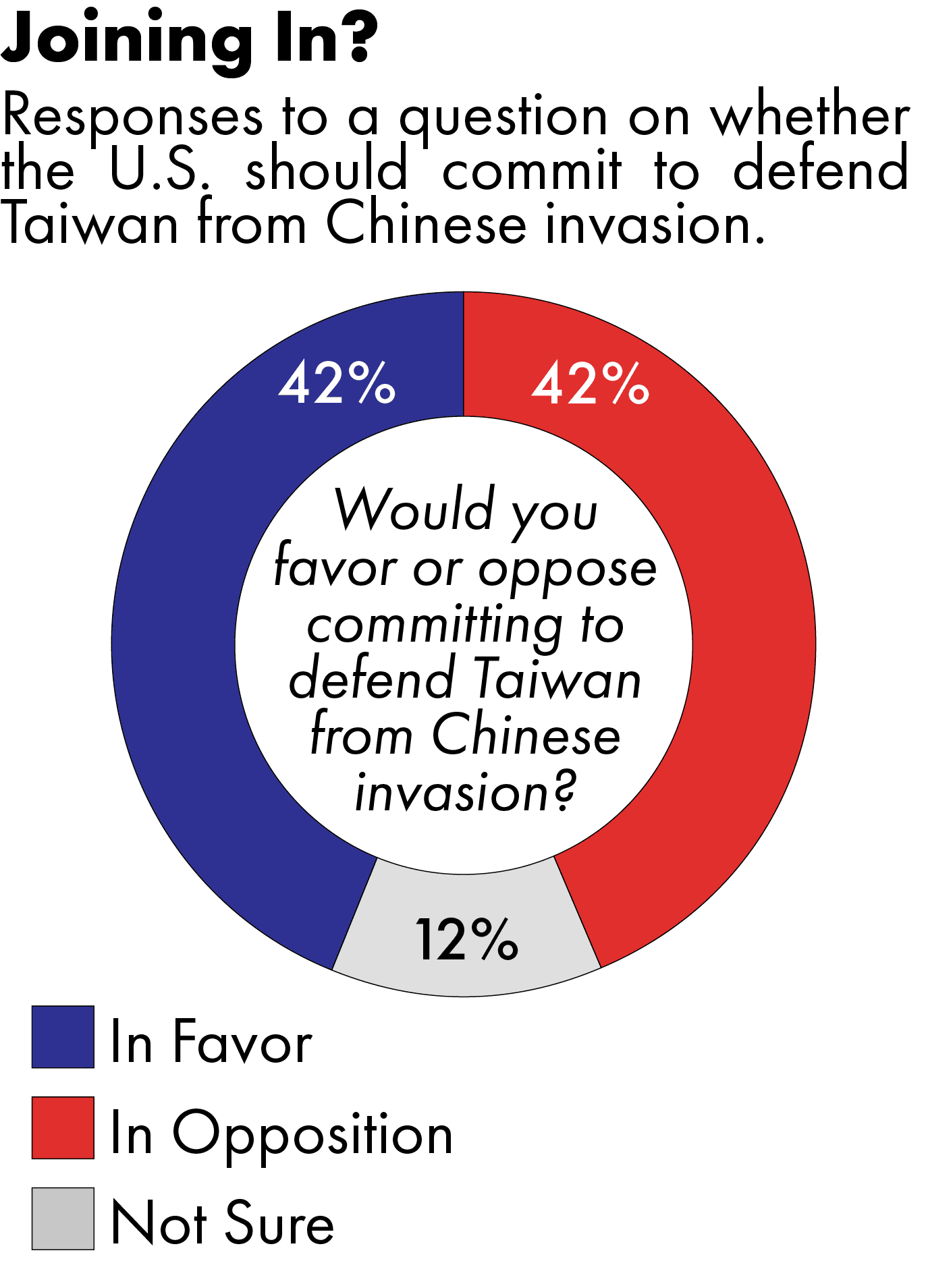
Support for Taiwan among the American public is another known unknown. Last year, in a survey of Americans by the Chicago Council on Global Affairs gauging respondents’ commitment to defending Taiwan from an invasion, most either opposed getting involved or were unsure. One 2022 poll found that only 34 percent of Americans could locate Taiwan on a map.
What is clear is that Trump’s Department of War expects Taiwan to prove its mettle. Pentagon officials like Elbridge Colby, the Under Secretary of War for Policy, have made it clear that American support will hinge on Washington’s perception of Taiwanese resolve.
“Americans need to see that Taiwan is invested in its defense to be motivated to help defend it,” Colby tweeted last year. “There has been too much reassurance, leading Taiwan to reckon that its chestnuts will be pulled out of the fire no matter what by America.” Washington might be prepared to defend Taiwan, he added, “but it has to make sense.”
Meanwhile, Trump himself has complained that Taiwan “stole” America’s semiconductor industry and has suggested that Taiwan should pay more for American protection.
“It was not lost on Taiwan that the debate was shifting and that there were questions about how seriously Taiwan was taking its own defense,” says Sacks, at CFR. “I see this ‘whole of society resilience’ campaign as a way of proving to the United States that Taiwan is taking this seriously.”
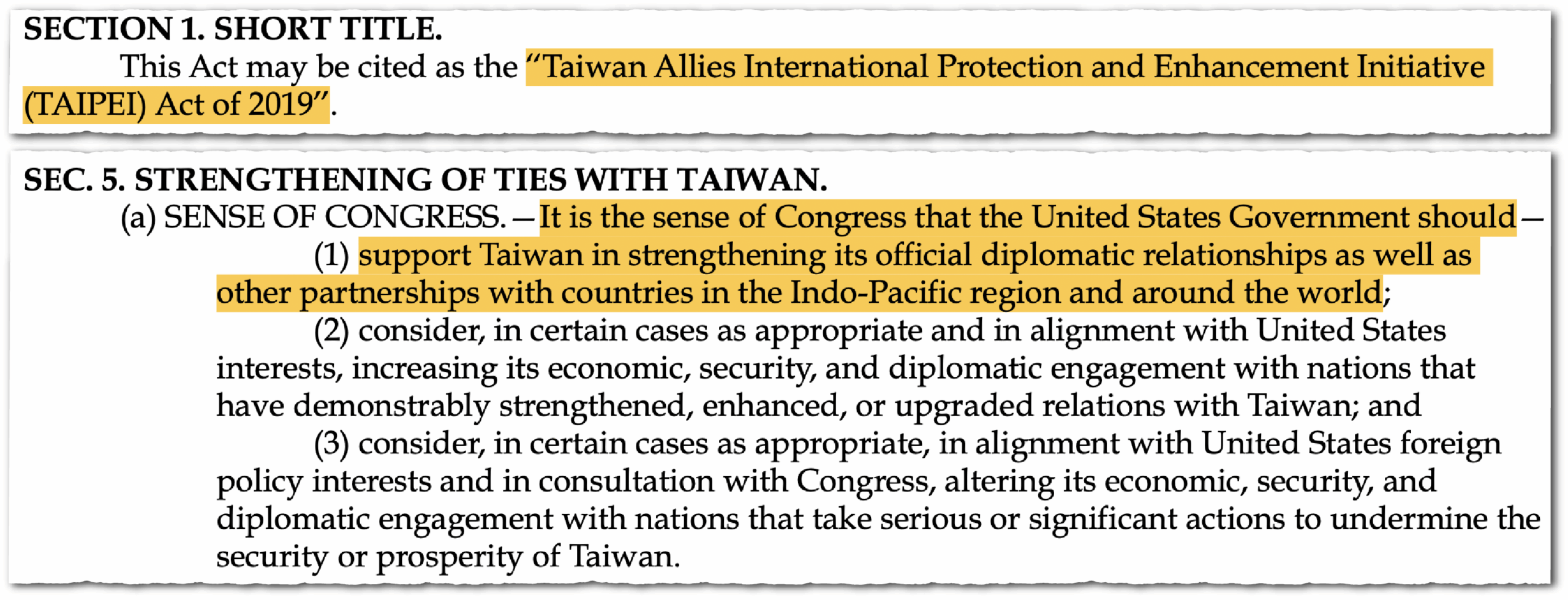
Remembering Trump’s first term, the Taiwanese had expected better treatment. In December 2016, the American president-elect made history when he took a congratulatory call from then-President Tsai. His administration showered Taiwan with over $18 billion in arms sales; signed the Taiwan Travel Act to allow high-level visits; and signed the TAIPEI Act to help preserve the island’s diplomatic allies.
“There was a general sense that Trump 1.0 had been good for Taiwan,” says Dotson, of the Global Taiwan Institute.
His second administration has been far less accommodating. Since returning to Pennsylvania Avenue, Trump has denied an American transit visit for President Lai; moved defense policy talks with Taiwanese officials from Washington to Anchorage; nixed $400 million of military aid; and slapped 10 percent tariffs on Taiwan’s export-dependent economy. Meanwhile, China hawks in his administration have been cowed as he pursues rapprochement with Xi.
I think it depends more on what’s happening domestically in China than ‘provoking China’ or not. The much bigger risk-cost calculus in Xi Jinping’s mind would be simply ‘Can [the PLA] win the war?’ ‘Can they win it easily?’
Andrew Yeh, executive director of the China Strategic Risks Institute, a British think-tank
“Before Trump was sworn in, I thought we’d return to what we saw in the first term with Taiwan but it hasn’t been like that at all,” says Culver. “Taiwan is getting a little freaked out right now that they’re really getting the Heisman from the Trump administration.”
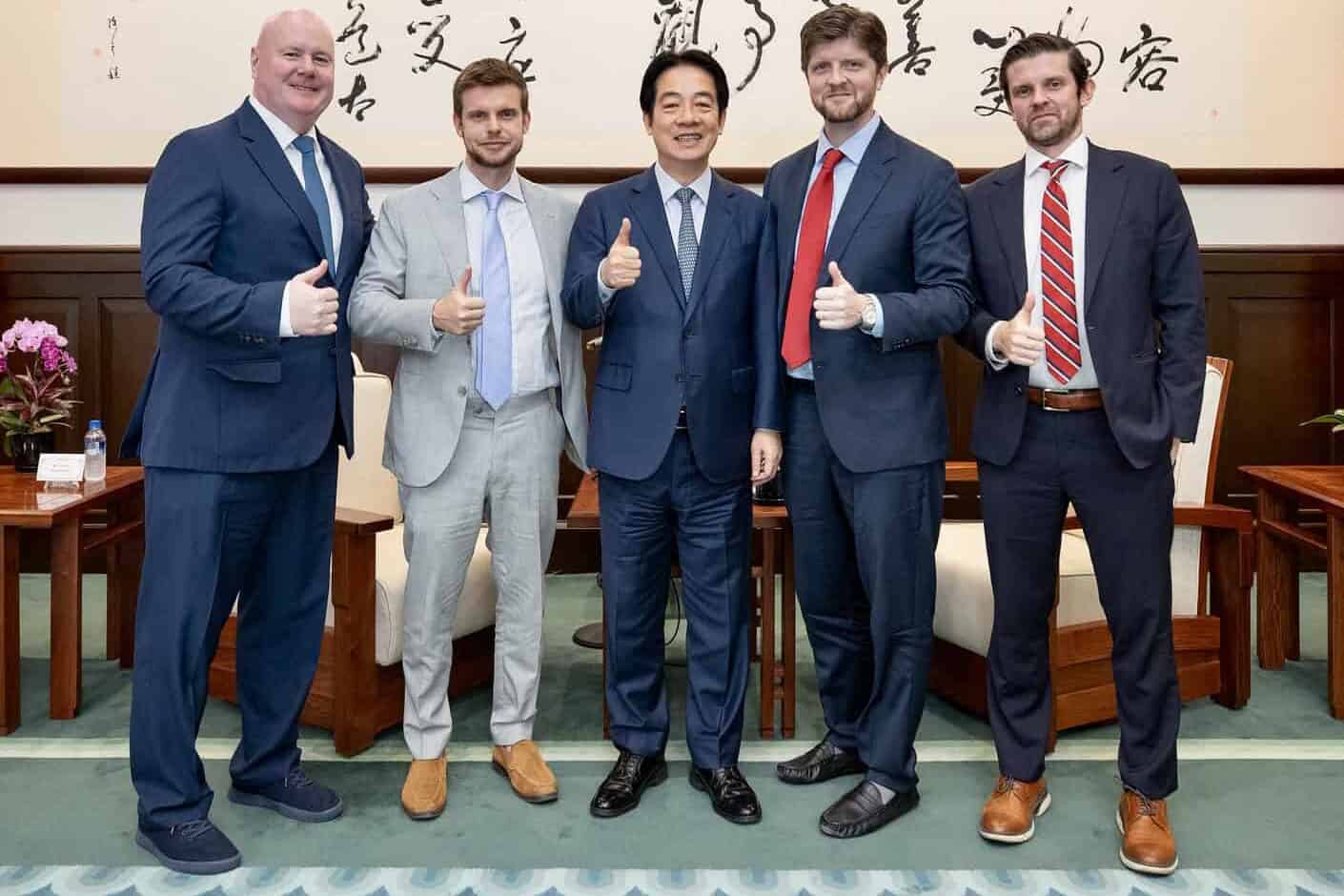
Taipei has reacted by quietly cozying up to MAGA-world. In October, President Lai joined a conservative American podcast on which he remarked that the U.S. president should get the Nobel Peace Prize, a much-touted goal of Trump’s, if he convinces China to abandon its claims on Taiwan.
“Taiwan is absolutely determined to ensure its own national security,” he added. “I believe people help those who help themselves.”
Three days later, Lin Fei-fan, deputy secretary-general of Taiwan’s National Security Council, published an essay in Foreign Affairs, entitled, “Taiwan’s Plan for Peace Through Strength.” The expression is a cornerstone of Trump’s own defense doctrine.
“As Taiwan accelerates its preparations, there should be no doubt about its determination to defend its future and its freedom,” Lin wrote.
The strategy may be bearing fruit. Last week the U.S. government approved a $330 million sale of military equipment to Taiwan, consisting mainly of spare parts for its existing jet fighters and cargo planes. It was the first such sale since Trump returned to the White House.
BORN IDENTITIES
Beijing has long preferred “peaceful” unification with Taiwan to war. It has dangled a “one country, two systems” framework as a carrot — the same formula that collapsed so spectacularly in Hong Kong.
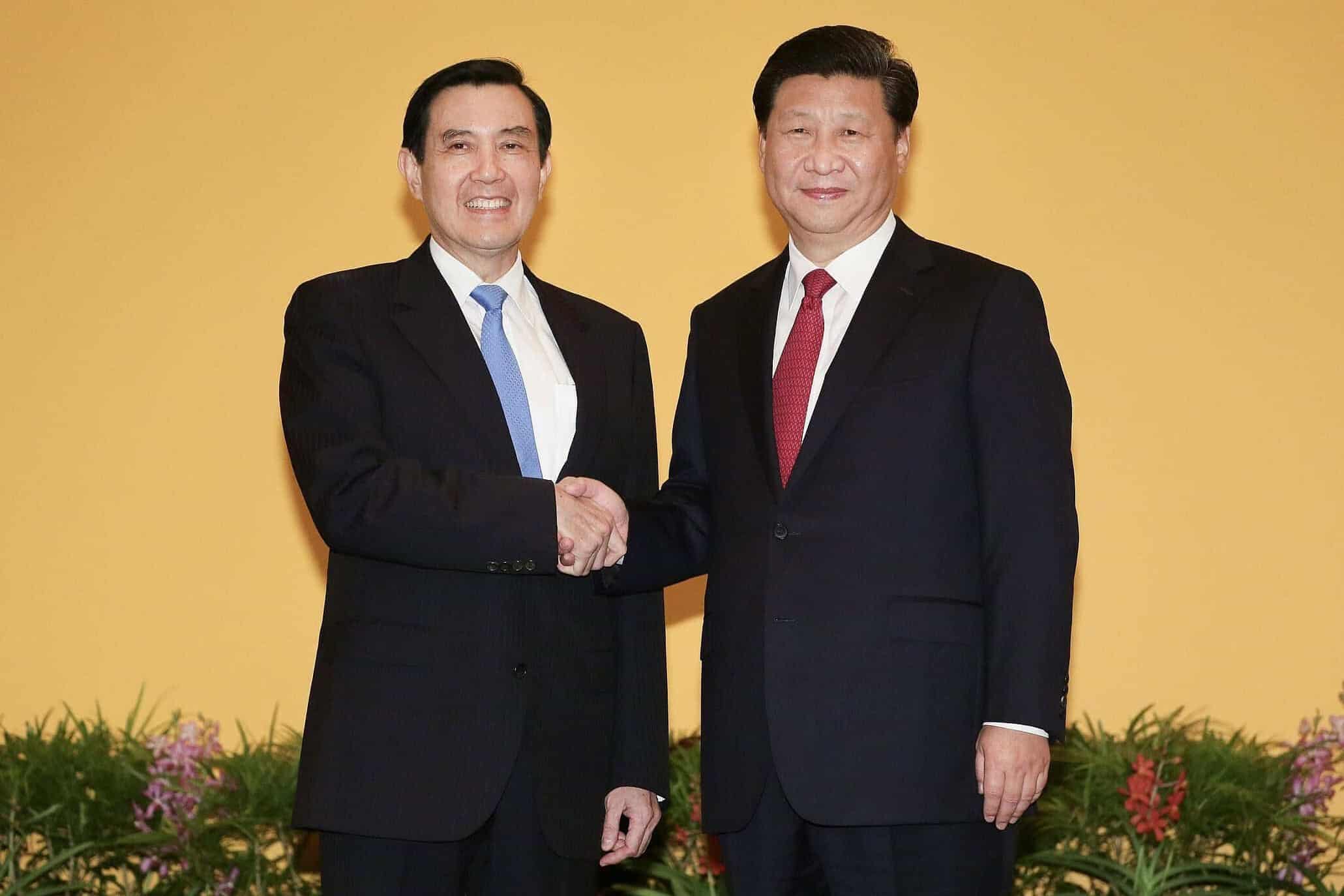
Through the 2010s, perhaps the high point of China-Taiwan relations, Beijing solidified economic and social ties with the island, working closely with the KMT presidency of Ma Ying-jeou. In 2015, Xi and Ma met in Singapore, marking the highest level cross-strait meeting since the Chinese Civil War. But with the repression that followed the passing of Hong Kong’s National Security Law in 2020, peaceful unification has never seemed more implausible.
Reflecting on the meeting recently, former president Ma criticized Lai for his antagonistic stance towards China. “Public sentiment [in Taiwan] hopes for reconciliation and peace across the Strait, and wants the government to focus on basic livelihood and economic issues,” Ma wrote on Facebook.
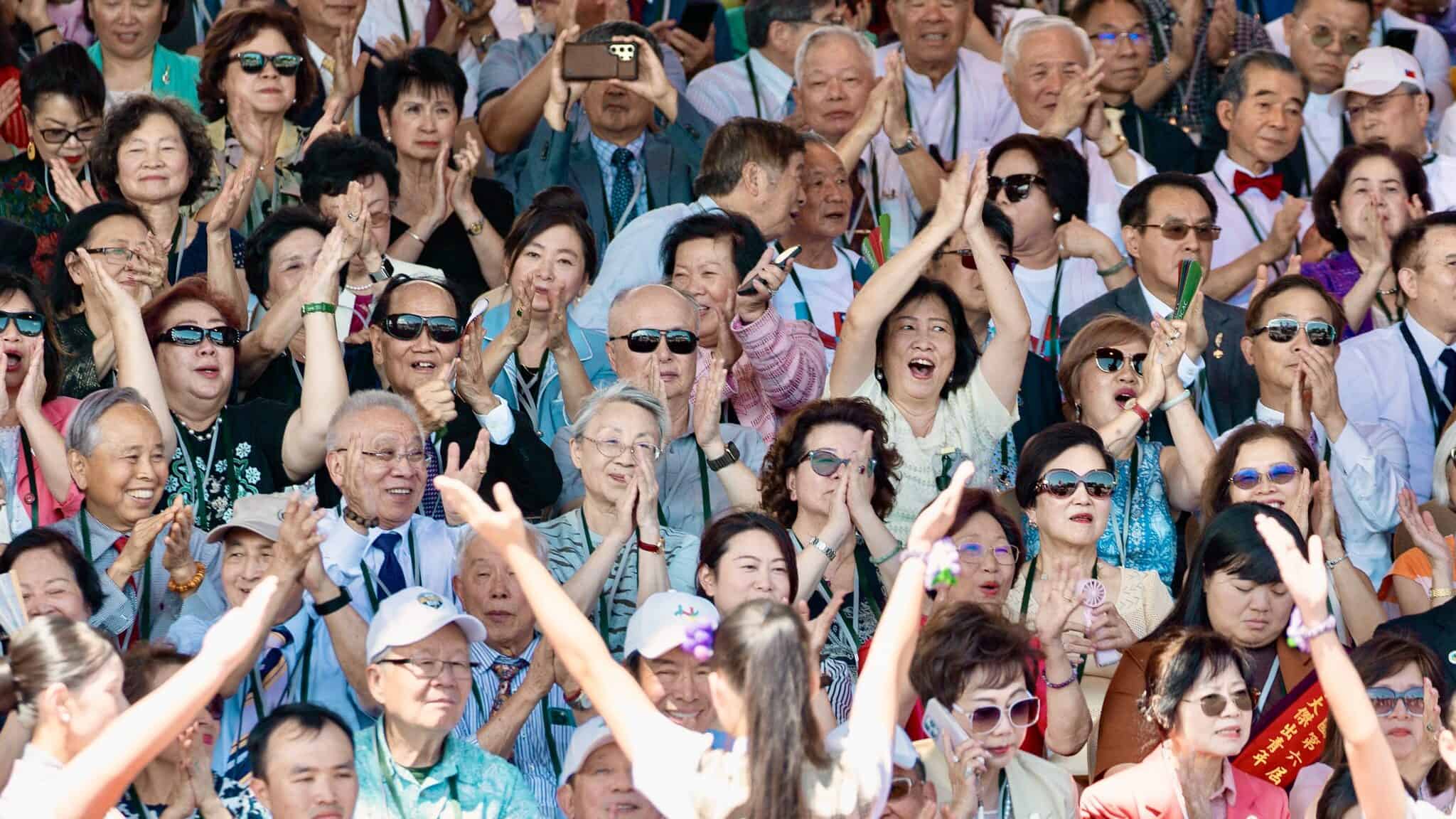
Yet as older Taiwanese who were born in, or identified with, China die off, those remaining are Taiwan natives like Lai — over 85 percent of the population — with little to no emotional ties to what Chinese officials wish Taiwanese would call the “mainland.” Moreover, those born after the 1980s have grown up in a democracy and self-identify as citizens of the free world.
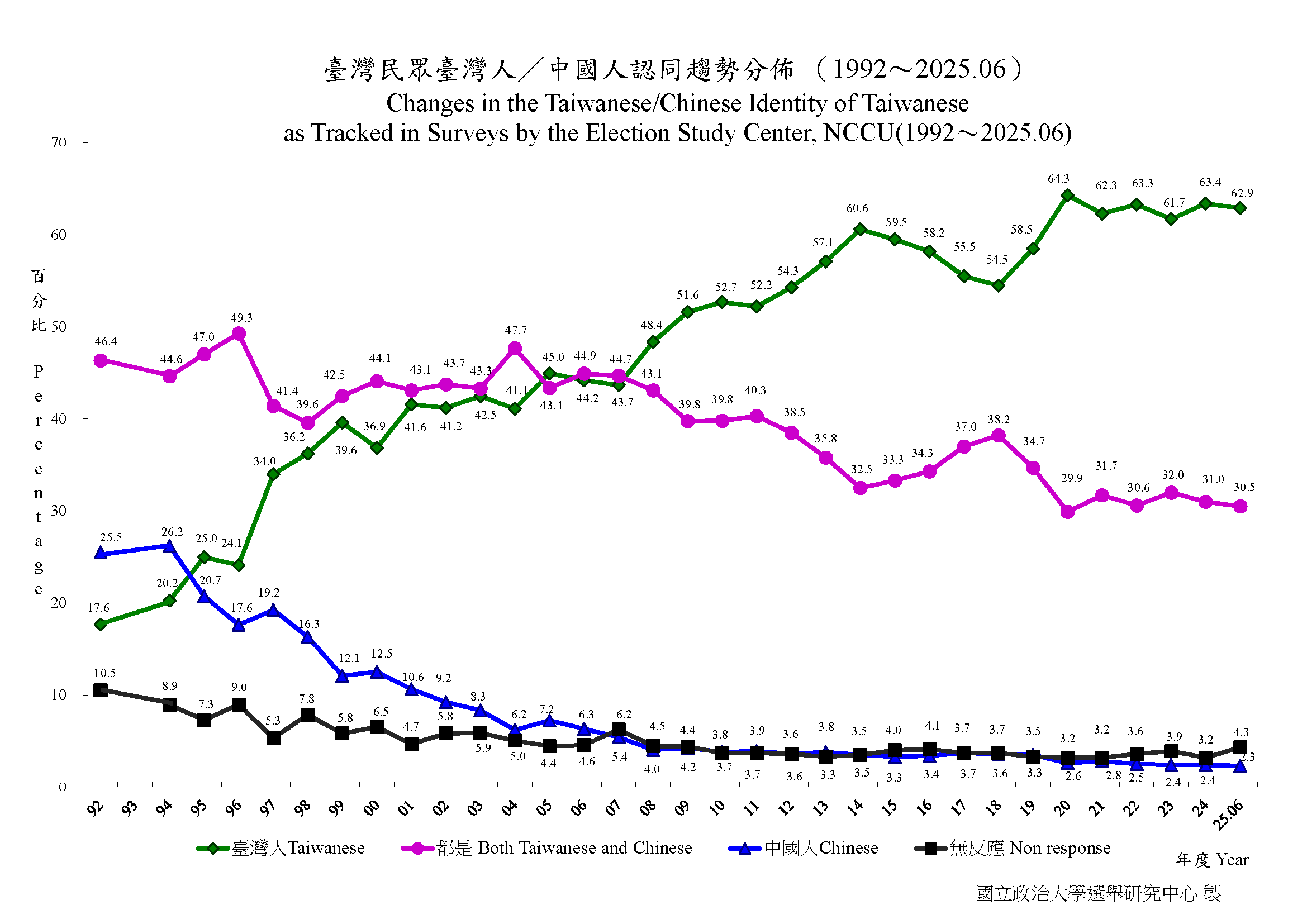
Consistent polling bears this out. In 1992, 17 percent of residents identified as “Taiwanese only” and 46.4 percent as “Taiwanese and Chinese,” according to the Election Study Center at National Chengchi University. In 2025, those figures were 62 percent and 30 percent respectively.
“People here are entitled to determine their national identity,” says Tien Hung-mao, a former Taiwanese foreign affairs minister and chairman of the Institute of National Policy Research, a government think-tank. “The vast majority of the people here don’t want to live under communism. We are a democracy.”
Results are even starker when polled on unification, which very few people say they support. More than 90 percent of respondents support either formal independence or the status quo. The implications for Beijing are clear. As J. Michael Cole writes in his new book, The Taiwan Tinderbox: The Island-Nation at the Centre of the New Cold War, unification “would in reality be annexation.”
“We cannot accept the narrative of China that Taiwan is part of China,” says deputy foreign minister Wu. “Taiwan needs to live under democracy and freedom.”
And yet, in Taiwan’s political system, a strong national defense does not enjoy bipartisan support. The KMT, which currently controls Taiwan’s legislature, has consistently opposed measures to raise defense spending and turn Taiwan into the kind of porcupine that Washington envisions. KMT politicians have framed such measures as provocations that risk sparking an invasion rather than deterring one. International observers debate this point.
“I think it depends more on what’s happening domestically in China than ‘provoking China’ or not,” says Yeh at the China Strategic Risk Institute. “The much bigger risk-cost calculus in Xi Jinping’s mind would be simply ‘Can [the PLA] win the war?’ ‘Can they win it easily?’ Taiwan having a stronger defense puts it in a much better position.”
Cheng Li-wun, the KMT’s new chair, opposes raising Taiwan’s defense spending to five percent of GDP by 2030, a major goal of the Lai administration strongly backed by the U.S. A vote is expected next year. Though the KMT has lost the last three presidential elections to Lai’s DPP, they remain competitive at the legislative level on local issues.
People here are entitled to determine their national identity. The vast majority of the people here don’t want to live under communism. We are a democracy.”
Tien Hung-mao, a former Taiwanese foreign affairs minister and chairman of the Institute of National Policy Research, a government think-tank
“The KMT winning office doesn’t actually reflect the views of the Taiwanese public at large on cross-straight relations,” notes Brian Hioe, a political writer in Taipei and non-resident fellow of the University of Nottingham’s Taiwan Research Hub. “Not every vote in Taiwanese politics is a referendum on cross-straight policy, only presidential elections.”
As Cole underscores in Taiwan Tinderbox, “On the essentials — freedom, democracy, and way of life — the majority of [both the DPP and KMT] tend to agree. And with few exceptions, all are opposed to the idea of Taiwan being governed by [China].”
While the measures Taiwan takes to deter Chinese aggression are contested, both parties agree that Chinese aggression is unwanted. “We have not abandoned our resolve to defend Taiwan by force,” KMT Chair Chen told an interviewer this month.

Brent Crane is a journalist based in San Diego. His work has been featured in The New Yorker, The New York Times, The Economist and elsewhere. @bcamcrane