Dan Wang is a research fellow at the Hoover Institution at Stanford University, based in Ann Arbor, Michigan and Palo Alto. Previously he was a lecturer at Yale University and a fellow at the Yale Law School’s Paul Tsai China Center, where he wrote his first book, Breakneck: China’s Quest to Engineer the Future, published on August 26, 2025. From 2017 to 2023, he worked in China as the technology analyst at Gavekal Dragonomics, an economics research firm, based in Hong Kong, Beijing and then Shanghai.

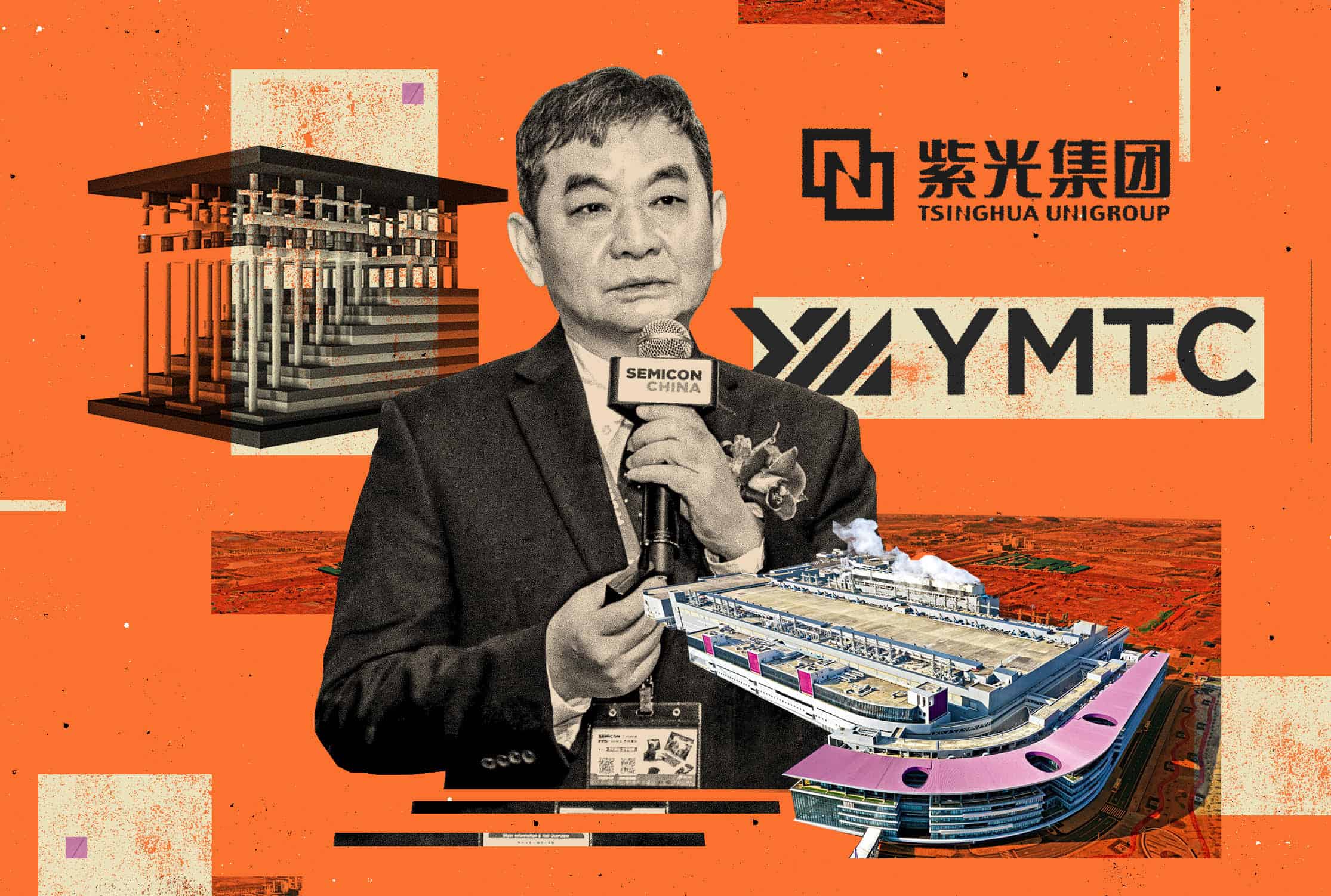
Illustration by Kate Copeland
This book grew out from your well-circulated “letters” which you published annually on your blog while living in China. They were part-analytical, part-travelogue and very fun to read. What made you start writing them?
The first one I did was in 2017 after I moved from California to Hong Kong. I was writing on my site as a way to keep in touch with friends in Silicon Valley, where I had been working. It grew into a bigger project when I saw that Michael Kovrig, my fellow Canadian and someone I knew in Hong Kong, was detained by Beijing police for three years. I was just about to move to Beijing. I was thinking, ‘Well, if I am ever incommunicado for a long period of time, who is better able to tell my own story than myself?’
What was your day job like at this time?
I worked for a firm called Gavekal Dragonomics, which is an economic research firm founded by former journalists. I was a technology analyst which meant that I was covering the trade war, China’s semiconductor industry and clean tech industry. That involved spending a lot of time finding data, going out to semiconductor factories, chatting with multinational business executives about the business environment in China, trying to get a sense of what the Chinese government was thinking. I was reading quite a lot of Xi Jinping’s speeches and issues of Qiushi magazine [the official magazine of the Chinese Communist Party] and then trying to communicate that to financial investors.
What did you learn from reading Qiushi?

For anyone who wants to have a good time, Qiushi now has a website. But what I decided to do was get a print subscription. That experience in itself was fun. You go to a post office, pay something like a dollar an issue — it is priced for retired cadres who still want to keep an eye on what the central leadership is thinking. The clerk who registered my subscription told me she hadn’t seen anyone under 45 ever place an order. The magazine itself is a delight. They’re thickly printed. The photographs are always beautiful, typical Chinese photos of leaders visiting villages or container ports. The front cover was always the same words — Qiushi, seeking truth — in red on a white background. The start of every issue carried a speech by Xi Jinping, whose font was slightly different from all the other articles.
Let’s get into the framework of your book, which revolves around two terms you’ve coined to describe China and the U.S.. First, what is the lawyerly society?
The lawyerly society is the description that I have for the United States. It’s trying to reason about America that’s not using these usual 20th-century terms like neoliberal or capitalist or democratic, whatever that means. I tried to come up with a way to think about the United States and all of its pathologies. The U.S. is a lawyerly society because lawyers have been part of America’s legal tradition from the very beginning. If you read the Declaration of Independence, it sounds very much like the start of a court case. Lawyers were present among so many of the founding fathers. If you take a look at the first sixteen presidents of the United States, from Washington all the way to Lincoln, thirteen of them practiced law. If you take a look at most of the modern political leaders, five of the last ten U.S. presidents went to law school; in any given year, half to two thirds of the U.S. Congress would have law degrees; and many staffers from the White House come from two institutions, Yale Law School and Harvard Law School.
| BIO AT A GLANCE | |
|---|---|
| FORMER POSITIONS | Fellow at Yale Law School’s Paul Tsai China Center and technology analyst at Gavekal Dragonomics |
| CURRENT POSITION | Research fellow at Stanford’s Hoover Institution |
Why is this bad?
While engineers envision bridges, lawyers are mostly good at envisioning new forms of procedure. The law gives people much more scope to stop things rather than create things. In principle you can have lawyers designing incentive schemes for creating U.S. semiconductor production, for example; we did get that over the last couple of years. But for the most part the lawyerly society is set up to litigate and block things.
If we take a look at what are some of the most pressing problems of America right now, is it material shortage as represented by very high housing costs, extremely high transit costs and lack of production related to the evisceration of its manufacturing sector. All of these have to do, to some degree, with the lawyerly vetocracy that is the United States.
If the United States has been very fully staffed by lawyers, then present China is very fully staffed by engineers… The issue with engineers is that they treat building another megaproject as the answer to all of their problems.
Was there any one moment which sparked this idea for you?
I listened to a podcast on the Ezra Klein show with a professor at the University of Michigan named Nick Bagley. He had written a piece about the procedure fetish in the U.S., about how lawyers see a better design procedure as the answer to every problem rather than focusing on the outcome. It was a combination of that and reading more about the One Child Policy. This really made the contrast very striking to me.
Now we turn to China. What is the engineering state?
If the United States has been very fully staffed by lawyers, then present China is very fully staffed by engineers. As a corrective to the chaos of the Mao years, Deng Xiaoping started to promote a lot of engineers into China’s senior leadership through the 1980s and 1990s. By 2002 all nine members of the standing committee of the Politburo had degrees in engineering of a very Soviet flavor. Hu Jintao was a hydraulic engineer. Wen Jiaobao was a geologist. The issue with engineers is that they treat building another megaproject as the answer to all of their problems. Anytime the economy wobbles, China is ready to announce another gigantic public works project — even in the present day. China is currently building an absolutely enormous dam in Tibet, which will use sixty times more cement than the Hoover Dam.
And what is problematic about that?
The problem is that engineers are very literal minded and often treat society as a math exercise. I spent a lot of time thinking about how the Communist Party treats people as if they were just a big hydraulic system that can be moved through a series of valves. I think about how the Communist Party manages ethno-religious minorities in Xinjiang and Tibet. Even for the Han majority, a lot of people have been restrained through the strictures of the hukou program. I spent a lot of time with the One Child Policy through the 1980s as well as zero-Covid, which I lived through. There’s no ambiguity about what these policies mean. The number is right there in the name.

How does the ongoing trade and tech war illustrate these two framings?
The trade war is itself a very lawyerly means to confront China’s technology rise, even if it is very defensible. It was started in the first Trump administration under Trade Representative Robert Lighthizer by filing a suit with a section 301 investigation. It accused China of acting unfairly and imposed these legal remedies of tariffs which have grown and grown. That was almost concurrent with a technology control program in which Donald Trump and his then-Commerce Secretary Wilbur Ross breathed life into some of the most dusty offices in the U.S. Department of Commerce to designate Chinese companies onto very poorly understood trade blacklists. They made them suffer quite a bit.
But Beijing didn’t respond by beefing up its legal team, although that was part of its response. If you take a look at Xi Jinping’s third term at the 20th Party Congress in 2022, he stacked the Politburo with former managers of megaprojects, former scientists and former engineers. So Beijing is still pretty intent on building its way out of problems.

In your latest letter, you present a new term, describing China as a “Leninist Technocracy with Grand Opera Characteristics.” What is that?
This is another attempt to break out of two analytical traps. One trap is to understand China and the U.S. through these political science terms like socialist, capitalist, illiberal or authoritarian, which I don’t find useful. Another trap is to just swallow Beijing’s terms, even though these are meaningless mouthfuls like “new productive forces” or “global security initiative.” China is Leninist because that is how the political system is organized, with a core of cadres that see themselves to be modernizing the country. It is, for the most part, pretty technocratic. It manages smooth functioning logistics. It has rational layouts of subway systems and high speed rail. China works quite well in terms of moving goods and people around. Its financial management is obviously technocratic as well.
But then there is the grand opera aspect. In every grand opera, there is some sort of dramatic downfall that feels either rapturous or preposterous and sometimes both at the same time. Part of what I want to say here is that the line between rationality and madness can be a pretty thin one. Something like zero-Covid might start out looking pretty rational, as it did while I was there. But then, the longer it went on, when the party state really had to double down on locking people in their compounds for weeks at a time — this is a way in which they became a bit too rational. And that produces the weirdest, craziest governing scenarios.
the pandemic was a time of “three grand engineering projects”: online platforms, property crackdown, zero-Covid. These are policies that made a lot of Chinese measurably poorer, made youth unemployment a lot worse, smashed a lot of tourism industries and, at the cost of perhaps saving some lives, introduced deep psychological scarring…
How important is communist ideology to Chinese leadership in your view then, specifically Marxism-Leninism?
I would try to separate Marxism-Leninism into their component terms. First, is the Chinese Communist Party Leninist? Absolutely. There’s no debate that China is organized with a Leninist model, which is about relying on a core cadre of selected, committed people to modernize the country and rally people through vast projects.

Is China Marxist? Here is where I would have questions. Marx spoke a lot about public ownership and it is true that the state has maintained control of a lot of strategic upstream sectors of the economy like energy production, the financial system and airlines. But there are many ways in which China doesn’t seem like a Marxist paradise. First, its system of taxation is pretty minimal; Chinese workers don’t pay very high taxes. China’s tax system is regressive. A very big proportion of it is funded by consumption taxes, which fall more on the poor. The core wealth of most Chinese, namely their homes, is barely taxed. China is a country that does not redistribute substantially from the wealthy to the poor. It is a country that arrests union organizers because they represent an alternative power center to the Communist Party. China is a country that has arrested students who attempt to read Marx, almost a per se disqualifier of being Marxist.

You were in China during the entirety of zero-Covid. Looking back, what are some of the lasting impacts of that time on Chinese society and politics?
On the surface, it seems like the pandemic has been mostly forgotten. But I think it is still remembered as a fairly catastrophic event. It is hard for any resident of Shanghai to forget that they were locked up for around ten weeks in the spring of 2022. Many were partially food insecure throughout the lockdown. In addition, many families lost an elderly loved one.
But it wasn’t just zero-Covid: this was a time when the engineering state was really intent on regulating society as a math exercise. Xi Jinping cracked down on many digital platforms. He mostly ended the online tutoring industry; posted strict limits on how many hours of video games children can play; and then targeted almost all of the large internet companies, especially Alibaba, for rectification.
| MISCELLANEA | |
|---|---|
| FAVORITE NOVEL | Stendhal’s Red and Black |
| FAVORITE CHINESE CUISINES | Yunnan, Shanghai, Sichuan |
| FAVORITE MOZART | The Da Ponte operas |
| MOVIE REC | The Zone of Interest |
This was also a time when the Chinese government was intent on reining in the debt of real estate developers as well, triggering a slump in property prices. To use a very Chinese way of calling it, the pandemic was a time of “three grand engineering projects”: online platforms, property crackdown, zero-Covid. These are policies that made a lot of Chinese measurably poorer, made youth unemployment a lot worse, smashed a lot of tourism industries and, at the cost of perhaps saving some lives, introduced deep psychological scarring to cities like Wuhan, Xian, Shanghai and others.
And why would the Party do that?
My sense of the psychology of the Politburo at the time was that the Communist Party in 2020 suffered a degree of hubris when it saw that it could control the pandemic better than anyone else. In April 2021 a Politburo statement actually said that this is a good time to do major structural reform. That was what major structural reform meant in China, to engineer the economy and the property sector.

How did your deep dive into the One Child Policy impact your thinking on China and the engineering state?
My chapter on the one child policy was my favorite to write. A lot of it was new to me. It persisted until 2015, into the social media era. But there were two big years that were important, in the early and late eighties. The bulk of it was enforced in rural areas. Many folks, especially the people who immigrate to America, are from urban areas where enforcement was less severe.
The One Child Policy was fascinating because it was inspired, in part, by a missile engineer named Song Jian. He was a brilliant cybernetician. He was close to China’s leadership and whispered into Deng Xiaoping’s ear that China really needed this drastic system of control. He was able to convince the leadership that population trajectories could be controlled as securely as missile trajectories.
…there’s also another danger in China writing, one that is too microscopic, that doesn’t go beyond a geographic area, and doesn’t engage the bigger picture. The challenge… is to figure out from which altitude to observe society and try to write something new.
The other surprising fact was just how brutal it was. Seeing how it was actually enforced brings you face to face with its sheer brutality. This could only be done by a system of mass sterilizations, mostly performed on women’s bodies, as well as the system of forced abortions. According to national health statistics, China conducted, over the course of the policy period, a number of abortions that is greater than America’s present population today. That is pretty striking. Thinking about how the policy persisted for so long was pretty striking as well.


Posters from the late 1980s aimed at educating the public about ‘(over)population, reproduction, and the need to try and curb population growth’. Credit: BG E13/602 and 603 (chineseposters.net, Landsberger Collection)
I know you have thoughts on this topic so I wanted to ask: what makes a good China writer in 2025?
A good China writer has to balance various dualities. For some people, just invoking the term “Communist Party” really evokes a sense of contempt and disgust. For others, the Communist Party is the great savior of the world’s poor. We should navigate that duality and understand that the Communist Party is a very capable organization that has wrought a lot of harm. That’s a simple attempt to navigate things.

Another duality is to try to navigate between the excessively big and the microscopic. There are plenty of China writers that are still invoking the same tired tropes about China, starting from imperial times. I have a friend, Nick Frisch at Yale Law, who calls this move “hitting the gong.” That produces a lot of the same stories that we’re very familiar with.
But there’s also another danger in China writing, one that is too microscopic, that doesn’t go beyond a geographic area, and doesn’t engage the bigger picture. The challenge of China writing is to figure out from which altitude to observe society and try to write something new.
Three favorite China books?
One is Just One Child by Susan Greenhall, which is extraordinary. The professor interviewed a lot of the architects involved in designing the One Child Policy. Another recent book that I loved was Peter Hessler’s Other Rivers, his account of teaching at Sichuan University throughout the majority of the pandemic. As usual for Hessler, it’s amazingly written. And one of my all time favorite China books is Simon Leys’ The Hall of Uselessness, which is just a wonderful series of essays that really capture the essence of China.

Brent Crane is a journalist based in San Diego. His work has been featured in The New Yorker, The New York Times, The Economist and elsewhere. @bcamcrane