Not content to run the world’s second most powerful country for a decade, Xi Jinping set about changing everything everywhere all at once. In an excerpt from their new book, Steve Tsang and Olivia Cheung examine how Xi seized personal control of China’s foreign policy apparatuses.
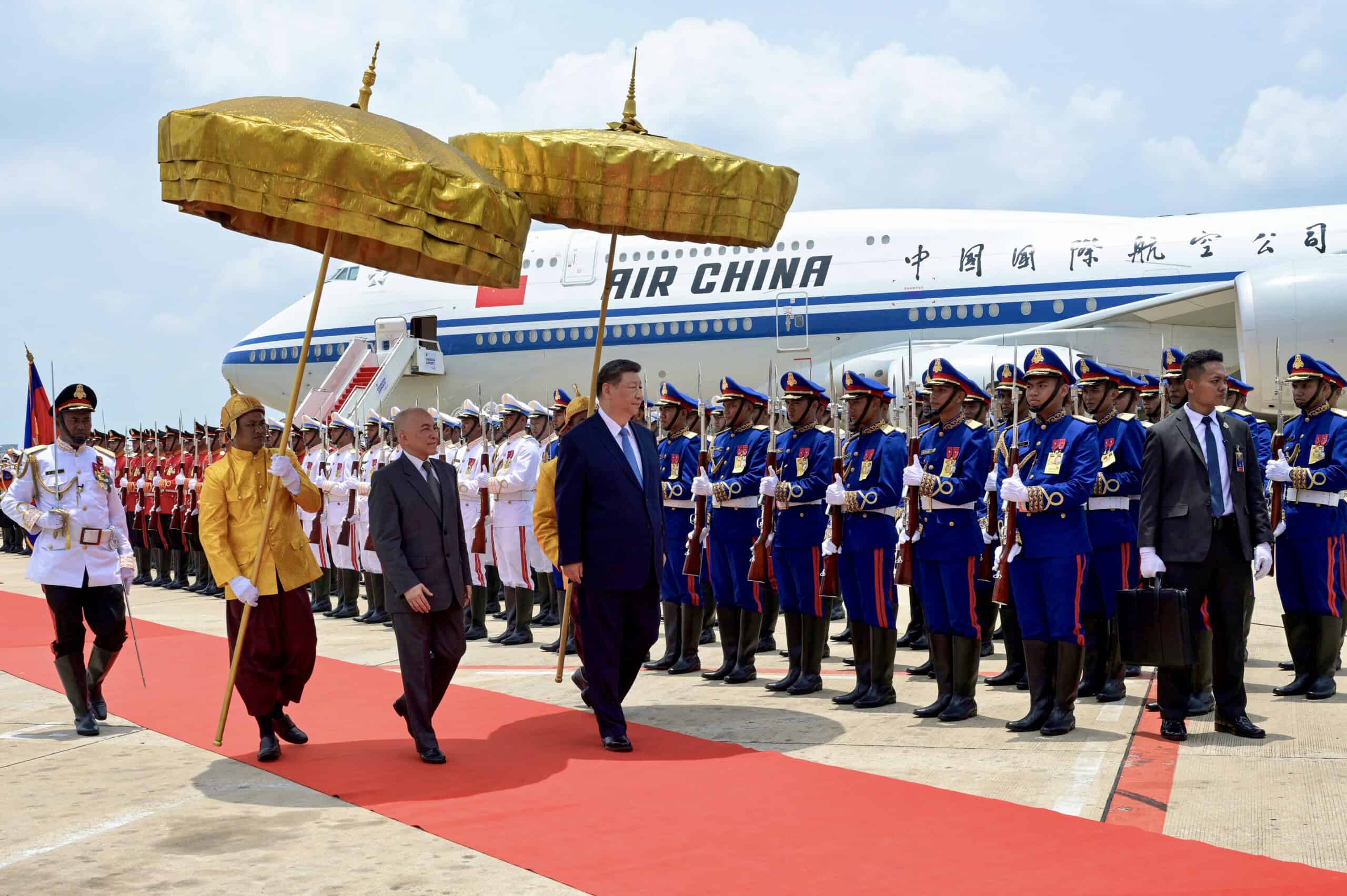
Chinese President Xi Jinping and Cambodia's King Norodom Sihamoni walking past the honor guards upon Xi's arrival at Phnom Penh International Airport, Cambodia, April 17, 2025. Credit: AFP via Getty Images
With a Leninist political system dominated by a strongman leader, China under Xi Jinping makes and manages foreign policy using an institutional structure different from that of other great powers, particularly those in the democratic West.
Steve Tsang and Olivia Cheung's book China's Global Strategy under Xi Jinping, set to release September 1, 2026, by Oxford University Press.
The most striking difference is that the foreign ministry in China is not the pivotal institution
Exclusive longform investigative journalism, Q&As, news and analysis, and data on Chinese business elites and corporations. We publish China scoops you won't find anywhere else.
A weekly curated reading list on China from Andrew Peaple.
A daily roundup of China finance, business and economics headlines.
We offer discounts for groups, institutions and students. Go to our Subscriptions page for details.
Sanctions and export controls failed to contain the rise of Yangtze Memory Technologies Corp. Now the national champion is riding the AI boom to a record IPO.
We use cookies to ensure that we give you the best experience on our website. If you continue to use this site we will assume that you are happy with it.