As Trump Heads to Beijing, Splits on China Widen at Home
The president’s relatively dovish approach to the U.S.’s top rival contrasts with hawkishness in Congress, but may reflect growing pro-China sentiment among younger Americans.
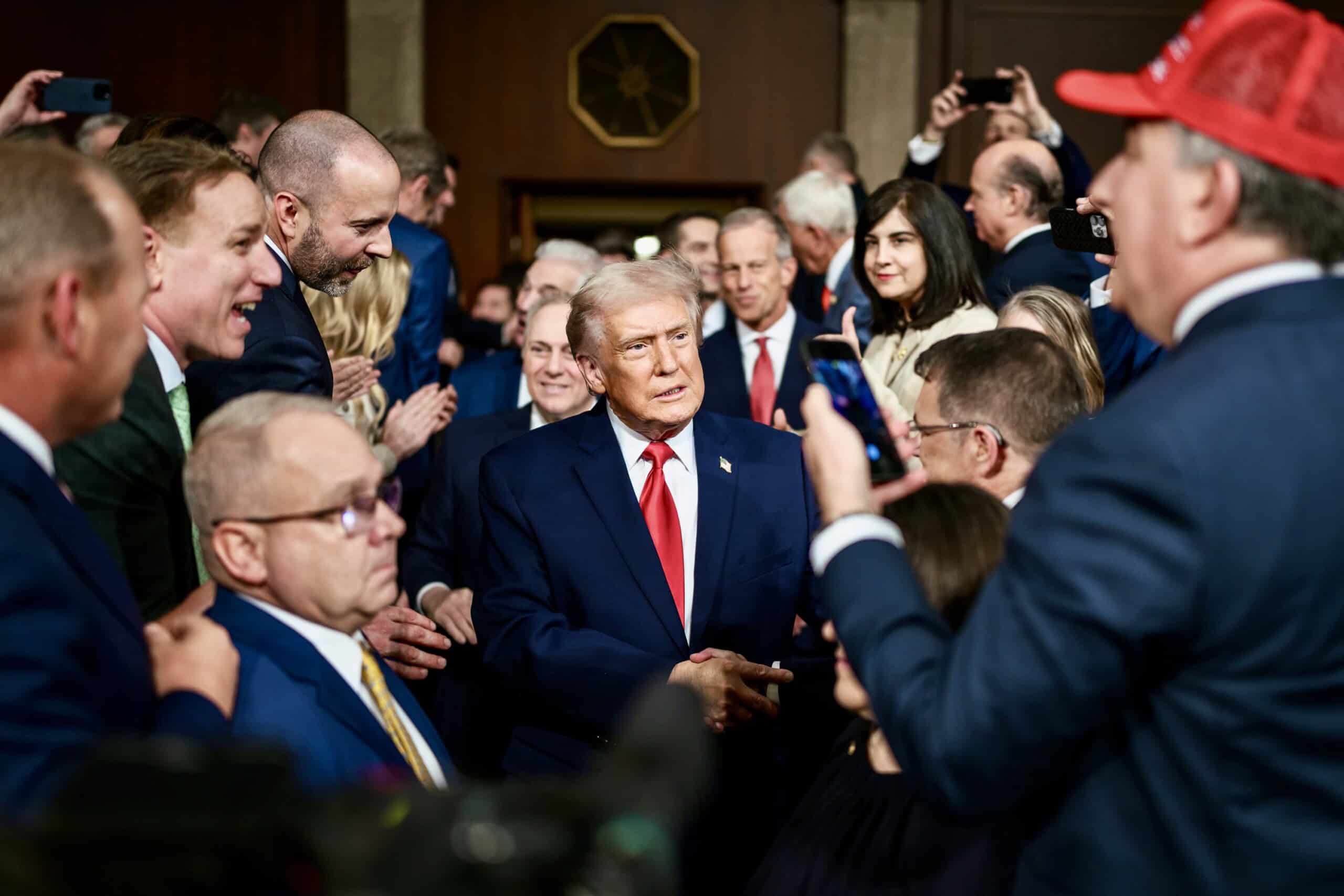
President Donald Trump arrives to the House floor to deliver his State of the Union address, February 24, 2026, at the U.S. Capitol in Washington, D.C. Credit: The White House via Flickr
When Donald Trump returned to the White House last year, China hawks in Washington had high hopes he would resume taking the kind of assertive actions against Beijing that marked the end of his first term.
But as Trump and his team now prepare for a delayed summit with Xi Jinping in China next month, those wishing for more of the same are feeling disappointed. Aside from raising tariffs on China, Trump has introduced few restrictions on Beijing since resuming office last January.
A post on
Exclusive longform investigative journalism, Q&As, news and analysis, and data on Chinese business elites and corporations. We publish China scoops you won't find anywhere else.
A weekly curated reading list on China from Andrew Peaple.
A daily roundup of China finance, business and economics headlines.
We offer discounts for groups, institutions and students. Go to our Subscriptions page for details.
Sanctions and export controls failed to contain the rise of Yangtze Memory Technologies Corp. Now the national champion is riding the AI boom to a record IPO.
We use cookies to ensure that we give you the best experience on our website. If you continue to use this site we will assume that you are happy with it.