Good evening. As Chinese crypto investors plied their trade in the middle years of the last decade, the exchanges that served them also started to lend them money. It was an easy way to boost exchange volumes and fee revenues, and everyone was a winner when the tide was rising. But when prices fell, people trading on borrowed money were forced to liquidate their positions in a hurry, exacerbating market falls. By 2017 the Chinese Communist Party had decided enough was enough and banned the industry, forcing the country’s emerging crypto entrepreneurs to move offshore. As Grady McGregor writes in this week’s cover story, they took their business models with them, extending ever more leverage to ever more traders, who used the exchanges’ loans to buy both cryptocurrencies and new derivative tools known as perpetual swaps or perps. Trading of the latter, often at leverage ratios of 100 to 1 or higher, now dominates the crypto industry and played a central role in its biggest ever crash in October — a crash precipitated by a threat by U.S. President Donald Trump to ramp up his trade war with China.
Our cover story is also the subject of this week’s Wire China podcast.
Other items in this week’s issue: A Sino-U.S. AI conference controversy; The Big Picture on whether Chinese EV makers are the real winners of the U.S. and Israel’s war on Iran; a conversation with Eyck Freymann on defending Taiwan; and China security expert Peter Mattis on the national security risks posed by Chinese-made kitchen appliances.
Want this emailed directly to your inbox? Sign up to receive our free newsletter.

Made in China, Banned in China
The crypto industry has a best friend forever in Donald Trump. The president and his sons Don Jr and Eric are unapologetic benefactors and beneficiaries of the industry. But even Trump’s crypto BFFs, many of whom have received presidential pardons, are not immune from his erratic policy moves. The industry suffered its biggest ever fall in October after Trump unexpectedly reignited his trade war with China. The crash was exacerbated by widespread borrowing by crypto investors — a practice rooted in China but also banned in China.

Chinese Scientists Need Not Attend
In late March a prestigious annual international conference on machine learning moved to bar Chinese companies such as Huawei and SenseTime, citing its concerns about dealing with U.S.-sanctioned entities. Rachel Cheung reports that the conference’s organizers soon reversed the move, blaming it on a misunderstanding, but not before sparking a backlash that is still rippling through Chinese academia. Chinese scientists now worry they could be excluded from future international platforms despite their growing contribution to advances in AI and other fields.
China’s EV Makers Tally Many Benefits, and Some Costs, from Trump’s War on Iran
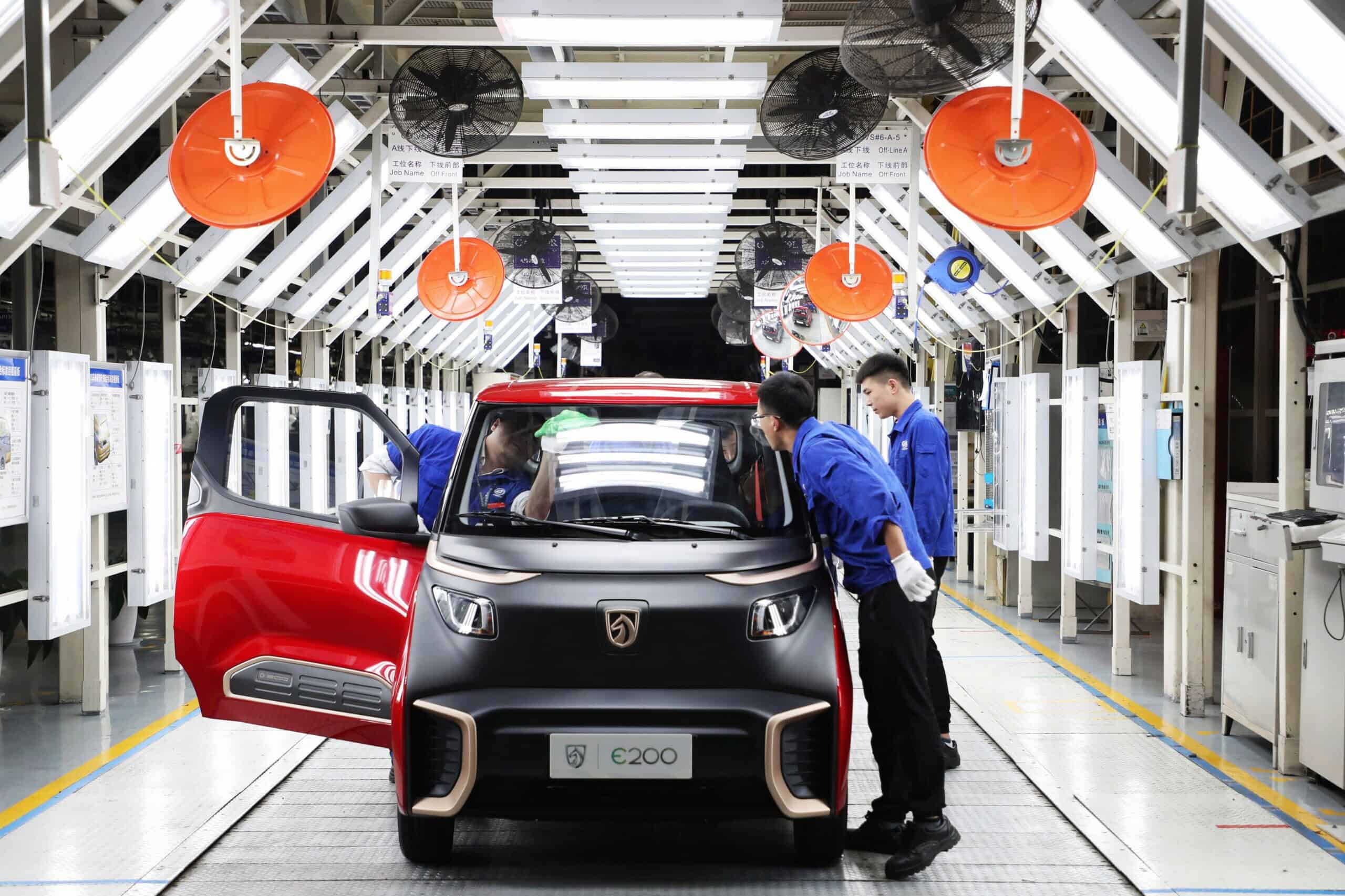
Christmas has come early for investors holding shares in China’s leading electric vehicle makers. There’s nothing like an ill-considered war in the Persian Gulf to drive up global energy prices — and sales of EVs. And the U.S. Navy’s blockade of the Strait of Hormuz, through which Iran’s oil exports to China must pass, provides an additional incentive for Chinese drivers to buy a BYD. But as Savannah Billman writes in this week’s Big Picture, there are some downsides. Chinese EV makers use sulfur in their production process, and half of all maritime sulfur cargoes need to transit — you guessed it — the Strait of Hormuz.
A Q&A with Eyck Freymann

Eyck Freymann, a researcher attached to Stanford University’s Hoover Institution and the U.S. Naval War College, is the author of a new book, Defending Taiwan, which was excerpted in The Wire China’s April 12 edition.
In this week’s Q&A, Paddy Stephens and Freymann discuss the strategies he thinks the U.S. need to adopt to deter Xi Jinping’s multifaceted threats to the independent island state. “Xi has a grand strategy to take Taiwan [while] the U.S. does not have an equivalent strategy to deter conflict,” he argues. “We are barreling towards a crisis, if not a war.”
Eyck Freymann
Illustration by Kate Copeland

The Other Bugs in Your Kitchen
Beware the Internet of Things, Peter Mattis warns in this week’s op-ed, if your things are made in China. “Smart home devices all connect to an Internet created with security as an afterthought,” Mattis writes. “These devices offer new ways to monitor our activities but can also be hijacked by malicious actors, like China’s Ministry of State Security.”
Subscribe today for unlimited access, starting at only $25 a month.