To mark the 25th anniversary of the Hainan spy plane crisis, The Wire China is publishing the second installment of its discussions with people who participated in the dramatic showdown. For Part I see our March 29 cover article.
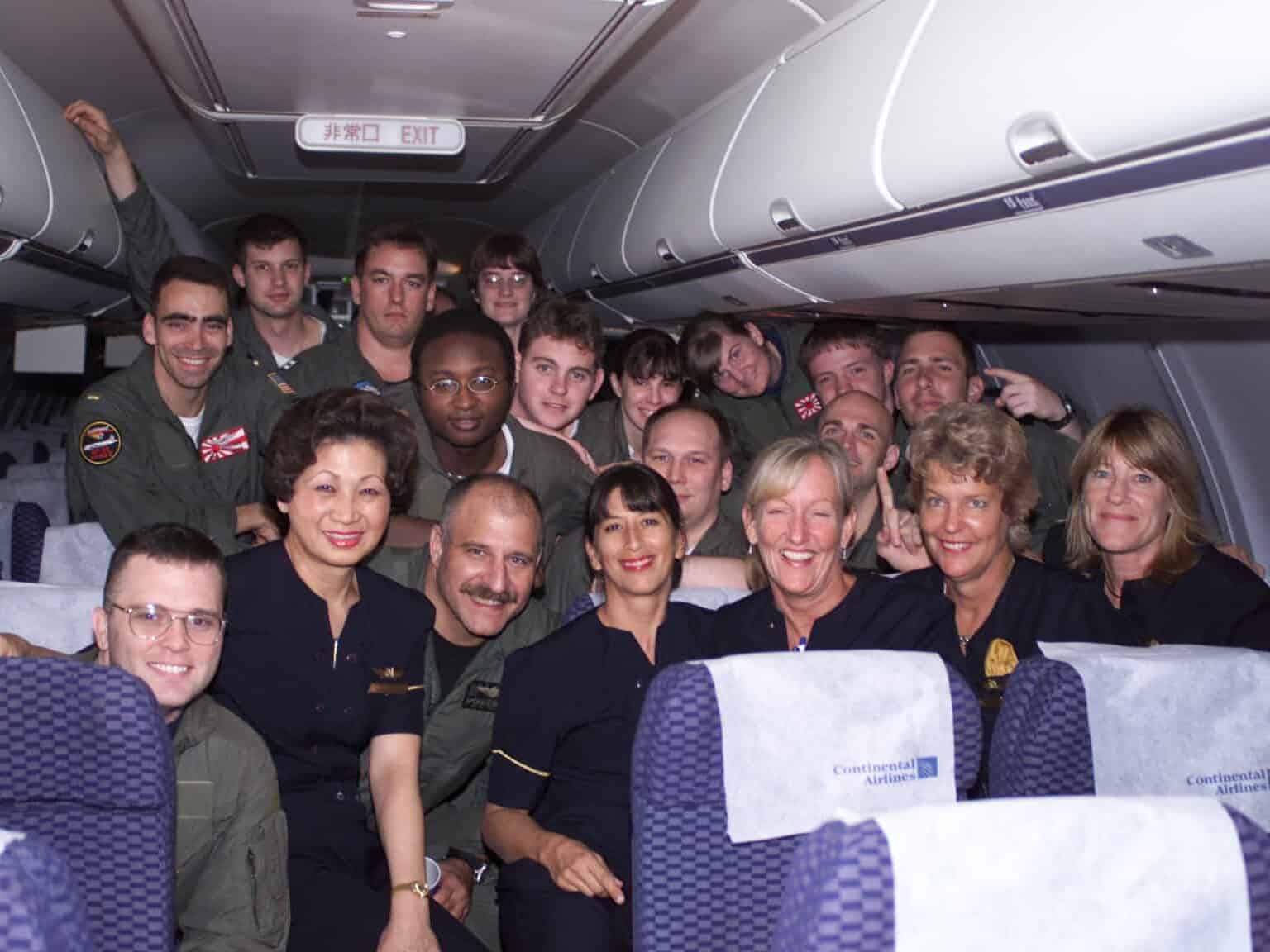
Returning EP-3 crew members pose with their charter flight attendants during the return trip from Hainan, April 12, 2001. Credit: John A Giles via USMC
On April 5, 2001 the Hainan spy plane crisis was entering its fourth day.
The Chinese military and government was engaged in an increasingly desperate and ultimately futile air and maritime search for the pilot of a jet fighter that had collided with a U.S. EP-3 reconnaissance aircraft over the South China Sea.
The spy plane’s 24-member crew was safe after making an emergency landing but were being held by the People’s Liberation Army.
Senior U.S. officials in Washington were strugg
Exclusive longform investigative journalism, Q&As, news and analysis, and data on Chinese business elites and corporations. We publish China scoops you won't find anywhere else.
A weekly curated reading list on China from Andrew Peaple.
A daily roundup of China finance, business and economics headlines.
We offer discounts for groups, institutions and students. Go to our Subscriptions page for details.
Sanctions and export controls failed to contain the rise of Yangtze Memory Technologies Corp. Now the national champion is riding the AI boom to a record IPO.
We use cookies to ensure that we give you the best experience on our website. If you continue to use this site we will assume that you are happy with it.