Restaurant chains were among the first foreign companies to enter China when the country opened up in the late 1970s. These days, however, their Chinese businesses have more often become a liability.
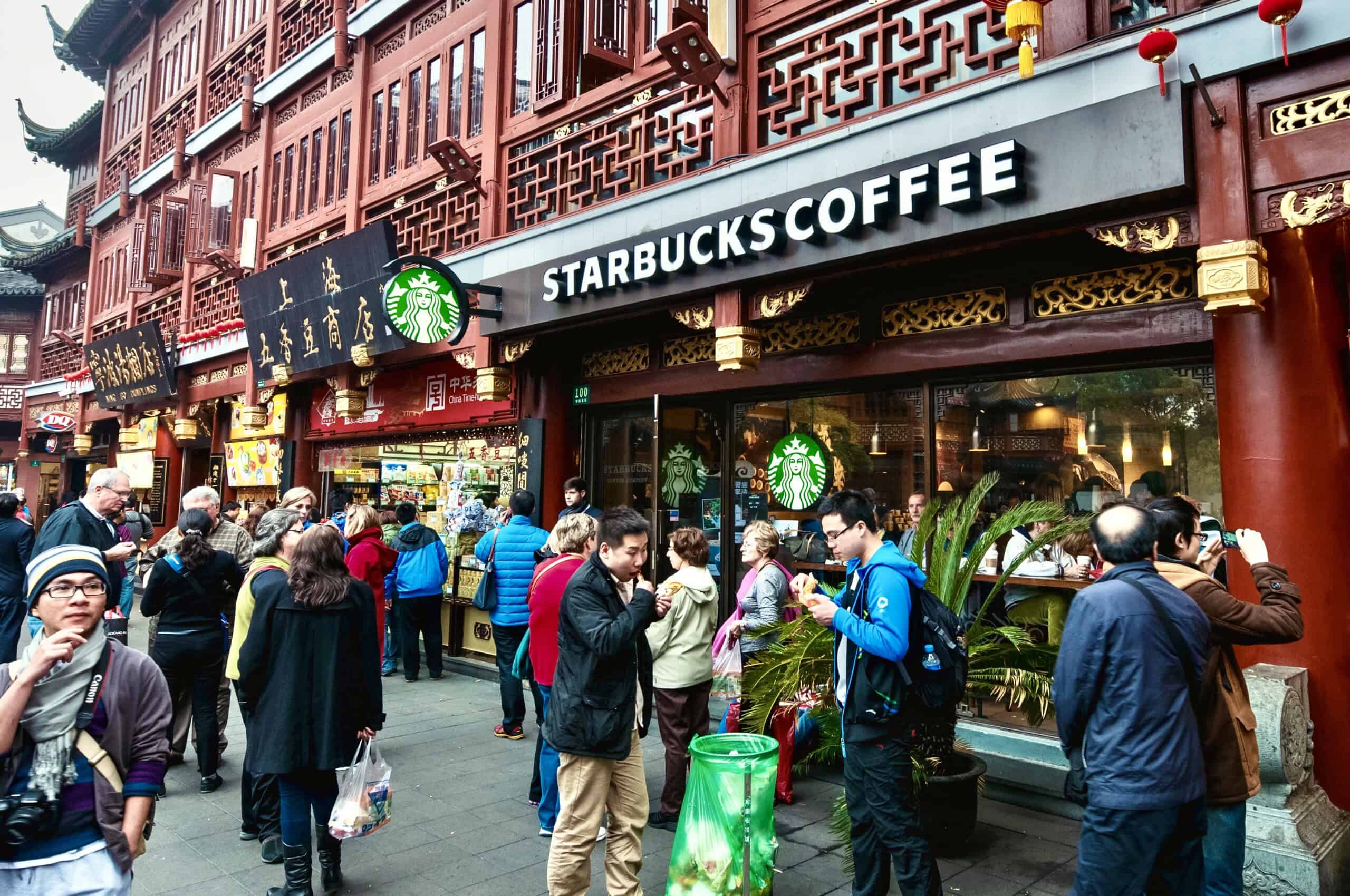
Starbucks’s lackluster sales in China have been a major drag on its share price, which has dropped 14 percent in the past year. Burger King’s nearly 1,500 outlets in the country each made less than half a million dollars last year, a fraction of sales in other major markets.

To compete against emerging Chinese rivals, both are now following a tried-and-true playbook – enlisting a Chinese operator.
Last month, Starbucks announced it is forming a joint venture valued at $4 billion with Boyu Capital, a prominent investment firm founded by Alvin Jiang, grandson of the late President Jiang Zemin. The agreement will give Boyu a 60 percent stake in Starbucks’ operations in China.
Days later, Restaurant Brands International, a New York-listed company that owns Burger King, said it is partnering up with CPE, a private equity firm that is injecting $350 million in fresh capital. The company has backed some of China’s most successful consumer brands, including Pop Mart, the company behind the viral toy Labubu, and Mixue, an ice cream and tea chain that has over 53,000 outlets worldwide.
The hope is that these local private equity firms can bring their resources, connections and expertise to the table, while signaling the brands’ commitment to China in a way that could shield them from geopolitical and regulatory volatility. The question is whether their investments will be enough to turn the Western firms’ businesses around.
“Many Western brands in China are entering a new chapter of their development,” says Jason Yu, managing director of CTR Research, a market research firm in Beijing.

“They either need to think about how they are going to use China’s infrastructure, logistics and ecosystem to compete effectively with domestic brands,” Yu adds. “Or some brands, especially medium or small sized companies, are considering phasing out or changing their operation model altogether because they do not have the right competency to win on their own.”
Few multinational food and beverage companies are recording the same growth and profitability in the world’s second largest economy as they used to. China’s economic slowdown and weak consumption growth are partly to blame. But foreign companies are also being outmaneuvered by more savvy Chinese players.
China is a very tough market with very low pricing and enormous deflationary pressures. You have to wake up every morning in China with the assumption that your competitors are out to get you.
Joel Silverstein, founder of the consultancy Canyon Spring Advisors
While Starbucks’ growth in the country has stagnated in recent years, Luckin, one of its main competitors, has expanded at the rate of one new store per hour this year. It recorded a 50 percent year-on-year jump in revenue in the latest quarter on the back of selling coffee with exotic flavors, such as a pineapple americano that typically costs around 15 yuan ($2.1).

Burger King, on the other hand, has failed to find a niche in the Chinese market. In major cities like Shanghai and Shenzhen, it struggles to compete against legacy companies such as McDonald’s; in lower-tier cities, it is losing ground to domestic burger chains such as Tastien and Wallace.

“They destroyed one hundred million dollars of capital by keeping on building stores when the economic model didn’t work,” says Joel Silverstein, founder of the consultancy Canyon Spring Advisors, who reviewed Burger King’s business in China on behalf of some private equity firms several years ago. “It’s a distress sale.”
Trimming exposure to China is part of a larger trend across the global retail sector.
Triumph, a Swiss lingerie label, announced last month that it will exit the Chinese market by the end of the year. General Mills, the U.S. owner of Häagen-Dazs, is mulling the sale of its 270 ice cream stores in China, according to a Bloomberg report, as consumers shift to Mixue’s 2-yuan soft serve. Decathlon, the French sporting goods retailer, is seeking a buyer for a 30 percent stake of its operations in China, Bloomberg reported in April.
Nearly half of the retail and consumer sector respondents to the latest survey by the American Chamber of Commerce in Shanghai saw their revenue decrease in 2024.

When it comes to food and beverages, 64 percent of Chinese consumers prefer domestic brands, according to a recent survey by consultancy Accenture, up from 57 percent in 2021. Only 10 percent of respondents now favour international brands, down from 28 percent four years ago.
“China is a very tough market with very low pricing and enormous deflationary pressures,” says Silverstein. “You have to wake up every morning in China with the assumption that your competitors are out to get you.”
That is why partnering with a local operator can come in handy. “Many international brands are still headquartered in America or Europe, where decision making is relatively slow,” says Yu, of CTR Research. A domestic operator, on the other hand, can react faster to the competition as well as shifting consumer trends, he says.
This strategy has worked well for some of the biggest names in fast food.
…local partners do more than run stores efficiently. They help foreign brands navigate policy headwinds, manage compliance exposure, and signal alignment with China’s long-term development priorities.
Han Lin, China country director at The Asia Group
Yum China, which has run KFC in China since it opened its first store in Beijing in 1987, separated from the Kentucky-based Yum! Brands in 2016 and listed independently on both the New York and Hong Kong exchanges.
With a free rein over the business, Yum China could better cater to local palates: It has, for instance, introduced KPRO, a sub-brand that offers energy bowls and smoothies to health-conscious consumers; as well as Pizza Hut Wow, a low-cost version of the pizza chain designed for lower-tier cities.
Such flexible store formats have also helped Yum China expand rapidly. The company has grown from 7,500 outlets in 2016 to over 17,500 by the latest quarter, and aims to reach 30,000 outlets by 2030, its chief executive officer Joey Watt revealed at an event last month.
Others have followed suit. Sandwich chain Subway has found new momentum since Fu-Rui-Shi, a Chinese company backed by private investors, took over its operations in 2023 as an exclusive franchisee. It added 500 stores in the last two years, doubling its count. DPC Dash, the operator of Domino’s Pizza in China, also went public in Hong Kong in 2023. The company recorded a 27 percent jump in revenue in the first half of this year, thanks to the opening of 190 new stores, successful social media campaigns, and creative offerings like durian and chocolate volcano pizza.

In the right hands, Starbucks and Burger King could find a similar new growth trajectory in China.
“Coupling Starbucks’ operational excellence with an investor in China who has the financial resources, nuanced market insight and network to push down into more of those second, third, or fourth-tier cities, that is a smart strategy for both companies,” says Jessica Gleeson, a former executive with Starbucks China.
“In today’s climate, local partners do more than run stores efficiently. They help foreign brands navigate policy headwinds, manage compliance exposure, and signal alignment with China’s long-term development priorities,” says Han Lin, China country director at The Asia Group, a consultancy based in Washington.
It is an attractive proposition for Chinese private equity firms, Han adds, which can acquire name brand assets at a time when the cost of financing in renminbi is near an all time low.
Selecting a partner, however, is just the first step. To regain the favor of Chinese consumers, the two brands will need to find new ways to differentiate themselves from their competitors.
“For any joint venture, the success rate is always fifty-fifty,” says Yu. “It really depends on whether the Chinese partners will dance well with their international counterparts.”

Rachel Cheung is a staff writer for The Wire China based in Hong Kong. She previously worked at VICE World News and South China Morning Post, where she won a SOPA Award for Excellence in Arts and Culture Reporting. Her work has appeared in The Washington Post, Los Angeles Times, Columbia Journalism Review and The Atlantic, among other outlets.