As a senior climate advisor to the U.S. Department of Defense from 2021 to 2023, my major role was integrating climate and energy concerns into the National Defense Strategy and other strategic documents. President Joe Biden saw China as the pacing threat against which America’s grand strategy had to prepare, and my office focused on how climate impacts would impact allies and partners. That, increasingly, was seen through the lens of strategic competition with China.

After my government service ended, I pivoted to working more on critical minerals, batteries, electric vehicles and U.S.-China relations, and participated in several unofficial “track two” dialogues between the two countries. On one of those dialogues, held in China in 2024, I had a chance to tour the operations of Chinese automaker NIO, battery maker Gotion and VW’s EV factory in Hefei, capital of Anhui province and an automotive centre in the world’s largest car market.
The level of sophistication of those factories was eye-opening. I had also heard that Xiaomi had a massive new factory near Beijing, so made it a priority to see it on another visit to China last month to better appreciate what the U.S. auto sector potentially faces, even if Xiaomi is not yet exporting outside of China.
After presenting a paper at an academic conference on the escalating economic arms race between the U.S. and China, I toured Xiaomi’s sprawling EV complex in southeast Beijing.
Assembly/testing of Xiaomi’s SU7 electric vehicle in the Xiaomi factory in Beijing. Credit: Lei Jun via X
I am not the only American impressed — and worried — by what I saw. Ford CEO Jim Farley liked Xiaomi’s SU7 sports car so much that he flew one back home to the U.S.
Given the importance of transportation to greenhouse gas emissions, the EV sector has become a focal point for policy analysts like me. Visiting Xiaomi was an opportunity to compare the trajectory of the auto sector in China and the U.S. Like my 2024 visit to the factories in Hefei, I was struck by Xiaomi’s advances in manufacturing and marketing, which makes me fear for the U.S. auto sector.
Everything about the factory and the cars Xiaomi makes there signals a confident company ready to further transform the auto sector. The manufacturing and design processes, by which Xiaomi and its partners draw inspiration from other companies but then improve upon them, suggests learning and innovation, not merely copying.
It is true that of the hundreds of EV makers in China, relatively few of them are profitable. Mighty BYD, China’s top selling EV car maker, is grappling with slowing sales in China as the market becomes saturated. But even with the slow down, EVs and hybrids accounted for more than 60 percent of new vehicle sales in May and June, according to the China Passenger Car Association (CPCA).
FROM PHONES TO PHONES WITH WHEELS
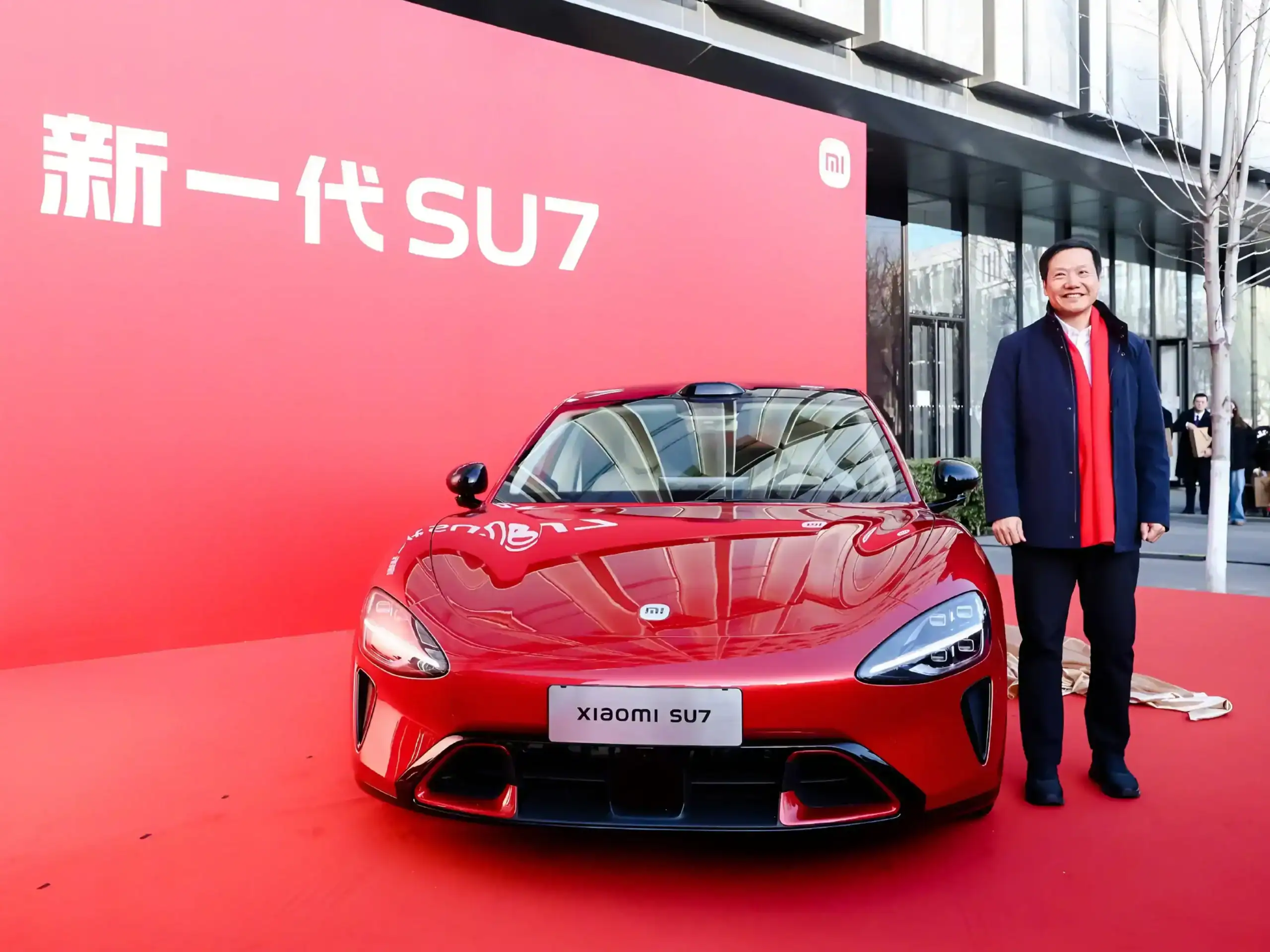
Xiaomi’s business is mainly phones and other appliances. In March 2024 Xiaomi launched the SU7 (pronounced “sue 7”, not “s-you 7”) and quickly became one of China’s top domestic automakers. By the third quarter of 2025, buoyed by its existing supply chains, Xiaomi’s EV unit was claiming it had become profitable, much faster than other Chinese car companies or Tesla.
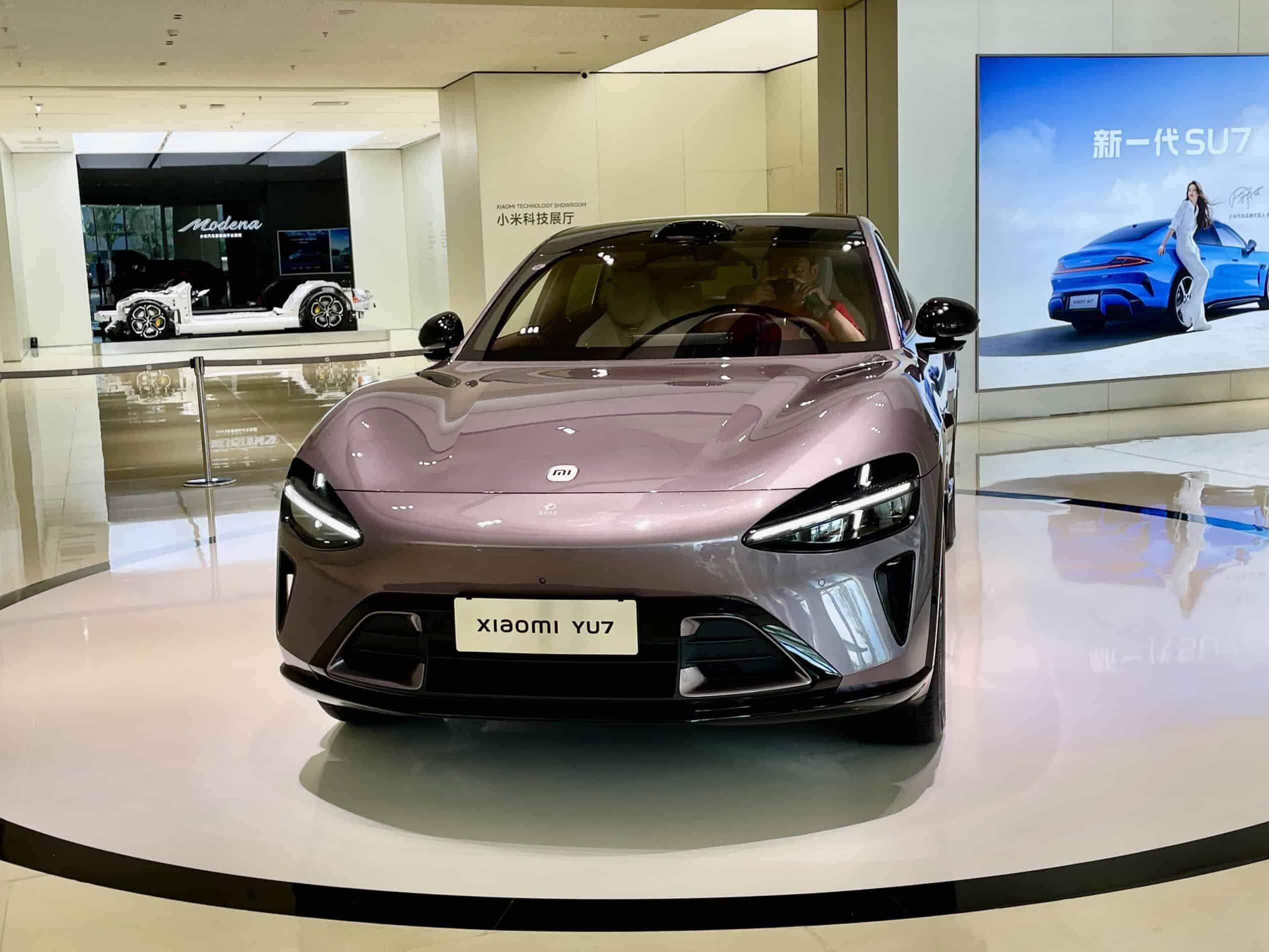
Xiaomi only has two models — the racy SU7 sedan and a slightly fancier coupe, the YU7. They also have versions of these models that are a little more expensive, including the SU7 Pro, SU7 Max and SU7 Ultra. Xiaomi’s cars are jokingly referred to as Mi-Shijie, Shijie being the Chinese name for Porsche.
But they are not priced like Porsches.
China’s scale of manufacturing — and the vast supplier ecosystems this sustains — make China arguably the only country where a mobile phone maker can try to become an EV maker as well.
Xiaomi’s SU7 sells for about 210,000 yuan ($30,000). That’s a lot of money for many Chinese buyers, far more than say BYD’s $8,000 entry-level Seagull. But the SU7’s sleek styling and functionality has made it a hit with upscale younger drivers. When a refreshed model of the SU7 was launched earlier this year, the initial 15,000-unit inventory reportedly sold out in 34 minutes.
The entry level SU7 has a range of 700km (435 miles); more expensive models have longer ranges. Xiaomi says its cars can recharge 350km in just 15 minutes. The entry-level SU7s use BYD’s lithium iron phosphate (LFP) batteries, while the more expensive ones use nickel manganese cobalt batteries from CATL.
When Xiaomi launched public tours of its Beijing facility late last year, some 100,000 people entered a lottery to join one of 200 tours. The Chinese families I observed were like kids in a candy shop, anxious to see Xiaomi’s automotive technology.
Even amidst public interest in Xiaomi’s cars, there have been a few concerning incidents. Xiaomi’s cars have had a similar problem to Tesla. They were initially equipped with door handles that were flush to the car and controlled electronically. There have been a few high-profile crashes, including one in which an SU7 driver burned to death after a collision. Passersby were unable to rescue him after the electronic door handles failed. China’s industry ministry subsequently decreed that all EVs must also be equipped with mechanical door handles. These episodes do not appear to have dampened the Chinese public’s enthusiasm for Xiaomi and other EVs.
Xiaomi’s attempt to take on Apple and Tesla seems like one of those only-in-China stories. China’s scale of manufacturing — and the vast supplier ecosystems this sustains — make China arguably the only country where a mobile phone maker can try to become an EV maker as well. Western economies have not yet demonstrated that they can — individually or collectively — fashion industrial policies to compete with China.
China Inc also benefits from the broad policy continuity provided by an entrenched ruling party that has taken a long-term view on industrial development and has actively supported the growth of new sectors over the past ten to fifteen years. At the same time, as Kyle Chan has argued, the Chinese government has also been willing to experiment and abandon policies that are not working.
By contrast the U.S. has been badly served by policy inconsistency, particularly with respect to clean technologies. Climate policy has been subject to partisan policy swings for decades, but such volatility in industrial policy became more destructive of private sector value of late. Biden-era financial incentives for renewables and EVs encouraged private-sector investment — only for the Trump administration to suppress those sectors and undermine their investments.
THE SHOWROOM AND FACTORY
Xiaomi’s showroom had the two models and related variants that you could sit in and try out features such as voice-activated lowering of the hood or the back seats that fold into a sleeping space. The frunk (“front trunk”) has an extra storage unit that can function as a cooler with a drain outlet for when the ice has melted. An enthusiastic staffer said you could go fishing and store live fish in it.
A mock-up room filled with Xiaomi appliances showed how the internet of things could be controlled from the SU7. While driving home, turn on your Xiaomi TV or air purifier — or feed your fish in your Xiaomi fishtank if you forgot to before leaving. So many possibilities. It felt a little like Pimp My Ride, the popular MTV program that restored and customized participants’ cars. I’m not sure I would want all that functionality but the automaker’s catering to customers — rather like “fan service” elements added to TV shows and movies to hook viewers — was impressive nonetheless.
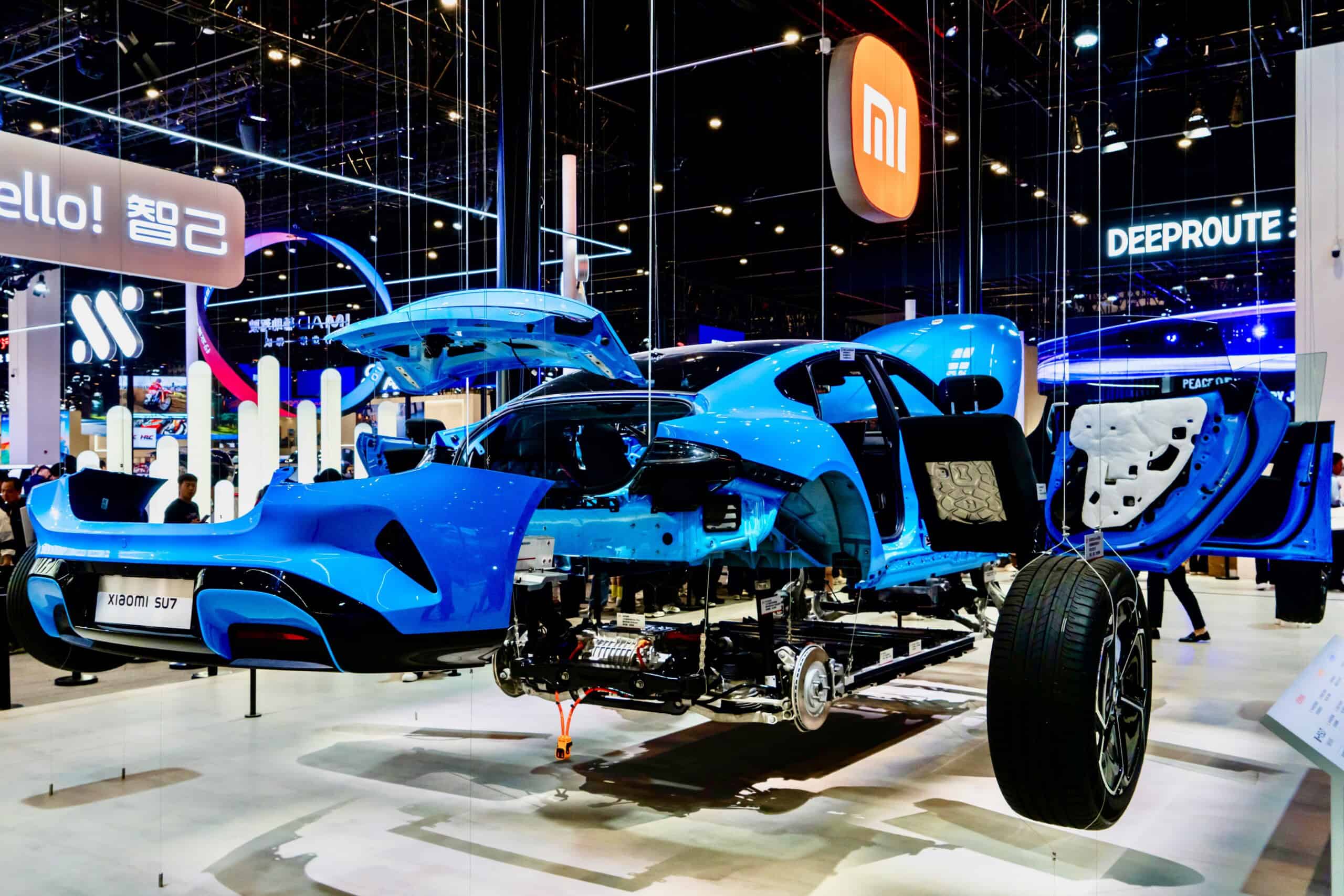
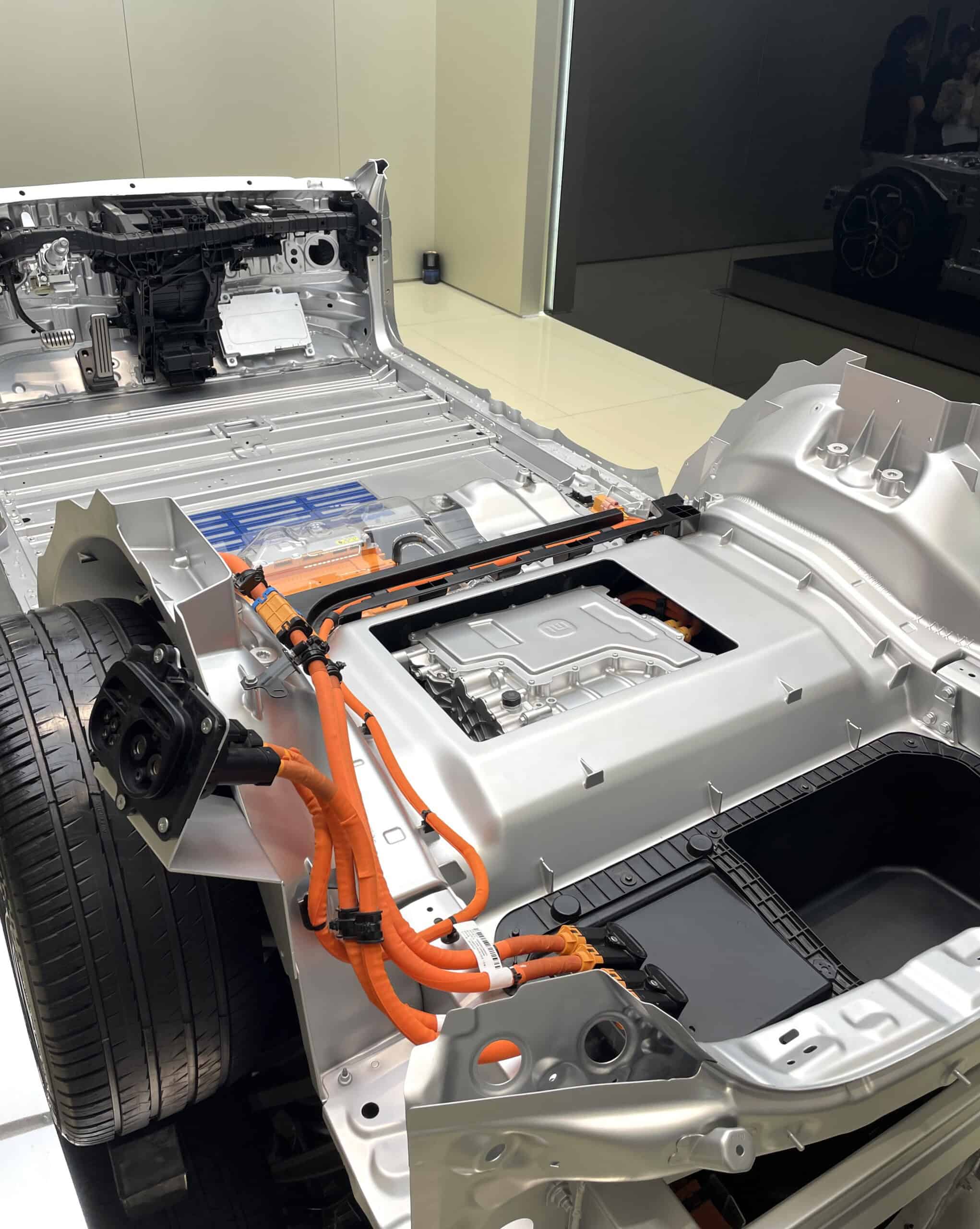
They walked us through a deconstructed car, piece by piece, proud of the various accolades, design specs, awards and patents for the motor, the specialty casted body, the batteries embedded in the chassis, the strong alloys used in the frame.
Most of the body is cast in a single piece — the so-called “gigacasting” model that Tesla pioneered in Shanghai and which has been copied by other EV makers as well.
Gigacasting large body pieces reduces the number of parts, which in turn reduces production time and the weight of the car. But it also can lead to much more expensive repairs if the car body is damaged during a collision. To reduce the chances of this and protect the SU7’s core shell containing the battery, its bumpers are made with lightweight but impact-resistant materials.
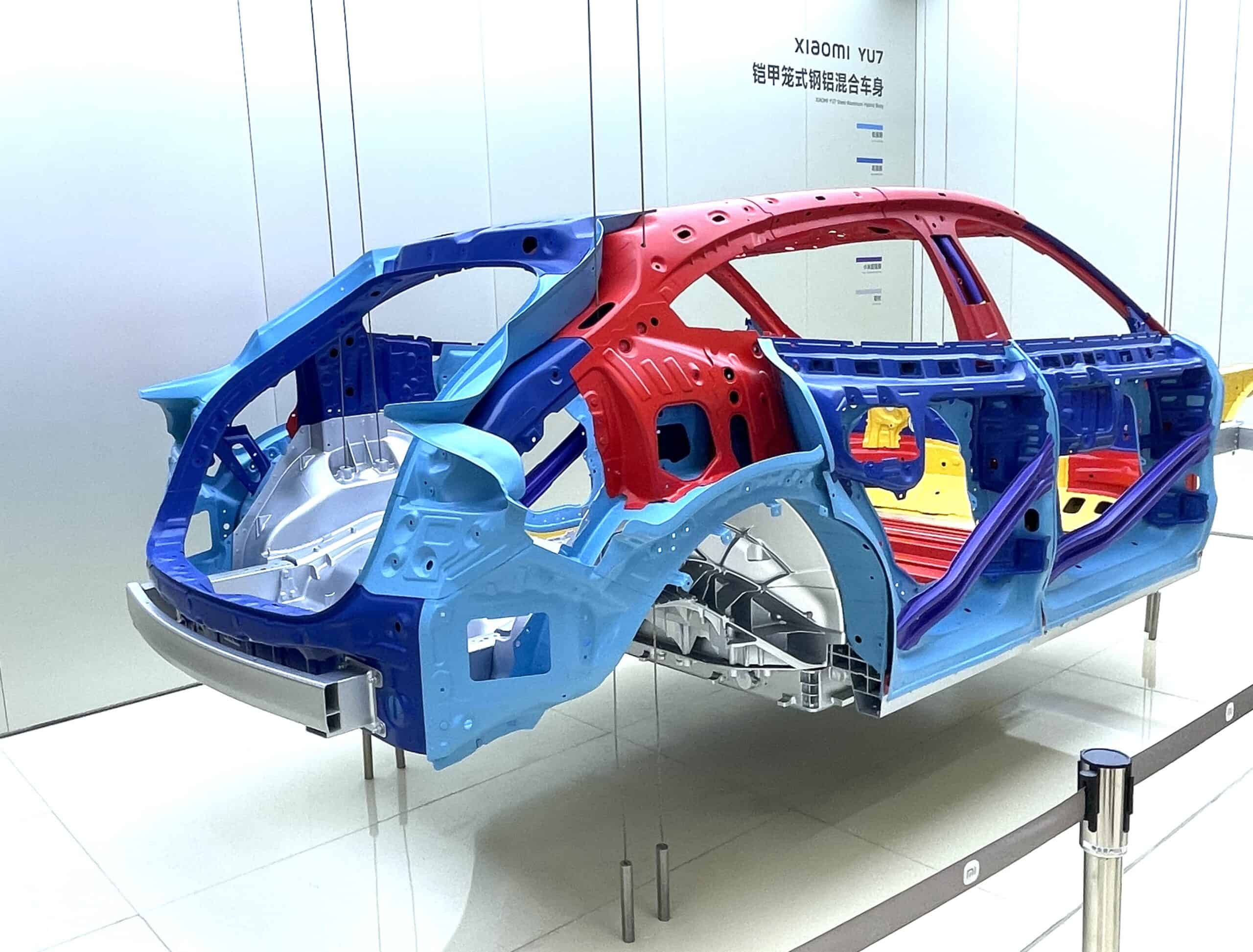
Xiaomi was happy for people to photograph all the cars in the showroom and all the specs of the car parts, but not its staff members.
Rules were stricter for the factory. All phones had to be put in a sealed pouch before entering.
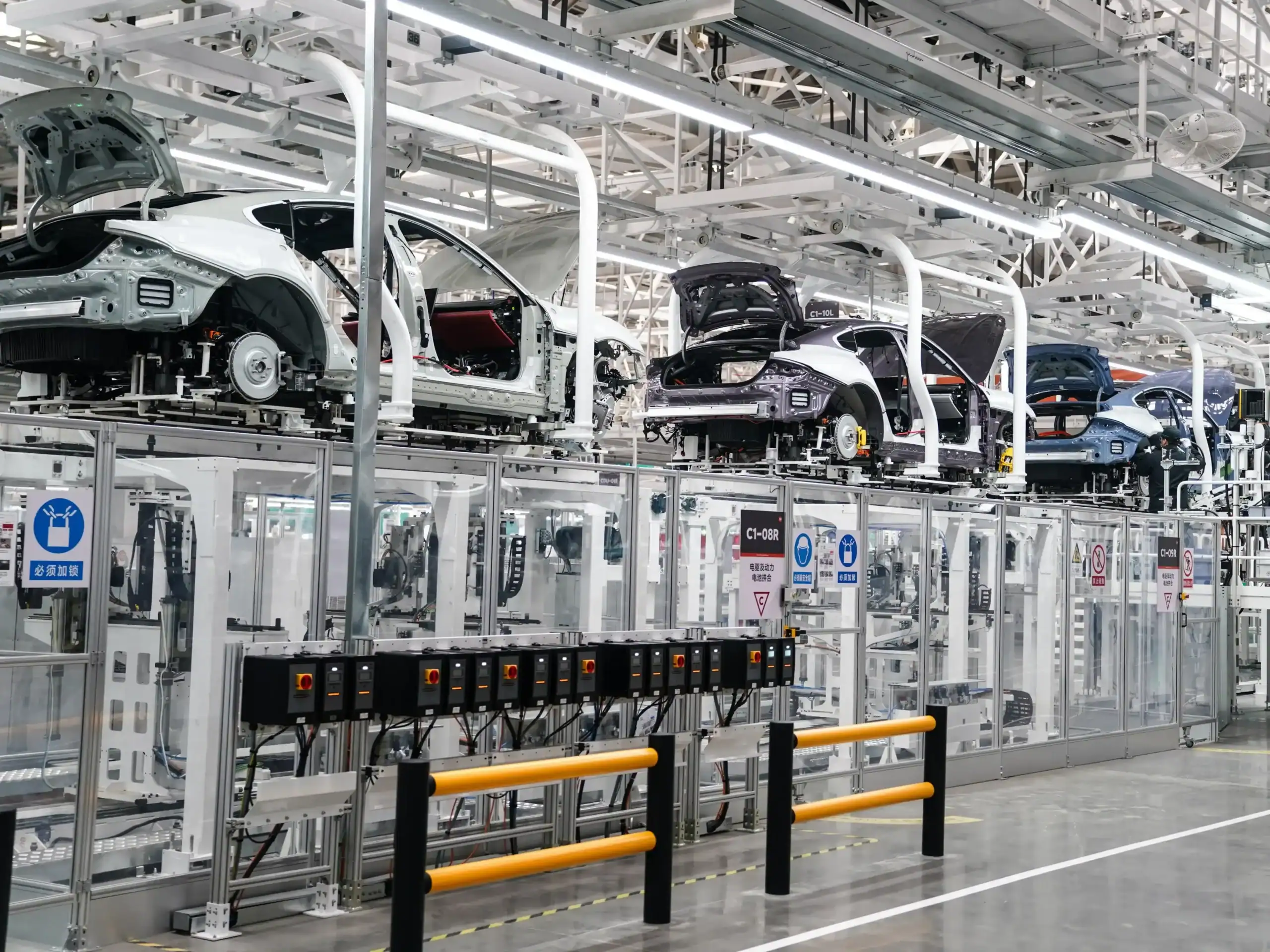
Phase 1 of the factory complex is built and operational; phases 2 and 3 are under construction. Some 10,000 people work at the factory, though in the casting and door assembly area that we visited there were only about 150 employees.
Like the NIO factory in Hefei, Xiaomi’s was heavily automated. Hundreds of mobile robots lift heavy parts and ferry them around the shop floor. All are equipped with LiDAR motion sensors to avoid collisions. Several hundred large robot arms assemble, weld and attach car doors to frames. The factory can produce a finished car every 76 seconds.
We passed by the hypercasting machines where the core of the chassis is die-cast from molten aluminium poured into a mold in a single piece. The machines have a clamping force of 9,100 tons, compared to Tesla’s 6,100t gigacasting system. The higher the clamping force, the greater the frame’s precision and structural integrity.
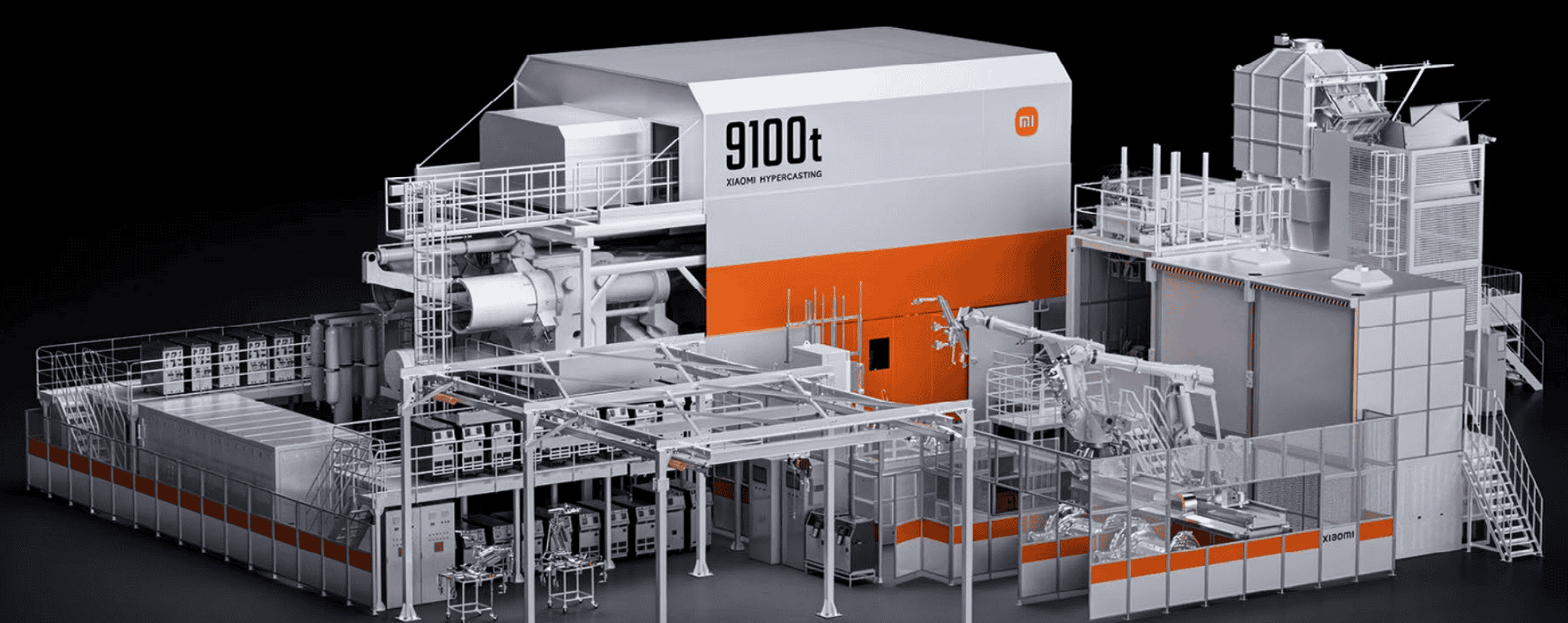
As with many other parts at the factory, Xiaomi was able to scale up its casting operations through partnerships. Its proprietary hypercasting system was developed in partnership with Haitian, a leading die casting manufacturer based in Ningbo.
IS THE U.S. A MARKET TOO FAR?
We were not able to test drive a SU7 but we did get a ride in one. The driver first activated our seats’ back massage feature. He fiddled with the sunroof’s color tint. The vehicle’s self-driving system changed lanes in traffic, performed a U-turn and parked.
The car goes from 0 to 100 km/hour in a few seconds and can take photos from its windscreen.
Given the affordability and quality of Chinese EVs like those from Xiaomi, these cars could go over well in the U.S. Perhaps too well, undercutting Western automakers who fear China’s advantages will put them out of business.
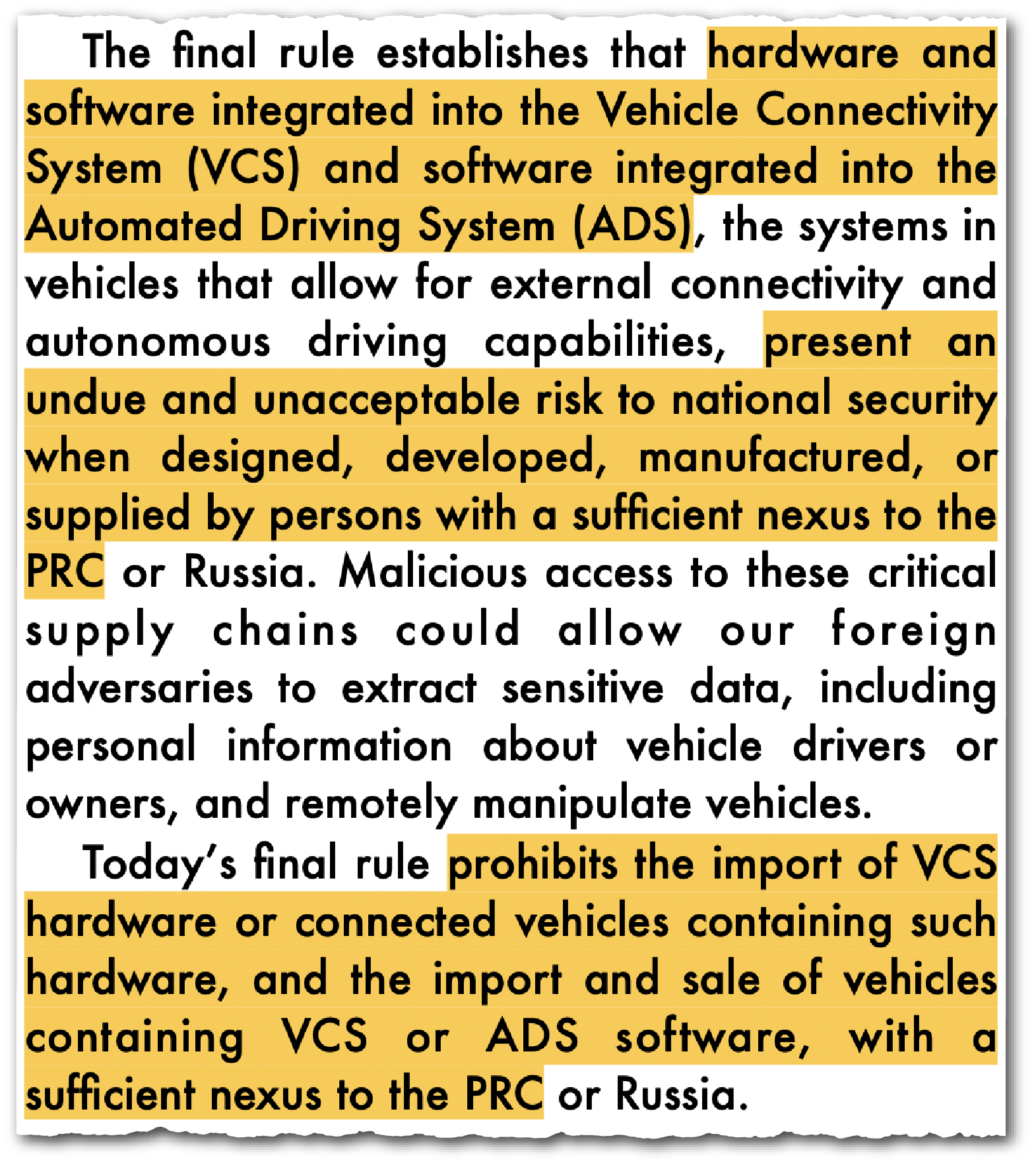
But the U.S. government is concerned about the perceived security risks of internet-connected vehicles — that they could be used as surveillance tools given all the data they collect or even be remotely controlled by the Chinese government through back door software access. There were similar Chinese fears about Teslas until it reached an agreement in 2024 to use Baidu’s mapping platform.
The Biden administration’s “connected vehicle rule”, issued in January 2025, effectively banned Chinese vehicles from American roads, with prohibitions on software starting in 2027 and hardware kicking in 2030.
Even before the connected vehicle rule was issued, virtually no Chinese vehicles were being sold in the U.S. One exception was Polestar, owned by Chinese automaker Geely and manufactured in South Carolina. The Commerce Department, however, recently denied Polestar a permit to sell in the U.S., which Polestar said would force it to exit the market.
Polestar’s sister company Volvo, also owned by Geely and manufactured at the same factory, did get permission to continue to operate.
It is not clear what could allow Chinese automakers to comply with the connected vehicle rule, though one option could be relying on American software providers or storing customer information in the U.S. (as TikTok initially proposed as a means to allay concerns about data privacy).
There are good reasons for the U.S. to find a way around this self-imposed roadblock. Chinese firms like CATL and BYD have manufacturing capabilities that American automakers lack, and Ford has a licensing agreement with the former to make LFP batteries.
A number of analysts, myself included, believe the U.S. should pursue more such licensing agreements and joint ventures to learn from Chinese manufacturers. But it is not clear that is politically possible right now, despite President Trump’s professed support for Chinese auto investments in the U.S.
It’s not clear U.S. automakers will return to EVs until the U.S. federal government recognizes that they are revolutionizing the auto sector. If the U.S. wants to have a viable auto sector, they must embrace EVs.
Xiaomi has recruited many Western engineers and designers from BMW, Porsche and Tesla, among others. Overall, however, I was surprised by the relatively small number of workers at Xiaomi’s Beijing factory — and also at the Hefei companies I visited in 2024.
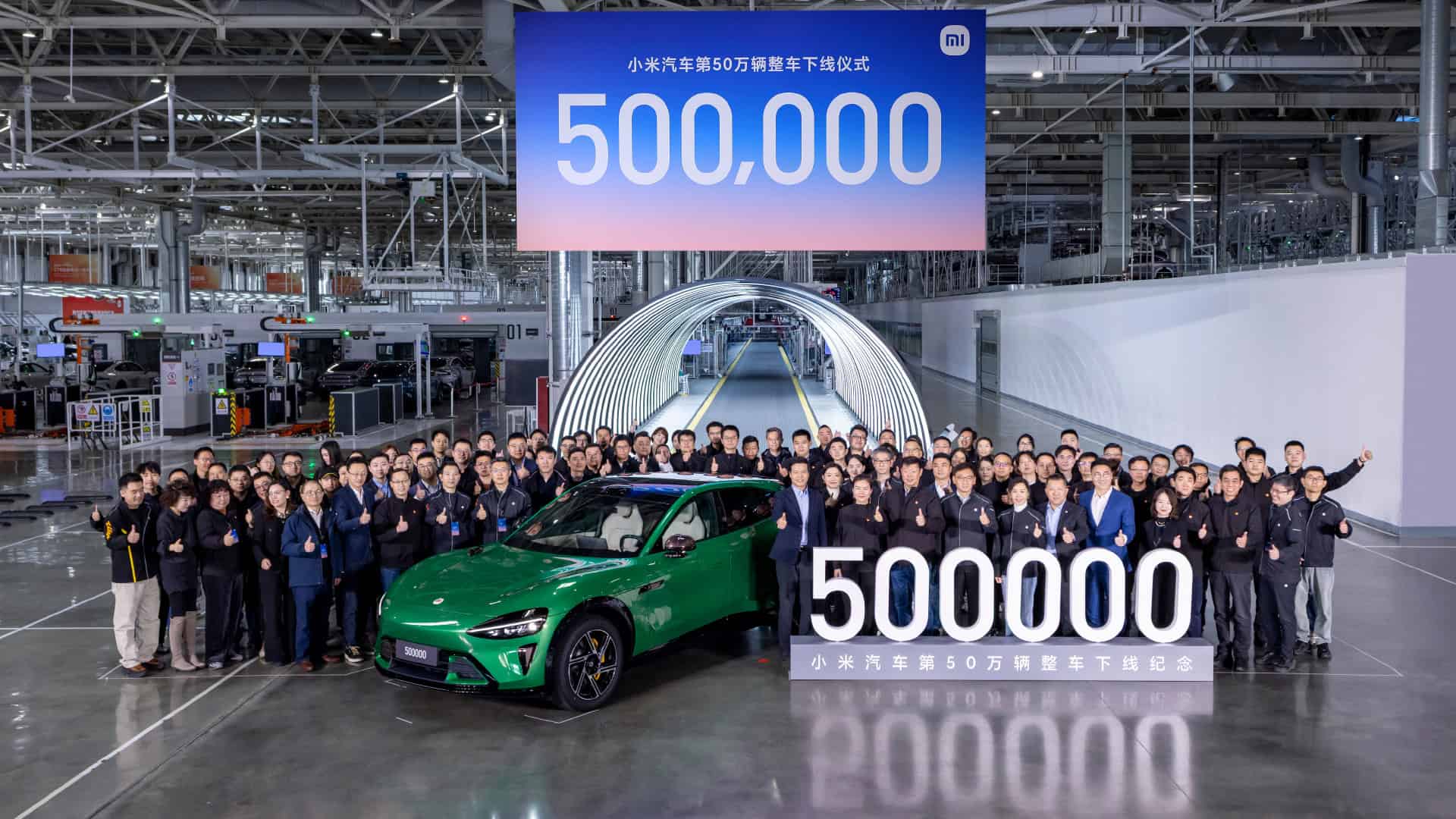
The products that come out of those facilities are not based on cheap labor. That is not the source of China’s advantage. The level of technical sophistication, with robotic welding and precision manufacturing, was a revelation. On this trip, I was impressed by Xiaomi’s engineering flair and design aesthetic that had echoes of Apple’s success.
Some observers think weak domestic demand and hyper or destructive competition (so-called “involution”) in China will ultimately bring a financial reckoning. Small EV automakers may be in trouble, particularly those that are selling less than a million units a year. Though Xiaomi only sold 411,000 vehicles in 2025, demand for its products has been robust and growing.
But my conversations with China-based experts suggest that the Chinese central government and provincial governments will prevent that from happening. They have too much invested in the success of local automakers to let many of them go under, though the central government may ultimately wish for some consolidation in the sector as we have seen in other sectors like solar.
Xiaomi received incentives from the Beijing municipal government, which like so many other local governments wants to support high-end automobiles with innovation funding support.
Other firms such as NIO have received cheap land and power from their local governments, and state support has likely been critical to that company’s longevity thus far. But unlike most China EV start-ups, Xiaomi was an established and profitable manufacturer of a variety of consumer products; it had other revenue streams it could rely on.
TIME TO ACT
Transportation is a leading source of greenhouse gas emissions in many countries. The transition to electric vehicles is a key feature of decarbonization. The internal combustion engine (ICE) must eventually be displaced.
Fortunately, electric vehicles are now more affordable than ever and they are, in my opinion, better cars than ICE vehicles. Even before the U.S. war on Iran caused oil prices to spike, consumers around the world were flocking to cheap Chinese-made EVs. That has only accelerated in recent months.
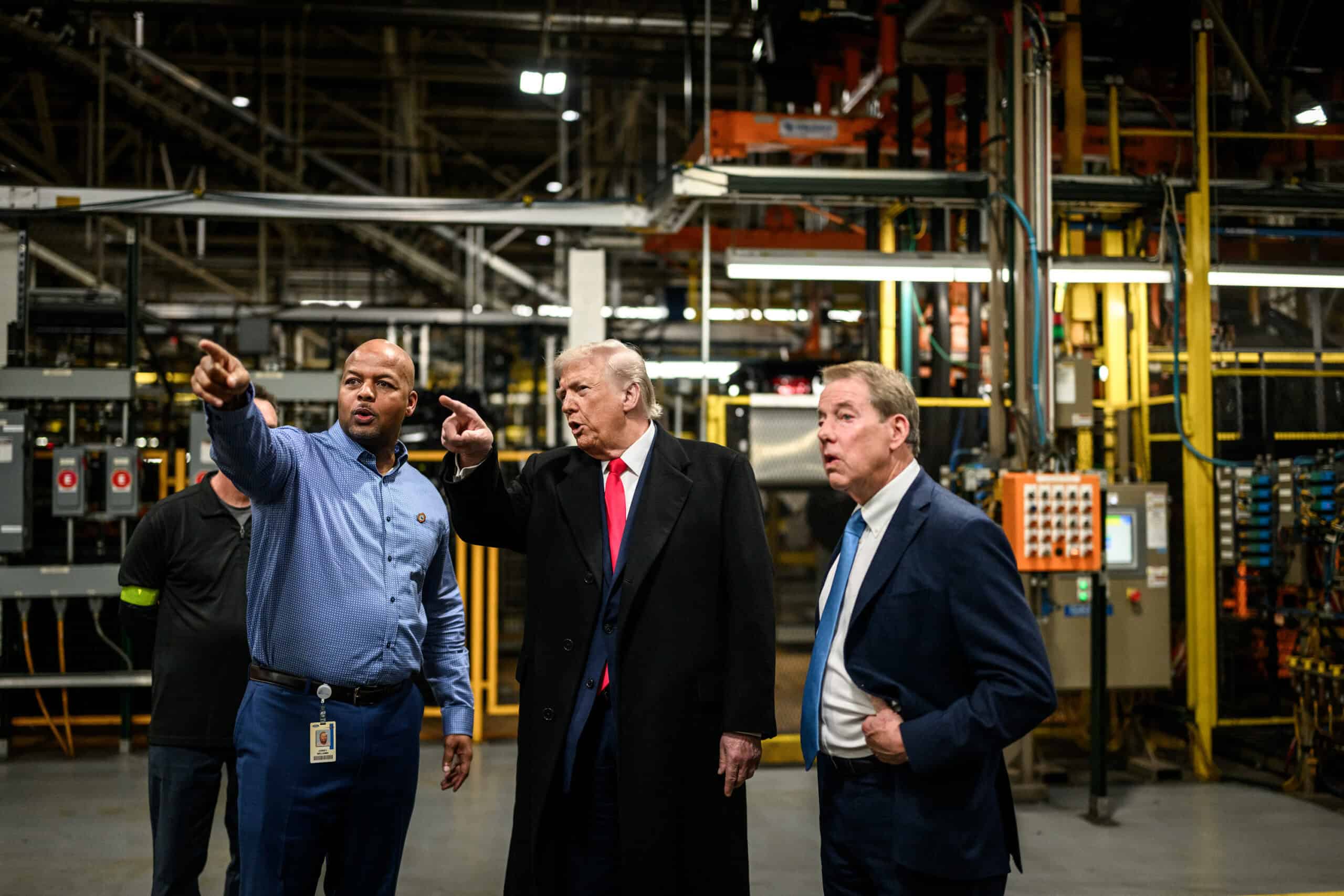
China’s successes in EVs and other sectors has prompted a rethink by American policymakers of the necessity of industrial policy. The CHIPS and Science Act, the Inflation Reduction Act, the Bipartisan Infrastructure Bill, the Defense Production Act, equity stakes in mining companies and other measures are all evidence of this new-found enthusiasm from both political parties to use federal government resources to support on-shoring of manufacturing and mining.
Xiaomi easily matched and perhaps exceeded the sophistication of the other manufacturers that I visited in Hefei two years ago.
Xiaomi officials were tight-lipped about whether there were plans for other plants outside of Beijing or what new models were under development, such as a cheaper SU7. We saw two new models cloaked in tape but it was not clear what kind they were; one looked like an SUV pictured here. Right now, Xiaomi is only selling domestically but will likely enter European markets next year.
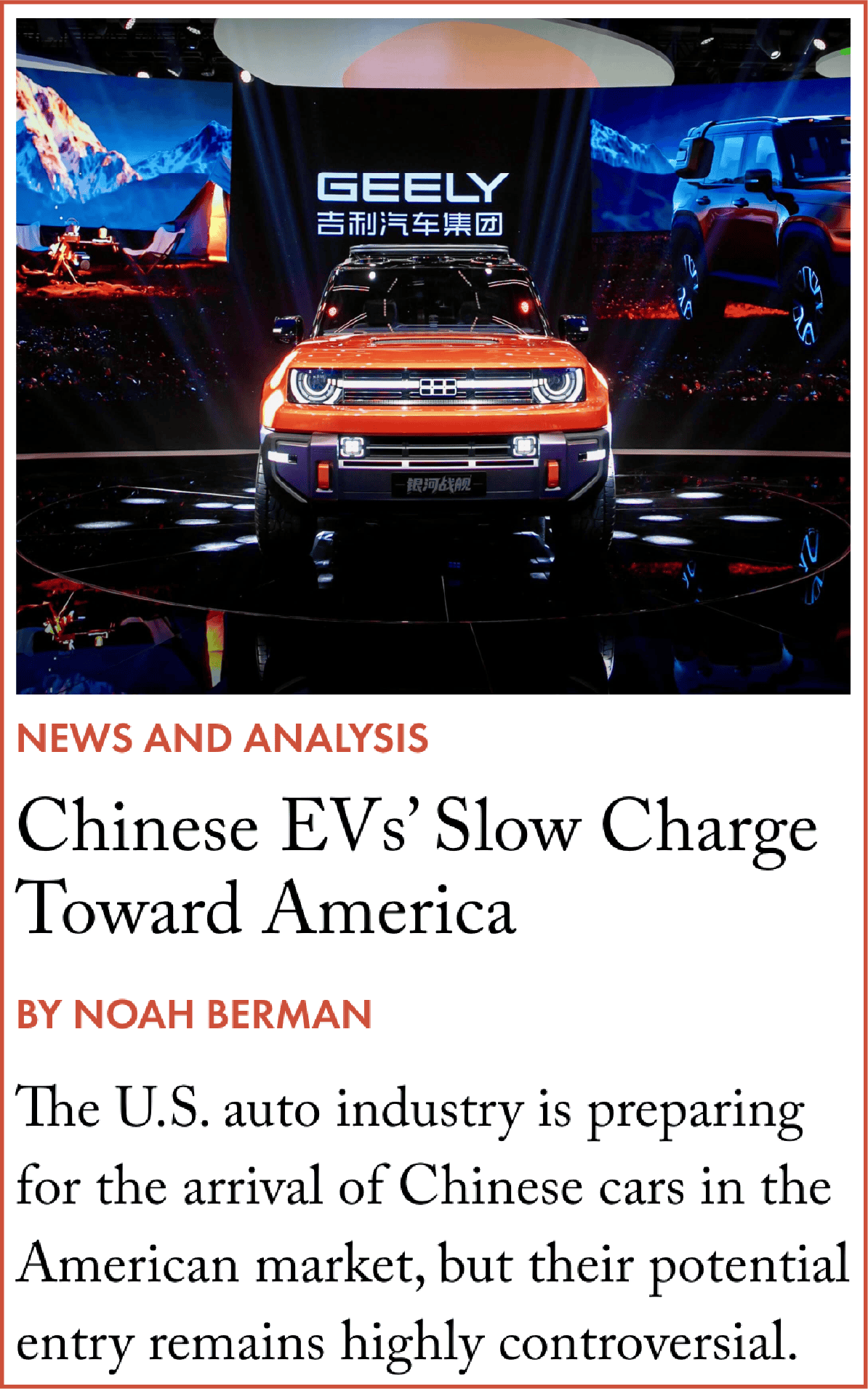
As Xiaomi contemplates following other Chinese EV makers abroad, Western automakers and their governments need to understand the challenges they face.
With high oil prices, Ford and other automakers are going to lose their foreign markets as consumers flock to EVs. Tariffs on Chinese EVs and Biden’s connected-vehicle rule have bought Detroit some time, but Mexican and Canadian consumers are starting to buy Chinese EVs. Some are showing up in El Paso.
Time is ticking for U.S. automakers to make affordable EVs. In the Biden era, car companies bet big on expensive EV variants like the Ford’s F150 Lightning, which was too expensive for most consumers. When Trump gutted EV incentives and fuel economy rules, automakers took the hint and rolled up much of their EV production, writing off more than $65 billion in losses.
Ford does have a “skunkworks” in California trying to figure out how to make a low-cost EV. Other U.S. automakers are further behind.
It remains to be seen if Tesla’s U.S. and European sales can recover after Elon Musk’s brief, divisive foray into Beltway politics last year. Jeff Bezos has a no-frills $20,000 EV “Slate” truck set to launch later this year.
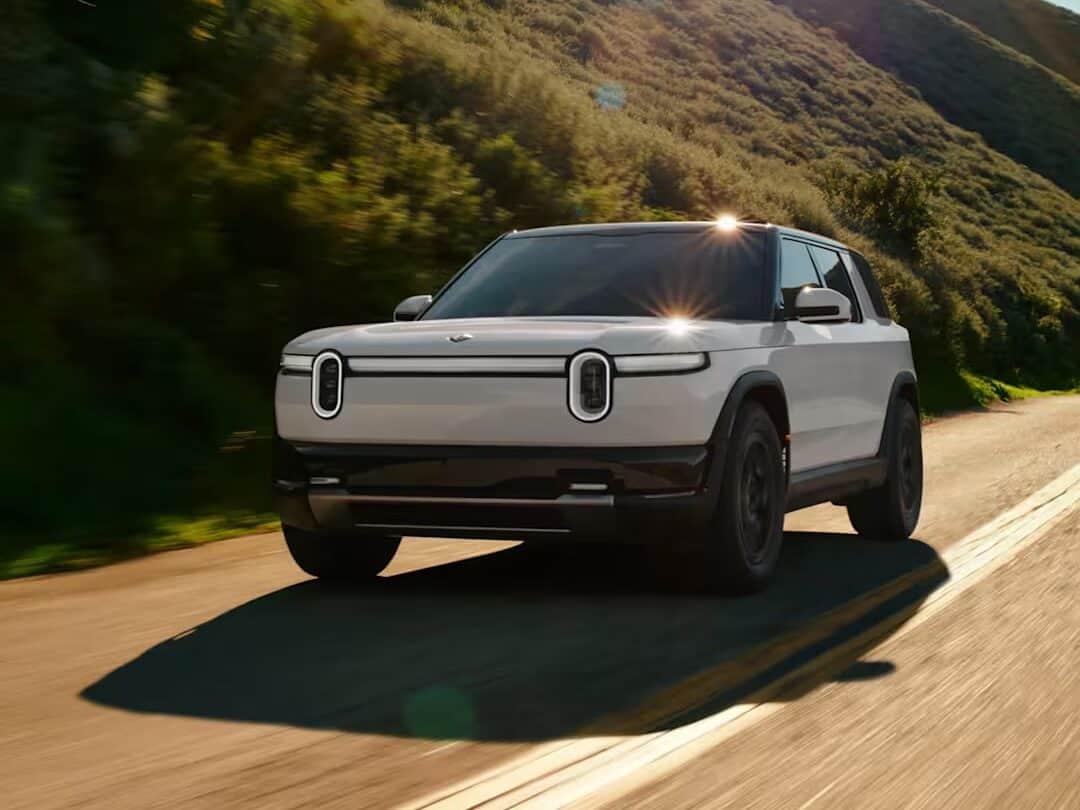
Rivian’s new R2 looks like the closest American car to the Chinese competition in terms of its styling, features and battery system. Its $58,000 price tag is still much higher than Chinese EVs, but it has plans to build a $45,000 alternative. Rivian may start to displace Tesla as the American EV of choice.
It’s not clear U.S. automakers will return to EVs until the U.S. federal government recognizes that they are revolutionizing the auto sector. If the U.S. wants to have a viable auto sector, they must embrace EVs.
ICE vehicles are the horses and buggies of the 21st century. Perhaps even the Trump administration, which does want advanced U.S.-made batteries for drones and other products, will recognize that a healthy EV sector is necessary for sufficient battery production.
My visit to Xiaomi reaffirmed for me that China is miles ahead of most U.S. automakers, and that consumers are going to want to get their hands on what Chinese consumers already are enjoying.

Joshua Busby is a professor at the LBJ School of Public Affairs at the University of Texas at Austin. From 2021 to 2023, he served as a senior climate advisor at the U.S. Department of Defense. He writes on the intersection of climate, energy, and geopolitics. His book States and Nature: The Effects of Climate Change on Security won the 2026 Grawemeyer Award for Ideas Advancing World Order.