Nexperia, a semiconductor manufacturer based in the Netherlands and owned by Chinese company Wingtech, has been at the center of a major international row since late September, when the Dutch government used a Cold War-era law to seize effective control of the company. Shortly afterwards, a Dutch court adjudged that its Chinese chief executive should be removed from office amid allegations of mismanagement. In retaliation, China blocked exports of so-called ‘legacy’ chips made in Nexperia’s Chinese fabs, causing major disruption to global automaker supply chains.
Marc Hijink, a technology journalist with Dutch outlet NRC and author of Focus — The ASML Way, has followed every twist in the saga. He spoke to The Wire China recently about the fallout from the row: the following is an edited version of our conversation.

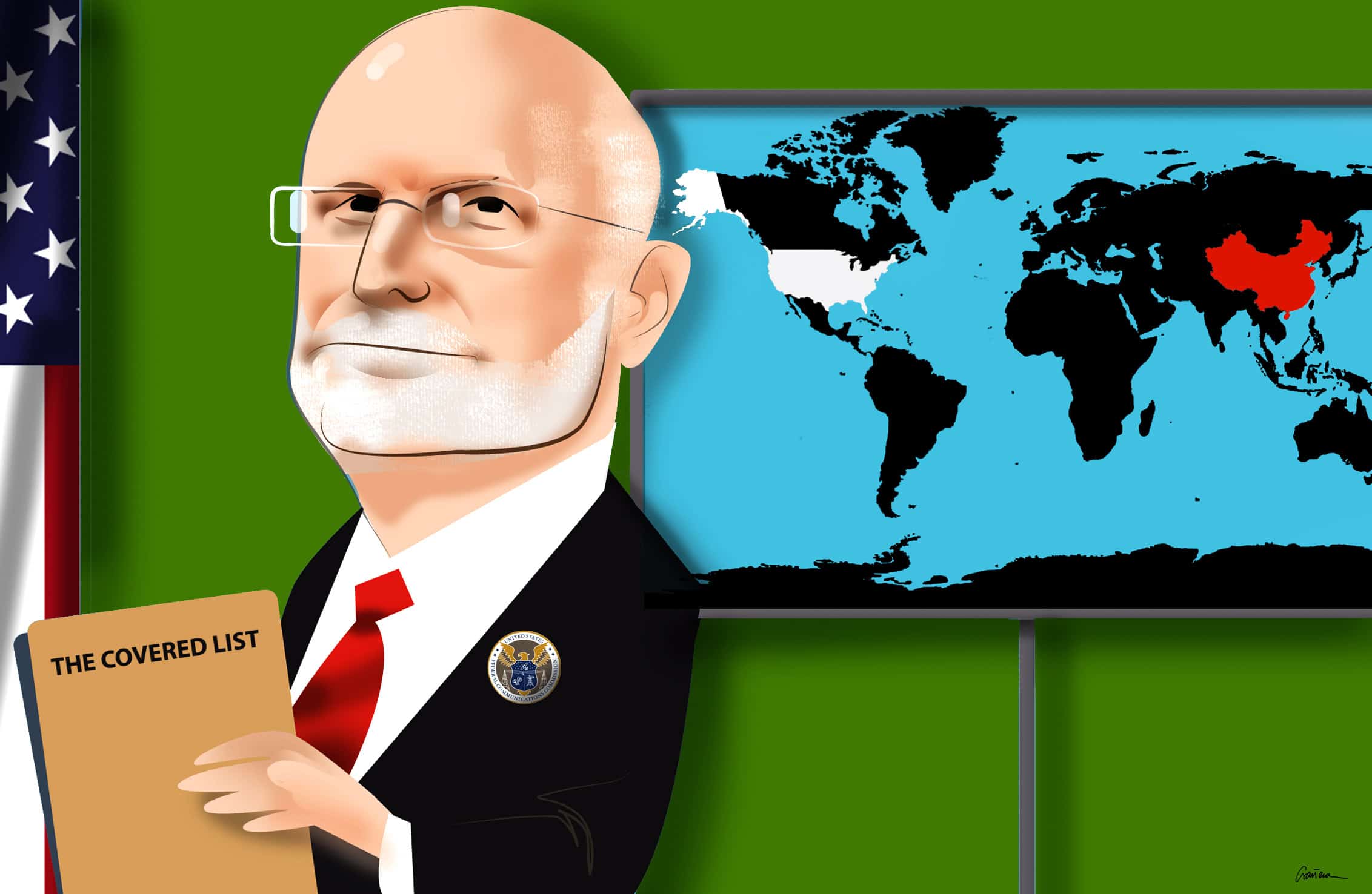
Illustration by Lauren Crow
Q: Can we start with the background to the controversy around Nexperia and how it became such a flash point between the Netherlands and China — with the U.S. also involved.
A: The problems started around the time that there began to be more pushback than Nexperia’s Chinese owner Wingtech had expected, from a geopolitical perspective, when it bought the company back in 2019.
When Nexperia was initially sold to a Chinese investor group in 2017, the deal got approval worldwide — even from the Committee on Foreign Investment in the United States (CFIUS), the U.S. authority that can block takeovers. There was also no problem in 2019 when Wingtech bought the company, because at that time all the geopolitical turmoil was around highly advanced chips [used in areas such as AI].
Things got worse when the U.S. also began to target ‘legacy’ chips [typically used in cars and household electronic products] and when Wingtech Technologies, the owner of Nexperia, was placed on the Department of Commerce’s Entity List [which identifies companies and individuals that should be subject to stiff U.S. export controls].
| BIO AT A GLANCE | |
|---|---|
| AGE | 56 |
| BIRTHPLACE | Amsterdam, Netherlands |
| CURRENT POSITIONS | Financial journalist and technology columnist at NRC, book author |
The initial plan of Wingtech’s owner Zhang Xuezheng — also known as Wing — had been to use Nexperia to expand in Europe. But there was a lot of pushback in the UK around 2021 when the company bought a company called Newport Wafer Fabs based in Wales [Wingtech eventually sold its 86 percent stake in NWF in 2024].
That was when Nexperia started to realize that it now had the reputation of being a Chinese player, even though it considered itself as a global company with a balanced production line — with front-end manufacturing in Europe, and the back end in China [based in Dongguan]. The balance began to change further when Wingtech started building a 12-inch wafer fab in Shanghai. For reasons of efficiency, Wing felt it was better to get more of Nexperia’s production to China. But that wasn’t the goal of [the Dutch management of] Nexperia, which was always primarily to expand in Europe.

So tensions were rising around Wingtech’s position as a holding company for Nexperia; and Wing himself was frustrated when the company was put on the U.S. Entity List in December 2024. He also knew there was a threat that the so-called affiliate rule might result in export restrictions for Nexperia itself. [The affiliate rule, also known as the 50 percent rule, was first proposed by the Biden administration, but not implemented by the Trump administration until this fall. Its aim was to ensure that subsidiaries of companies on the Entity List were also subject to export controls.]
It seemed the only way for Nexperia to circumvent export controls was if Wing were to step back — maybe not completely, but so that he would have some sort of oversight, like an oversight board. Together with his European board members, Wing started negotiating with the Dutch government, and they both agreed that if he were to water down his grip on Nexperia, there was an opportunity for his company to survive and become more European and more Dutch.
What makes sense is for both sides of the company to find some kind of agreement or use a judge to figure out how to split up. Neither China nor Europe wants to give up this technology, and the Europeans don’t want to lose the front-end production.
Initially that was also Wing’s take. But he did a 180-degree turn over this past summer. I think that was partly because he knew the pressure was coming from the United States. He’s the type of manager that wants to take a hands-on approach. For him, it’s counterintuitive to have somebody else limiting his ability to steer the company. And although Wing originally wanted to invest in Europe, he had come to believe that wasn’t working out, and was now thinking he better get as much back to China as he could, including Nexperia’s knowledge and IP.

The other factor was that Wing’s wafer fab in Shanghai wasn’t doing so well. So he used Nexperia to create bloated orders for the fab — that’s considered mismanagement under Dutch law, because you’re sort of crippling the company. Even though Wingtech owns Nexperia, its headquarters is still in the Netherlands, and so Dutch law applies to the company.
And in the meantime the Dutch government had become more concerned?
Yes. Back in 2017, the Dutch government didn’t have any tools to prevent Nexperia from being taken over, and anyway I doubt it would have realized the strategic importance of the company at that time — because the Dutch government was quite naive, and still is quite naive.
| BOOK CORNER |
|---|
| Not a connoisseur, I enjoy the work of Bill Bryson, Steven Levy, Walter Isaacson (Jobs, not Musk), and Stephen King for his ability to bring scenes to life. |
More recently, the Ministry of Economic Affairs rediscovered an old law dating back to the 1950s, designed for the post-war era when the government was trying to ensure the availability of vital goods. They brushed the dust off the law and found a way to use it in relation to Nexperia. The law isn’t about nationalizing companies — it’s more like freezing them so that the government can make sure that everything is still operating well.
The economics ministry used this ‘old law’ as a way to effectively pull the handbrake on Nexperia after Wing had performed his 180-degree turn, by deeming its chips as crucial goods for the European car industry. It was very much the Dutch government’s fear that if Wing reduced Nexperia’s headcount in the Netherlands and reorganized the company, it would lead the Nexperia front-end fabs in the UK and Germany to fail. It needed to find a way to ‘pause’ the company.

At the same time, Wing had also started changing Nexperia’s leadership, putting his puppets into certain crucial divisions. He started pushing out the existing board members. If you were to add one and one together, you could see he was preparing to pull back out of Europe. And so Nexperia’s European board members protested. They brought a case against Wing at what is called the Enterprise Court, a typically Dutch court institution that is independent from the government. It ruled that Wing should be suspended as CEO.
But the timing of all this appeared awful, from the Chinese point of view, because the moves against Wingtech and Wing happened on consecutive days. It was on September 30 that the Dutch Minister of Economic Affairs, Vincent Karremans, applied the ‘old law’ allowing the government to effectively take temporary control of Nexperia — the same day that the Trump administration affirmed it would implement the affiliate [50 percent] rule. And just one day later came the Enterprise Court’s decision to oust Wing as a Nexperia’s CEO because of his alleged mismanagement. [Wingtech appealed this decision in late November].

For Chinese observers, it was very easy to see this all as a nationalization of Nexperia. I think what really happened is that Karremans lost control over the framing of the story. He wanted to do this all swiftly and smoothly, and not in public.
So in the Dutch minister Karremans’s telling, the U.S. government’s introduction of the affiliate rule wasn’t the catalyst for the action that they took to pause operations at Nexperia?
And I agree, because it was not directly the reason. It’s very easy to say that because it all happened on the same date, that the Netherlands was just following American orders. That is not correct.
What did happen was that there was a negotiation between the U.S. and the Netherlands with the American side saying, okay, if you want Nexperia to be able to circumvent the export controls or the affiliate rules, make sure the Chinese CEO and the Chinese owner have more distance from actual decision making at the company. It has to become more European and less Chinese.
I do think it’s crucial that Europe stands firm in protecting its own technology and trying to get back its grip on semiconductor manufacturing. But you can do that in a less drastic way.
At first, Wing was also negotiating around that approach; he was open to a supervisory board that could set guidelines for him, to make sure that front-end production would stay in Europe. But then he changed his mind and started doing the 180-degree turn that happened over the summer. Wingtech being placed on the Entity List on December 24 last year had frustrated Wing very much, because he was trying to build a conglomerate: he had a vision of Wingtech and Nexperia being a global player.
| MISCELLANEA | |
|---|---|
| FAVORITE MUSIC | Rock/hard rock |
| FAVORITE FILM | This is Spinal Tap |
| MOST ADMIRED | Frank Zappa |
Getting back to the bad timing of all this: the Dutch Minister had wanted to do it all secretly, but of course Wing was mad because he had been ousted by the court, on top of the decision made by the Dutch government. The timing gave him the opportunity to frame it all as a nationalization. He didn’t mention the accusations of mismanagement, or the questions around his own background because, as the Dutch expression goes, he’s not your ideal son in law.
What’s happening now is that both sides are accusing each other of mutiny — Nexperia Europe, with its Dutch headquarters, is on one side; and on the other side is Nexperia China, mainly the back-end factory based in Dongguan.
A new development is that the Dutch government stepped back from the special measures that it took to intervene in Nexperia on November 19. Is this part of a climb down?

They needed to cool down the diplomatic turmoil. It’s really rare that the Dutch and the Chinese accuse each other of this sort of wrongdoing. And it’s true that the Dutch government had chosen not to discuss the situation with the Chinese before implementing the ‘old law’. I think it would have been a better option to do so, as a lot of these issues could have been prevented.
Suspending the law now is a move to keep discussions open — because for the Chinese, the implementation of that law was like a slap in the face. They wanted it off the table. Of course, they also want the court’s decision [to suspend Wing] off the table. But we have an independent court system in the Netherlands, so it’s very hard to roll that back. That’s up to a judge.

So there’s still a gridlock. It appears that the ‘old law’, that was hurtful to Chinese feelings of self esteem, is off the table. But the Chinese side still has this grip over exports of semiconductors from the Dongguan fab, even though they promised to relax their export restrictions. Companies wanting to import those chips still need to offer a lot more information than they want. So we’re really in a bad place in Europe.
Because the chips that Nexperia exports from Dongguan are pretty vital for all sorts of products, right?
Cars, dishwashers, coffee makers, any kind of Internet of Things application. Nexperia is not only good at building legacy chips, but it’s good at building them in huge amounts. The volumes are incredible — 110 billion chips per year, or about a tenth of the global supply. Their value is less than that of advanced chips. But if you look at the car industry, for example, about half of the average production value of a car is electronics. It needs huge volumes of the sorts of chips supplied by Nexperia, so that’s why the car industry has been heavily affected. The car industry is not investing enough in de-risking its supply chain: it seems they haven’t learned that lesson from the pandemic when supply chain constraints resulted in production halts.

The Nexperia issue didn’t only affect European car factories; U.S. car manufacturers were also complaining. Even Chinese car manufacturers were experiencing the same problems.
So who’s in charge of Nexperia right now?
Brilliant question, but it’s very hard to answer. As I said, there are now two sides of the company accusing each other of mutiny. In the Netherlands, Wing was ousted as CEO, and he lost control over his shares. There’s a temporary, neutral player that now has control over those shares, and there’s a temporary CEO taking care of business from the European side.
But if you look at what’s happening in the chip fab in Dongguan, it’s of course Nexperia China, or Wingtech calling the shots. In the end, there’s a commercial conflict between these two sides of the company, so it’s bound to split up, I would say. It’s hard to imagine things could be getting back to normal.
…when it comes to dealing with the Chinese, that for negotiations to be successful, the Chinese want a ‘no surprise’ approach. In diplomatic phrasing, it is okay to slap each other in the face: but issue a warning first. The Chinese will be mad, but you can still deal with them.
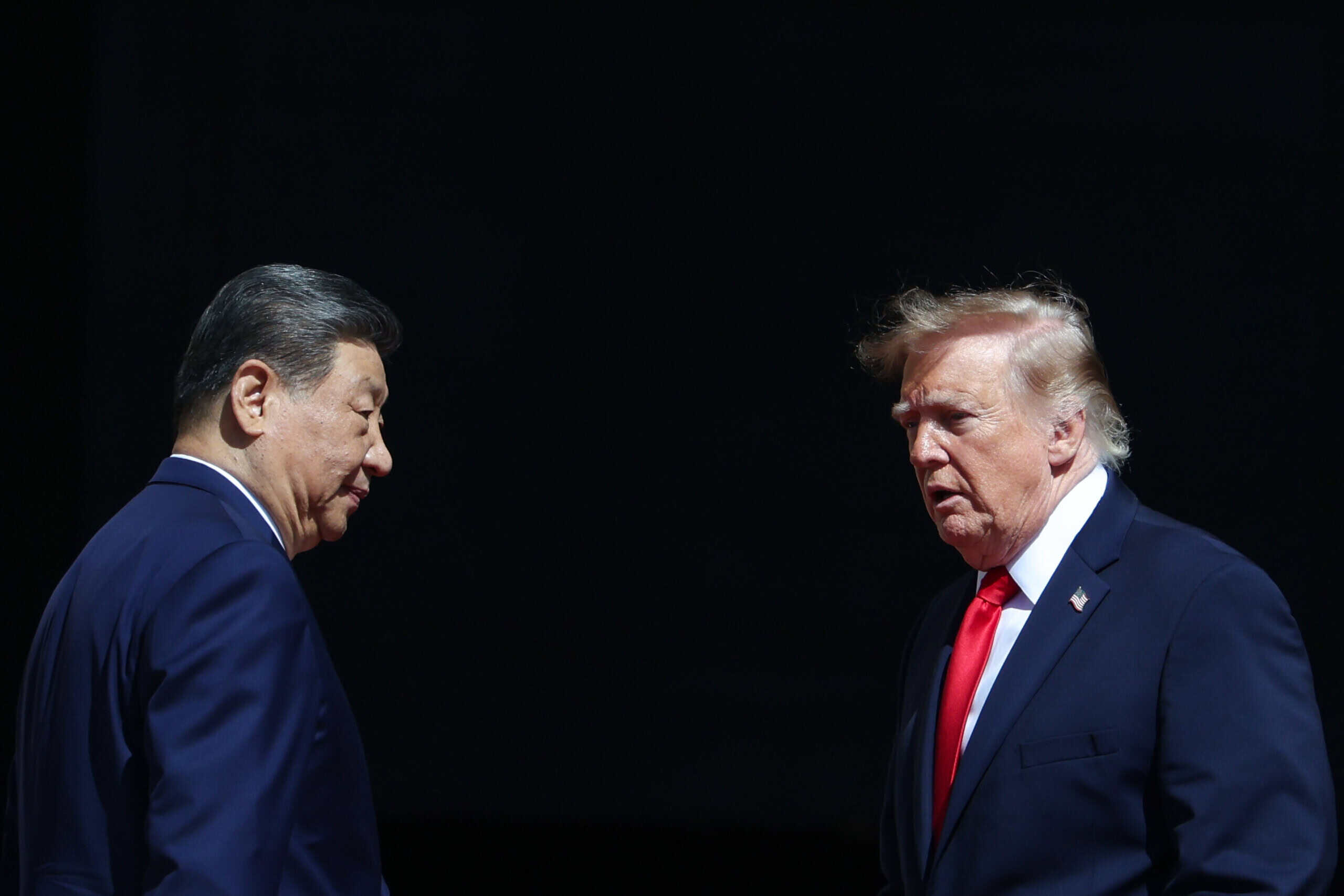
The issue around the U.S.’s affiliate rule is still hovering over Nexperia like a dark shadow. Sure, it is off the table for now, after the talks between Donald Trump and Xi Jinping in South Korea, where the Nexperia situation was on the table. I thought that was mind blowing: These are chips that cost four cents, and the big leaders of the world that are spending time discussing a topic like that. [At the talks, Trump agreed to suspend the affiliate rule for a year as part of an agreement to cool trade tensions between the U.S. and China].

What makes sense is for both sides of the company to find some kind of agreement or use a judge to figure out how to split up. Neither China nor Europe wants to give up this technology, and the Europeans don’t want to lose the front-end production.
How much of this row is down to the personalities involved, and how much is it simply a manifestation of the fact that the Netherlands government, and Dutch companies, are now in the middle of a trade and technological race between the world’s two largest economies?
I think the best example of the role of the individuals involved is Vincent Karremans, the minister, who did an interview with the Guardian saying he would do it all over again, no regrets, when he really was not in a position to do so. He should already have learned his lesson that it was not a good idea to bypass European member states, or Brussels, on a topic like this.

Because he didn’t get the support of the EU before entering this battle?
Yes. He argued that the Dutch were solving a European problem around having front-end production in our own countries, including the UK. But there was no negotiation, even with Germany, an EU member state that is a very close ally to the Netherlands and has a huge car industry. Even within the Dutch government, China-related issues are always sensitive. But this seems to have been Karremans’s own decision, and he was ill advised, I think.
I do think it’s crucial that Europe stands firm in protecting its own technology and trying to get back its grip on semiconductor manufacturing. But you can do that in a less drastic way. For example, it would have been an option to reach out to China before and say, hey, we’re dealing with this CEO/shareholder, and the way things are going now, this is not going to work — neither for the Chinese part of the company, nor for the European part. The only way for this company to survive is if his grip on the company loosens, so please help us out solving this. China might have been open to talks on this: They don’t like surprises.

That’s the lesson that the Dutch already learned with ASML, the lithography equipment maker, that is restricted both by Dutch and U.S. law from exporting certain kinds of advanced machines to China. And the lesson is that China is still very dependent on Dutch technology. There’s leverage there that you could use and say, Okay, help us solve this, this problem.
But that was not the approach that Karremans took, and he also didn’t negotiate with his fellow ministers or the Prime Minister. The Dutch government is in a very bad place now, with a caretaker cabinet that has imploded. That leaves a lot of room for secretaries like Karremans to do their own thing — until they run into a wall that’s called China.
So this situation could have been resolved by more reasonable people?
There was another major personality involved — Wing, who was first cooperative, and then decided to change course. He decided his own role was more important than the future of his company, and that’s the reason the Nexperia board members stepped in. So there was a clash of two personalities, with a geopolitical backdrop. The explosion was caused by bad timing, and all these personalities that wanted to make their point.
…it’s mind boggling that not only public opinion, but the political debate really isn’t about technology or sovereignty until the international media suddenly start writing about the Dutch. Then we realize, we do matter to the rest of the world.
Of course, it would make more sense for Europe to have its own chip manufacturing industry. We could decouple ourselves as well, but I don’t think that’s a realistic way of looking at the future. We’ll keep our dependencies on both China and the U.S., and we have to make sure that we leverage our market power, but also our foreign policy and export restrictions to use as bargaining chips. Europe is very reluctant to be more aggressive, because it still has huge dependencies. When it comes to safety in Ukraine, for example, we still need the Americans to support us.

You said earlier that it’s quite rare for there to be an open row between the Hague and Beijing. Do you think the Netherlands has a coherent strategy towards China, and if so, what is it?
The Dutch take on China changed back in 2018-19, basically as a result of discussions around Huawei’s presence in our telecoms networks. The Dutch took more of a slightly hawkish approach compared to that of Germany, which depends far more on exports to China.
But there’s also a realization when it comes to dealing with the Chinese, that for negotiations to be successful, the Chinese want a ‘no surprise’ approach. In diplomatic phrasing, it is okay to slap each other in the face: but issue a warning first. The Chinese will be mad, but you can still deal with them. In this situation, because there was no diplomatic communication it heated up very quickly. If you issue a warning before, you can keep the communication going. That was completely underestimated, and now we’re in a worse situation than before.
How is this all going down in the Netherlands? Do people feel supportive and patriotic about companies like Nexperia and ASML?

I’m sorry to disappoint you, but even during the Dutch elections, there really was no discussion at all about the Nexperia crisis. It’s because the Dutch don’t really have a big semiconductor manufacturing industry. If you had this situation in Taiwan, everybody would be excited or angered, because the whole country depends on this industry.
For the Dutch it’s still an obscure technology. That was one of the reasons for me to dive in and to write my book about ASML — to see how dependent the rest of the world is about our technology. One of the reasons ASML is so successful as a company is that it has been regarded as a neutral player, because the Dutch don’t have any manufacturing capacity of their own, so there was no way that ASML would be a preferred supplier for Dutch competitors. So it’s a safe bet if you compare it to its Japanese competitors.
To me, it’s mind boggling that not only public opinion, but the political debate really isn’t about technology or sovereignty until the international media suddenly start writing about the Dutch. Then we realize, we do matter to the rest of the world.

Andrew Peaple is a UK-based editor at The Wire. Previously, Andrew was a reporter and editor at The Wall Street Journal, including stints in Beijing from 2007 to 2010 and in Hong Kong from 2015 to 2019. Among other roles, Andrew was Asia editor for the Heard on the Street column, and the Asia markets editor. @andypeaps