The Department of Defense has this week issued a newly-expanded list of what it calls Chinese military companies operating in the United States — including in it for the first time some of China’s biggest commercial players with major presences in American markets.
The idea behind the list is to specify Chinese companies the U.S. government believes support China’s policy of military-civil fusion. In practice, the DoD will no longer be able to sign procurement contracts with any of the companies listed as of the end of this month. Moreover, from next July it will not buy from suppliers which use components made by companies on the list.
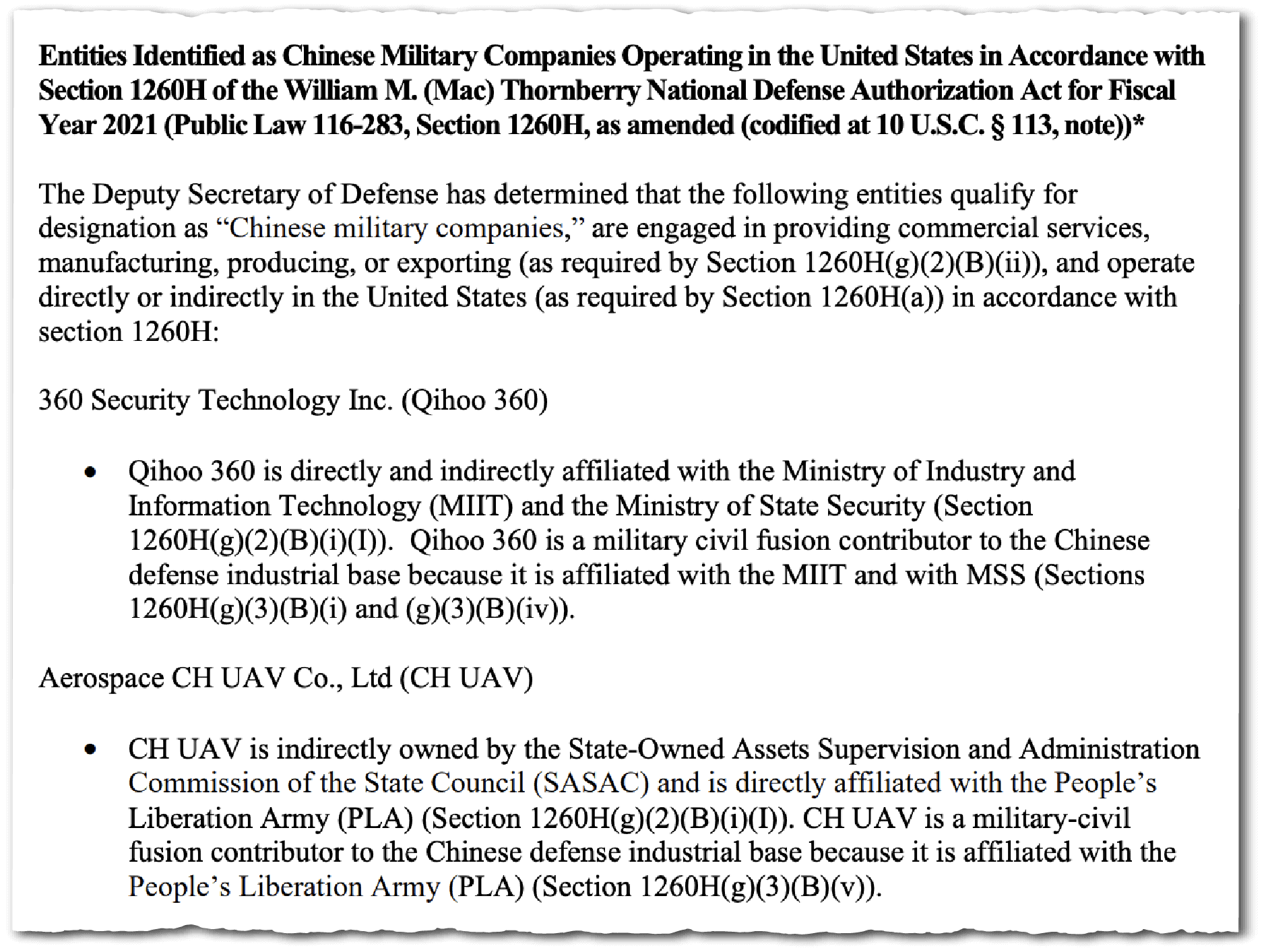
Some of the companies among the 188 listed this year have raised eyebrows. Companies like Internet giants Alibaba and Baidu have not been included before: in its press release, the DoD described both as “contributor[s] to the Chinese defense industrial base”.
Robotics maker Unitree, biotech giant WuXi AppTec, router manufacturer TP-Link Technologies, and electric vehicle makers BYD and NIO are also first-time inclusions on what is officially known as the 1260H list.
Chinese companies included on the list can still operate in the United States, and untangling their businesses there could anyway prove tricky. American universities, police departments, and the U.S. military itself have regularly purchased Unitree-made robotics, The Wire found last year, for example. Alibaba Holdings Group, the company’s listed entity, trades on the New York Stock Exchange.
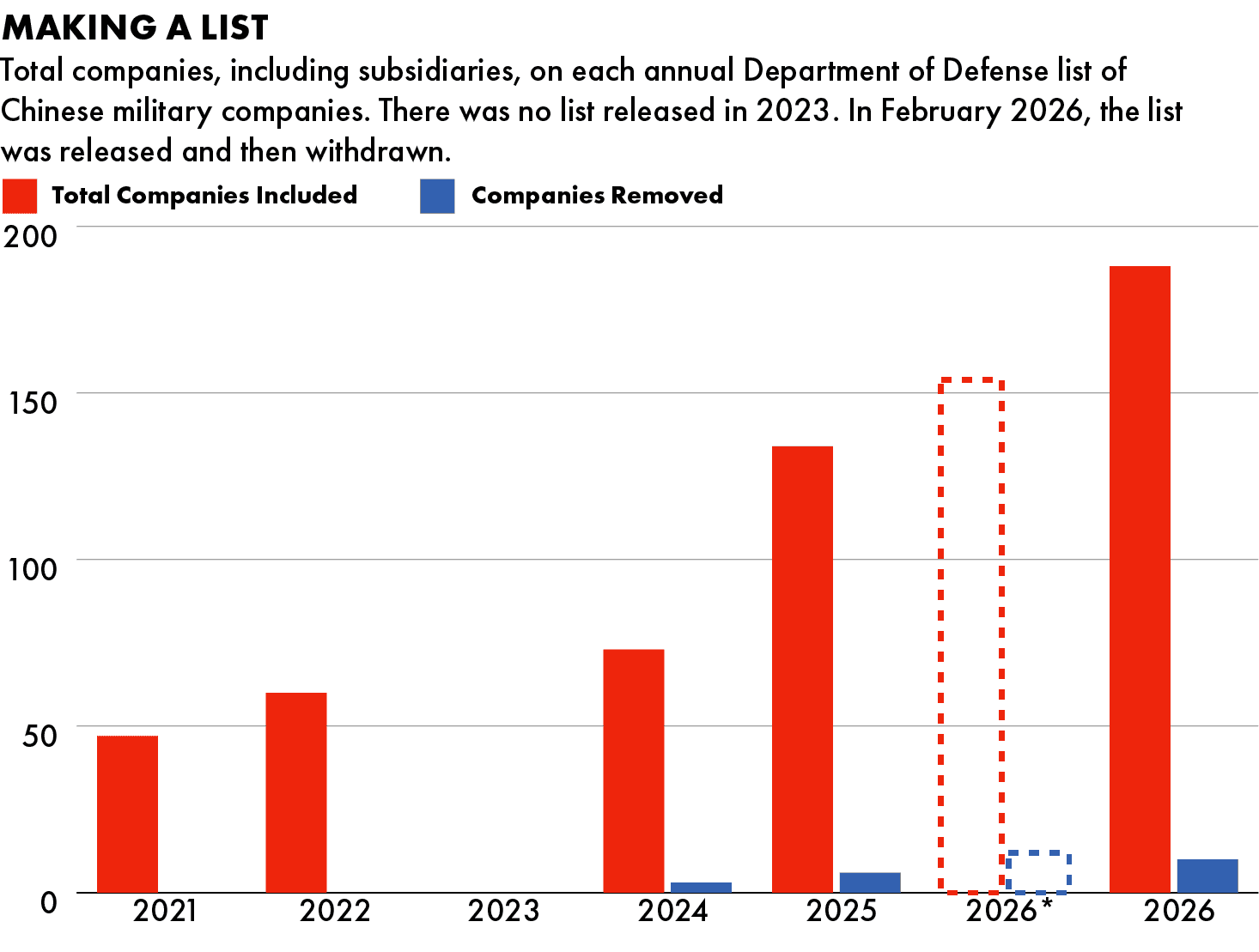
The DoD is required to publish the list every year, and it has only been growing in size. Its release this year comes shortly after President Donald Trump’s summit with Chinese leader Xi Jinping in Beijing last month. A version of the 1260H list was published and withdrawn without explanation in February this year; that version only included 154 companies. In total, the finalized 2026 list added 54 new companies from 2025.
The list is an incremental step to address economic security challenges without derailing overall stability in the U.S.-China relationship, Scott Kennedy, trustee chair in Chinese Business and Economics at the Center for Strategic and International Studies, told The Wire. “This list has very limited material consequences for the firms on it for the moment,” he says.
But it is also a signaling tool for universities and other research institutions that might want to contract with included Chinese firms, says Ryan Fedasiuk, a fellow at the Washington D.C.-based American Enterprise Institute.
“[The list] is sort of a canary in the Washington coal mine” he says. “It signals to allies and partners the [Chinese] entities that might come under further restriction.”
The justifications for adding these companies and removing companies is quite ambiguous. There is no explanation for what affiliated means, or indirectly affiliated…The new list raises more questions than it answers.
Scott Kennedy, trustee chair in Chinese Business and Economics at the Center for Strategic and International Studies
The list often triggers a flurry of denials, and this year was no different. BYD, Alibaba, and Wuxi AppTec told Reuters this week they would contest inclusion on the list. Baidu and NIO released statements asserting they are not military companies or contributors.
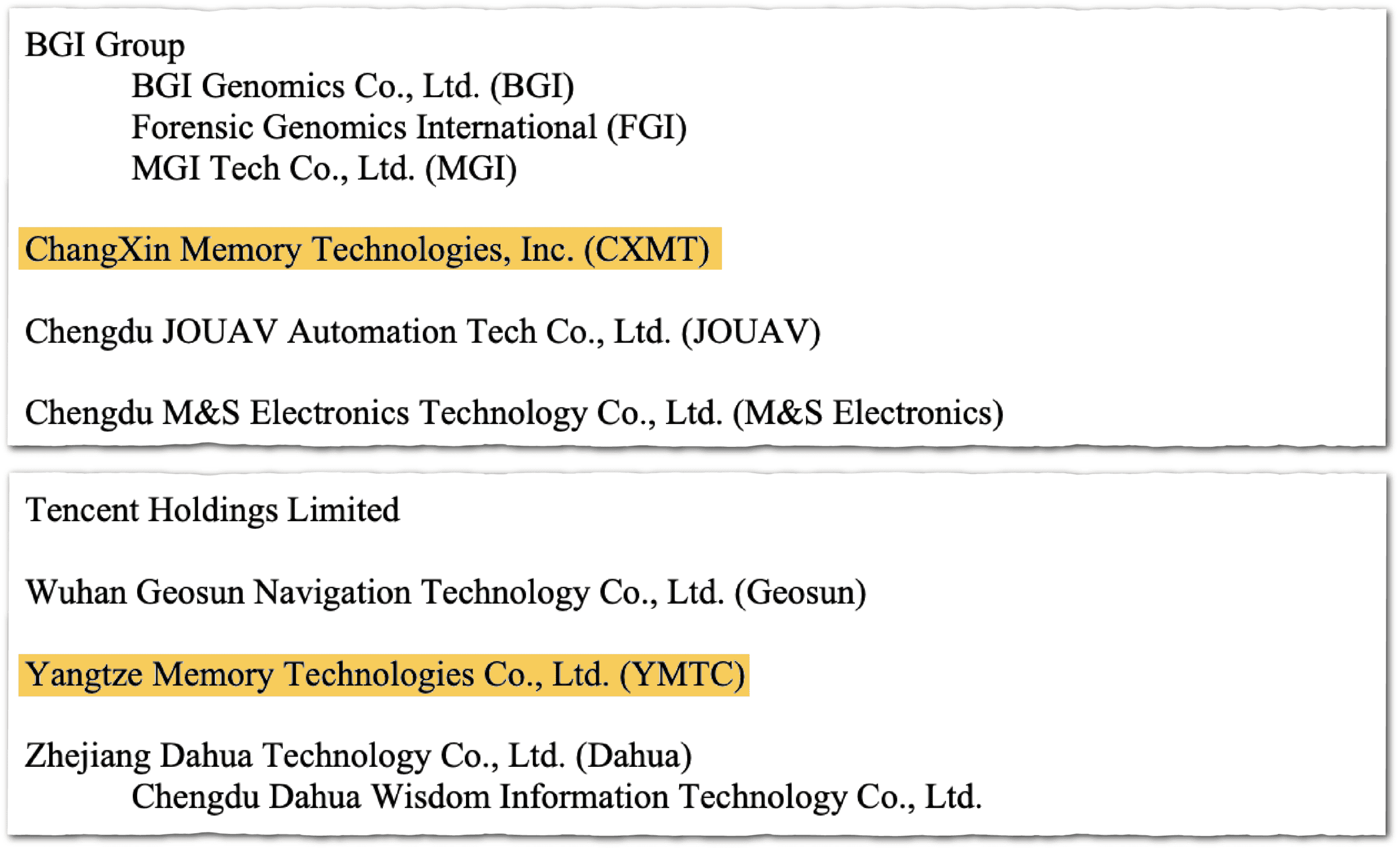
Over the past two years the DoD has removed a handful of companies after further investigation. This year, it removed ten companies, including COSCO Shipping Finance, though its COSCO parent company remains. Two semiconductor manufacturers slated to be removed in the withdrawn February list, ChangXin Memory Technologies (CXMT) and Yangtze Memory Technologies (YMTC), were included in the June list.
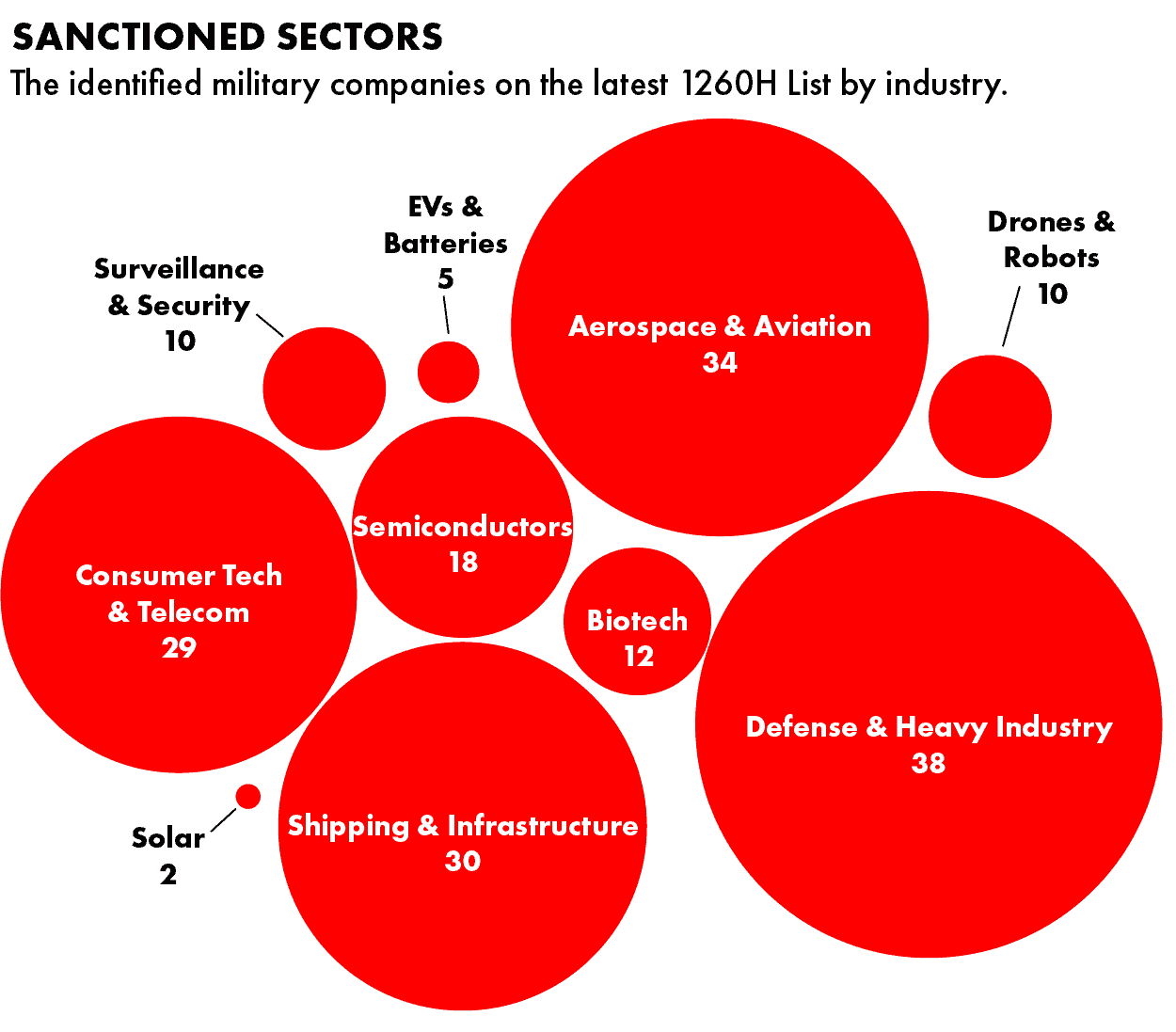
In a report to Congress last year, the Defense Department identified China’s investments in batteries, AI, solar panels, and semiconductors as critical to its military modernization. The 188 companies listed this year cover a broad range of these critical industrial sectors.
Last year, U.S. lawmakers pushed for more than a dozen other companies such as AI developer DeepSeek, battery maker Gotion, and smart prison manufacturer Tiandy Technologies to be added to this year’s list, but they didn’t make the final cut.
The DoD chose to include companies owned by or affiliated with China’s State-owned Assets Supervision and Administration Commission of the State Council (SASAC) — the body which oversees China’s state-owned enterprises — or the Ministry of Industry and Information Technology (MIIT) and has identified these as military contributors.
Some firms are also included because of their designations as one of China’s “Single Champions” or “Little Giants” — small companies in key industrial sectors supported by Beijing.
“Not a lot of effort was put into developing this list,” says CSIS’s Kennedy. “The justifications for adding these companies and removing companies is quite ambiguous. There is no explanation for what affiliated means, or indirectly affiliated… The new list raises more questions than it answers.”
The table below shows some of this year’s notable inclusions on the list.
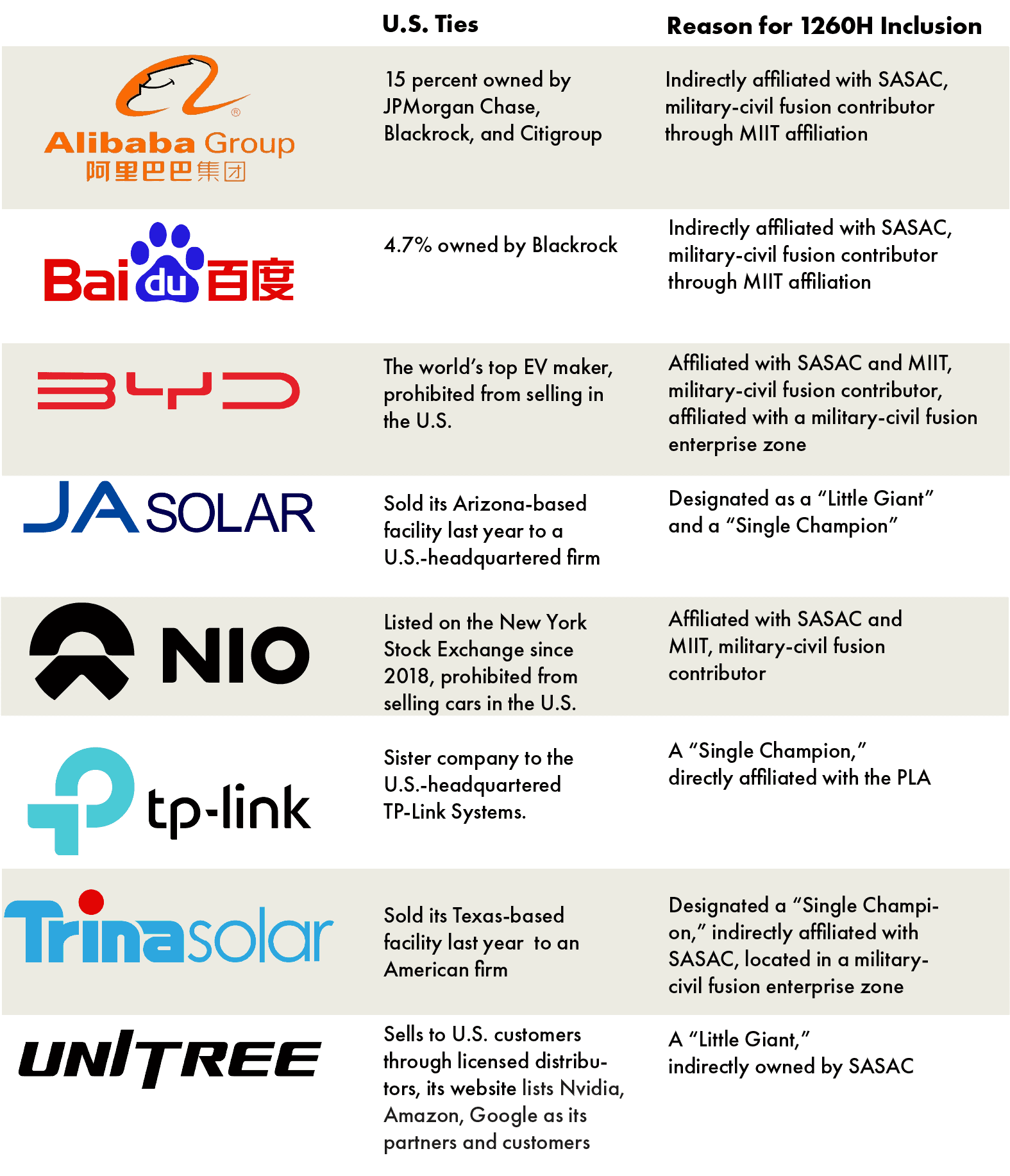
Some of the included entities have been subjected to U.S. regulatory scrutiny before. TP-Link Technologies is the Chinese corporate sister of the U.S.-based TP-Link Systems. Both entities are now in hot water: The Chinese TP-Link is on the 1260H list, and the California-headquartered TP-Link has been under pressure from the Federal Communications Commission because of security concerns over routers made in China.
And though neither BYD nor NIO sells in the United States due to prohibitive tariffs and a rule banning China-connected vehicles, their North American footprint is only expanding as Canada opens up to China-made EVs. Last year, BYD trounced Tesla as the world’s top EV maker and is still top dog in China, despite slowing domestic sales.

Savannah Billman is a Staff Writer for The Wire China based in NYC. She previously worked at the National Committee on U.S.-China Relations.