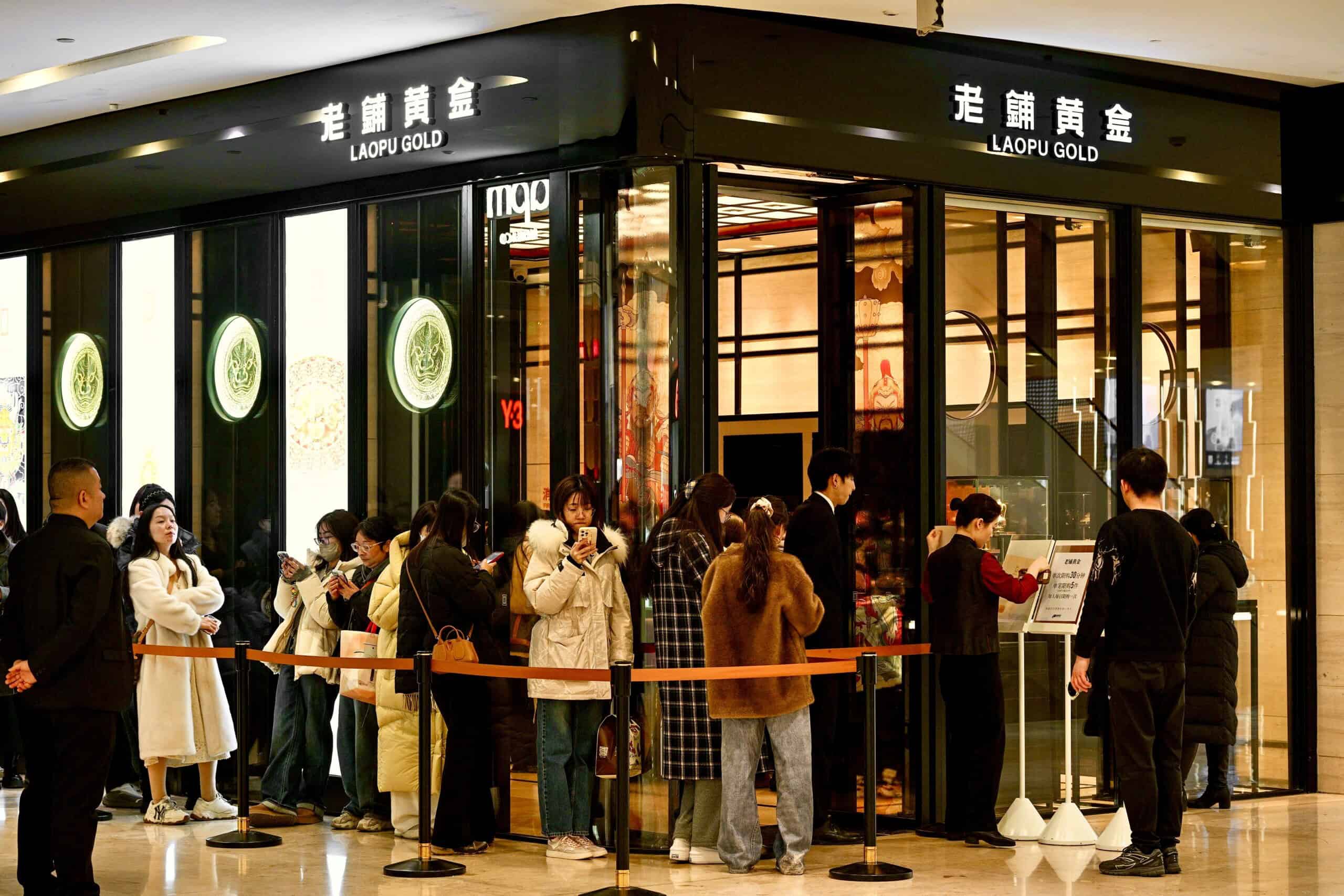
Jewelry store chain Laopu Gold has become one of the leading success stories amid the recent rise of homegrown Chinese consumer-focused companies. But some are now questioning whether behind the glitter, Laopu’s business lives up to the story it tells.
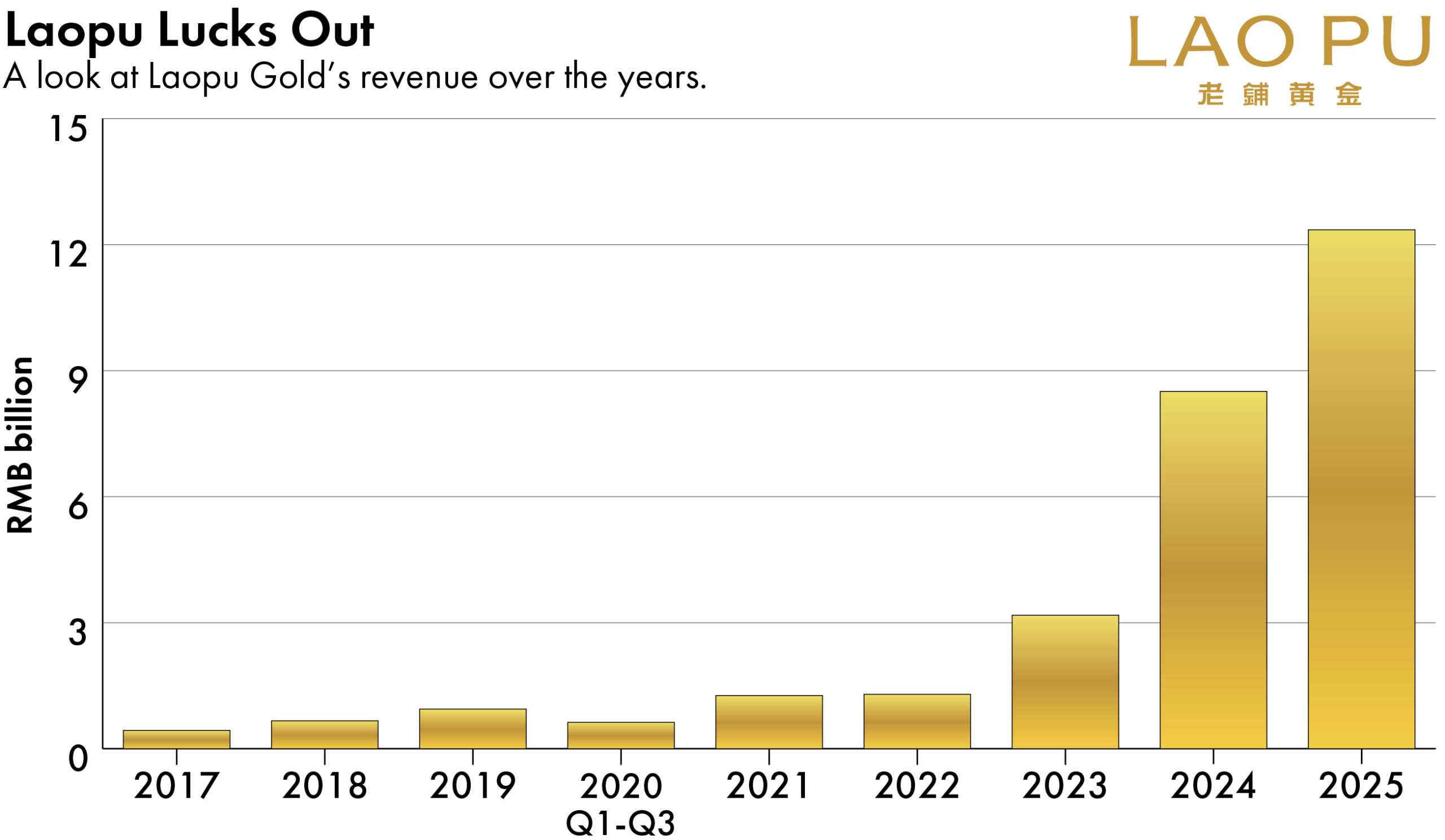
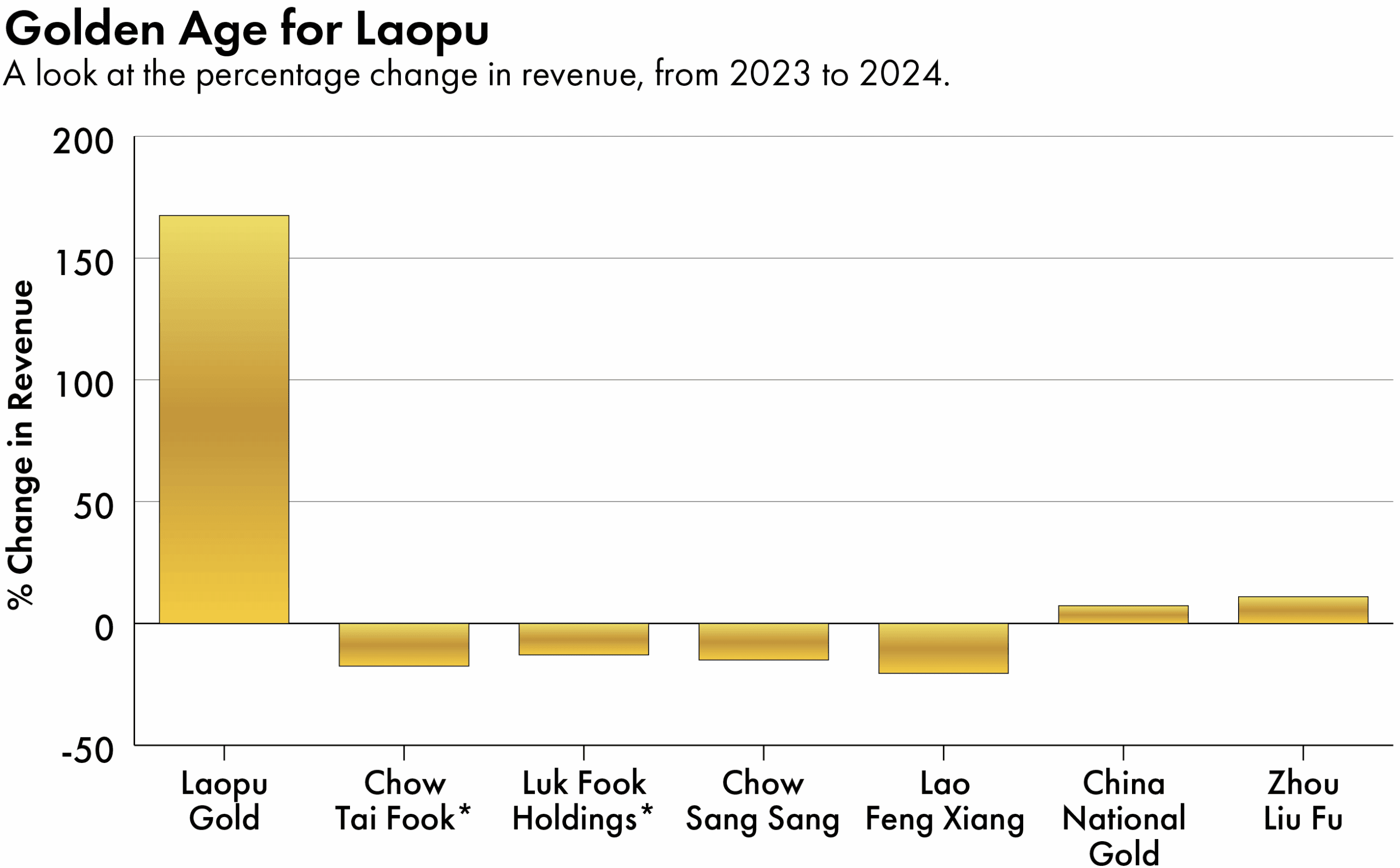
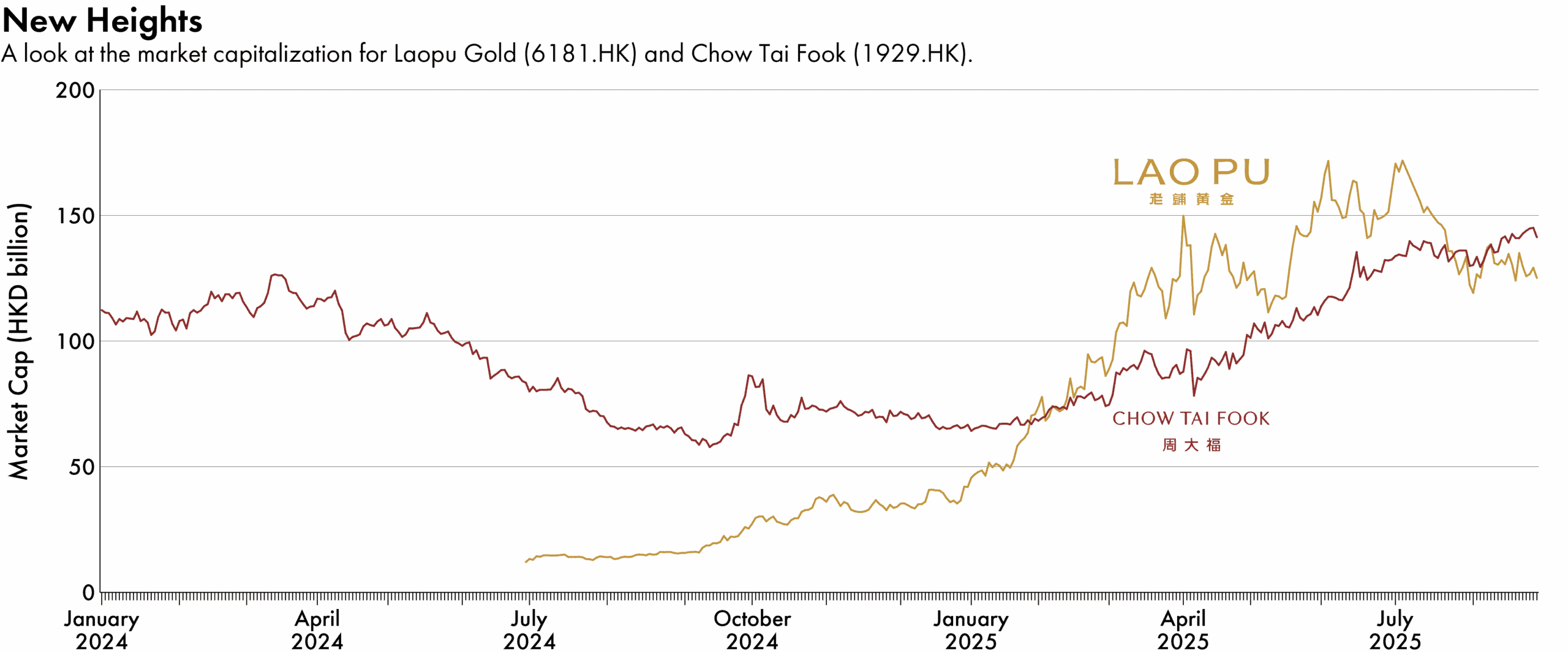
On the surface, Laopu is still gleaming. Launched in 2009, the company has benefited in recent years from a shift in Chinese tastes towards homegrown products, even in a sector like luxury long dominated by foreign brands. Laopu’s net profits nearly tripled in the first half of this year, while its share price is still up by 18 times since it listed in June 2024, despite a recent pullback.
Yet that success story is looking wobbly as questions arise over whether Laopu can keep shoppers piling into its stores — and if its growth plans are quite as solid as the gold it sells.
“Laopu Gold is taking market share from both luxury and traditional gold jewellers,” says Jacques Roizen, managing director of Digital Luxury Group, a consultancy. “The real question is how sustainable is it…At some point, the market is going to catch up.”
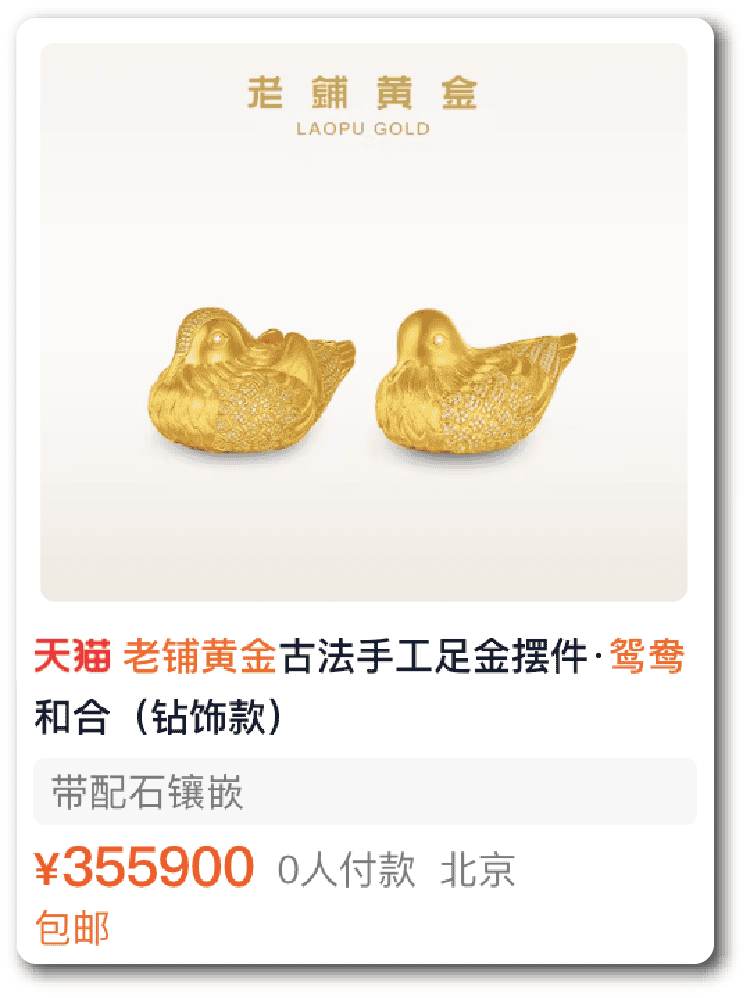
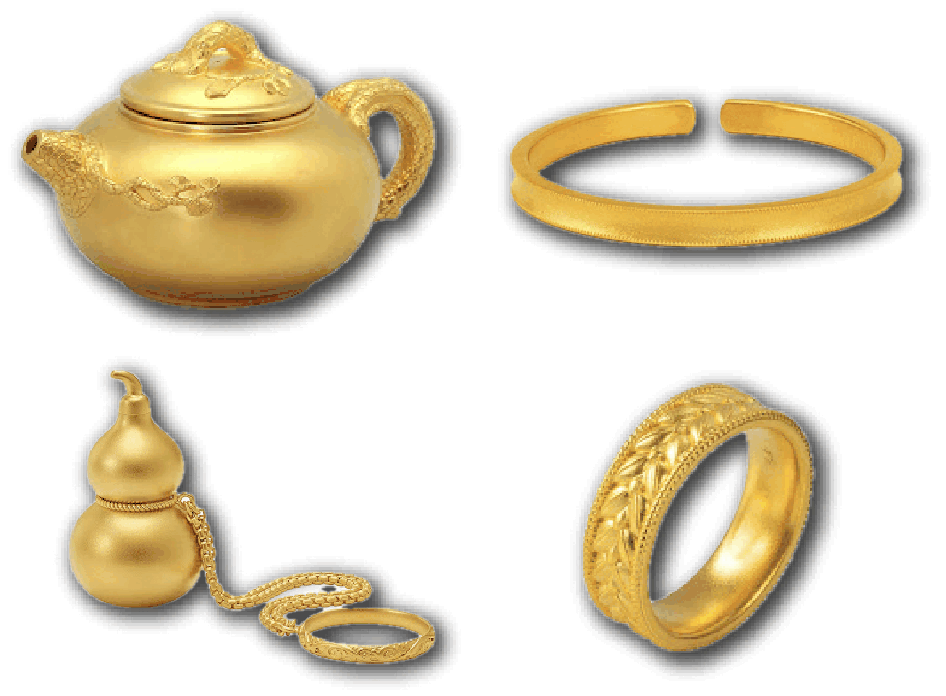
Laopu has sought to set itself apart from foreign and domestic rivals with jewelry and antiques handcrafted using traditional techniques, which it markets as “heritage gold.” Its products range from a 12,680 yuan ($1,770), diamond-studded hulu pendant designed for everyday wear, to a pair of mandarin ducks that are currently listed for 355,900 yuan ($49,800) on Taobao.
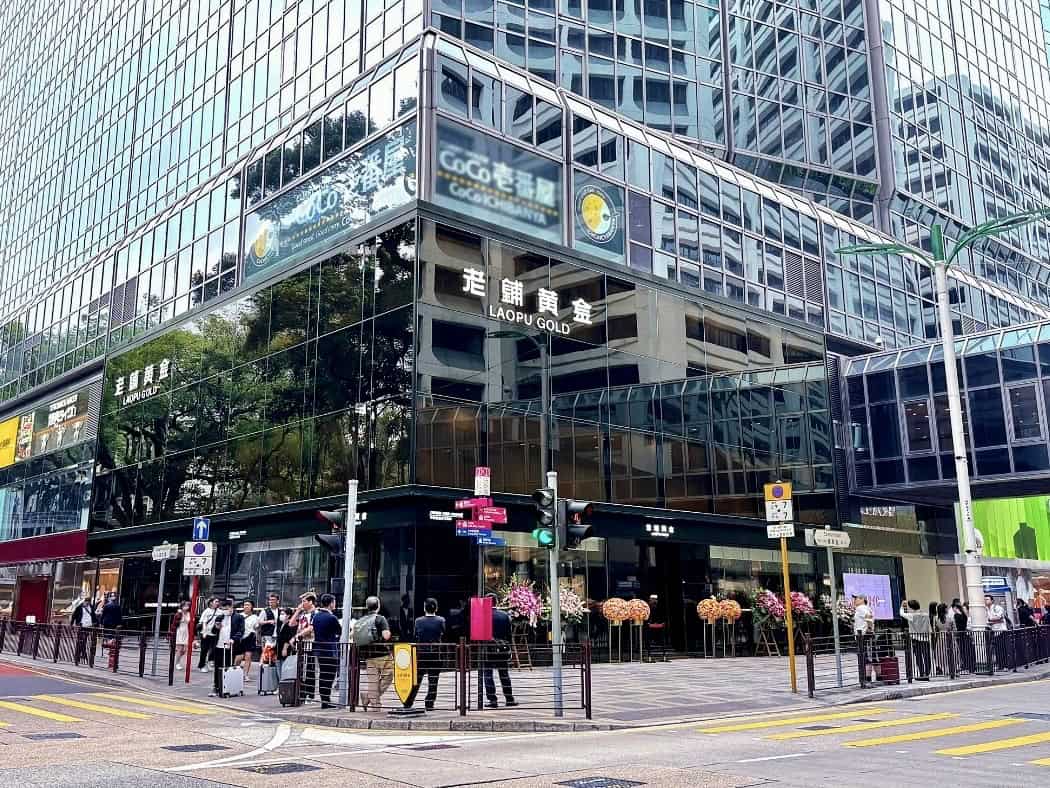
On one recent Saturday, about a dozen shoppers stood in line outside its two-storey flagship store on Canton Road in Hong Kong, keen to see what the Laopu fuss was all about. The store, right across from designer labels such as Miu Miu and Van Cleef & Arpels, opened in one of Asia’s most expensive retail districts in April last year.
One tourist from Jiangsu province spent some 25,000 yuan ($3,500) on an abacus-shaped pendant, having seen her friends wear similar “sophisticated designs” from Laopu. Many others, though, left empty-handed, unimpressed with the limited selection on offer. “Nothing caught my eye,” said another tourist, surnamed Mao, who was visiting from Guangdong.
…every store that Laopu had opened and operated was generally valued by the market at half a billion dollars. It just stood out as being completely different from any company we’d encountered in the sector and had traits similar to past frauds.
Gillem Tulloch, founder of GMT Research, a research firm in Hong Kong
Some analysts now doubt how Laopu’s stores, like the one in Hong Kong, are performing collectively. The company, which sells the bulk of its products via just 40 outlets across China, reported a 251 percent rise in revenue year-on year in the first half of 2025.
Gillem Tulloch, founder of GMT Research, a research firm in Hong Kong that screens companies for financial anomalies, has questioned Laopu’s numbers, flagging the company as a high accounting risk in a report last month.
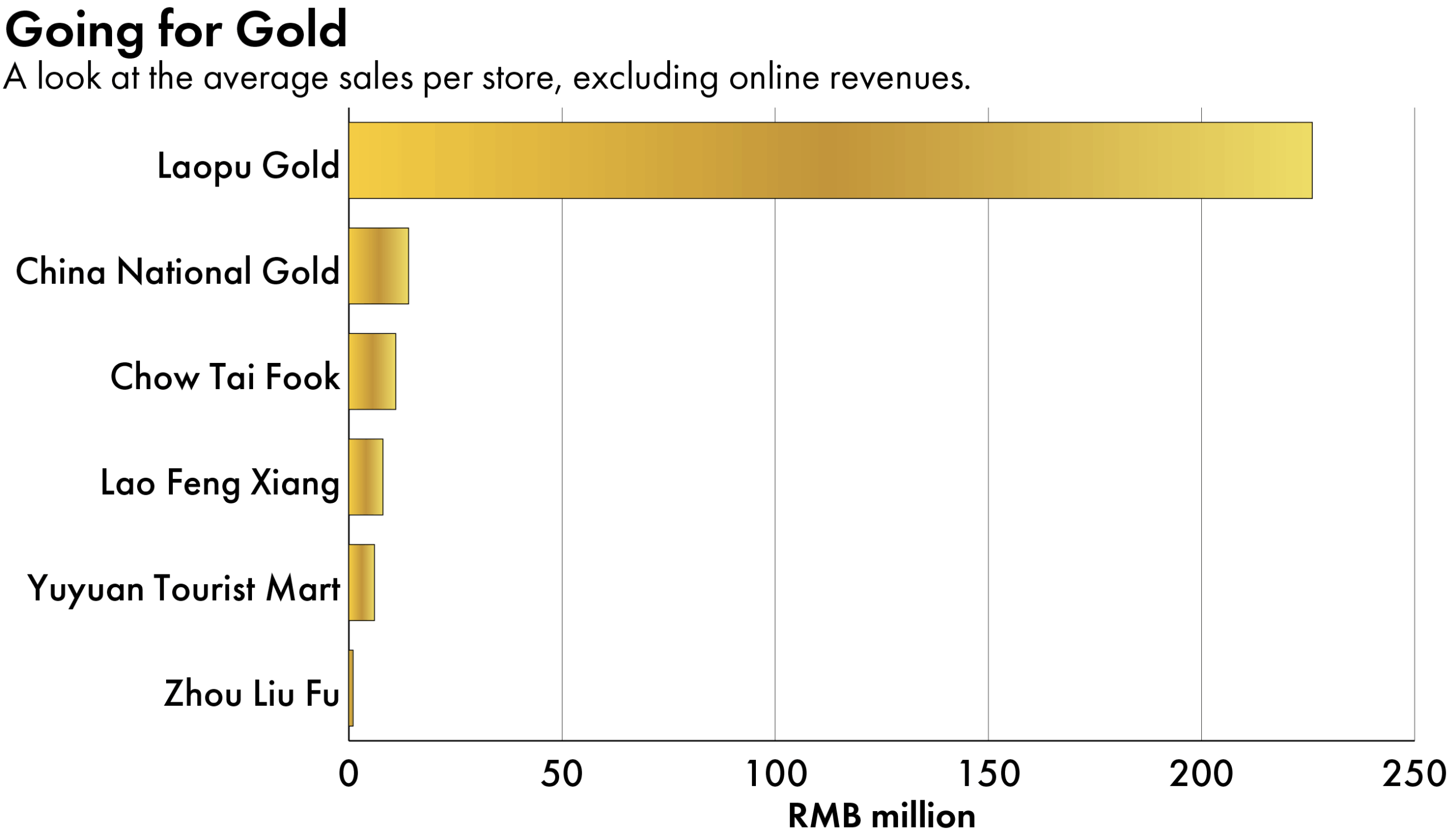
“What I found particularly unusual is this sudden growth in revenue per store,” says Tulloch. According to his calculations, Laopu’s average sales per store jumped fivefold from 46 million yuan ($6.4 million) in 2022 to 226 million ($31 million) in 2024, towering over its peers.
Its explosive growth also defied the overall decline in consumption of gold jewelry in the country, which fell by a quarter in 2024, according to data from the China Gold Association.
When Laopu’s market value rose as high as $24 billion in July, it implied that “every store that Laopu had opened and operated was generally valued by the market at half a billion dollars,” Tulloch says. “It just stood out as being completely different from any company we’d encountered in the sector and had traits similar to past frauds.”
Laopu did not respond to requests for comment.
Laopu’s backers point to its success in capitalizing on Chinese consumers’ growing sense of national pride — a trend that has helped retailers in other sectors such as apparel and fast food. The Laopu brand has also appealed to shoppers trading down from the likes of Cartier and Van Cleef following a collapse in the international price of diamonds, and as China’s economy falters.
“Laopu is benefiting from the fact that Chinese consumers are more conservative in their spending and more focused on value preservation, and see hard gold as a more prudent expenditure,” Roizen says.
Laopu positions itself as a high-end label, charging a premium for its brand and complex designs. While most established jewelry stores — such as Hong Kong’s Chow Tai Fook or the state-owned Lao Feng Xiang — price their products based on their weight and the market price of gold, Laopu sets a fixed price for its accessories, at a substantial markup to the metal’s underlying value.
Taking another page out of the luxury playbook, the company also increases their prices a few times a year, most recently jacking them up by 5 to 13 percent on Monday.
“Laopu Gold’s products are not unique. It’s been on the market for at least 10 years, and it is not the only company doing this,” says Chen Shen, a gemstone dealer based in Shanghai. “But its design is more modern and it has strict quality control.”
During its record rally earlier this year, Laopu’s market valuation had even surpassed that of industry leader Chow Tai Fook, which has nearly ten times its revenue and some 6,300 outlets in China.
Yet this isn’t the first time Laopu’s figures have been subject to controversy.
Its founder Xu Gaoming, a former clerk at a fisheries bureau in the Hunan city of Yueyang, first started Golden Treasury in 2004, a company selling Buddhist ornaments. That business never took off, but in 2016, it spun off one of its two brands, Laopu Gold, as a separate entity to pave the way for an initial public offering.
It is mind-blowing that a company plans to declare over a billion yuan in dividends when the operating business still burns cash at an accelerated rate and the liquidity is not there to pay for it.
Mike Braun, managing director of the financial advisory Zenon Partners
China’s stock market regulator rejected Laopu’s first application to list on the Shenzhen stock exchange in 2021, raising concerns about its gross profit margins that were “substantially higher” than its peers’, among other factors. (Laopu attributed this to its high-end positioning and its model of running self-operated stores instead of franchises.)
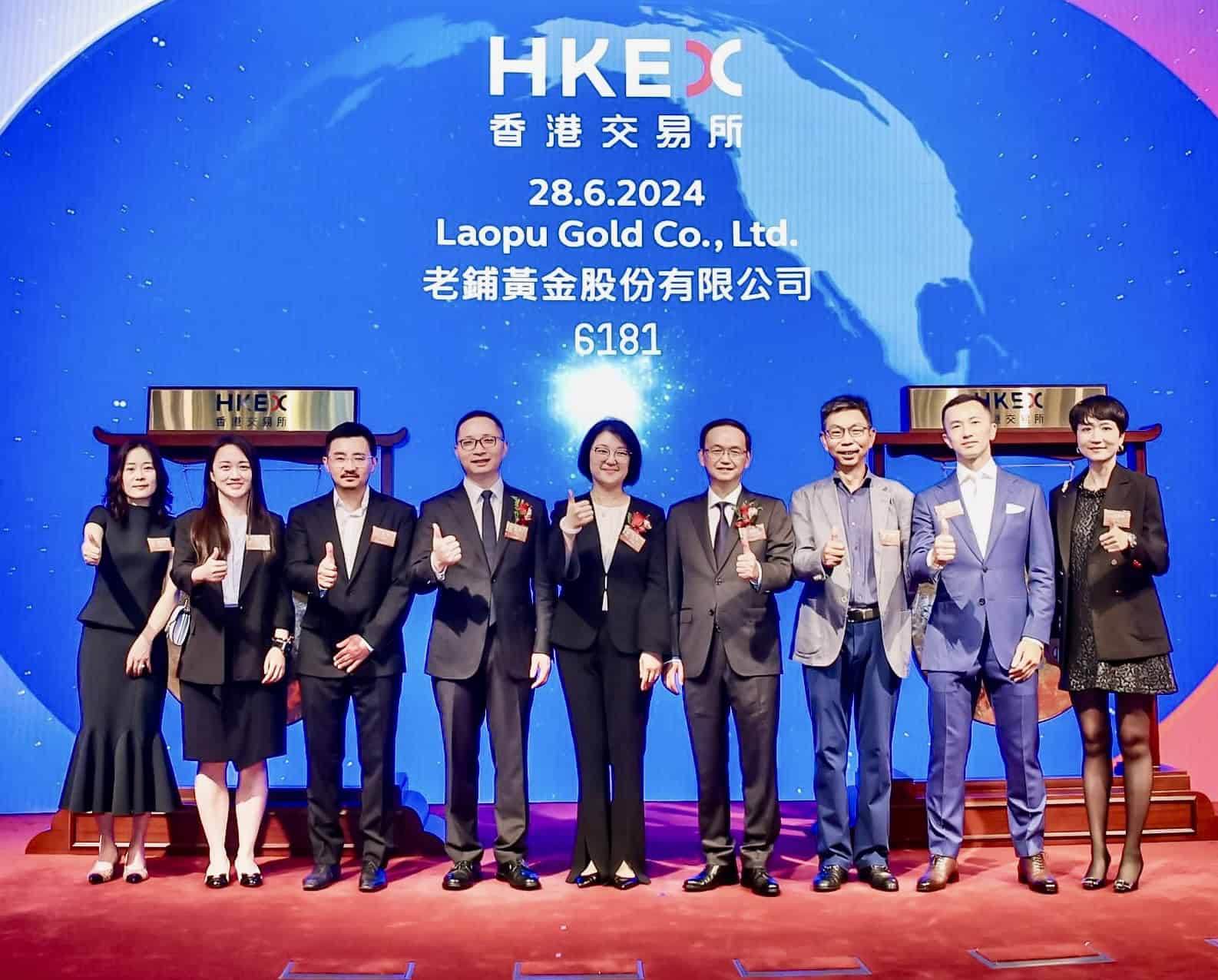
At the time, Chinese media also cast doubt on its numbers, noting discrepancies between its revenue and profit growth. The company withdrew its second listing application in 2023 and turned to Hong Kong, where it raised HK$906 million ($116 million) in a flotation last year and an additional HK$2,715 million ($349 million) through a share placement in May. Its major investors included Huang River Investment, a subsidiary of Tencent; and BA Capital, a Shanghai-based venture capital firm whose portfolio includes Pop Mart, the company behind the viral toy Labubu.
While some continue to see red flags in Laopu’s business, Xu, its founder and chairman, has further growth in mind. On the company’s earnings call last Wednesday, Xu announced plans for an international expansion, expressing confidence that Laopu’s gold jewelry would appeal to both the Chinese diaspora and global consumers. In June, the company opened its first boutique outside of Greater China in Singapore.
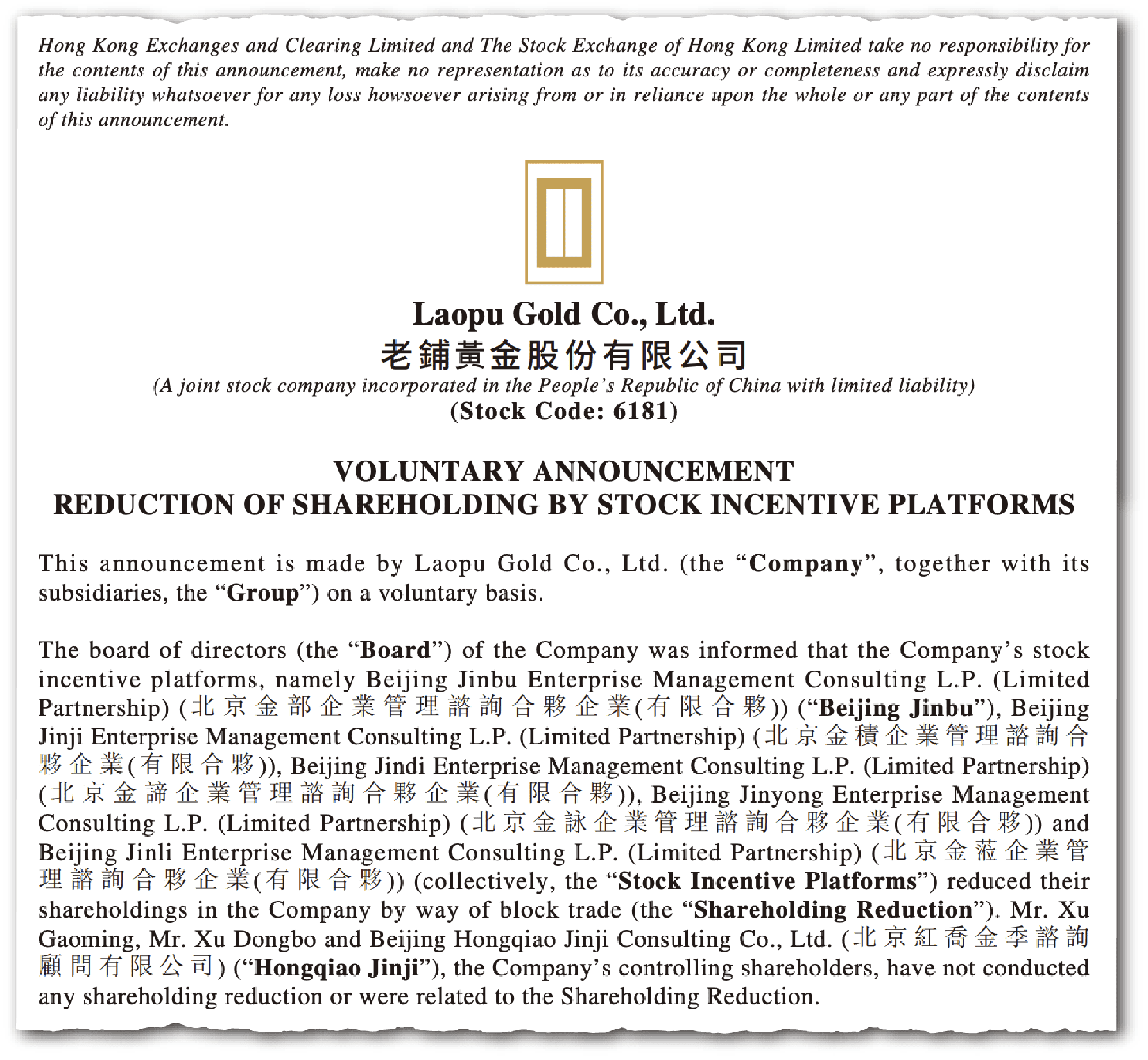
Despite Xu’s bullishness, Laopu’s share price has dropped 30 percent since its peak in July, with investors disappointed at the company’s lack of concrete growth measures. Some stock incentive platforms that manage employees’ equity put their shares on sale in a block deal on Thursday, seeking as much as HK$2 billion ($258 million), according to Bloomberg.
There are also concerns about the company’s financial health as it has recorded consecutive years of negative cash flow, despite its fast-rising sales. In its latest report, the company attributed that to stocking up on raw materials ahead of its international expansion.
Mike Braun, managing director of the financial advisory Zenon Partners, says Laopu Gold’s cash flow situation is concerning.
“It is mind-blowing that a company plans to declare over a billion yuan ($140 million) in dividends when the operating business still burns cash at an accelerated rate and the liquidity is not there to pay for it,” he says.
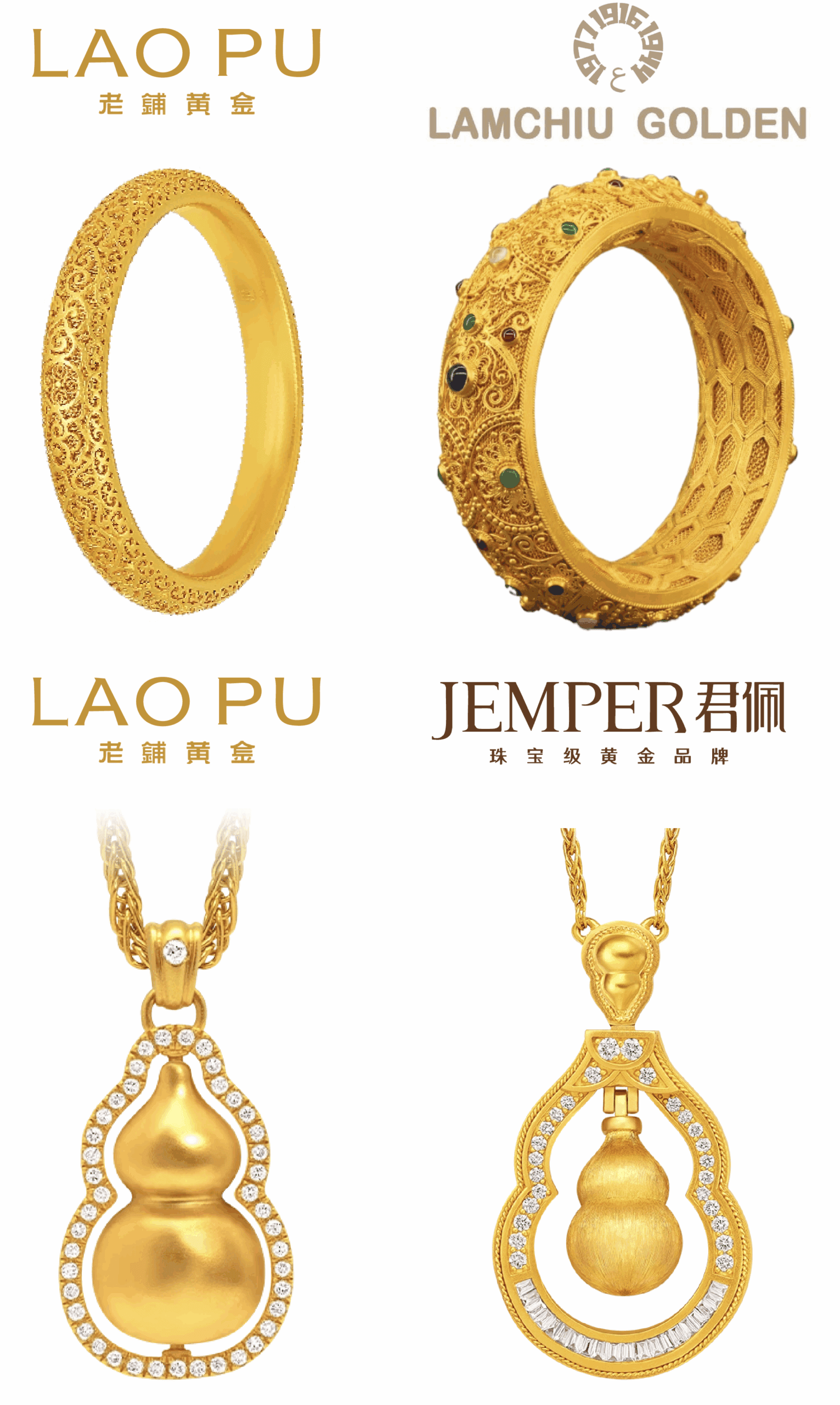
Laopu’s biggest challenge yet might come from domestic competitors.
The techniques Laopu uses in its jewelry-making are not exclusive: it outsourced 41 percent of its production to external manufacturers in 2023. And as Chen, the gemstone dealer, notes, Laopu draws from the same pool of Chinese artisans as others in the industry.
Some smaller brands, such as Lam Chiu from Lanzhou in Gansu province and Shenzhen-based Jemper, are already gaining ground. They also tout handcrafted jewelry, exquisite designs and Chinese cultural elements, and are frequently compared to Laopu on social media.
“Chinese consumers can change their mind very quickly,” says Chen. “They don’t have brand loyalty.”

Rachel Cheung is a staff writer for The Wire China based in Hong Kong. She previously worked at VICE World News and South China Morning Post, where she won a SOPA Award for Excellence in Arts and Culture Reporting. Her work has appeared in The Washington Post, Los Angeles Times, Columbia Journalism Review and The Atlantic, among other outlets.