Janet Yellen’s life has been marked by a series of firsts. She was the first woman to be named chair of the Council of Economic Advisers (Clinton administration), chair of the Federal Reserve (Obama administration), and Treasury secretary (Biden administration.) Gender aside, she is the first person to have ever led the country’s three most important government economic bodies. In all these roles, Yellen has dealt with China. Her career spans from Washington’s warm engagement with Beijing to its frosty disengagement, though part of her job at Treasury was to revive economic policy ties and assure that the two countries didn’t fully split apart.

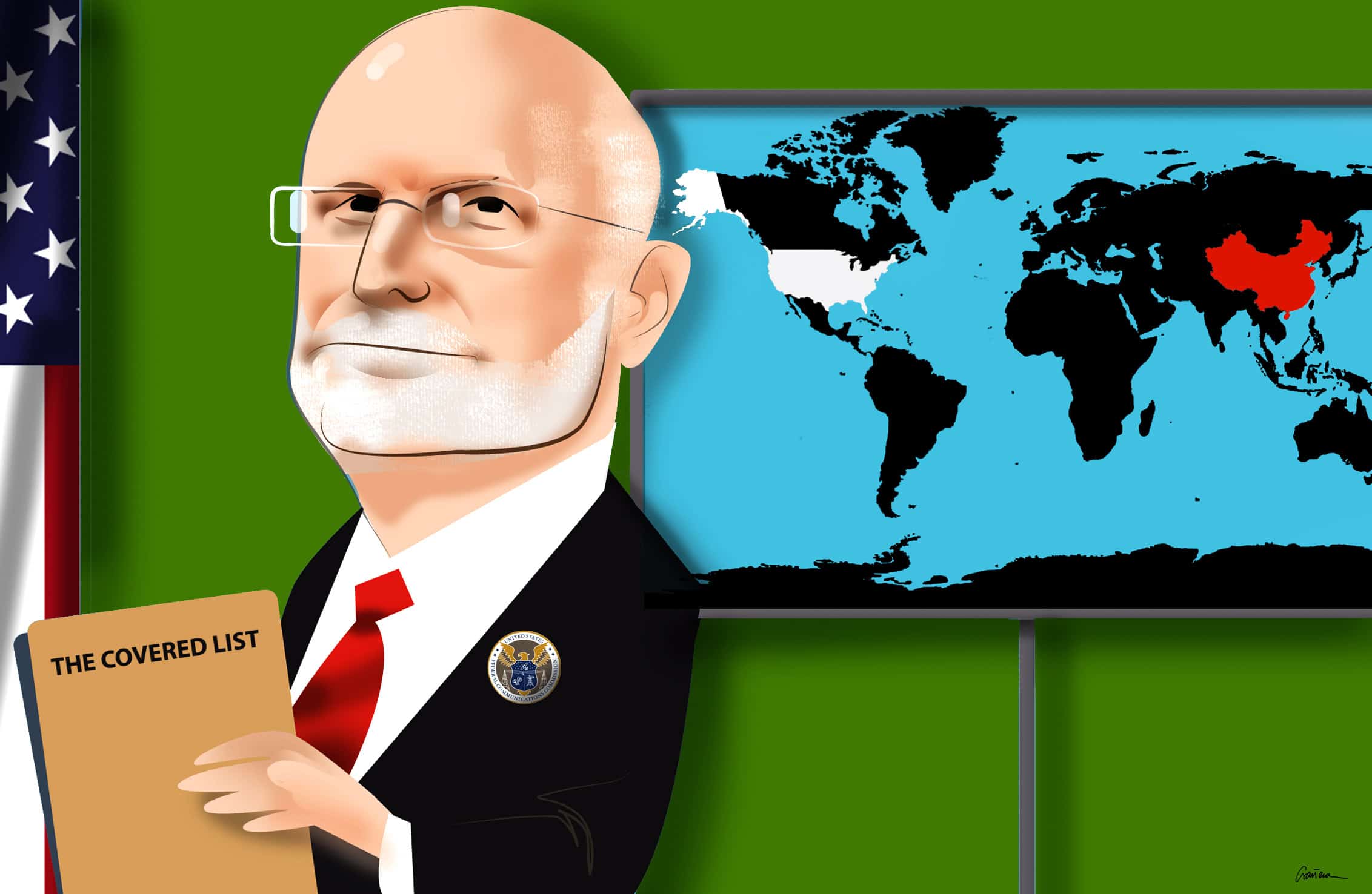
Illustration by Kate Copeland
Q: I want to proceed chronologically, but given what’s happening now, let me start with a Trump question. What do you think of how President Trump is using tariffs to pressure China — and not only China — to make concessions on trade?
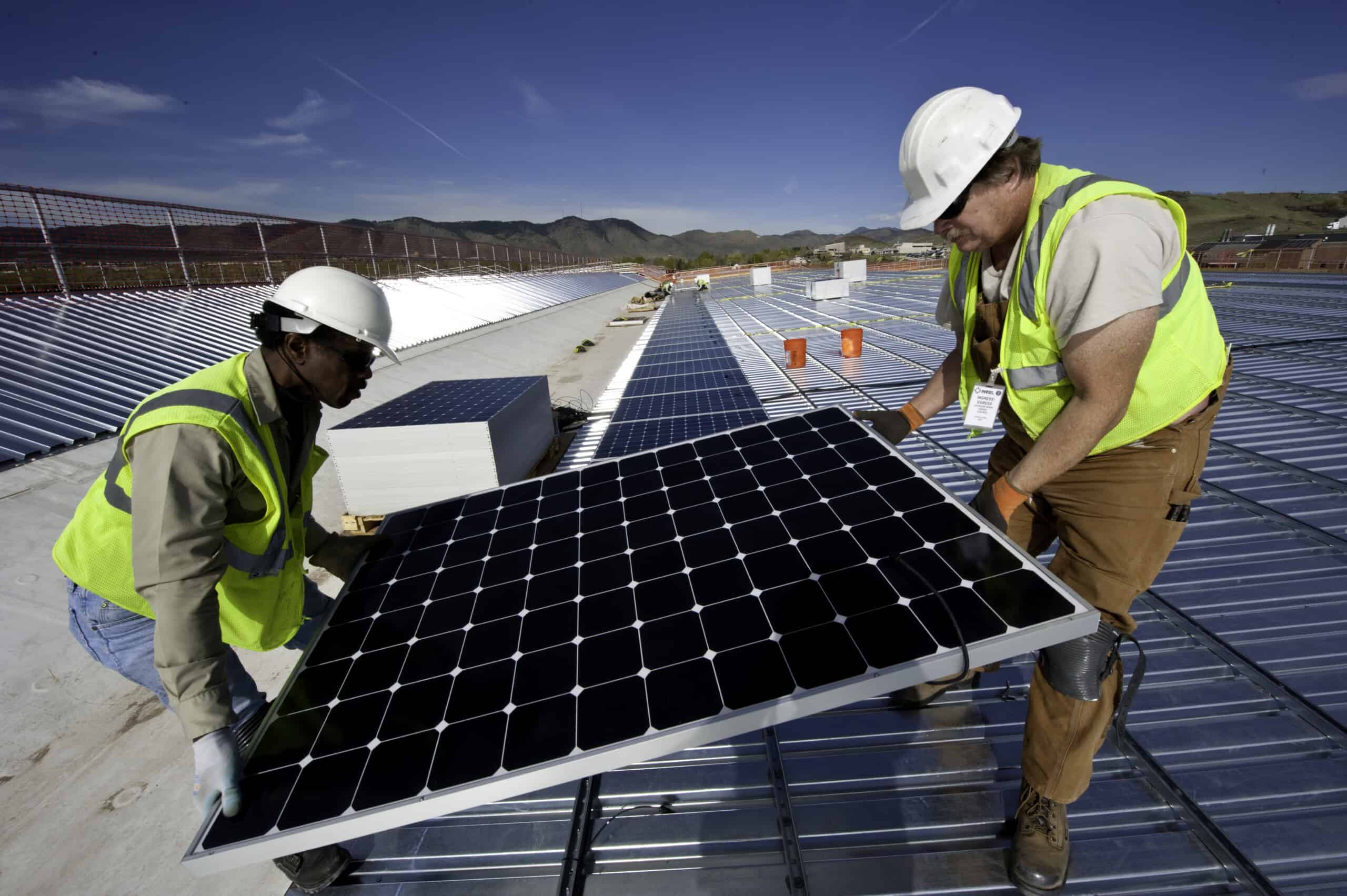
A: I’m very disapproving of the strategy that he’s following, although I’m not opposed to targeted tariffs meant to protect a couple of industries where we thought the ‘infant industry’ or national security issues were important. The Biden administration imposed those, particularly on semiconductors and clean energy. We thought that what China was doing in both sectors had the potential to undermine our industrial strength in these areas.
In clean energy we have very innovative firms who have invented much of the technology, but who have been driven out of business by China’s subsidies. To be able to scale up they need some protection and also targeted support in the form of subsidies and tax incentives.
Now, in truth, I don’t know what the objectives are that Trump has with respect to China. Sometimes I think he’d be happy to settle for a deal in which we sell more agricultural goods and airplanes. That’s not in and of itself bad for the United States. But in many cases, if China buys more soybeans from us, they buy less from other countries. All that happens is a rearrangement of global production. And in some cases, strong-arming a country to buy our planes rather than their planes is harming our allies.
But I don’t know if that’s his objective. I hear various things. One is that he’s trying to bring broad-based manufacturing back into the United States. I don’t think that that’s an objective we should have, and it’s not going to work. Manufacturing is declining as a share of employment in every developed country, including China in recent years. We’re not going to make America richer by producing more shoes, toys, and apparel.
These are not going to be good, high-wage jobs, and it’s not a strategy that creates net jobs. The unemployment rate in the United States is 4.1 percent; most people would call that full employment. What this would do, at least to some extent, is attract resources and people away from other sectors, including our export sector where research suggests there are good jobs.

The tariffs aren’t even likely to induce very much investment in these sectors. To be willing to invest in a shoe or textile factory in the United States, you would have to think you’re going to have a very high level of protection for a very long time. I don’t know how anybody could possibly think that. Even if it lasted through the Trump administration, there’s every reason to believe that a future administration would reverse this policy.
Of course, we have a big trade imbalance with China. But I don’t think you’re going to find many economists who believe that unfair trade policy is the major cause of the United States’ overall trade imbalance. It reflects a gap between the total spending that Americans want to do and the amount that we’re capable of producing ourselves. For more than 30 years, the U.S. has been spending more than we’re producing for a whole set of reasons. If you really wanted to reduce our trade deficit, probably getting control of fiscal policy and reducing our deficit would be a better way of accomplishing that.
So far, the Trump tariffs haven’t created much inflation. Why do you think that is?
In May, the last month for which data is available, we collected around $22 billion. Someone is paying that, and if that continues, eventually it’s going to be consumers who pay. [Right now] firms are running down inventories and they’re probably not passing along price increases until they’re forced to refill those inventories from abroad.
There’s also a certain amount of Chinese goods diversion taking place through third countries. In the short run, when there’s uncertainty about whether tariffs are temporary or permanent, producers will absorb the cost to some extent. I expect that in the coming months, we’re going to see more meaningful increases in prices. In the case of automobiles, there’s going to be a pop in prices. I’d expect that to come this summer.
Let’s go back to the Clinton administration. You were then the head of the Council of Economic Advisors and accompanied President Clinton to China in 1998. At that point, the administration was pushing for engagement with China and trying to get it into the World Trade Organization. What was the thinking at that time?
China wanted to gain entry to the WTO and was rapidly adopting more pro-market strategies, moving in a direction of less reliance on state-owned enterprises and greater reliance on the market. At the time, we dealt with economists in China, many of whom had visited the United States and were very sympathetic to our understanding of the virtues of a market-based economy. Perhaps chief among these people was Premier Zhu Rongji.
| BIO AT A GLANCE | |
|---|---|
| AGE | 78 |
| BIRTHPLACE | Brooklyn, New York, USA |
| CURRENT OR FORMER POSITION | Distinguished Fellow in Residence, Brookings Institution; formerly Secretary of the Treasury and Federal Reserve Chair |
Working with China was seen as fostering that development, helping China grow, and moving people out of poverty. Trade was seen as generally beneficial. It would be beneficial to us, and it would also be beneficial to the Chinese. We thought it would be good for us to have a growing and richer China with a bigger middle class. I suppose some people thought eventually a richer and freer China might move somewhat in the direction of democracy.
Did you think that?
I don’t think I knew enough at the time about China to have a good view. Nobody expected democratization overnight. But typically, in an economy where markets and private firms are thriving, there’s better information flow and people have more opportunity to express themselves. So, I think we saw it as a win-win. I don’t think we saw it as giving China a gift that’s going to be costly to the United States.
With the benefit of hindsight, do you think it was naive? What do you think worked and what didn’t?
There has been a lot of research that shows that there was a China shock: In the early 2000s manufacturing industries in parts of the Midwest and South were decimated by the influx of goods from China. Maybe two million jobs were affected in a concentrated period.
Every economist knows that after adding up all the gains and losses from trade it tends to create net gains, but there are losers along the way. That’s not something that economists discovered recently. Our experience, though, had been that because we have flexible labor markets, people are able to make very sizable adjustments as sectoral demands for workers changes.
You should provide support for retraining. People are mobile and make adjustments, and you try to help the losers. Unfortunately, I don’t think we did that. There was trade adjustment assistance, but I don’t think it was ever really properly funded or operated. Given the way the shock hit, it caused a lot of problems, and it wasn’t well handled on our end. It ended up having a profound effect.
Economists believe trade is a piece of [this disruption] and China is a piece of it, but the bigger piece is technological change. The problem is that everybody knows about China, and I think Americans really blame this whole thing on China.
From there, you went on to become president of the San Francisco Fed [from 2004 to 2010], a region where trade with Asia is important. In your analysis of the regional economy, what role did China play?
Let me clarify what my role was at the San Francisco Fed. There had been a scandal involving a bank called BCCI. [In the 1980s, the foreign-owned Bank of Credit and Commerce International was involved in money laundering and other crimes and had illegally gained a controlling interest in a Washington D.C. bank-holding company.]
I don’t think talk shops are useless. You develop ties with people and an understanding of who to call if problems arise.
In the aftermath of BCCI’s downfall. Congress passed legislation that said if a banking entity based in another country were allowed to operate in the United States, we had to establish that the foreign country had comprehensive consolidated supervision. Some of the work for that was doled out to the regional banks. In San Francisco, we housed a lot of banks based in Asia. There was some very small Chinese presence, but China wanted to become more active, and we had been working with them on what you need to do to beef up supervision.
I went three times to China when I was at the San Francisco Fed. Our special focus was on the financial system, financial supervision and regulation. We met with the China Banking Regulatory Commission, and then with People’s Bank of China Governor Zhou Xiaochuan.
While we were there, we sought to understand general macroeconomic trends, and monetary policy issues. We always visited the central bank and arranged meetings with private economists based in Beijing or Shanghai or Hong Kong. We probably also met with the heads of the World Bank and IMF teams in China. Our focus was on their financial system and their progress in supervision and regulation.
What was your general impression?
They were making a lot of progress in developing a modern system of supervision and regulation. This was all pre-Xi Jinping. The government was trying to get major Chinese banks to be more disciplined in their lending practices. And they were trying to set up joint ventures and minority ownership with big American or foreign firms, so they could kind of teach Chinese bankers a rigorous process of loan evaluation.
There was something a little schizophrenic about this because the government always felt free to call up these banks and tell them to lend more here or there. It may not be profitable and you may make losses, but we’re telling you to do it. There was always pressure coming from the government.
But this was also a period in which the government objective seemed to be to promote privately owned firms. They wanted to see capital being allocated to them and not just to the state-owned enterprises, which at the time were regarded as very inefficient and were holding back Chinese growth.
How did you deal with the fact that the PBOC is not independent like the Fed? And do you think that helped or hurt China’s government in terms of development?
That’s a very difficult question for me to answer. We know why countries benefit from an independent central bank, but China has a very, very different system. It’s almost impossible to imagine a central bank in China having the kind of independence that the Fed or the Bank of England or European Central Bank has.
But I remember we undertook a study while I was at the San Francisco Fed that was coordinated by the Bank for International Settlements that provided advice on how to better make monetary policy by bringing in independent outside views. We suggested changes they could make that would move them in the direction of a modern independent central bank without going that far. [The BIS is an international monetary institution often described as the bank for central banks.]
When you became vice chairman of the Fed [2010-2014] and then the chairman [2014-2017], did you also visit China?
When I became vice chair, I started attending some of the Strategic Economic Dialogues. [The SED were annual sessions of senior officials from China and the U.S. during the Bush administration.] Ben Bernanke was Fed chair. The Chinese always had a strong interest in understanding macroeconomic development, U.S. monetary policy and what was happening in the United States.
When I became chair, I participated [in what was then called the Strategic and Economic Dialogue during the Obama administration.] I went to Beijing in 2014 with Treasury Secretary Jack Lew. The Chinese came to the United States in 2015, and I participated in that with Jack. And in July of 2017, there was a dialogue where I participated with Treasury Secretary Steven Mnuchin. The dialogues stopped after that. [The Trump administration created a short-lived exchange called the Comprehensive Economic Dialogue.]
Did you find them useful? There is a lot of controversy about whether they were just talk shops.
I don’t think talk shops are useless. You develop ties with people and an understanding of who to call if problems arise. We developed more trusting relationships, friendships, rapport, and understanding of how others see the world. We were trying to learn from them about developments in China that were notable, often financial sector developments.

We were on very good terms. I had countless meetings with Zhou Xiaochuan. I was also going to Basel for meetings at the Bank for International Settlements on a regular basis, and Governor Zhou went to those meetings. His successor, Yi Gang, did as well.
In one meeting of the G20 in Shanghai in 2016, there was even a rumor about a secret pact between China and the United States called the Shanghai Accord.
What was that about?
We had been holding interest rates at the Fed at zero for a very long time, but as we got into 2015, it seemed clear that the labor market was pretty close to being healed, and the time had come to start raising interest rates. We were thinking about doing so in September of 2015. But in the summer of 2015, the Chinese currency had come under a lot of pressure. They basically tied the yuan to the dollar, and so the Chinese currency was gradually appreciating. Then they had a surprise devaluation. [On August 11, 2015, China devalued the yuan, which fell a total of 3 percent and sparked panic among Chinese households and markets.]

That really threw financial markets globally for a loop, and stock markets started falling everywhere. In the United States, there was a lot of concern about China’s currency policy and economic growth.
Part of the pressure on China was the expectation we would tighten interest rates. They were beginning to suffer capital outflows, and their reserves were declining. Their very ham-handed devaluation really freaked the markets out and they started encountering real problems. Because there would be spillovers to global financial markets, we were also worried about the outlook in China.
We didn’t tighten until the end of 2015, and when we tightened there was another episode of disruption. Then we had this meeting in Shanghai. Going into that meeting, it was maybe expected that the Fed would tighten four times in 2016. [G20 finance ministers and central bankers met in Shanghai in February 2016.]
After that meeting, the Chinese seemed more relaxed. Some of the pressure on their currency diminished, and we didn’t raise rates nearly as much as was expected. We only raised them once at the end of the year.
People thought there had been some secret accord. They called it the Shanghai Accord and the papers were filled with it. There was a kind of social media frenzy that we had some secret agreement where we agreed that if they stopped depreciation pressure on the renminbi, we’d stop tightening monetary policy.
Was there such an agreement?
| MISCELLANEA | |
|---|---|
| FAVORITE BOOK | Strangers in Their Own Land by Arlie Hochschild |
| FAVORITE FILM | Casablanca |
| FAVORITE MUSIC | Baroque |
| MOST ADMIRED | John Maynard Keynes |
No. We did meet, and we understood the pressures that they were under. When I occasionally teach about things like this, I like to use it as an example of how monetary policy in one country has spillovers in others. Sometimes policies that you think are in your own best interest have negative spillovers in another country, and then when they react in what they think is in their best interest, that has a negative repercussion back on you.
The best outcome for everybody is if you take those things into account and change the way you think about what is in your best interest. That doesn’t require a secret handshake agreement. Nothing like that. It just shows the value of understanding the impact of policies in one country on other countries and back again.
Would you say at that time that you raised interest rates less than had been expected in part because of the possible impact on China?
I prefer to put it this way: Chinese developments which were partly caused by interest rate increases in the U.S. altered the outlook for the U.S. in such a way that it made further increases in interest rates less appropriate.
A tightening of financial conditions and slower growth in the global economy and in China reduced our prospects for growth and made it more sensible to worry about downside risks to the labor market.
In your discussions at the Fed with people in China did you see a difference after Xi Jinping became president and consolidated power starting in 2013?
The real change I noticed was when Vice Premier He Lifeng and the current economic contingent were put in place. [He Lifeng became a member of the Politburo in October 2022 during the 20th Party Congress, where Xi stacked the top ranks of the party with his longtime allies. He became vice minister in charge of economic and financial affairs in March 2023, replacing Liu He, who had been educated in the U.S.. By that point, Yellen was Treasury Secretary under Joe Biden.]
One of the things I really noticed was the change in their growth strategy. This is a country with an unbelievably high savings rate, where consumer spending is a modest share of GDP. This is different than any other developed economy
Making changes [to boost consumption] would also ultimately make China less export-dependent… But in the visits that I had during the time that I was at Treasury, it became clear Xi doesn’t want to do that.
All along, it had been recognized by Zhou Xiaochuan and all the PBOC people, and Liu He, that China needed to strengthen consumption as a contributor to GDP. The two major ways you do that are by expanding the social safety net so people have health care, some sort of pension scheme, and don’t have to save so much. Also the share of GDP going to household income in China is very low because a lot of the income goes to state-owned enterprises and is not distributed [and used to benefit consumers].
Making changes [to boost consumption] would also ultimately make China less export-dependent. When you have a low share of GDP going to consumption and the return on investment [in areas like infrastructure and housing] is declining, you’re going to end up exporting like crazy. And that’s going to create a lot of problems with the rest of the world that is not going to like what it means for them.
And isn’t the point of all of this to improve the material living standards of Chinese? Why shouldn’t you be distributing more income and letting prosperity filter through? Everybody we talked to over the years took it as a given that that was the direction China was going to go.
But in the visits that I had during the time that I was at Treasury, it became clear Xi doesn’t want to do that. He doesn’t want people to be impoverished but he doesn’t want them to be too materialistic either. He has implemented a policy that involves giving rebates to households that replace old appliances with new ones. But that just affects the timing of spending and isn’t going to raise consumer spending as a share of GDP.
What was it like dealing with He Lifeng compared to people that you had dealt with before?
The people that Xi put in place are a different breed with very different backgrounds. He Lifeng is an economist. He has a PhD in economics, but I think from a university focused on Marxist economics. He also headed the National Development and Reform Commission. [He has a PhD in economics from Xiamen University. NDRC oversees state economic planning and five-year plans.]

When he talked about the economy, he started talking about it sector by sector. You could see he didn’t have a macro perspective on things. [His predecessor as vice premier] Liu He had studied at the Kennedy School. He spoke English quite well. Yi Gang taught at the University of Indiana. He had an American PhD. And Governor Zhou had spent time in California.
I don’t think He Lifeng had ever been to the United States, and he speaks no English. He’d risen through hierarchies in local and regional governments with Xi. He has total loyalty to Xi and the party line.
As opposed to creating more of a consumer society, they seem to be putting their emphasis on trying to catch up or get ahead of the U.S. with technology that has military applications.
I totally agree, and that’s a very worrisome part of our relationship with China. But they’ve also made massive innovations in areas like clean energy, including electric vehicles. I drove a BYD in Australia. It’s a lovely car, and costs around $10,000. And the battery — you can stop and charge it in five minutes. Their battery developments are really impressive.
They have the most modern technology and the lowest cost by an order of magnitude. They’re simply at the cutting edge in almost everything having to do with clean energy. I don’t know that that’s related to national security.
Do you think it would make sense for the U.S. to encourage Chinese investment in areas where China is ahead, like cars, batteries, wind power?
Yes, I think it would, especially if we make sure that we have the ability to transfer some of that technology and know-how to local people and firms. Divorcing yourself from the most modern and innovative technology and manufacturing methods doesn’t seem a way to get ahead.
When you think about what China did, it welcomed U.S. investment. They stole a lot of our technology, which I don’t approve of. But they learned a ton from working with foreign firms and having them in their economy. They saw it as a way of getting to the technological frontier.
Divorcing yourself from the most modern and innovative technology and manufacturing methods doesn’t seem a way to get ahead… joint ventures and licensing arrangements, where our companies can benefit from advances that the Chinese have made, make a lot of sense.
There is so much antipathy toward China that even when a Chinese firm wants to set up business and have a joint venture with an American firm, there’s bipartisan opposition. We worked on the regulations for all the clean energy incentives in the Inflation Reduction Act, including for electric vehicles. We ended up allowing not joint ventures, but permitting licensing arrangements where they at least had the potential for technology transfer.
There was a group of people who saw anything more than that as off the table, and not politically possible. I would have been inclined toward letting Chinese companies come here and so we can use their technology and build electric vehicles. If Americans can have cars with batteries you can charge in five minutes, why don’t we want to do that?
We want to have a domestic car industry, so we don’t want the Chinese to bring BYD here and knock Ford and General Motors and our companies out of business. But joint ventures and licensing arrangements, where our companies can benefit from advances that the Chinese have made, make a lot of sense.
Let’s go back a little earlier to your tenure at Treasury. You had the job of easing what were then very rough relations between the two countries. Do you think you managed to accomplish much?
Things had reached a dangerous point where there was so much animosity and so little contact that you couldn’t even figure out who to call and be convinced that someone on the other end would answer and deal with you. At the time this outreach began, Liu He was my Chinese contact. He’s a person I knew and got along with well. But we would have phone calls or Zoom meetings scheduled and something would happen, whether it was the balloon thing or Nancy Pelosi going to Taiwan. He’d say, ‘I can’t talk to you. I’m going to have to move the call.’ Things had gotten into a very bad state.
[After House Speaker Nancy Pelosi’s visit to Taiwan in August 2022, China largely froze contacts. Then the U.S. shot down a Chinese balloon that the U.S. thought was on a spy mission in February 2023, and again China also cut off many contacts.]
When Xi and Biden met in Bali [in November 2022 during a G20 summit] they agreed to try to restore contacts. They jointly identified macroeconomic and financial development as an area where it would be useful to have ongoing contacts. That’s the kind of thing I had been doing for years — talking about macroeconomic policy, monetary policy, financial markets, macro developments affecting our economies, the global economy.
I think we deepened our contacts. We developed more trusting relations. My personal relationship with He Lifeng grew to be very cordial and very warm. It’s hard to deal with a person who doesn’t speak one word of English. But nevertheless, I would say a warmth and rapport developed between our senior teams, including with Liao Min. He’s a fantastic guy, who has always worked well with the United States. [Educated in Cambridge University and Peking University, Liao is now vice minister of finance.]
We had three meetings together that were very long and detailed and went over many issues. We set up working groups, including an economic task force that had a dialogue on the issue of subsidization of advanced manufacturing and its relationship to consumer spending and macroeconomic priorities.
We also had a financial task force that was headed by the PBOC and Treasury. We did things that were important. For example, after the financial crisis we began having principal-level meetings with a number of major financial centers where we would game through what we would do if we found out on a Friday afternoon that a major financial institution was failing that had operations in all our jurisdictions. Who is going to do what? By Sunday night we would have to be prepared to go out and communicate to the public our plan and whether this firm was going to be open for business and what was going to happen.
We started doing that with the Bank of England, and then later we brought in the European Central Bank. This is really complicated stuff. We had never done anything like that with the Chinese, but the Chinese have huge financial institutions. So our working group set up tabletop exercises in which we would work through with them, what we would do in really great detail. We developed playbooks and we talked through a lot of financial stability issues that affect the global economy.
I think about my second meeting with He Lifeng, which occurred before the APEC meetings in San Francisco in November of 2023. We hosted them, I think, for two and a half days of meetings. They arrived in the afternoon and were tired and went to bed. We went out to dinner in San Francisco. We were going to meet with them first thing in the morning. And over dinner, [Treasury Undersecretary] Jay Shambaugh’s cell phone rang, and we found out that ICBC, which has a securities firm in New York that handles Treasury securities, had been hacked. U.S. institutions were worried about transmission of problems from this securities firm to them so they cut this institution off, which is what they should do, and what our protocols call for. [State-owned Industrial and Commercial Bank of China is China’s largest bank.]

Some U.S. firms were thinking maybe they should cut off ICBC too. We discovered this as we were having dinner, knowing all the main Chinese financial regulators, including [PBOC Governor] Pan Gongshen, and He Lifeng, were going to be at the meeting at 8 o’clock the next morning. And we thought, what’s the reaction going to be? Maybe they would think we arranged this horrible thing just to embarrass them and make them look bad.
You could imagine they’d be very upset if it hit the papers that instead of having meetings with regulators, we cut off a Chinese firm. So we frantically started making calls to the Chinese team. It was late, but we got in touch with them, and we were able to meet with them absolutely first thing in the morning.
By the time I got there at 8 o’clock to talk to He Lifeng, I wanted to convey that we were really sorry this happened, and we wanted to extend every possible degree of support in dealing with this.
And he said, ‘Great. That’s fine, I really appreciate it.’ And I thought, okay, we had enough contact among all the people at these levels that they didn’t think we were trying to embarrass them. You need to have those kinds of contacts when something happens.
Did ICBC, the parent company, get cut off?
No, we managed to avoid that. They had to go through various tests to show [the hacking] hadn’t affected the ICBC parent. The New York firm got back and running in about a week, as I recall.
It’s a small thing, but it shows that cooperation is possible. We also worked very closely with them on sanctions. I’m not at liberty to discuss all the details, but I made it clear on every trip to China that we would not tolerate Chinese cooperation with the Russian military. This extended to dual-use goods that China might have been providing to Russia that would help it in its military campaign against Ukraine.
We had a lot of intelligence about what was going on, and some of it involved Chinese banking organizations that were facilitating this trade. We had the possibility of sanctioning some Chinese firms. They care very deeply about the Chinese banking system, its access to correspondent banking in the U.S., and China’s ability to conduct global trade. The last thing in the world they want is for a Chinese institution of any size [to get cut off].
I’m not talking just about the largest institutions, but small ones too. That kind of publicity is anathema to them. They were willing to cooperate to prevent that from happening. And we had very detailed interchanges with them and collaborative work to try to shut some of this down.
But the Chinese still ship semiconductors, drones and other things useful to the military to Russia.
There are Chinese firms that do that, and we have sanctioned them when we discover they are engaged in this. But the real power of U.S. sanctions is on banks. We have the ability to cut off their correspondent banking relations in the United States, which means they can’t do any international activity. But if a firm in China is supplying things and not running payments through a Chinese bank, that’s very hard to detect.

Now, did it shut everything down? Was this sufficient to let Ukraine win? No, obviously it wasn’t. But it’s a piece of what you have to do to address the Russian threat against Ukraine.
We were also very concerned about debt restructuring because there are so many developing countries that have overhangs of debt and can’t develop. China does a lot of international lending, particularly in Africa, and when you can’t pay them back, they’re often not nice.
Most reasonable people understand that once debt gets to be too onerous, in some sense it is in everybody’s best interest to reduce the amount of debt. When a country is strangled with debt, it can’t borrow a penny abroad. It can’t grow. And then its capacity to pay anything back diminishes.
China is always saying, ‘Oh, yes, we will do this.’ But they just drag their feet; they are uncooperative. The IMF, World Bank and G20 set up something called the Sovereign Debt Roundtable, which included the Chinese, other lending and borrowing countries and private lenders. It focused on policies pertaining to sovereign lending. The Chinese were involved and, over time they became more cooperative.
We just kept plugging away, saying we need you to be more cooperative; it’s in your interest. They would say,’ Oh, we’re cooperating.’ The PBOC would say, ‘Oh, yeah, we’re doing our part. It’s those guys over there, the Export-Import Bank or a development bank that just won’t go along.’
Then we realized the person in charge of all of this is He Lifeng. And if he tells these guys, ‘This is it, we’re going to come to the table and deal with this,’ he has the power to do it. In Zambia and a couple of other African countries we made some progress in getting them to be more cooperative.
Has this work continued under Trump?
The working groups ended. Our hope had been that they would continue. We have senior civil servants who could have continued them. But I understand they have been disbanded.
Do you talk to Treasury Secretary Scott Bessent at all?
No, I don’t. He has succeeded in undoing everything that was a priority of mine at Treasury. This goes well beyond China. It goes to reforms of the Internal Revenue Service, an international tax treaty with 137 countries that we negotiated, our attempts to evolve the agendas of the World Bank and IMF to address global public goods like preparing for pandemics and addressing climate change. All of that is completely dead. I don’t think he needs my advice on that.
Asked to comment, Secretary Bessent replied: “Sadly, these bitter comments come as no surprise. Secretary Yellen’s greatest priority, when she actually visited the Treasury building, was leaving me and the American people with the largest deficit to GDP in American history when our country was not at war or in recession.
“The Trump Administration and I have engaged China in a respectful but fulsome manner, rather than being lectured and cowered. I couldn’t even tell you what Secretary Yellen’s China policy was, aside from consuming beer and mushrooms.
“Thanks to President Trump’s transparency and economic policies, the U. S. economy will generate parallel prosperity — a Golden Age for working Americans and business.”
During the Biden administration, as you were trying to do this work with China, the White House was moving ahead with more tariffs. I understand that you were very frustrated in not having access to the president and that sometimes important decisions would come when you were in China or when you were just back from China. How did you deal with that?
Well, there was the time when we put bilateral tariffs on clean energy and finished up a Section 301 [trade review that increased other tariffs]. I don’t know when they made those decisions, but there weren’t meetings with the president about them. I had reason to believe that the president was making decisions, but I didn’t know what the decisions were.

Meanwhile, I’m going off to China to discuss all these issues about our concerns with advanced manufacturing and what they’re doing in the clean energy industry and the like. We had established the new working group to discuss subsidization of advanced manufacturing and how it links in with these consumption priorities. And the first meeting of that working group was right after we came back from China. The Chinese were coming to the United States for the World Bank meeting in April 2024.
I discovered the president was planning to give a speech announcing the tariffs the day all these senior Chinese were meeting to discuss this issue. And I just thought that was inconceivable so I strongly objected. He [Biden] delayed the speech.
You would think a Treasury secretary would talk to the president a lot. I presume your predecessors talked to Obama or Clinton regularly.
Biden relied on a small group of advisers for many of the decisions he made. At least in the economic area, he had very few meetings of the sort that I think of as what NEC meetings are supposed to be like — where the president and all the senior officials, including cabinet members that have interest and knowledge about some particular issue, discuss it around the table and give their views and the president asks questions. There were virtually no meetings like that.
I think there were issues where the president just thought he knows his own mind and didn’t want or need to debate.
On a different topic, when you were in China, it was greatly remarked upon that you knew how to use chopsticks. I always thought it would be more surprising if a Jewish woman from Brooklyn didn’t know how to use chopsticks. What did you make of the attention that was given to you on those personal things?
They like older people in China. Somehow, the image they had of me, I think, was as warm and affectionate, and the Chinese government allowed that to be the case. They allowed social media to go a little crazy over the chopsticks, eating at this restaurant or that restaurant. I gather that when most foreigners at the level I’m at would come to China, if they went to a restaurant, they would eat in a private room. We never did that. We went to good local restaurants, and we sat at tables in the middle of the crowd. Somebody would notice us, and it would get into social media, and they let that happen.
I think they probably saw me as one of the most pro-China people they were dealing with in the United States. I always tried to confine our China policy measures to the narrowest national security focus that I could. I was always positive about our overall trade and investment relationship and extolled the fact that it was beneficial to both sides and it was valuable to preserve, although we have very legitimate national security concerns.

On my first trip to China as Treasury secretary in July 2023, I got off the plane to where they greet you, and there were zillions of reporters there. It had been sunny all day, and there was this shower, and it stopped raining. As I came down that stairway, a huge rainbow opened up in the sky. As I got to the bottom and I’m greeting my greeters, someone said, ‘What a wonderful omen we have,this rainbow.’ And they let that go viral.
On the first night we were there, we told the Treasury attaché at the embassy, ‘We’re tired. We have meetings the next morning, so let’s go out quickly for dinner. Something not too fancy. You order a bunch of stuff for all of us.’ So, he took us to a Yunnanese restaurant [named In and Out].
There must have been 14 or 16 of us. They started putting dishes on the table and I started taking a little of this and a little of that. Some people photographed us. We were in the middle of the restaurant at a long table they put together. The next thing I know — and this is more or less simultaneous with the rainbow — is this thing about the mushrooms. [There was a cascade of news stories about whether Yellen had eaten hallucinogenic mushrooms.]
I thought it was funny because that was one of my favorite restaurants and I certainly had mushrooms there and I had no special psychedelic moment from it. On a final subject, I understand that one of your concerns about your trip to China was that you couldn’t take your personal laptop or phone with you and do Wordle as you usually do.
I lost my Wordle streak. I had a 180-game streak or something like that.
Another contribution to the country.
Public service.

Bob Davis, a former correspondent at The Wall Street Journal, covered U.S.-China relations beginning in the 1990s. He is the author of Broken Engagement, a collection of The Wire China interviews. Earlier, he co-authored Superpower Showdown, with Lingling Wei, which chronicles the two nations’ economic and trade rivalry. He can be reached via bobdavisreports.com.