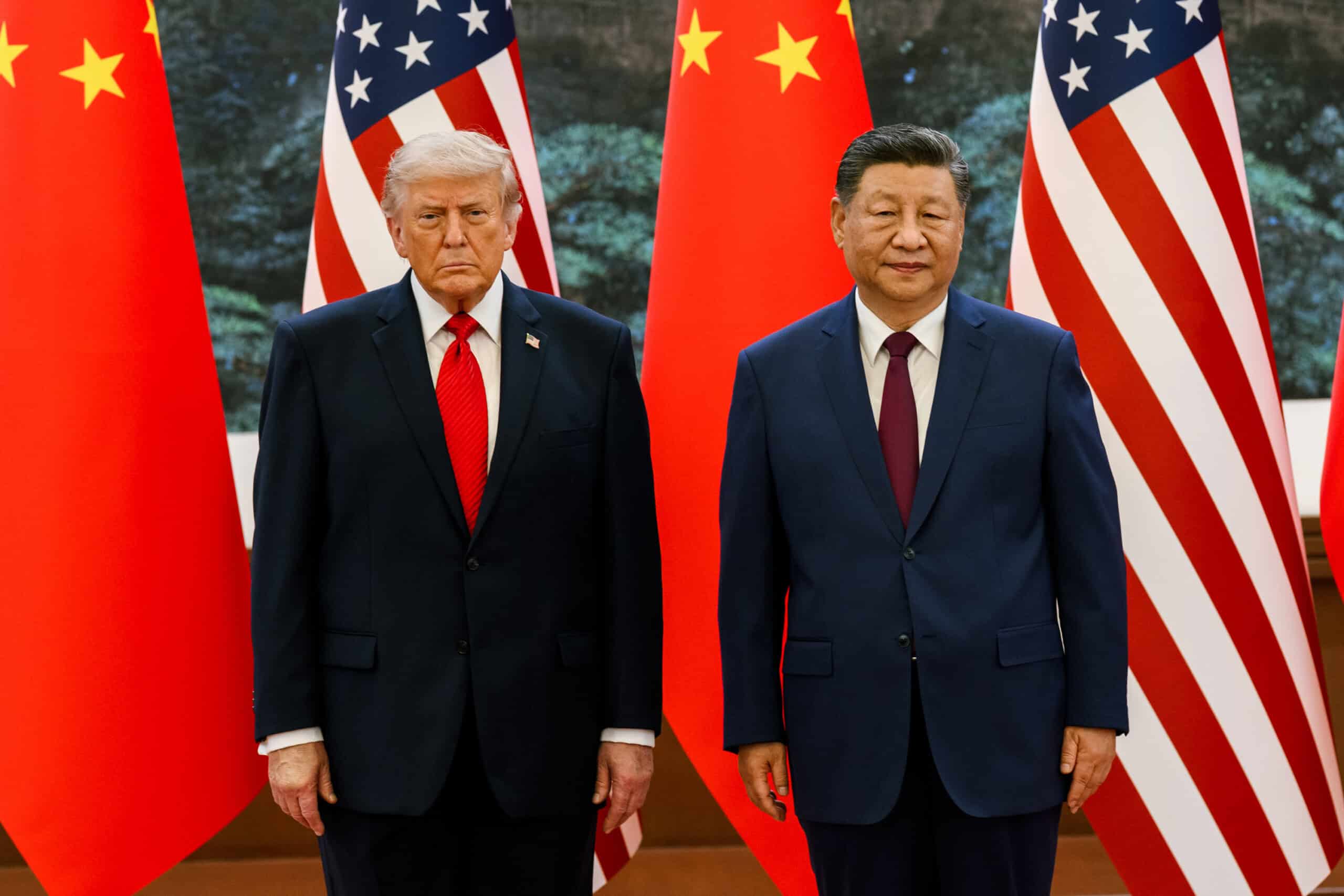
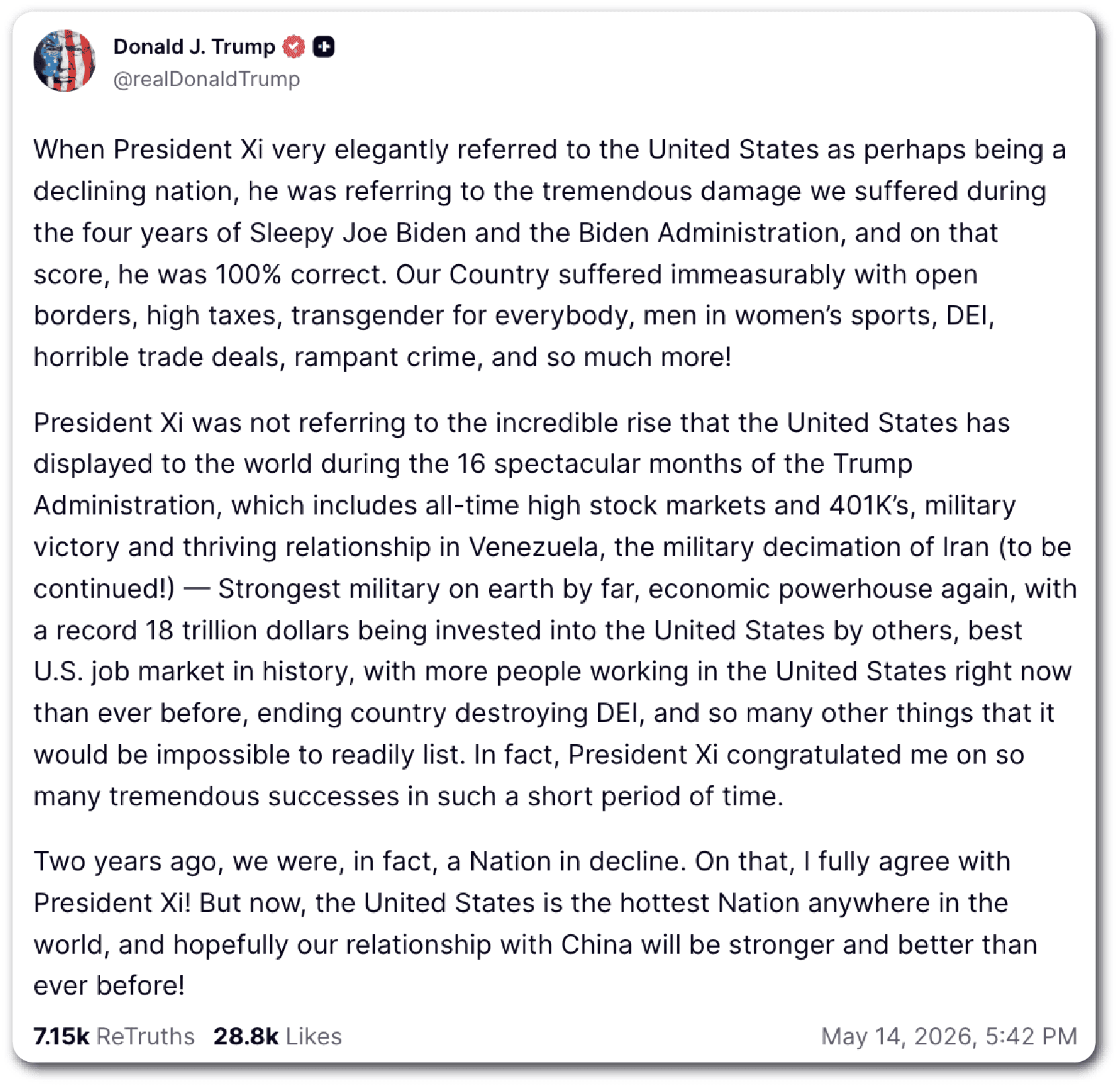
In the run-up to the first U.S. presidential visit to China in nearly a decade, President Trump talked up its potential achievements. His Truth Social feed and the official White House account both exuded glowing expectations that “great things will happen.”
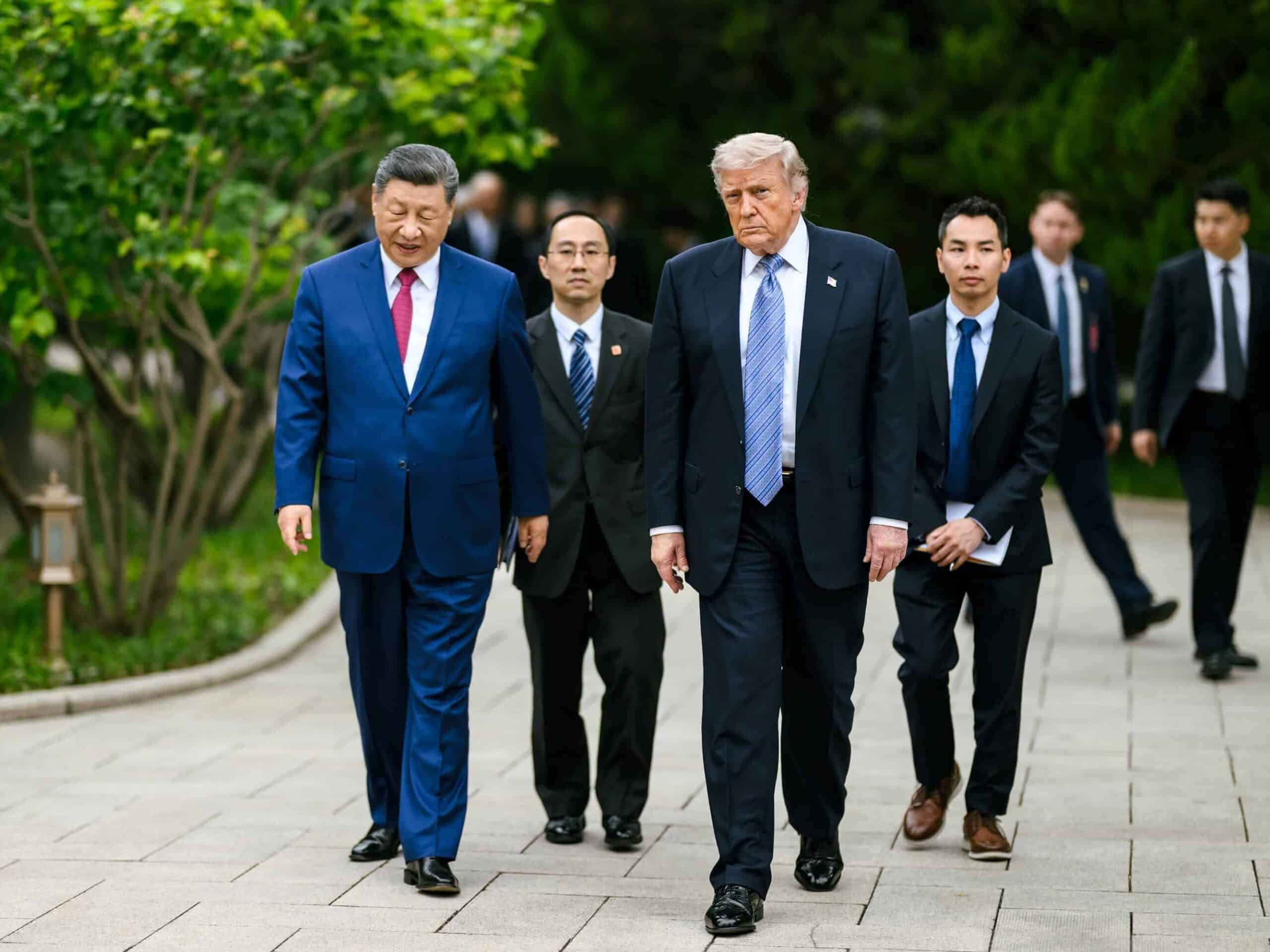
Even after he arrived in Beijing, Trump painted the summit in the best light, repeatedly claiming a personal friendship with Xi Jinping. China smartly reciprocated with generally positive wording and gestures, including inviting the president deep inside the Zhongnanhai leadership compound where few other foreign leaders have ever set foot.
Yet if we frame the summit in the terms of Trump’s favorite allusion, the U.S. simply did not have the “cards” with which to entice and pressure Beijing into substantial agreements. Moreover, the American side’s lack of cards was not the result of a badly dealt hand, that one would just have to get on and play with in a normal game of poker.
Instead, Trump’s second term began with a relatively good hand for the United States: a strong alliance network, cooling price pressures, ample funding for green energy and semiconductor subsidies, and global leadership in science and technology across most fields. Instead of building on this strong position, as any good poker player would have done, the President has squandered many of these cards since taking office. As a result, he had to camouflage his now weaker hand with pleasantries in Beijing.
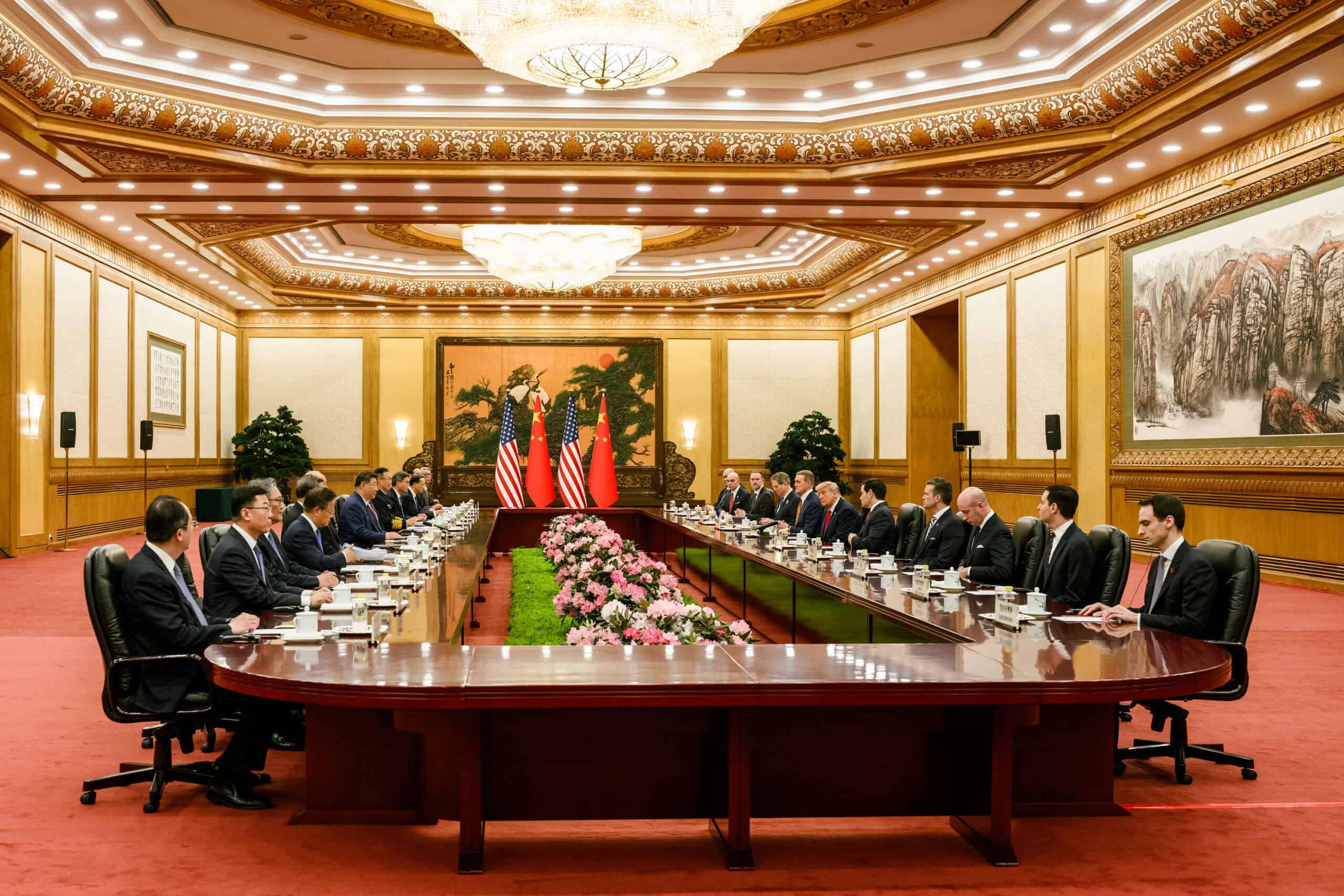
All the genial verbiage and gestures on display cannot cover over the fact that the U.S. obtained few substantive gains from the summit. On the crisis in the Persian Gulf, Trump claimed that the two sides agreed on some principles, such as the undesirability of shutting down the Strait of Hormuz or Iran possessing nuclear weapons. No joint action or coordination to realize these outcomes has been announced, however, and may well not be in the coming weeks.
Nor does it seem like the two sides talked much about medium-term trade issues and China’s fiscal and industrial policies that for years have been creating an uneven playing field for U.S. competitors. In the short-term, the U.S. may have gotten incremental increases in agricultural orders, and a (much smaller than expected) airplane order. The two sides simply agreed to talk more at a lower level, through two new boards of trade and investment.
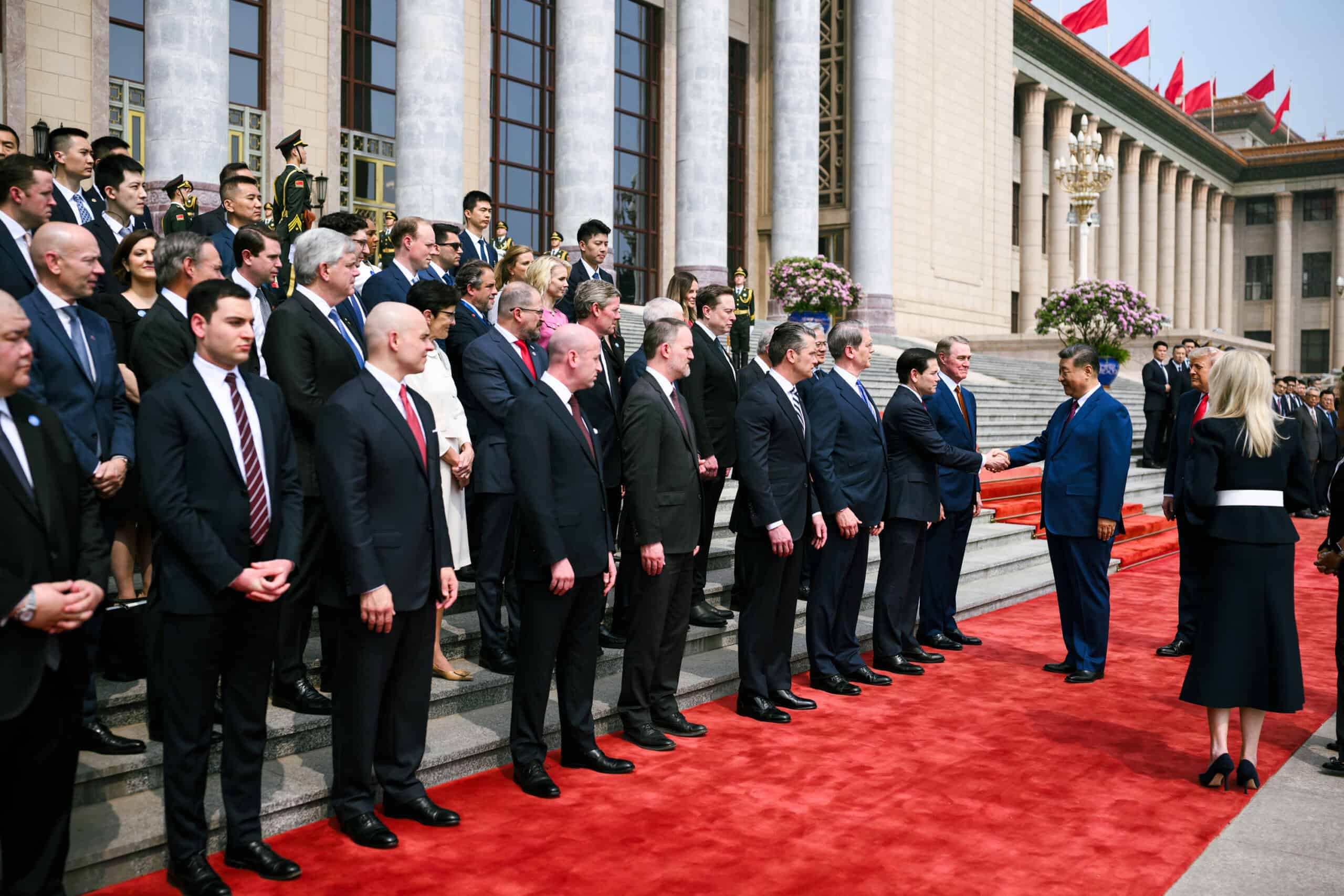
In fact, it is China that now has a strong hand vis-a-vis the U.S., both because of its own actions and because of its rival squandering its advantages in recent months.
The Chinese government has spent years, even decades cultivating supply chain autonomy via a dizzying suite of industrial policies and fiscal subsidies. Even though the U.S. has imposed export bans on various technologies, China has either already developed alternatives or will do so in the coming five years.
In contrast, the current U.S. administration dismantled the country’s biggest program of support for green energy as soon as it took office, even to the point of forcing the destruction of already-installed offshore wind generators. The CHIPS Act for the semiconductor industry has been kept alive, but the funds are now deployed in ways that reflect the leadership’s personal whims rather than well-considered strategy.
It is not entirely wrong to think of Great Power politics as a card game, as Trump at times does. However, it is not a poker game, where hands are dealt randomly, and players both try to read the cards held by other players and, at times, bluff their way to victory.
After China temporarily cut off rare earth exports, the U.S. began to try to build an alternative supply chain: but as it turns out, this would require the collaboration of many traditional allies and partners, whose interests have been systematically undermined by U.S. actions in the first 16 months of the administration.
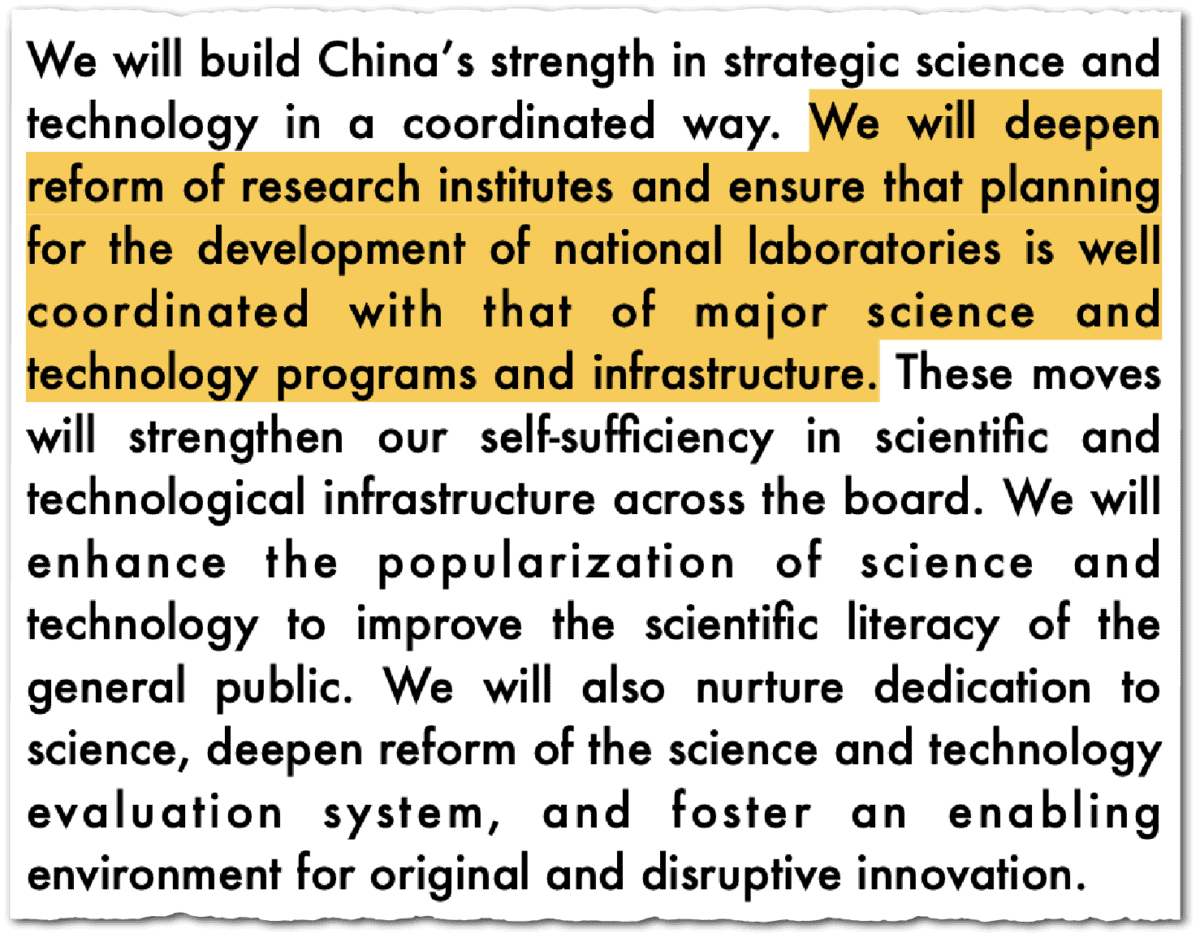
China has also invested an enormous amount in core sciences, spending that is bearing fruit with the center of gravity in many fields shifting gradually toward Chinese universities. Its fiscal outlay in this area was $23 billion in 2024, nearly 3 times higher than the amount in 2015. Meanwhile, the U.S.’s spending on its National Science Foundation started at a similar level in 2015 at $7 billion, but grew by only 20 percent over the following decade, barely covering higher costs due to inflation. Funding for the National Institute of Health, a major source of money for the bio-sciences, has also been gutted.
Furthermore, U.S. visa policies and the wave of anti-immigrant rhetoric from the Trump White House — as well as Chinese propaganda about the U.S. — have dramatically reduced the number of Chinese students, including some of their brightest talent, from enrolling in American schools. The combination of these factors, if unchecked, will make Chinese universities the leaders in a growing number of science fields and innovation in the coming years.
Finally, China recognized its vulnerability to oil shocks a decade ago and began both to develop battery and EV technologies, and massive oil reserves. When an oil crisis finally arrived, China was not caught in the sort of desperate inflationary spiral which has ensnared nearly all of its neighbors. The U.S. is blessed with ample oil reserves, from which it continues to benefit. However, given the global nature of the oil market, a robust program to encourage EV purchases and production in the U.S. would still have reduced the inflationary impact of the Persian Gulf crisis. This, in turn, would have given the U.S. greater leeway to focus negotiations on medium term issues like trade and subsidies. However, with oil-led inflation rising rapidly, the administration had to make dealing with Iran a higher priority in the latest round of negotiations with Xi.
It is not entirely wrong to think of Great Power politics as a card game, as Trump at times does. However, it is not a poker game, where hands are dealt randomly, and players both try to read the cards held by other players and, at times, bluff their way to victory.
The card game of geopolitics is in fact more akin to the Pokemon card game, where players still need to guess or collect intelligence on a competitor’s hand, but have much more discretion than in poker to expend resources and make tradeoffs in order to build the best position they can relative to their competitors.
The evidence on display in Beijing last week was that China has done this expertly — while the Trump administration still needs to realize that they are not even playing the right card game.

Victor Shih is a professor of political economy at UC San Diego and holds the Ho Miu Lam Chair in China and Pacific Relations at the School of Global Policy and Strategy. He is also the director of the 21st Century China Center and the author of Coalitions of the Weak: Elite Politics in China from Mao’s Strategem to the Rise of Xi. @vshih2