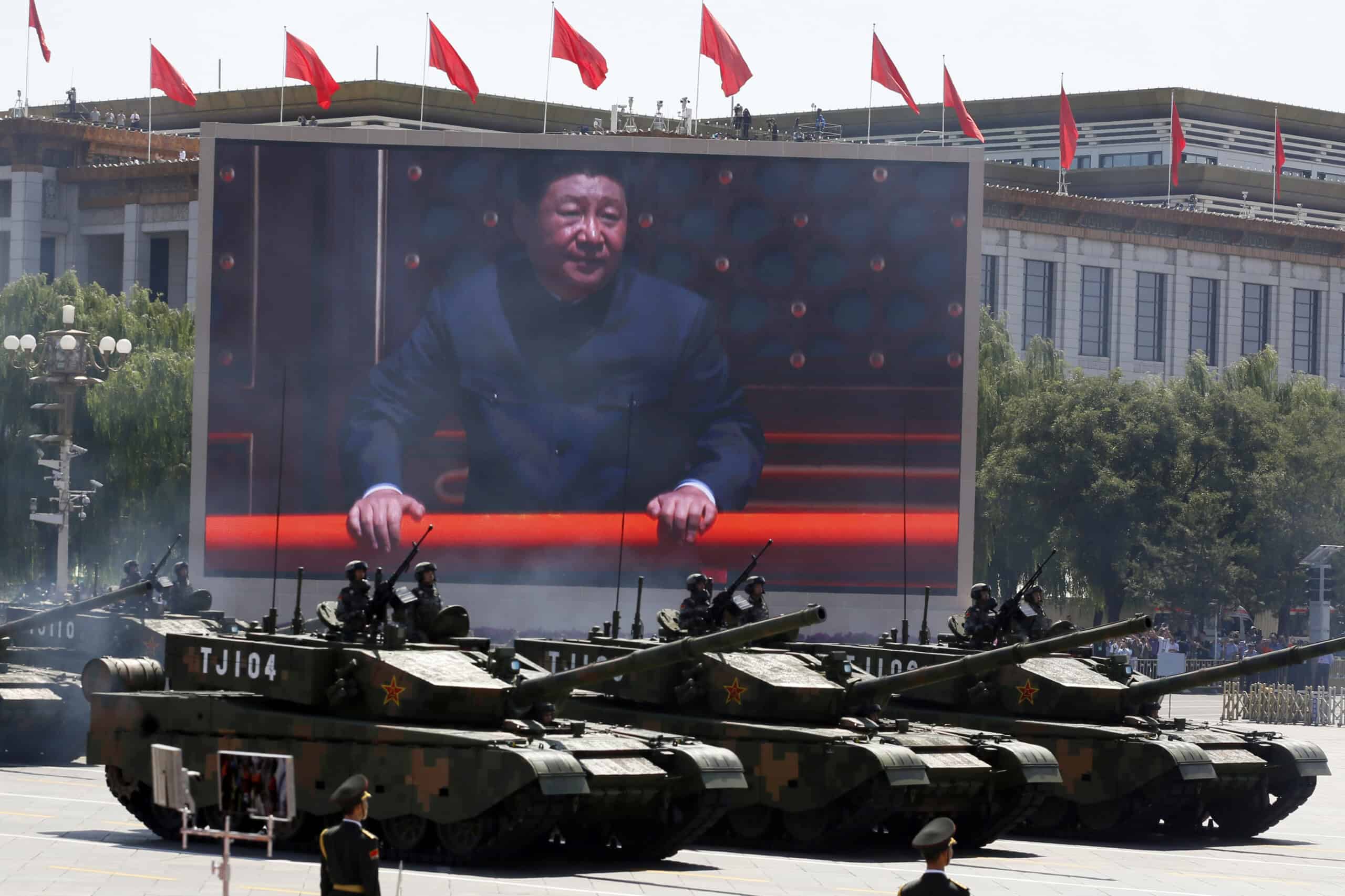
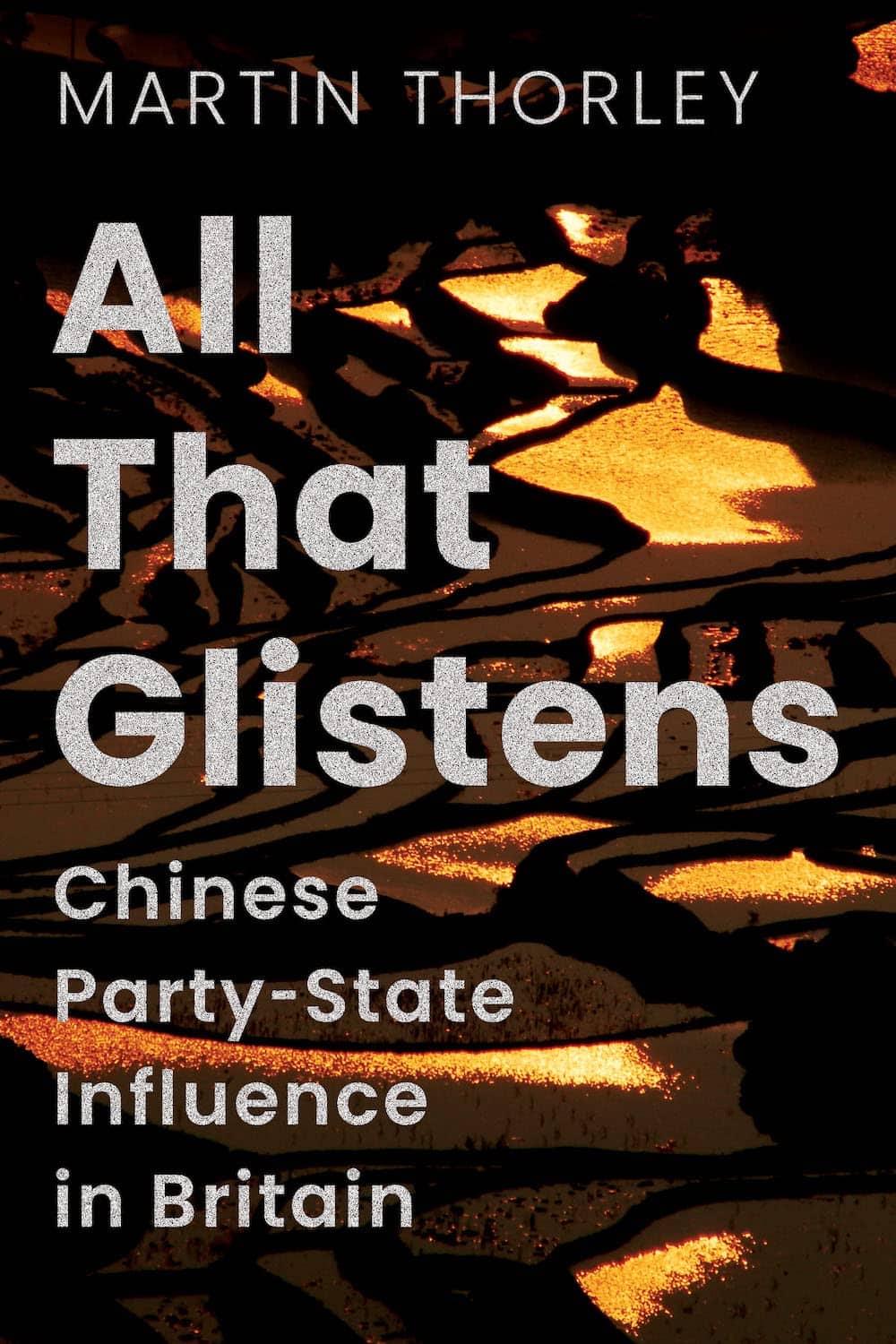
Martin Thorley’s book All That Glistens: Chinese Party-State Influence in Britain takes an in-depth look at the so-called ‘Golden Era’ of UK-China relations, when the British government pursued a policy aimed at creating far closer economic ties with Beijing. Thorley wrote the book after living in China for over six years, where he both studied and started a business. He now works as a senior analyst for the Global Initiative Against Transnational Organized Crime. The following is an edited transcript of a recent conversation.

Illustration by Lauren Crow
Q: Could you start by reminding people outside the UK about the so-called ‘Golden Era’ of UK-China relations: what it was supposed to be, and why you think now is a good time to look back on it?
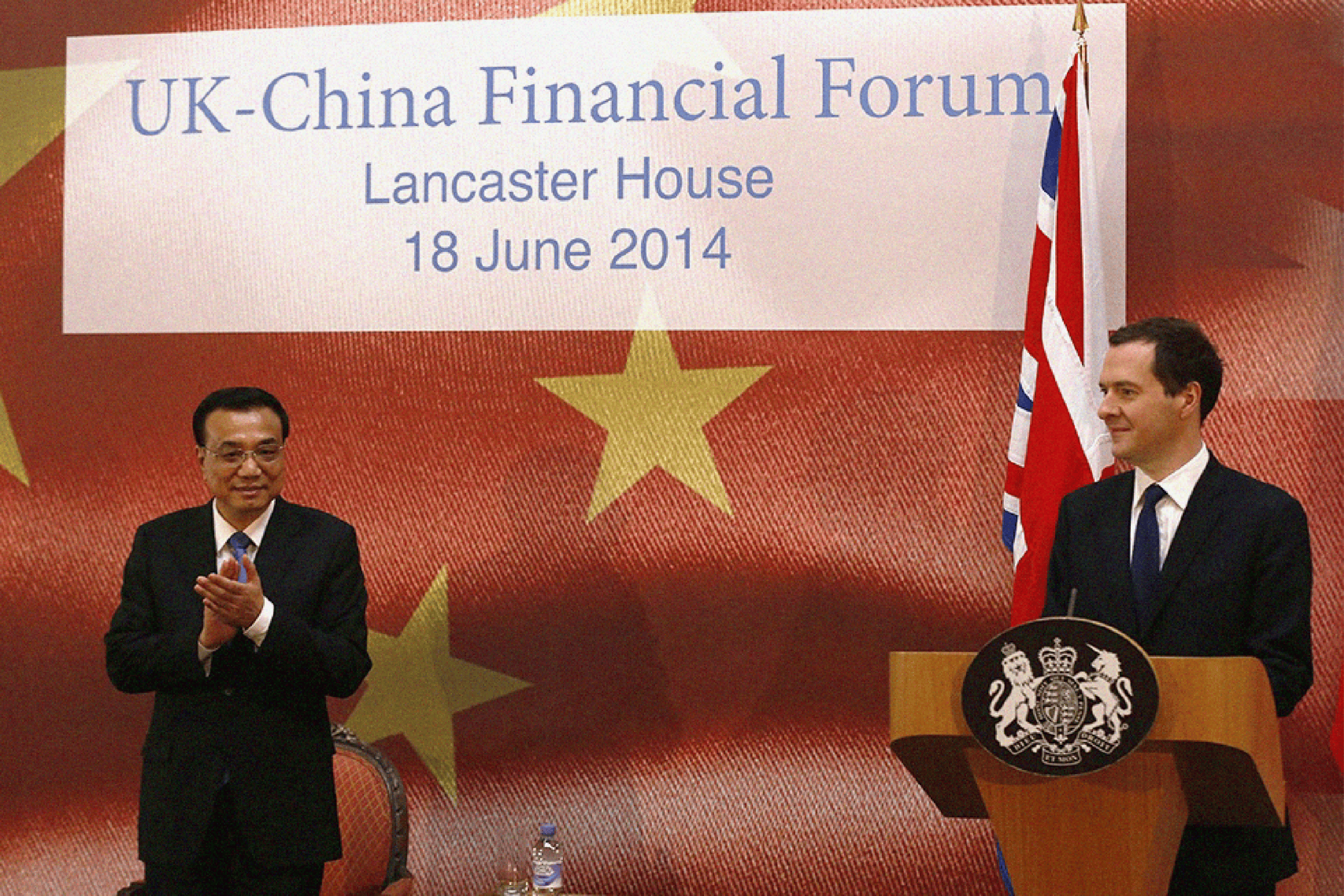
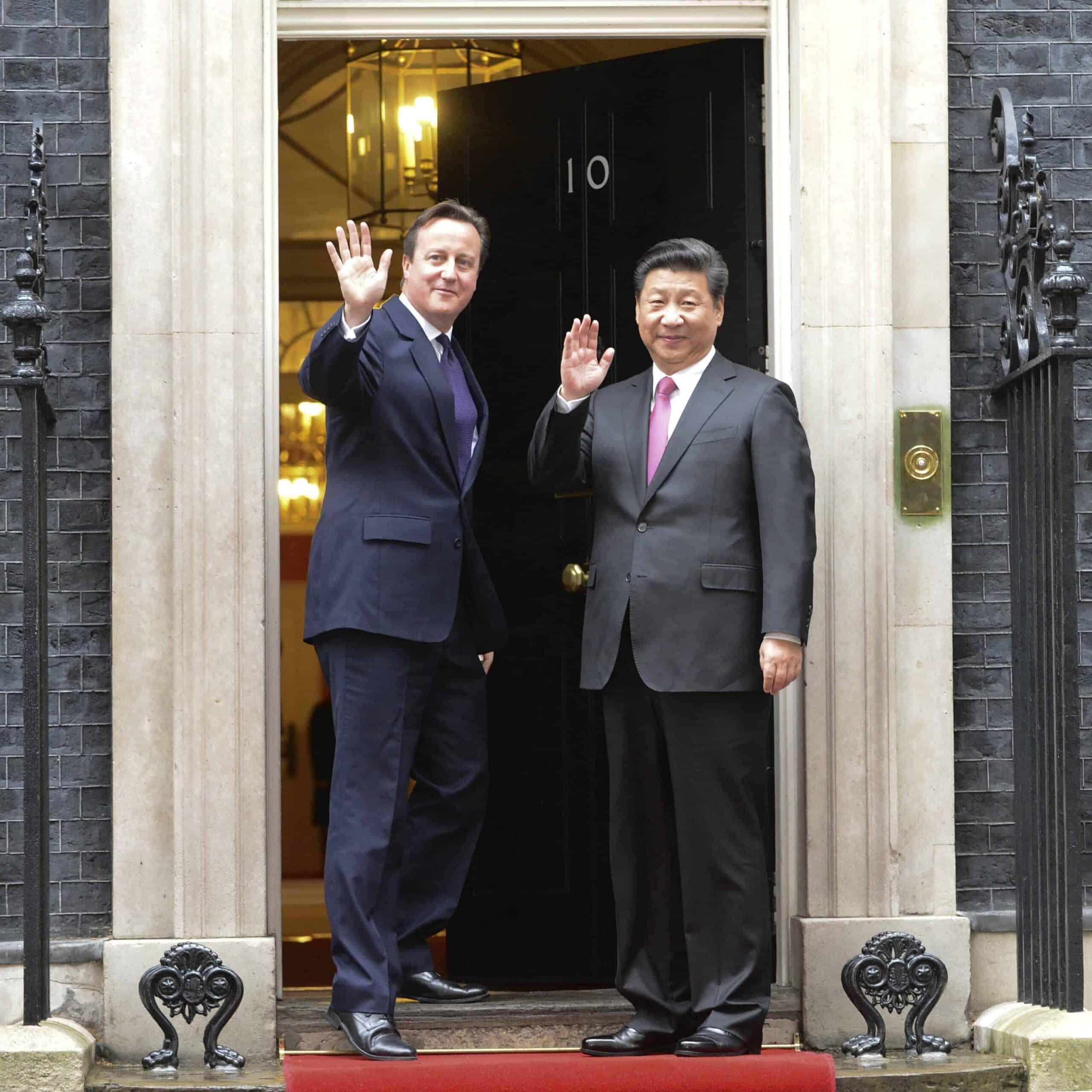
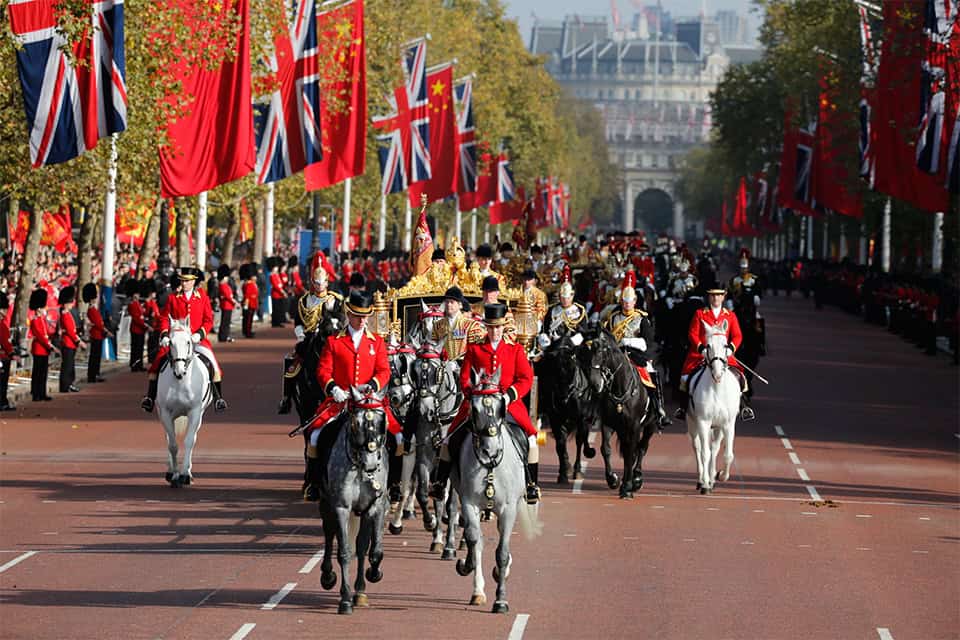
A: The ‘Golden Era’ was proclaimed first by George Osborne, the UK’s chancellor of the exchequer [equivalent to the U.S. Treasury Secretary: Osborne had a highly influential role in the government of Prime Minister David Cameron from 2010-16] and by Xi Jinping, in 2015. Effectively it was a reversal in approach towards China by the then-government, after Cameron had met with the Dalai Lama in 2012. It saw a flurry of activity between the two countries — increased cooperation with the City of London on finance, Chinese involvement in the UK’s nuclear energy sector and generally warmer relations that saw developments like the UK joining the Asian Infrastructure Investment Bank [the China-based multilateral development bank].
My book on it stems from a PhD that I originally started in 2016, which you could argue was the zenith of the golden era. It captures something of the approach and the times, but it’s important to say that there is much here that applies to countries beyond the UK and to the present day.
| BIO AT A GLANCE | |
|---|---|
| CURRENTLY BASED IN | Sheffield, UK |
| CURRENT POSITION | Senior Analyst, Global Initiative Against Transnational Organized Crime |
What was the thinking behind this warm approach to China at the time in the UK government?
There were a number of things going on. It was still not long after the global financial crisis. The then-government had pursued a policy of economic austerity, amid real limitations on what it could do to balance the books.
Osborne was a key actor in this move. For him, China was a really significant opportunity in the financial sense. And that speaks to a bigger theme: at that time, we saw a group that was hyperfocused on financial metrics getting into the driving seat on UK policy towards China. Osborne was in effect the political representative of a group that went wider than politics, that contained many business leaders keen on strong ties to China.
That line between the commercial interests and the realm of politics is fascinating. It might be the definitive feature in terms of UK-China policy at this time. To take one example, Osborne created a position in government called the Commercial Secretary to the Treasury. The individuals who were in that position typically came from the business world and weren’t elected politicians; they became lords [meaning they joined the UK’s non-elected second chamber of parliament] and served in government; and they played a very important role in the UK’s engagement with China. It’s notable to see the frustrations that government departments had with this commercial secretary role because of the power that individual held.
| MISCELLANEA | |
|---|---|
| FAVORITE FICTION BOOK | Dr Zhivago |
| CURRENT LISTENS | My recent playlist includes Kassa Overall, Kid A-era Radiohead, Fumio Itabashi, Bjork, Joy Division, and Holy Bible-era Manics. |
| FAVORITE FILMS | A few favourites include The Diving Bell and the Butterfly, The Lives of Others, and Happy As Lazzaro. |
| MOST ADMIRED | The work of Primo Levi has been important to me. |
Even more than before, with that government we saw donations from business leaders coming into politics, some from notable China-linked individuals, and a closeness with business through government contracts and secondments.
How was it that a network of senior people emerged at this time in UK political circles that was so open to Chinese investment, and closer ties with China economically?
Some of what came to pass really horrified a lot of UK allies. One important point to make is that individuals and governments are often totally unprepared and ill-equipped to understand engagement with an authoritarian state — not just in the UK and not just in this particular instance.
From my time on the ground in China, I learned there was a hard edge to the Chinese party-state, which was a very different beast from a liberal democracy. I was fortunate to have experience working with various individuals in a domestic business environment in China. It took me a couple of years in that position to really understand China’s domestic political economy.
On the other hand, you had individuals who have grown up in a liberal democracy coming over to engage in business deals. In many cases they are very well-meaning, good people — but totally lacking the necessary tools and awareness.
As to why there was and is a group in the UK that was willing to engage with China, and why there was a lack of understanding of the real Chinese political economy: unfortunately, what you often saw among that group, and among the policy makers who would visit China, was that it was almost like they learned about China through the back of a chauffeur-driven car, or in an air-conditioned conference room.
You always have different factions and groups in and around politics. Some may have more of a financial focus, some may have more focus on security. One of my findings was that in the UK at this time, the so-called ‘money men’ seem to have outmaneuvered those responsible for issues closer to security and sovereignty. It would not be until the late 2010s that the security realm burst back into the issue of China policy with a vengeance.
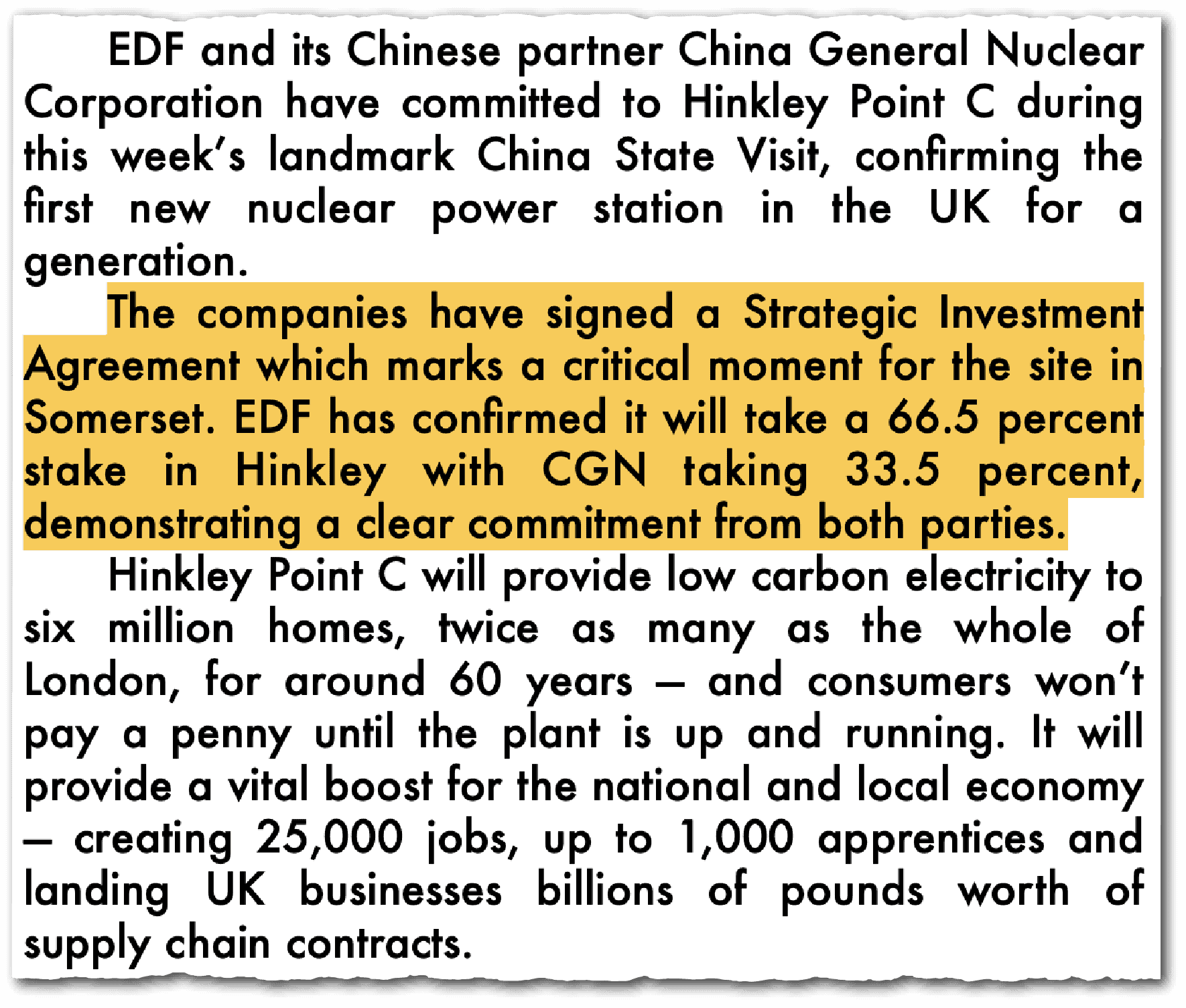
To some extent the relationship developed in such a way that it was a victim of its own success. Things had developed so far in nuclear energy, for example, that the UK was looking at offering China a site where they could not only be involved but also build and operate a nuclear reactor [The Cameron government agreed in 2016 to allow China General Nuclear (CGN) a 33.5 percent stake in multibillion-pound nuclear project at Hinkley Point in western England, alongside France’s EDF. The stake size was reduced to 27.4 percent in 2025]. Suddenly the government, and many British people and much of the media, started looking again at China through the security prism.
Did Britain simply see China as a source of capital, so that the security aspects of the relationship were initially ignored?
I agree that was a factor. However, at the time, the cost of borrowing was cheap. And the idea that one would select Chinese party-state investment over cheap borrowing to build a nuclear power station…when I look back at it, I don’t think it stacks up and I don’t think it stacked up then. I don’t think anyone who brought China’s political economy into the equation could arrive at the conclusion that it was a good decision.
One has to understand that when you’re getting an investment from China you are entering into a different form of agreement with a different type of network. It’s a system with wildly different conditions. This speaks again to this almost myopia in the UK. We still were very much holding onto an optimistic 1990s worldview. That is understandable. But if we’re talking about authoritarian states, one has to use a different calculus.
What sort of people from China were spreading influence in these elite circles in the UK, and how did they go about it?
Sometimes when we talk about these issues we think of traditional espionage. That realm is very important and it still exists. But you also have many other individuals involved, who are tied to and supportive of the Chinese party-state. For that reason it’s important to go beyond Cold War definitions.
Discussion of Chinese party-state activity abroad often involves reference to the United Front system, and with good reason. Let me try to explain by way of comparison. When we think of individual countries, they typically have a foreign ministry that deals in a formal sense with the way that the country engages and reaches out beyond its borders. We can think of the United Front system in this way but instead of a foreign ministry looking out to the world beyond its borders, the united front system is the Chinese Communist Party looking out at the world beyond the Party. It focuses particularly on groups that might threaten the Party’s position — the non-Party world both domestic and international.
The potential danger comes when people genuinely believe they’re doing good. If you genuinely think you are doing good by bringing China into an international system to be a responsible international stakeholder, well, there are no limits on what you can justify to yourself doing…
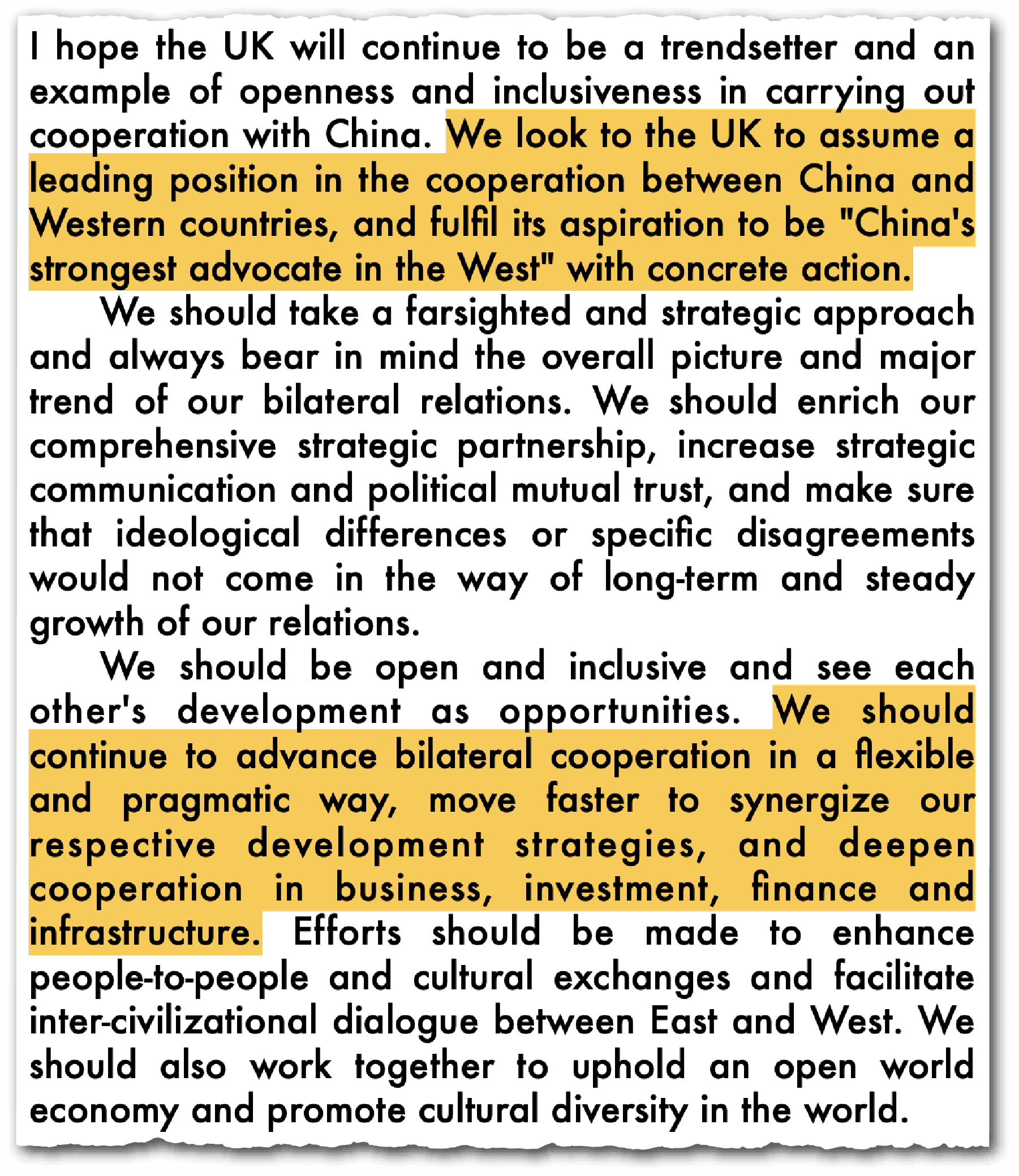
A lot of actors who were undeniably connected to the United Front system come up in the book. In terms of coordination it’s not as clear. The United Front system has a fairly long leash, but ultimately it leads back to the party-state. So we see people who are seriously embedded in the United Front making really vast sums of money, and then making vast donations into British politics directly. But more than that, we see engagement with elites, a very common United Front strategy. We even see the setting up of an all-party parliamentary group on China, framing political debate in the UK.
Where many of these approaches were successful, it wasn’t simply down to the United Front connected groups and individuals alone. In many ways this was a business decision. There was a donor club for people who donated a significant sum into the governing party at the time [The Conservative Party], who could then have private meetings with the prime minister. Very often these are groups whose members and companies are dependent on supply chains that go through China, and on market access to China. So, of course, they’re going to have a very specific view. This is vital in the reception of those efforts made by the Chinese party-state. Again, I’m not sure we’ve entirely caught up with this when we think about country-to-country engagement.
So yes, you have the Chinese side, with the United Front, and we need to be better aware of that. But the financialization and capitalization of the UK government made them receptive. I would argue it’s not a conspiracy that took place, it’s not that there’s someone pulling the strings. It’s far worse than that: it’s the landscape itself.
And on the Chinese side, it’s more subtle than having someone in Beijing giving people their marching orders. It’s more about creating an atmosphere that is favorable to China?
It’s a really good point. Let me try and illustrate it with another example. In my current role, I work on state threats and transnational organized crime. We’ve always had states that use crime in various ways, usually in the realm of espionage. But countries like Russia and China are now making more extensive use of criminals and criminal elements — what I call geocriminality.
There’s a really interesting difference between how Russia and China do this. In the case of Russia episodic geocriminality is more common — it’s usually a single delineated task, like arson at a Ukrainian factory in London, or an assassination in a Tiergarten in Berlin. We see individual tasks where the state seems to reach out and use criminals.
With China we see huge use of criminal elements too, but what we observe is often ‘systemic geocriminality’. There seem to be fewer individual acts as with Russia where someone says ‘this is your task, this is where you get paid’. Instead, United Front actors are absolutely at liberty to use and link with criminal actors, often in pursuing their own objectives. The party-state can then draw upon that network. So it’s not an individual act: It’s more that the United Front actors gain benefits from aligning their interests with the party-state, and they are absolutely allowed to use criminals to pursue those aims. I think that speaks to what we are talking about in the UK.
Individuals in the United Front get benefits if their interests accord with the party-state. I think of Chinese business as a latent network. Businesses are not directly managed by Beijing: they pursue their own objectives, and they are typically profit driven. However they know there are red lines they cannot cross, and that shapes their behavior. If it really comes down to it, they’re still on a long leash, and the party-state will pull that leash if it needs to.
There are always Chinese United Front-linked actors in position, pushing for things that would be advantageous to the party-state. The crucial element is then the constituency which gets into power in a country like the UK. Then the party-state actors who are already close to elites are very well placed.
From the Chinese point of view, did its efforts work in the Golden Era? Does the way that China tries to get influence in a country like the UK actually work?
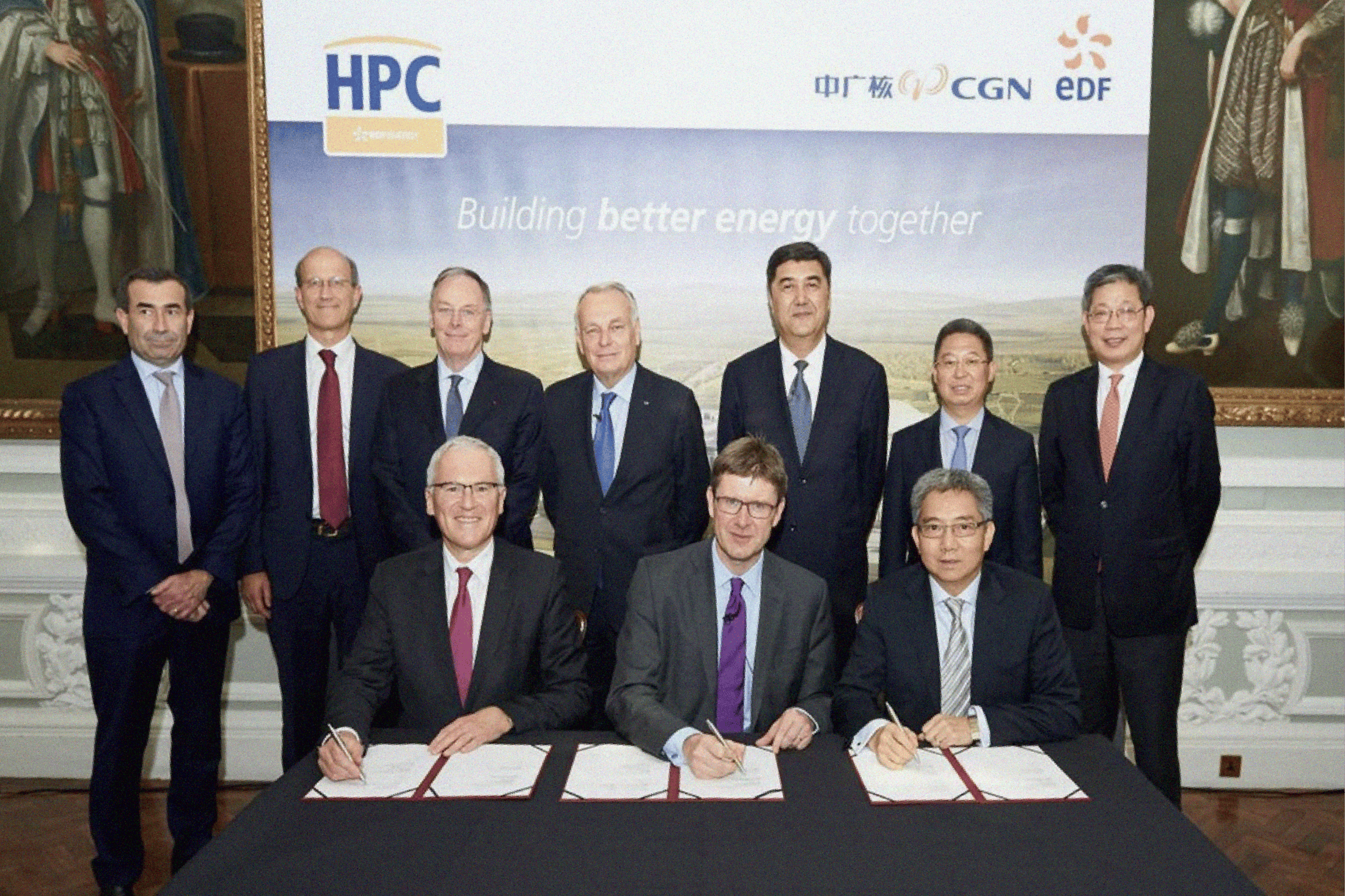
A lot of the cases in the book are messy, and there are one or two spectacular failures for China. But in terms of categorizing this, I’m not sure it’s so simple. In some of the cases, the Chinese were victims of their own success. The nuclear energy case is fascinating. As I mentioned, they secured the agreement to be involved at Hinkley, and secured a really significant concession to build their own reactor at the UK’s Bradwell site. It almost got so far, so fast that it triggered a push back.
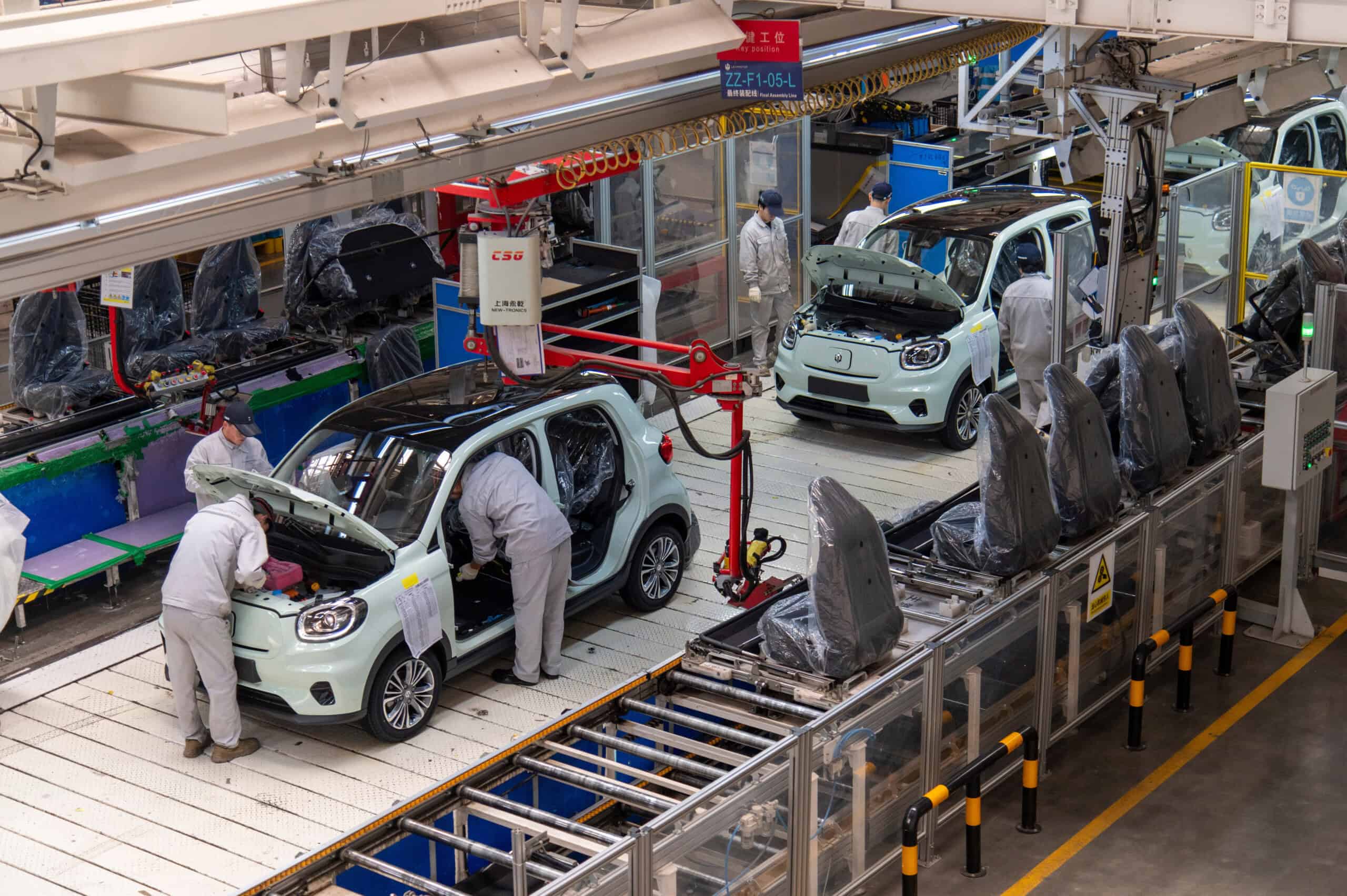
Nuclear energy projects take a very long time, of course, they span multiple governments. However, imagine if there were an agreement that wasn’t for a nuclear power station, but was related to tech or EVs. They take effect a lot more quickly, and once you go down that path, it can be very difficult to go back.
…a partnership between a liberal democracy and China will fall to pieces in the medium term, just because of the way a party-state operates — it will do something in a long enough time span that a liberal democracy cannot tolerate.
So I still think there are some really crucial lessons there, even if the outcomes weren’t entirely as desired in Beijing. As an aside I would add that this was a very tumultuous time in UK politics. You had the exit from the EU, you had multiple governments, particularly in the second half of the 2010s: so that also affected some of the outcomes. What I would ask now is how might this happen in a different but comparable country.
Was there any sense at that time that if the UK were to engage more with China and have more mutual investment, gradually China would become ‘more like us’, i.e. more democratic and more free market-based?
Yes there was some of that thinking. The potential danger comes when people genuinely believe they’re doing good. If you genuinely think you are doing good by bringing China into an international system to be a responsible international stakeholder, well, there are no limits on what you can justify to yourself doing: you don’t need to ask questions, you don’t need to scrutinize yourself.
Some governments in the 1990s really did seem, at some subconscious level, to believe in the end of history. After many years during which the security and sovereignty concerns of past decades had receded, governments were simply not capable of perceiving some of the dangers that an authoritarian party-state represented.
Is there a way for a mid-sized country like the UK to achieve a consistent way of approaching China that doesn’t lurch from the extremes of the golden era to hawkishness and back again, and that isn’t beholden to whoever gets elected in the United States?
I agree this pendulum swing is not desirable. I’m not against engagement with China, but I am very much for informed engagement. That’s one of the driving forces that animated the book project.
One needs to understand what is possible with China. I would say one should look at coexistence, some limited cooperation — perhaps that’s the best one can hope for. Where it becomes a problem is when one talks of serious partnerships. There’s very little of certainty in the international relations world, but one of the things I bet on is that such a partnership between a liberal democracy and China will fall to pieces in the medium term, just because of the way a party-state operates — it will do something in a long enough time span that a liberal democracy cannot tolerate.
I have a positive view of China and its culture, but politically there’s an incompatibility. There’s been a lot of talk recently about the role of middle powers: engagement with such powers would be useful for the UK in particular. From that position, it could in turn develop a different form of engagement with China.
In the book you write about the risks of engaging with China on nuclear power. But what about technology more broadly: given China’s advances in several areas, is there a danger the UK could miss out and fall behind if it doesn’t engage?
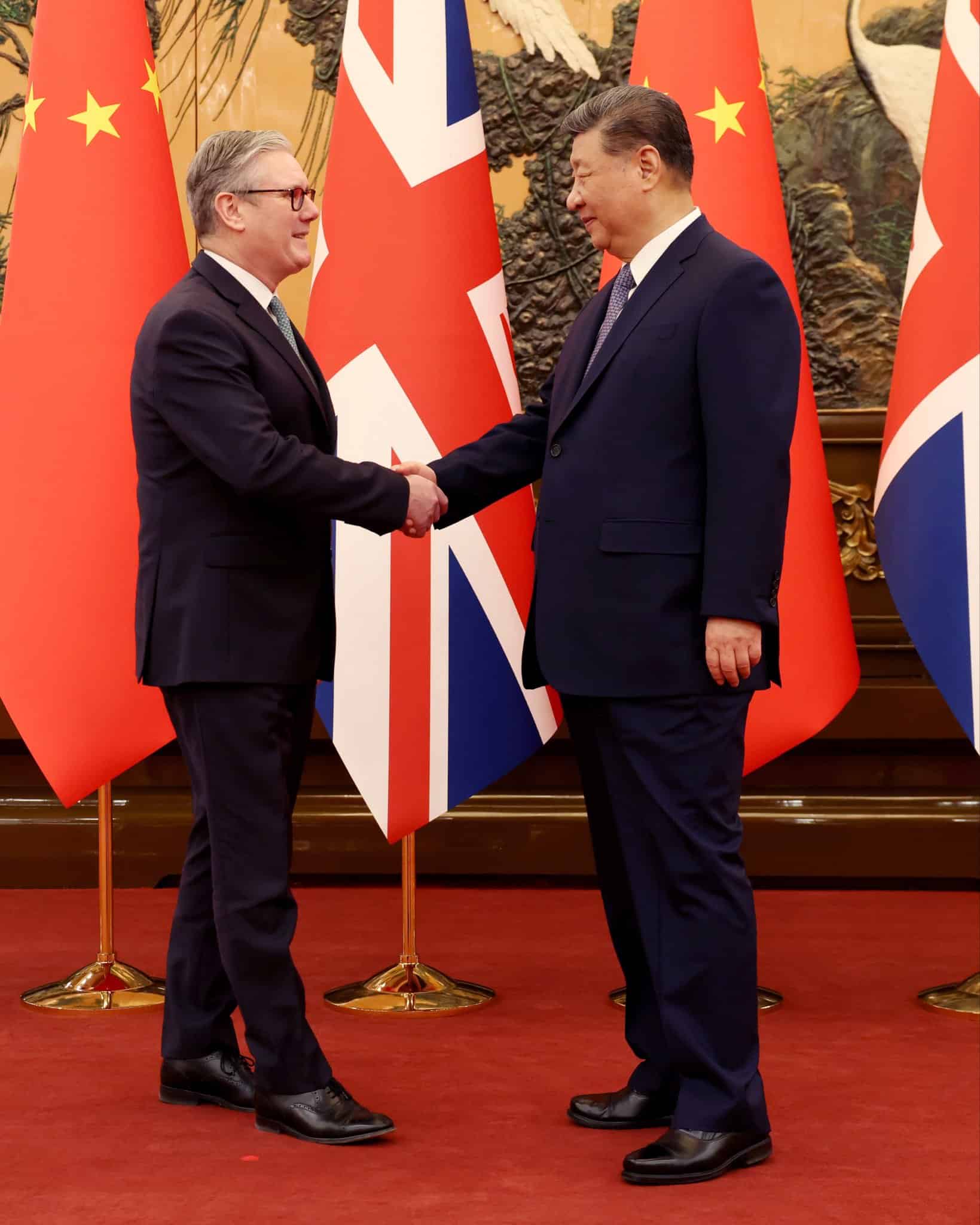
Unfortunately this is a ‘least-bad’ type of choice: there is not going to be a good solution. I tend to go with a ‘Yes, if’ approach. There can be engagement in this technology or in that industry if it meets certain conditions. The approach can generally try to be positive, but it’s got to be strong and it’s got to be consistent.
Not engaging does come with a cost. The question is going to be, which choice incurs the highest cost. If you say to China, these EVs can work but they have to have a certain security element, sometimes that may be deeply unpalatable to the Chinese side. But if you are clear about it you can put that to them, front and center.
Sometimes the UK doesn’t know the power it has, in the sense that it’s a pretty good market to be in. The UK is a regulatory power too: China was willing to compromise to get its nuclear reactor passed by the UK regulator, and to show the world that it was operating here in the UK. That was a really big carrot for China General Nuclear. I’m not sure the UK used any of its levers particularly well.

Andrew Peaple is a UK-based editor at The Wire. Previously, Andrew was a reporter and editor at The Wall Street Journal, including stints in Beijing from 2007 to 2010 and in Hong Kong from 2015 to 2019. Among other roles, Andrew was Asia editor for the Heard on the Street column, and the Asia markets editor. @andypeaps