Good evening. It is hard to be in two places at the same time, especially when those two places are on opposite sides of the Pacific ocean. Over the course of two years, Ding Linwei juggled a full-time job with Google in California with an attempt, unbeknownst to his employer, to launch a start-up back in his native China. In the highest profile case of its kind launched during the Biden administration, the justice department alleged that Ding stole trade secrets from Google and also engaged in economic espionage. The latter, more serious charge says a lot about the current fraught state of Sino-U.S. relations. Ding, who denied the accusations, was found guilty on all counts earlier this month. His defense lawyers tried to argue that while Ding might not have been employee-of-the-month material, he wasn’t a thief, let alone a spy. Eliot Chen traveled to San Francisco to witness the trial.
In our latest podcast, Andrew Peaple talks to Eliot about both the Ding saga and his earlier reporting on Xi Jinping’s missing generals, and previews this week’s issue.
Also in this week’s issue: Chinese service robots; Meet CATL; Ali Wyne on the China policy vacuum in Washington; and why the Party wants Chinese couples to have more unprotected sex.
Want this emailed directly to your inbox? Sign up to receive our free newsletter.

Tinker, Tailor, Engineer, Spy
While full-time Google engineer Ding Linwei was in China trying to launch his own start-up, an intern tapped Ding’s Google ID card to enter and exit the company’s offices in California, giving the impression Ding was present and accounted for. The U.S. government alleged that Ding’s entrepreneurial activity involved the theft of trade secrets from his employer and, more ominously, economic espionage. Eliot Chen charts Ding’s journey from promising student and engineer to convicted thief and spy.
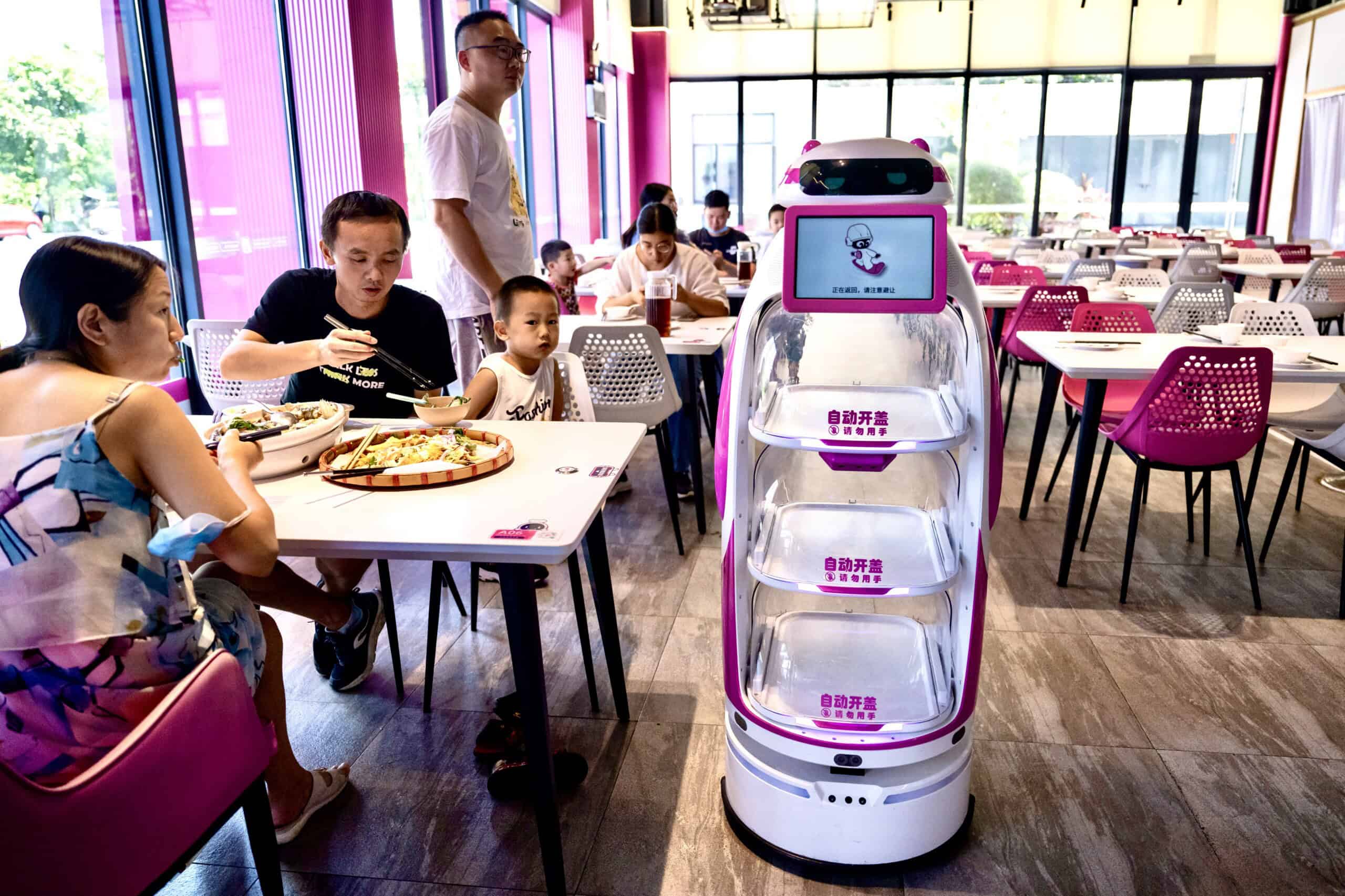
Robots Don’t Ask for Tips
Last year more than 20 million service robots — that can clean home interiors and pools, deliver food orders and mow lawns among other tasks — were sold worldwide, according to the International Federation of Robotics. According to the National Bureau of Statistics, China produced 18.6 million such robots. But as Rachel Cheung writes, and as has happened in so many other sectors before, Chinese manufacturers are pursuing debilitating price wars at home and abroad in their efforts to boost market share. “If you can only compete by lowering the price, that’s going to be a very tough business,” says one executive.

CATL in the News
Chinese battery champion CATL’s legal name is Contemporary Amperex Technology Ltd. and it boasts of some impressive technological achievements, including a vehicle battery that it says can last for one million miles after a 12-minute charge. But in Washington, China-hawk politicians seems to think CATL stands for Communist Agent Threat Looming. Texas is also wary of the company. Late last month the state banned its employees from using CATL products. In our latest Big Picture Company in the News profile, Savannah Billman looks at the world’s largest manufacturer of lithium-ion batteries.
A Q&A with Ali Wyne

Ali Wyne is a U.S.-China relations specialist at the International Crisis Group. In an interview with Noah Berman, Wyne explains why he doesn’t agree with the conventional wisdom that there is a “China consensus” inside the D.C. beltway.
He also argues that President Trump “has not supplied a coherent construct to guide [China policy] — he seems to proceed on the basis of instinct, and instinct is wholly inadequate as a basis for managing your relationship with your principal competitor, and for stabilizing the world’s most consequential bilateral relationship”.
Ali Wyne
Illustration by Lauren Crow

Baby Bust
When the Chinese government ended its one-child policy a decade ago, it projected there would be 14.3 million births in 2025. Instead there were just 7.9 million, Yi Fuxian writes. Stabilising, let alone reversing, the declining births trend will be extremely difficult.
Subscribe today for unlimited access, starting at only $25 a month.