Bitmain, the Chinese company that leads the world in making bitcoin mining equipment, is looking to become more American — all while growing its commercial ties with the family of President Trump.

Beijing-based Bitmain, which has a roughly four-fifths share of the global market for specialized bitcoin mining gear according to Cambridge University research, will announce by the end of September that it is opening a new U.S. headquarters and manufacturing base in either Florida or Texas, with a goal of hiring 250 people in the country, Irene Gao, Bitmain’s president of mining, told The Wire. The company expects production at the facility to start by next summer, though it already hires contract manufacturers in Pennsylvania and Washington state, she says.
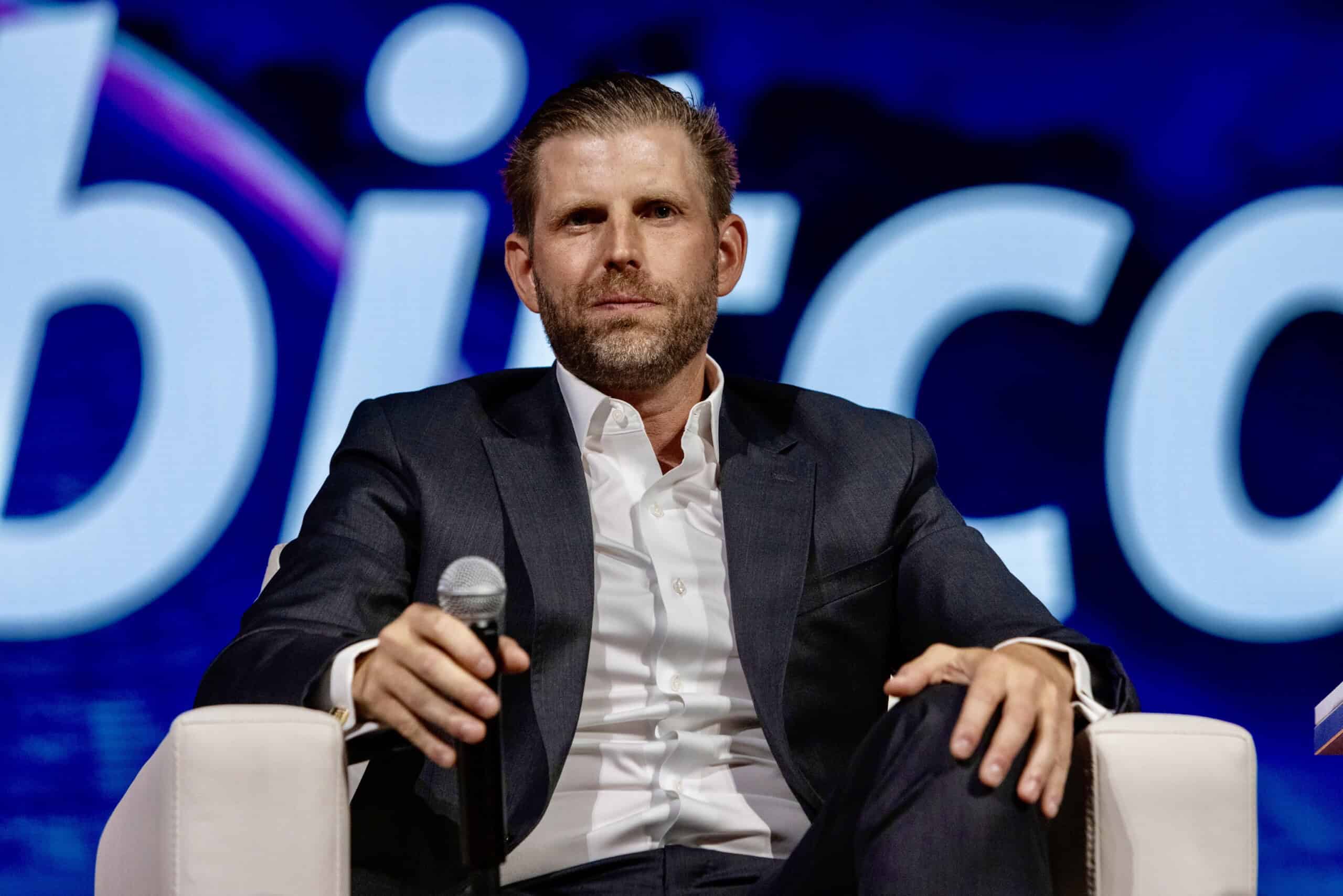
The expansion comes as Bitmain has been gaining new U.S. customers, including American Bitcoin, a cryptocurrency venture co-founded in March by Eric Trump with Donald Trump Jr. as one of its investors. The new firm is set to buy up to $320 million worth of Bitmain equipment, and already owns some 60,000 machines made by Bitmain and fellow Chinese firm MicroBT, securities filings with the U.S. Securities and Exchange Commission show.
Meanwhile, Bitmain is distancing itself from a controversial company back in its home country.
The company has attracted scrutiny for its ties to Xiamen Sophgo Technologies, a semiconductor designer that the U.S. government blacklisted in January — during the dying days of the Biden administration — over concerns that it helps advance China’s military ambitions. Last October, the Taiwan Semiconductor Manufacturing Company (TSMC) reported to the U.S. government that a type of chip it delivered to Sophgo may have ended up in the hands of Chinese telecom giant Huawei, which is sanctioned by the United States.
Zhan Ketuan, Bitmain’s co-founder and one of its largest shareholders, owns a 22.6 percent beneficial stake in Sophgo, the largest individual beneficial holding in the company, WireScreen shows, while Zhou Feng, a top Bitmain executive who is also Zhan’s brother-in-law, held supervisory roles at Sophgo subsidiaries. The two companies still lease offices on adjacent floors at a building in Beijing’s tech-heavy Haidian district.

Zhou left his roles at Sophgo subsidiaries — which The Wire reported last fall — in January and February, corporate records show.
The corporate reshuffling and Bitmain’s U.S. expansion plans show how a Chinese company critical to the bitcoin mining supply chain is taking advantage of the Trump administration’s support for cryptocurrencies, while adapting to Washington’s tough-on-China trade measures.
All bitcoin miners in the U.S. depend on [Bitmain’s] machines and chips. They are the most powerful, efficient machines in the market.
Nishant Sharma, founder of consultancy BlocksBridge
There is “no equity relationship or business overlap between Bitmain and Xiamen Sophgo Technologies,” Gao, Bitmain’s representative, says, adding that the building the firms share in Beijing “is a commercial office space open for lease to the public, with numerous independent tenants.”

“The company is not aware of, nor involved in, any of [Zhan Ketuan’s] other investment activities [other than Bitman],” she says, adding that Zhou Feng previously played an advisory role at the Sophgo subsidiaries but was not involved in their day-to-day work. The Wire attempted to contact Zhan by email but did not receive a response.
The White House, Eric Trump, American Bitcoin and Sophgo did not respond to requests for comment. A spokeswoman for the Trump administration has previously said the president’s assets are held in a trust managed by his children.
Sophgo and Huawei have each denied doing business with one another. Bitmain has not been accused of wrongdoing and has said it was not involved with the Sophgo incident, as has Zhan Ketuan.
“Matters related to Sophgo and the U.S. Entity List have no connection to Bitmain…Any attempt to link the two [companies] is misleading,” Gao says, adding that Bitmain spun off its artificial intelligence business in 2021 and has since focused on bitcoin mining. “We have always operated in full compliance with applicable laws and regulations in the United States and globally.”
Still, some experts remain skeptical of Bitmain. “It is risky to do business with Bitmain,” says Chiang Min-yen, a nonresident fellow at the Research Institute for Democracy, Society, and Emerging Technology, a think tank backed by the Taiwan government. “We need to understand whether the technology owned by Bitmain could contribute to the development of China’s AI ecosystem.”

Washington has not moved to clamp down on Bitmain’s access to semiconductors, even as it makes it generally harder for Chinese firms to obtain advanced chips. The company remains one of TSMC’s top Chinese clients, according to a June research note by J.P. Morgan analysts. They project that Bitmain, alongside U.S. firms Apple and Advanced Micro Devices, will drive demand for TSMC’s next-generation technology.
Gao says that Bitmain “has maintained a long-standing partnership with TSMC.” A spokesperson for TSMC declined to comment on its current relationship with Bitmain.

Sourcing chips from TSMC has underpinned Bitmain’s competitiveness, says Nishant Sharma, who ran public relations at Bitmain before starting consultancy Blocksbridge. “All bitcoin miners in the U.S. depend on [Bitmain’s] machines and chips,” he says. “They are the most powerful, efficient machines in the market.”
Some American miners experienced the cost of that dependence last autumn, around the time TSMC reported concerns about Sophgo to the U.S. government. In November, importers reported that U.S. Customs and Border Protection (CBP) had begun holding up Chinese bitcoin mining machines.
Ethan Vera, chief operating officer of Bitcoin mining company Luxor Tech, says worsening impoundments over the winter led his firm to have millions of dollars of equipment ordered from different manufacturers stopped at the border. “We got majorly screwed,” he says.
Two former senior Customs officials told The Wire they were not aware of any connection between the seizures of Bitmain products and the addition of Sophgo to the Entity List. CBP began releasing China-made machines in late February under legal pressure from Bitmain and other Chinese manufacturers, says one official, who requested anonymity to discuss non-public information.
A spokesperson for CBP said the agency could not disclose confidential business information.
Gao says that her company’s clients received shipments on time, aside from a few “random” incidents, until larger delays got the company’s attention beginning in February. She adds that Bitmain and its customers worked with Customs officials to get its goods released.
“Claims that clearance occurred only ‘under legal pressure’ are speculative and misleading,” Gao says. “All procedures were conducted in accordance with applicable U.S. customs regulations.”


Inside a bitcoin mining facility in Rockdale, Texas, operated by Riot Platforms. Credit: Riot Platforms
American Bitcoin and other Bitmain customers in the U.S. are now running full steam ahead. The Trump family-backed firm is now seeking to go public through a reverse merger with a company called Gryhon Digital Mining that it expects to close as soon as this summer. American Bitcoin is one of several crypto ventures that Trump’s business associates and family have launched since he took office with the promise to cut red tape for the crypto industry.
From a production standpoint, they seem to be all systems go. I don’t see [Bitmain] slowing down. The industry is very happy with the current administration.
Ethan Vera, chief operating officer of Bitcoin mining company Luxor Tech

“The speed at which we’ve done this is incredible,” Eric Trump said at a Toronto crypto conference in May, referring to his company’s path toward public markets.
He has sought to portray his crypto investments, including 9.3 percent of American Bitcoin, as part of the U.S.’s tech competition with China. “You better believe that China is running very hard at this,” he said on CNBC in April.
China effectively banned crypto in 2021, but as in many industries, American miners depend on Chinese equipment. Bitmain is planning a ceremony to celebrate its partnership with American Bitcoin’s parent company, Miami-based Hut 8, in August, Gao says.
Vera, the trader of Bitcoin mining machines, expects Bitmain to maintain its dominance.
“From a production standpoint, they seem to be all systems go. I don’t see them slowing down,” he says. “The industry is very happy with the current administration.”

Noah Berman is a staff writer for The Wire based in New York. He previously wrote about economics and technology at the Council on Foreign Relations. His work has appeared in the Boston Globe and PBS News. He graduated from Georgetown University.