China’s artificial intelligence sector has provided plenty of shocks this year. Its own companies are not immune to the industry’s rapid shifts.
Baichuan, a leading Chinese AI start-up, is one that has dramatically changed direction. Two of its co-founders resigned last week to start their own business, just months after another top executive left the multibillion dollar company.
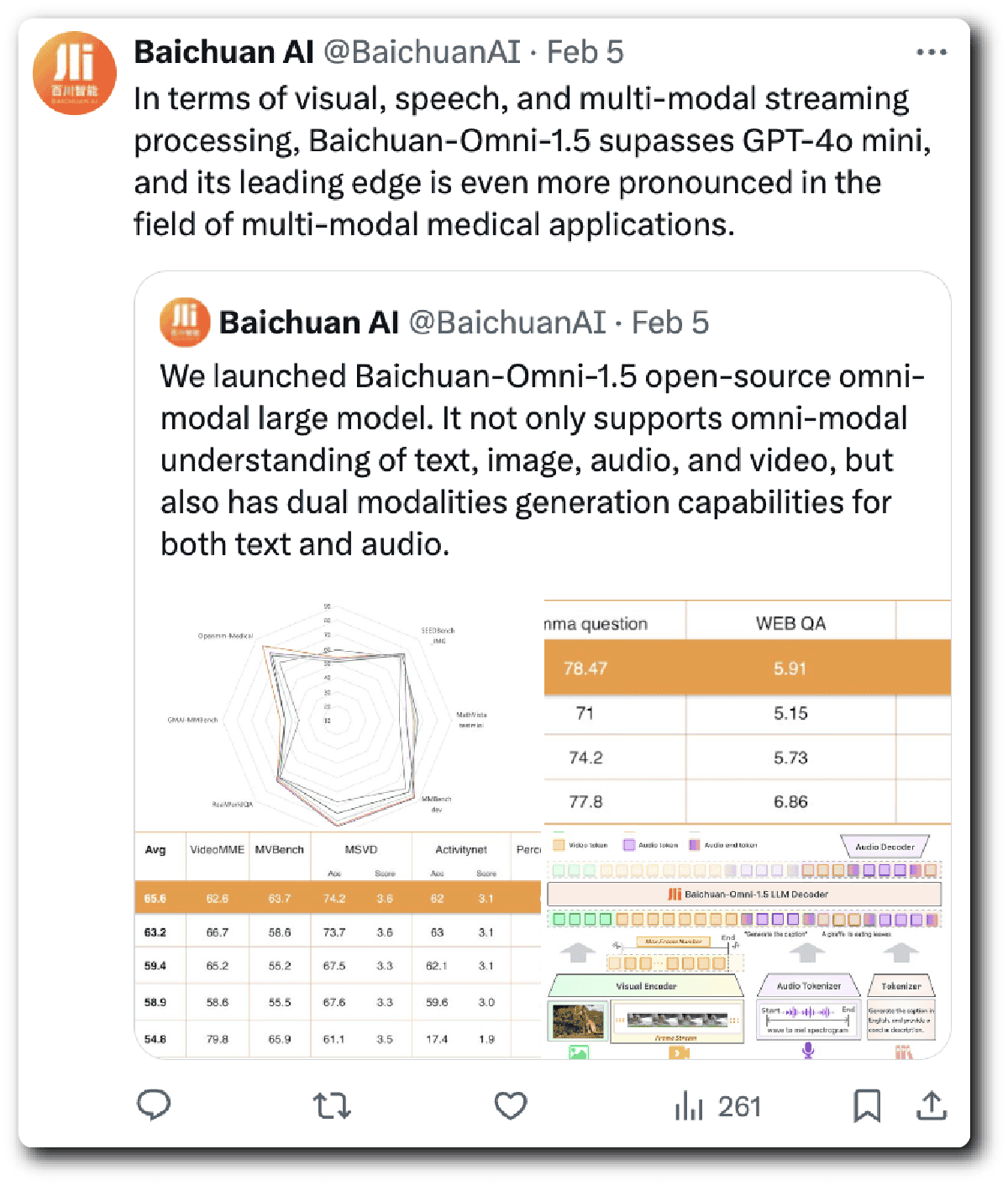
Gone, too, is Baichuan’s focus on sales to the financial industry, just three months after the company launched a model called Baichuan4-Finance, which it claimed could surpass OpenAI’s flagship 4o model in over a dozen financial tasks. Earlier this month, employees involved in Baichuan’s sales to the financial industry were told to resign, according to several Chinese media reports. Instead, the company will now concentrate on AI for the healthcare sector.
The sudden strategy shift reflects how intensifying competition within China’s AI world is forcing companies to specialize — and how readily they are willing to pivot to a new sector when another doesn’t work out.
The Wire plans to highlight some of the Chinese AI start-ups worth more than $1 billion in the coming weeks — the so-called AI tigers. Today, we’re looking at Baichuan; we previously profiled Zhipu AI.
Baichuan’s Beginnings
Baichuan was founded in March 2023 by Wang Xiaochuan and Ru Liyun, former executives of Chinese search engine Sogou. Wang, 46, was the latter company’s CEO while Ru, 45, led operations. Sogou went public on the New York Stock Exchange in 2017 and remained listed until 2021, when video game giant Tencent took it private in a $3.5 billion deal.
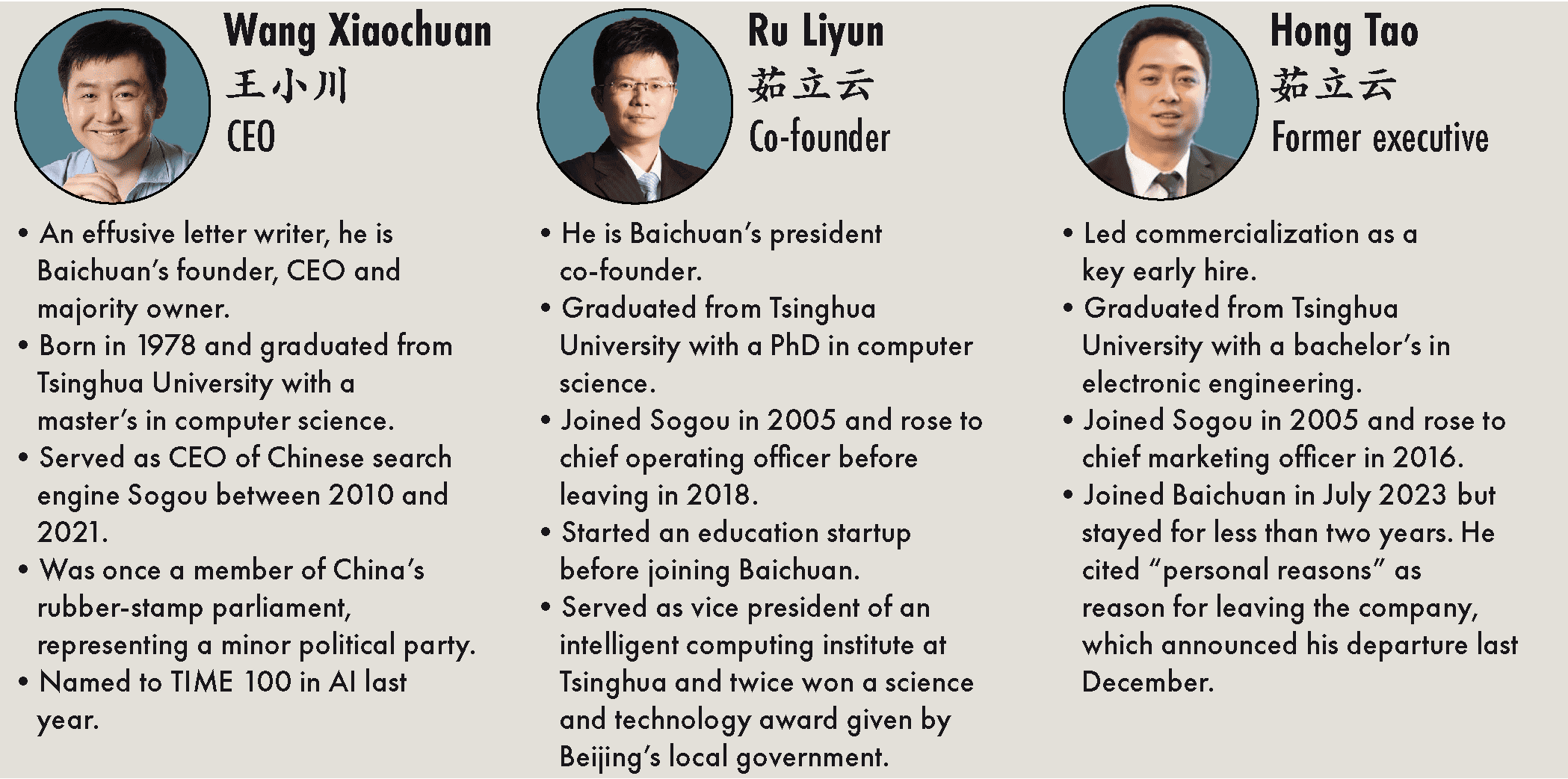
Wang stepped down from Sogou soon afterwards, with Ru having left in 2018. In a note to colleagues announcing his resignation, Wang, who studied gene editing during his years at Tsinghua University, said he wanted to move into healthcare.
The Chinese and Western worlds are now isolated from each other. They each have their own ecosystems. China doesn’t want models like OpenAI because of the ideology behind it.
Ru Liyun, co-founder of Baichuan
“In the last 20 years, life sciences have been lingering in my heart and curiosity. In the next 20 years, my life would be more meaningful if I can be a part of the development of life sciences and medicine to make a contribution to public health,” Wang wrote in a departure letter to Sogou employees.
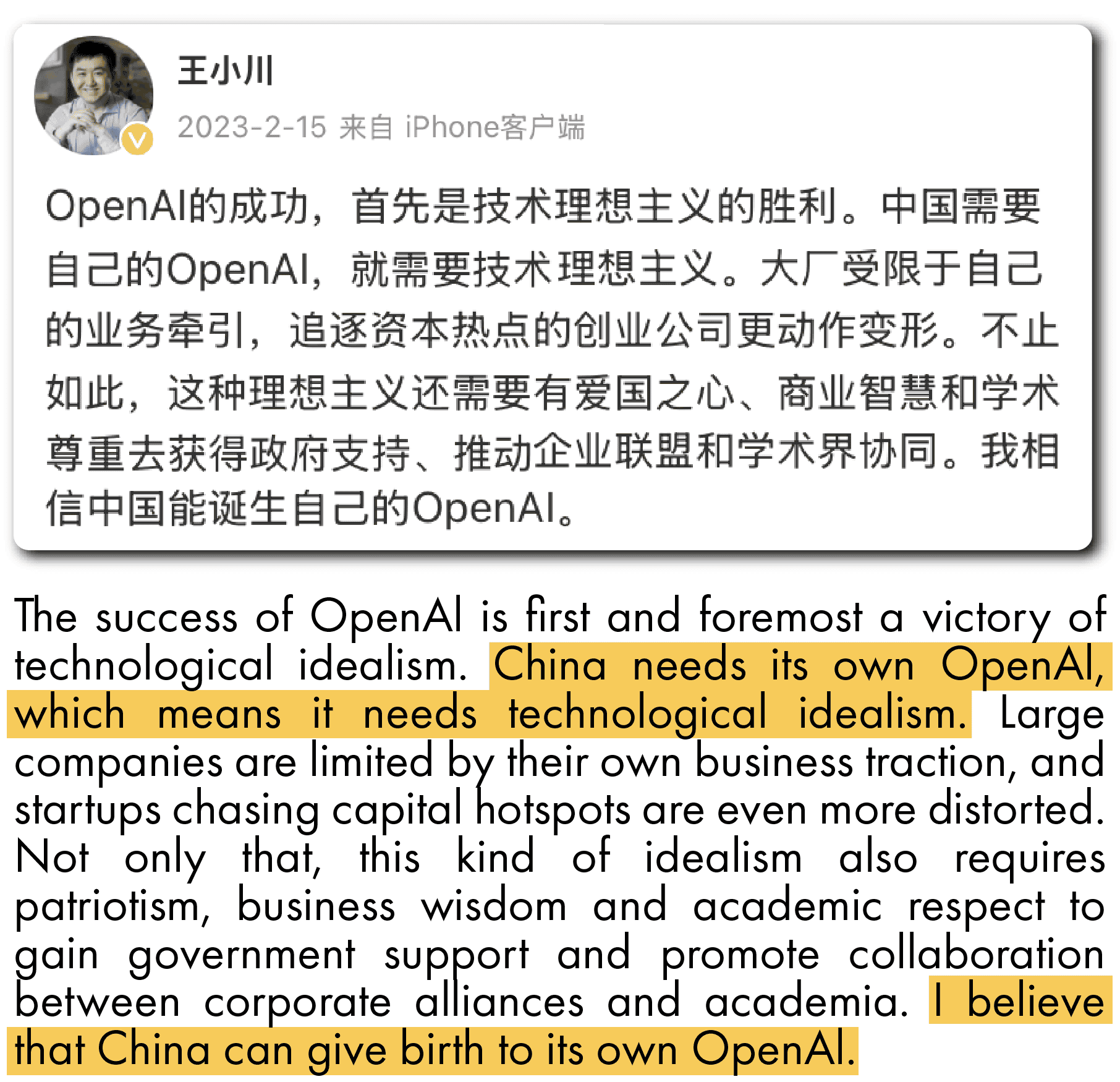
In 2022, he and Ru co-founded a firm in Beijing called Five Seasons Wisdom and Health, focusing on healthcare consulting and AI development. By the following March, the pair had established a new business with the same office address in the tech-heavy Zhongguancun neighborhood as Five Seasons, according to WireScreen. They called it Baichuan, which comes from a Mandarin phrase that means “all rivers run to the sea.”
The company did not respond to requests for comment.
In a letter published two weeks after he registered Baichuan, Wang, channelling Austrian philosopher Ludwig Wittgenstein, extolled AI’s potential to become “a part of human civilization” and encouraged the 50 employees that then worked at the company to be the “pioneers of a new era.”
Baichuan’s Backers
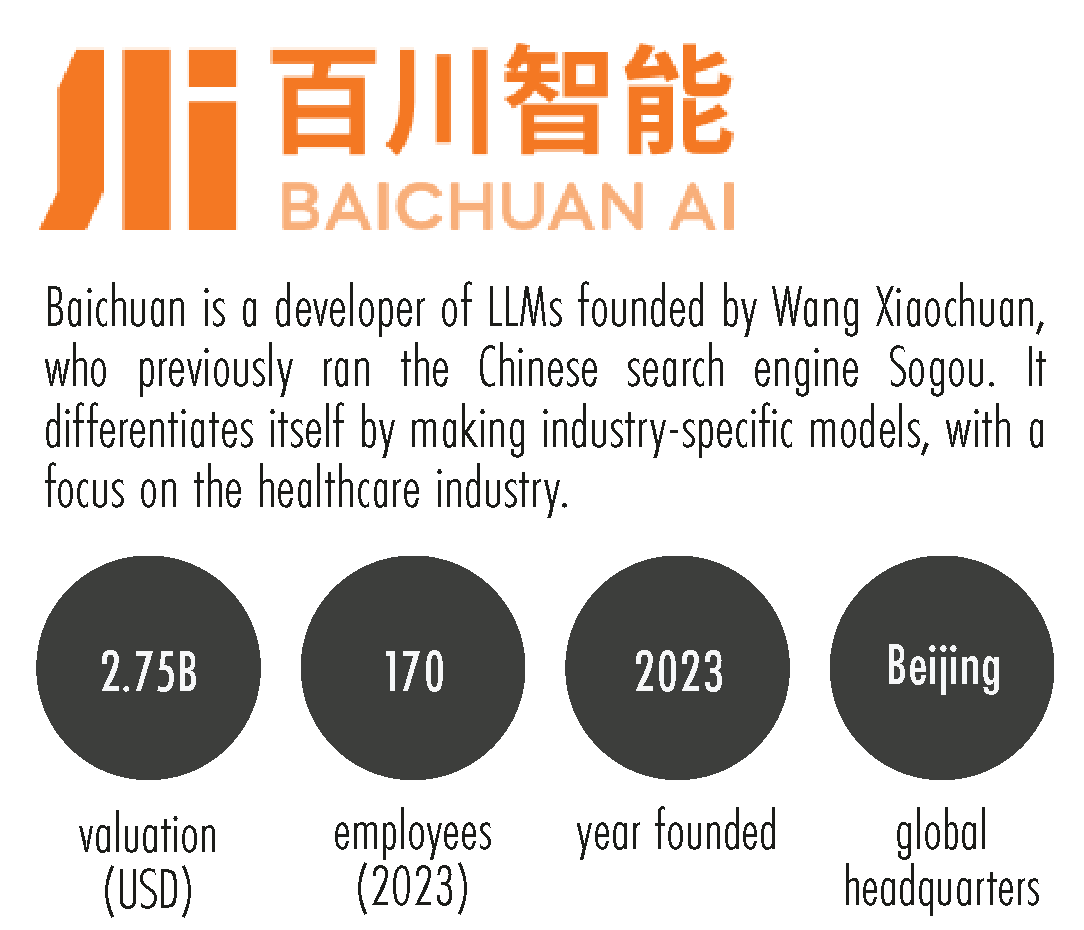
Within six months, Baichuan released four open-source and free-to-use AI models and two closed-source models. The LLMs together accrued more than six million downloads in less than half a year, according to the company, which credited the speed of development to “top scientific and technological talents and strong financial resources.”
Investors took note. By October 2023, the company said it had raised $300 million from backers including Alibaba, Tencent and Xiaomi. Baichuan also won state support from AI-focused government guidance funds in Beijing and Shenzhen, according to data provider Pitchbook.
Those aren’t Baichuan’s only links to Beijing. Wang was a member of the Chinese People’s Political Consultative Conference, China’s rubber-stamp parliament, between 2018 and 2023. Unusually, he represented the Jiusan Society, one of the eight minor political parties that the Chinese Communist Party permits to operate.
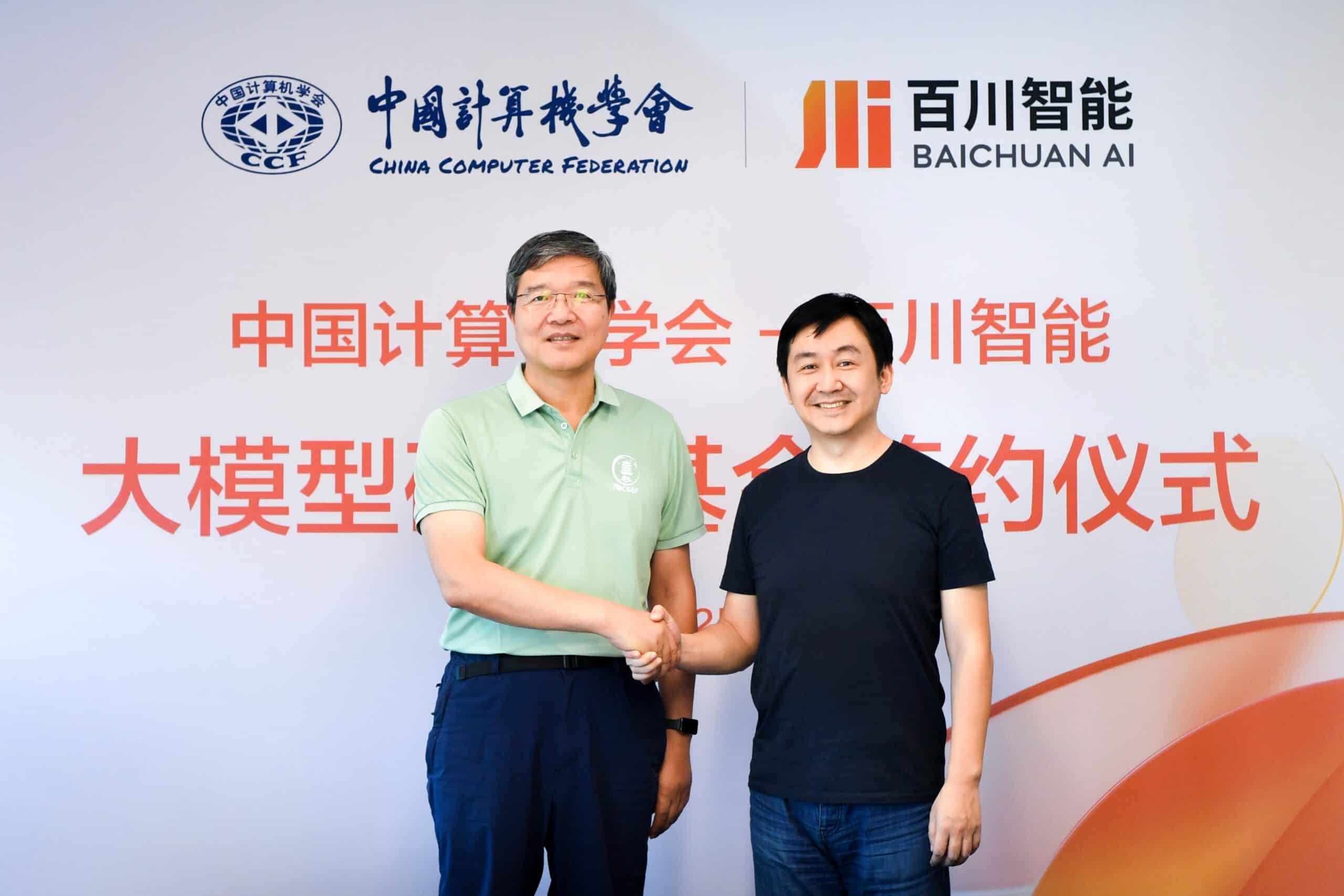
“There are less intense ideological requirements for being part of a minor party,” says Neil Thomas, a fellow at the Asia Society Policy Institute. But these parties are still ultimately accountable to the CCP, with the same goal of “targeting intellectuals who could be politically useful to the Communist Party,” he says.
Wang’s membership in a political party sets Baichuan apart among other Chinese AI unicorns. So does its medical focus.
In February, the company began partnering with the Beijing Children’s Hospital to offer “AI pediatrician” services — essentially an LLM for doctors to consult on tough cases. As of last Thursday, it has been used in only around ten consultations, according to the company. Wang said in January that Baichuan soon plans to roll out a similar product aimed at hospitals in Beijing’s Haidian District, the second-largest in the city.

Erfan Darzi, a researcher at Boston Children’s Hospital who has studied Baichuan and other medical LLMs, says pediatrics are particularly well-suited for AI assistance because it focuses on the whole body rather than a single organ. “You usually have a lot of data among many different vectors,” he says, citing parameters like family history and vital signs. “That’s actually a very good use case for AI. It solves a huge problem in pediatrics.”
Baichuan also has AI products aimed at regular consumers, including a chatbot called Bai Xiaoying. The company claims its open-source Baichuan2 LLM is “basically equal” to U.S. firm Meta’s LLaMA2. But Baichuan does not crack the top 25 on SuperCLUE, which ranks Chinese LLMs on performance.
Top 10 Chinese LLMs, as of March 25
| MODEL | COMPANY |
|---|---|
| DeepSeek-R1 | DeepSeek |
| QwQ-32B | Alibaba |
| Doubao-1.5-pro-32k-250115 | Bytedance |
| Hunyuan-turbos-20250226 | Tencent |
| DeepSeek-R1-Distill-Qwen-32B | DeepSeek |
| Qwen-max-latest | Alibaba |
| 360智脑o1.5 | 360AI |
| DeepSeek-V3 | DeepSeek |
| YAYI-Ultra | Wenge Research |
Source: SuperCLUE
It’s also like many Chinese — and American — AI companies in that it has its sights set on artificial general intelligence, generally accepted to mean the point at which AI can do most tasks better than humans. Achieving AGI is “what we’re trying to do,” Ru said at a Hong Kong conference last October.
Since capitalizing with an initial $50 million in April 2023, Baichuan has raised almost $1 billion more in three further funding rounds, according to Pitchbook. As of July 2024, the company is valued at $2.75 billion, Pitchbook shows.
Speaking about Baichuan, Wang and Ru sometimes sound like they carry the weight of China on their shoulders.
“The Chinese and Western worlds are now isolated from each other. They each have their own ecosystems,” Ru said at the conference in Hong Kong. “China doesn’t want models like OpenAI because of the ideology behind it.”
Rachel Cheung contributed reporting.

Noah Berman is a staff writer for The Wire based in New York. He previously wrote about economics and technology at the Council on Foreign Relations. His work has appeared in the Boston Globe and PBS News. He graduated from Georgetown University.