
Jonathan Cheng is the China bureau chief for The Wall Street Journal. From 2013 to 2019, he was the Korea bureau chief, based in Seoul. A native of Toronto, he lives in Beijing. His first book, Korean Messiah: Kim Il Sung and the Christian Roots of North Korea’s Personality Cult, recounts the profound impact of Christianity on North Korean society. The book is out with Alfred A. Knopf as of April.
Illustration by Lauren Crow
Q: How did this book come about?
A: I was sent to Korea by the Wall Street Journal in 2013. I’m not ethnically Korean, although I had been learning the language. I did what many people do when they get sent to a new posting, which is to read up on the country. Obviously, I wasn’t going to be posted to Pyongyang, but I was going to be responsible for writing a lot about North Korea. I read everything about it.
What’s interesting is, if you pick up standard books on North Korea, you’ll learn that the founder of the state, Kim Il Sung, was raised in a pretty devout household and that Pyongyang, where he grew up, was a city so Christianized it was known as the Jerusalem of the East. That was really interesting to me.
Did you ever visit?
I went to North Korea in 2013 and again in 2017 and I was very struck by what I would consider the religiosity of the place. The first thing people do in the morning is use government-issued dusters to clean the portraits of Kim Il Sung — and later his son Kim Jong Il — that hang in every North Korean home. On your wedding day, on your graduation day, on New Year’s Day, on his birthday, you’re at his statue presenting a bouquet of flowers and bowing. Everyone wears his face over their hearts on little pin badges. They recite his words and sing his praises.
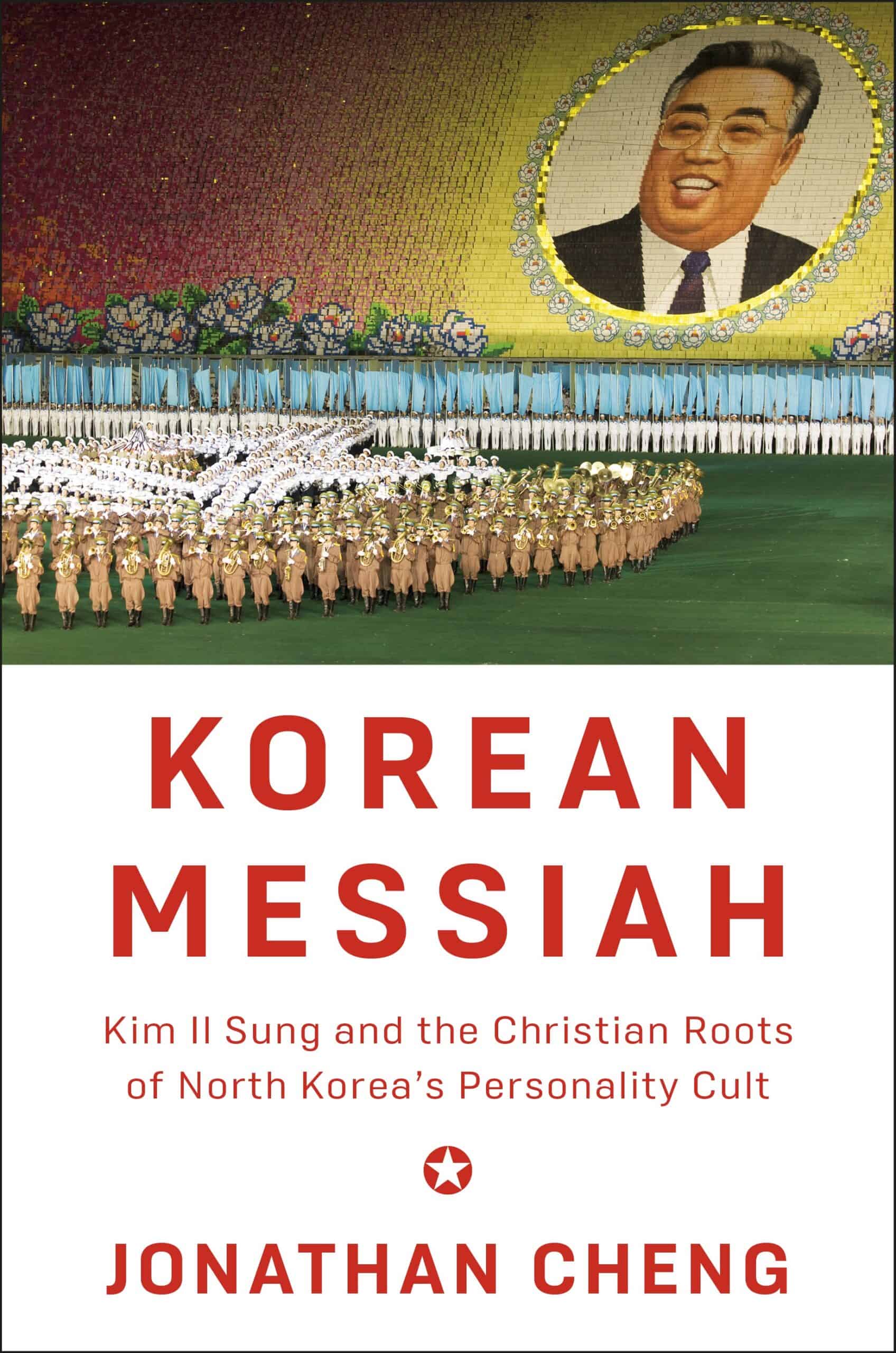
I’m not the first person to point out the religious nature of all this, but it really struck me, and I didn’t feel like I had much of an understanding of how to connect Kim Il Sung’s Christian childhood and the religiosity of North Korea today. I thought for sure there would be books on the topic, because it seemed so obvious, but the more I read, the more I found there weren’t any.
I wasn’t planning to write a book; it started off as a potential Wall Street Journal piece. But the more I dove into it, the more I realized I couldn’t do this in even a 2,000-word article. It’s like the frog being boiled in water: you go along, and at some point you realize, “Oh wait, I’m writing a book.”
Let’s dive into it then. What was Korea like when American missionaries first arrived in the late 19th century?
Korea was known then as the Hermit Kingdom, which is still the moniker used for North Korea today. It was relatively isolated by the standard of the day. That’s not to say there were no contacts between Korea and the outside world, but there were fewer than in other places.
This Christian thread is grossly overlooked when it comes to North Korea. Part of what I’m trying to do is offer a corrective, to tell people this was a very powerful ideological thread running through modern Korea and specifically through the family of Kim Il Sung.
When the first Protestant missionaries arrived in Korea in the 1880s, they found a country that was curious about them as foreigners but not particularly interested in the message they were preaching, about a man who was crucified 2,000 years ago. Working in Seoul and down in Busan, they didn’t succeed much in winning converts. It wasn’t until one Indiana man, Samuel Moffett — arriving in Seoul on his 26th birthday in 1890 — went up to Pyongyang that things changed. Within a couple of weeks, he found a hunger for his message that was insatiable. He was writing back to the Presbyterian Church in New York saying he didn’t have time to eat or sleep because of the queue of people at his door wanting to hear what he was preaching.
Some of these people were the grandparents and parents of Kim Il Sung.
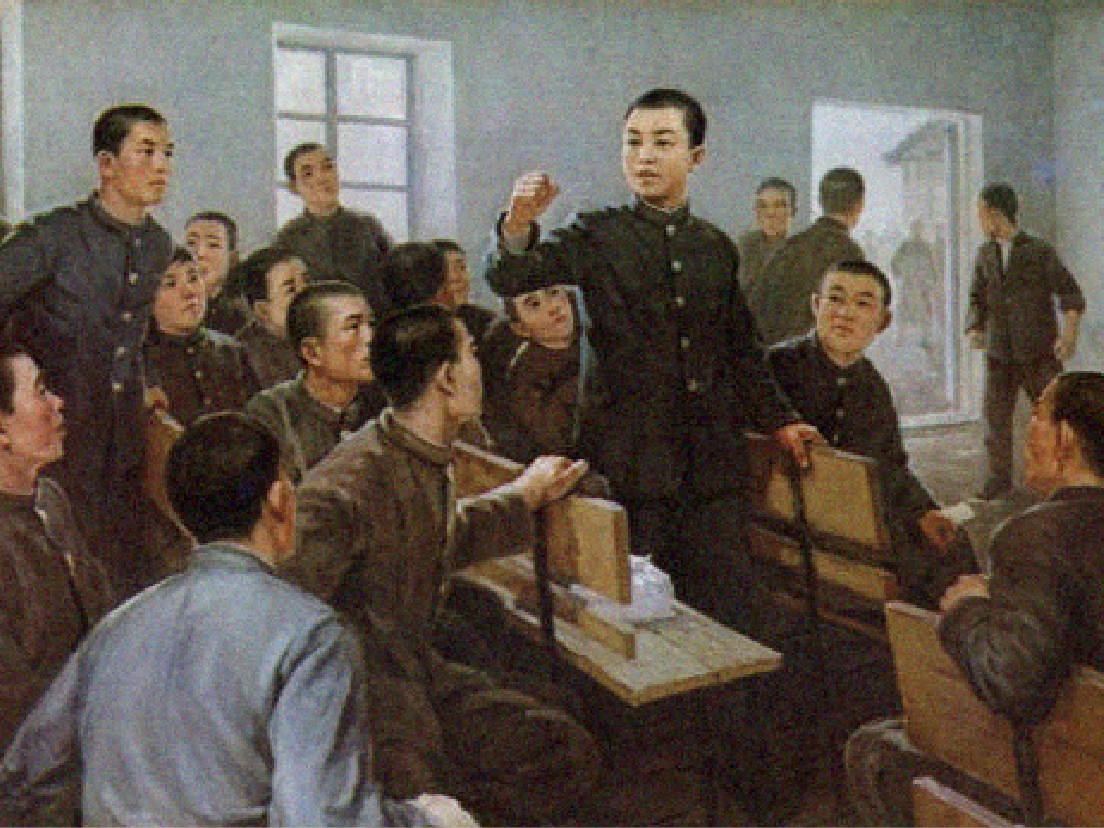
Not only were they converts, they were very devout ones — architects of the Jerusalem of the East. Kim Il Sung’s father had an aspiration, according to one source, of becoming a pastor. Whether or not that’s true, there’s very little question that he was essentially a Christian educator, devoted to winning Korea for Christ. Kim Il Sung’s mother was the daughter of a devout early convert as well and she was what they called a “Bible woman”, tasked with spreading the Christian message in the villages around Pyongyang, teaching women to read through the Bible.
By the time Kim Il Sung was born in 1912 on the outskirts of Pyongyang, he was raised in a very devout Christian household, in a city that boasted the world’s largest Presbyterian seminary, some of the world’s largest churches and prayer meetings and Christian leaders from the U.S. and the UK flocking to see what was going on.
What was Pyongyang like before its religious transformation?
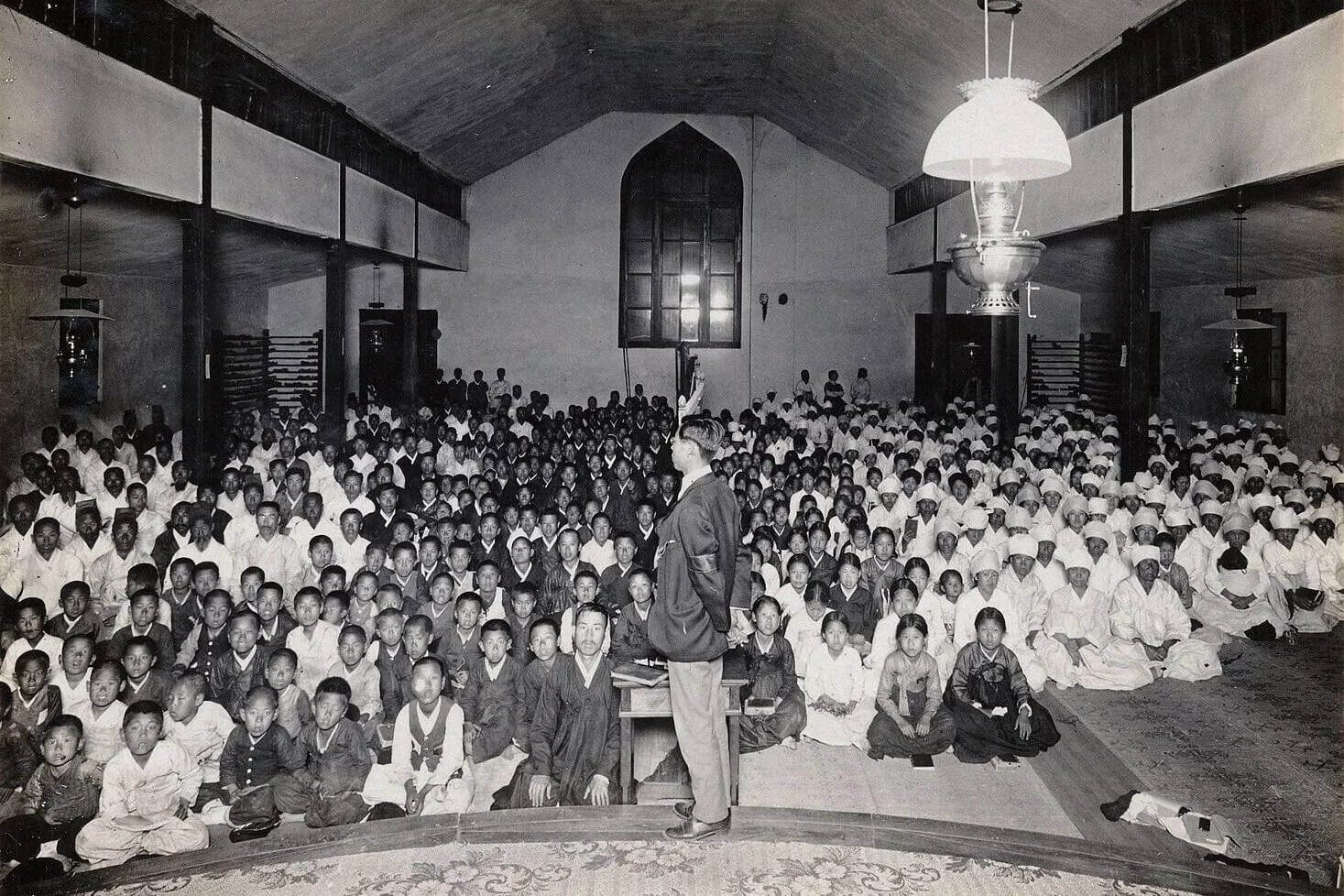
It was known as a Las Vegas type of city, famous for its saloons, for the most famous dancing girls in all of Korea. There were massive stone-throwing fights, with hundreds of men on each side, hurling stones at each other in a field. Many would die. That’s what Pyongyang was known for when Samuel Moffett first arrived in 1890. Yet within just a few years, it was already developing a reputation as the Jerusalem of the East. Quite a transformation.
Then Japanese colonizers arrived. What was Korea’s experience under Japanese occupation and what was its relationship to China at this time?
If you look at the map of Northeast Asia, Korea had somehow, through millennia, avoided fully falling into the Chinese empire. It has had a distinct language and culture separate from Chinese for a very long time and by almost any definition of statehood — certainly the kind Woodrow Wilson was proclaiming in the early 20th century — Korea was a nation, but one that had been subjugated by Japan.
| BIO AT A GLANCE | |
|---|---|
| AGE | 43 |
| BIRTHPLACE | Toronto, Canada |
| CURRENT POSITION | China Bureau Chief, The Wall Street Journal |
The Japanese colonization of Korea was very different from other colonial projects. When the British and other European powers colonized nations, they were typically far away with very little historical overlap. Korea and Japan shared many historical, cultural, and linguistic ties, making it a deeply bruising experience for Koreans. They were made a protectorate in 1905 and a colony formally in 1910, a status that lasted until the defeat of the Japanese Empire in 1945. Forty years, front to back. Korean Christians were at the forefront of the fight against Japanese colonialism and Kim Il Sung’s family was very much in that vein.
You describe how, as Korea’s independence movement developed, China was a kind of staging ground, where exile communities plotted.
Yes, in Manchuria and Shanghai, where you can still visit the Korean Provisional Government set up in 1919 in the French Concession. The seminal moment for Korea’s independence movement was March 1st 1919, just two months before China’s May 4th movement in Beijing. Both were inspired by the end of World War One and Woodrow Wilson’s proclamation at the Paris Peace Conference that every people should have the right to self-determination. But it was the Koreans who went first, and in many ways inspired and foreshadowed what happened in Tiananmen Square that May. Obviously there were indigenous Chinese factors that led to the May 4th movement, but the March 1st events in Korea were very much an inspiration to Chinese nationalists.
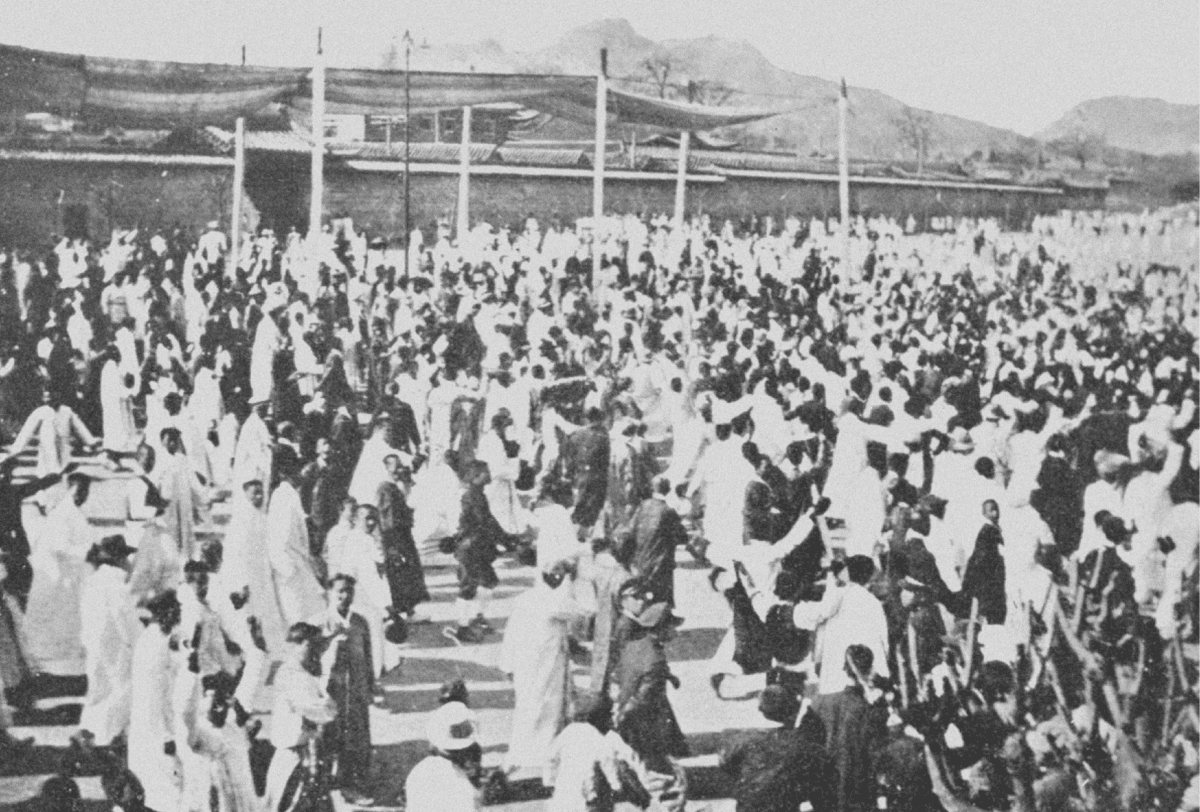
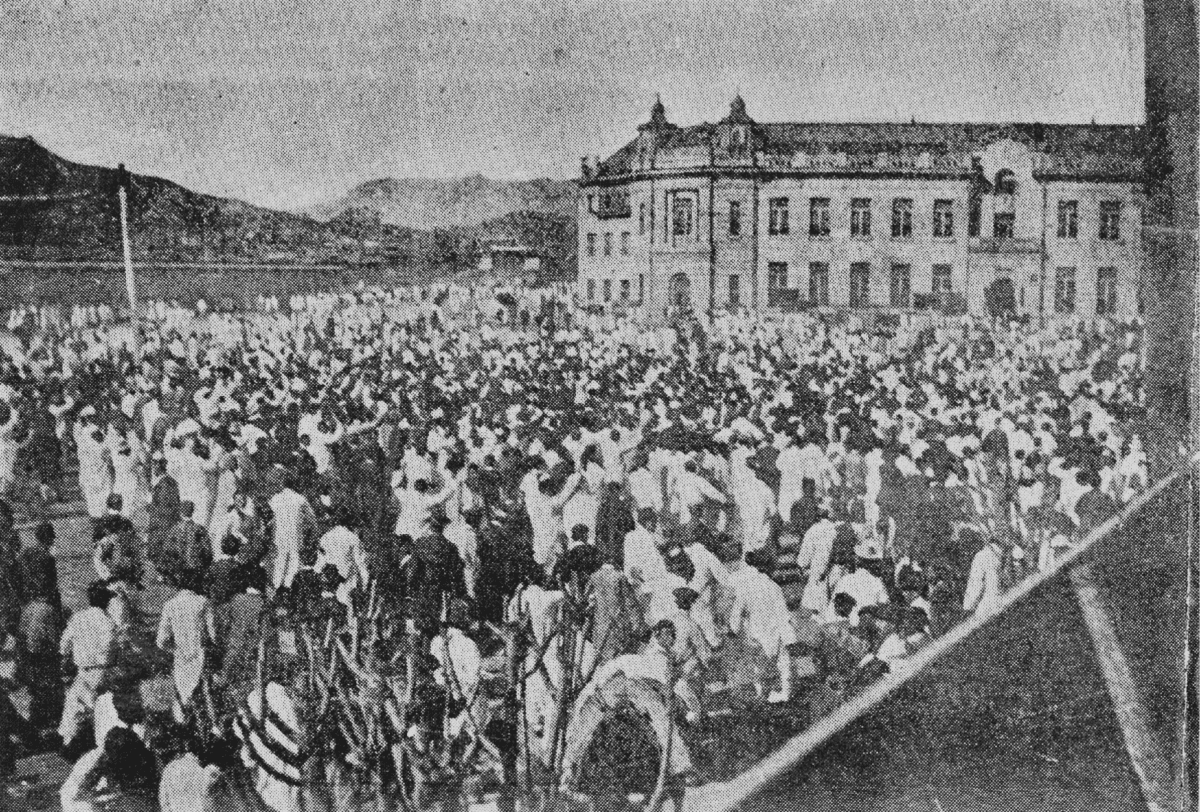
Crowds demonstrating outside the Seoul City Hall, March, 1919. Credit: Red Cross Wikimedia Commmons
There’s one more China connection: a Korean Catholic famously assassinated the first Resident General of Korea, Itō Hirobumi — four times Prime Minister of Japan during the early Meiji years — with a pistol in Harbin. At the trial, held in Dalian, Liang Qichao, the leading reformer of the late Qing period, attended and expressed great admiration.
Mao Zedong was watching Korea’s independence movement as well. He has a remark where he dismisses the promises of Wilsonian democracy, citing Korea as an example of how the West and its ideals failed the people of Asia. That drove many Korean and Chinese nationalists toward the other great force of the period: the Bolshevik revolution. You had 1919 — the failure of the Wilsonian project — alongside 1917, the success of the Bolsheviks. The same -isms flowing through China after May 4th — anarchism, socialism, Bolshevism — were flowing through Korea as well.
If we fast forward to the founding of the DPRK: what do we understand about the Kim dynasty through this lens of Christianity that we were missing before?
When people describe North Korea today, they typically call it a socialist country. That’s not incorrect: it certainly identifies as one and it was set up by the Soviet Union. You could describe the state as Stalinist, as part of the Soviet bloc. None of those labels are wrong per se. But if you’d talked to Kim Il Sung’s father and asked him, “Are you a Confucian?” he would have said, “No.” Korea was deeply influenced by Confucianism, but he’d have said they’d rejected that. If you’d asked, “Are you a socialist?” he’d have said, “I’m definitely not a socialist. I’m a Christian.” He would have said Christianity was the path to Korea’s national liberation.
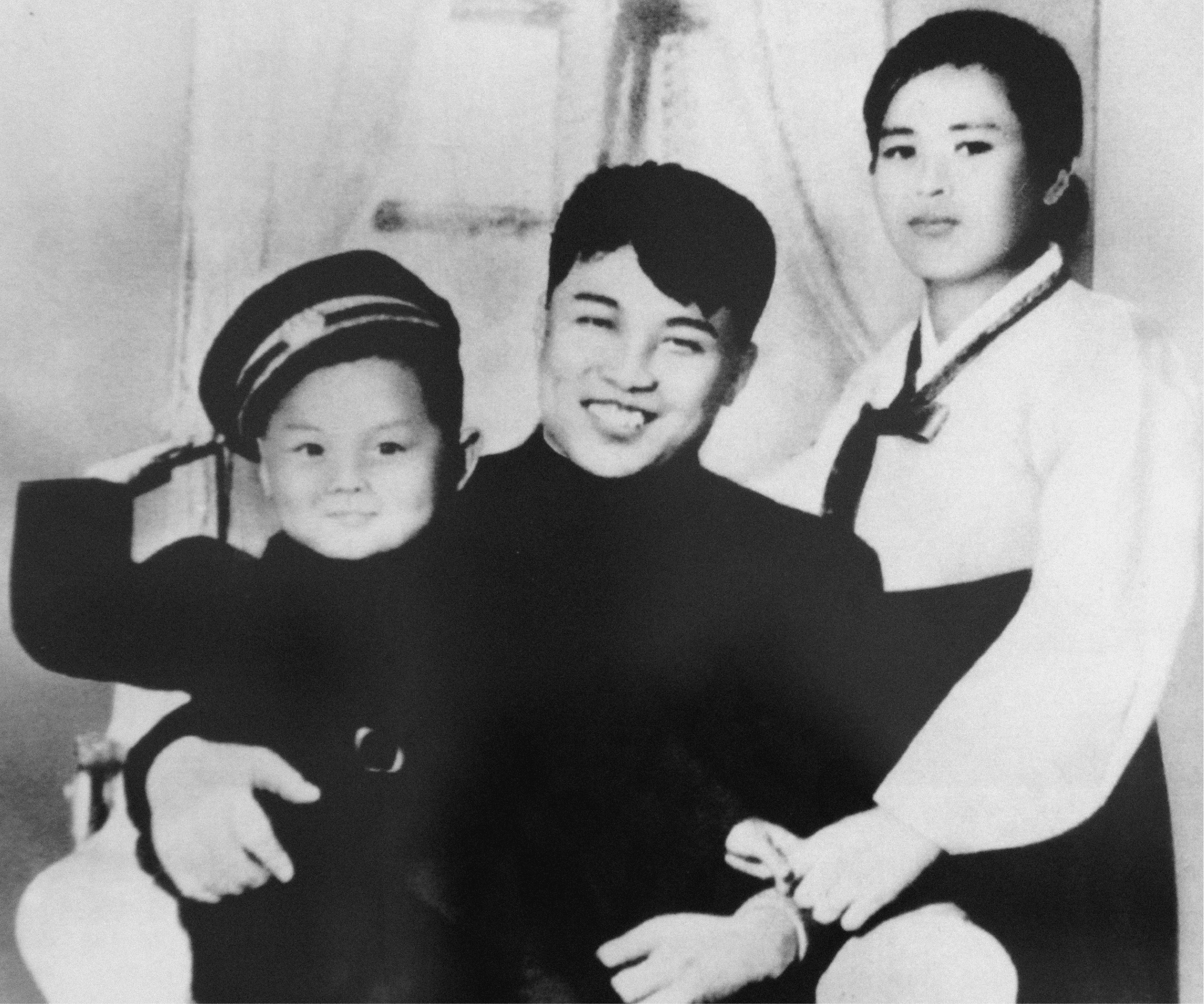
What I’m trying to posit in this book is that to understand North Korea, you cannot overlook the Christian influence of the Jerusalem of the East, and specifically its influence on Kim Il Sung. I’m not saying he created a crypto-Christian state, but that it definitely played a deep role in his upbringing, just as we’re all products of our influences. This Christian thread is grossly overlooked when it comes to North Korea. Part of what I’m trying to do is offer a corrective, to tell people this was a very powerful ideological thread running through modern Korea and specifically through the family of Kim Il Sung.
But fanatic cults of personality have prospered in other states lacking a deep history of Christianization — Stalin, Mao, Pol Pot, etc. It seems to me that part of your argument is that this Christian legacy somehow explains the remarkable endurance of the Kim family cult.
Absolutely. Stalin was at the unquestioned peak of his cult for about eight years, from 1945 to his death in 1953. Mao’s cult of personality peaked during the Cultural Revolution, roughly 1966 to 1969, about three years at its height. And after each of them, you had a reckoning: Khrushchev’s de-Stalinization, Deng Xiaoping’s “70 percent right, 30 percent wrong.”
| MISCELLANEA | |
|---|---|
| FAVORITE BOOKS | The Rise of Theodore Roosevelt by Edmund Morris, Sea of Poppies by Amitav Ghosh, The Martyred by Richard E. Kim, and Rebecca by Daphne du Maurier |
| FAVORITE FILM | The English Patient, Jerry Maguire |
| FAVORITE MUSIC | Oasis, Bruce Springsteen & the E Street Band |
Nothing remotely like that happened in North Korea. There was no reform and opening, no glasnost and perestroika. When Kim Il Sung died, he handed it off to his son, who had been one of the main architects of his father’s cult, putting it into overdrive. And it’s now been handed to a third generation in Kim Jong Un, with nobody along the way incentivized to dial things back at all. If anything, they keep dialing it up. They’ve made Kim Il Sung the Eternal President of North Korea. Nobody knows for certain what’s going on with Kim Jong Un’s daughter, but it looks like they’re preparing for the cult to continue into a fourth generation.
What is Christianity’s role in North Korea today? I’m thinking of the missionaries in China who have operated an underground railroad of sorts for defectors.
In the 1990s, around the time of Kim Il Sung’s death, a massive famine struck North Korea and thousands fled over the Yalu and Tumen rivers into northeastern China. Many South Korean missionaries were operating undercover there, running safe houses. The North Koreans were fleeing primarily for economic reasons — not out of political defiance, but because they were starving. Many eventually made their way to South Korea along a route that first ran through the consulates in Shenyang and the foreign embassies in Beijing, then through Mongolia when China shut that channel, and eventually through Southeast Asia — across the border from Yunnan into neighboring countries to seek asylum. Some 30,000 North Koreans made that very difficult journey and ended up in South Korea.
The country is not as welcoming to outsiders as it was even in the pre-COVID period. But North Korea, I don’t think, is going away anytime soon. They are a nuclear-armed state. There’s very little debate about that anymore, even if the U.S. government is reluctant to apply the label.
What’s fascinating is that South Korean missionaries were the primary conduits of this underground railroad. Many used the opportunity to share the gospel — the same thing Samuel Moffett did in the 1890s. Many of these North Koreans, encountering Christianity for the first time, were struck by how similar it was to what I call Kimilsungism, the religion they were raised in. They’d do a double take: “This sounds like a replica of Kimilsungism.” And the missionaries would have to explain: no, Kimilsungism came later. It borrows from Christianity, not the other way around. The North Koreans almost couldn’t believe it — until they were told the Bible predates Kim Il Sung by 2,000 years. It just speaks to how strong those echoes are.
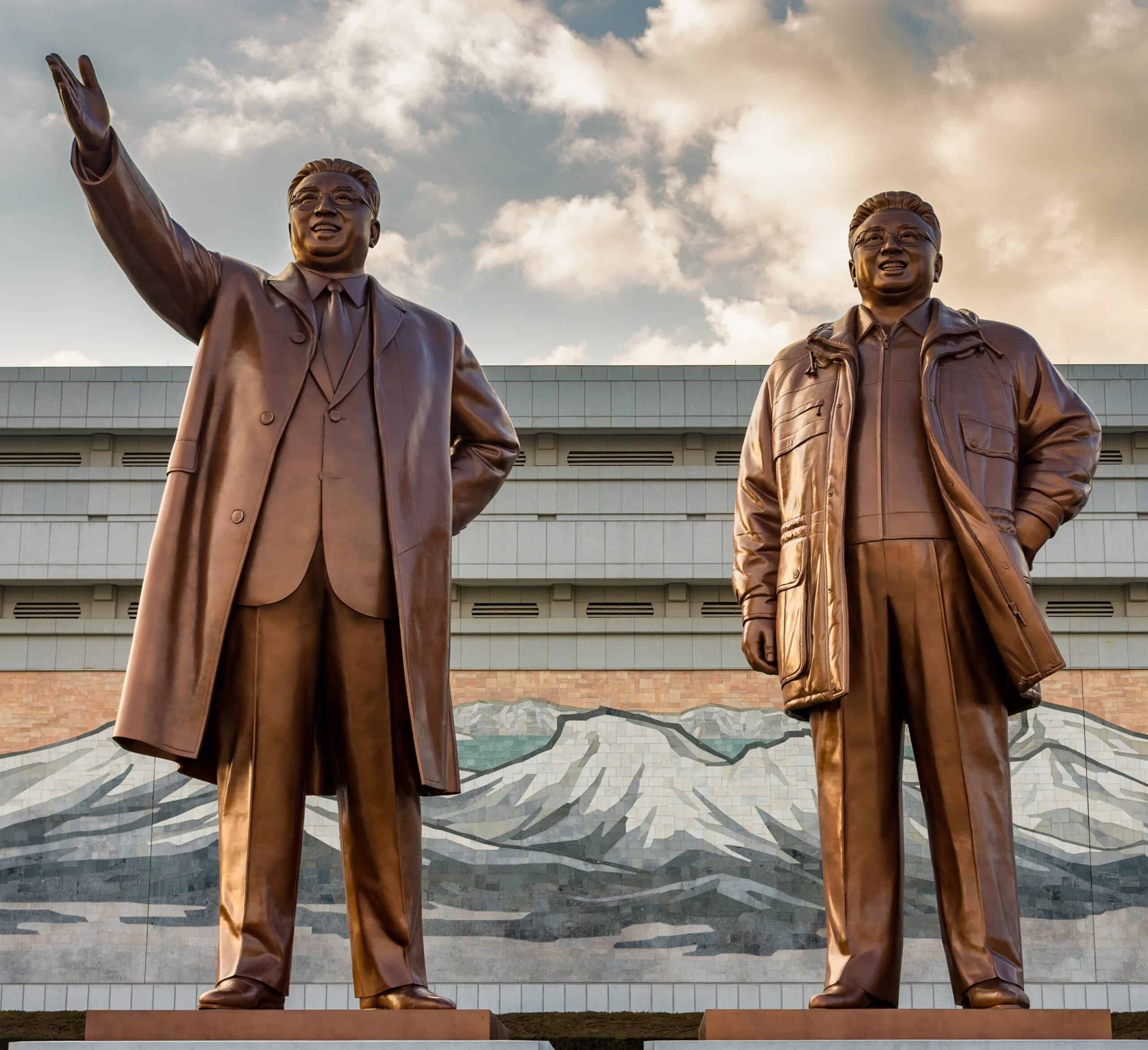
I don’t want to say Kim Il Sung was sitting with a Bible on one side creating his ideology. It was likely far more subtle than that. But the end result is the same: North Koreans who come out, encounter Christianity and ask, “What is this, and why is it so similar to what I was raised in?” Many do become Christian when they reach South Korea.
I’d be remiss if I didn’t ask you about your day job. There are few foreign correspondents in China today. What’s it like reporting there now compared to, say, ten years ago?
I can’t really compare it to back then because I wasn’t here; I was reporting in Hong Kong, which is a different environment, and then Seoul. But even when I was based in Seoul, I was flying in and out of Beijing, partly to get to Pyongyang. Beijing was a gateway to North Korea, though that role has diminished. North Korea hasn’t truly reopened since Covid and the infrastructure in Beijing for North Korea-watching — chiefly Koryo Tours, which for decades was the main conduit for Western visitors — has atrophied somewhat. Flights between Pyongyang and Beijing have recently been restored. That remains the main way in and out.
As for the general freedom in Beijing, by all measures it has gotten a lot more difficult. Surveillance and technology have made things easier for reporters in some respects but also much easier for the state to track what we’re doing. That’s true in the North Korean context too: go to the border regions, go to Dandong, and you’re guaranteed to be followed. The most sensitive areas of China reporting are arguably the party leadership and the frontier regions: Tibet and Xinjiang first among them, but the North Korea border not far behind.
When I think about being a China journalist, so much of what I see rhymes with North Korea — though North Korea provides a more extreme version of everything. The suppression and repression are more pronounced. The Christian influence is much stronger in North Korea, though that’s not to say it isn’t present in Chinese history. At heart, that’s the argument of the book: North Korea is perhaps best understood not only as a nation state but as a religious society built around Kim Il Sung.
Like a theocracy?
“Theocracy” isn’t necessarily misapplied to North Korea, though North Korea would certainly not use that term about itself. I like the phrase “religious society” because it’s relatively neutral — almost respectful, in a sense. Many people there genuinely believe what they are taught. That doesn’t mean it’s real. But you could say that of a lot of religions. And the people born in North Korea had about as much say in being born there as any of us did being born where we were. I want to leave space for that kind of respect: to face it, examine it on its own terms and recognize it for what it is.
Would you welcome the chance to return to North Korea?
I would, but I’m not sure I’d dare to. The country is not as welcoming to outsiders as it was even in the pre-COVID period. But North Korea, I don’t think, is going away anytime soon. They are a nuclear-armed state. There’s very little debate about that anymore, even if the U.S. government is reluctant to apply the label.
As for internal threats, I wouldn’t dare predict. But the state has proven to be incredibly robust. Very few people in 1989 would have predicted that North Korea in 2026 would not only have survived but arguably thrived, with a non-negotiable nuclear deterrent, a third-generation leader and possibly a fourth generation on the way.
It has China as a backer, too. It’s hard to imagine that Beijing would allow the Kim regime to fall.
Yes, though nobody saw Nixon going to China. Donald Trump is realigning the world in many ways. Maybe we do see him in Pyongyang at some point. But as a journalist, my goal is less to be predictive or prescriptive about where North Korea is headed and more to be descriptive about what is happening and what has happened. Part of what this book was about was showing readers that there are a lot more dimensions to North Korea than meet the eye. It’s about developing a more holistic understanding of what it is and where it came from.

Brent Crane is a journalist based in San Diego. His work has been featured in The New Yorker, The New York Times, The Economist and elsewhere. @bcamcrane

_(KADA-shyun15-012~11).jpg)
