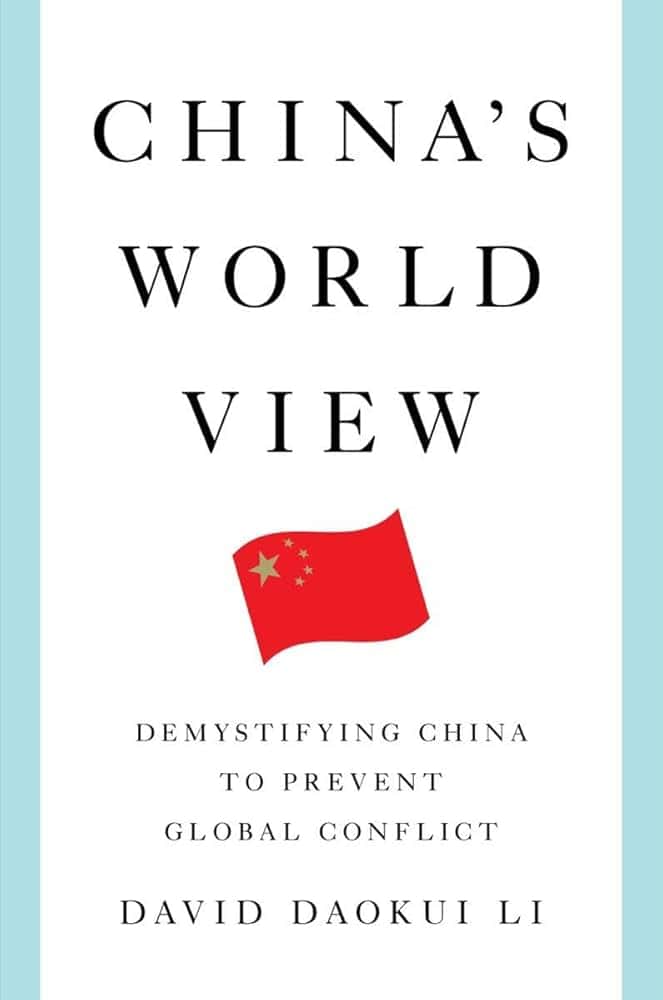
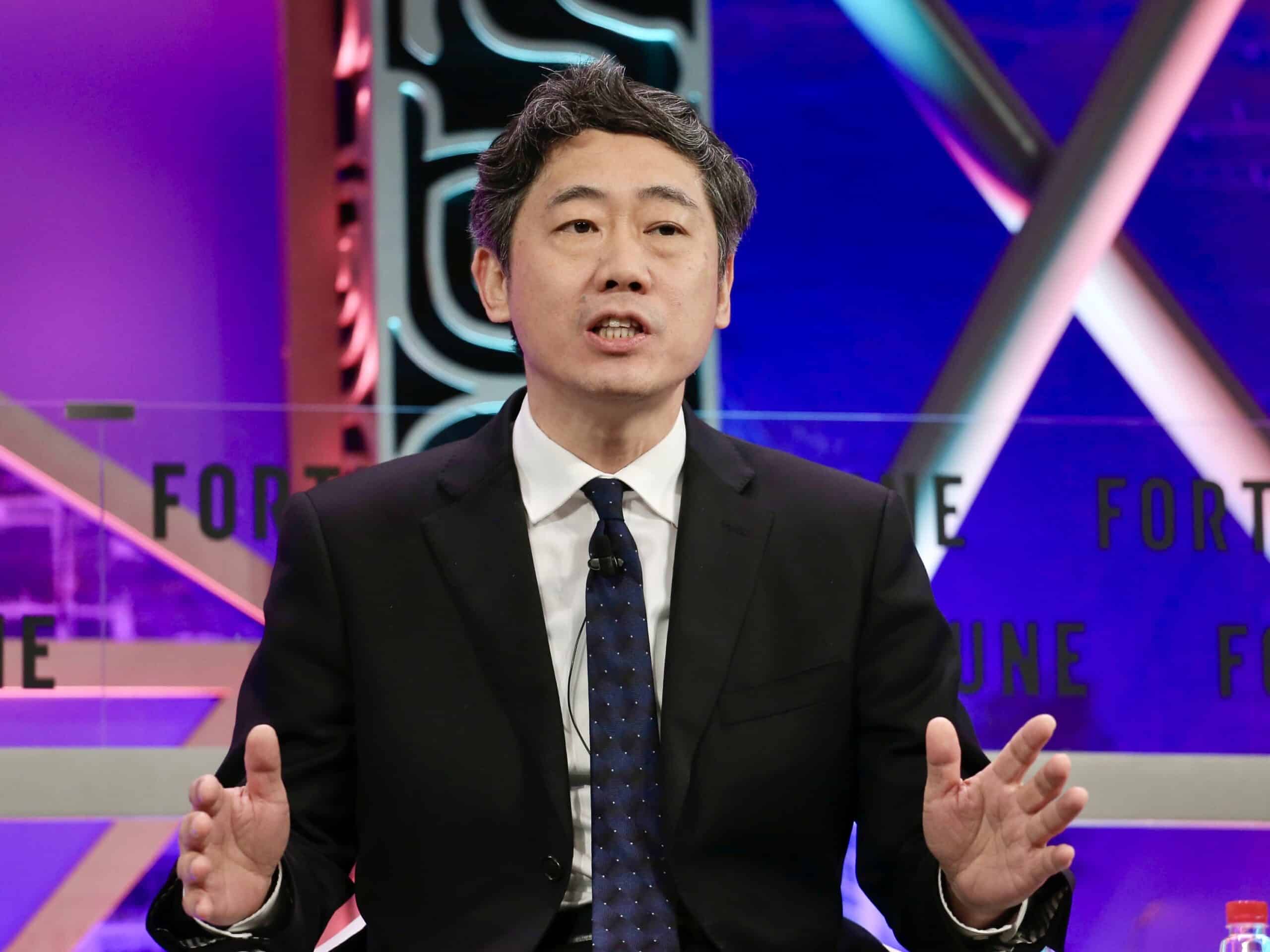
David Daokui Li, a prominent Chinese economist, has advised China’s senior leaders and central bank over a four-decade career in academia. A Harvard graduate, he was a national fellow at Stanford University’s Hoover Institution and taught at the University of Michigan, before returning to China in the early 2000s. He was the founding dean of the Schwarzman College at Tsinghua University and is currently the director of the Academic Center for Chinese Economic Practice and Thinking at the university. In his most recent book, China’s World View: Demystifying China to Prevent Global Conflict (2024), he explains how China sees its position in the world.
The following is a lightly-edited transcript of our recent conversation.
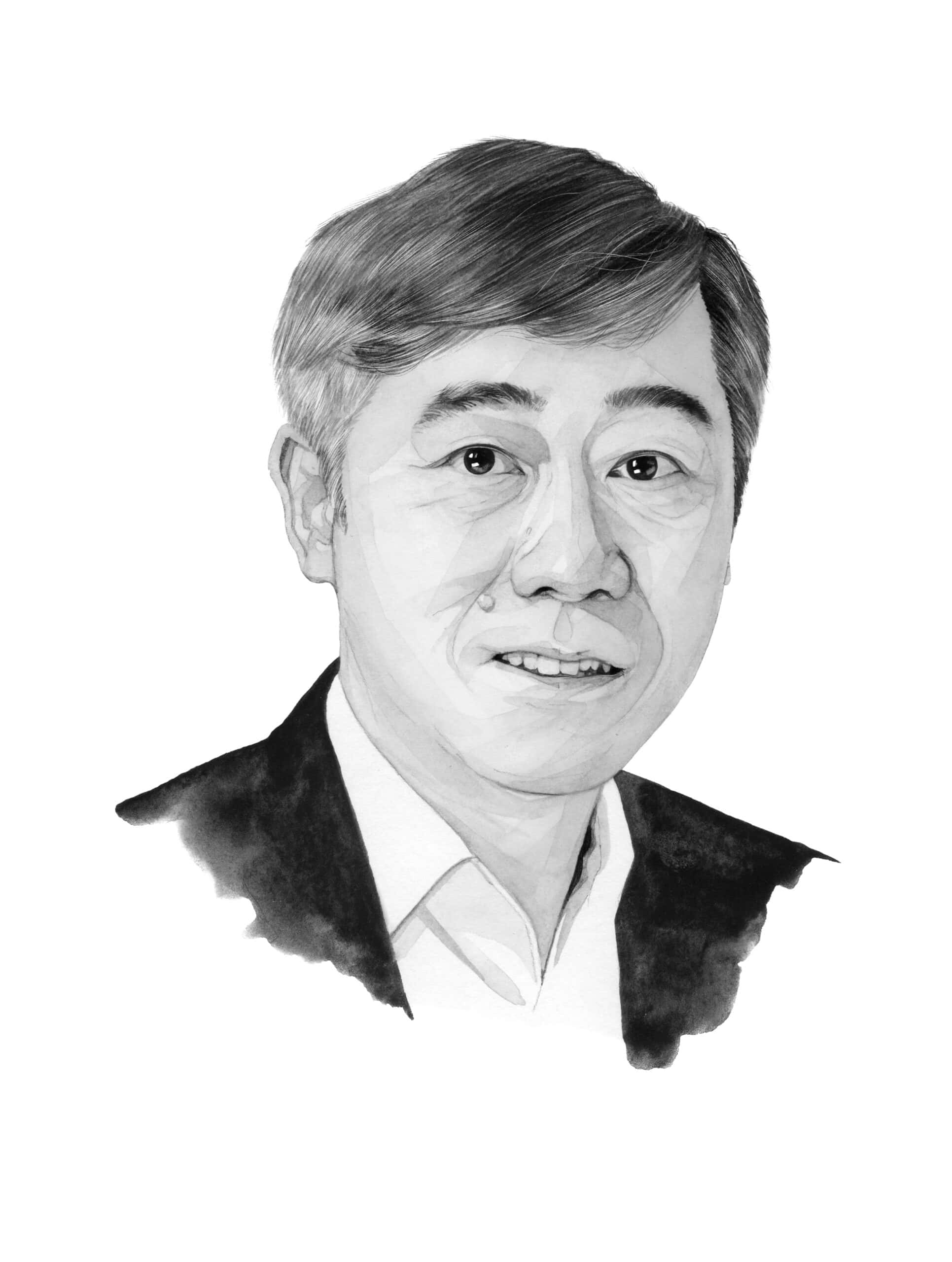
Illustration by Kate Copeland
Q: A central theme of your book is that the world should not fear China’s rise, and that any fear comes from misconceptions about China. What do you see as some of the most common misunderstandings?
A: I think the world gets things totally wrong about China in three aspects. The first mega-myth is that the Chinese Communist Party is communist, which could not be more wrong. The Chinese constitution does not mention anything about wiping out private ownership of production assets, which is the ultimate goal of the communist movement. Instead, China recently passed legislation, in May 2025, to promote the development of private enterprises; China is pushing for more private investment. The CCP as a ruling party is not rooted in the ideology of communism.
Why do I mention this? Because in the rest of the world, especially certain Western countries, some politicians worry that China, under the leadership of the CCP, will promote its ideology to wipe out the private capitalist system. That’s the biggest misunderstanding. After the collapse of the former Soviet Union, the CCP at the very top level was seriously deliberating whether to get rid of the word “communist” from the party name. In the end, the conclusion was clear: they would keep it because they wanted to respect history.
China runs a political system of internal balance. And it tries to promote orderly social and political participation by the population, and an orderly market economy, where market forces cannot create excessive inequality.
The second mega myth is that China is run by an authoritarian regime. By that, scholars mean that the regime relies on a small number of elites to make key decisions, and the population have limited political participation. This is not the reality in China. The CCP has over 100 million party members. It is the largest political party in the world by far and it’s a grassroots party. Every village and residential district has its Party branch, deliberating and making decisions on important issues for the community. The Communist Party is not an elite party: It’s a “population-based party” that mobilizes a huge number of the population to achieve its goal.

The population of 1.4 billion participates in Chinese politics through a structured system of voting, starting from the residential district, moving up to municipality level. We elect people’s delegates to our districts, who in turn elect our municipal people’s delegates, and the National People’s Congress’s delegates, who elect the Premier and the President.
The CCP has the world’s most sophisticated human resources department. If you compare our Chinese president with his counterparts in the U.S., whether it’s Presidents Trump, Obama or Biden, the Chinese president has a much longer CV of political experience. Our President started his career as a deputy mayor of a small county, and rose to become president, moving up step by step. In contrast, President Obama did not do much actual administrative work before assuming his position in the White House, and Donald Trump did not do any government work before being elected.
Also the Chinese political system has its internal discipline system, which is very tough and guards against misbehavior and corruption. We have 64 provincial leaders serving five-year terms. And every five years, I tell you, at least five provincial leaders are fired due to corruption investigations. There are clear checks and the balances in the system.
China’s leaders always have the mentality of students taking exams. They are always on their toes because the leaders, starting with Mao Zedong, believe that if they don’t do a good job, they will be undermined by the population, one way or the other. This is what I call mental discipline.
The third mega-myth about China is that it will export its ideology to the world. China will not and cannot do this because its political system today is based on a long history, which cannot be duplicated in the rest of the world. For example, the Chinese population respects the government the same way children respect parents, and the government behaves like parents, taking care of the population. This is a history influenced by [ancient philosophers] Confucius and Mencius.
The second reason is that religion matters. China doesn’t have a religion as commonly understood in the rest of the world, such as Christianity and Islamism. These religions have theories of the afterlife. We don’t. The third reason is language. Language is key to our thinking, and the Chinese language is totally different from many other languages.
This internal discipline system can also be used by leaders to punish and silence political opponents, as some have accused Xi of doing so. And China’s anti-corruption drive has continued for years without signs of abating — is this a sign that the mechanism isn’t effective in preventing and rooting out corruption?
China’s anti-corruption system has been squarely focusing on corruption, and mostly corruption in government-business dealings. It is not meant to get rid of political opponents of the party. In fact, there is a separate system to discipline political dissidents within the party.
And why has there still been a quite large number of corruption cases under investigation? The reason is that most of the ongoing investigations into corruption cases are about the past — in many cases, corruption deals from the past 10 years, or 10 years ago before the 18th Party Congress, before President Xi’s assumed power.
So the ongoing corruption cases are actually a historical check. It is to go back to history; it’s trying to clean up the party officials’ misdeeds. After the 18th Party Congress, which is 2012, there has been a significant decline in corruption dealings. The side effect of this is that many officials are becoming overly cautious. They are not willing to be close to business owners for worry of being alleged to be corrupt.
If China is not Communist, how would you describe its system?
China runs a system based on three things. It has a dominant party, which is bent on all-round nation building. The Party started during the days when China was at the mercy of strong powers from the West and Japan, so its mission is nation building. By all round, I mean that this Party wants China to be respected by the rest of the world, rather than being intruded on or interfering in other people’s affairs. China runs a political system of internal balance. And it tries to promote orderly social and political participation by the population, and an orderly market economy, where market forces cannot create excessive inequality.
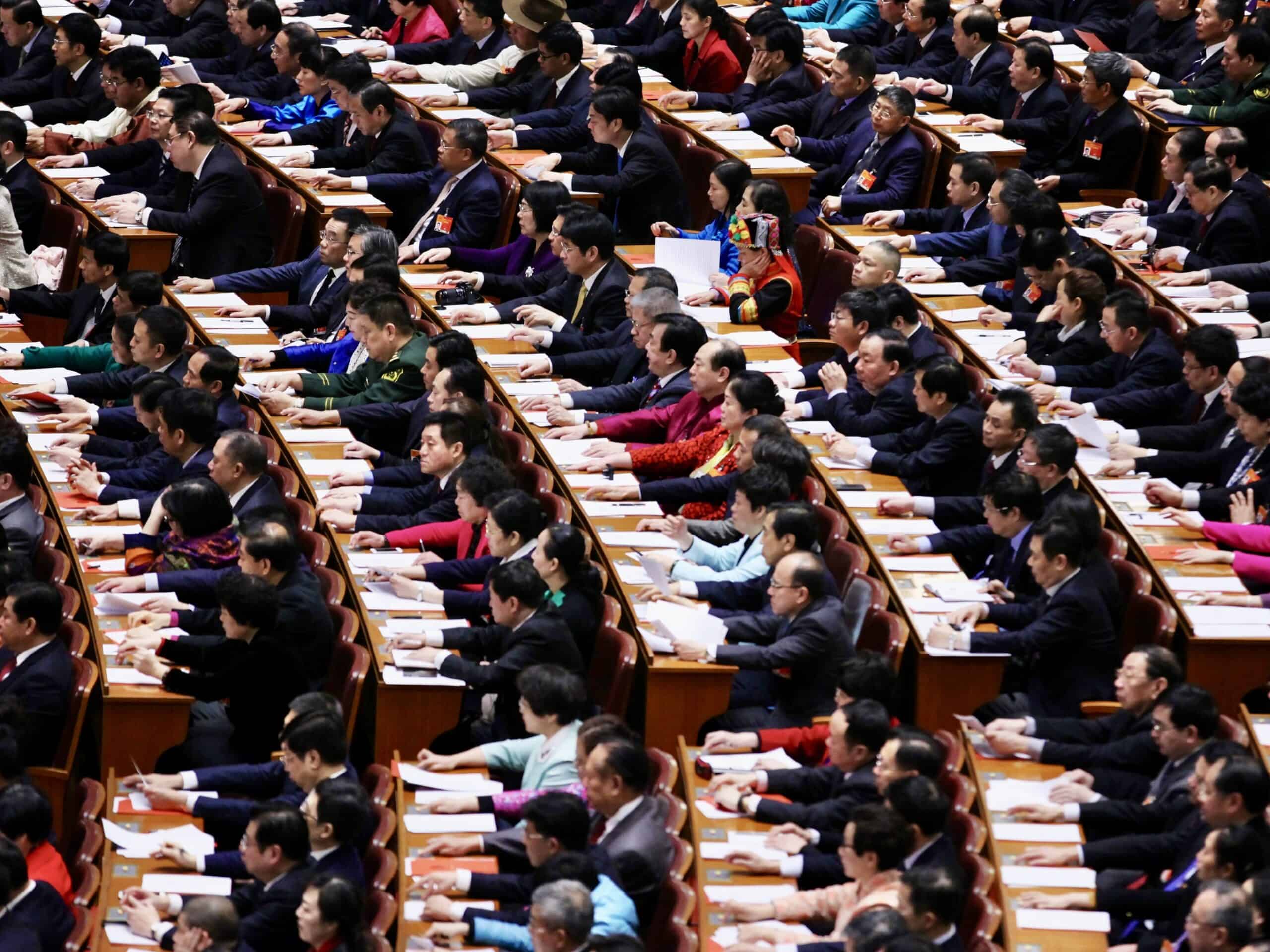
And would you describe China’s system as democratic? Some would argue that this process is highly choreographed and that the candidates are preordained. Is it credible to say that China’s leaders are chosen by the NPC delegates? Additionally, given China’s one-party rule, doesn’t it effectively mean there’s no alternative choice for the people?
The Chinese political system can be described as a democratic one, although the details are very different from those in Europe and the U.S.
Of course, the nomination process for both local and national elections is carefully coordinated. In many cases, non-Communist Party members are nominated. In all democratic processes, there are necessary steps to coordinate and discuss candidates before an election; this is the foundation of any democracy. In the U.S., for example, a candidate must get a certain number of signatures or party support. China also has such processes — they are just different in nature. No democracy allows a person to simply stand out as a candidate without a proper nomination process, and China has clear rules for this.
I was in college in the early 1980s when students on campus were involved in nominating and electing delegates to the local district People’s Congress. The process was very dynamic. Today, it is much better organized and less chaotic.
In summary, democracy in China is very vibrant at the local level with a lot of internal discussion and coordination. The local election is not just a process of conforming to nominated officials; rather, it is a process to weed out certain candidates.
Has China reached its goal of nation building yet? What more needs to be done?
Not yet. There’s one tangible [goal] and one intangible [goal]. The tangible thing is Taiwan, because at the end of World War Two, it was widely recognized that China was one nation, which included all its current provinces plus Taiwan. China is now going back to being a respected nation, with its own country still divided into two parts. If the U.S. were divided into two parts, would the U.S. be happy with that? No.
The intangible goal is for China to be respected as an efficient and laudable social political system. Currently, there are many people who still believe that China does not have a socio-political system that deserves respect, that China is a communist or anti-market economy, that it’s a backward country with no human rights. How can China be a respected nation while always being criticized by the rest of the world?

China feels the pain of always being criticized, always having the finger pointed at it for being a bad nation.
What is your assessment of the state of China-U.S. relations now, especially after the meeting between the two countries’ leaders last October? And what can we expect in the coming year?
The U.S.-China relationship is now in a very good shape, much better than most people realize or anticipated one year ago. The biggest achievement so far is that the two sides can discuss many issues frankly, and after four decades, America finally recognizes China as an equal partner to solve international issues.
I think that’s President Trump’s main message. I understand the U.S. is not monolithic. Congress may have different views. Some factions of American politics are still very hostile to China. But unlike one year ago, at least one important branch of the U.S. government — that is, the White House — is now coming to the realization that China is not a mortal enemy of the United States.
One very important implication is that the White House, in essence, respects China’s core interests: the most important is that mainland China wants to reunite, ideally peacefully, with Taiwan. Of course, I understand the White House just made an announcement to sell over $10 billion worth of weaponry to Taiwan. I treat this as business, I don’t think it will change the big picture. The fundamental point is that the U.S. isn’t fighting for the secession forces of Taiwan.
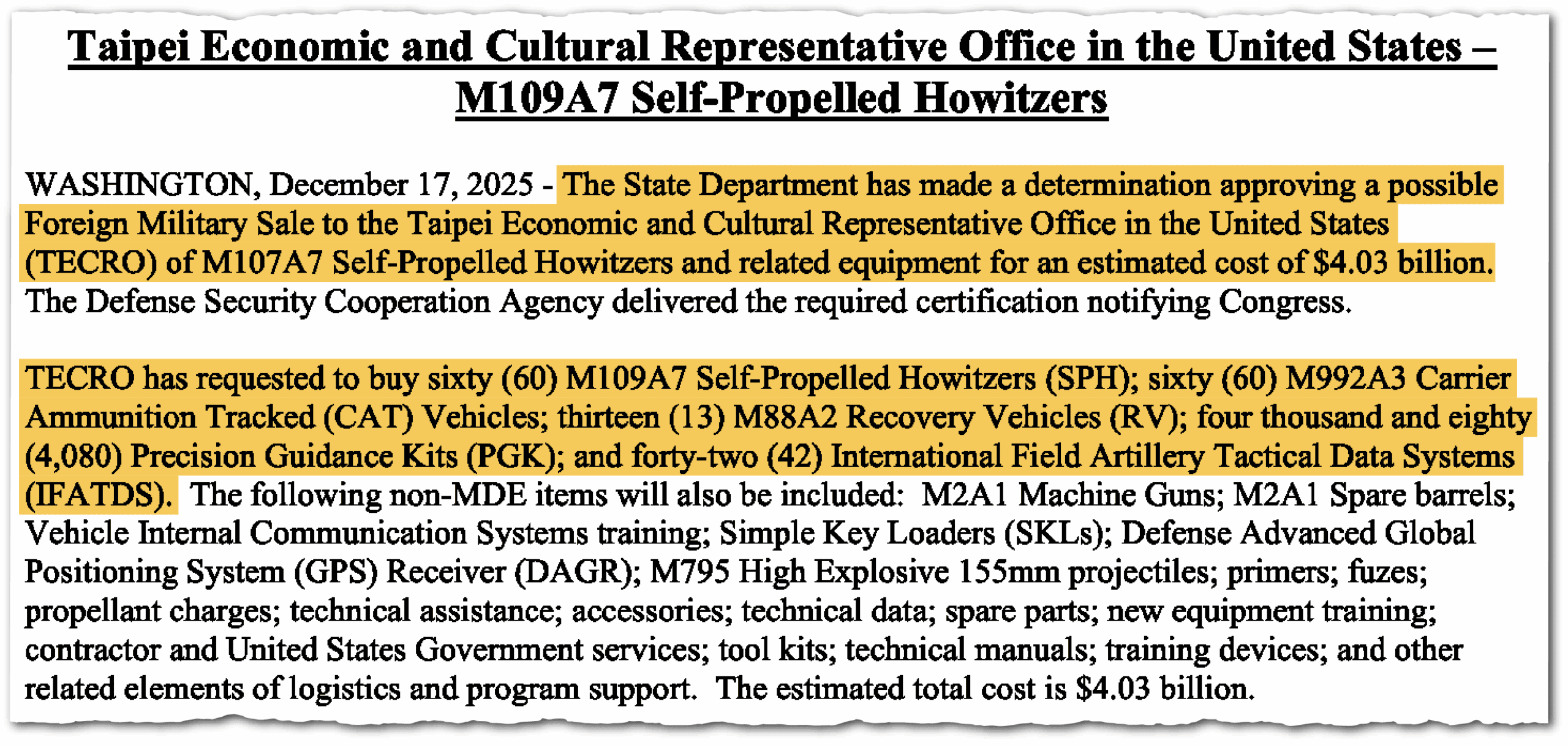
You brought up an issue that worries a lot of people. By saying “ideally peacefully,” do you imply that there is the possibility of reuniting with Taiwan by force?
Peaceful unification is very, very specific. It refers to a peaceful negotiation between the mainland side and the Taiwanese local authority, to come up with a new system of governance for the current leaders in Taiwan. For instance, setting up a new law, maybe a Basic Law [a constitutional document that enshrines the One Country, Two Systems policy] or a mini constitution for Taiwan. For example, Taiwanese people would not have to serve in the Chinese military. And Taiwan, for sure, would enjoy a very, very high degree of autonomy.
I believe the Taiwanese population will feel that peaceful unification is much better than the status quo, which requires taxpayers to pay huge amounts for foreign weaponry and young men to serve in the military.
You asked about military backed reunification. I’m an economist, so let me explain it this way. You need a credible threat in order to reach a desirable outcome. President Trump understands this very well. In this case, the goal of mainland China is clearly peaceful reunification; the means includes the option of forceful unification. Without this, you can never achieve things. The goal, clearly, is peaceful reunification.
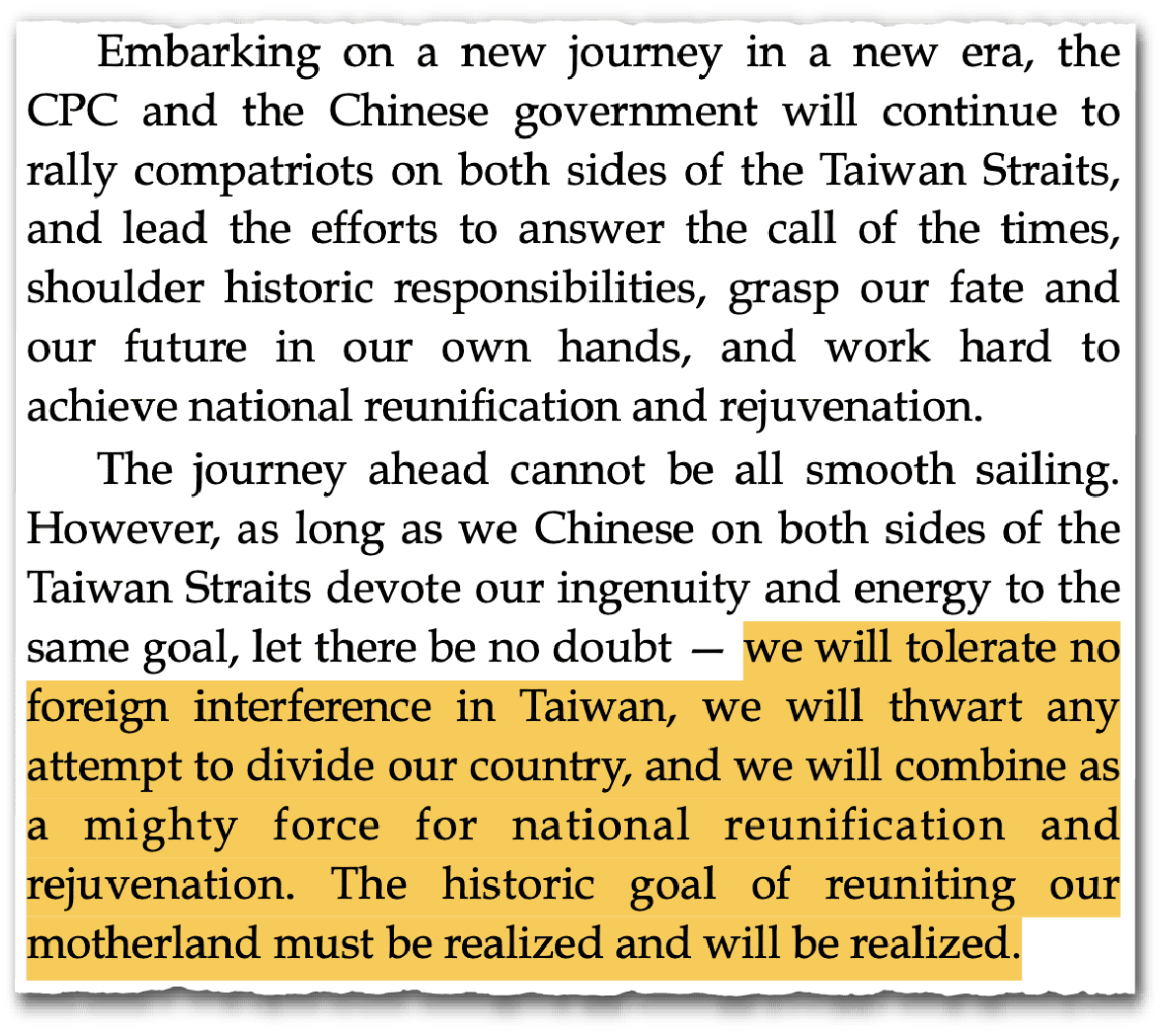
A lot of Taiwanese people look at the example of Hong Kong and are discouraged by the promise of autonomy and rights guaranteed under One Country, Two Systems. Public polls in Taiwan have consistently found that a very low percentage of the population support reunification. Does China take their opinions into consideration?
The key question is whether a small percentage of people in Taiwan not willing to be unified with the mainland means that Taiwan should be separated. I think this is a wrong way to ask the question.
In many countries, people in some parts of the country want to have secession. Other parts of the population feel strongly that the country should be united. In judging whether one part of a country deserves secession or should be separated, one should take into account the whole population’s political will. The fact is that the majority of the population in mainland China feel strongly that Taiwan should be part of China one way or the other, and should be reunited through peaceful means. Taking this whole picture into account, the overwhelming political will of the population is for peaceful unification.

As for whether Hong Kong is a good example for Taiwan, it is one comparison. Hong Kong was not a democratically governed territory under British rule; the legislature and the governor were essentially appointed by the British authority. There were no democratic rules as widely recognized. Meanwhile, Beijing promised that Hong Kong would gradually move to a system of elected legislature and a Chief Executive. It is the process of this transition that is divisive and controversial. The central authority maintains that the process should be orderly and gradual, while some people in Hong Kong believe it should be a one-step process.
In today’s Taiwan, local elections have been widely implemented. The population is overall content with this practice. When Taiwan is peacefully reunited with mainland China, I don’t see controversies or disputes about continuing this practice. Local elections are fine with both Taiwan and the central authority. The only things that will change are firstly, the Taiwanese authority will no longer be bothered with national defense and foreign relations; and secondly, the population of Taiwan will not have to perform military service. Young men will not have to be drafted.


Members of the Taiwanese Army conduct military training exercises. Credit: Ministry of National Defense
Overall, this will be a big plus and a benefit to the population of Taiwan. I believe the Taiwanese population will feel that peaceful unification is much better than the status quo, which requires taxpayers to pay huge amounts for foreign weaponry and young men to serve in the military. I believe it will be a win-win situation for both the Taiwan and mainland populations.
In a recent post, you argued that China is not a winner of the trade war despite its $1 trillion trade surplus. Can you explain why? Do you think China will face more trade tensions in the coming year because of this large imbalance?
China will face tension for sure. There’s already a lot of tension and it’s a big pain for China. It’s a curse in disguise, the opposite of a blessing in disguise.

How is China going to make adjustments? Firstly, China will try to boost domestic demand. When our local market becomes stronger and domestic demand goes up, we buy more foreign goods. For my family’s Christmas gifts, we ordered two pairs of German shoes. They are very sturdy and comfortable. I am trying to buy more German stuff, as I know the German economy is not doing particularly well.
Secondly, China will try to explain and negotiate with foreign governments to find a way for China to have less direct exports to these economies. China’s exports to foreign countries are oftentimes processed trade. China imports the materials and components, processes and assembles them, before exporting the final goods. China will find a way to help our trade partners to boost local production. Chinese enterprises will go abroad to make more investments and provide more jobs.
Thirdly, China will allow the renminbi to appreciate against the U.S. dollar, therefore China’s comparative cost advantage will be smaller.
Chinese President Xi Jinping doubled down on the need to boost domestic demand recently, but it’s also something the Chinese government has been working on for years. What do you see as the root cause of this weakness in consumption? Why are people unwilling to spend?
| FAVOURITE BOOK |
|---|
| My favorite book is Adam Smith’s The Wealth of Nations. The title of the book actually does not do justice to its actual content; it should be called “Adam Smith on the Governance of Britain.” It covers a wide range of issues and is extremely sophisticated. People actually misread this book. He is not arguing that a free market economy is simply the best. Instead, he argues that in order for a market economy to work properly, a lot of very sophisticated issues have to be resolved, including the proper role of the government — in their case, the Queen and the army. |
The single most important issue in the short run is local government debt. Local governments are the biggest spenders in our economy. Until three years ago, they spent as high as 41 percent of our GDP in the form of social welfare and investment in infrastructure. However, this single most important engine of economic growth is now stalling because they have accumulated too much debt. The total debt of local governments is about the same size as China’s GDP. Local governments cannot even service the interest, let alone pay back the debt.
Therefore, for the past three years, their spending has been shrinking. They are squeezing enterprises for taxation. They’re also delaying payments to many enterprises. They are delaying or sometimes eliminating bonus payments to their employees. In turn, households are not getting enough jobs because their employers are being squeezed.
The solution is very simple. The Chinese central government, which holds debt equivalent to 28 percent of China’s GDP, should issue debt as high as 50 percent of GDP in order to relieve local governments of their debt burden. The Chinese central government has every means and every reason to do this, but it is taking time for central decision makers to realize this. This is very simple economics for me, but it’s hard to swallow for many leaders, who were trained as engineers.
The second reason is institutional. None of the 27 ministries in the central government is in charge of promoting consumption. They are either in charge of diplomacy, foreign affairs, political affairs, or production. Of about 500 departments underneath the main ministries, only two and half departments are in charge of consumption. My generation, born in the 60s and the 70s, suffered from a shortage of goods. We did not have enough goods to sustain basic living. The whole Chinese political and social infrastructure is geared towards production. We always believe production is the key to nation building, not consumption.
In a recent forum, you mentioned that one of the best ways to boost domestic demand is urbanization. What do you mean?
Urbanization is a fundamental engine to boost consumption. China’s 1.4 billion population can be divided into two parts: 700 million live comfortably. We’ve got cars, good apartments and air conditioners.
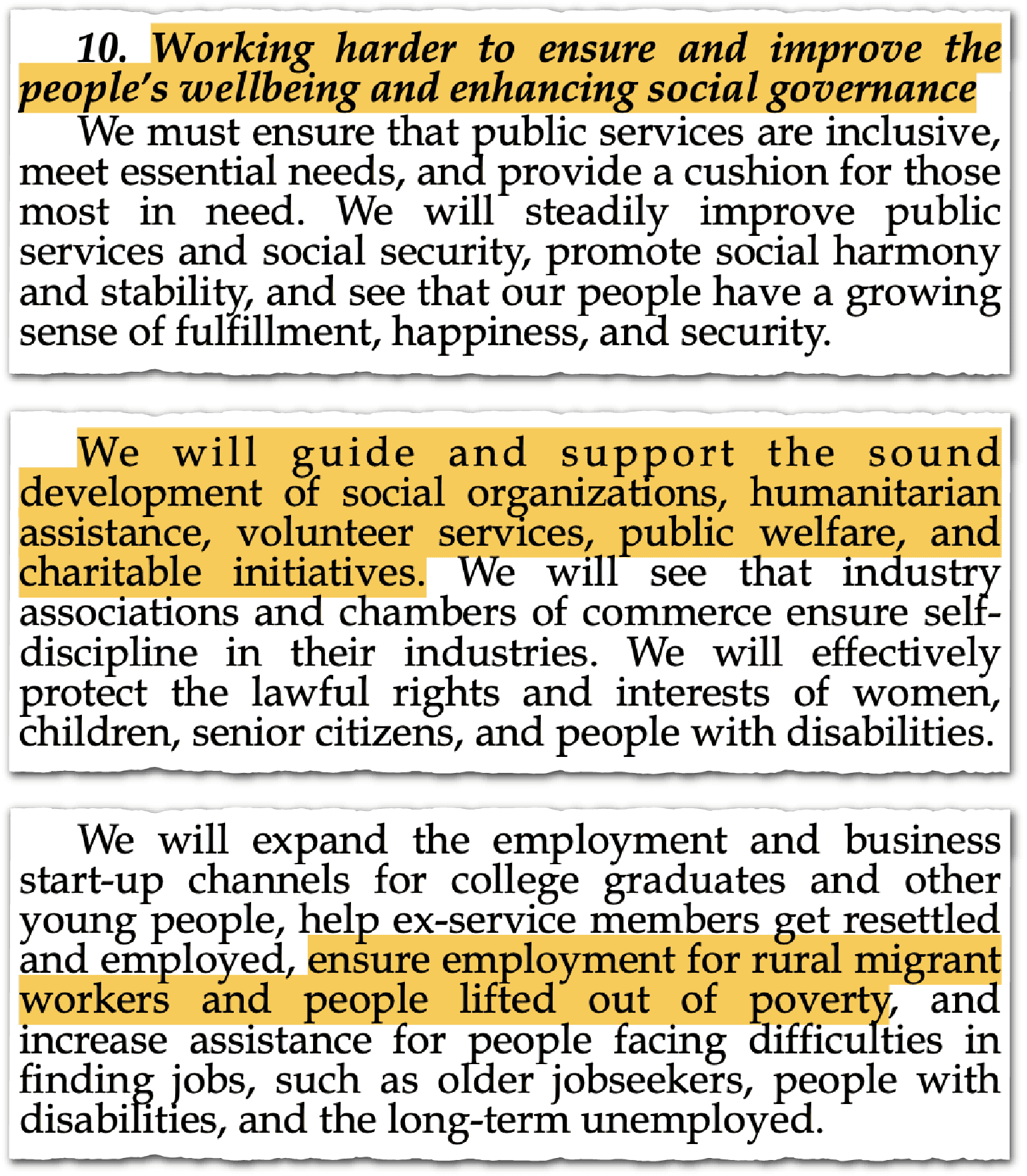
The other 700 million are either living in the countryside or cities, without being fully assimilated into city life, because their families cannot join them and their kids cannot go to schools there. So they are not willing to spend money. They are saving money for their future, to build houses in the countryside.
The way to resolve this is to speed up urbanization, giving urban welfare to this 350 million population who are already living in cities. More schools and hospitals have to be built. More basic public housing has to be provided. Again, it needs money. In China, a new policy has been called for under the name of investing in human beings, which is to provide social welfare and better education. In the past two decades, China has been investing in concrete and steel, now we are trying to invest in human beings. That’s the way to go.
China is under a lot of deflationary pressure. Do you think the government sees this as a problem?
There’s now consensus that deflation is a big problem for China. Let me tell you a strange situation: Chinese GDP relative to U.S. GDP, measured in dollars, has been declining for the past two and a half years, because our price level has been coming down, whereas the U.S. price level has been going up. People in China say, after two years of hard work, we are even falling behind the U.S. You can argue, this is a vanity issue.
…China should not slow down its technological progress. Meanwhile, it should double down on more market development and demand, and more welfare for people who need the support.
How can we resolve this issue in a meaningful way? We have to help the Chinese economy have a normal pace of inflation, around 2 to 3 percent, instead of the 2 percent decrease right now. The key issue, again, is local government debt. China needs to use central government debt issuance as a way to boost domestic welfare, economic activity and demand.
China has made significant advances in AI, robotics and other technology, but there are worries that its laser focus on industrial policy and high-technology could come at the expense of the rest of the economy. Is that a valid concern?
| MISCELLANEA | |
|---|---|
| FAVORITE MUSIC | My favorite music is a large body of classical music. To name one is the Overture (Prelude) to Tannhäuser by Richard Wagner. This is one of the “classics of the classics.” |
| FAVORITE FILM | My favorite movie is Forrest Gump. It is very philosophical. It tells us that a person with a good heart, following the flow of the world, will eventually end up being blessed and doing well. |
It’s valid. People are talking about how China’s rapid application of AI may kill jobs, and in the end, may make demand in the economy shrink even more. One sensible view, which I support, is that China should not slow down its technological progress. Meanwhile, it should double down on more market development and demand, and more welfare for people who need the support.
For example, in China we do not have enough medical services or education. Parents are willing to spend money on education, and most education can only be done by real human beings, not by AI.
China also needs more social services, such as soccer or basketball games. Many cities in China compete to organize marathons. However, there are lots of restrictions on marathons because the government is concerned about people dying from heart attacks.
And China needs more pop music shows like those by Taylor Swift. She went to Singapore instead of China on her world tour, yet we have so many stadiums which are vacant. There are all these restrictions on Chinese consumption. When consumption of these things goes up, it could compensate for the loss of potential jobs due to AI.
Throughout your career, you have advised different top Chinese leaders. How does Xi Jinping compare to his predecessors, and in what ways is his governance style different?
There’s a huge difference between Xi Jinping and his predecessors. Xi is fundamentally concerned about the long term future of the Party and the country. He wants the Party to be able to govern China in an effective and sustainable way for many years to come. He wants the country to not only become prosperous, but also to gain respect from the rest of the whole world. Whereas his predecessors were mostly concerned about the most pressing issue of the day — in other words, about making sure they can survive.
You’ve been very active on social media, explaining China’s policy on X, YouTube and Xiaohongshu, which is quite rare among Chinese scholars. Do you have a mandate? Is this driven by your own interests?
It’s very simple. As I explained to many of my American and western friends, social media is my weapon and my army. I write papers. I give speeches offline. And oftentimes, I have been misquoted and my views have been amplified by other media, either positively or negatively. For many years, I was at the mercy of the media.
Two years ago, before turning 60, I decided on two things. The first was to use more social media. I founded my own department of publicity, propaganda, and public relations. I am happy to do this interview with you because you are able to amplify and propagate my views in the U.S. and the Western world, which I am not doing very effectively right now through YouTube. In the Chinese media I usually don’t give interviews now because I have my own voice.
The other resolution, which was not so successful, was to get a private license to fly a plane. You need 50 hours of coached flight. Even if I were to obtain the license, there is literally zero possibility for me to fly from Beijing to Shanghai, because Chinese airspace is too tightly controlled. This is another example of China having too many restrictions on consumption.

Rachel Cheung is a staff writer for The Wire China based in Hong Kong. She previously worked at VICE World News and South China Morning Post, where she won a SOPA Award for Excellence in Arts and Culture Reporting. Her work has appeared in The Washington Post, Los Angeles Times, Columbia Journalism Review and The Atlantic, among other outlets.