In the short but storied history of China’s tech titans, few chapters inspire more renown than a five-year period known as the War of a Thousand Groupons. The conflict began in 2008, with the launch of the American group-discount platform. In Silicon Valley, Groupon created a sensation, soaring to a valuation of more than $1 billion in just 16 months — the quickest pace ever.
Techies were drooling in China too, where a bargain-sensitive consumer market seemed tailor-made for such a platform. Investment capital flooded into the sector, propping up dozens, then hundreds, then thousands of start-ups. By the time of Groupon’s $16 billion IPO in 2011, there were 5,000 group-discount copycats duking it out in the Middle Kingdom.
“For these gladiators, no dirty trick or underhanded maneuver was out of bounds,” wrote former Google China president Kai-Fu Lee, in his book, AI Superpowers. “They deployed tactics that would make Uber founder Travis Kalanick blush.”
Competition, in other words, was brutal. Companies copied and stole from one another with abandon. They installed moles in competitors’ staff. Some went so far as to forcibly uninstall competing software from consumers’ phones or report rival CEOs to the police on frivolous accusations. As firms struggled to retain smaller and smaller shreds of market share, fresh cash from the likes of Sequoia Capital China, Alibaba and Tencent was burned like confetti.
Chinese consumers, meanwhile, took advantage of the gratuitous stream of discounts. A Japanese dinner in Beijing, for example, that was valued at $106 went for $26. As the years went by, weaker combatants began to perish in the maelstrom, until only those with deep pockets and swift feet were left standing. Among them was Meituan, “the Beautiful Group.”

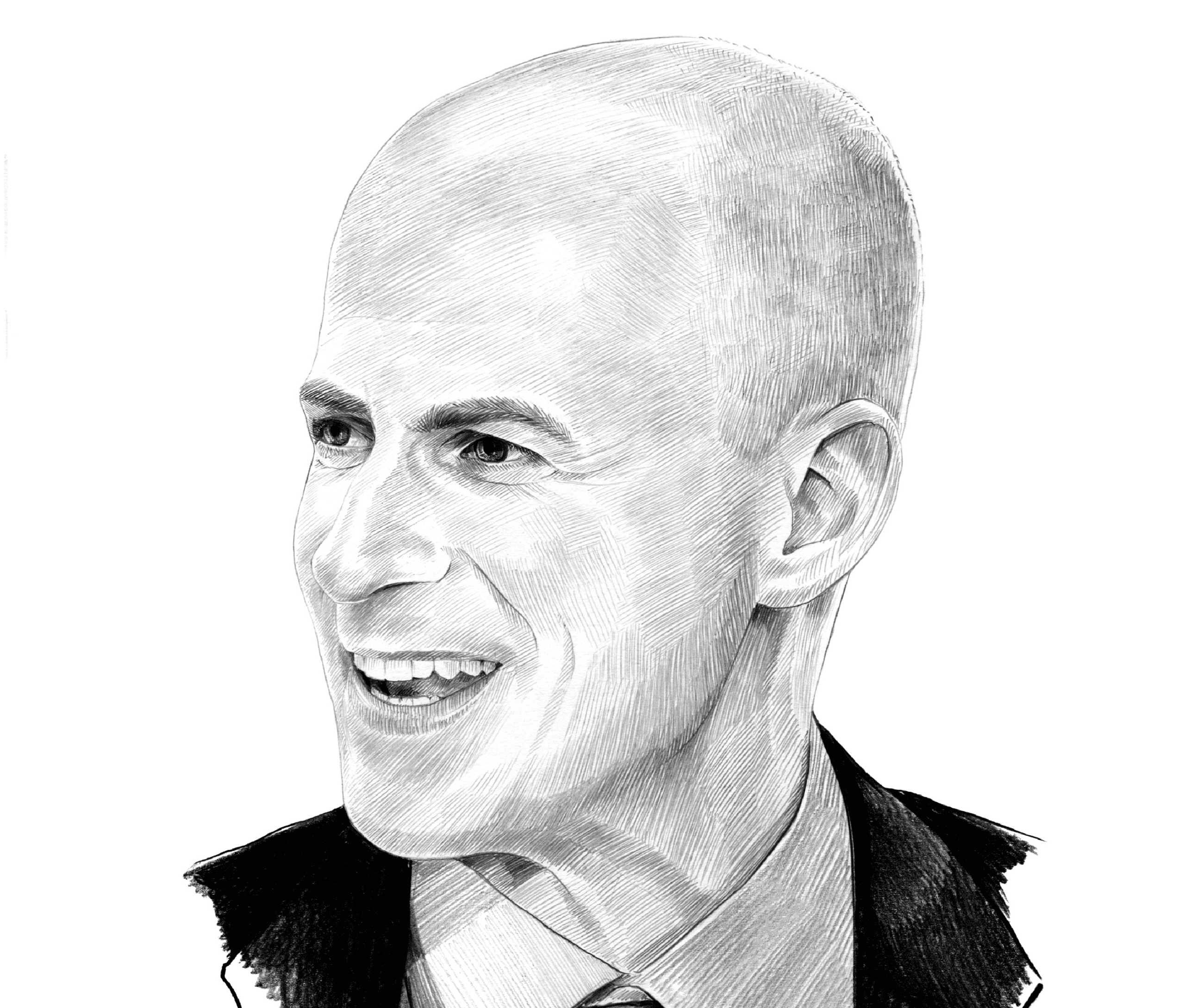
Launched in 2010, Meituan was founded by a soft-spoken computer engineer named Wang Xing. Bespectacled, bald and fond of science fiction, Wang entered the Groupon War battle hardened from a string of half successful startups and duds. Each of his ventures was an American copy. The biggest were Xiaonei, a Facebook duplicate, and Fanfou, a Twitter replica. Insiders called him “the Cloner.” But he was more than just a copy-cat.
“Wang Xing is a driven entrepreneur and calculated strategist, known for keeping himself and his colleagues on a permanent war footing,” says Michael Norris, an industry researcher in Shanghai. “In many ways, Wang Xing is an embodiment of Andy Grove’s maxim ‘only the paranoid survive.’”
In 2006, Wang sold Xiaonei for nearly $2 million after the company ran out of money. Its new owners rebranded the firm RenRen and turned it into a billion dollar company. Fanfou was on track to glory too, before government censors blocked it following riots in Xinjiang in 2009. Competitor Sina Weibo filled the microblogging void, eventually swelling into an $11 billion behemoth. With both big ventures, Wang had missed out, by a hair, on enormous fortunes.
Then came Meituan. Today, the “super app” boasts a valuation of $180 billion, trailing only Alibaba and Tencent in the Chinese tech space.1This ranking is for listed companies and does not account for Ant Group and ByteDance It claims 500 million users and 30 million employees, making it one of the largest online-to-offline (O2O) companies in the world.
Wang’s success stems from his incessant flexibility. “Wang Xing will jump from business to business, he doesn’t care,” says Jeffrey Towson, a consultant focused on Chinese tech. “He’s like a dude on the street corner who, when it starts raining, is suddenly selling umbrellas. He’s a hustler.”
Of Meituan’s offerings, coupons represent only a slice. Consumers can book hotels, travel and movie tickets; rent bicycles; order food delivery; peruse restaurant reviews; even book massages and manicures. It fuses elements of Yelp, DoorDash, Kayak, GrubHub, Fandango, OpenTable and Booking.com. The company has branched into physical grocery stores and is investing in autonomous delivery vehicles and drone systems. Wang even has a 22 percent stake in Li Auto, the Chinese electric vehicle brand. In July, following Didi’s IPO fiasco, Meituan re-launched a ride hailing service in Beijing.2(Meituan had embarked on a ride hailing push in 2017, but the project stalled after Meituan struggled to acquire relevant government licences.)
At the moment, Meituan is best known for food delivery, a market it dominates. In cities, the company’s yellow-vested delivery drivers are near-constant fixtures on roads, zipping by on mopeds saddled with bagged meals and directed by Meituan’s sophisticated AI system. On the app, users can track orders, which typically take no longer than 28 minutes. Last year, the company made 10 billion food deliveries. Young Chinese order food from the app so often that people joke Meituan is “more convenient than mother’s kitchen.”
The pandemic and its lockdowns have been a boon for the company. Delivery orders increased 25 percent to $75 billion. It hired 458,000 new drivers between January and March 2020 alone. Meituan’s growth has been about more than just food, however. In travel booking, Meituan reigns supreme, edging Ctrip, China’s largest travel company, out of the number one spot just a few years after entering the market.
Wang Xing will jump from business to business, he doesn’t care… He’s like a dude on the street corner who, when it starts raining, is suddenly selling umbrellas. He’s a hustler.
Jeffrey Towson, Chinese tech-focused consultant
But with success and size has come scrutiny. For the first time, Meituan is suffering from multiple PR crises, stemming from accusations of worker mistreatment and monopolistic practices. In April, antitrust regulators announced a probe into Meituan, the second-ever such action. The first antitrust probe was launched against Alibaba, once a top investor in Meituan, late last year. That resulted in a record $2.8 billion fine against the e-commerce giant. Regulators are expected to impose a $1 billion fine against Meituan, according to The Wall Street Journal.
Meituan’s troubles deepened in May, when Wang Xing posted a millennium-old poem onto his Fanfou account that many interpreted as a dig at regulators. Entitled “The Book Burning Pit,” the poem is a sarcastic skewering of Qin Shihuang, the notoriously heavy-handed Chinese emperor. Even after Wang deleted the post and clarified that it referred only to Meituan’s competitors, the company’s shares plunged 14 percent. Then in June, Wang was summoned by officials to Beijing, where he was advised to keep a low profile, according to Bloomberg.3Around that time, with regulatory scrutiny on tech firms intensifying, Wang had donated about $2 billion of his shares to his philanthropic foundation for education and scientific research, according to The Wall Street Journal.
As China’s tech sector comes under regulatory scrutiny, Wang finds himself in an uncomfortable position. His goal is to make Meituan “the Amazon of services,” but a push for greater dominance in the expanding O2O services market risks provoking more unwanted scrutiny. With industry leaders like Didi and Alibaba, Beijing has shown its willingness to knock tech giants down to size. With Meituan’s biggest rival, Alibaba, in the doghouse, however, there is also a temptation for Wang to go full steam ahead.
“Maybe Meituan sits still,” Towson says. “But it would be very uncharacteristic for them to just keep doing what they’ve been doing.”
One book that Wang says “greatly influenced” him is Finite and Infinite Games: A Vision of Life as Play and Possibility, by the late American philosopher James Carse.4Carse died in September 2020 In it, Carse lays out two philosophical categories: “finite” and “infinite” games. The aim of the former — “the familiar contests of everyday life” — is to achieve total victory, to complete the task. But in the latter, more valuable category, one tries to keep the game going forever.
FOOD FIGHT
Wang Xing was born into an intellectual family in Fujian Province in 1979. His father was an entrepreneur, having worked in mining and construction before running a successful cement company. In adolescence, on a counterfeit PC gifted by his father, Wang discovered a passion for computers.
After graduating from prestigious Tsinghua University with an engineering degree in 2001, Wang went to the University of Delaware to pursue a PhD in computer engineering. There he discovered Friendster, an early Facebook competitor. Excited by the nascent social media platform and the possibilities it presented for the Chinese market, he dropped out of his PhD program in 2004 and returned to China.

“I was very excited about social networking, because I studied computer networking,” Wang said in 2011. “I saw this was going to be the new infrastructure of how information flows, above computer networks.”
With friends in Beijing, he launched Duoduoyou, a Friendster copy, which fizzled.
Later, with Xiaonei, the Facebook clone and Renren precursor, Wang’s team found success. But the company burned through cash so quickly that Wang was forced to sell it. “This is not the end,” he declared in a statement announcing the sale, quoting Winston Churchill. “It is not even the beginning of the end. But it is, perhaps, the end of the beginning.”
People who know Wang describe him as intelligent but somewhat inscrutable. James Hong, an angel investor and friend, calls him “almost Vulcan in his ability to solve problems logically and pragmatically. He has almost no ego which enables him to see things clearly even when they are not in his favor.”
“He does deeply believe he’s delivering a benefit to society,” adds one senior Meituan board member who requested anonymity. “He’s always very convinced that what he’s doing is right, so if you challenge him on a few things, you get a lot of pushback. You better be prepared.”
In the Chinese public, his reputation is one of “a solitary and pensive figure” and a “poet entrepreneur.” His Fanfou account, which features 16,000 posts, is a window into a searching, analytical mind. In the posts, he quotes from classical Chinese poetry, The Catcher in the Rye and records more esoteric musings, such as: “For a lonely soul, work is the best cure.”5His account is virtually the only active one on the platform, which the tech website Protocol calls “a digital ghost town.” “If I haven’t seen, thought of, or done anything worth mentioning on Fanfou today, then this day was wasted,” Wang’s bio reads.
Through Fanfou and Xiaonei, Wang became well-known in the Chinese tech world. But though the copy-to-China model was common in the early 2000s, his copy-catting was regarded as notoriously brazen. Xiaonei, for example, resembled Facebook even down to the site’s footer, which read: “A Mark Zuckerberg production.”
[Wang is] almost Vulcan in his ability to solve problems logically and pragmatically. He has almost no ego which enables him to see things clearly even when they are not in his favor.
James Hong, angel investor and friend of Wang Xing
Success has enhanced his reputation. These days, Wang is viewed less as an opportunistic cloner and more a daring visionary. His victory in the Groupon War was pivotal in that transformation.
“His reputation currently is built on the fact that Meituan was the sole survivor of the Groupon War and that he was able to lead the company through a broken business model and pivot to a point today where it is a $200 billion company,” says Rui Ma, an investment consultant and podcaster who follows the Chinese tech world.
One of the few companies left standing in the rubble of the Groupon War was Dianping.com, a restaurant review platform. Meituan and Dianping duked it out for a while, with Meituan backed by Alibaba and the private equity firm General Atlantic; and Dianping backed by Google, Lightspeed Venture Partners and Qiming Ventures. Sequoia Capital China backed both companies. A truce was called in October 2015, when the two firms, rather unexpectedly, announced a $15 billion merger.
The merger was framed as a coming together of equals. The company even changed its name to Meituan Dianping. But it soon became apparent that Wang did not want a co-CEO. Soon after the merger, Zhang Tao, the founder of Dianping, was booted from the conglomerate.
“Wang Xing is just a more aggressive CEO and that’s probably more of what [the board] needed at the time,” says Rui Ma. “[Tao] is much more conservative. He was known as more of a micromanager whereas Wang Xing is much more comfortable with chaos.”
In 2018, Meituan raised $4.8 billion, one of the largest tech IPOs in Hong Kong in years. The event solidified Meituan in the rarified circle of Chinese tech titans.

With the Groupon War behind him, Wang funneled his energy into food delivery. It was an obvious fit. Meituan had a network of restaurants in cities across China that it had cultivated in the Groupon War. And Wang saw the industry as a long-term win. “No matter what happens, people still need to eat, and we provide the most convenient way for people to eat,” he has said.
But doubling down on the food space also exposed fault lines — this time with Alibaba. Dianping was backed by Tencent, Alibaba’s arch-rival. Wang’s decision to merge with Dianping resulted in Tencent owning a fifth of Meituan and in Alibaba — one of Wang’s original key investors — selling its $900 million stake in 2016.
There was a personal dimension to all of this. Prior to the merger, Ma and Wang had been on famously good terms. Ma was seen as grooming Wang as a protege. But for Wang, the Alibaba tent proved too constricting for his mammoth ambitions. He didn’t want to just be an investee of Alibaba — he wanted to be as big as Alibaba. Ma wouldn’t allow such expansion.
“It was very clear to Wang Xing that Jack Ma didn’t want him building his own empire, but wanted him to be more of a vassal to the Alibaba empire,” says Rui Ma. “That really didn’t sit well with him.”
Wang’s defection seems to have created an impassable rift. Wang has said in public that [Jack] Ma has “no integrity.” And in 2018, with Meituan commanding 50 percent of the food delivery market, Alibaba entered the ring with the $9.5 billion purchase of Ele.me, Meituan’s biggest competitor. It was the priciest acquisition in Chinese history, and Alibaba went on to pump $450 million into the company.
“Food delivery is a market we must take,” said Ele.me CEO Wang Lei at the time. “We will keep investing, and there is no limit to our budget.”
Alibaba peddled Ele.me’s services through its shopping and entertainment units, and users could pay with Alipay, Ant Financial’s widely used payment platform.6(Meituan has its own, much less popular e-wallet, Meituan Zhifu.) The competition sometimes led to outright violence, with fights breaking out between Meituan and Ele.me drivers. Ele.me reportedly had new hires undergo martial arts training.
It worked — for a while. Meituan was neck-and-neck with Ele.me, each boasting 30 percent of the market. But thanks to Meituan’s access to WeChat and QQ user bases through Tencent, heavy traffic from Dianping’s review platform and the company’s famously efficient management practices, Wang came out on top. By 2019, Meituan dominated 60 percent of the space. That year, Meituan landed in the black for the first time.

“They whooped Ele.me,” says Towson. “Meituan had better execution. Their playbooks weren’t that different. Wang Xing’s team is just better.”
Licking its wounds, Ele.me was then folded into Alipay under Ant Financial. Last year, Meituan accounted for 67 percent of the market; Ele.me had 27 percent. “If you look at Ant Financial’s filings,” says Towson, “they don’t even talk about Ele.me anymore.”
In other words, Wang has gone toe-to-toe with Jack Ma, the most powerful tech mogul in China, and come out the victor. But in the Chinese tech industry, after each new victory comes a new battle.
TRUST ISSUES
In April, Meituan was summoned by regulators, alongside 34 other tech companies, to discuss antitrust practices. The same month, regulators announced a probe into how Meituan treats merchants on its platform. The accusation is that Meituan has practiced “forced exclusivity,” wherein “local restaurants can only choose one platform company to work with, so they are forced to choose between Ele.me and Meituan,” says Ya-Wen Lei, a Harvard sociologist who has conducted extensive research on Meituan.
The government’s case, observers say, is strong.
“Meituan’s antitrust issues are real,” says Norris, the Shanghai researcher. “There is sufficient evidence from merchants that Meituan has previously engaged in forced exclusivity.” (Meituan maintains that this is not standard practice for the company.)
More disconcerting for Meituan is the fact that no one knows how regulators will respond to what is essentially a new type of company. Meituan is in an uncomfortable spot: needing to expand and dominate to survive, but not knowing where the red lines or regulatory tripwires are.
“The people that are on the legal side trying to regulate this market have no precedent; they don’t really know how to deal with this,” says Ivan Platonov, a Beijing-based analyst with EqualOcean, a market research firm. “Meituan should be worried.”
Antitrust enforcement is not only Meituan’s problem. Across the Chinese tech space — and, indeed, across the world — governments are scratching their heads over how to balance Big Tech with fair play. While some speculate that Beijing’s crackdown is driven more by politics than principles, Angela Zhang, a law professor at the University of Hong Kong and the author of Chinese Antitrust Exceptionalism, thinks Beijing’s action is justified.
“The Chinese government has initiated a massive law enforcement campaign against tech firms in many areas, including antitrust, data protection and financial regulation,” she says. “Thus far, the Chinese regulatory actions appear to be prompted by legitimate concerns about market concentration, competition and consumer protection issues.”
As Meituan awaits the regulators’ ruling, the company is quietly pushing ahead. After shuttering its ride-hailing service in 2019, Meituan re-launched it in July — presumably to take a bite out of Didi’s virtual monopoly. It is also investing heavily in the community group-buying space, where consumers buy groceries en masse, something particularly hot in so-called third and fourth tier cities. The nearly $12 billion space is now a hot ticket in the Chinese tech world. In addition to Meituan, Alibaba, JD.com, Pinduoduo and others are all jumping into the space.
“Those consumers are, in the opinion of many in the industry, the next piece of the pie that these companies will fight over,” Platonov says. “There is a lot of money being burned in those third and fourth-tier cities right now.”

Yet Meituan’s biggest challenge may be internal. The company has been scrutinized over its treatment of its drivers, who engage in relentless, low-paying work while being managed by a pitiless, incessantly monitoring algorithm. Professor Lei at Harvard says that while many were lured by the “freedom” of gig work over factory work, the deal has not panned out.
“A lot of workers I spoke to were very afraid and angry,” Lei says. “They found that they didn’t really have freedom and that platform companies actually have more power over them than the factory bosses.”
In April, a Beijing social security official volunteered as a Meituan delivery driver for a 12-hour shift and earned less than $7 for five orders. Video of his exhausting, fruitless day went viral in China, prompting outrage. In 2020, a similar investigation by Renwu magazine also prompted public rage against Meituan.
Given the size of Meituan’s workforce and the time-crunching demands of its AI system, the issue is unlikely to go away. Officials, for instance, have pressured Meituan to provide better insurance options for gig workers, and Meituan says it will do so. But with such a price-sensitive industry, where consumers jump to whichever app is cheapest, any systematic change that leads to an increase in price could be devastating for revenue.
“Looking after the drivers is probably the most challenging area, just because Meituan has so many drivers,” says the Meituan board member. “We absolutely want to and intend to do the right thing by the drivers and the government. But we want to make sure that the rules apply to everyone.”
The government may condemn platform companies in some ways… but they don’t really take any concrete action. The government has its own concern because they see this platform sector as a reservoir to absorb labor forces.
Ya-Wen Lei, associate professor of sociology at Harvard University
Indeed, with Wang Xing at the helm, Meituan has a good shot of keeping its infinite game going. In July, he was seen in attendance at Xi Jinping’s speech commemorating the Communist Party’s 100th anniversary at Tiananmen Square. Seated alongside Party stalwarts, medal winners and other state-designated heroes, observers took it as a sign that the “poet entrepreneur” was still in Beijing’s good graces.
“The government may condemn platform companies in some ways,” says Lei, the Harvard sociologist, “but they don’t really take any concrete action. The government has its own concern because they see this platform sector as a reservoir to absorb labor forces.”
In other words, it is in the government’s interest to have Meituan running at full capacity, an outcome Wang is surely happy to deliver.

Brent Crane is a journalist based in San Diego. His work has been featured in The New Yorker, The New York Times, The Economist and elsewhere. @bcamcrane