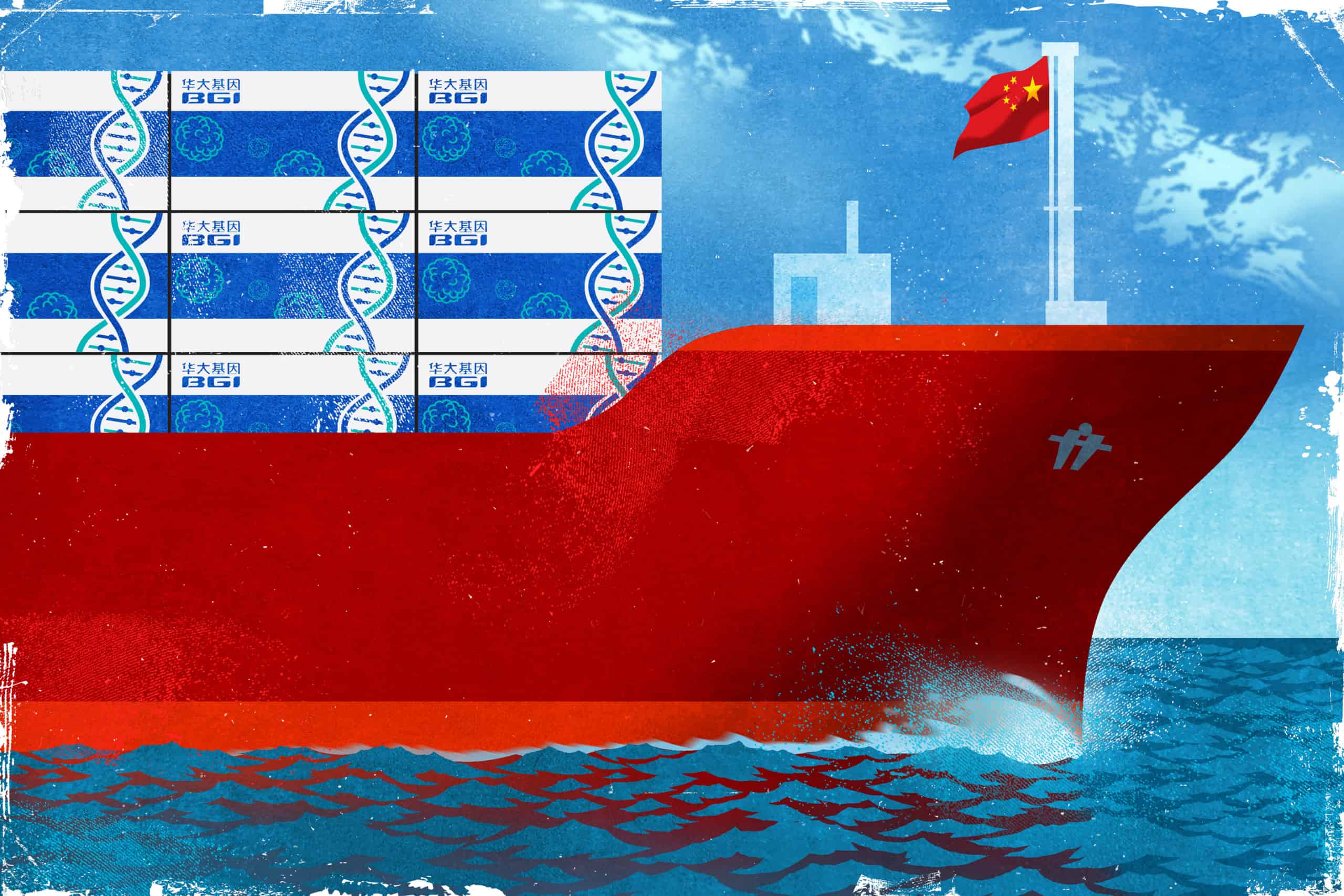
Last April, as the world fell to Covid-19, one Chinese company was there to offer a helping hand: BGI. But the line between the biotech giant and Beijing is increasingly blurry.
Illustration by Sam Ward
Listen to SupChina editor-at-large and Sinica podcast host Kaiser Kuo read this article.
On January 25, 2020, as the city of Wuhan headed into the world’s first Covid-19 lockdown, the Chinese billionaire Wang Jian arrived on one of the last incoming trains. Flanked by a small entourage of younger scientists, Wang exited the station wearing a mask, a light puffy jacket and a backpack. Thousands were fleeing the river port metropolis. But Wang came ready to work.
During the SARS
Exclusive longform investigative journalism, Q&As, news and analysis, and data on Chinese business elites and corporations. We publish China scoops you won't find anywhere else.
A weekly curated reading list on China from Andrew Peaple.
A daily roundup of China finance, business and economics headlines.
We offer discounts for groups, institutions and students. Go to our Subscriptions page for details.
Goldman Sachs economists argue that by allowing the renminbi to appreciate by 3-5 percent a year, Beijing can reconcile seemingly contradictory policy goals.
The U.S. and EU are restricting Chinese inverters over cybersecurity and supply-chain concerns, but replacing them may create new challenges for the renewable-energy industry.
Corporate Risk Intelligence for National Security, Compliance & Due Diligence
We use cookies to ensure that we give you the best experience on our website. If you continue to use this site we will assume that you are happy with it.