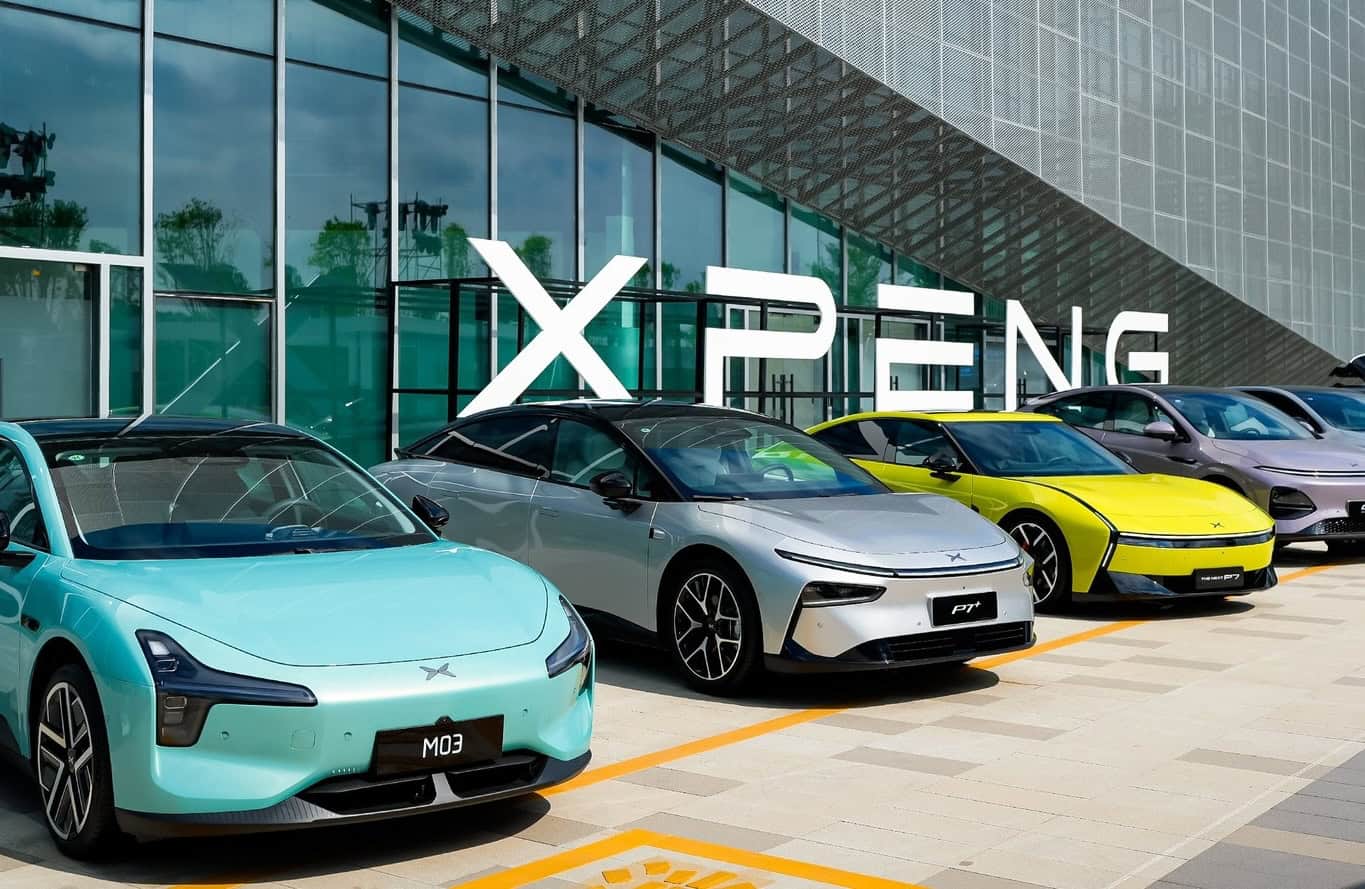
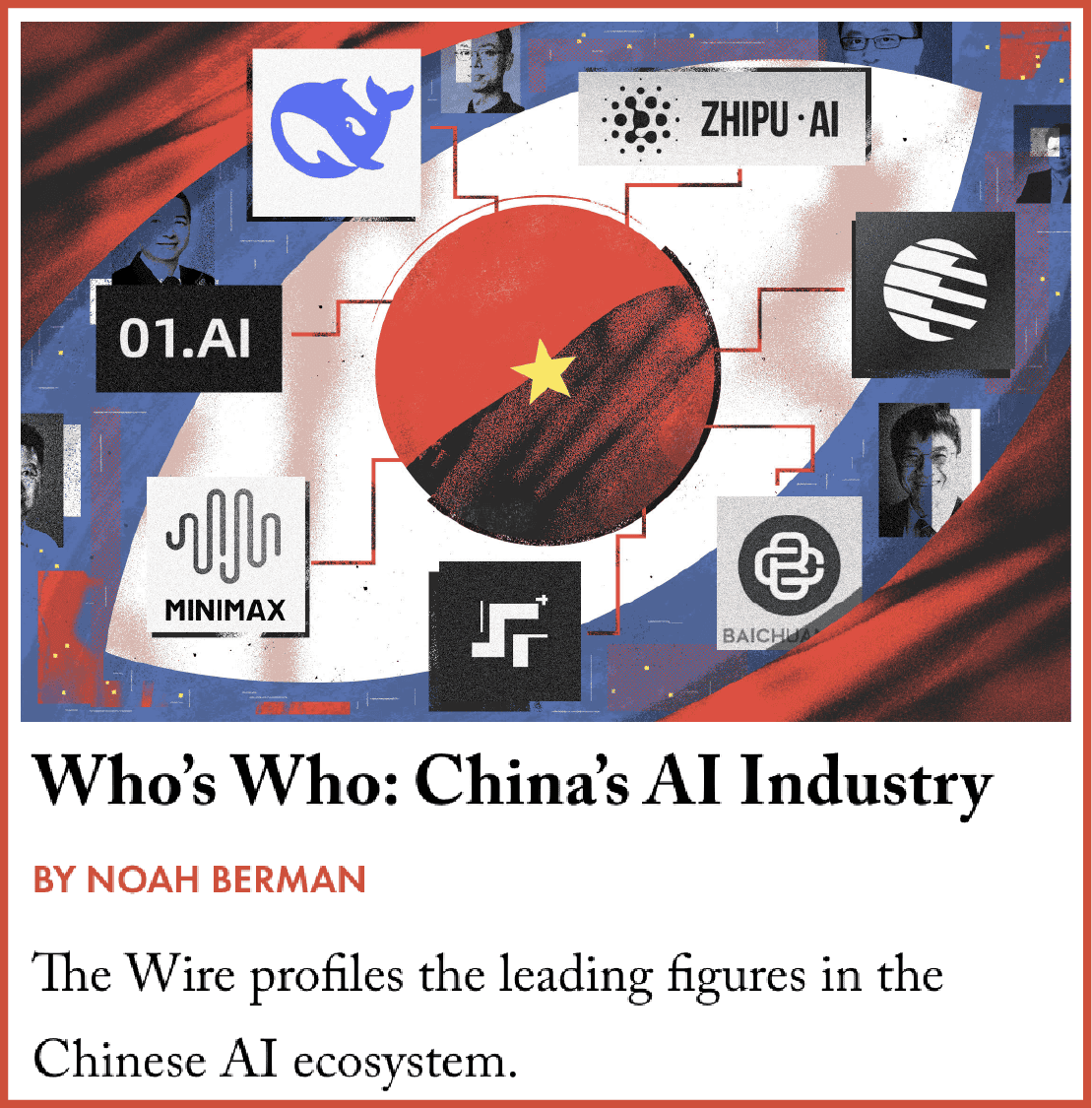
The launch of previously little-known DeepSeek’s low-cost, chip-efficient artificial intelligence model was a wake-up call for Silicon Valley, Wall Street and Washington when it comes to China’s AI challenge. Yet a fierce competition has long been underway between a wave of recently-founded Chinese firms already on DeepSeek’s tail.
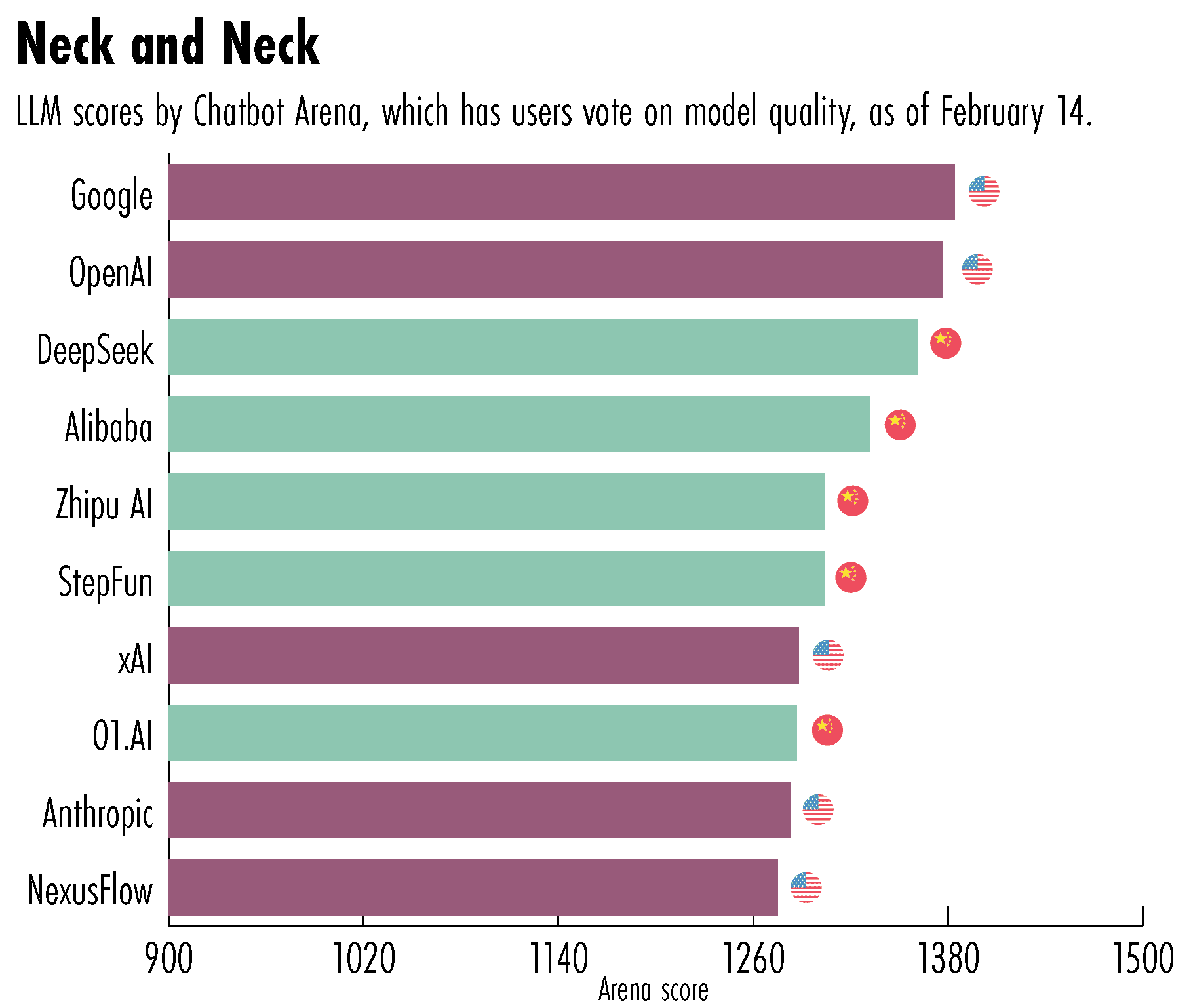
In the coming weeks The Wire plans to highlight some of those firms, beginning with Beijing-based Zhipu, the oldest and largest of China’s AI unicorns — a group that includes 01.AI, Baichuan, Minimax, Moonshot AI, StepFun, and most recently DeepSeek. As the chart below shows, some have already produced large language models that vie with those of U.S. rivals on quality.
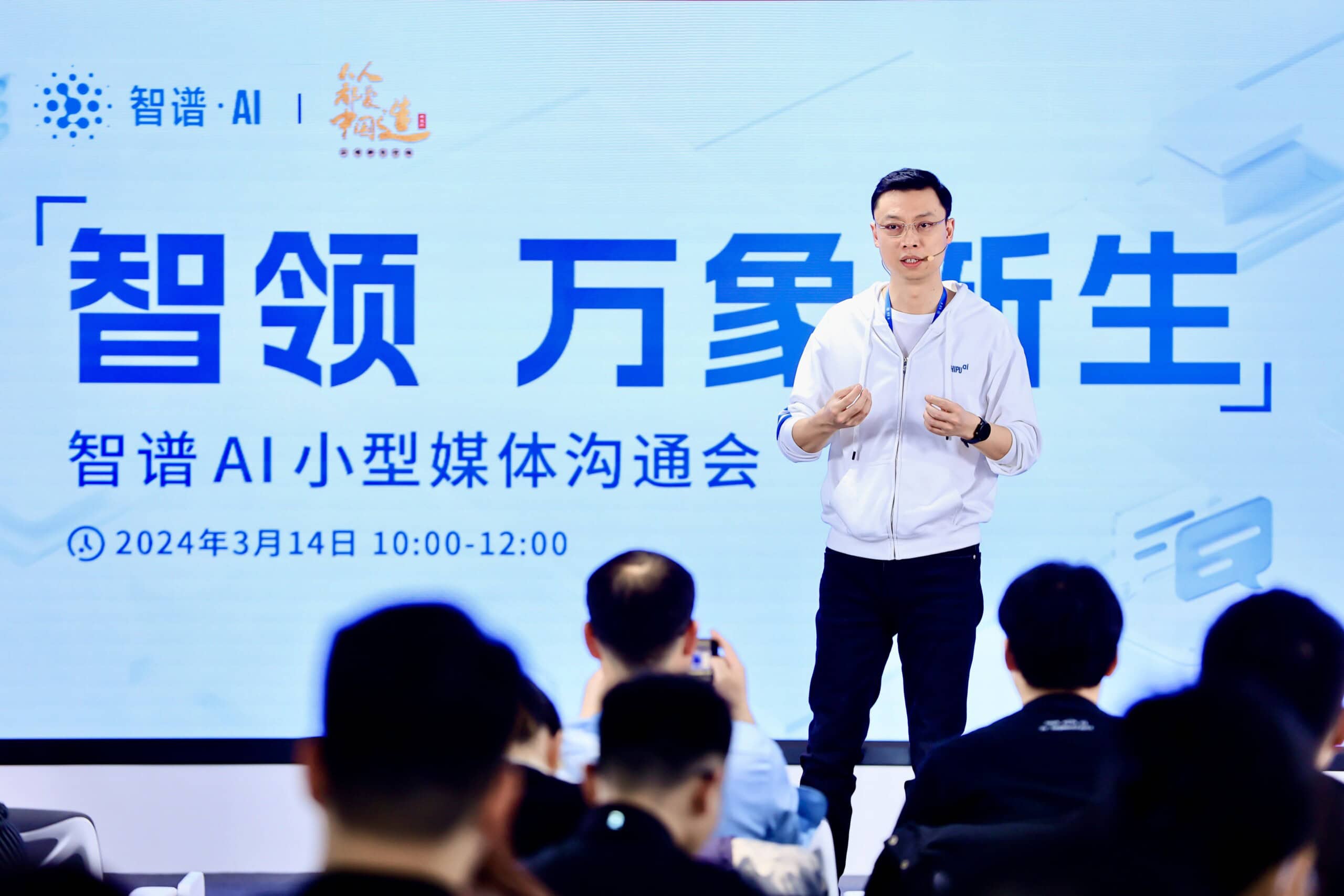
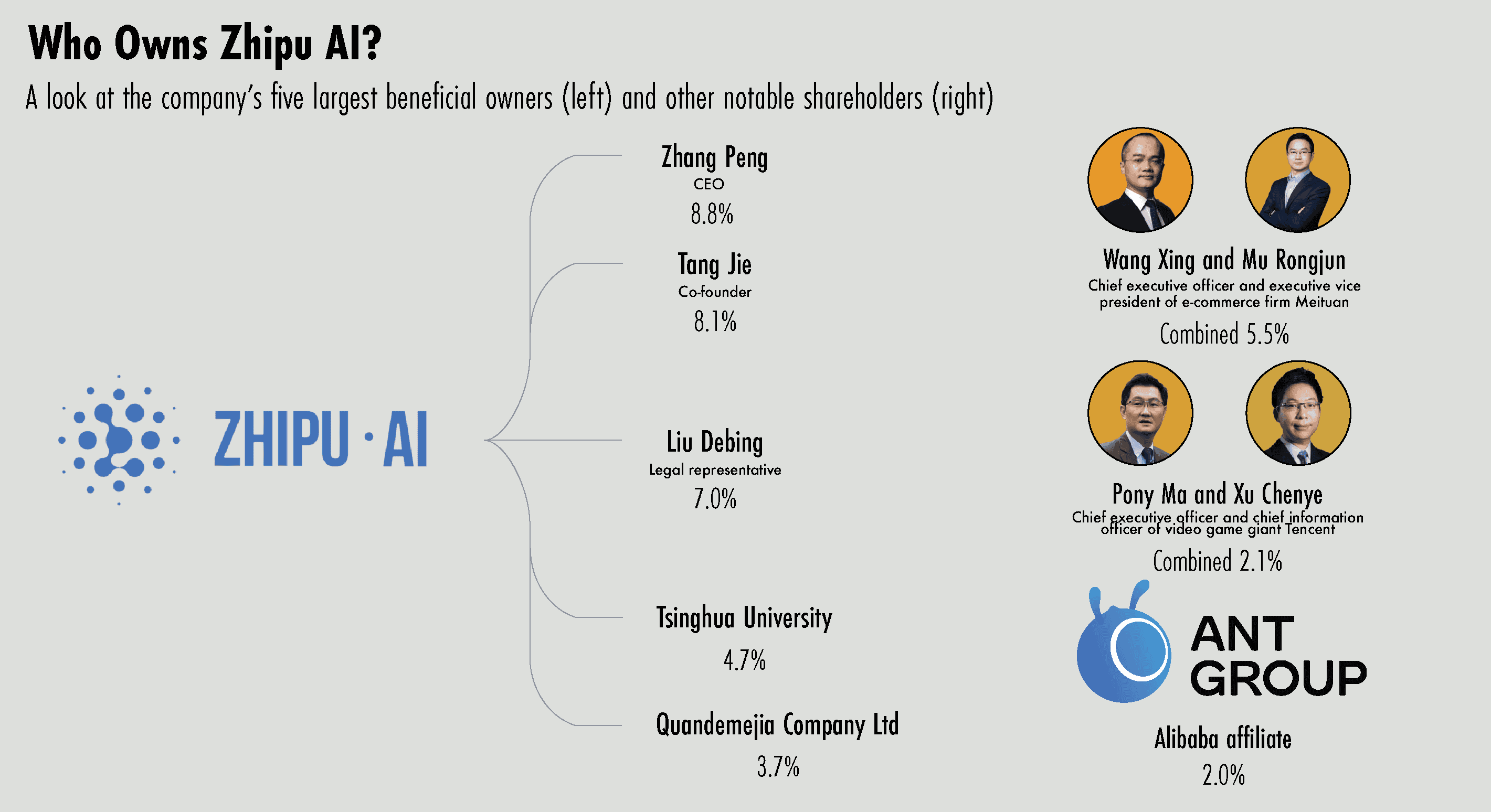
The Chinese state has supported Zhipu since its formation. It was founded in 2019 by two computer science professors at the elite Tsinghua University: Tang Jie, a prominent figure in China’s AI ecosystem, and Li Juanzi. It is currently run by chief executive Zhang Peng, who holds a doctorate from Tsinghua and studied with Tang.
Zhipu is just another level because they’re selling their models directly to the Chinese government. Servicing the government is the number one thing they do well.
Jenny Xiao, an investor at Silicon Valley venture capital firm Leonis Capital
The company struggled to commercialize its products in its first year, surviving in part thanks to a state-run industrial park in Beijing’s tech-focused Zhongguancun neighborhood, which gave the nascent firm three months of free office space in 2019, according to state media.
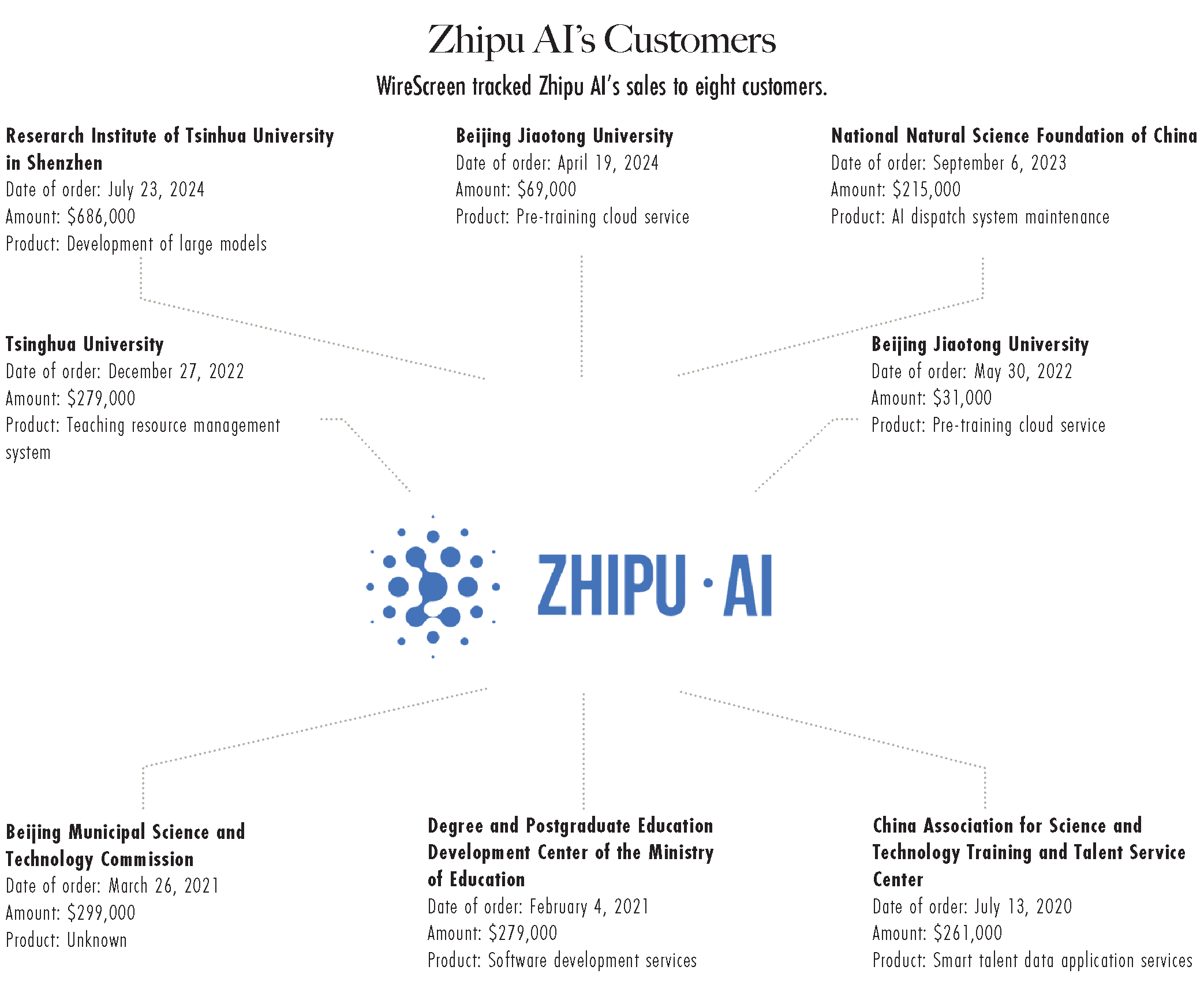
According to WireScreen, one of Zhipu’s earliest customers was the China Association for Science and Technology, a political organization under the Chinese Communist Party responsible for directing national technology programs. Zhipu sold “smart talent data application services” to the association’s training center in 2020, WireScreen shows. Several other government offices and universities, including those affiliated with China’s defense base, have become customers since.
Following the 2020 technological breakthrough of U.S. firm OpenAI’s GPT-3 model, Zhipu started pouring resources into its own large-language models, chief executive Zhang Peng said in a 2023 interview with Chinese outlet 36kr.
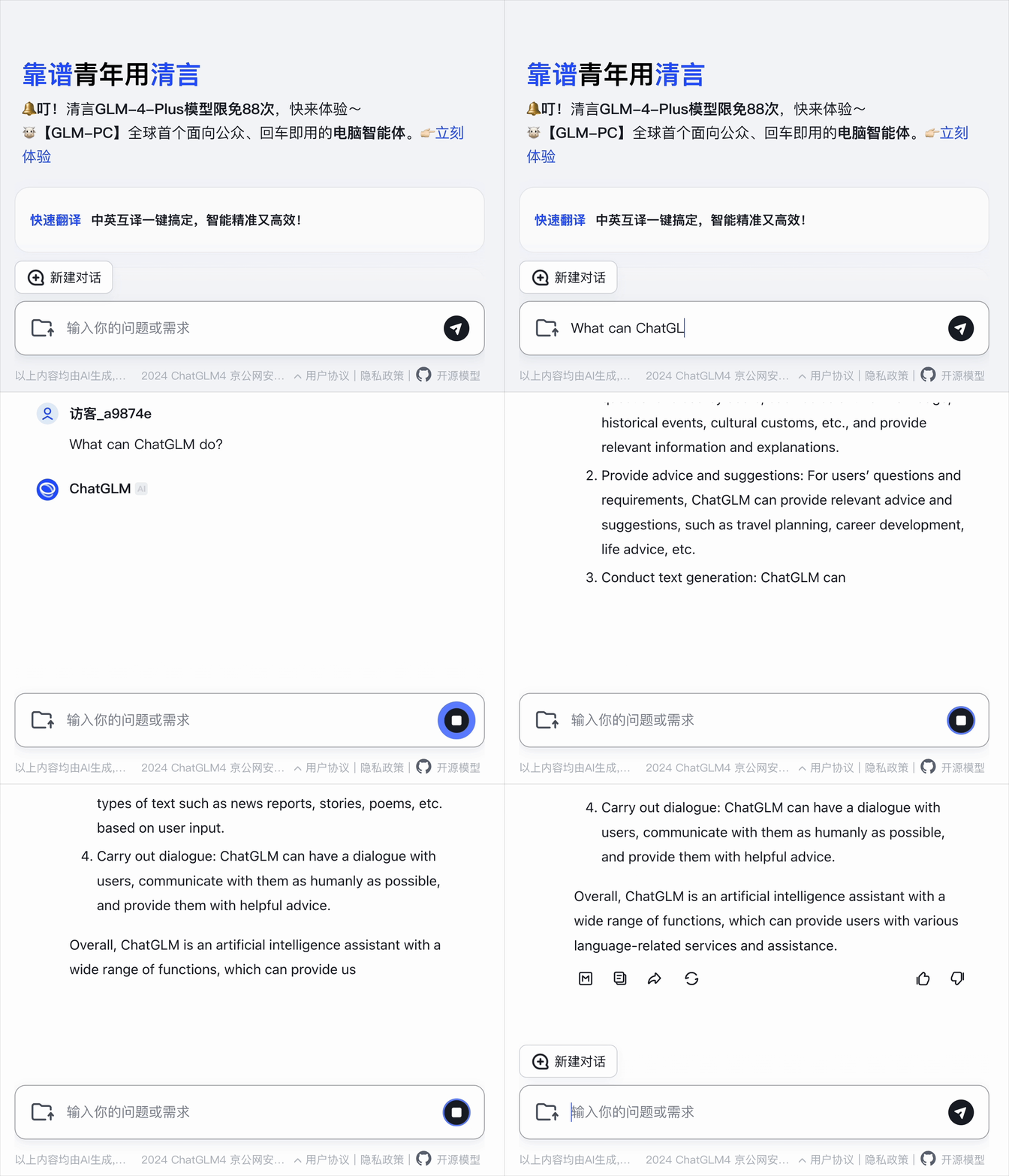
Zhipu released its first AI model in 2022 and its first chatbot, ChatGLM, in 2023. Today, the company prides itself on “making machines think like humans,” according to its website.
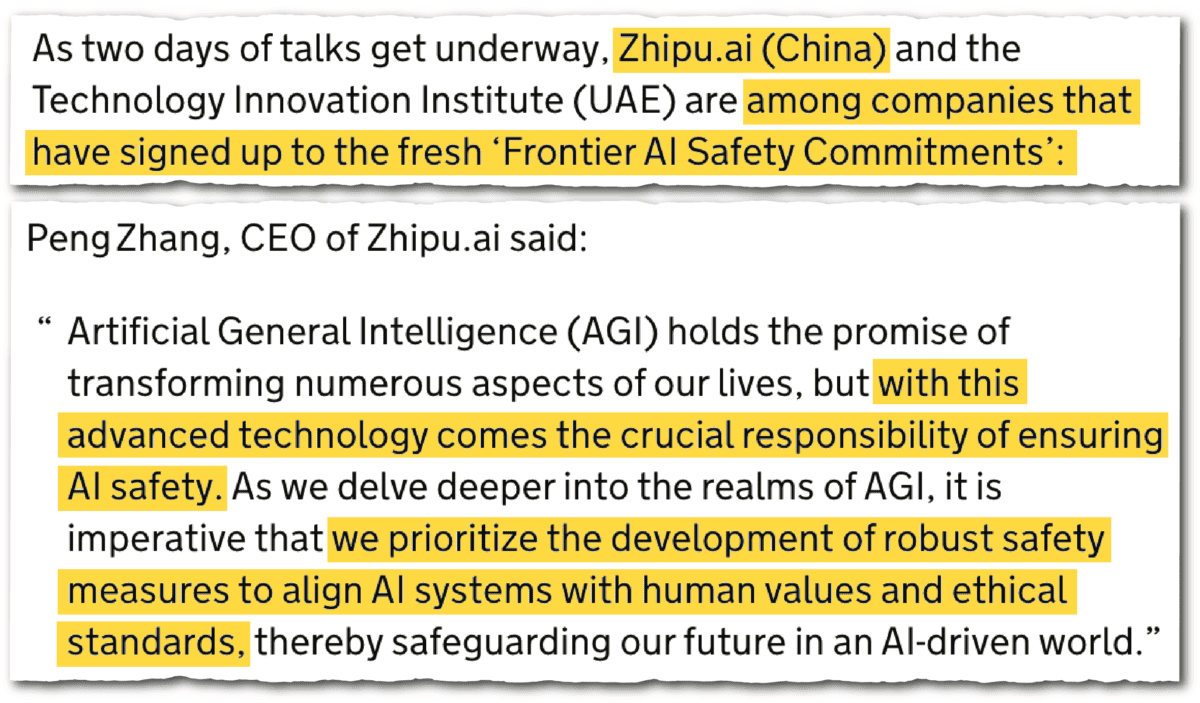
Last May, Zhipu also became the first Chinese company to join the likes of Google, Meta, and OpenAI in signing on to a list of AI safety commitments for makers of leading-edge models.
“Zhipu’s willingness to take the leap really opened up the pathway for greater international engagement in these commitments and safety frameworks,” says Scott Singer, a visiting scholar at the Carnegie Endowment for International Peace. Zhipu’s Chinese peers 01.AI and Minimax followed it in signing on to the commitments ahead of the international AI summit in Paris last week.
Still, like all Chinese AI companies, Zhipu must make models that fall in line with Beijing’s censorship rules. Companies interpret these in different ways, but Zhipu makes the most “politically correct” models of all the unicorns, says Jenny Xiao, an investor at Silicon Valley venture capital firm Leonis Capital.
“Zhipu is just another level because they’re selling their models directly to the Chinese government,” she says. “Servicing the government is the number one thing they do well.”
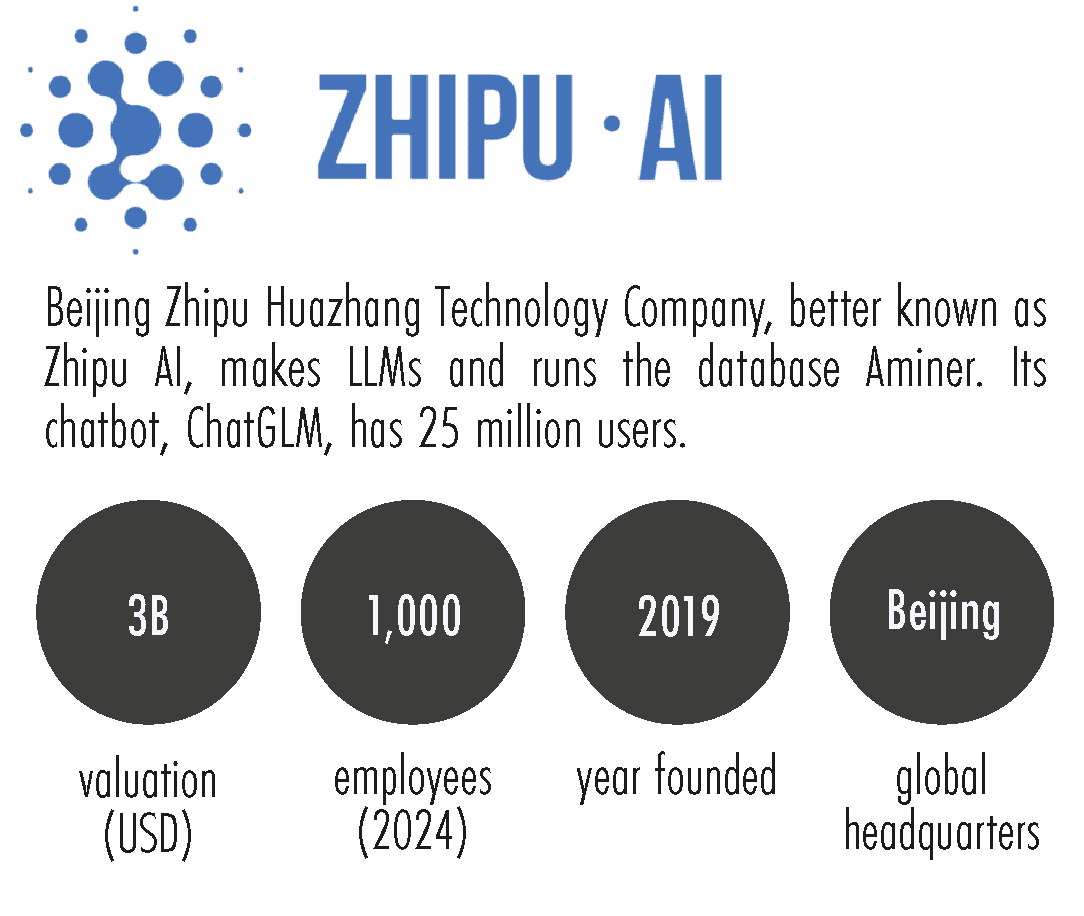
Zhipu has to date produced more than 50 models across text, audio, and video, continuing to support 20 of them. These include ChatGLM, and research database Aminer. Zhipu has more than 400,000 corporate users and derives most of its income from business clients, Zhang said in an interview with local media last year; the company says its commercial revenue doubled last year, though it did not reveal its baseline figure or if it is profitable.
Last August, market intelligence firm IDC ranked Zhipu third in market share for business-focused LLMs. That same month, executives from Zhipu and U.S. chipmaker Intel revealed autonomous driving software running on Zhipu’s AI models and Intel’s semiconductors.
Some of the largest companies and state funds in China have backed Zhipu, which is now valued at $3 billion, according to Pitchbook, based on a September financing round.
Internet giant Alibaba, e-commerce firm Meituan, gaming goliath Tencent, and several state entities have invested. Zhipu does not disclose the size of this backing, but WireScreen shows that altogether Chinese state entities beneficially own 15.4 percent of the company. Prosperity7, the venture capital arm of the Saudi Arabian national oil company, poured $400 million into the firm last year.
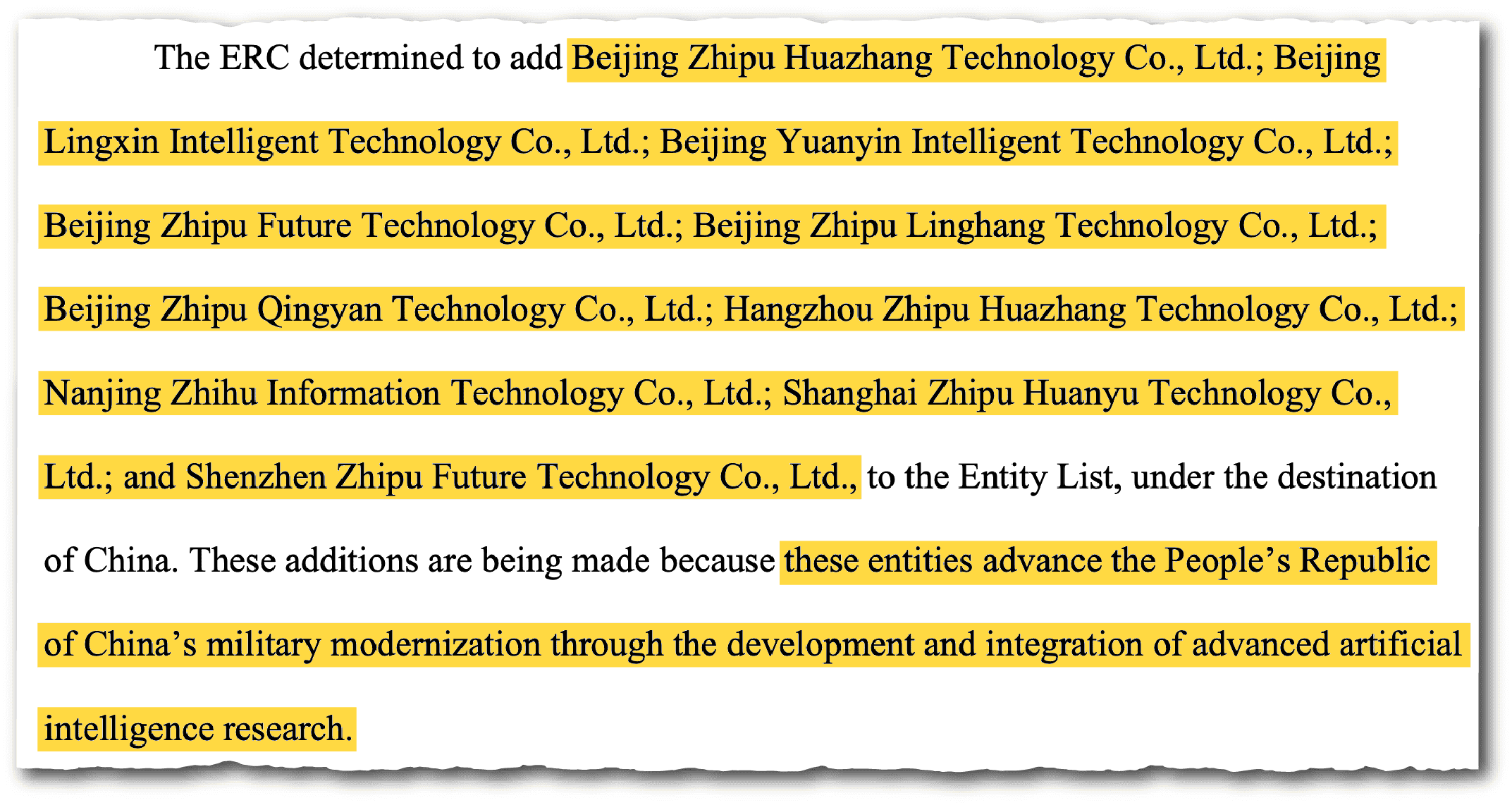
Zhipu’s rise has not gone unnoticed in Washington, which is looking to clamp down on China’s AI sector over fears around its potential military applications. Last month, the U.S. Department of Commerce blacklisted the firm, adding it and nine subsidiaries to its Entity List. The move will require firms exporting U.S. technology to obtain a license before selling to Zhipu.
The Department of Commerce did not respond to a request for comment.
Zhipu said that the designation lacked “factual basis” and that “being included in the Entity List will not have a substantial impact on the company’s business.”
The company’s hiring page suggests this is not just bluster. It is currently looking to fill more than 150 jobs, including many aiming to boost overseas sales from bases in Hong Kong and Malaysia.

Noah Berman is a staff writer for The Wire based in New York. He previously wrote about economics and technology at the Council on Foreign Relations. His work has appeared in the Boston Globe and PBS News. He graduated from Georgetown University.