As part of the Biden administration’s State Department, Melanie Hart developed strategies to reduce nation-state vulnerabilities to Chinese pressure. She established the department’s playbook for responding to Chinese economic coercion and led an internal unit that provided response support to several countries. In her current role as senior director of the Atlantic Council’s Global China Hub, she continues to analyze Beijing’s actions and their global impact to generate policy solutions, with the goal of enabling the United States and its allies to respond effectively to common policy challenges on China. The following is an edited transcript of our recent conversation.

Illustration by Lauren Crow
Q: Let’s start with your work at the State Department. Can you describe what you did, particularly on the issue of Chinese economic coercion?
A: I’m just coming off of a little under four years at the State Department, where my mandate was to come up with innovative ideas for how the U.S. would engage in economic statecraft to compete with China.
That included devising a U.S. playbook for helping nations that are targets of Chinese economic coercion. This wasn’t something that the United States had done before. There had been no coherent policy for how we step up — not just with diplomatic words, but with real economic aid to support nations facing Chinese economic coercion.
This became a real point of interest for the incoming Biden administration, because there were a couple of cases that were boiling over right as we all entered our jobs in 2021. One of them was Australia, which had called for an independent investigation into the Covid crisis. China then targeted Australia with an insane range of coercive economic actions, trying to use Australia’s commercial relationships with the Chinese economy to bring pain onto the Australian companies and workers involved. They cut off barley exports. They targeted wine exports to China. They targeted lobsters. All kinds of crazy stuff, just trying to put the screws on Australia over that decision.
| BIO AT A GLANCE | |
|---|---|
| AGE | 46 |
| BIRTHPLACE | Port Arthur, Texas |
| FORMER POSITION | Senior Advisor for China, Office of the Under Secretary for Economic Growth, Energy, and the Environment, U.S. Department of State |
| CURRENT POSITION | Senior Director, Atlantic Council Global China Hub |
There had been other cases targeting other places and products, such as Taiwanese pineapples, Japanese access to critical minerals, and Philippine banana sales. But it seemed like around 2020, 2021, that the pace of those cases was picking up, and there was concern that absent some U.S. intervention, nations around the world would make foreign policy decisions based on what Beijing wanted, as a way to avoid having to pay economic costs that they couldn’t afford.
So from the very beginning there were quiet conversations between the new Biden appointees and the awesome career diplomats at the State Department trying to brainstorm: What have we been seeing, and what would we like to do to get engaged?
A lot of smaller countries look to the United States to be the one standing in their corner, as the one country that they could always count on. They now see the United States backing down to Chinese economic coercion over rare earth magnets, and they’re struggling to understand what that means.
Critically, in August 2021, China really started going after Lithuania, which had made the decision to allow Taiwan to open up an office in its capital Vilnius and call it the “Taiwanese Representative Office” instead of “Taipei Representative Office,” which Beijing prefers. That happened at the exact same time that Jose W. Fernandez, my boss at the State Department, was confirmed by the Senate. So we had an immediate case, and we had a leader at the Department, as well as the White House and people in Congress, telling us, “Go get it, see what you can do to help these folks. And don’t let bureaucracy stop you. Come up with innovative ideas.”

We really leaned in with the Lithuanians in fall 2021 and winter 2022 to find tools that would enable us to counter the moves that China was making to cause harm. So, for example, by removing Lithuania from its customs databases, China had blocked exports there of Lithuanian agricultural products. So at the State Department we worked to fast-track some of their pending applications to export agriculture to the United States. We were able to increase Lithuanian agricultural product exports to the United States by about 19 percent in one year, which helped fill the China gap and helped fill a gap that we had in the U.S. market in eggs. We were able to help Lithuania and U.S. consumers at the same time, which was great.
We came up with a very innovative playbook for meeting the Lithuanians where their needs were. The Lithuanians not only survived, but thrived. And then, to our surprise, other nations just started pounding down the door, saying, “We’re trying to do this thing. Beijing is threatening us. Are we eligible for the Lithuanian package?” We realized we had better develop a more detailed package and a team to roll these out. That’s when we started putting things together, and we developed a really incredible team — what we call the internal consulting firm at the State Department — that nations could come to for help.

Have you seen this work continue since the changeover in administrations?
The challenge right now is a lot of the people who would lead this kind of work aren’t yet in their seats. The leadership positions that are critical nodes for providing the dome of political support that is needed for working-level folks to be running around making promises and finding new ways to deploy U.S. government tools and resources, those people really need to be in the seats for that work to happen.
| FAVOURITE BOOKS |
|---|
| Work-related: Books that deliver incredibly detailed research with an enjoyable read, like Eva Dou’s House of Huawei, Karen Hao’s Empire of AI, and Calder Walton’s Spies: the Epic Intelligence War Between East and West. Not work-related: First Lie Wins by Ashley Elston. |
Many of the countries that I previously engaged with as a State Department official, while they were facing Chinese economic coercion, have come into our offices at the Atlantic Council to meet with me in my new role to say, “Oh my god, is the United States now backing down to Chinese economic coercion? What does that mean?”
A lot of smaller countries look to the United States to be the one standing in their corner, as the one country that they could always count on. They now see the United States backing down to Chinese economic coercion over rare earth magnets, and they’re struggling to understand what that means. And a lot of nations are very nervous because they just don’t know where this U.S. and China deal-making will go.
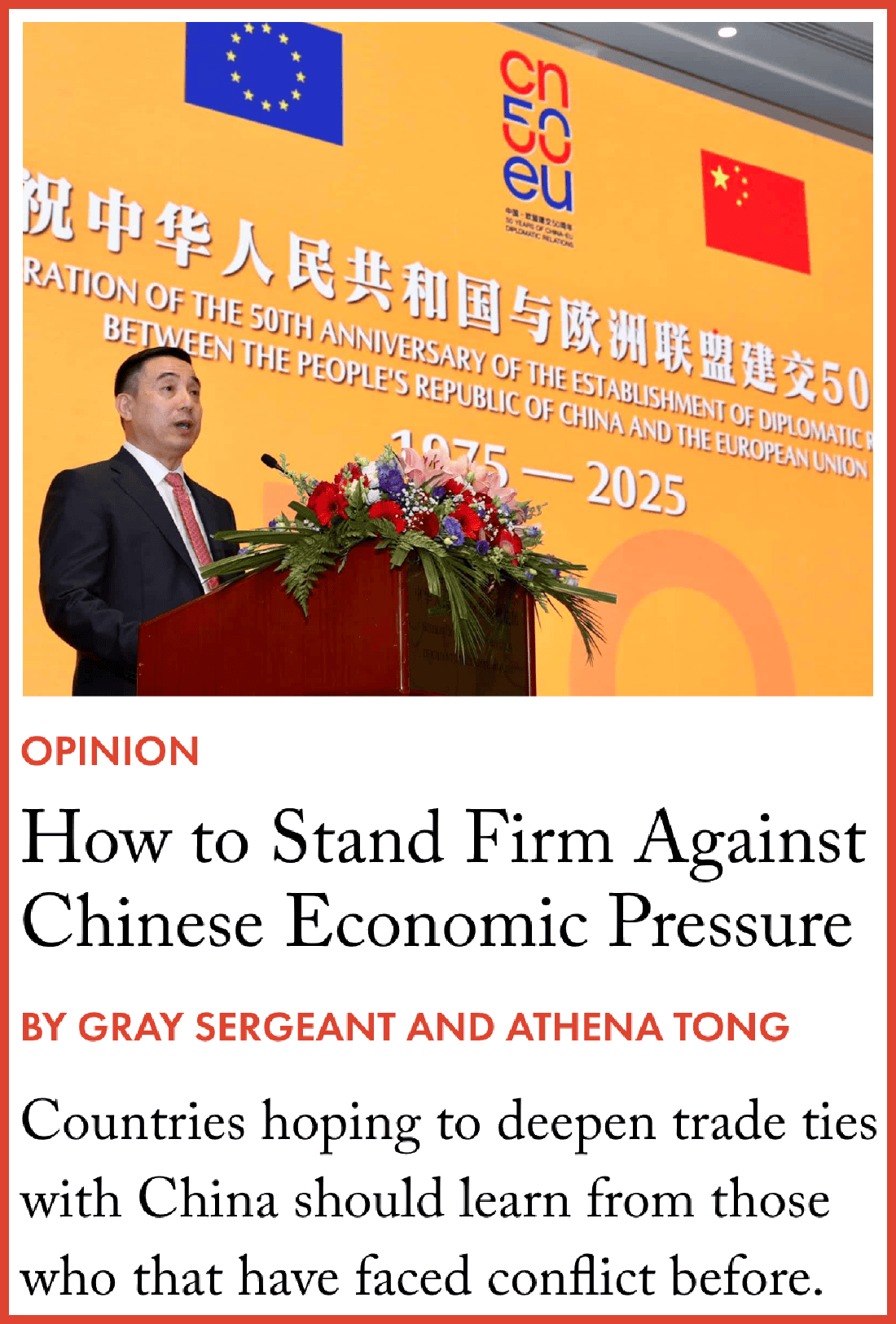
A second challenge is that countries facing Chinese economic coercion often don’t want a lot of publicity. If you’re a small country you don’t generally want to put yourself in a David-and-Goliath scenario where you’re taking on China on behalf of the big countries. You just want to find a way to do what you need to do for yourself and make the China problem go away. And the best way to do that is to keep things pretty quiet. It takes some time to build up trust in any administration that they will handle those issues quietly.
We’ll have to see officials landing in the seats and foreign partners really getting to know them. If they have confidence that the United States would be on their side, I could see this team leaning in. Jacob Helberg is the nominee for under secretary. I’ve heard good things about him: He sounds strong on China.
Is the China issue still an area of bipartisan consensus?
One of my best experiences as a State Department official and a Biden appointee is that I never had a bad meeting with Congress, no matter which side of the aisle or which house of Congress I was talking to. In one case, a Republican House member from Florida who I had never met before wanted a briefing. When I walked in and shared what we were doing, I got nothing but support, because they got it, and they were happy to see us leaning in, being innovative, moving the needle, and getting stuff done.
That support was deeply bipartisan, and that made my job really fun. That’s one reason I decided to work at a bipartisan think tank as my next step, because I saw that my briefings with Republicans were going just as with Democrats.
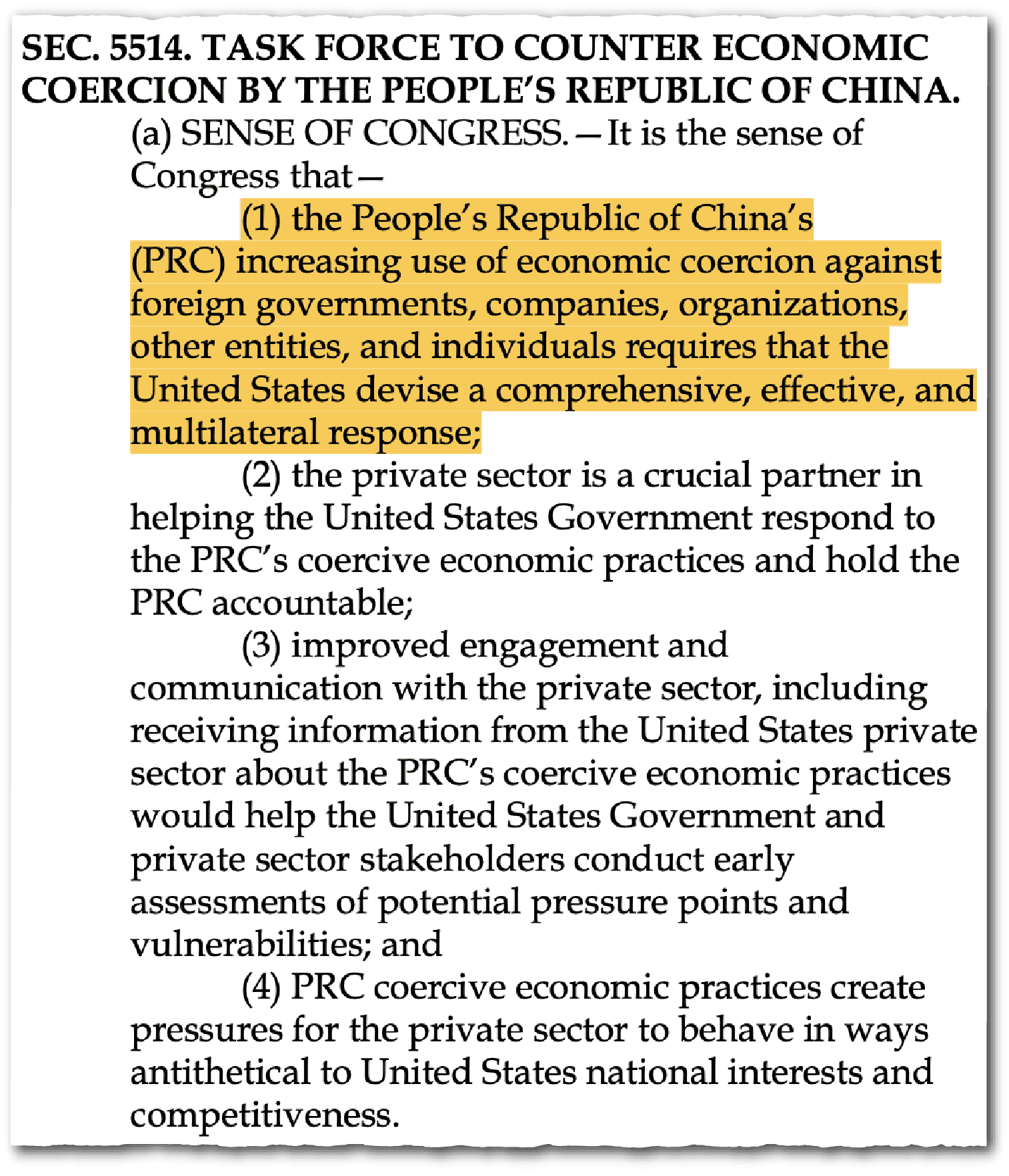
Where there is a struggle in Congress is in actually paying for things. Many members of Congress are trying to figure out how to strengthen the U.S. hand at countering Chinese economic coercion, and they think in terms of authorities that they can give the State Department, because those are free. If you tell the State Department, “Okay, you are now allowed to do X,” that’s helpful, but if there’s no money behind it, it doesn’t really move the needle.
The message that I keep delivering to members of Congress in both houses and on both sides of the aisle, is that it’s about money and people. If you don’t have money at all, you’re just not in the game.
What do you see as the major points of potential collaboration between the U.S. and Europe on China?
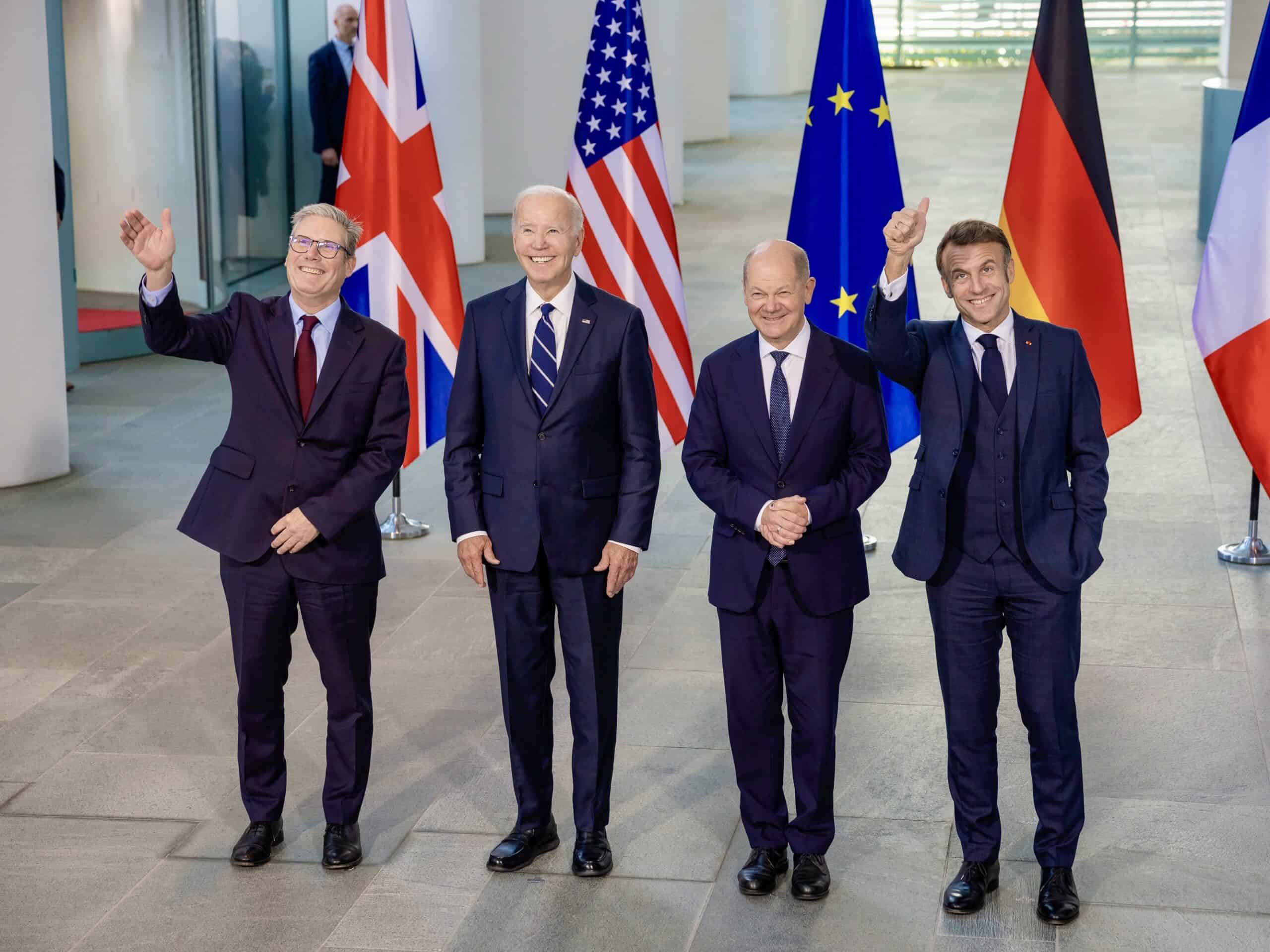
I exited my time in government feeling like transatlantic cooperation on China was the big missing piece. We did our absolute best in every way to pull Europe along and find ways to collaborate on China, and there was strong agreement on the nature of the problem. But I was deeply disappointed in Europe’s ability to follow through on actual solutions.
The nail in the coffin was watching how the electric vehicle subsidy battle played out within Brussels, and watching Germany, who had the most to lose from subsidized Chinese EVs flooding the European market, actually vote against tariffs. It was quite sad to watch the Europeans twist themselves in knots trying desperately to ensure that whatever countervailing duties they rolled out adhered religiously to the texts of the WTO, and China immediately responding with actions against Europe that totally violated the WTO in spirit and in law. Europe insists on bringing a butter knife to a gunfight again and again, and it was frustrating to not be able to move beyond that, at least during the Biden administration.
Maroš Šefčovič, European Commissioner for Trade & Economic Security, on EU-China relations. Credit: EP
I realize that from a European perspective, it’s harder because the EU is made up of 27 countries. Brussels has some authorities, like trade authorities, but the member states do foreign policy. Something like economic coercion perfectly sits between the two, and makes it very difficult for Europe to figure out how to play effectively on a China competition battlefield. That’s a big challenge, but I think it’s a challenge worth working on.
One thing that I have recently been hearing from some of my European counterparts is, “Look, a couple of years ago, we were still benefiting economically from our relationship with China. We weren’t feeling the pain yet that you were talking about. That’s changed, it’s different now.” That’s interesting. Time will show if that leads to different action.
…the Chinese diplomats and officials are very good negotiators. You do not want to go into any negotiation with China without a very clear view of what you want and what your red lines are. I see a lot of murkiness on both of those things, on the U.S. side.
I find that the China experts across Europe are phenomenal, and a lot of fun to work with. If you put a bunch of China experts in a room, no matter what country they’re from, we tend to all kind of coalesce around the same ideas and desires. There’s so much commonality on the expert side that I can’t help but maintain some hope that there’s space for common action at a government-to-government level.
| MISCELLANEA | |
|---|---|
| FAVORITE MUSIC | Jazz. We have jazz playing during breakfast at my house, a great way to start the day. |
| FAVORITE FILM | Knives Out, because it’s so incredibly fun and brilliantly done. Junebug or Daddy and Them, because I grew up in the South, and these two films get it right. |
| MOST ADMIRED | The career officials across the federal government who are showing up to work holding everything together and standing up for American interests in ways both large and small. |
We have to keep in mind that President Trump’s romances with foreign leaders tend to have a short time horizon, and none of us really know where this is going with Xi Jinping. The sky’s the limit in terms of outcomes, which can be a bit scary when there’s so much unpredictability. But I can see all kinds of interesting black swan events coming to the fore over the next three and a half years, including a transatlantic trade agreement. There’s already negotiations ongoing, and I’ve spoken with people on the Trump transition team where we both look at each other in shock, realizing we’re in total agreement on the fact that we should do a trade agreement with Europe, and address our common China challenges that way.
What is the current picture with regards to U.S.-China trade, particularly the tariff situation?
The high level version is that the Trump administration went in really hot and heavy with China on tariffs, thinking that the United States held all the cards and we had all the leverage over China, and that if we pushed tariffs to a very high level that Beijing would, in desperation, give us whatever we wanted to get the level back down. China called our bluff on that one, and in particular, restricted U.S. access to rare earth magnets, which we can’t get anywhere else. By cutting off that access, they forced Ford to shut down production for a week, and they triggered some alarm bells in the Department of Defense supply chain as well.

Beijing tends to spend more time studying our dependencies on China than Washington does. They have a whole swath of levers ready to pull: It’s the economic coercion toolkit that I know very well. They had that one lever lying in wait, and they yanked it. And when China pulled the rare earth magnet lever, and the administration realized there were no near-term alternatives, they basically did a 180 and entered into a negotiation with China whereby, through some form of sequenced agreement, the United States and China would aim to land in a place that has lower tariff rates — maybe back to January 2025 overall tariff rates — and various other goodies as part of the mix, to make both sides look good.
What China wants as part of the deal is for the United States to drop its tech export controls. They want the United States to pull back support for Taiwan. They want the tariff rate to come down. And it seems they’d also like to box the administration into some kind of friendly U.S.-China framework, so that Trump becomes more predictable.
It’s not entirely clear to me what the U.S. wants, and in my view, that’s a bit concerning, because the Chinese diplomats and officials are very good negotiators. You do not want to go into any negotiation with China without a very clear view of what you want and what your red lines are. I see a lot of murkiness on both of those things, on the U.S. side.
This new escalation, where Trump renewed threats of tariffs in response to Chinese actions on rare earths, seemed abrupt. What happened and why, and how does it affect the trade talks?
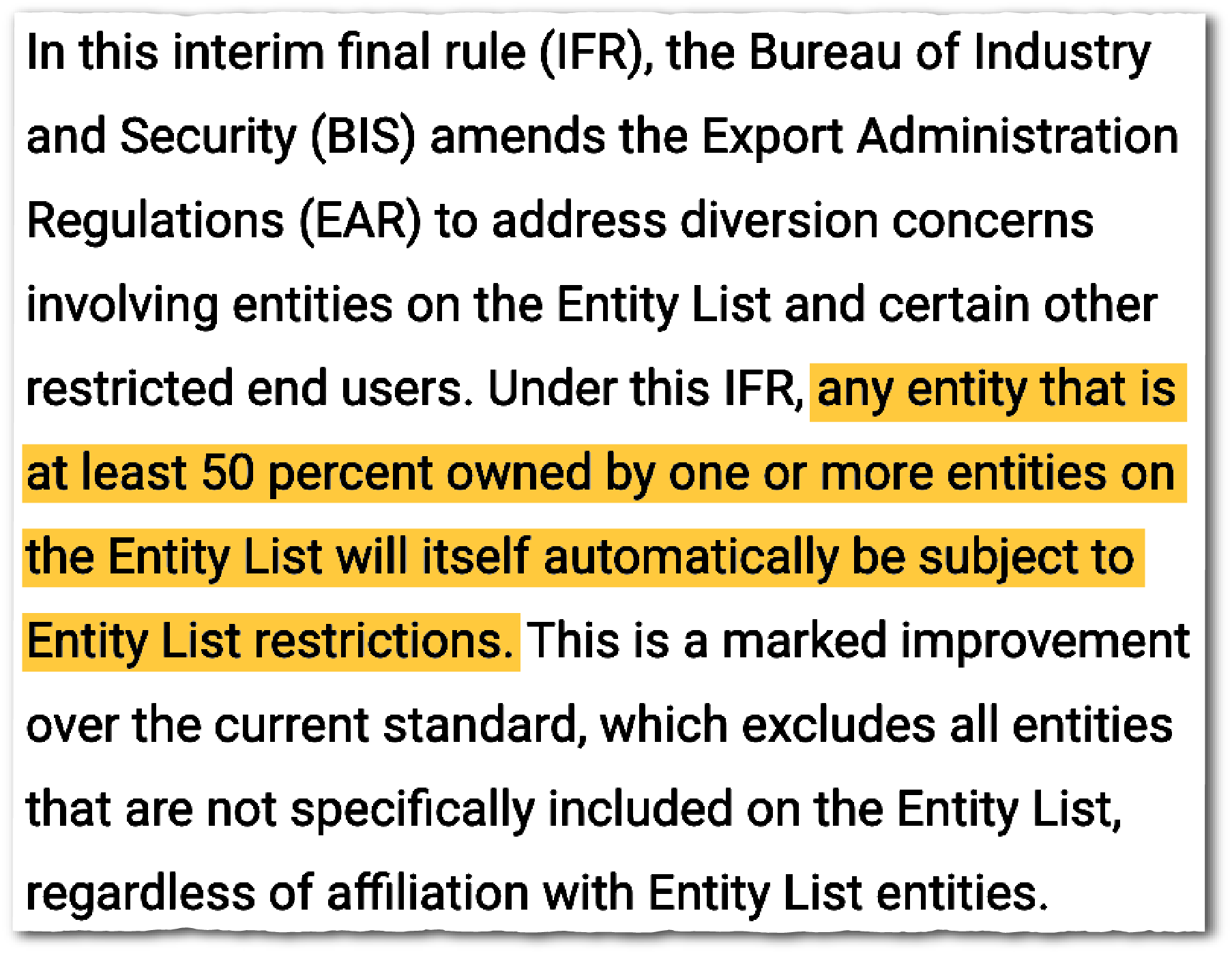
I happened to be in Europe when China rolled out this new rare earth package. When I first saw the news, I thought, clearly, this is a response to the Trump administration’s 50 percent rule adjustment.
But China has a play that it often runs, where Beijing will look for convenient times to roll things out so that it can blame the United States on being the reason why they had to take this action that they were planning to take anyway. And all of my European colleagues were saying, “This is clearly actually a response to us and to Western rearmament.” They were sharing some of their conversations with their Chinese counterparts that indicated that China was very clearly linking the two; the NATO nations had all committed in June to raise their defense spending to 5 percent of GDP.
We have in the past seen China use critical minerals as a tool to put pressure on other countries. But usually when they do that, they turn the tap off and then turn it back on when the countries back off of whatever it is that China doesn’t want them to do. But this time is a shift, in that it seems to be quite broad and very focused on defense supply chains.
And it looks like something that they don’t plan to reverse. I suspect that is why we are suddenly seeing a new flurry of Trump administration messaging on the need to handle this collaboratively with allies and partners. I wouldn’t be surprised if this creates new space for something like allied coordination on critical minerals, specifically.
On the trade talks, the tariff measures that the White House is threatening harm the United States pretty much as much as they harm China. So that’s not the best lever to pull if your goal is to pressure Beijing. You’ve seen them messaging that the U.S. might consider cutting China off from aircraft parts again. But if you look at what Trump has been saying, it’s clear that he would rather see movement towards something that looks like a deal and a meeting with Xi Jinping during the APEC summit [in November].
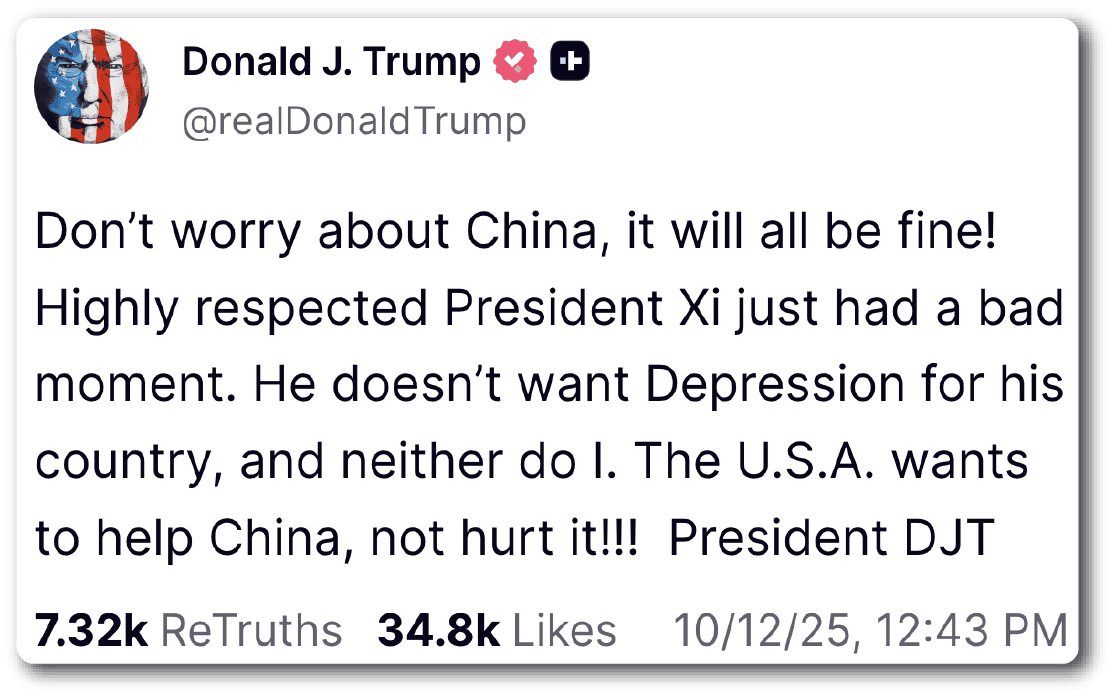
At this point in time, recognizing that every day is a surprise, I would expect that they are going to meet at APEC, but that the deliverables will be slim to none. It might be another punt where everything gets delayed again for another 90 days, and I suspect the primary focus will shift toward some kind of meeting in early 2026 — possibly Trump going to China — but that the focus will be just to prevent the relationship from completely going off the rails, and to prevent rolling out tariffs that aren’t good for the United States anyways.
During Trump’s first term, he famously also put tariffs on China, though they were more targeted. What are the differences between then and now, and what can be learned from how that time played out?
One key difference is that in the first Trump administration, they didn’t put tariffs on all of our partner countries at the same time. This approach, where the United States is attacking everyone, everywhere, all at once, makes us the isolated party, and substantially reduces our leverage when dealing with China, because our economy is feeling the downward pressure from tariffs. The average American consumer is feeling some of the pinch from the tariffs that are on pretty much all goods that we import, and that means that we have to find relief for our own reasons. We can’t just sit with these tariffs indefinitely, to ride it out, and Beijing is well aware of that.
The Chinese economy overall is indeed weak, and they are facing a lot of macroeconomic challenges… At the same time, Beijing is very good at dedicating resources toward emerging tech, and they are poised to eat our lunch, particularly when it comes to advanced robotics, AI, and biotechnology.
It’s also the case that in the previous Trump administration, they rolled out Section 301 tariffs, based on specific complaints about the Chinese economy that were valid. There was clear evidence that the Chinese government was engaging in IP theft, and behaviors of that nature, and that that was undermining the American economy; and so it made sense for the U.S. Trade Representative to enact Section 301 tariffs in response. I had questions about what was selected, as it didn’t seem like the selection of goods targeted was strategic in any way; there were some weird things on the list, and China wound up finding ways such that we paid for tariffs while they didn’t. But there were valid arguments behind that wave of tariffs.
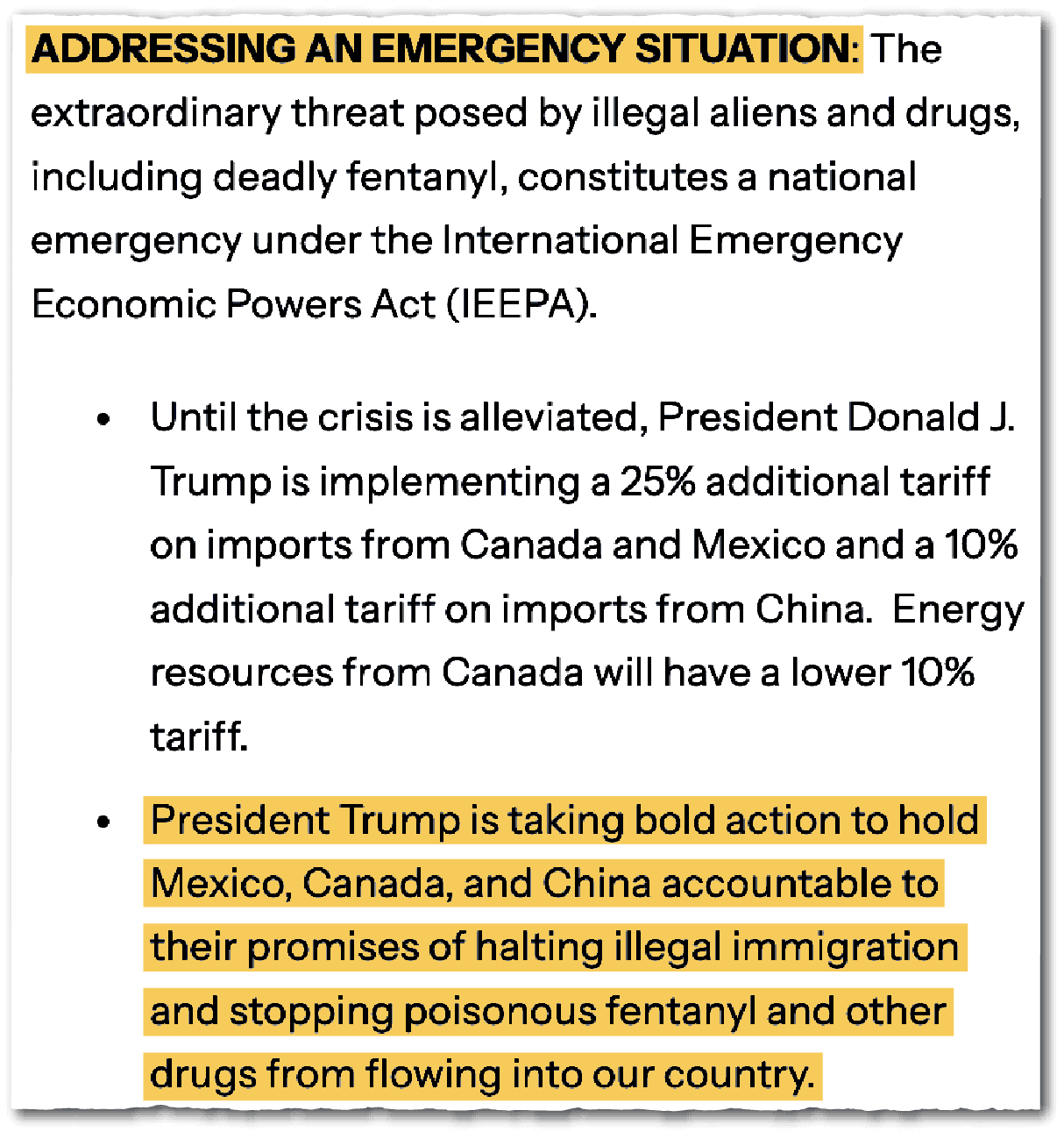
It is so murky this time with the math not mathing, and with the fentanyl issue where we’re accusing China, Mexico, and Canada all the same. It especially doesn’t make sense for Canada. The evidence is a little bit shaky. With the numbers, it’s not really clear what they’re tied to. It unfortunately undermines the U.S.’s credibility when we point out that there are real fundamental problems with China’s economic policy that undermine the United States and our allies and partners. We now look like the rule-breaking party at the table, and that really undermines not only our leverage over China, but also our leverage over everyone else as well.
In trade and competition with China, tech is a critical area of contention. Where do you see this competition going, and what sort of policy levers do you see as important tools?
A lot of observers in Washington are misunderstanding what’s happening in the Chinese economy. They look at the GDP numbers and say, “Okay, the real number is low, and that means they’re just going down.” And they assume that China can’t innovate and that any tech advantage they have is because they stole it from the United States, and so we just need to cut things off: then they won’t be able to steal anymore, and they’re just going to go down indefinitely, and we will reign supreme. That is short sighted and misinformed from multiple angles.
The Chinese economy overall is indeed weak, and they are facing a lot of macroeconomic challenges that will be hard to deal with. At the same time, Beijing is very good at dedicating resources toward emerging tech, and they are poised to eat our lunch, particularly when it comes to advanced robotics, AI, and biotechnology.
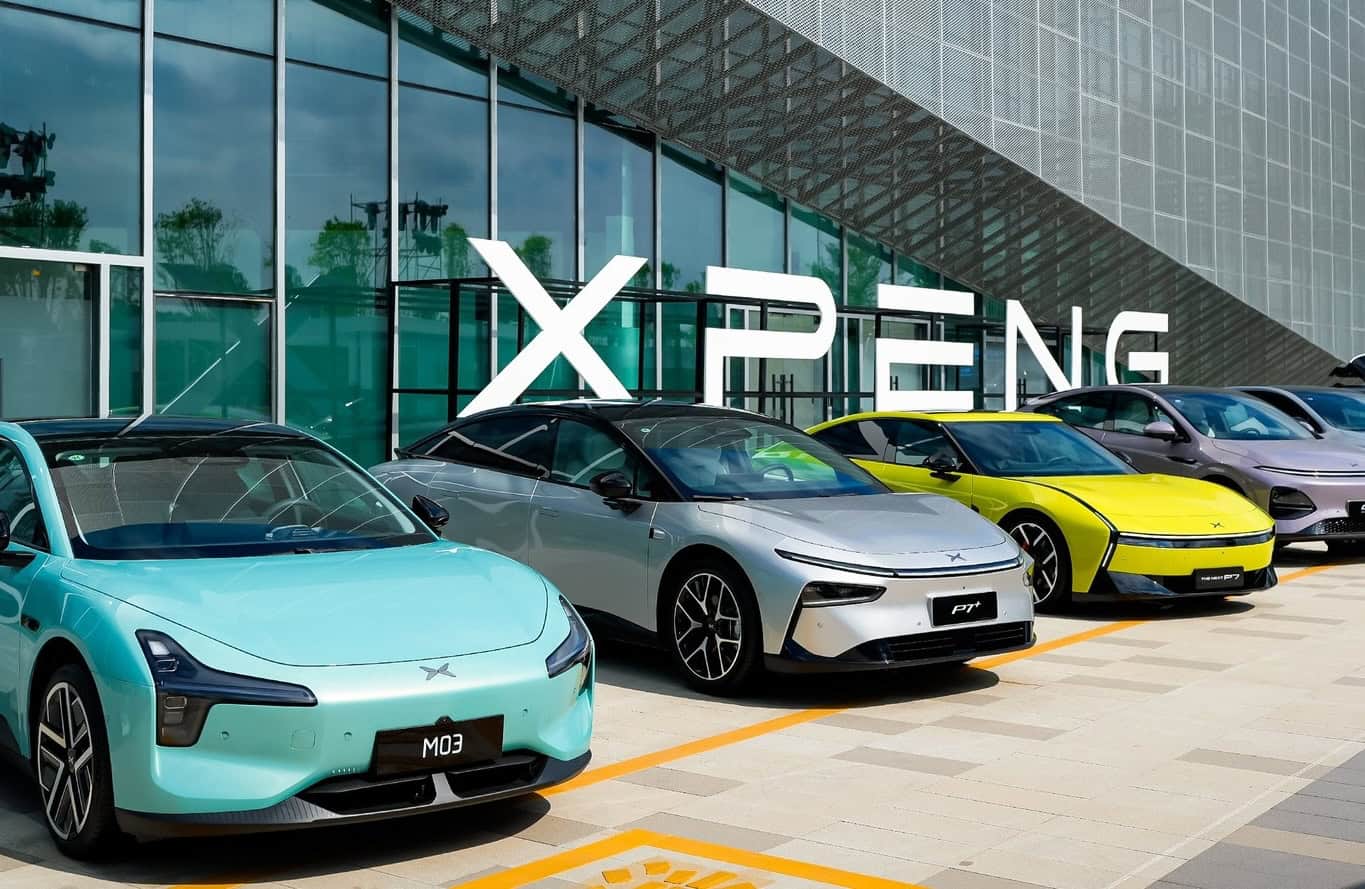
I’m doing a lot of work right now on the biotech front. Chinese universities and hospitals are doing science that is as good as anything you can find in the United States. They’re combining AI and robotics and biotech in really innovative ways, like setting up robots to do scientific experiments, 24 hours a day, seven days a week, by the thousands, to gather data points to feed into an AI model to develop new drugs faster than we can. Meanwhile, the U.S. is just gutting biotech R&D at the very moment when China is beginning to catch up.
On robotics, there’s no comparison. There is a company in China that has a permit from the government to run commercial operations for an unmanned aerial drone car that can take you to the airport. They are really pushing the envelope on putting different pieces of emerging tech together for new commercial deployments that we are so far behind. It’s a bit terrifying.
Likewise, on the AI front, DeepSeek made some interesting innovations. Their model is open source. They’re finding ways to develop AI that requires less compute and energy resources. Everybody else on the planet is just like China in that they don’t have semiconductor chips that are high-end at the scale needed to run the most advanced AI models that the U.S. has. If DeepSeek has a version that runs on fewer chips, everybody is going to want that.
We lost in the 5G battle because we weren’t pushing forward Western alternatives that were available at the same scale and pricing that China could offer. We’re poised to just trip into the exact same issue on AI as well.

Evan Peng is a journalist based in New York. His work has appeared in POLITICO and Bloomberg.