Amid escalating geopolitical tensions between China and the West, Chinese overseas students encounter suspicion from both sides. Western countries are failing them by neither listening to nor supporting them — and in doing so, they are making both a strategic and moral mistake.
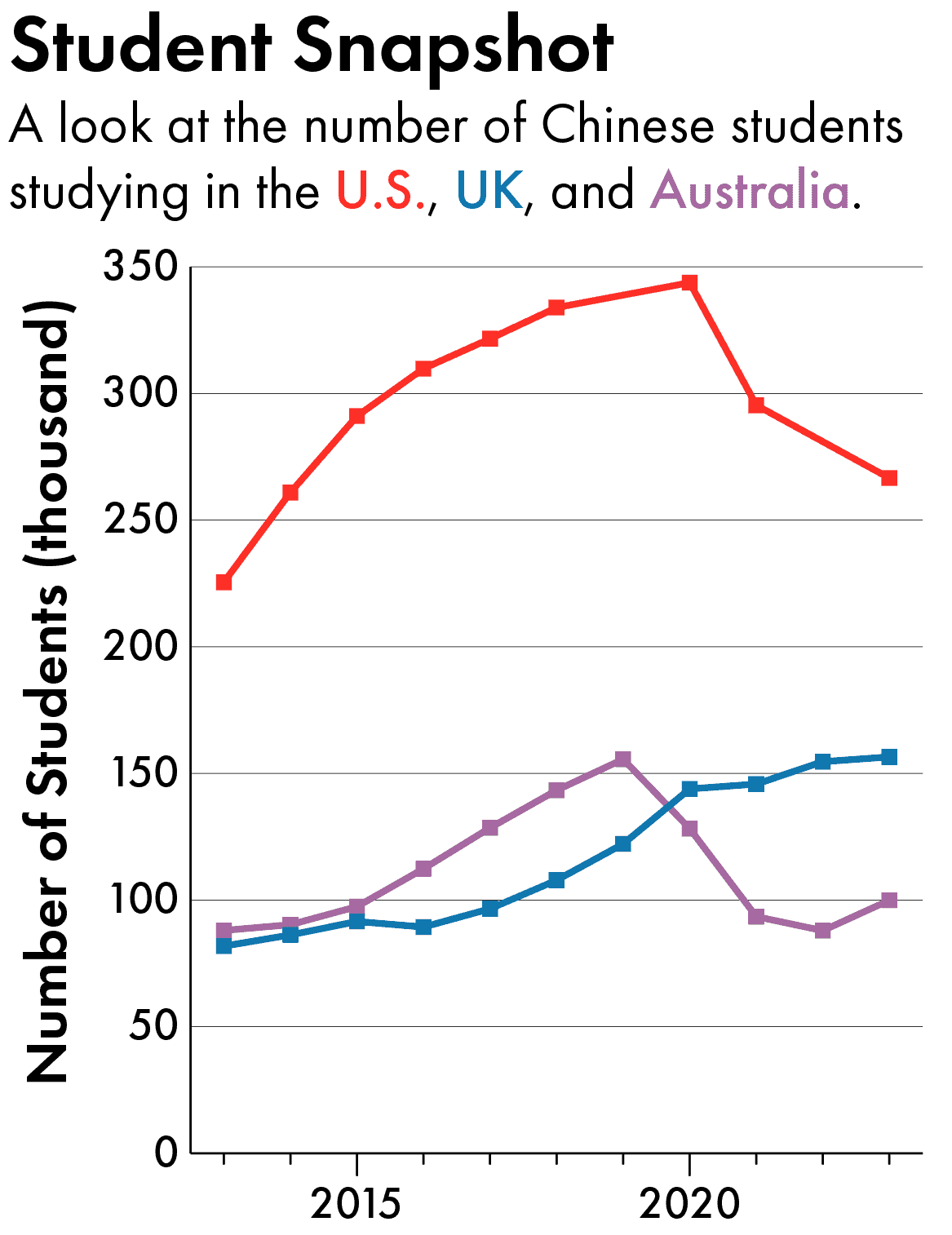
Chinese students occupy an unenviable position on the fault lines of global politics. With more than one million studying abroad — two-thirds in Western countries — they have become direct targets of Western efforts to curb China’s growing influence. Australia and the U.S., held up as exemplars in their harsh policies towards Chinese students, have imposed tighter visa restrictions, expanded laws on foreign influence and national security, and curtailed academic exchanges. In the UK, lingering unease has given way to rising hostility, as China-critical media and think tanks portray Chinese students as national security threats from which the country needs to divest.
Rather than rehearsing these anxieties, we should pause and ask two fundamental questions: where are the voices of Chinese students in all these debates? And what does this silence tell us?
It’s not surprising that China is the world’s largest source of international students, given its population, economic scale, and the deeply rooted Confucian tradition that values education. For many Chinese middle- and upper-middle-class families, sending children abroad — often at ten times the cost of domestic tuition — is a substantial investment in a better future. In the UK alone, over 150,000 Chinese students are enrolled, representing the largest group of international students in British higher education. They contribute at least £5.4 billion ($7.1 billion) annually to the British economy from their fees and expenditure, according to a British Council estimate for 2021, including £2.3 billion ($3 billion) directly to universities.
Despite their economic significance, Chinese students have often faced misunderstanding, neglect, and discrimination. Reading the negative rhetoric that surrounds them, one is struck by the impossibility of being a Chinese student abroad today. If they study science, technology, engineering and mathematics (STEM) subjects and frontier technologies, they face accusations of smuggling knowledge back home. If they express views that differ from the Western consensus, they may be seen as potential propagandists for Beijing. And if they withdraw and keep to themselves in class, they are dismissed as underqualified, “soul-crushing” to teach, or posing challenges to integration.
Before I join the debate, I should declare my position. I am a female scholar from mainland China who has taught hundreds, if not thousands, of Chinese students over the years, first in Hong Kong and now at a British university. My personal journey, combined with years of research and close interactions with these young people, presents a far more nuanced story than is often told.
[UK institutions] often lack the “China literacy” to understand the complex pressures Chinese students face. Instead, they misdiagnose Chinese students’ unique needs as “problems” that need to be fixed and lump them with those of other international student cohorts.
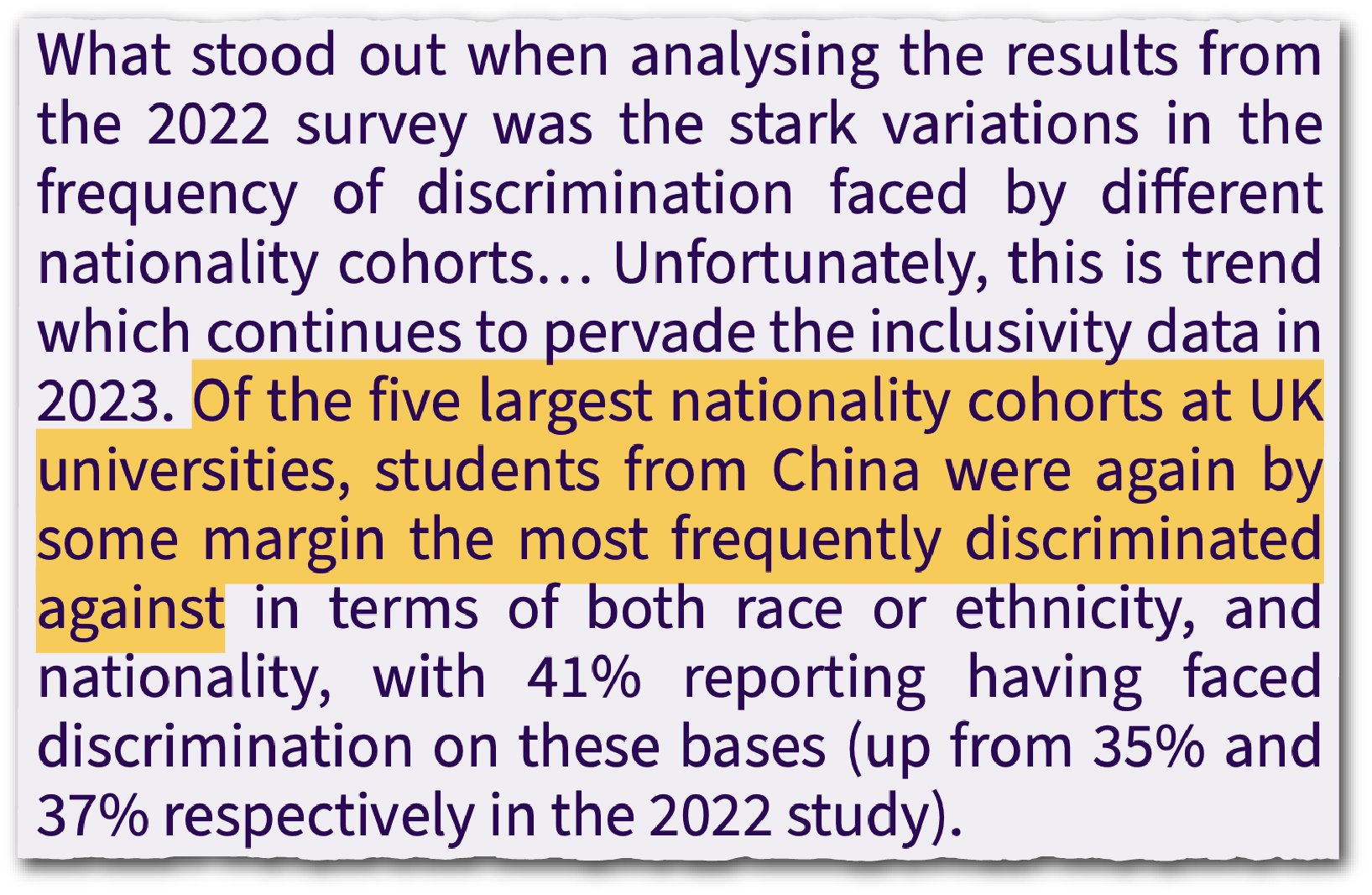
I see Chinese students as victims — not enemies — caught between a hostile host society and the long arm of their homeland. Many arrive in the UK seeking the better future promised by British higher education, only to encounter pervasive racism and discrimination, often expressed as “anti-China” sentiment. This hostility peaked during the Covid-19 pandemic and has never truly subsided. International Student Barometer survey data from 2022 to 2024 shows that Chinese students are the most frequently discriminated against among the major international student groups in the UK, with about 35–41 percent reporting racial abuse.
More worryingly, Chinese students are increasingly portrayed as agents of the Chinese Communist Party, subjecting them to even greater scrutiny. While I do not aim to dismiss all such concerns, particularly those about transnational repression, many claims are based on limited data or simply anecdotes. We need more substantial research that engages the broader Chinese student population to develop a balanced response to the PRC influence.
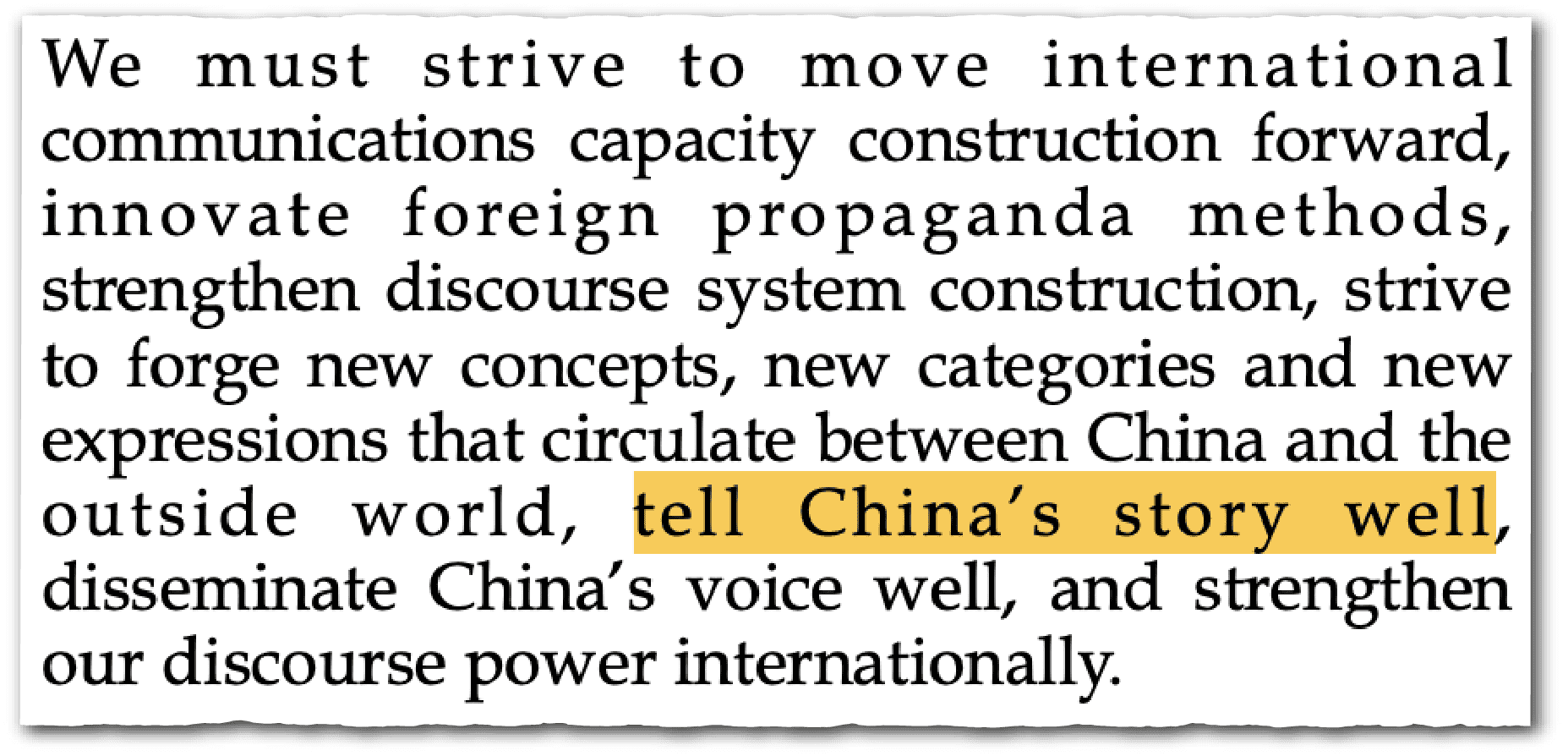
My research shows that Chinese students in the UK do experience widespread, yet often unspoken political pressure, frequently exerted by PRC-aligned groups such as Chinese Students and Scholars Associations. Unlike the overt intimidation experienced by Chinese dissidents, students face a more subtle form of pressure that fosters fear, suspicion, and internalized self-surveillance. Most are aware that they are “grassroots ambassadors” who must “tell China’s story well”, or risk being seen as disloyal by the Party. As a result, Chinese students often resort to self-censorship, such as avoiding “liking” certain social media posts or refraining from public expression, to protect their families and their own futures in China.
It is therefore not surprising that Chinese overseas students rarely speak up: they are neither encouraged nor feel comfortable doing so. When they do express themselves, they often feel unheard. In today’s alarmist political climate, saying the wrong thing could be seen as problematic by either side.
Limited and often disconnected support structures deepen Chinese students’ isolation. Although many UK institutions offer a genuine welcome, they often lack the “China literacy” to understand the complex pressures Chinese students face. Instead, they misdiagnose Chinese students’ unique needs as “problems” that need to be fixed and lump them with those of other international student cohorts. This lack of understanding risks reinforcing stereotypes. In one notorious case, the University of Liverpool sent out an exam-season email on academic integrity that translated only the word “cheating” into Chinese, explaining that “Chinese students are usually unfamiliar with the word.”
What can we do now? The UK and other Western countries should stop panicking about China — and about Chinese students — and start recognizing their strategic importance. The current obsession with scapegoating Chinese students partly reflects the UK’s own anxiety about an increasingly one-sided relationship with a rising global China. The U.S.’s recent actions offer a cautionary tale. In trying to appear tough by threatening to aggressively cut visas issued to Chinese students, Washington has damaged its own higher education sector and, ironically, strengthened the CCP’s legitimacy, by allowing it to position itself as a defender of the interests of Chinese students.
The U.S. missteps present a rare opportunity for countries like the UK. Britain has already overtaken the U.S. as the top study-abroad destination for Chinese students. Recent data from UCAS, the UK university admissions service, confirms this trend, showing a 10 percent increase in applications from Chinese students for UK undergraduate programs. This is a moment the UK could seize to strengthen its higher education capacity and global competitiveness.
Recognizing [Chinese students’] value means not just asking what they can do for us, but beginning by listening to what they need — and committing to what we promise to offer them: safety, respect, and opportunity.
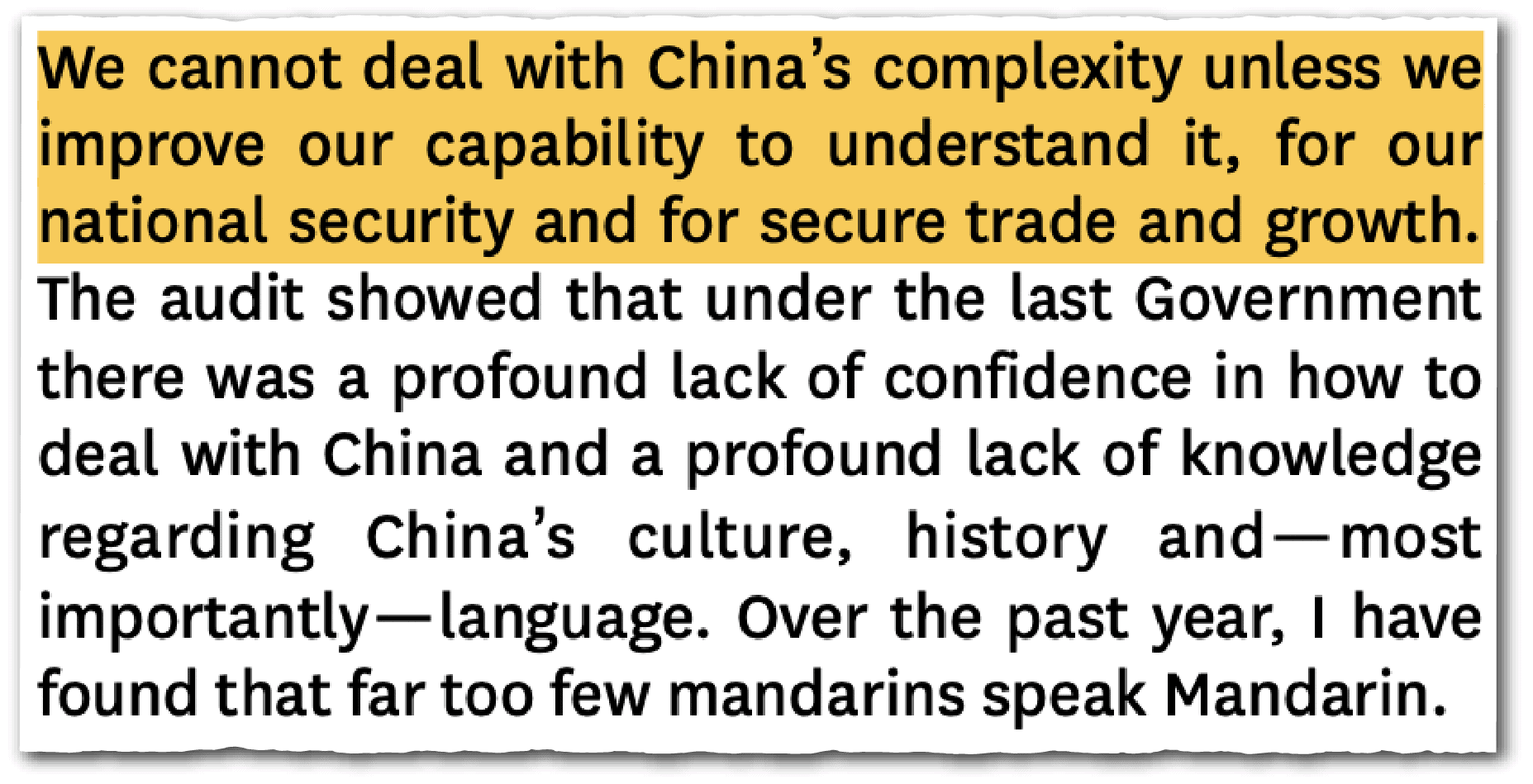
At a time when the UK is attempting to re-strategise its relationship with China, some commentators rightly argue that Chinese students are invaluable assets to Britain. They bring language skills, cultural knowledge, and intellectual resources that could be tapped to strengthen Britain’s China capacity, one of the most profound gaps in the current policy landscape.
I agree with this argument but want to push it further. Chinese students are not only assets or instruments; they are human beings facing complex pressures while trying to make the most of a formative chapter in their lives. Recognizing their value means not just asking what they can do for us, but beginning by listening to what they need — and committing to what we promise to offer them: safety, respect, and opportunity.
In doing so, we would truly be living by the democratic values we proclaim. We would also strengthen the resilience of our democratic institutions in a complex, globalized world — one that requires us to maintain dialogue with people and regimes holding different values, while safeguarding our own principles.

Yanran is a lecturer in Chinese politics and political economy at King’s College London. She received her PhD in politics and public administration from the University of Hong Kong in 2018. Prior to joining King’s, she was the lecturer and deputy director of the Master of Non-profit Management Program at the University of Hong Kong for three years.