
Cheng Lei is an Australian journalist and currently a news anchor for Sky News Australia. In August 2020, while working as a business reporter for China Global Television Network (CGTN) in Beijing, she was arrested by China’s Ministry of State Security. The charge: “illegally supplying state secrets overseas,” Australia’s foreign minister disclosed in 2021 (China has never publicized its accusations against her).
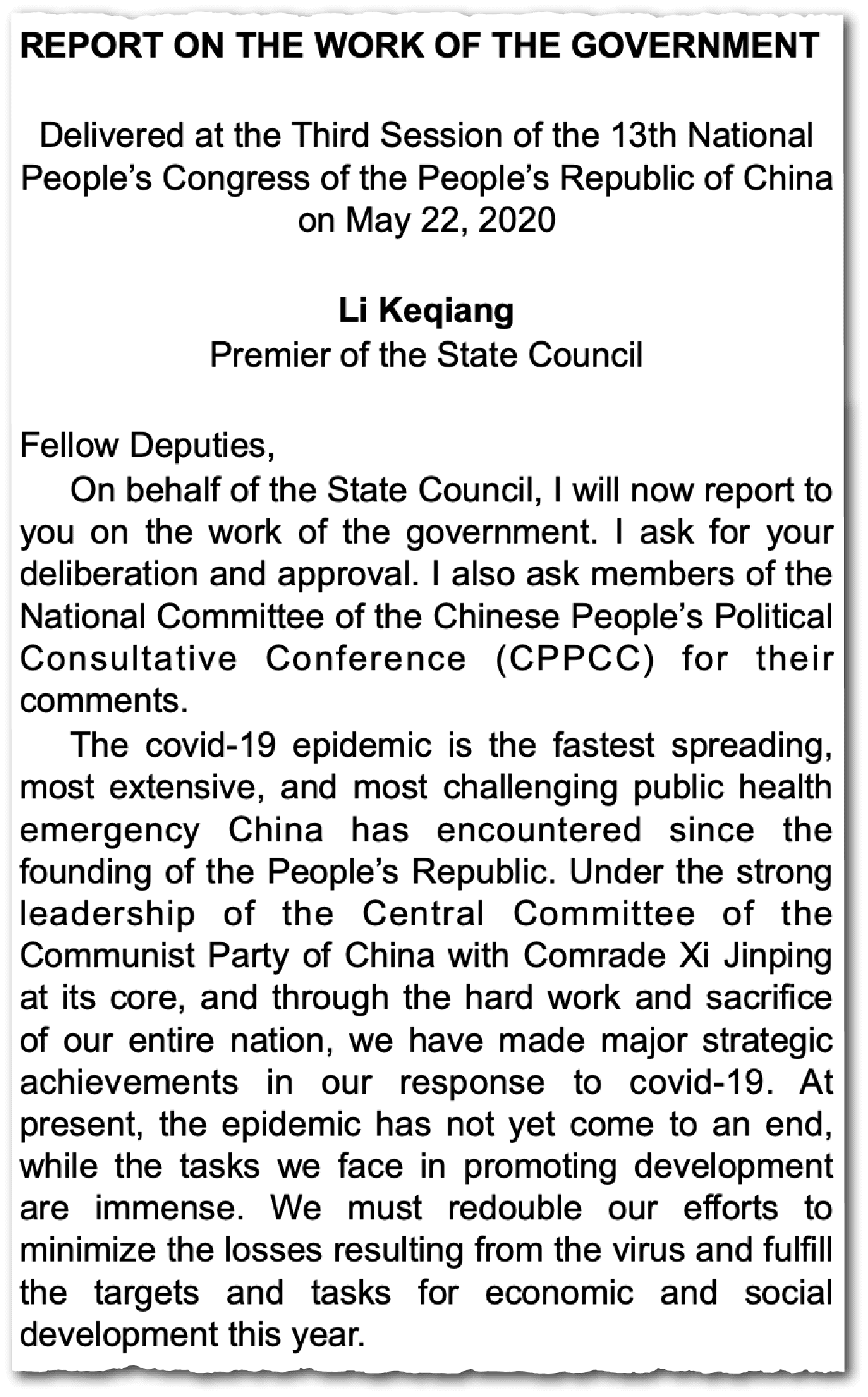
Cheng learned in detention that the specific ‘crime’ she had been arrested for was texting a Bloomberg reporter, Haze Fan, thereby breaking an embargo on the results of then-Premier Li Keqiang’s government work report in May 2020. The mother of two spent three years and two months behind bars in a MSS detention facility, before she was released and returned to Australia in October 2023.
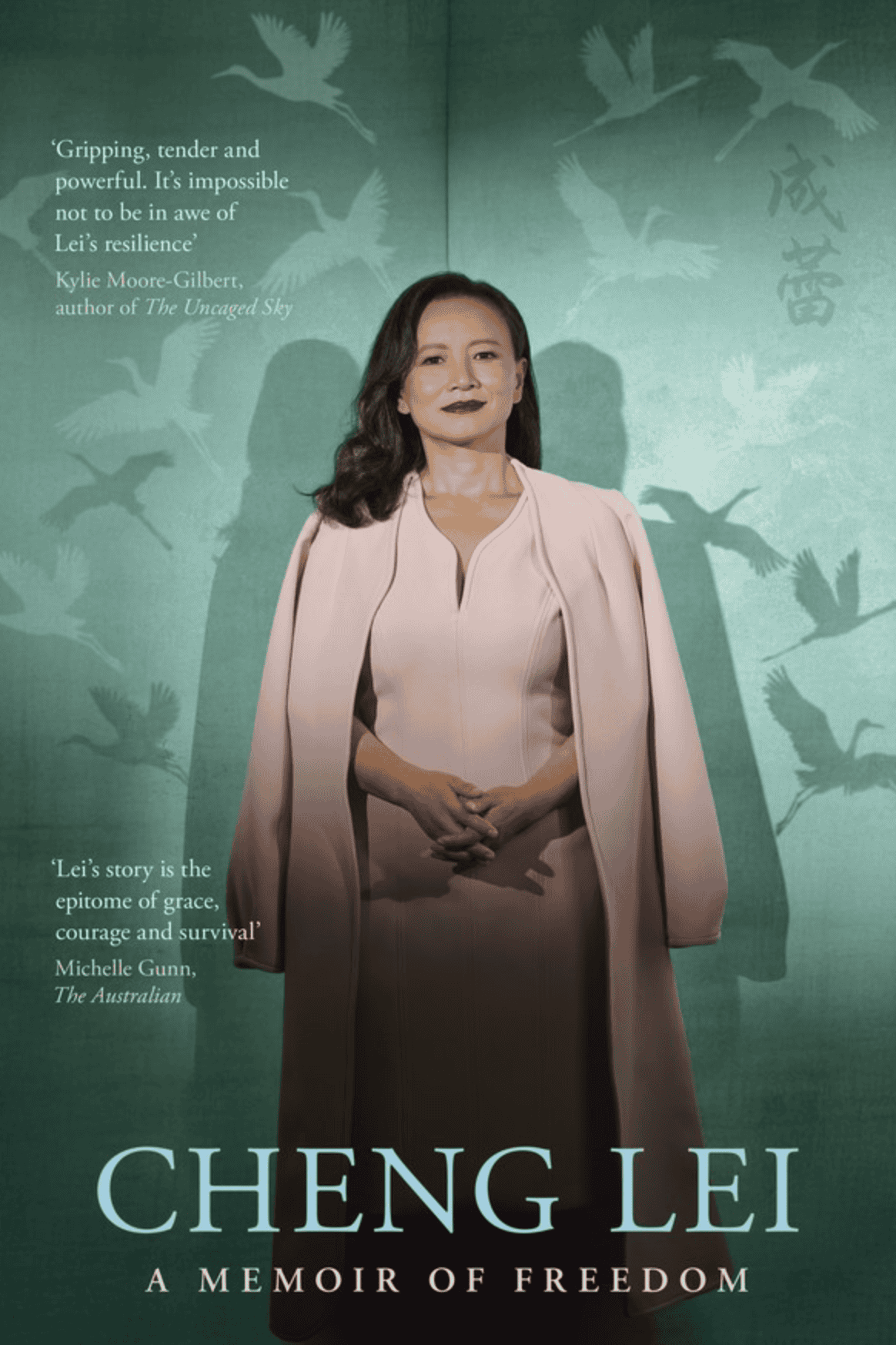
Now, she is the author of an autobiography: Cheng Lei: A Memoir of Freedom, which tells in intimate detail of her experience in prison. In this lightly edited Q&A, we discussed her experience as a foreigner working for China’s top state broadcaster, her experiences in detention, and her views on China-Australia relations and the journalism field.
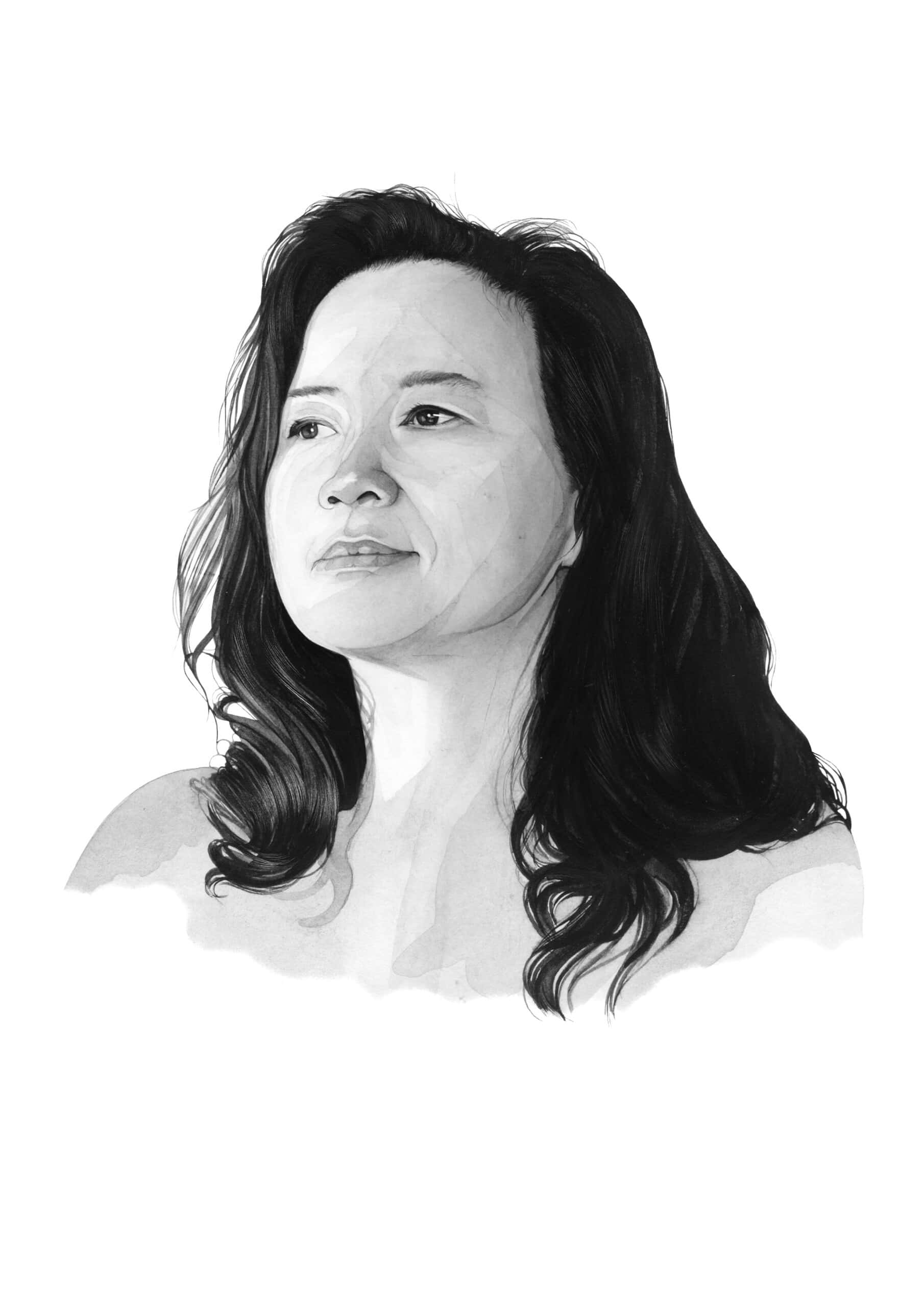
Illustration by Kate Copeland
Q: Let’s start with your background and early career. How did you get into journalism and work your way up to becoming an anchor at CGTN?
A: I came to Australia as a 10 year old, and after mastering English, I became really interested in current affairs thanks to my dad’s influence. He also advised me to study commerce [at university]. It wasn’t really my cup of tea, but like a typical obedient Asian child I went and got a job in something I didn’t like, trudged on for five years and was always looking for a way out. I felt I had this great bilingual advantage that wasn’t really being used.
I went to China as a business analyst at the end of 2000 for a logistics company. I saw up close the dysfunction of a joint venture involving two foreign companies and a very powerful state owned organization. Even though the JV folded, I decided to stay in China and heard about an internship opportunity at CCTV 9 which was what the English language channel was called back then. I was lucky enough to be accepted and started in journalism there. A year and a half later, CNBC Asia was looking for a China correspondent, and I went to work for them for nine years. That was where I really got a grounding in journalism. I really loved covering China in English, and also talking about global markets and doing interviews in Chinese for the CNBC Chinese partner, Shanghai Media Group. I was using my bilingual advantage to its maximum, loving the pace of change and being able to tell a story that not many people had the ability to do in a nuanced way.
| BIO AT A GLANCE | |
|---|---|
| AGE | 50 |
| BIRTHPLACE | Hunan, China |
| CURRENT POSITION | News presenter and columnist, Sky News Australia. Problem maker, great life lover, world’s worst soccer player, aspiring cook, and mom who always feels like she’s failing. |
The CNBC joint venture folded [in 2012], partly because China was tightening its grip on media cooperation. I was then approached by my old boss, the guy who had recruited me to CCTV, to work for what was now CCTV English. I went to work for them at the end of 2012. I felt that with nine years of experience at CNBC, I could bring a lot of change, openness and objectivity, to CCTV English. I always thought I was doing that throughout the next eight years or so, getting a more global flavor into the coverage, asking questions that other anchors didn’t dare ask and challenging guests — because, the way I saw it, my goal was to make the channel less shit. By that I mean less like a state-run propaganda machine, and more like, for example, CNBC.
I was anchoring the channel’s business show, and at the same time my good friend Haze Fan was in Beijing, working for Bloomberg and getting exclusive stories. We had met at CNBC before I went to CCTV and she to Bloomberg. We thought we had a lot of synergies between the two of us, me with the state angle and she with the multinational angle.
Then came the rupture in the China-Australia relationship. I didn’t know it then, but later I found out later that they had started surveillance on me about three or four days after the then-foreign minister of Australia had asked for an independent investigation into the source of Covid — a move which enraged China.
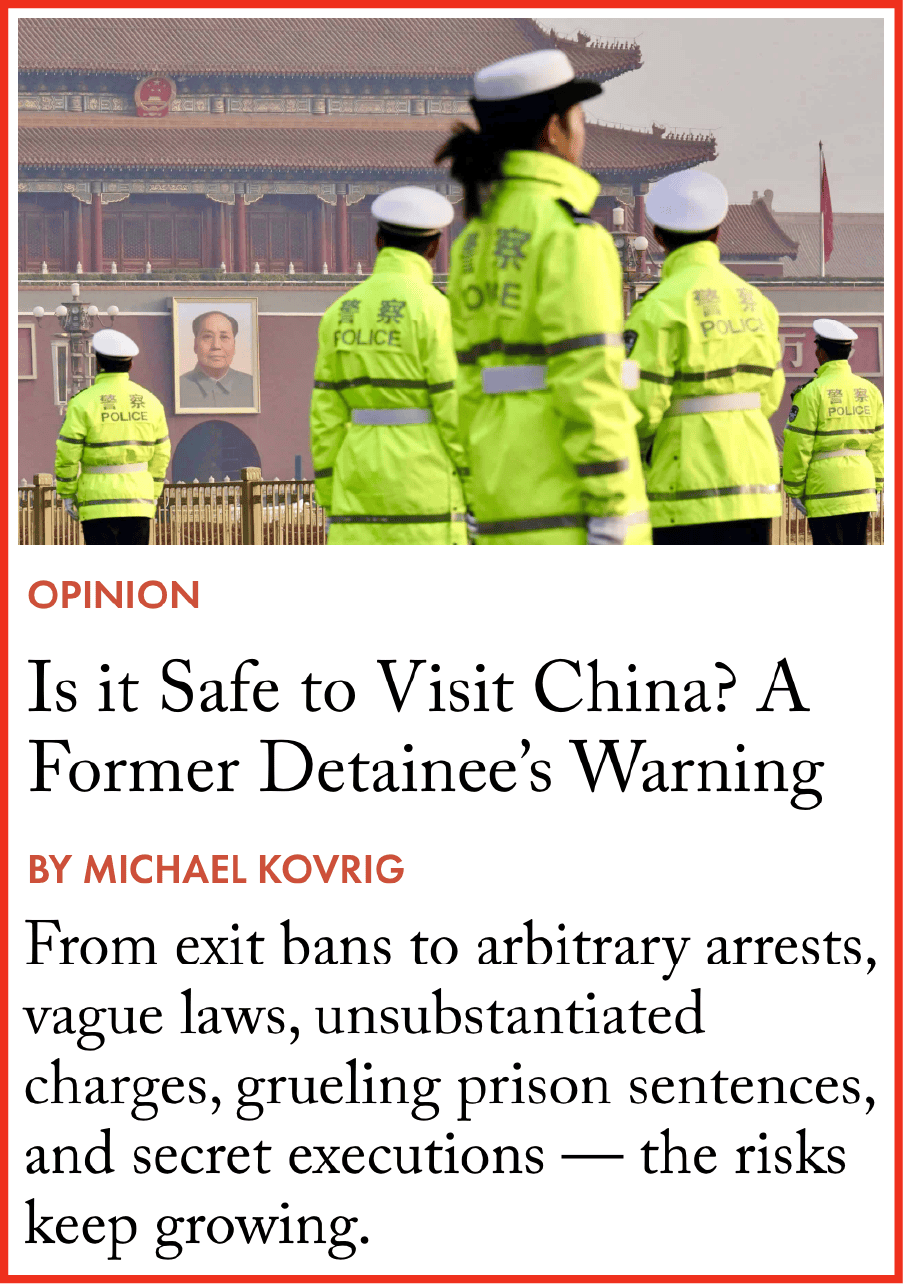
The Chinese authorities avoided the mistake they made after [Huawei chief financial officer] Meng Wanzhou was arrested in Canada, and they retaliated soon after by arresting the ‘two Michaels’ [Michael Kovrig and Michael Spavor, two Canadian nationals, were arrested in December 2018 in response to Canada arresting Meng]. They were trying to make it appear that the surveillance on me wasn’t related [to the foreign minister’s call]. It wasn’t hostage diplomacy, and it wasn’t an immediate retaliation, but the timing of the surveillance could not have been coincidental. I know of at least another Australian who was surveilled around the same time.
The reason they gave for the surveillance was that I was in frequent contact with foreign journalists, which is total bullshit, because I had been doing that for the past 20 years, and I was a foreign journalist myself. It’s not a crime to be in touch with other foreign journalists; in fact, it is part of your job.
Through your work at CCTV, did you learn anything that you feel that other foreign reporters don’t understand about covering China?
Because CCTV is a state-owned TV station, I think I was more trusted when I asked for interviews. There was less likely to be reticence because [Chinese] interviewees would think that the request had been sanctioned, and therefore they would not be made to look bad; whereas for foreign media, they’d be quite cautious to accept an interview.
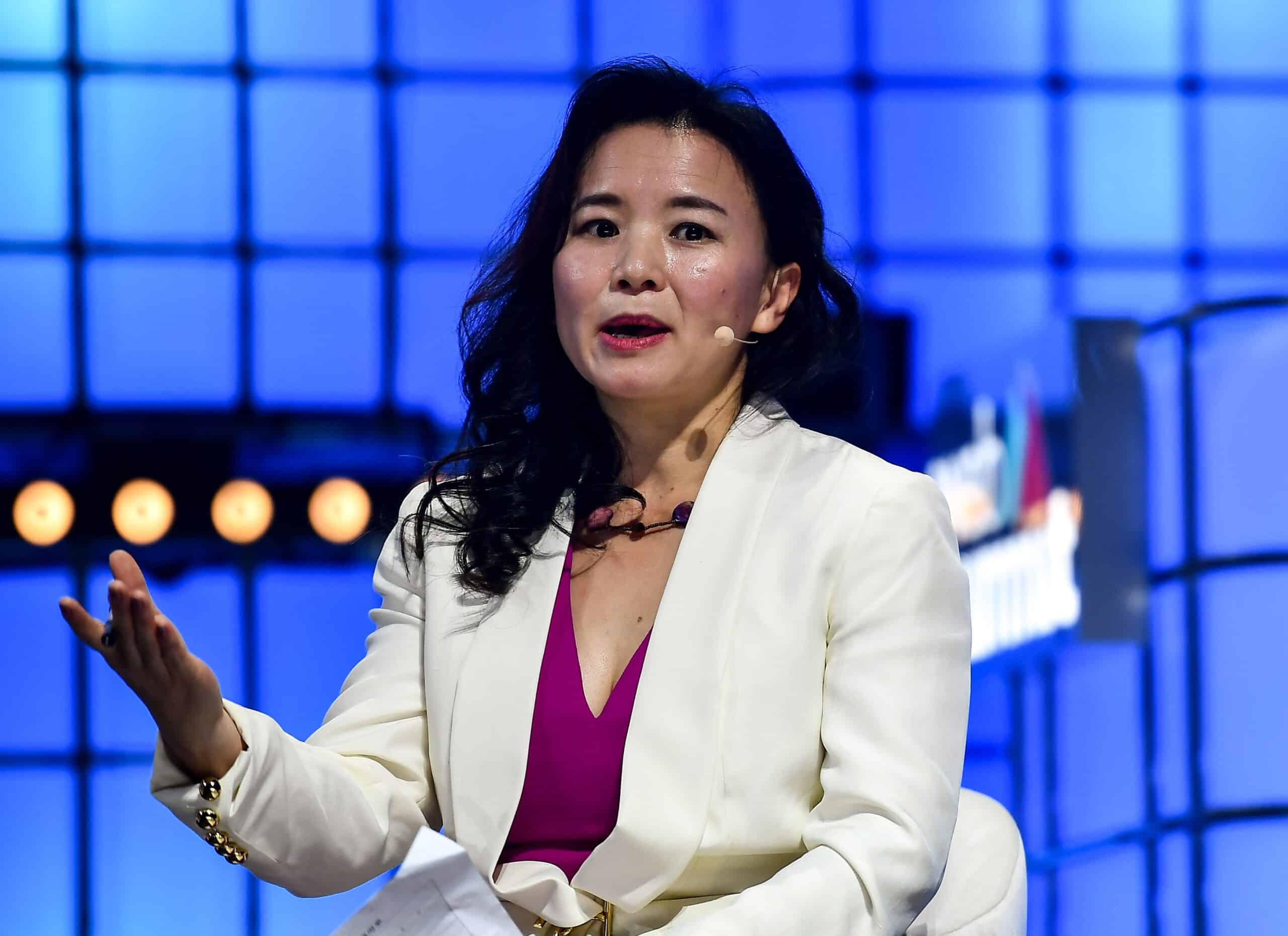
Cheng Lei appears on a CCTV Global Business segment reporting on the Chinese SOE reforms, September 15, 2015. Credit: CGTN America
The whole mood in the media changed after Xi came to power, and then again after Trump came in power. It was getting harder for Chinese media to get foreign chief executives to speak to us. I remember Eric Schmidt of Google saying he would never go on CGTN [CCTV’s English newscasts were rebranded CGTN in 2016]; and there were CEOs who would say one thing to Bloomberg and then another on CGTN, because they realized the difference in how they wanted to be perceived.
After Xi came into power, there was a lot more brown nosing, by state media on CCTV’s Chinese channels. On the English channel there were often requests to ask foreign interviewees what they thought of Xi’s speech and a lot more coverage of anything in which he was involved. Anything that Xi was speaking at would be covered extensively — almost sickeningly so.
…I was in a place where I had two T-shirts and everything that I owned could fit in a little box; but I had a very rich inner life. Once you have lost everything, you realize who you really are, what you’re made of, and that is far more valuable and keeps you more serene for longer.
At the time of my arrest, CGTN was recruiting a lot of foreign anchors, and I always thought that I was more outspoken or daring than them, because I thought I knew more about the system and its so-called red lines, and that I had already worked there for a long time. I also had a good relationship with most of the management, because the people who were starting out or in middle management when I joined in 2002 had advanced by the time I rejoined in 2012. So I thought I could get away with more, whereas the other foreign anchors censored themselves because they were so scared that they would get into trouble. I actually felt very good about myself, tragically.
Were there ever cases where you tried to push the envelope and went too far, from their point of view?
| MISCELLANEA | |
|---|---|
| FAVORITE MUSICIANS | Paul Simon and Leonard Cohen |
| BOOK REC | Sapiens by Yuval Noah Harari, not just for the intellectual parts, but for how it can actually make you feel, and that it kind of answers the meaning of life, which is a big question when you’re in prison. |
They didn’t like the fact that I was always getting new international guests, because our guest bookers preferred the same old Chinese professors who were safe and always toed the party line. I thought that just made the show look terrible, because they spoke in such a way that you just could smell the propaganda.
I tried to volunteer to cover Xinjiang. I was not successful. I volunteered to go to Wuhan [during the Covid pandemic]. They didn’t want me to go. I remember getting two guests on my show who were both female and very good in their fields. I was told that it didn’t look good for three females to be on at the same time. And I thought that was just the most idiotic thing.
Did you hear from any of your former colleagues after you were released?
I think most are too scared. And some of them gave false testimony against me. I only know of one person, a British citizen who actually wrote to me while I was incarcerated. Some of the foreigners did contact me because by then they had left CGTN. But no local has dared to contact me.
On August 13, 2020, Cheng was summoned for a meeting with the director of CGTN. She walked into the meeting room at CCTV’s headquarters where she encountered a phalanx of state security cadres, and was arrested.
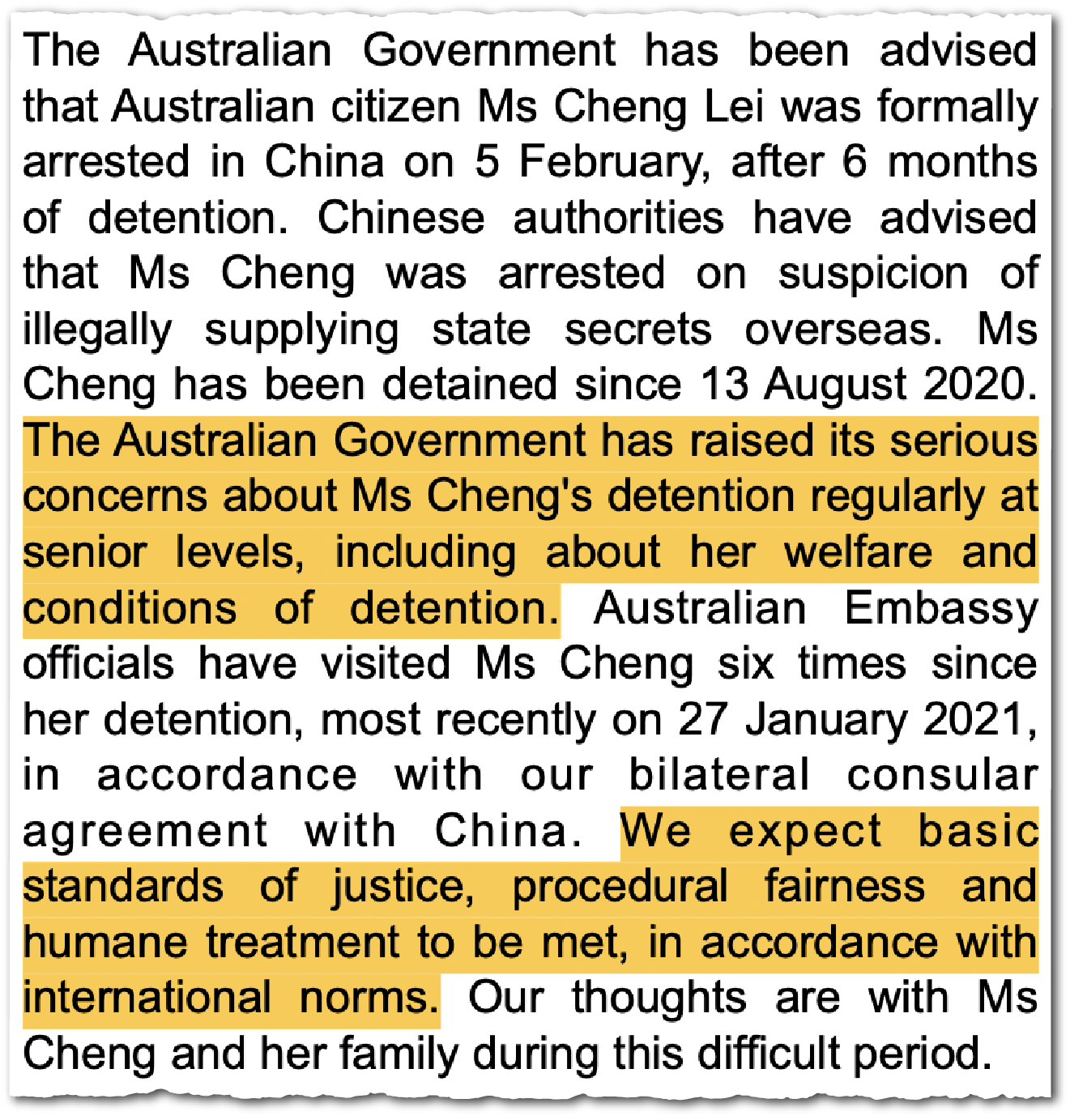
Cheng was initially detained under a process known as Residential Surveillance in a Designated Location (RSDL), a type of incarceration that combines protracted interrogation and detention under strict and inhumane conditions. Cheng was held in a cell where the lights were kept on for 24 hours a day and endured boredom, isolation and pain resulting from being forced to sit in an upright position on the edge of her bed for hours every day.
After six months, she was transferred to an adjacent facility where she shared a cell with three to four other women for the remainder of her detention. She recalls in her book the sometimes difficult, sometimes irreverent, sometimes moving episodes from her years in that detention center.
Was there a day in the detention center that was most memorable for you, or that that stands out to you as you recall that period?
There was a period when I was able to contact the person in the next cell via coded knocks. Those two weeks were very exciting and very moving; being punished for it was the bad part, and being betrayed by our cell mate who snitched on us as she was about to leave. After she left the cell to go to the quarantine cell to leave the detention center, she snitched on us to get back at me, because I stood up to her when she was bullying another cell mate.
Any time we managed to do something creative that defied the orders that tried to erase our human impulses was, for me, a big win inside. That kept me going. Every time I got a good book was a little red letter day; and the one day I was able to have my only phone call with my mom and the kids.
Are there lessons from your time at the detention center that you’ve taken away that apply to your everyday life now?
The mantra I used to always recite was life is full of suffering. Everything is in flux. Only when you stop grasping can you have peace of mind. I think we try to pursue happiness to our great detriment. Because even when there is joy, there is also anti-climax, it can be disappointing. It doesn’t last. But when you accept everything is like a river you can make peace with suffering and loss, which is a much better way to think than to expect that life is all about a series of joys.
That smoother kind of expectation is better for our sanity, and the joy of giving really outweighs that of receiving. So whenever I am having a bad day, I try to make someone else happy or smile or laugh. The joy you give them is multiplied in yourself.
I also learned to value experiences over objects. I was in a place where I had two T-shirts and everything that I owned could fit in a little box; but I had a very rich inner life. Once you have lost everything, you realize who you really are, what you’re made of, and that is far more valuable and keeps you more serene for longer. The psychological weight of having to purchase, store, clean and then get rid of objects, really makes us not free.
You write that while in prison you really didn’t want to read books about anything to do with journalism. Did your detention change the way that you think about the profession and how we do things?
My initial resentment towards the profession at the time was because I felt so guilty that I had harmed my family, especially my kids, because of my job.
But having been helped by so many in this profession, and having come out into this world where truth is more precious, and objectivity is even rarer than ever before, I see the profession with a new perspective: that each one of us has to work so much harder in this world of distrust and disinformation. If we don’t uphold the truth, then it will disappear. I’m the recipient of a lot of help from my peers, so it’s my responsibility to keep speaking out for others who have lost their voices, and for people who are hurt or who are disadvantaged by the tyranny of autocracies.
The other thing is to be ultra careful about sources. In this current environment in China, it’s much more dangerous for sources to speak to foreign journalists. It’s okay to just put them ‘on background’, if you don’t feel comfortable revealing their names. You need to really think about how best to protect sources.
What is your relationship like with Haze Fan now? Have you reconnected since you were released?
I’ve contacted her, but she blocked me on her WeChat posts, and she hasn’t responded to my messages. I know she’s living in London and still doing work for Bloomberg, but it’s not up to me.
If you could have your time again, would you do anything differently on that day when you shared the Premier’s work report with her?
Of course knowing what I know now, I wouldn’t have shared it.
I’ve thought back to all the foreign correspondent journalist friends I have, and nobody pumped me for intel except Haze. That’s why I think I hated her at the time. I don’t hate anyone anymore. But still, why is it that none of my friends at the Washington Post, the New York Times, CNBC or Al Jazeera asked me for things the way she did with a ferocious intensity. I hate to think how many other people she endangered by pressing them — especially people in government, and especially Chinese citizens because they are punished much more harshly.
But I also think my case was not about this report. It wasn’t about the text, it wasn’t about Haze. It was about punishing Australia and setting an example for journalists to back off, to shut up, to be quiet.

What can be done to discourage the Chinese government from doing to other journalists what they did to you, if they’re unlucky enough to come from a country that falls afoul of China at some point in the future?
I like to think that being so vocal now makes them look really bad. I hope they really regret taking a journalist because we have a platform and can remember a lot. They tried to stop me from writing a book by having me sign a gag order. But journalists aren’t a very pliable lot. I think what happened with me backfired so much that I hope they really think again. That’s not to say that arresting someone in a different profession is better, but I certainly think anyone with any knowledge of the MSS or the government’s very inhumane ways should speak up.
You’ve often said the question you get asked the most is whether you’d return to China. In the book, you wrote that you would, under conditions where you feel safe enough and welcome enough. What kind of conditions would have to change in China for that to happen?
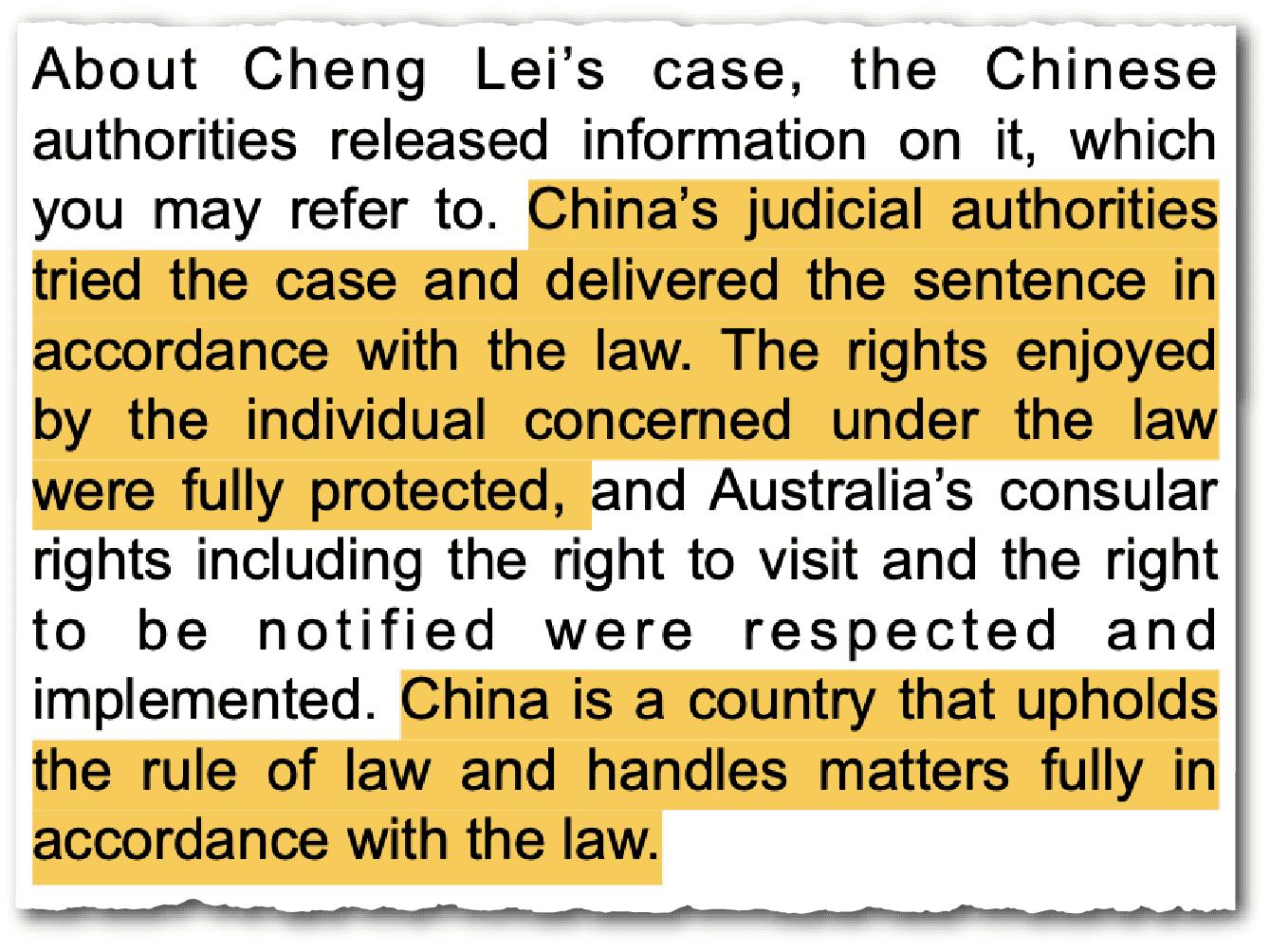
It’s about a whole shift in government. Because, right now you still have so much disinformation about me. The Chinese Internet is a prison against truth. So if every day they are lying to themselves, lying to their own people about what they do and what happens to people, then that’s not a system I want to be a part of, or a country I want to visit.
They say that I’m a spy and a traitor, and they pay the wumao [state-sponsored online commentators paid to post propaganda] to go and say vile things about me and my family. That is not the work of an honest and strong regime.
I love the China beat, and I think it’s not just interesting, but super important. There’s such an asymmetry of understanding because of the language and the opacity of the system. Everyone should try to address this gap because otherwise you miscalculate, you misjudge, and the world does not benefit from that.
Last year I saw then-Foreign Ministry spokesman Wang Wenbin at a press event. He saw me and then directed diplomats to block me. The following day, he said that he didn’t know me and never saw me. This is just outright lying. It’s funny how China tries to project itself as being governed by law, but then it can be so extremely petty and so afraid of individuals.
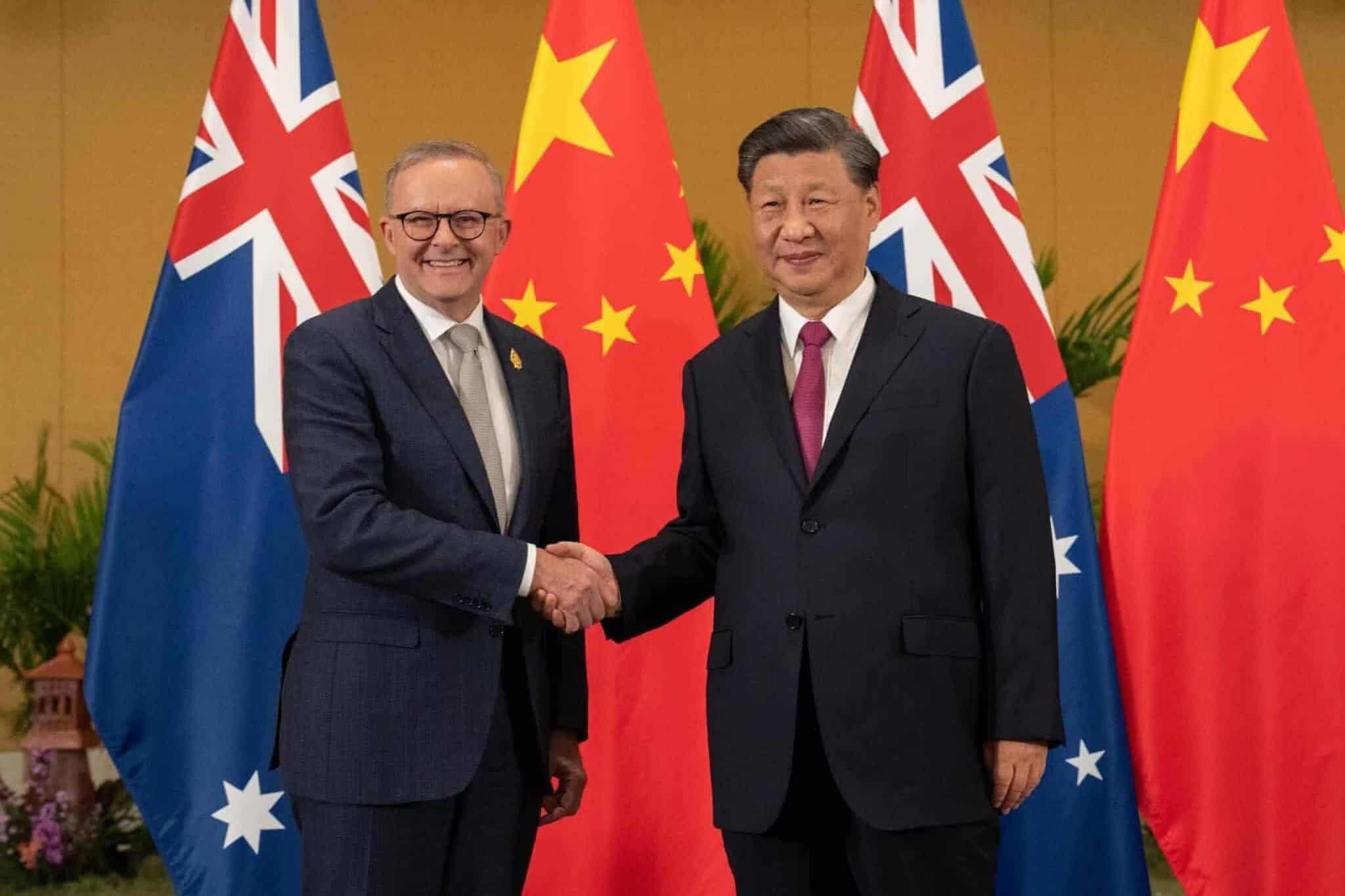
What are your thoughts on the relationship between China and Australia today? Do you think that it is trending in the right direction?
That’s a question I grapple with every day, because I don’t think Australia has moral clarity at the moment, and that is partly because it’s very hard to see the full picture. It’s hard to see what China is, because China is hiding so much, and with the aid of technology, is putting on this beautifully flawless facade.
The amount of ignorance about how China plays dirty, about what people are affected and what people really think means that views on China in Australia are very absolutist and simplistic. I’d like to see better coverage of China issues. I’d like to see the major parties not be so sucked into the illusion that all 1.4 million Australians with Chinese heritage think the same way about engagement with China. I try to add perspective on the whole China debate, but I know that fewer people are studying Chinese and thinking about careers in diplomacy or business to do with China. That’s not the right direction to go.
Do you still see yourself as a China reporter? How has that role changed since you were released from detention?
I find it difficult: because of the disinformation and increasing xenophobia in China it is very hard to find people to interview. It is hard for me to cover China from afar, but that’s not to say people on the ground in China have it easy either. I love the China beat, and I think it’s not just interesting, but super important. There’s such an asymmetry of understanding because of the language and the opacity of the system. Everyone should try to address this gap because otherwise you miscalculate, you misjudge, and the world does not benefit from that.
Having said that, my position also brings the advantage of people who have been, for example, imprisoned in China, trusting me with their stories. That is a direction that I would like to take because the inhumane practices and the conditions of Chinese prisons and detention centers is one of the biggest areas that the government hides. This is something the China cheerleaders conveniently never mention. I’d like to do more to inform people about that.
Eliot Chen is a Toronto-based staff writer at The Wire. Previously, he was a researcher at the Center for Strategic and International Studies’ Human Rights Initiative and MacroPolo. @eliotcxchen
.jpg)