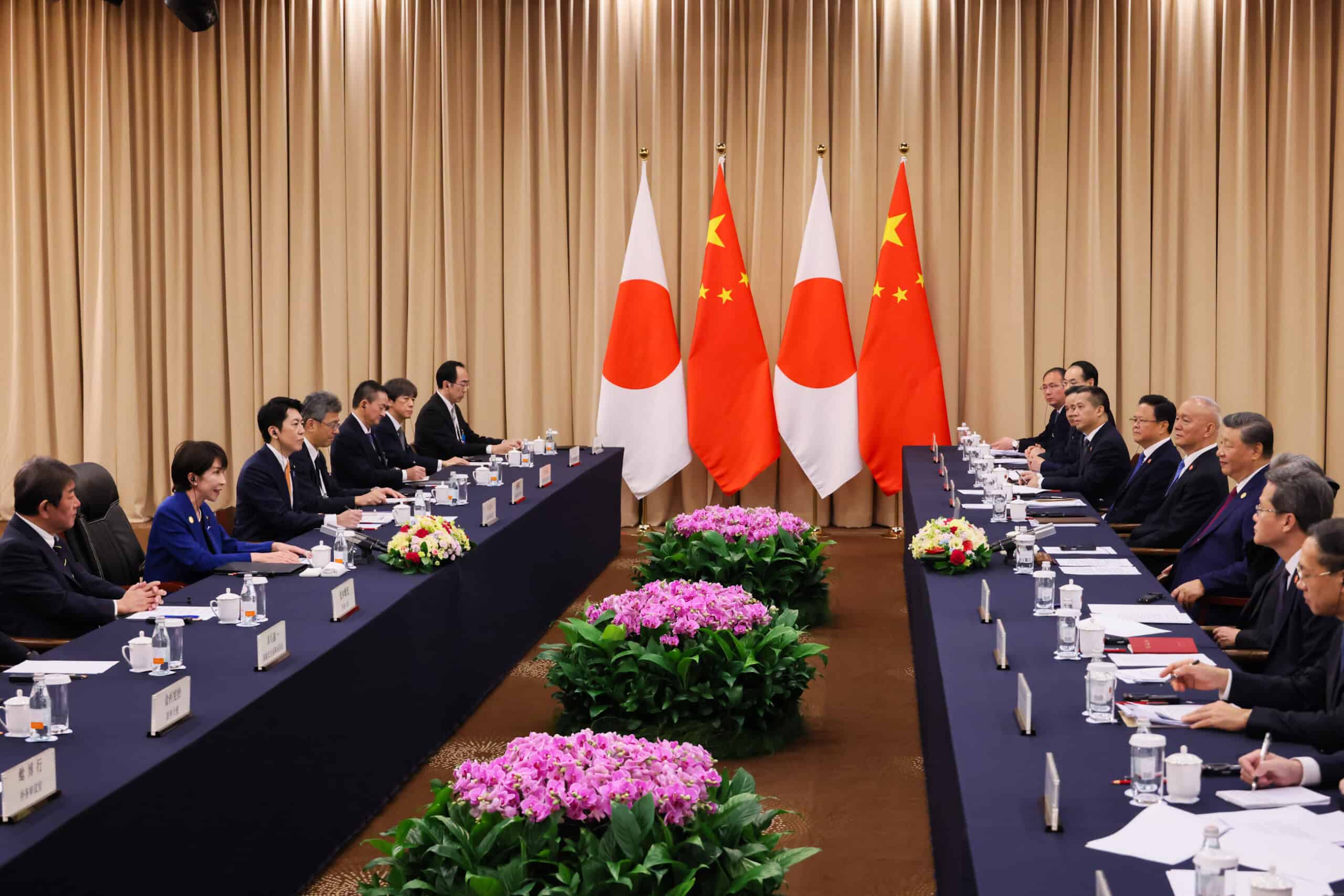
When President Donald Trump met with Chinese leader Xi Jinping last month, the world’s most valuable company was watching closely.
For months, Trump had been hinting that he might allow Nvidia to sell a downgraded version of its newest generation of chips, known as the Blackwell, to China. But after the meeting in South Korea, senior officials said the Blackwell wasn’t even discussed.
“As for the most advanced Blackwell chip, that’s not something we’re interested in selling to China at this time,” White House Press Secretary Karoline Leavitt said on November 4.
The decision means that Nvidia will not be able to tap demand from Chinese companies which, like their U.S. peers, are investing heavily in artificial intelligence infrastructure. Jensen Huang, Nvidia’s chief executive, has called China a $50 billion market for the company.
DATA DRIVEN
Even without China, Nvidia’s sales are soaring. Data centers have quickly become the largest source of Nvidia revenue, which has risen seven-fold since 2021.


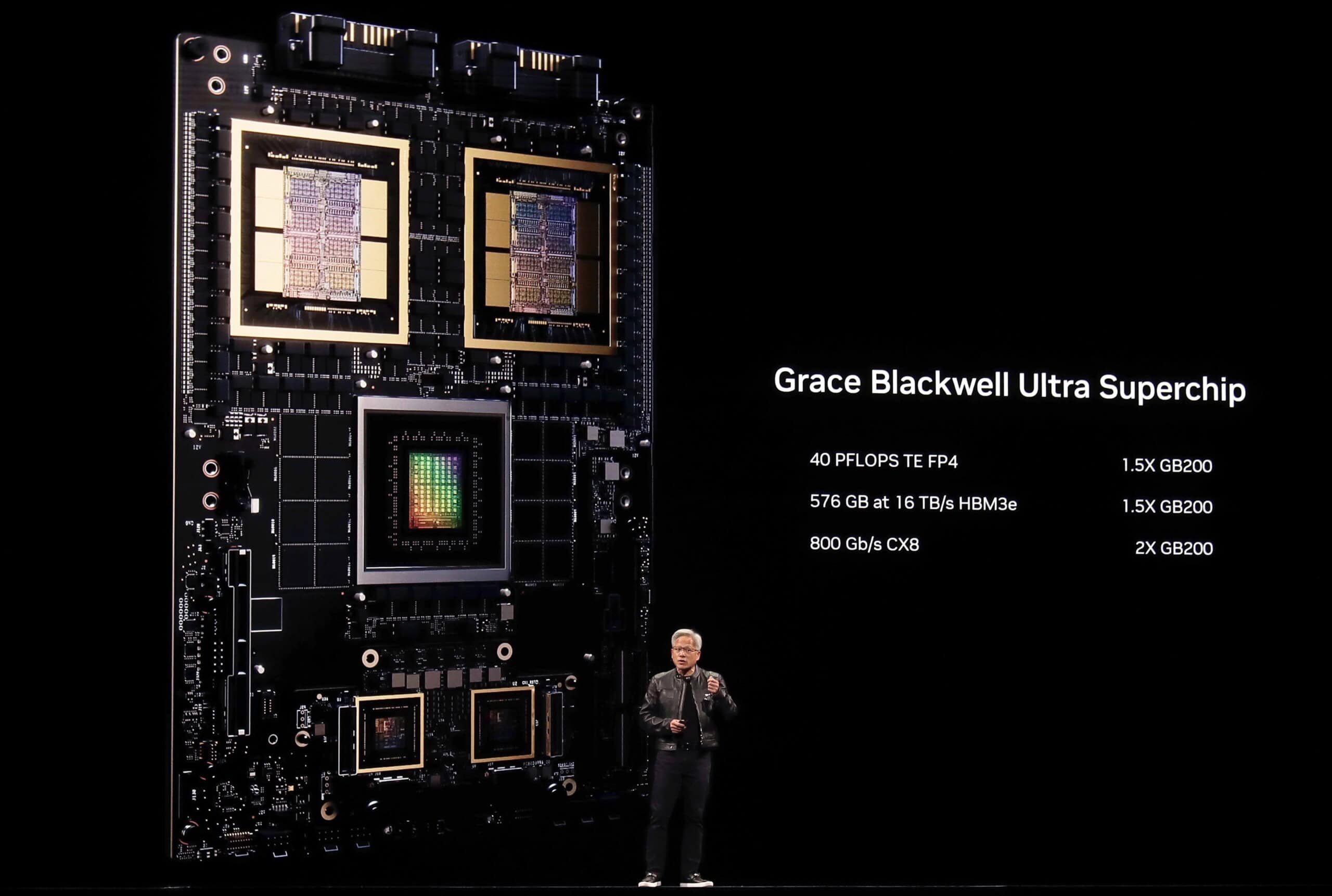
The Blackwell, which Nvidia describes as the “world’s most powerful chip,” has become a major sales driver. Nvidia announced the product in March 2024 and began selling it last autumn.
This year, Nvidia has shipped 6 million Blackwell chips through October — which alone could have generated $150 billion in revenue, analysts at investment bank Mizuho estimate, more than Nvidia as a whole recorded last year. Nvidia reckons it will sell $500 billion worth of Blackwell chips by the end of 2026, even with none expected to go to China.

CHINA CHANGE
As recently as 2022, Nvidia generated more revenue from China than the United States. In October that year, U.S. export controls began limiting Chinese companies from buying Nvidia’s most powerful chips. The launch of ChatGPT a month later sparked an explosion of U.S. investment in data centers and other AI infrastructure.
A smart business strategy for Nvidia would be to spread the peanut butter. Getting people addicted to your GPUs is a hedge against the hyperscalers relying on their own silicon.
Saif Khan, a distinguished technology fellow at the Institute for Progress, a Washington think tank
The United States is now by far the biggest buyer for Nvidia chips. Sales to China, meanwhile, fell to less than 6 percent of Nvidia’s total revenue in the second quarter of this year.
“The data center compute market in China is enormous,” an Nvidia spokesperson said in a statement. “Unless U.S. export restrictions change, that opportunity will be handed entirely to China’s own industry.”

Even though Nvidia’s revenue is growing rapidly, its customers, including so-called hyperscalers such as Amazon and Google, are looking to develop in-house replacements for Nvidia graphics processing units (GPUs).
That makes diversification, including to China, more appealing, says Saif Khan, a distinguished technology fellow at the Institute for Progress, a Washington think tank.
“A smart business strategy for Nvidia would be to spread the peanut butter,” he says. “Getting people addicted to your GPUs is a hedge against the hyperscalers relying on their own silicon.”
In August, Huang said he was preparing a new product for the China market. The announcement drew controversy in Washington because of the new chip’s projected performance, although Nvidia has not publicly released its specifications. Several news outlets have reported that Nvidia designed a version of the Blackwell, the B30A, specifically for China.
The Nvidia spokesperson said “there is no product called B30A planned, designed, or produced,” adding that “degraded export-compliant products cannot succeed in the China market.”
Khan and his colleagues have compared Nvidia and Huawei chips by total processing power, which measures how effective chips are at training large language models; and memory bandwidth, which is needed to run them once they are trained.
By both measures, they project that the B30A would be as good or better than the H20, currently the most advanced chip that Nvidia is allowed to sell to China. Khan says the analysis uses the B30A as a stand-in for a general downgraded Blackwell, and that it generally holds for any Blackwell chip that is 50 percent less powerful than the company’s most advanced model.
Nvidia says its Blackwell servers are 25 times more energy efficient than previous generation equipment, making it cheaper to reach a certain level of computing power.

Whether China is open to Nvidia’s latest offering is another question. China-based customers stopped buying the H20 this summer, according to Nvidia’s securities filings. Huang said in Taiwan last week that the company is “not planning to ship anything to China.”
Beijing is pushing big tech firms and state-owned enterprises to buy domestic chips, and a deluge of Blackwell sales would undercut its self-sufficiency efforts, says Poe Zhao, a China-based technology analyst and author of the Hello China Tech newsletter.
Still, “Chinese companies definitely want the B30A,” he says. “The constraint is political.”

Noah Berman is a staff writer for The Wire based in New York. He previously wrote about economics and technology at the Council on Foreign Relations. His work has appeared in the Boston Globe and PBS News. He graduated from Georgetown University.