My most vivid encounter with the engineering state occurred, in classic Chinese fashion, on a bicycle.

In the summer of 2021, I traveled with two friends deep into China’s southwest. Over five days, we cycled nearly four hundred miles through Guizhou province and arrived in the city of Chongqing. Rather than riding a Flying Pigeon — the comfortable but single-geared bike from the Maoist era, available only in black — I was flying through on a Giant racing bike, which was fabulously strong and quick.
It was over this long ride that I started to realize how an examination of China’s problems throws U.S. problems into stark relief. Each time I left Beijing and Shanghai to enter more remote parts of the country, I was astonished by how even China’s poorest provinces have better infrastructure than America’s richest. The chief feature of the engineering state is building big public works, no matter the financial or human cost. For many people in Guizhou, it has produced an enthusiasm and an expectation for physical change, a feeling not often found among Americans today.
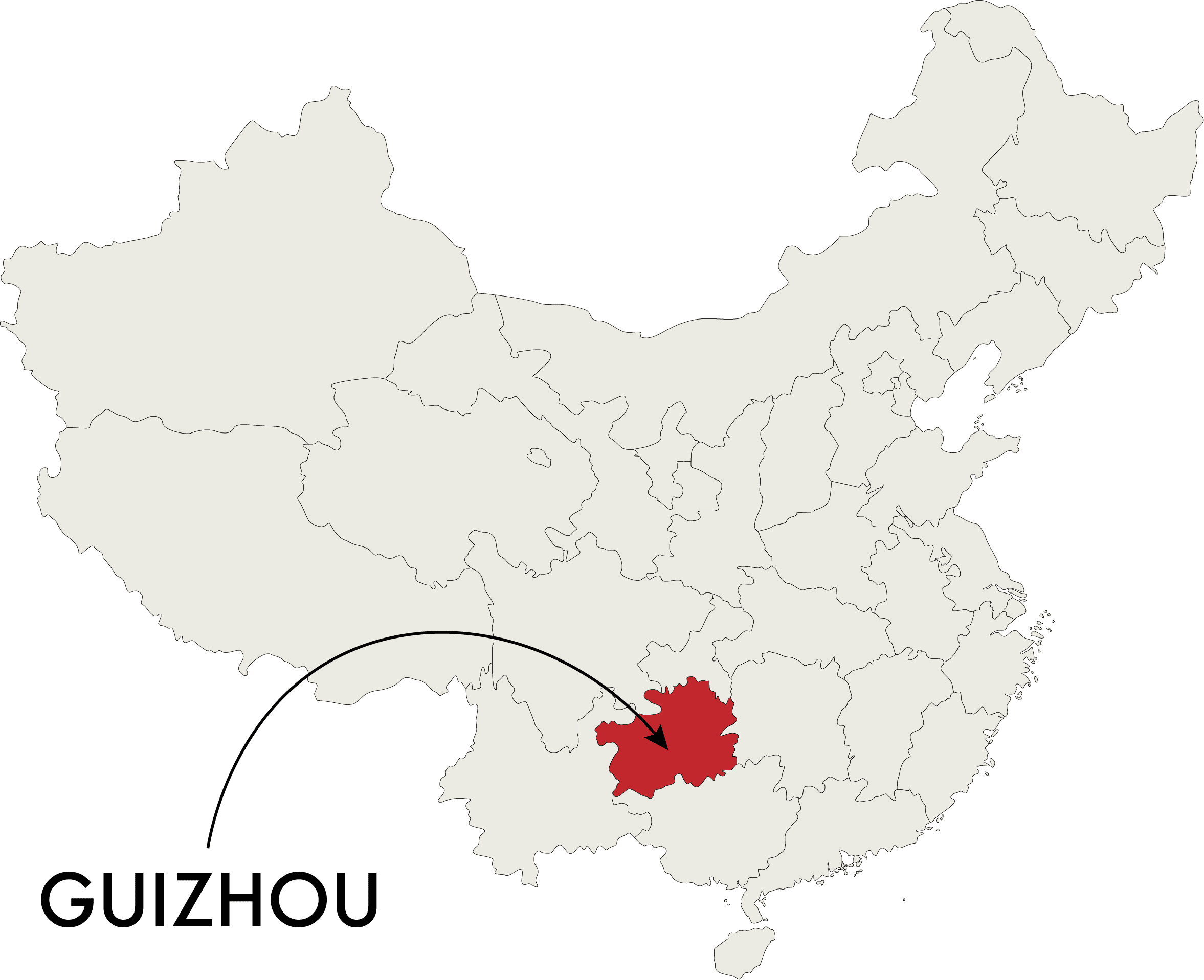
Mountains dominate Guizhou’s landscape. They are made of karst stone, perplexed with intricacy. Even a decade ago, a cycling trip through Guizhou might have been foolhardy. There just weren’t enough adequate roads. It is China’s fourth-poorest province and far away from prosperous coasts — a province, the saying goes, “where not three feet of land is flat, where not three days pass without rain, where not a family has three silver coins.”
In the nineteenth century, one of the imperial cartographers sent by the Qing emperor to map the territory grew exasperated by his task. “Southern Guizhou has a multitude of mountain peaks jumbled together,” he lamented. “They are vexingly numerous and ill-disciplined.” Visitors did not always find locals to be hospitable. Much of Guizhou is settled by the Miao minority, which has historically resented the intrusion of China’s Han-majority ethnic group.
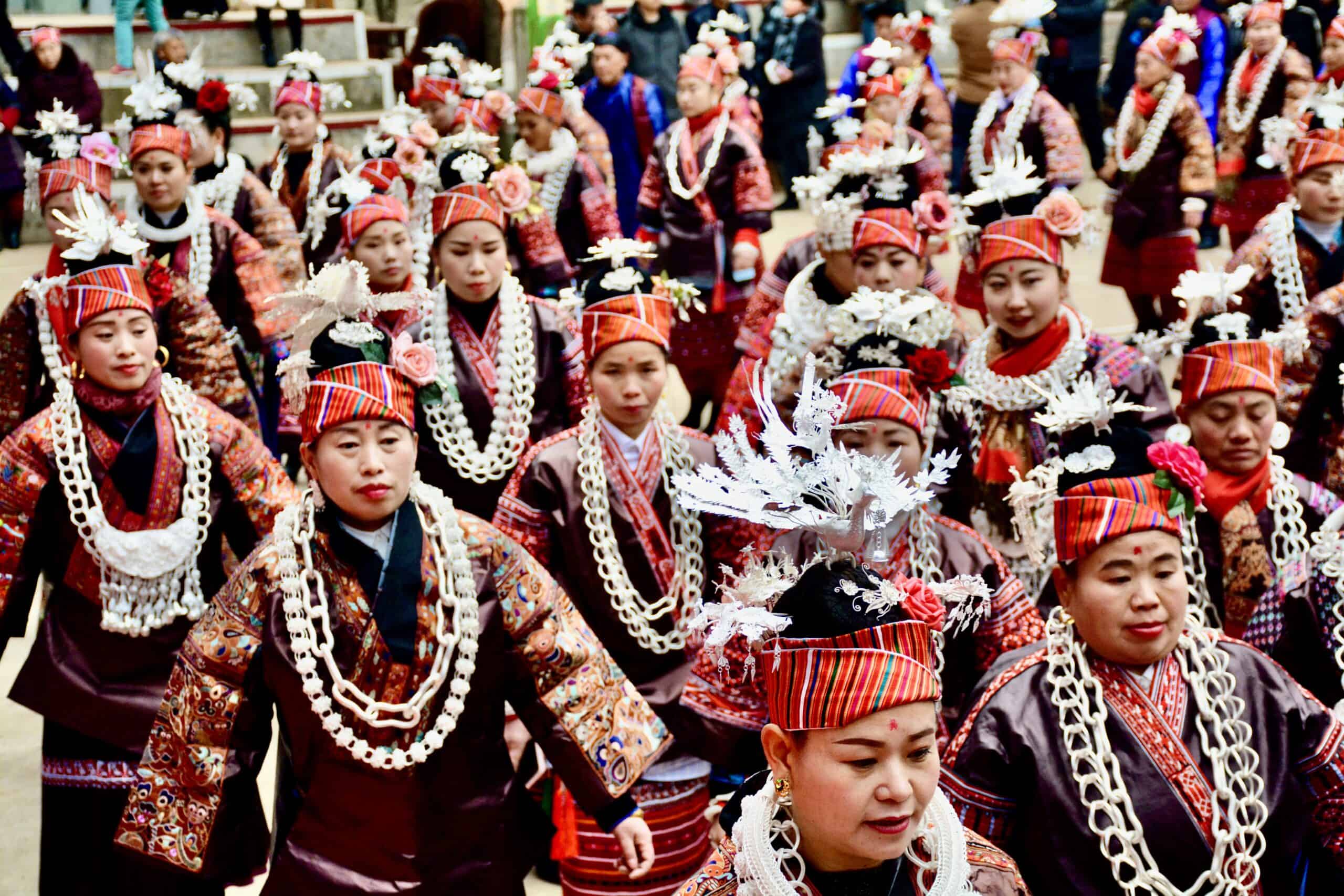
Guizhou’s insularity and mystery are the stuff of legend. One traveler in the ninth century wrote about an ordeal: While exploring the province, he chanced upon an elegant monastery. Ten nuns at once emerged, merrily inviting him inside their thatched cottages. They were excellent hosts, plying him with dried fruits. When he felt the scene to be too fantastic, the traveler braved the dismay of the nuns and abruptly departed. Once he returned to the boat, the crew confirmed his fears: The nuns were monkey tricksters who sometimes took on human form to entice people into their midst.
IF YOU CAN MAKE IT HERE
In the present century, the central government has lavished Guizhou with attention. Several of Guizhou’s party chiefs have gone on to high positions in Beijing, including Hu Jintao, general secretary of the Communist Party before Xi Jinping. Chinese leaders are usually expected to administer a poor province before they can be promoted to the country’s political pinnacle. In the United States, it would be as if politicians had to gain some experience in the Rust Belt or coal country before they could get anywhere near a cabinet position. Guizhou has received several big projects. The central government built the world’s largest radio telescope — with an aperture measuring five hundred meters in diameter, named the Heaven’s Eye — in a remote corner of the province. The state-owned distillery behind Maotai, the hundred-proof spirit made of sorghum, grew into one of China’s most valuable companies. Its capital city of Guiyang now hosts several of the country’s biggest data centers.
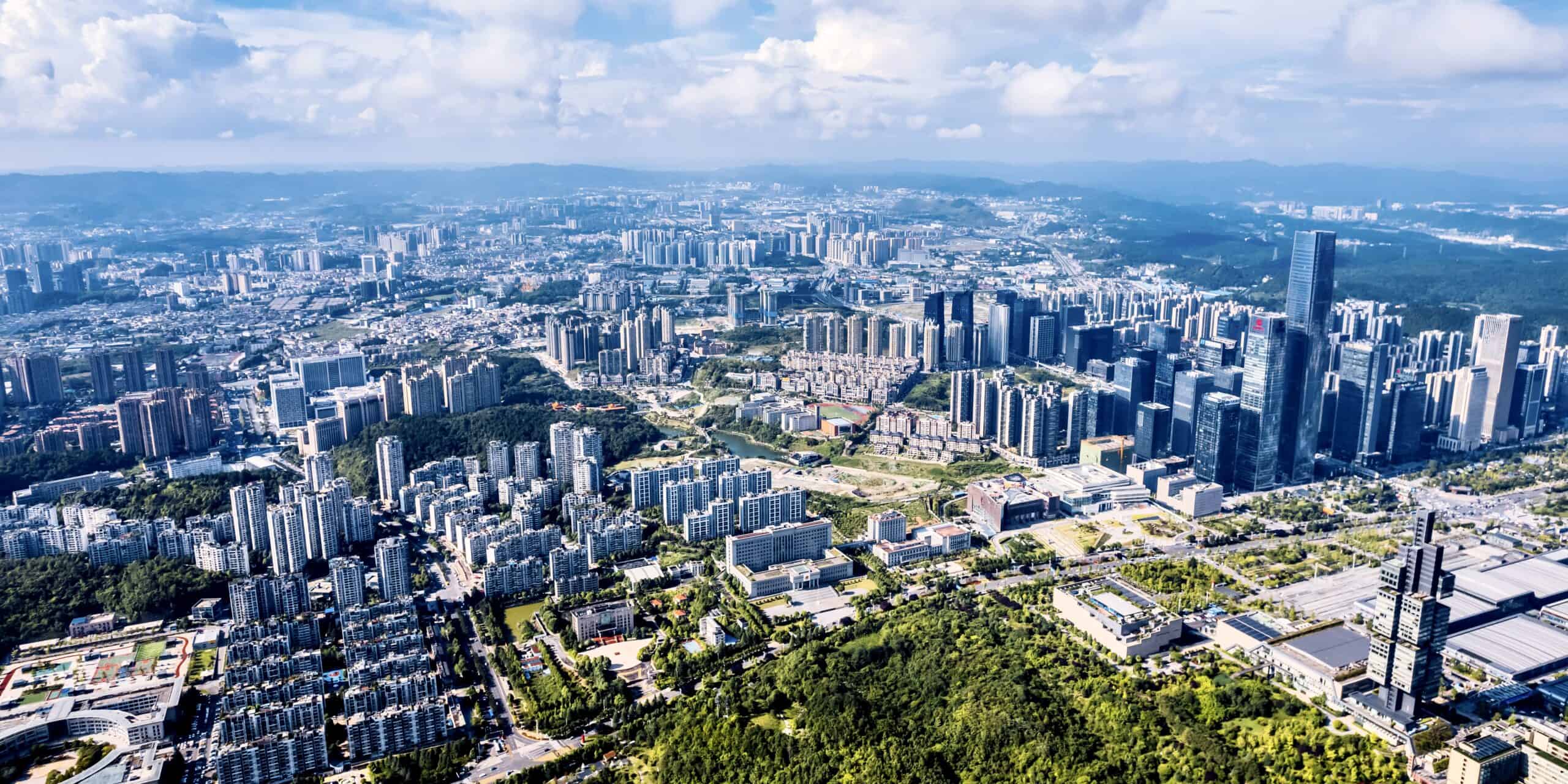
I went to Guiyang with my friends Christian Shepherd, a journalist from the United Kingdom then working for the Financial Times, and Teng Bao, who grew up in Florida and founded a tech company in Shanghai. A century ago, it would have taken weeks of travel along twisting roads to reach Guiyang from Shanghai. For my friends and me, it took a seven-hour ride on high-speed rail.
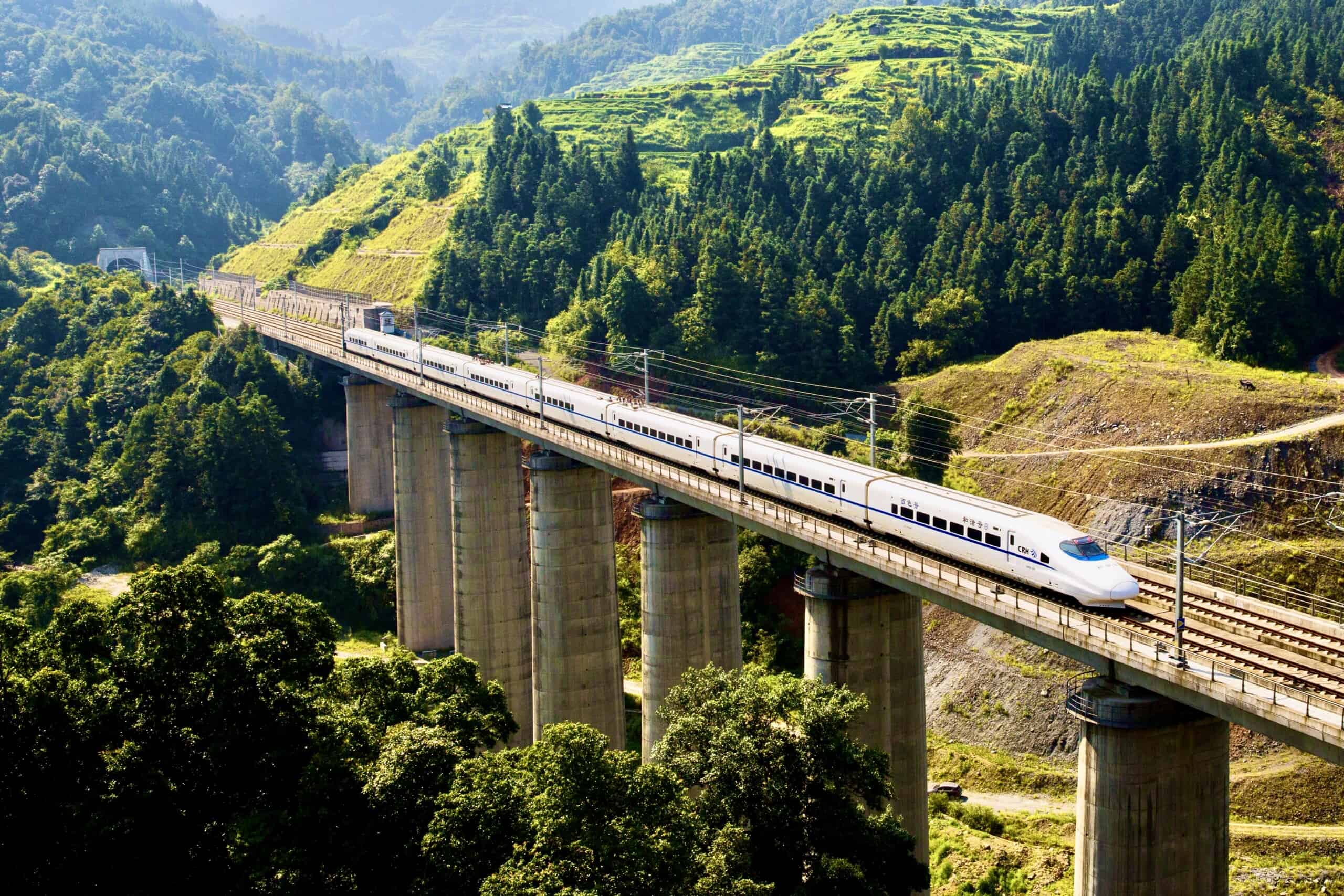
Guizhou was one of the last provinces to be connected to the national high-speed network. When the railway opened its first station in 2016, engineers had finally blasted tunnels through the mountains and erected enough sturdy bridges to span the gorges. On the train, Christian, Teng, and I reclined in comfortable seats, tucking our disassembled bikes in the back of the compartment, picking up snacks or water from the attendant’s trolley when we wanted something. When we looked out the windows, the occasional blur of long tunnels hinted at the difficulty of the construction.
Christian is a great cyclist. Teng and I had more enthusiasm than experience. The three of us each packed a change of clothes, a first-aid kit, spare tires, and not much else. We stuffed our gear into sleek leather bags strapped on the back of our bikes. Then we were off. The plan was to reach our hostel accommodations by early evening each day, where we would wash our clothes in the sink, hang them out to dry, and then get up to do it all over again the next day.
The chief feature of the engineering state is building big public works, no matter the financial or human cost. For many people in Guizhou, it has produced an enthusiasm and an expectation for physical change, a feeling not often found among Americans today.
Each day of cycling brought new thrills: spectacular landscapes, bridges and gorges that kept surpassing the last, waterfalls where we would occasionally linger. Our trek was tough — not because we were up against impassable roads or trickster monkeys, but because every day demanded the grind of pushing uphill. Guizhou’s infrastructure was a cyclist’s dream. On the first day of our trip, we cycled along a just-built highway not yet open to cars. That was our favorite moment: careening downhill at thrilling speeds amid luscious green mountains wreathed by bands of mist.
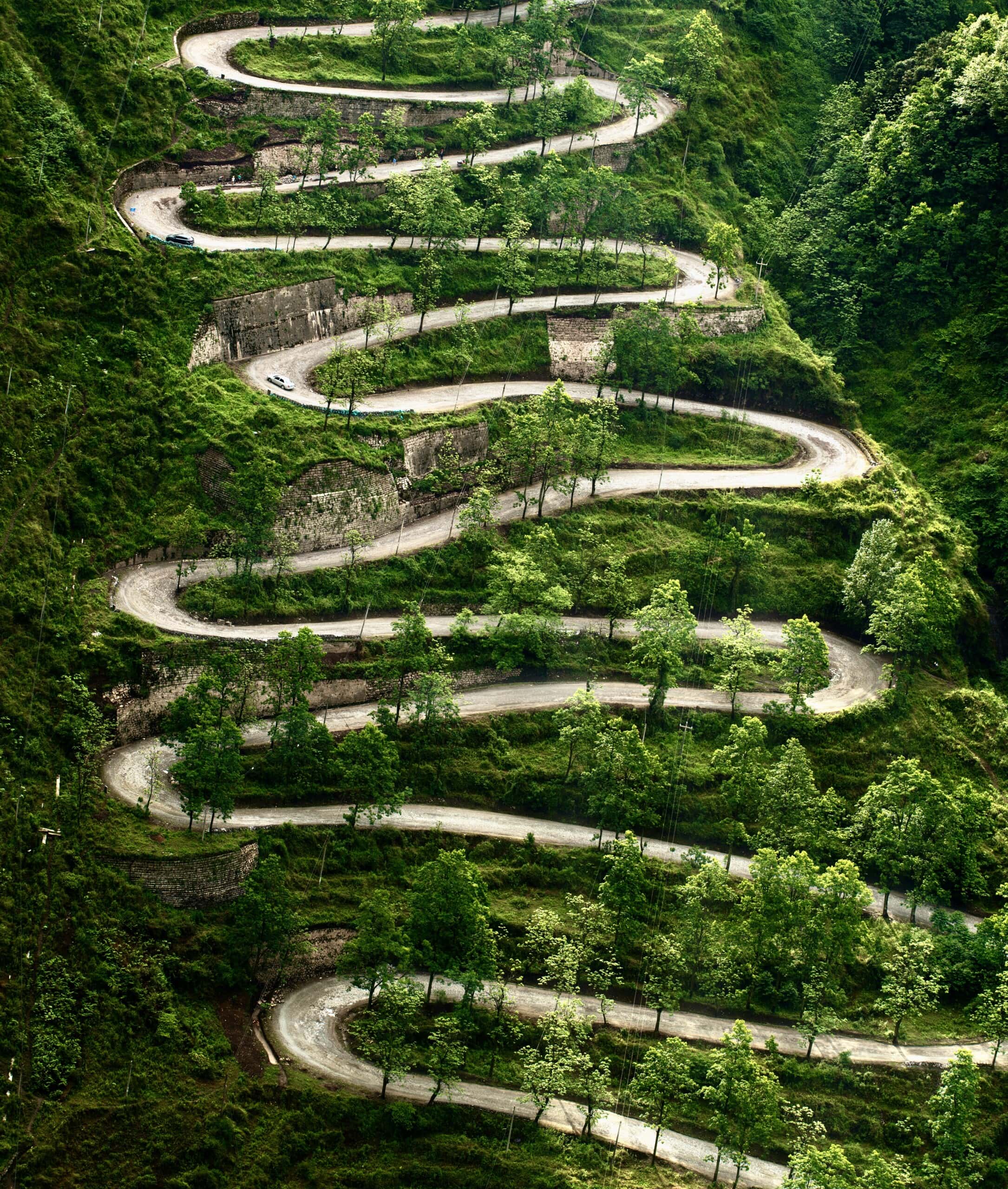
This bike ride was the greatest physical exertion of my life, as well as the most rewarding. We enjoyed not only the views but the food as well. Every few hours, we took a break along the side of the road. You expend an enormous amount of energy on a bike, so we would order bowls of noodles — spooning in the pungent pickles that make Guizhou cuisine so bracing — and then grab a vanilla ice cream bar before hopping back on our bikes. At night, we ordered local dishes: a fish stew full of sour pickles, braised goat, a salad of local herbs and roots, and rice balls (each the size of a lime) filled with sweet sesame, deep fried with savory pickles on the side.
If only that Qing cartographer could see Guizhou now. All sorts of new infrastructure are built into its countryside. On the third day, we came upon a sight nearly as strange as a monkey-filled phantasm. Teng was leading the three of us when he yelled, “Guitars!” When I raised my gaze, I saw that big guitar ornaments were hanging off of streetlamps. In the distance, I spied a hill topped by a giant rock guitar. It turned out that we were cycling through Zheng’an County, the self-styled guitar capital of the world. According to state media, one of every seven guitars made worldwide is produced in this township we passed through by chance.
That is another feature of the engineering state: Manufacturing hubs are everywhere, often making goods you don’t expect.
Guizhou locals may be as surprised as anyone to host the world’s guitar capital. Not many of them play the instrument. Zheng’an became a guitar hub because a lot of its residents had moved to coastal Guangdong for work, many of them finding employment by coincidence in guitar factories. Then the local government made a big effort to entice them to return to Guizhou as part of a policy to develop the interior. That effort coincided with a 2012 directive from the State Council (the executive agency of the central government) that encouraged manufacturers to relocate from coastal provinces to inland ones. The document had suggested that Guizhou pursue technologically intensive industries like aerospace or electric vehicle manufacturing. Instead, what Guizhou built was more suitable to its less-skilled realities: the Guitar Culture Industrial Park.
Zheng’an isn’t making the best guitars in the world. For the most part, it’s serving the lower half of the market. But its manufacturers are improving as local brands are getting hungry for global recognition. One of them is experimenting by adding bamboo into its guitars. Many of them are trying to become known for quality, not cheapness. I suspect many of them will get there. Chinese manufacturers are steadily gaining recognition for producing quality knives, sound systems, electric vehicles, consumer drones, and many other products. Why not guitars too?
CLIFF CITY
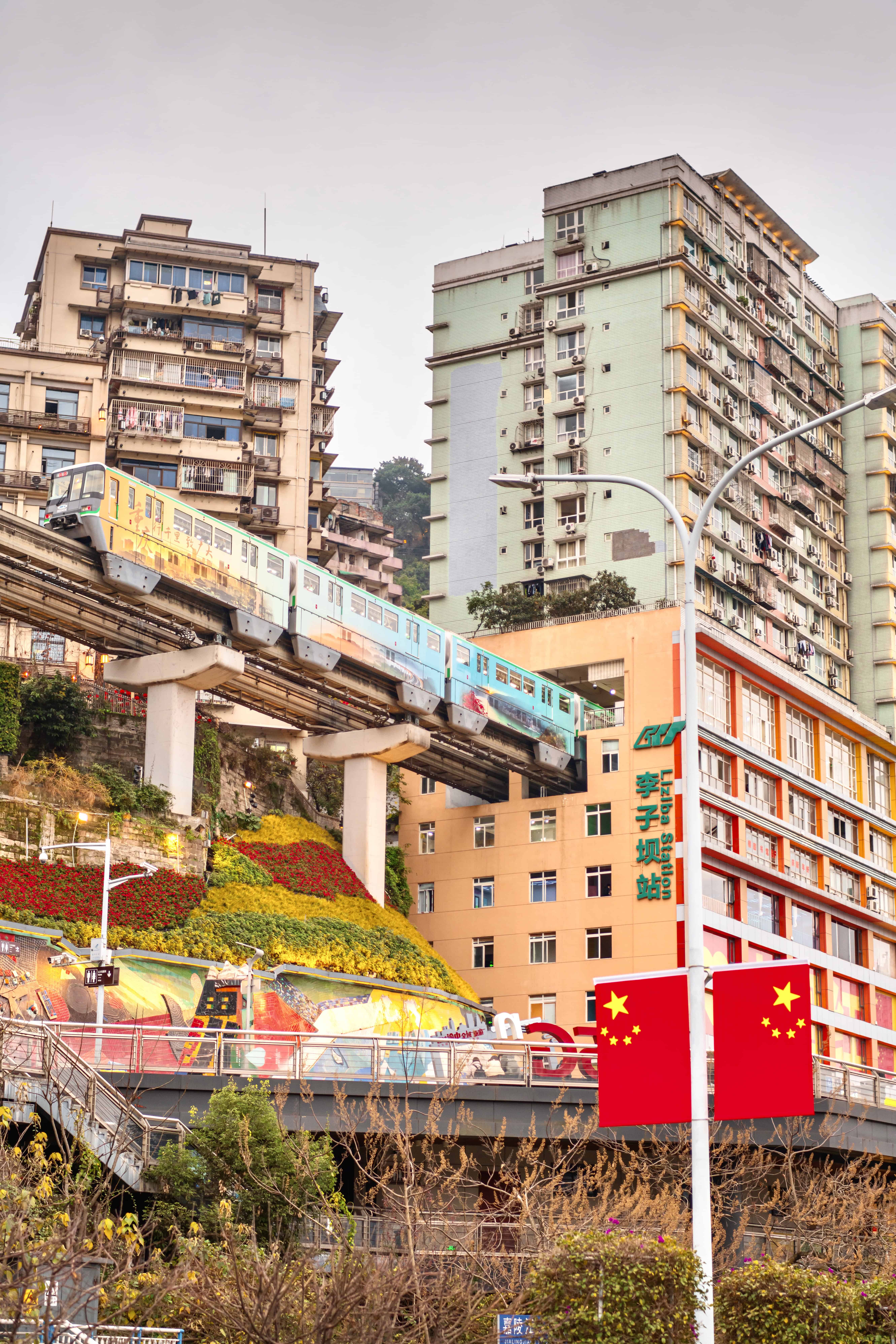
After four days of cycling through Guizhou, we arrived in the municipality of Chongqing. The city’s downtown core is built around two rivers — the Yangtze and the Jialing — with a skyline dominated by tall buildings that sprout from steep hillsides. They seem to stack upon each other: You can enter a building at ground level, go up by elevator for over ten floors, and exit once more at ground level. Chongqing is my favorite Chinese city to visit because it has the country’s, and perhaps the world’s, most dramatic urban setting. Highways and bridges weave through huge buildings that look as if they are carved into the hills, connected to each other by systems of stairs, escalators, and walkways. The city is filled with ludicrous designs, like a subway line that passes through the middle of an apartment building sitting on a hill.
Chongqing was China’s capital during World War II, then known as Chungking. There, Chiang Kai-shek’s Nationalist forces huddled with Communists and the U.S. general Joseph Stilwell inside air-raid tunnels carved into hillsides to shelter from Japanese bombers. Chongqing is a municipality that matches the landmass of Austria — and is just as mountainous — as well as the population of Texas — and is just as boisterous. The bridges that were elegant in the Guizhou countryside swelled toward monstrosity as we approached the city. Everything is bigger in Chongqing. It is raucous, full of unexpected sites, a city that teems. With its Blade Runner aesthetic, Chongqing is the embodiment of cyberpunk — or more aptly given its rivers, hydropunk.
China does little by way of redistribution from the wealthy to the poor; rather, it is enacting a Leninist agenda in which the state retains enormous discretion to command economic resources in order to maintain political control and to build toward a post-scarcity world.
The mountains that protected the city from Japanese bombers also create a heat trap, making Chongqing one of China’s “four furnaces.” Perversely, the favorite food of locals is a cauldron of red chilies, beef oil, and Sichuan peppercorns — which generates a purring tingle on the tongue — into which one dips a swirl of thinly sliced meats and vegetables. Some of the air-raid tunnels have become hotpot restaurants, popular because the tunnels’ cool air helps spicy food go down more easily. Chongqing is also making plans to turn some of these shelters into art exhibitions or wine cellars.
Aerial footage of Chongqing. Credit: Adobe Stock
Christian, Teng, and I were in a celebratory mood when we reached the city. After four days of cycling through nature, it felt great to be thrown into Chongqing’s dramatic urban scenery. At night, the city’s skyscrapers come to life with bright lights dancing along their sides. As we watched the sun set, people gathered around low tables, the centers of which held steaming pots of crimson broth.
I almost never drink. If there was ever an occasion, I decided, it would be the end of this bike ride. The three of us toasted each other with cold beers and then ordered food so spicy that it altered my auditory capacity. Below us were lazy pleasure boats cruising on the Yangtze River, a few headed toward the Three Gorges Dam. The following day, I hopped back on the high-speed rail to return to work in Shanghai.
CASH POOR, INFRASTRUCTURE RICH
It was only afterward that I started to appreciate the strangeness of what I had cycled through. I had traversed a poor region to which the engineering state has devoted tremendous resources to modernize. Guizhou had compressed the century’s worth of investments that the United States had made — between the Transcontinental Railroad and the Interstate Highway System — into two decades.
After cycling through Guizhou, I came to a different understanding of the term “socialism with Chinese characteristics.”
China does little by way of redistribution from the wealthy to the poor; rather, it is enacting a Leninist agenda in which the state retains enormous discretion to command economic resources in order to maintain political control and to build toward a post-scarcity world. By examining Guizhou’s development, as well as the developments of a few other places that I want to bring readers’ attention to, we can grasp just what those “Chinese characteristics” actually entail.
Qianchun Interchange, Guiyang. Credit: Adobe Stock
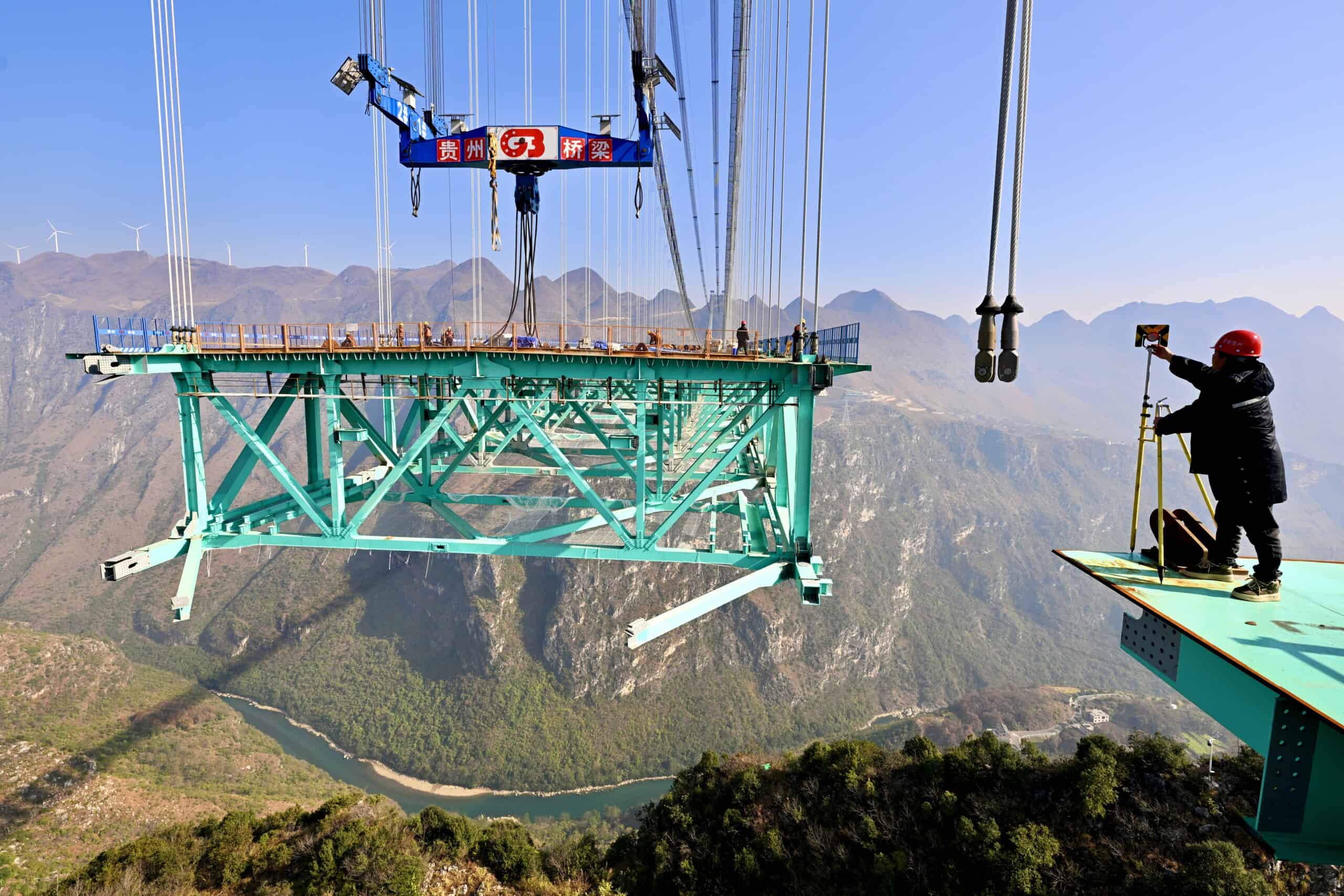
Guizhou has built forty-five of the world’s one hundred highest bridges. It has eleven airports, with three more under construction. It has five thousand miles of expressways, ranked fourth among provinces in China by length. It has around a thousand miles of high-speed train track. Guizhou’s infrastructure isn’t made only of the twentieth-century stuff of steel and concrete. Guiyang bills itself as a “big data valley,” touting that its cool air can lower heating costs. Enormous facilities housing data servers make Guizhou emblematic of the modern infrastructure that powers AI too.
The Guizhou locals we chatted with were prouder of their bridges than anything else. My friends and I cycled across bridges that were set above plunging ravines. State media boasts that Guizhou has become a “museum of bridges,” a few of which are trying to develop into tourism sites: The tenth-highest bridge in Guizhou (which is twenty-third globally) hosts the world’s highest bungee jump. Each time the engineers build a bridge, they inevitably announce that travel times between two towns have been cut from many hours to perhaps a few minutes. That creates real convenience and connection for rural people. Some of these are bridges to nowhere, but after a few years, they become somewhere.
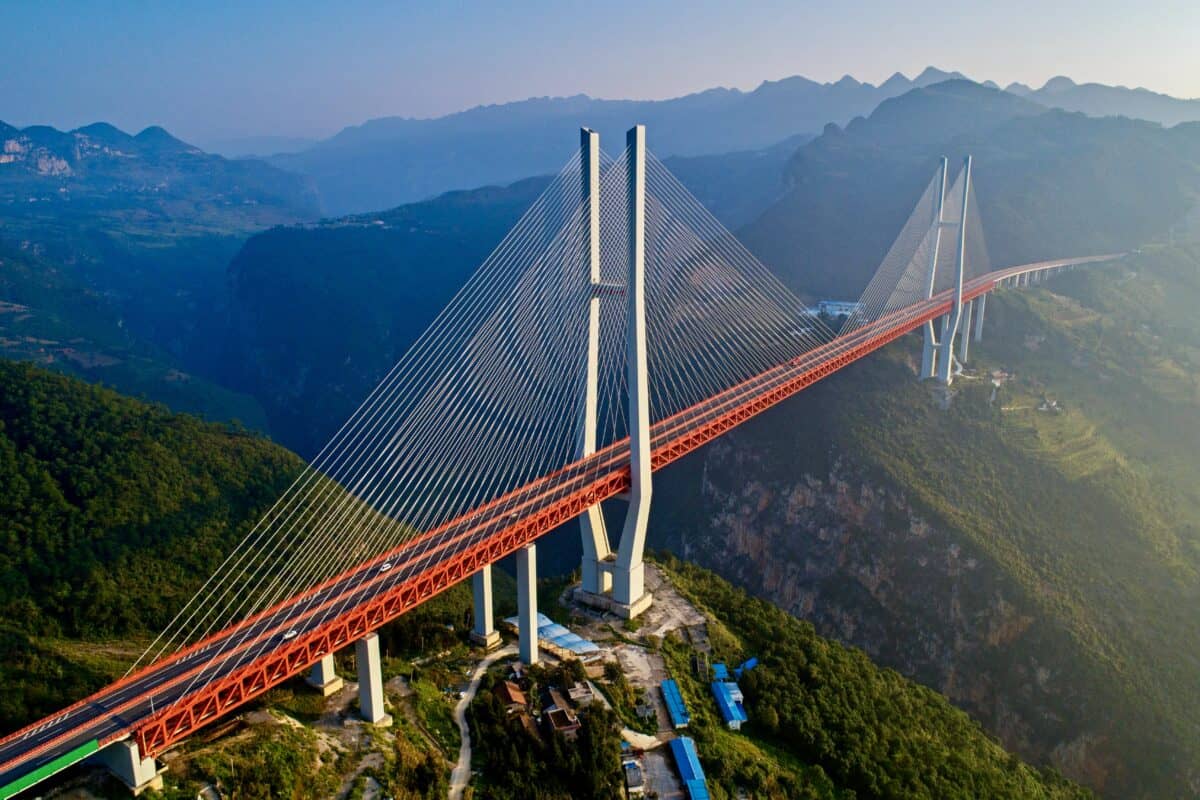
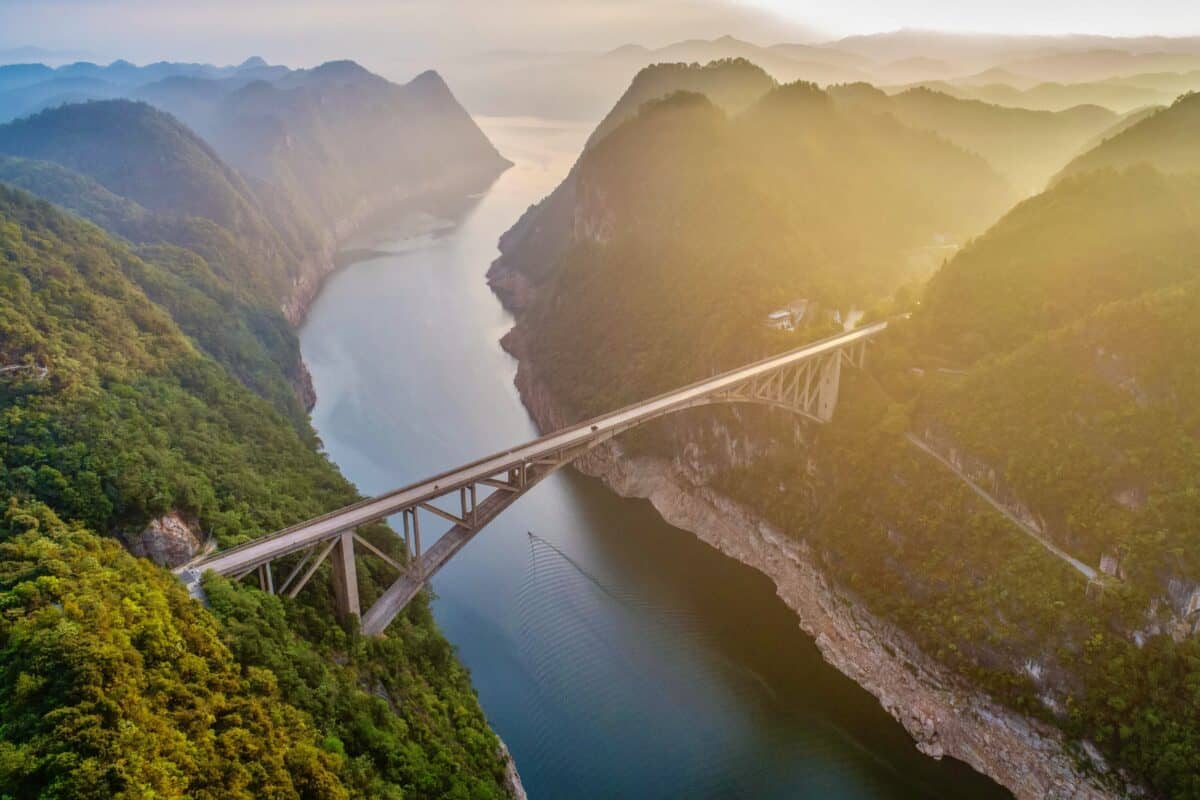
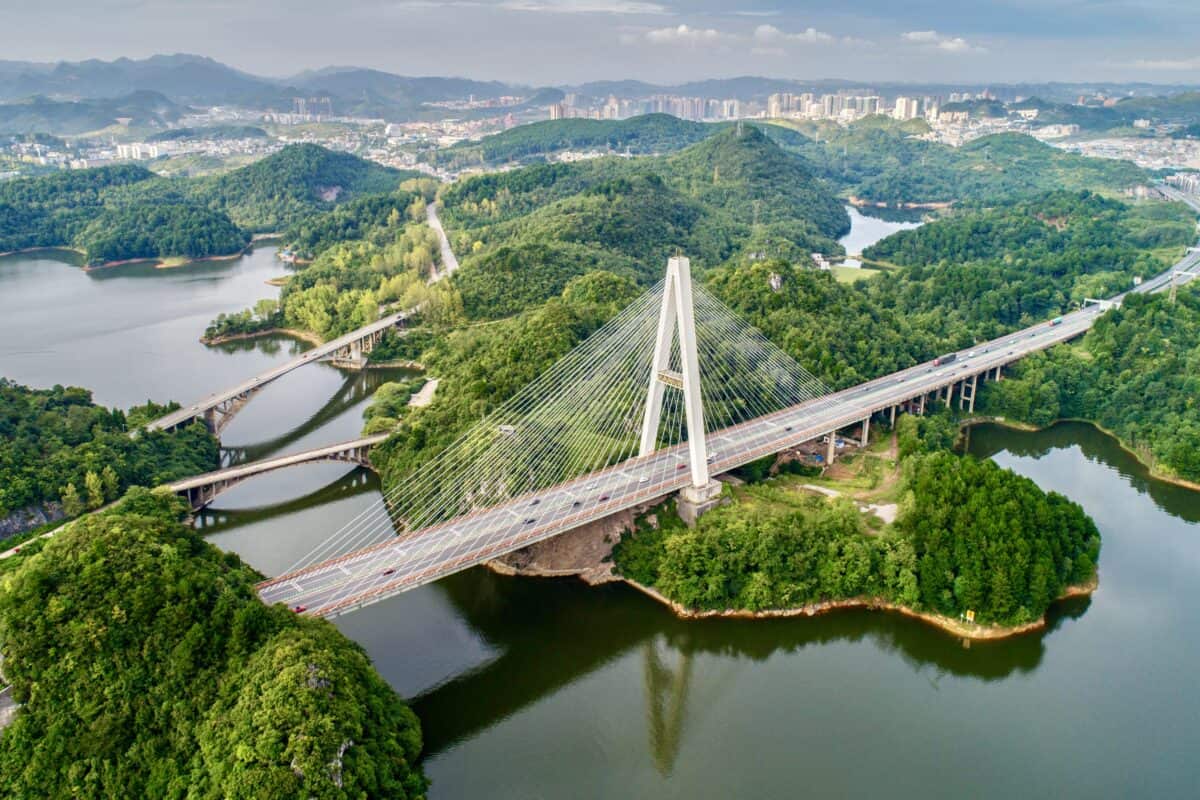
From left to right: The Beipanjiang Bridge on the border between Yunnan and Guizhou, the Jiangjiehe Bridge in Weng’an, Guizhou, and Hongfenghu Bridge in Guizhou’s Qingzhen city. Credit: ChinaImages via Depositphotos
Still, beneath Guizhou’s engineering marvels are counties mired in poverty. At $8,000 per capita, the province has the income of Botswana, 40 percent below China’s national average and less than a third that of rich coastal cities like Beijing and Shanghai. One day, Christian remarked on how few working-age adults we saw in Guizhou: Those who don’t have a job making guitars have mostly migrated to other provinces, leaving small children in the care of grandparents. In 2010, only half of Guizhou’s children attended high school — the lowest rate in the country. News reports often featured stories of children having to rise at the crack of dawn and hike through harrowing mountain paths, some with rope ladders, to be able to attend school.
Construction in Guizhou’s Qiandongnan Miao and Dong Autonomous Prefecture. Credit: Adobe Stock
In spite of the challenges of deep rural isolation, China’s fourth-poorest province — where household income is one-fifteenth that of New York State — has vastly superior infrastructure: three times the length of New York’s highways, as well as a functional high-speed rail network. And Guizhou isn’t exactly an exceptional Chinese province. Across the country, the engineering state has relentlessly built public works, making Guizhou an extreme case of China’s growth strategy rather than a deviation from it.
Modern China has been on a building spree. It began in the 1990s, after economic reopening took hold, and then received another boost in 2008, when the central government approved vast public works to respond to the global financial crisis.
In spite of the challenges of deep rural isolation, China’s fourth-poorest province — where household income is one-fifteenth that of New York State — has vastly superior infrastructure: three times the length of New York’s highways, as well as a functional high-speed rail network.
China’s first interprovincial expressway opened in 1993, connecting Beijing with the nearby port city of Tianjin. Soon enough, highways reached everywhere. A Chinese citizen born when the country completed its first expressway would — by the time she reached the legal driving age of eighteen in 2011 — be able to drive on a highway system that surpassed the length of the U.S. interstate system. By 2020, China had built a second batch of expressways that again totaled the length of the U.S. system. The first expanse of highways took eighteen years to build; the second took half that time.
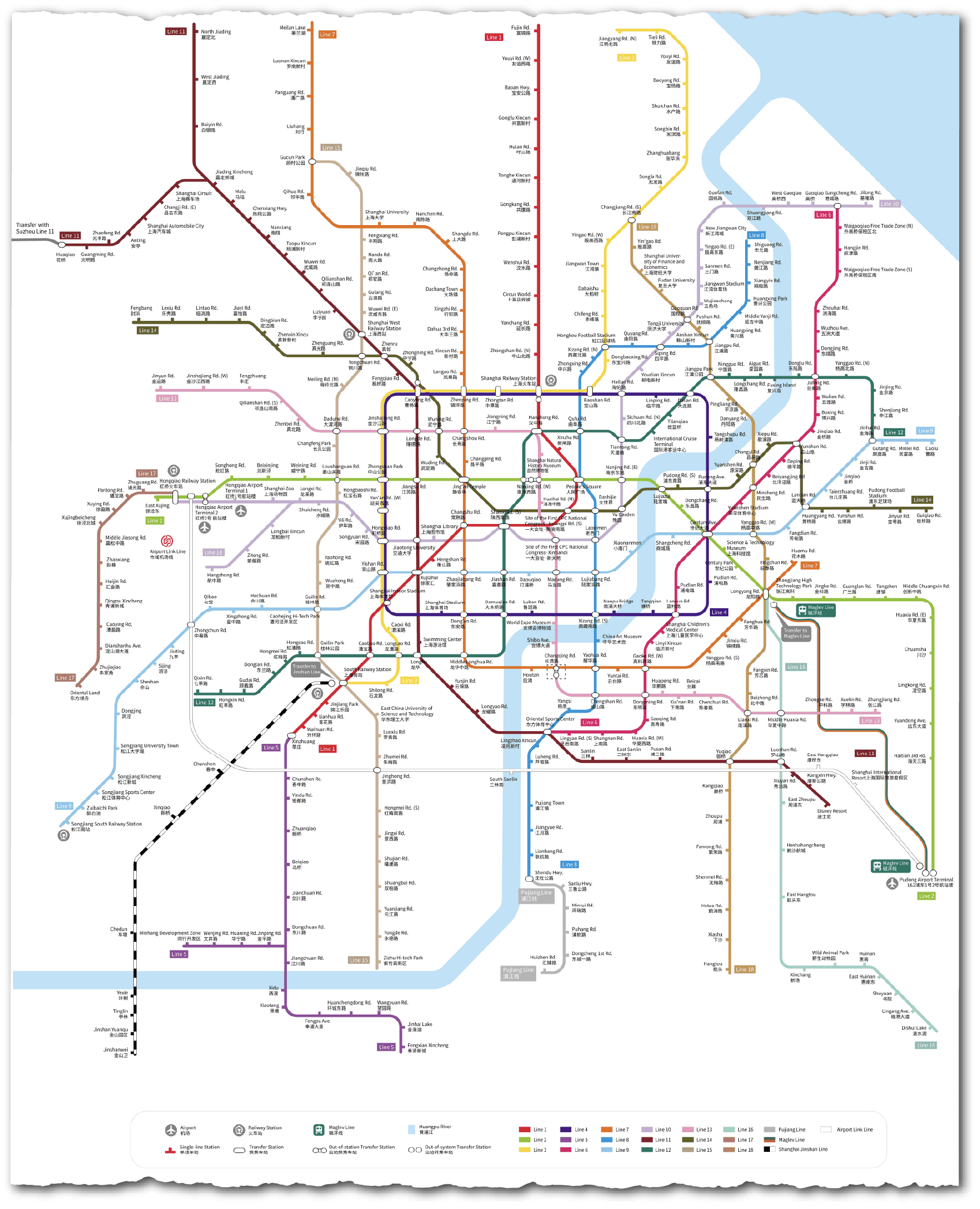
Cars quickly filled these roads. In 1990, there were half a million automobiles in the country; in 2024, there were 435 million, many of them electric. China didn’t just build cars and highways. It also built mass transit. From 2003 to 2013, Shanghai added as much subway track as in the entire system in New York City. In 2025, fifty-one Chinese cities have subway lines, eleven of which are longer than New York’s. China now has a longer high-speed rail network than the rest of the world put together, ten times the length of Spain’s and Japan’s (second and third in the world, respectively). Sleek railcars in silver zooming on elevated bridges are telegenic things, their pictures adorning billboards and book covers. This system completes around two billion passenger trips each year.
The state loves showing footage of big container ships that berth under enormous cranes, plucking from a mosaic of containers. As exports soared, China’s ports became the world’s busiest. Shanghai alone moved more containers in 2022 than all of the U.S. ports combined. China’s export engine sputtered in the early 2000s, not for a lack of ports but for a lack of power in Guangdong. So the state invested in a network of new power plants mostly burning coal. In addition to using fossil fuels, China builds a third to a half of the world’s new wind and solar capacity each year. It is sending renewable energy from its sparse western provinces into its industrialized eastern provinces.
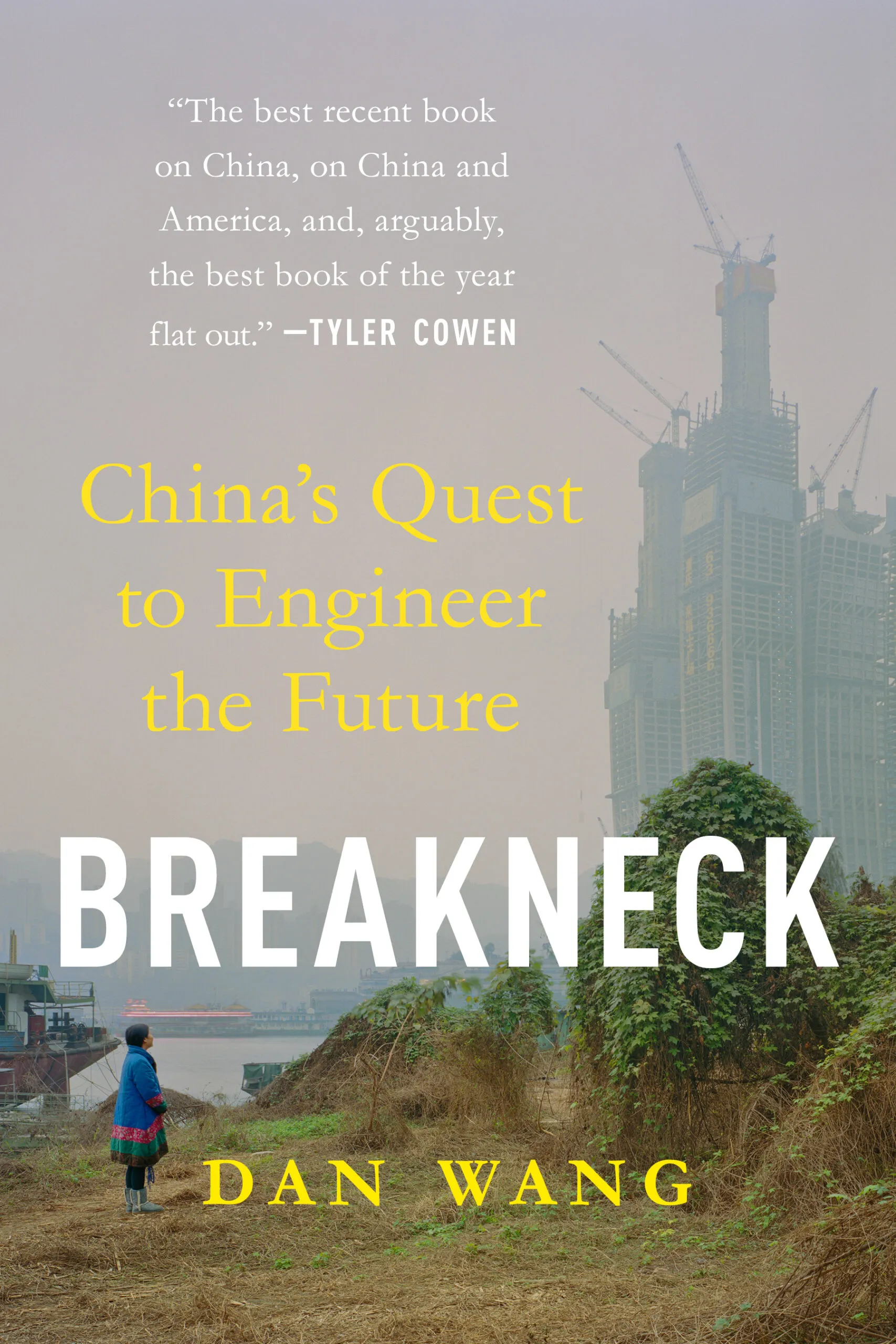
Excerpted from Breakneck: China’s Quest to Engineer the Future. Copyright (c) 2025 by Daniel Wang. Used with permission of the publisher, W. W. Norton & Company, Inc. All rights reserved.

Dan Wang is a research fellow at the Hoover History Lab at Stanford University. He was previously a fellow at the Yale Law School’s Paul Tsai China Center, and previously worked in China as the technology analyst at Gavekal Dragonomics. He lives between Palo Alto and Ann Arbor.