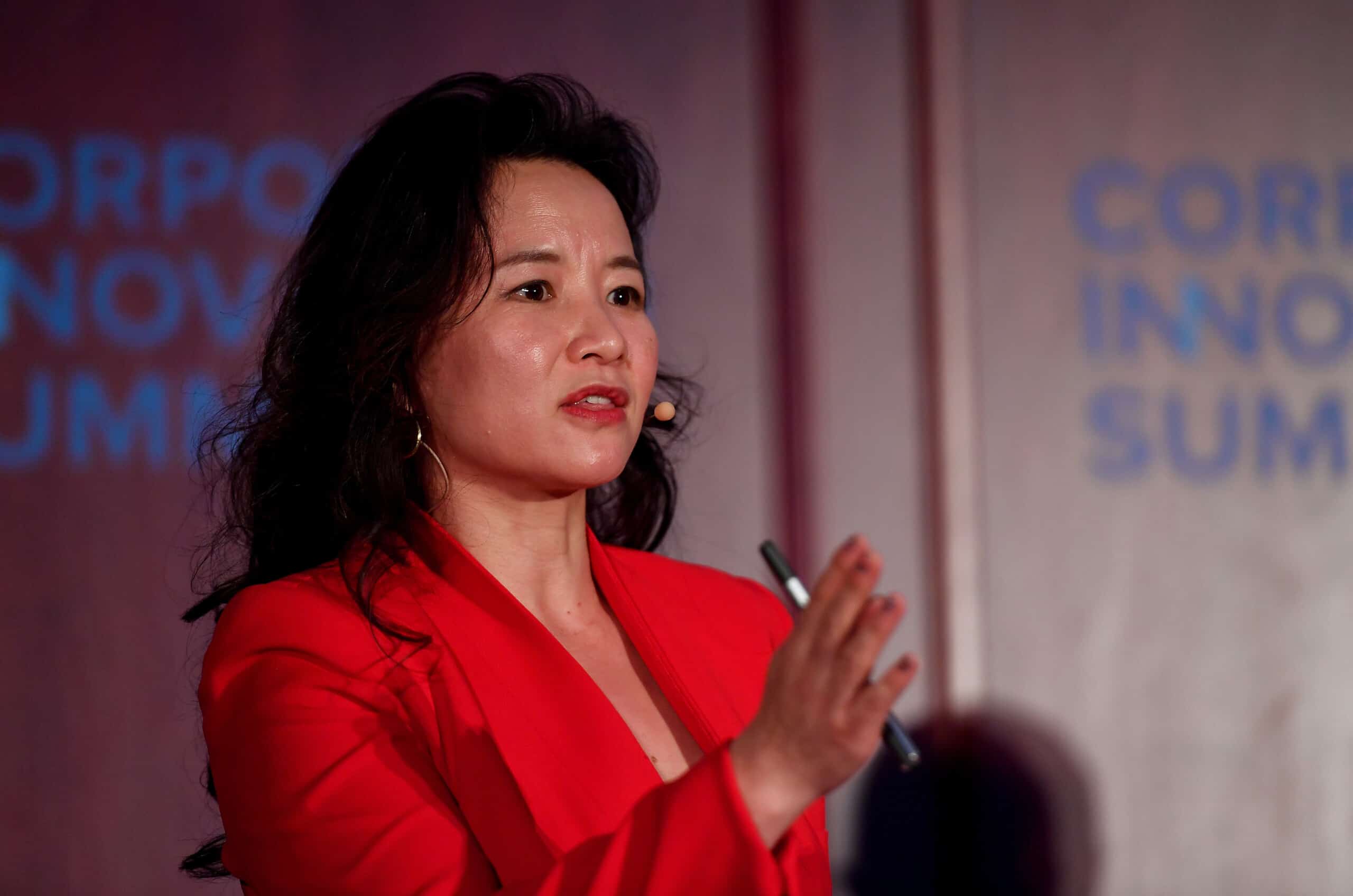
When Cheng Lei didn’t show up to the birthday celebration on August 14, 2020, for her partner, Nick Coyle, he knew something was up. And when the Beijing-based Australian journalist didn’t respond to any of his texts that evening, he grew even more concerned.
The next morning, Coyle went to Cheng’s apartment, where he noticed her passport and laptop were gone. “It was at that point that I knew [she was missing],” says Coyle, who was the executive director of the China-Australia Chamber of Commerce at the time.
Two years later, Cheng, who was a prominent business anchor for CGTN, the Chinese state broadcaster, is still in detention. The Chinese government arrested her on national security grounds and accused her of “illegally providing state secrets to foreign forces,” but has provided very little detailed information about the case. In March, at a closed-door trial — where the Australian ambassador was denied entry — her verdict was deferred.
None of the experts The Wire spoke to believe Cheng was actually engaged in espionage. Instead, most view her as a pawn in the strained relationship between China and Australia, which — at the time of her arrest — was in a state of diplomatic deep-freeze. Now, with a new Australian administration under Prime Minister Anthony Albanese, who took office in May, the question is whether Cheng could be released as part of an effort to restore some normalcy to bilateral ties.
This is China saying, this is what happens if you cross Beijing.
James Curran, a history professor at the University of Sydney
“There has been an attempt at a reset. They [the new government] have come in and said they believe the Chinese relationship should be stabilized,” says James Curran, a history professor at the University of Sydney and author of the recent book, Australia’s China Odyssey: From Euphoria to Fear. While he notes that her release wouldn’t be a silver bullet, it “would be an incredible first step from the Chinese side.”
Whether or not the renewed hope for Cheng’s release proves to be justified, her case points to a growing concern for foreign journalists and businesspeople based in China — that they, too, could get caught up in diplomatic struggles between their home countries and Beijing over which they have no control.
For countries like Australia there is the further question of how to stand up to a major power like China that appears increasingly willing to use coercive tactics, particularly against smaller nations.
“This is the broader pattern of China saying, ‘We are not going to play by your rules,’” says Curran. “This is China saying, ‘This is what happens if you cross Beijing.’”
Other recent high-profile cases of detention in China include those of Michael Spavor and Michael Kovrig, two Canadians who were held for nearly three years. Many interpreted their arrest as retaliation against Canada for detaining Meng Wanzhou, the chief financial officer for telecoms giant Huawei, at the request of the United States. The Canadians were eventually released after negotiations with the U.S. cleared the way for Meng’s return to China. In Cheng’s case, the Australian government does not have an obvious person to trade and the U.S. is not involved in negotiations.
Another Australian, Yang Hengjun, a writer who previously worked for the Chinese government, is also in Chinese jail on espionage charges, after being arrested in 2019. A close friend of Cheng’s, Haze Fan, a Chinese national who worked for Bloomberg, was detained a few months after Cheng. Fan was released on bail earlier this summer, but Bloomberg has said they have not been able to contact her. Due to Fan and Cheng’s friendship, some speculate their cases may be related.

Relations between China and Australia started cratering around 2017 due to conflicts over technology, trade and foreign influence. In 2018, Australia banned Huawei from building its 5G networks, and in 2020, Australian officials called for an independent probe into the origins of Covid-19 in China. A few months before Cheng’s detention, the Australian government raided the homes of four journalists working for Chinese state media in Australia.
In response, China — which remains Australia’s largest trading partner, mainly thanks to its thirst for commodities such as iron ore and copper — imposed a series of economic sanctions against Australian goods including barley, wine, and coal. For more than two years, the two countries have had little high level diplomatic engagement.
“China moved earliest against Australia to make an example of it,” says Charles Edel, the Australia chair at the Washington, D.C.-based Center for Strategic and International Studies. “The anger you see coming out of China is not based on the harm Australia can do. It is anger and frustration and vengeance against a smaller nation standing up.”
Before joining CGTN in 2012, Cheng — who was born in China and immigrated to Australia as a child — attended the University of Queensland and spent nine years reporting for CNBC. She has two kids who live in Australia. Rachael Ruble, a journalist who worked alongside Cheng at CGTN in Beijing and now works in Istanbul, says, “She really seemed like she was very serious about her job and knew a lot about business. I had a lot of respect for her.”
In a 2017 interview, Cheng said that her proudest accomplishment was her work “to narrow the gulf of misunderstanding between China and the rest of the world and vice versa.” CGTN did not respond to a request for comment, and the media organization still showcases Cheng as an anchor on its website.
Prime Minister Albanese publicly addressed Cheng’s case this week, criticizing Beijing’s lack of transparency and treatment of Cheng, and saying that the Chinese government “needs to do better.” Last month, the Australian Foreign Ministry released a statement marking the two year anniversary of her detention. Experts say that the administration’s gradual resumption of diplomatic engagement makes it easier to raise Cheng’s case with Chinese counterparts. Penny Wong, the Australian Foreign Minister, met with Wang Yi, her Chinese counterpart in July, and the Australian and Chinese defense ministers met on the sidelines of the Shangri-La Dialogue in June.
Currently, there have been top level communications… but we have not yet come to the stage to discuss about how to solve those specific issues either political issues or trade issues or some other individual cases.
Xiao Qian, the Chinese ambassador in Australia
“For most of the two years, there was no high level political engagement. That is slowly and tentatively changing. We have had some limited contact,” says Geoff Raby, who served as Australia’s ambassador to China until 2011 and is a friend of Cheng’s. “You raise it [Cheng’s case] as the first talking point of every bilateral meeting. There may be something China wants from us. They will at some point want to lift the relationship up. When it comes and how it comes, I don’t know.”
The Australian Foreign Ministry did not respond to requests for comment. Last month, the Chinese ambassador in Australia, Xiao Qian, was asked at a press conference whether the Chinese government would consider lifting trade sanctions and releasing Cheng to kickstart a better relationship. In response, he said, “Currently, there have been top level communications… but we have not yet come to the stage to discuss about how to solve those specific issues either political issues or trade issues or some other individual cases. We’re ready to compare notes with the new government and to get engaged in the process.”
For now, Cheng’s partner Coyle, who has only been able to communicate with her indirectly through consular officials, says she is holding up as well as can be expected, despite the harsh conditions. “I hope this situation gets resolved expeditiously and compassionately,” he says. “That is the most important thing.”

Katrina Northrop is a journalist based in Washington D.C. Her work has been published in The New York Times, The Atlantic, The Providence Journal, and SupChina. @NorthropKatrina