Happy 10-1 China and Shuang’shi (10-10) Kuai’le Taiwan… Donald Trump and Xi Jinping’s summit in Washington last month was a repeat of their uneventful Beijing meeting in May. Neither side raised or lowered current tariffs on the other. China continued to delay implementation of a strict new export control regime, in return for Washington not expanding the number of Chinese companies subject to U.S. export controls. But as Rachel Cheung writes in this week’s cover story, the recent history of Wuhan-based memory-chip maker Yangtze Memory Technologies Corp illustrates that beneath the surface calm a low-intensity conflict continues. In December 2022 the Biden administration put YMTC on a sanctions list that bans it from buying U.S. chip-making equipment or employing American citizens. YMTC was able to not just survive but thrive by pioneering its own technological innovations, at least one of which was later licensed to industry giant Samsung, and buying chip-making equipment from Dutch and Japanese suppliers instead.
Summit coverage. And please see the articles we posted during summit week including Yun Sun on its significance, Goldman Sachs economists Andrew Tilton and Hui Shan on the wisdom of a modest appreciation in the value of the renminbi, and an interview with Concordia AI’s Brian Tse on AI safety (also the subject of this week’s opinion column by — and podcast with — Kristy Loke).
Other articles in this week’s issue: Did GaNkool steal from BelGaN? Noah Berman on an alleged Sino-Belgian high-tech heist; the Big Picture looks at how tech-industry inflation is driving up China’s trade surplus; and Logan Wright on where Xi Jinping’s economic and financial policies went wrong.
Want this emailed directly to your inbox? Sign up to receive our free newsletter.
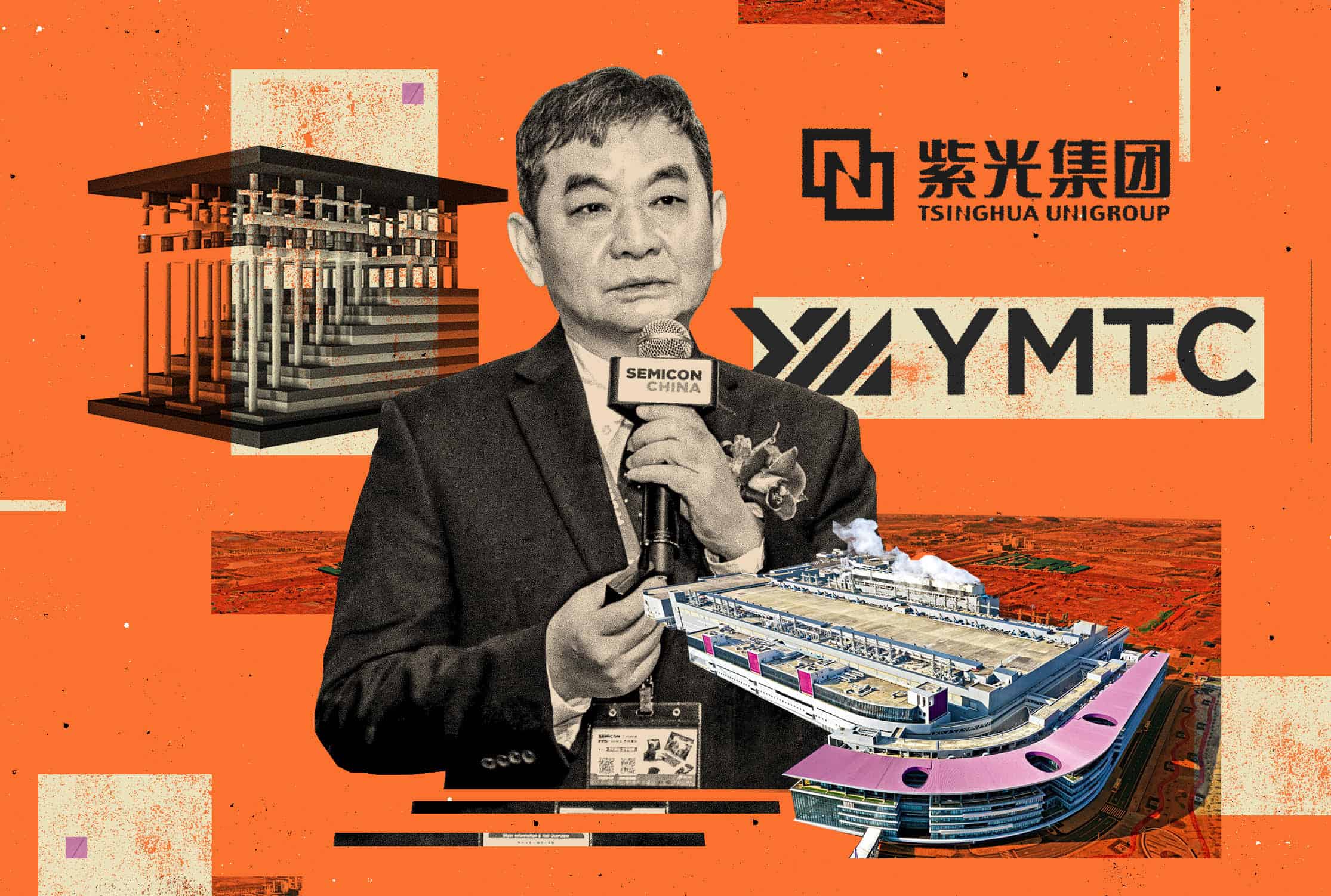
The Survivor
Why, in 2023, did Dutch exports of chip-making equipment to Hubei, of all places, surge by a factor of four compared to 2022? The answer probably has a lot to do with sanctions imposed by the Biden administration on Hubei-based YMTC, which in December 2022 was banned from buying American high-tech products. So the memory-chip manufacturer turned instead to Dutch and Japanese alternatives, prompting one White House official to call the ban “a handout” to the likes of ASML and Tokyo Electron. This week’s cover story looks at the Chinese company, headed by Chen Nanxiang, that America could not kill.

The Curious Case of BelGaN, GaNkool and the alleged engineer-thief “H.L.”
The government of Belgium, it would appear, has no fear of the Chinese Communist Party. In 2018 the Belgian Federal Police helped the first Trump administration arrest a Chinese Ministry of State Security officer, wanted for allegedly stealing trade secrets from GE, and extradited him to the U.S. Eight years later, Belgian authorities are once again trying the CCP’s patience. Earlier this year they arrested a dual Belgian-Chinese national accused of stealing trade secrets from Belgium’s only chipmaking firm, BelGaN, before it collapsed in 2024. Noah Berman writes about the case of BelGaN, Fujian-based GaNkool, a Chinese-American tech entrepreneur with links to both companies, and the alleged engineer thief known as “H.L.”

What China worries about when it worries about AI
Yes, China is determined to supplant U.S. leadership in the AI industry. But no, writes Kristy Loke, it is not prepared to do so by throwing caution to the wind. Beijing has clearly articulated its fears about the possible “loss of human control scenarios concerning cyber, biological, nuclear, and embodied AI risks”, while also highlighting “recursive self-improvement as an emerging area of concern”.
Loke is also The Wire China’s guest on our latest podcast, hosted and produced by Savannah Billman.
China, China, how does your trade surplus grow?
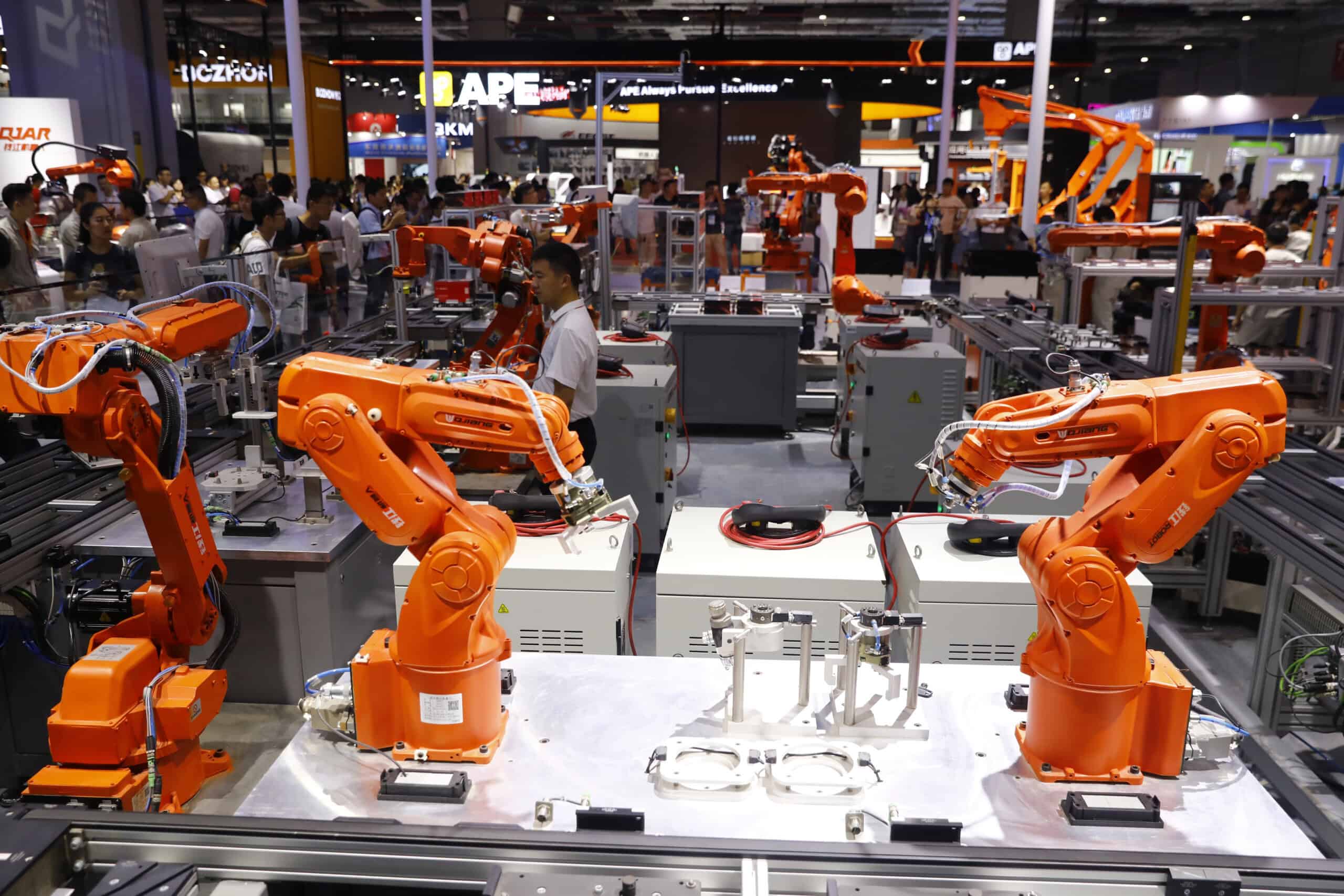
With higher prices is how, writes Savannah Billman in this week’s Big Picture. In August, Chinese exports of memory chips were about the same as in January in volume terms. But thanks to this year’s demand surge for all things AI-related, the value of China’s memory-chip exports were 56 percent higher in August than in January.
A Q&A with Logan Wright

The Rhodium Group’s Logan Wright is a well-known expert on China’s financial system and the author of a new book, Broken China: How the Economic Miracle Shattered and What it Means for the World. In a conversation with Rachel Cheung, he discusses how the overextension of China’s financial system is now constraining economic growth, the consequences of the property sector’s implosion, and what he predicts will be a prolonged period of decay marked by “lower growth, lower interest rates, deflationary pressure, weak consumer activity, and rising trade tensions”.
“Xi Jinping changed the perceptions of political risks in markets,” he says. “It went from being very difficult to lose money in Chinese assets because everyone assumed that everything would be bailed out, to becoming very easy to lose money in Chinese assets if you assume that something is no longer protected.”
Logan Wright
Illustration by Lauren Crow
The Wire China, Issue No. 303
Subscribe today for unlimited access, starting at only $25 a month.