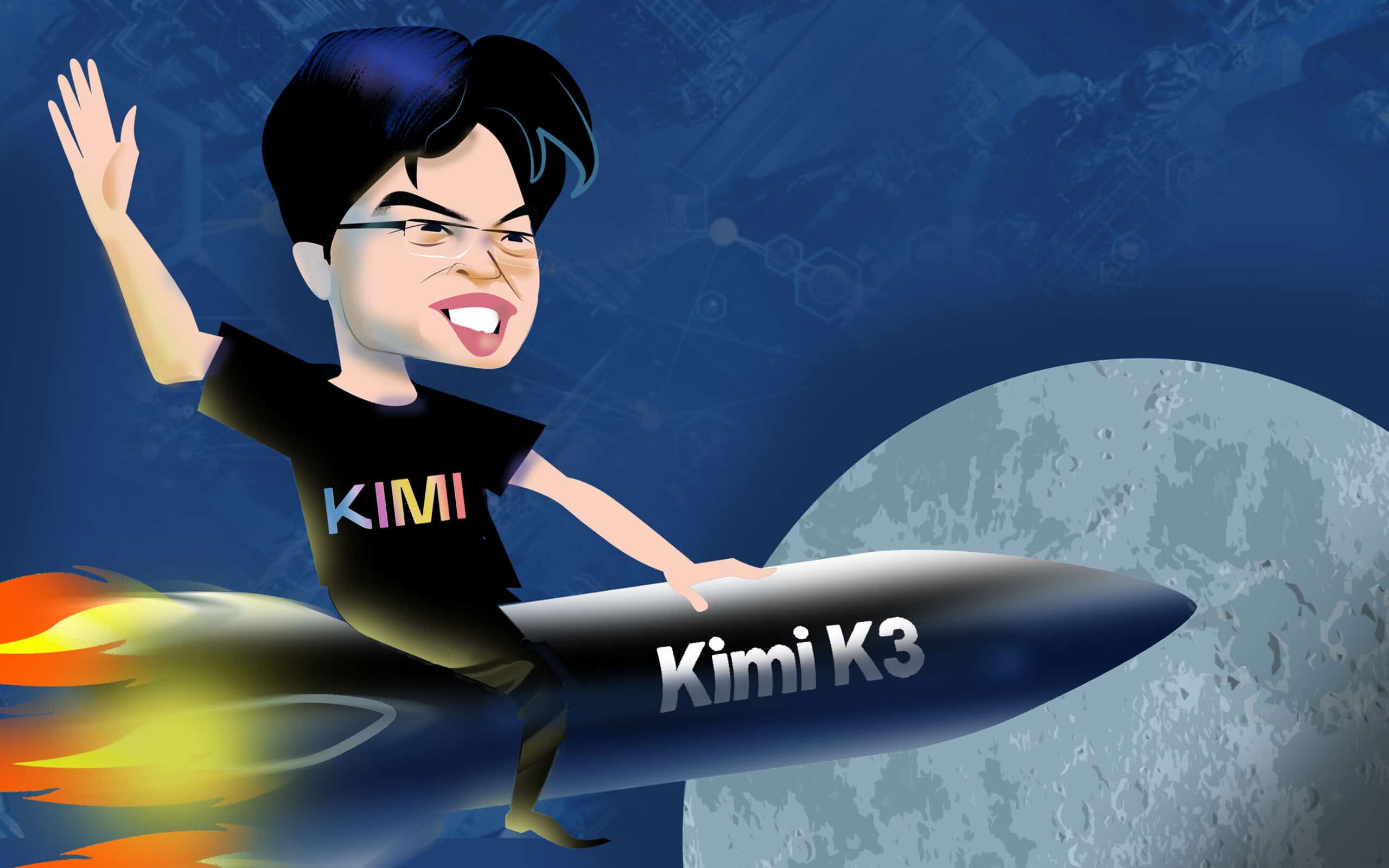
The launch of Kimi K3, one of China’s most powerful AI models to date, prompted a reckoning in the U.S. and triggered a regulatory storm.
Illustration by Luis Grañena
On the evening of July 24, the men and women of Moonshot AI enjoyed a rare night out on the town. At a Beijing night club they danced, drank and pumped their fists in the air. A large screen at the venue flashed exhortations such as “K3 Scale Up!”, “K4 Scale the F*** Up!” and “To the Moon!”.
They were celebrating Moonshot’s launch of Kimi K3, an open weight model that took the global developer community by storm. On several popular benchmarks, it approaches the intelligence and
Exclusive longform investigative journalism, Q&As, news and analysis, and data on Chinese business elites and corporations. We publish China scoops you won't find anywhere else.
A weekly curated reading list on China from Andrew Peaple.
A daily roundup of China finance, business and economics headlines.
We offer discounts for groups, institutions and students. Go to our Subscriptions page for details.
How did the late premier convince local governments to surrender fiscal revenues to Beijing? In an extract from his recent book, Authoritarian Markets, Adam Y. Liu explains how Zhu played his trump card — letting local governments set up their own banks.
The academic and former U.S. ambassador to Russia talks about the contrasts between Putin and Xi, and what Washington can do about their relationship with each other.
Corporate Risk Intelligence for National Security, Compliance & Due Diligence
We use cookies to ensure that we give you the best experience on our website. If you continue to use this site we will assume that you are happy with it.