The United States and China Are Leaving a Dangerous Vacuum in Global Leadership
The reluctance of the world’s two foremost powers to uphold the international order risks a repetition of past traumas.
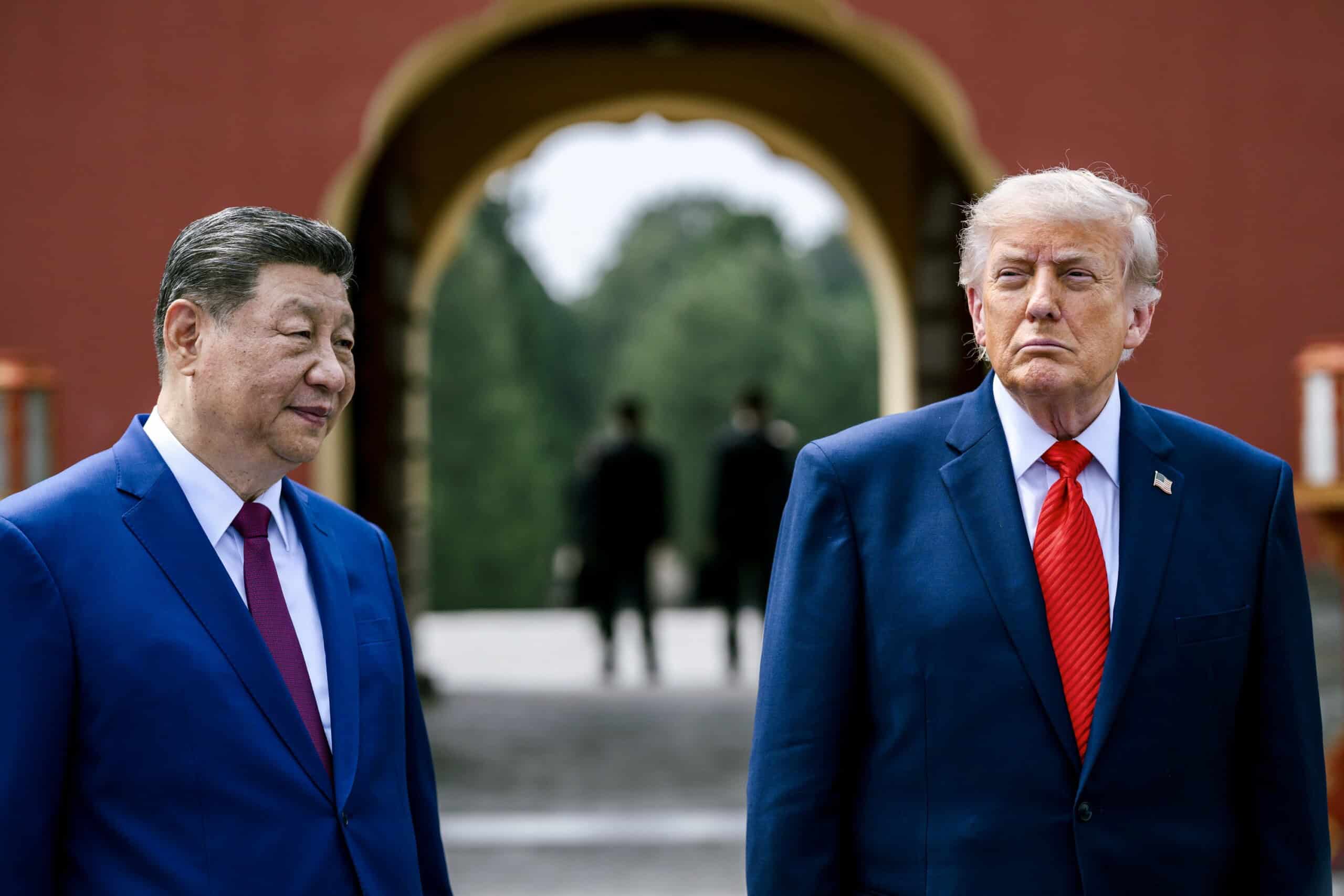
U.S. President Donald Trump tours the Hall of Prayer of Good Harvest with Chinese President Xi Jinping, May 14, 2026, at the Temple of Heaven in Beijing. Credit: The White House via Flickr
“Can China and the United States overcome the ‘Thucydides trap’ and establish a new paradigm for relations between great powers?” Chinese leader Xi Jinping put this question to his American counterpart, Donald Trump, when the two leaders met in Beijing in May. Thucydides, an Athenian general and historian, wrote a seminal account of the Peloponnesian War, which destroyed the Greek city-state system by the end of the fifth century. He traced the conflict to two factors: the rise of Athens
Exclusive longform investigative journalism, Q&As, news and analysis, and data on Chinese business elites and corporations. We publish China scoops you won't find anywhere else.
A weekly curated reading list on China from Andrew Peaple.
A daily roundup of China finance, business and economics headlines.
We offer discounts for groups, institutions and students. Go to our Subscriptions page for details.
From Mike Mansfield to Max Baucus and Steve Daines, Montana has been the unlikely source of America’s most influential China-hand senators over the past half-century. But amidst spy balloons, trade wars and mutual paranoia, being a proponent for rational and beneficial relations between the two countries has never been harder.
The former CIA officer says Washington has lacked a clear strategy towards intelligence on China, in contrast to Beijing’s approach — and that Congress needs to act.
Corporate Risk Intelligence for National Security, Compliance & Due Diligence
We use cookies to ensure that we give you the best experience on our website. If you continue to use this site we will assume that you are happy with it.