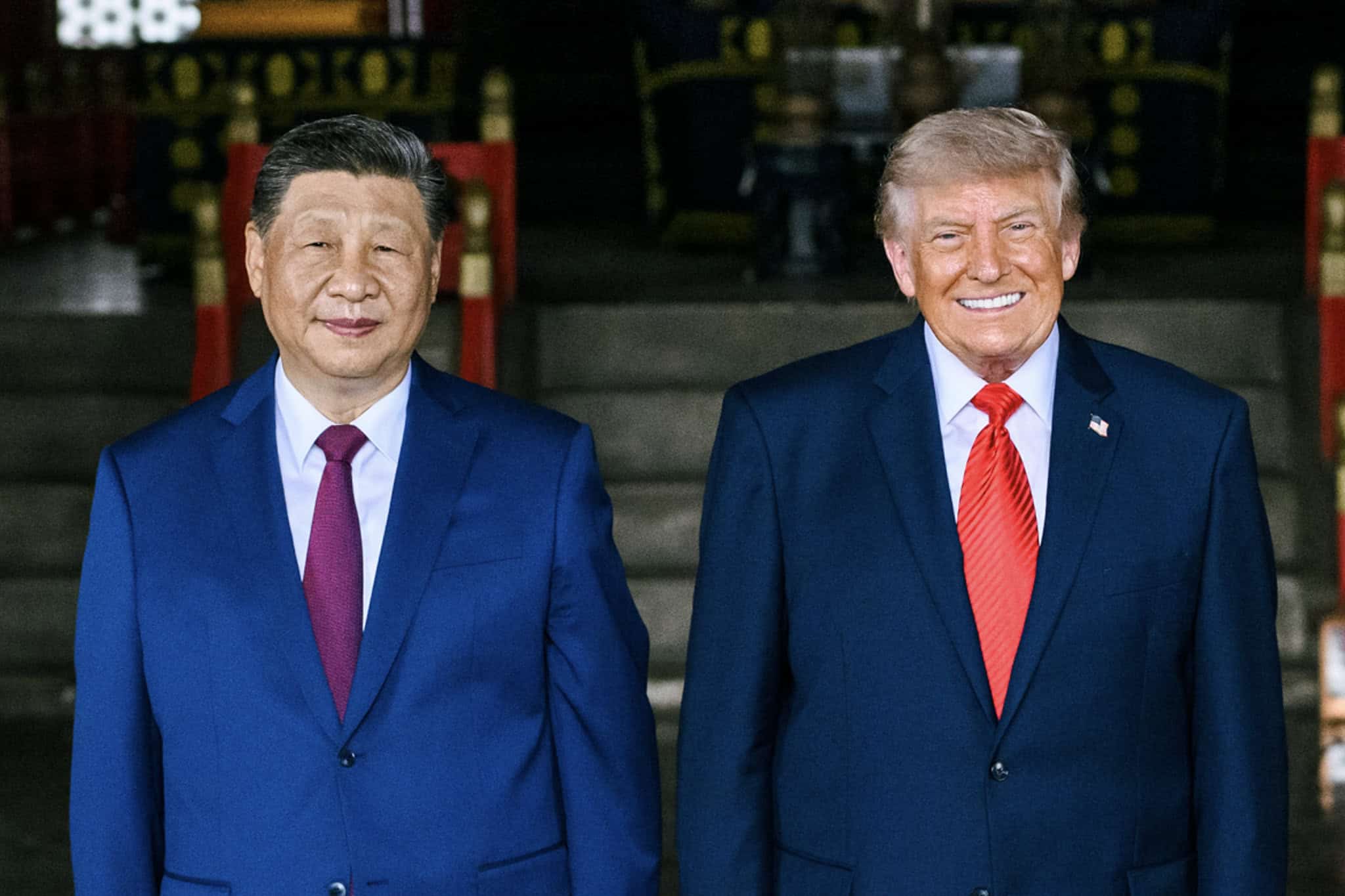
Following their recent summit in Beijing, President Trump, President Xi, and their teams signaled interest in working together on artificial intelligence ‘guardrails’ and agreed to establish further government-level dialogue on AI governance. While this has not been officially confirmed, U.S. media have reported that unexpected behaviors of AI systems, autonomous weapons, and misuse of open-source tools by non-state actors were the three AI topics scheduled for discussion at the summit.
Among these possible areas for bilateral coordination, open‑weight model governance stands out as both underexplored and unusually promising, provided that both sides engage in good faith and resist turning AI governance into a point of geopolitical tit-for-tat.
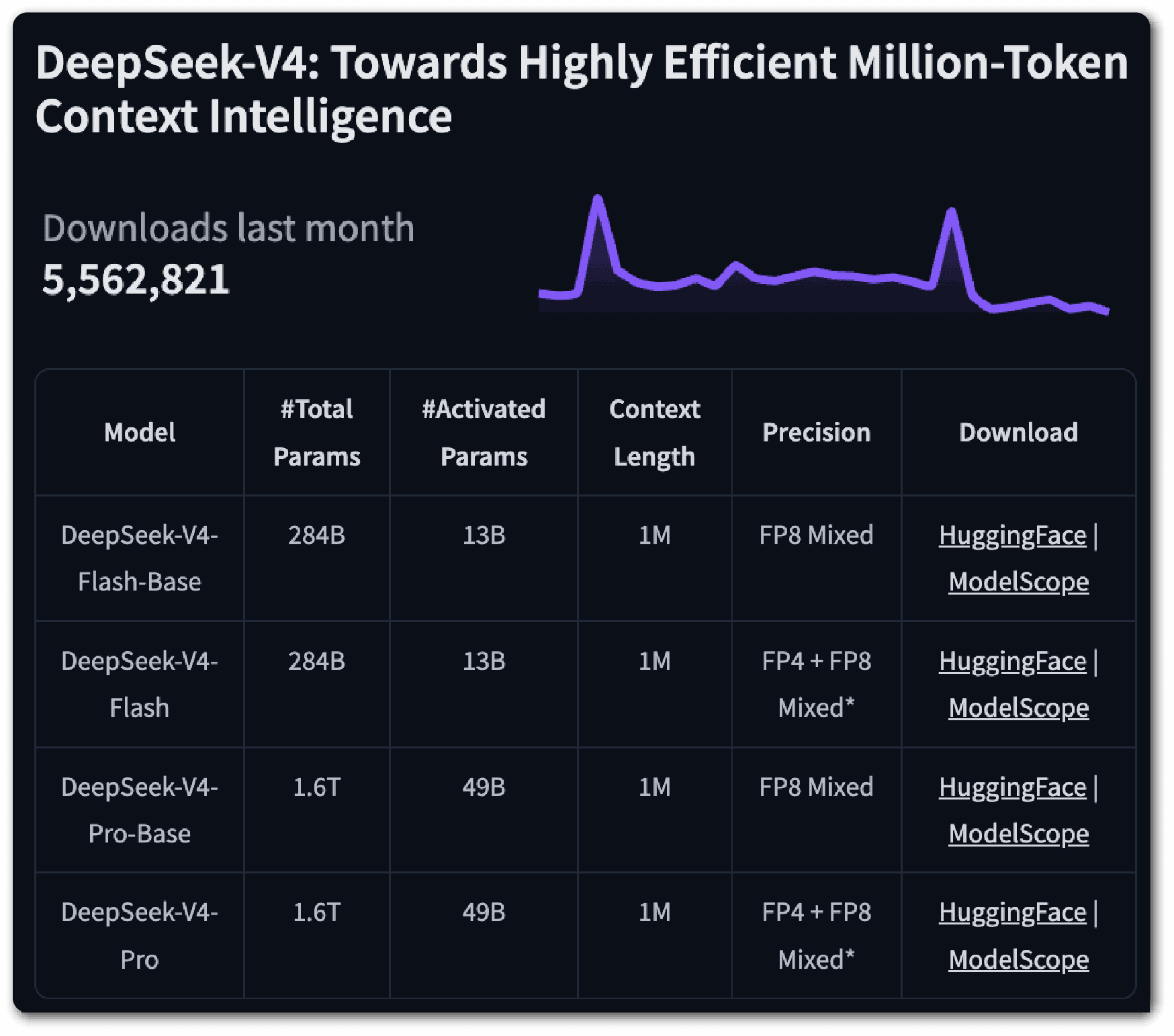
‘Open‑weight’ models, such as DeepSeek-v4, Kimi-K2.5, gpt-oss, or Gemma 4, are AI models that have their parameters (i.e., ‘weights’) openly available for download by anyone on the internet. Anyone who would like to manipulate and deploy the model can do so freely with little if any oversight. Researchers have also found that on a limited compute budget, with varying degrees of expertise, and on a much shortened timeline, open models could be improved and pointed towards harm, such as in the biosecurity and cyber domains.
As these systems diffuse and their capabilities potentially continue to catch up to those of proprietary models, rules made in isolation will become much harder to align and revise. The window for shaping norms around open‑weight models may not stay open for long.
…incidents from powerful open-weight models would likely invite a public backlash in both the U.S. and China, spelling trouble for a thriving open model ecosystem. Officials in both countries should be able to agree: open-weight AI doesn’t need a ‘Chernobyl Moment’.
While its openness lends ease of misuse, it is also this transparency that provides something rare in international AI governance. Due to their publicly available parameters, open‑weight models can be inspected, evaluated, and checked for compliance with standards by researchers anywhere in the world. Unlike with closed models, no blind trust or specialized infrastructure between countries is needed. Amidst the rivalry between the U.S. and China, this ease of verifiability matters.
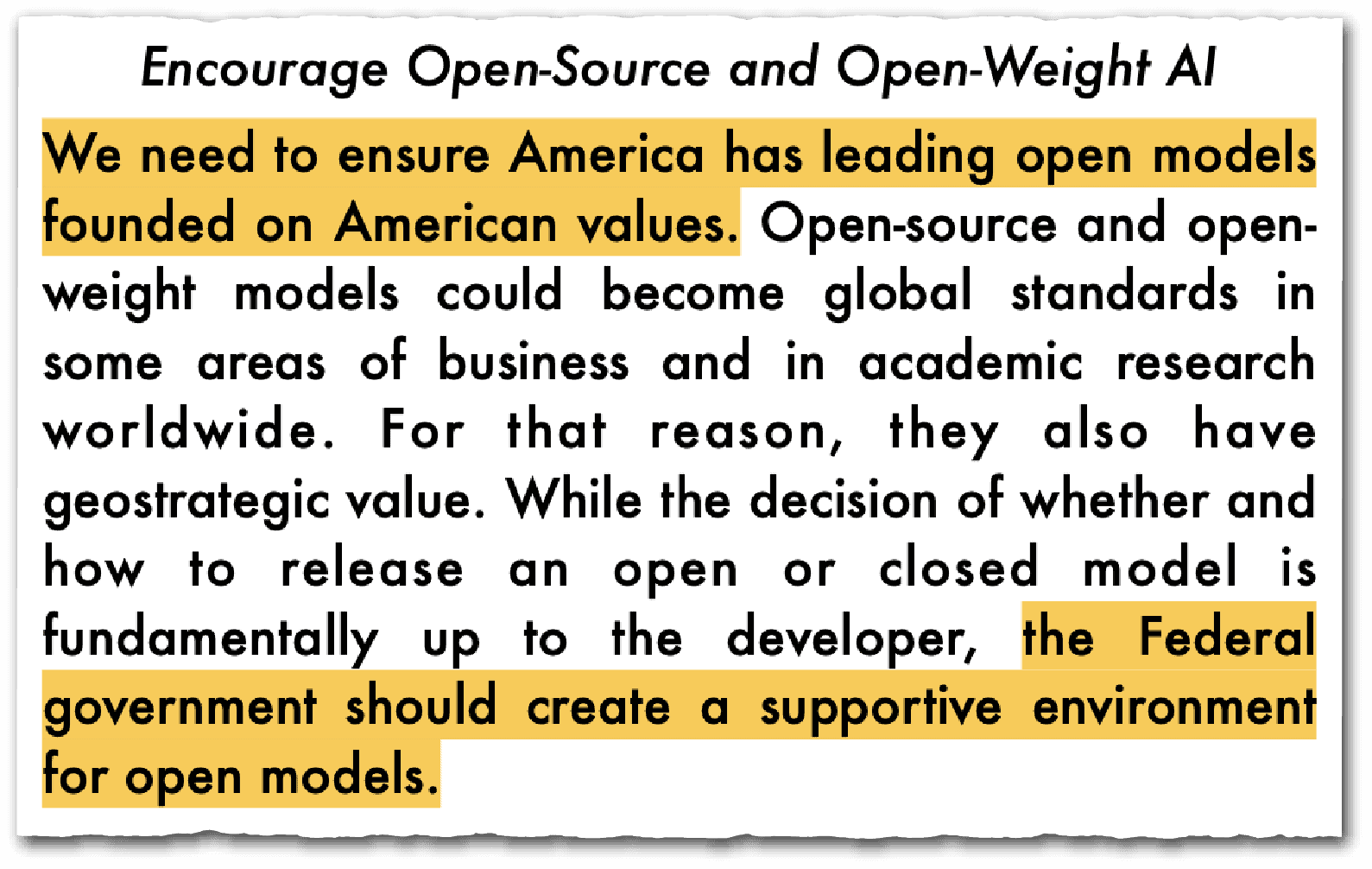
Beyond technical feasibility, both countries have a surprising degree of alignment in their stated priorities and incentives for cultivating a thriving open-weight model ecosystem. In the United States, policymakers and industry leaders frame open‑weight AI as an engine of innovation and economic growth. The U.S. AI Action Plan has resoundingly endorsed open models as a pillar of innovation.
China, meanwhile, has long positioned open‑source and open‑weight AI as central to its innovation and industrial strategy. China’s enthusiasm has only increased since the ‘DeepSeek moment’ in early 2025, which gave a shot of confidence to the state and market of the country’s ability to innovate at the cutting edge and keep up with the AI frontier despite serious compute challenges. It also pointed to a feasible path towards faster and wider AI diffusion. Relatedly, China’s recent policy documents often highlight the need to systemically manage escalating risks from rapidly developing AI systems.
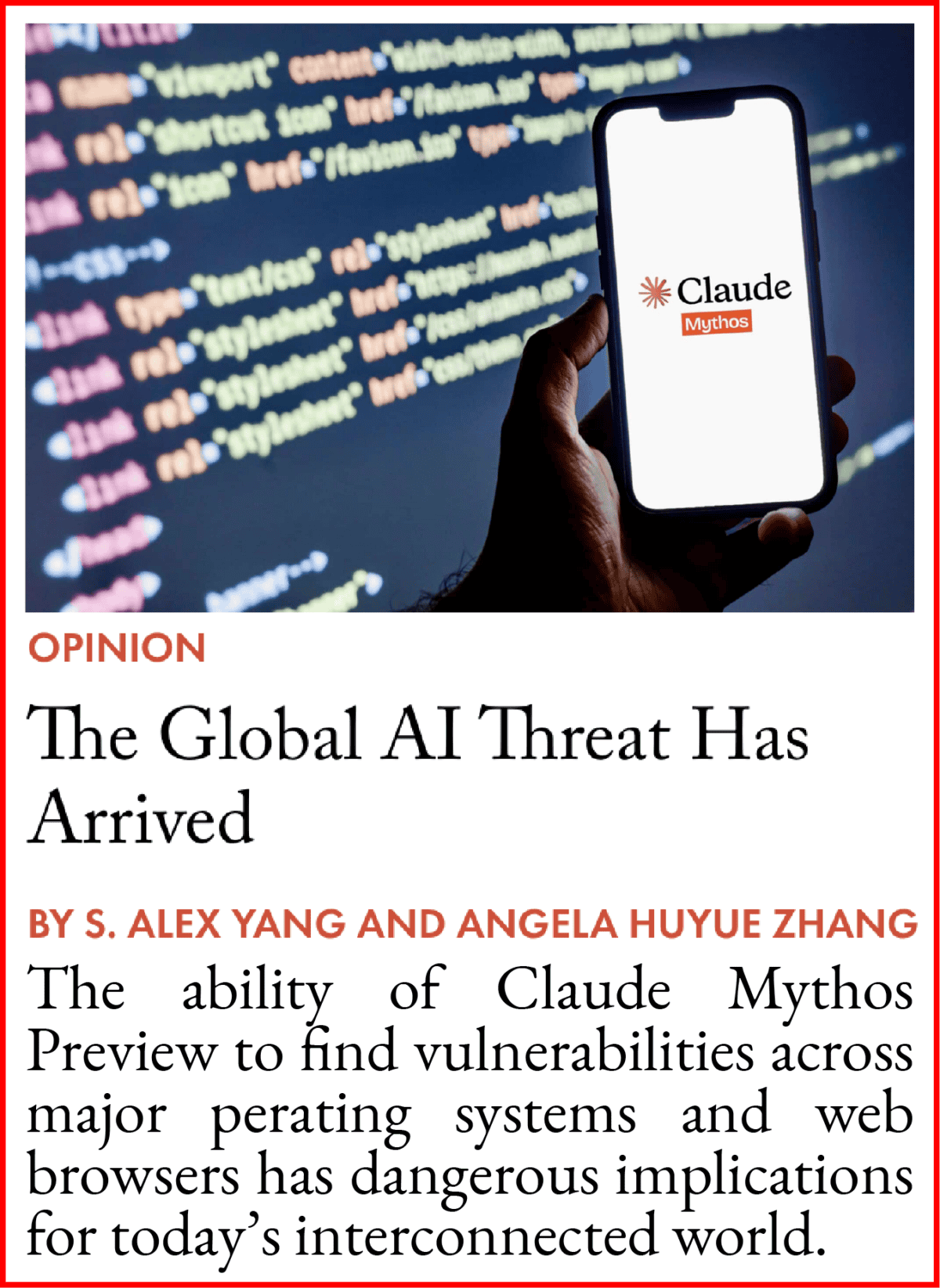
Increasingly, both countries see open models as too valuable to miss out on. But at the same time, they pose risks too significant to ignore. Open models have consistently lagged a few months behind the closed-source frontier, which now exhibits serious cybersecurity risks through Anthropic’s Mythos. The Trump administration’s June 2 executive order, which establishes a voluntary pre-deployment evaluation framework for high-risk frontier AI models and directs agencies to harden critical infrastructure defences, reflects how the U.S. is anticipating risks to mount as Mythos-like capabilities start proliferating. In addition to the direct harms, incidents from powerful open-weight models would likely invite a public backlash in both the U.S. and China, spelling trouble for a thriving open model ecosystem. Officials in both countries should be able to agree: open-weight AI doesn’t need a ‘Chernobyl Moment’.
The risks and benefits associated with open‑weight AI are more global in nature than for closed models. Open-weight models spread easily across borders through decentralized and often unmonitorable channels. Users merely need to download models to their own computer or rented hardware for use and further manipulation. Even where platforms are restricted, distribution persists. For example, huggingface.com, the West’s largest open model distribution platform, is banned in China, but 41 percent of models downloaded from it still originate from Chinese companies.
Open‑weight AI also complicates the prevailing narrative of a ‘zero‑sum race’, making collaboration more feasible. Currently, competition in AI is no longer only about who can train the most advanced closed model; it is also about who can best deploy and integrate AI across economic and strategic domains. Open‑weight models, by design, diffuse and generate value across the world, making it harder to frame their progress as purely national.
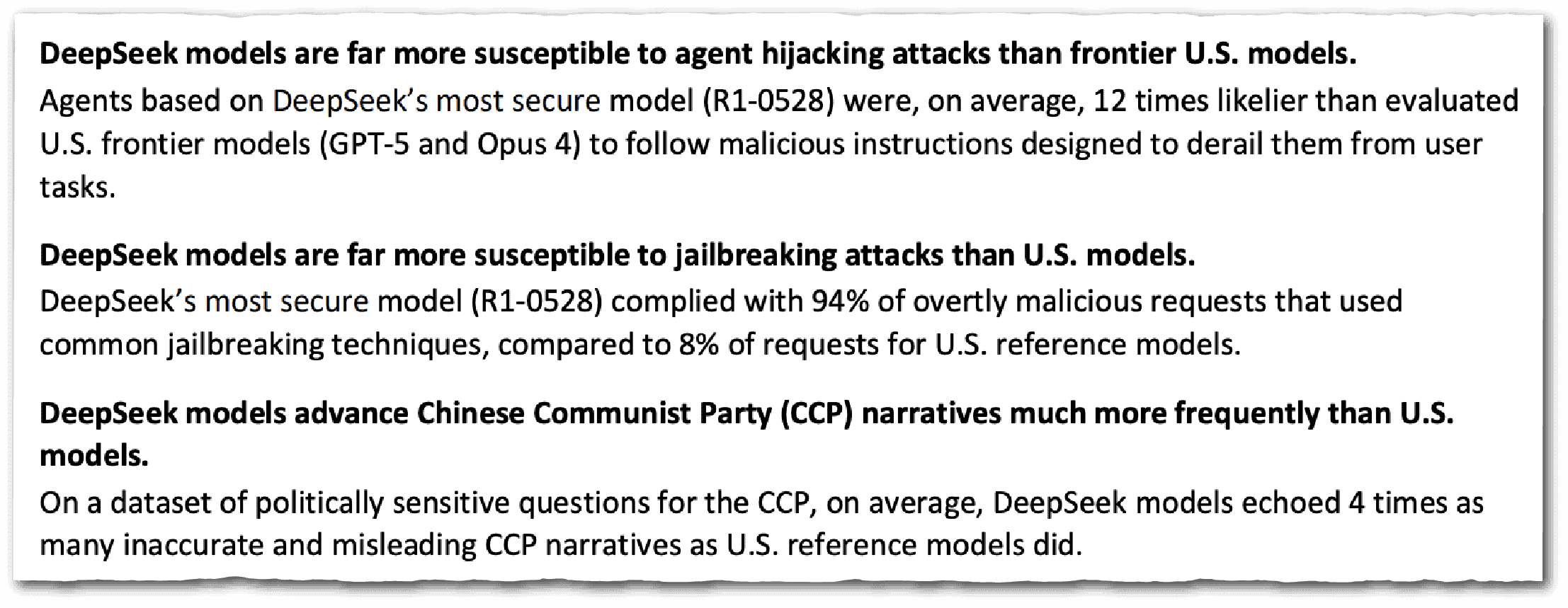
When it comes to efforts to monitor and manage the risks of open‑weight models, there is more alignment across the two countries than commonly assumed. Although China’s AI rules have focused heavily on content control, regulators are attentive to the distinct risks of open models. Last year, the Cyberspace Administration of China urged open model developers to strengthen their assessments of security flaws, while a leading government-affiliated think tank evaluated 15 leading open coding models in China for misuse and other risks. In parallel, the U.S. Center for AI Standards and Innovation has been testing frontier open models — including DeepSeek’s — for unsafe behaviors, using U.S. models as a benchmark.
Despite shared interests and the technical feasibility of low-trust coordination on open-weight models, it is important to acknowledge that U.S.-China collaborations will not be free of strategic tension. Chinese policymakers see open‑weight AI as a way to hasten its key goal of industrial upgrading and welcome its strategic value in blunting the impact of U.S. chip export controls.
U.S. officials, for their part, worry that America is losing control over the open model tech stack and have concerns about how Chinese open model leadership may complicate U.S. efforts to maintain an overarching technological lead via export controls. In such a low‑trust environment, it may be tempting to weaponize safety standards. Managing that temptation and focusing collaboration on mutual interests will be essential if any bilateral framework is to be viable.
Taken together, these factors make open‑weight AI governance a unique, pragmatic starting point for U.S.-China cooperation in AI. In a relationship marked by deep mistrust, areas that are both technically verifiable and aligned with mutual interests are rare; open‑weight models meet both criteria.
This need not begin with a formal treaty. Initial steps could take the form of a bilateral technical working group drawing from policy and technical experts, informed by top domestic AI developers, and meeting regularly to share top concerns and best practices. If successful, this channel could feed into a shared set of standards for high-risk open‑weight models, provide an interface to resolve misunderstandings, and lay the groundwork for more ambitious coordination on emerging AI risks, including potential capability and risk red lines for both frontier proprietary and open models.
The Trump administration’s recent shift toward AI governance, and the political opening created by the Trump-Xi Summit, offer a rare chance to move in this direction. The question now is whether Washington and Beijing will use that opening to turn talk of ‘guardrails’ into concrete cooperation — before the opportunity, and the window for shaping open‑weight AI, a powerful modality of AI, closes.

Kristy Loke is a MATS research fellow focusing on China’s AI governance and innovation strategies and how they intersect with international AI governance.

Stephen Casper is a computer scientist and incoming Assistant Professor of Public Policy at the Harvard Kennedy School, where his work focuses on AI safeguards and governance.