For most western corporate leaders, China business today means developing strategies for diverse sourcing that involve both China and other countries, and so-called “China-for-China” localization to compete in its massive market. The more advanced now look to China for innovation and talent too.
What most miss is the speed with which Chinese companies are staking out positions in the markets of the future, the Global South. Beneath the headlines of record Chinese exports and growing outbound investment lie the actions of a multitude of Chinese companies. A new, Global-South-focused, breed of multinationals is taking shape.

One example is Hangcha, the little-known Hangzhou forklift manufacturer that is now the world’s eighth-largest. Approaching Bangkok’s Suvarnabhumi airport, it is Hangcha that billboards promote, not Japan’s Toyota or Germany’s Jungheinrich. In 2024 Hangcha generated 16.5 billion yuan ($2.4 billion) in revenue, with over 40 percent coming from overseas, shipping 280,000 units to 180 countries, mostly in the Global South. By contrast, Toyota, the global market leader, earns 87 percent of its international revenue in the U.S. and Europe.
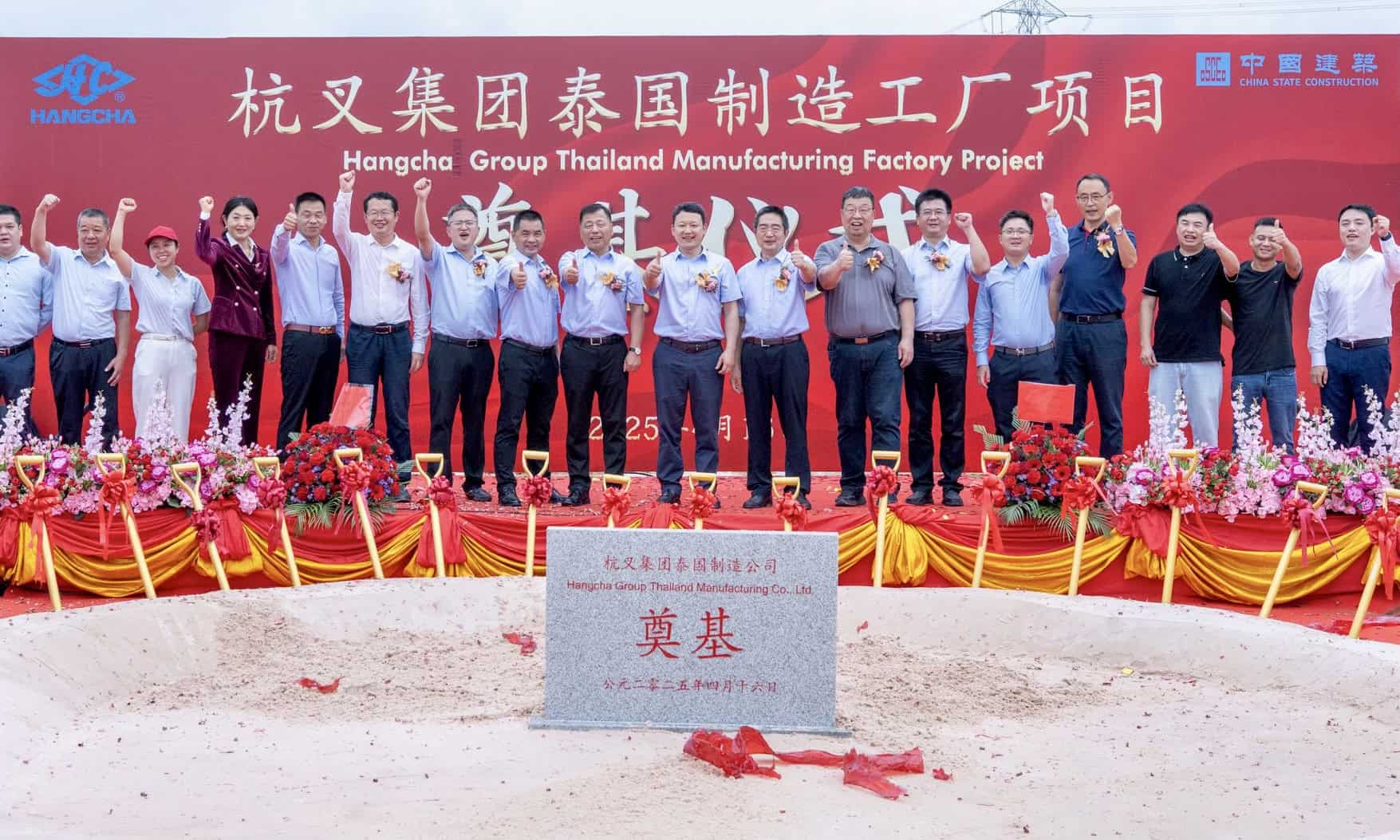
Last November Hangcha cut the ribbon on a new Middle East and South Asia hub in Dubai’s Jebel Ali Free Zone, its seventh new overseas subsidiary in eighteen months. The Dubai opening followed new entities in Indonesia, Japan, Malaysia, France and Vietnam and ground-breaking on a $20 million wholly-owned plant in Thailand due on stream this year. Alongside vehicles, this Thai plant will pack-assemble and sell lithium batteries from Hangcha’s 50-50 JV with global battery leader CATL.

It is not just Hangcha. Consider Meituan’s food delivery service. Under its Keeta brand, Meituan expanded first to Hong Kong then to 20 cities in Saudi Arabia and on to Qatar, Kuwait, Dubai, and Abu Dhabi. Last year it announced ambitious growth plans for Brazil though these have now hit problems. Last month Mixue Bingcheng also launched its low-priced soft drinks and ice creams in Brazil. Mixue has signed a memorandum with Brazil’s investment promotion agency to spend four billion yuan ($590 billion) to source coffee and fruit locally; build a factory; and open between 500 and 1,000 outlets by 2030, generating an estimated 25,000 jobs. Mixue already has around 60,000 outlets, more than McDonald’s and Starbucks combined, with 4,500 in thirteen overseas markets, almost all in the Global South.
Behind Hangcha, Meituan and Mixue are dozens more: BYD cars in São Paulo, Sany excavators in Riyadh, Mengniu-backed Aice ice cream in Jakarta, Huawei 5G in Brazil’s Curitiba, Alicloud services in Johannesburg and Transsion, with its longstanding market-leading position in smartphones across Africa.
Tomorrow’s global economy; tomorrow’s multinationals
To thrive, multinationals need to go where the growth is — and then build the product offerings, capabilities and structures to serve these markets profitably. According to IMF projections, the Global South will generate 27 percent of global growth between now and 2030: today it accounts for just 21 percent of the world economy. Add in China, and these markets account for nearly half of global demand growth over the next five years.
Naturally well-positioned at home in China, Chinese companies are building ever stronger positions in the markets of the Global South. Exports from China to these countries now exceed those to the U.S. and Europe combined. Last year, Chinese export growth to ASEAN was 13 percent; to Africa 26 percent. Chinese outward investment to these destinations is also growing at the expense of developed markets.
These macro-aggregates result from the commercial decisions and successes of individual companies. Still in the early stages of internationalization, many Chinese companies are adopting a ‘Global South-first’ strategy. In autos, Chery’s largest export markets lie in Russia and the Global South. Great Wall Motors names Russia, South Africa, the Gulf and Latin America as its major export markets, with overseas manufacturing bases in Russia, Thailand and Brazil. Australia is the only sizeable developed-market export destination. In construction equipment, Chinese excavator brands such as Sany, XCMG and Zoomlion have captured market shares of 30 to 40 percent in Africa, Southeast Asia and the Middle East and over 60 percent in Russia and Central Asia, compared with around 5 percent in Europe and North America. One Chinese analyst estimates that the Global South accounts for two-thirds of Sany’s overseas revenue. The figures for XCMG and Zoomlion may be even higher.
For sure, the likes of Shein, Temu and TikTok are also prospering in developed markets. But most exceptions to this Global South push reflect decisions made in geopolitically easier times: Geely bought Volvo in 2010. ChemChina completed its acquisition of Syngenta in 2017.
Why Chinese companies prefer the Global South
Geopolitical shifts and the increasingly unpredictable environment that Chinese companies face in developed markets are not the only reason for this focus. Business success in the Global South is rooted in a blend of corporate and government initiatives similar to that which drove growth in China. In different ways, China’s state-owned and private-owned enterprises alike are finding success.

At the government and Party level, China has long emphasized its relations with what is now the Global South. In the early 1970s China funded the construction of the Tanzania-Zambia railway. “China will always be a developing country,” stated Premier Li Qiang last year even as China said it would stop claiming related rights at the WTO. With renewed Belt and Road investments, this supportive political backdrop continues with the growth of BRICS, its expansion to include Egypt, the UAE, Iran, Ethiopia and Indonesia and a host of other diplomatic engagements by China.
State-owned enterprises such as PetroChina, State Grid, China Harbour Engineering and COFCO have expanded overseas with the twin objectives of strengthening China’s economic resilience and earning financial returns. In infrastructure, contracts are rarely pure commercial decisions. Government relations matter. These companies can rely on support from China’s two policy banks, as well as state-owned insurer Sinosure and its embassies and ministries.
Western companies spent the 2010s focused on the China market. The coming competition will play out in 150 countries or more. And those that cede that ground will find they have ceded the future.
But this is just a part of the story. In sectors from consumer electronics to automotive and medtech, state backing is becoming a less significant backdrop to the broader story at play. More fundamental are the initiative and energy of individual Chinese business leaders who want to grow and succeed as global companies, and gain respect on the world stage. They spot commercial opportunities to sell their competitive products to customers in markets where levels of development are often on a par with regions of China.

At home they have built scale, managed costs, and innovated rapidly to meet customer needs and turned far-reaching ambition into business results. Faced with weak demand and intense price competition there, they see better pricing and margins abroad, quite separate from government policy guidance. They bring familiarity with markets where state and market practices and regulation are still developing; enjoy a cost base appropriate to lower income markets; and can deploy technology without displacing legacy systems. Warm or chilly diplomatic relations are assets or liabilities to work with, not what determines management choices.
Not all plain sailing
Success is by no means assured, even so. However similar Global South markets may appear, the differences with China are large and varied. Many western companies misjudged their approach in China, underestimating the adaptation and effort required. Now Chinese firms often stumble on product and service adaptation, management style and local regulatory compliance. Mixue faced protests over price cuts from Vietnamese franchisees a few years ago and has announced some store closures in Vietnam and Indonesia. Meituan has stumbled in Brazil.

Moreover, alongside the benefits, Global South governments see the challenges that Chinese companies present: Chinese imports benefit consumers but threaten local jobs and companies. While Brazil’s commodities sector booms with exports to China, its economy is de-industrializing. Governments want their own companies to prosper and create jobs. In the 1960s Jacques Servan-Schreiber wrote Le Défi Américain (the American Challenge) to express fears that Europe would lose in the face of internationalizing American companies. For the Global South, that challenge now comes from China.
Governments will, though, tolerate — even support — Chinese corporate success when companies build local plants, hire locally and transfer technology. Paradoxically this will strengthen the growth of China’s new multinationals, forcing localization around the world. Hangcha with its Thai plant and Mixue with its São Paulo supply-chain pledge are well-placed.

Competing against a new breed of multinational
The economic pull and supportive geopolitics between China and the Global South are unlikely to change. By the early 2030s, leading Chinese firms are on track to enjoy strong market and operating footprints across the Global South. Western companies will not easily regain lost ground. Nascent multinationals from the Global South may forfeit the chance to even get started. The risk is clear: Western firms will get squeezed out of the markets which will bring most of the next decade’s growth, while optimizing their business models for the slower-growth, higher-income markets of the U.S. and Europe.
Fundamental to this challenge are the capabilities that these new Chinese multinationals are building year by year. They are adapting what they have learned at home so they can win market-by-market across the Global South. Over time, hard-won lessons from Lagos, Mumbai, Dubai and São Paulo will shape management mindsets, operating models, organizational cultures and innovation in ways that Western competitors underestimate at their peril.
Western companies spent the 2010s focused on the China market. The coming competition will play out in 150 countries or more. And those that cede that ground will find they have ceded the future.

Andrew Cainey is an advisor to companies and governments on China, geopolitics and global business. He is the co-author of Xiconomics: What China’s Dual Circulation Strategy Means for Global Business and a senior associate fellow at the Royal United Services Institute, the world’s oldest defense and security think tank.