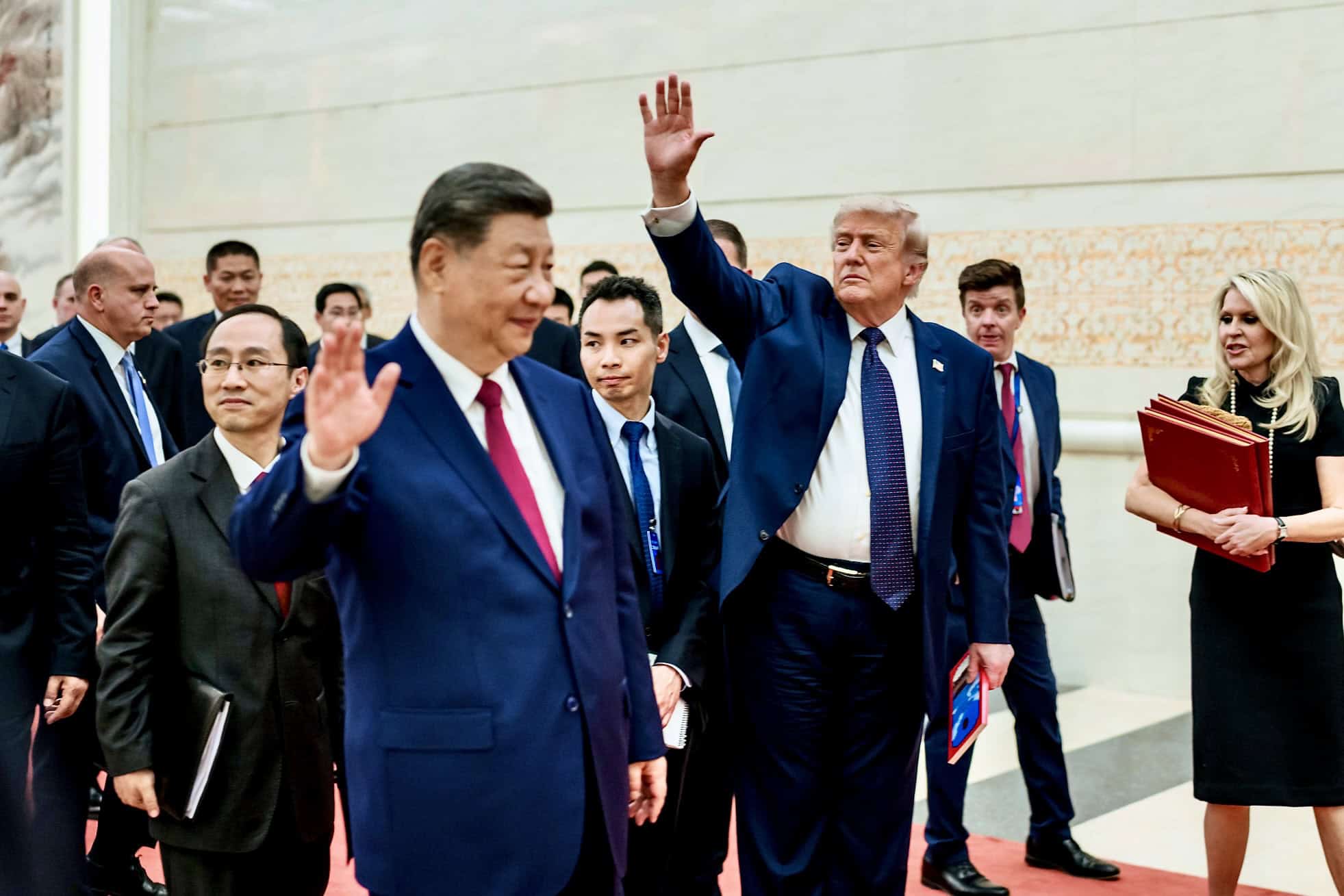
‘Nixon goes to China’ was one of the seminal episodes of the Cold War, the moment in 1972 when a previously hawkish U.S. President restarted relations with the country then led by Mao Zedong, illustrating the divisions within the Communist bloc of countries as he did so.
‘Trump goes to China’ could yet be its equal for the post-Communist era but for the exact opposite reason, with a now unquestioned superpower, under its autocratic leader Xi Jinping, receiving a blessing from its only global peer — a moment that this time exposed the divisions among the former hegemons of the G7, the United States, Europe and Japan.

In his approach to this month’s summit, Trump ignored those in the U.S. and elsewhere who still want to prioritize stopping China’s rise — or at least would like to steer its political and economic model in a different direction —whether they justify it by pointing to the macroeconomic imbalances or over-capacity it has caused.
Trump’s way, by contrast, is to accept China as it is, and to seek to make deals with it instead — some aircraft and agriculture purchases for China, setting up boards of trade and investment — in line with his general approach to international relations.
Europe will almost certainly be forced to follow Trump’s lead eventually, notwithstanding what seems likely to be a prolonged period of turbulence as it attempts to deploy new and existing tools to counter China’s market dominance in several key industries. Technology has created global markets in which China’s mix of government direction, entrepreneurialism, and intensive competition has left it currently best placed to take advantage across many goods.

To be clear, there are still high tariffs in place between the U.S. and China. Calculating these is something of an art, but as of November 2025 a good estimate showed them to be at 47.5 percent on Chinese goods entering into the U.S., and 31.5 percent going the other way. These tariffs are reducing direct trade between the two: in his deals with third countries, Trump is also seeking to penalize trans-shipment of Chinese goods to the U.S., and encourage more purchases of U.S. goods.
Trump, though, is not denying the basic fact of China’s place as a global manufacturing superpower. He is not working systematically with others to seek to control this, bar the odd rather unconvincing initiative on critical minerals. And he doesn’t care if Europe buys a lot from China as long as they also do the same for the United States.
Trump is probably ahead of the game, if only accidentally, in his acceptance of China as an economic superpower. His effective surrender and acquiescence to China’s rise is the clearest sign that the multi-polar world order has definitively emerged.
This is the reason why his visit to Beijing was so significant. It was both a recognition that the U.S. and China are now fellow trade superpowers; and that an uncomfortable economic détente is needed, given both are now operating in the full knowledge that each can impose significant damage on the other, and must therefore manage their relationship accordingly.
Too many commentators over-analyse Trump. There is no evidence that he has any great strategy. Rather he wants tariffs and he wants deals, and he doesn’t have any other particular geopolitical ideas or goals to pursue. As it happens, on this occasion in China, he was going with the flow of the modern world, unlike with his tariffs. Indeed, U.S. services firms will be making a lot of their money from acting in ways that facilitate Chinese manufacturing dominance, a form of trade that seems unlikely to be stopped.
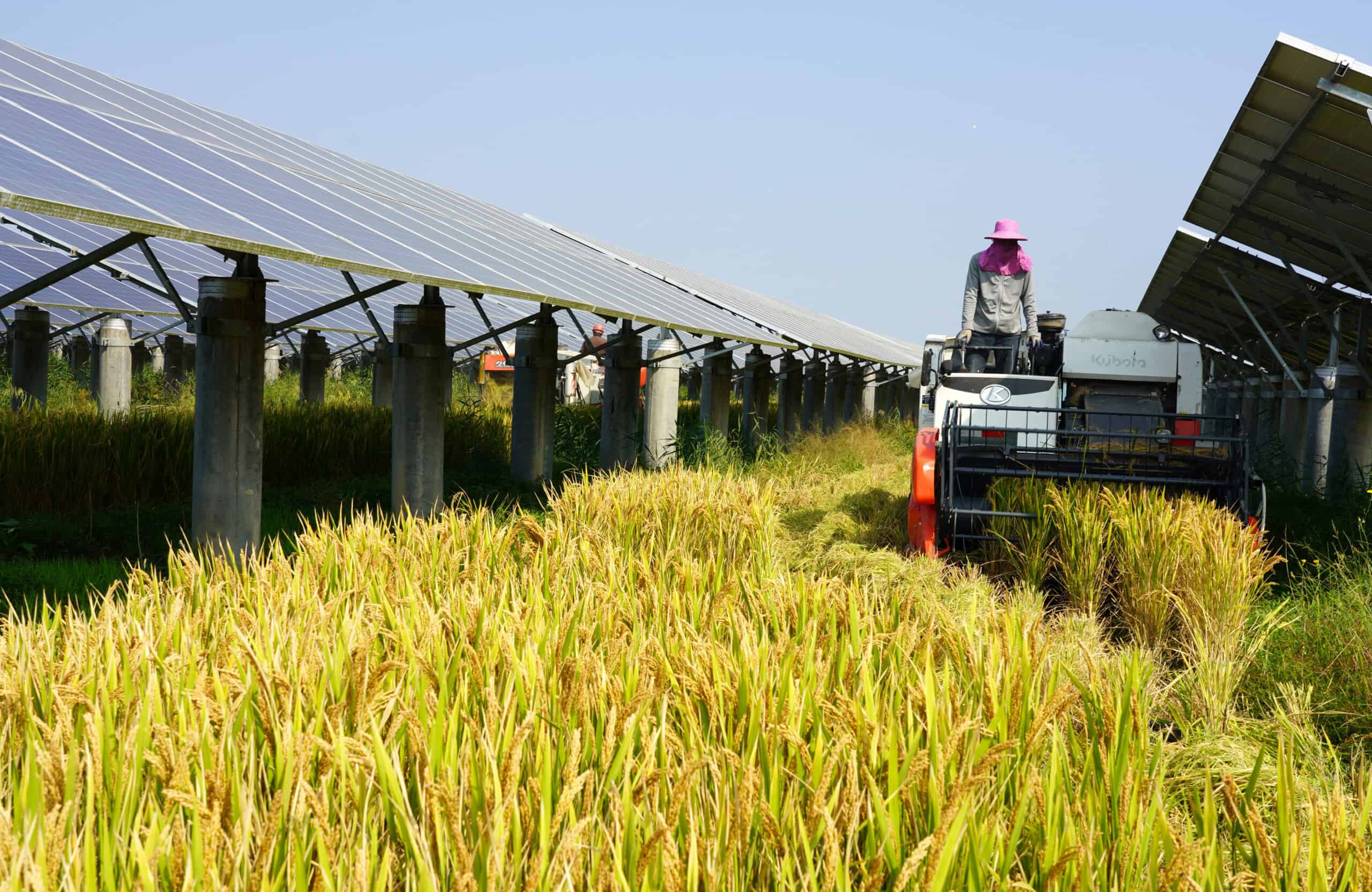
Chinese exports in general are not obviously being generally affected by U.S. tariffs or the complaints made by many about its alleged dumping and unfair use of subsidies. Indeed, the closure of the Straits of Hormuz is showing the importance of Chinese companies to the new economy, in areas like electric vehicles, solar panels, and batteries. Unsurprisingly, other leaders are also beating a path to China, because they can see its importance to the global economy and want a share of its potential overseas investment.
Europe is finding this moment particularly difficult. Declining domestic demand for its companies’ products such as cars and steel has in the past been offset by their global competitiveness. China is now undermining all this. Domestic protection can’t help much with this problem, and meanwhile some national leaders want Chinese companies to invest in their countries. Developing new tools or using existing ones to counter China’s growth can’t make up for the lack of a strategy which would have to involve difficult trade-offs — and which would almost certainly have to involve greater emphasis on services industries over manufacturing.
Overlaying this China debate is a broader one about dependencies, something that is inevitable in open economies with plentiful products and services, but which can potentially be dangerous when they are concentrated in unallied countries. Dependencies on China have been noted in areas like critical raw materials and pharmaceutical components, but can be hard to track given the complexity of modern supply chains. It is questionable whether democratic governments even have the power to make companies diversify, or what this would mean for consumers and jobs.
Today’s challenges have a precedent. Technology driven change brings inevitable political and economic dislocation, as in the 19th and early 20th centuries. There have been even more intense developments in the last thirty years starting with the internet, continuing today with artificial intelligence.
After the Second World War, the international community sought to impose rules explicitly designed to avoid the weaponization of trade that had happened in the 1930s, towards the end of one of those previous periods of great change. The rules related mostly to tariffs, whereas in today’s interconnected world there are many more ways for countries to impose costs on each other, as the U.S. and China have discovered and are now trying to manage. There is clearly a need for the rules themselves to be revamped.

But meanwhile, Trump’s way of dealing with the situation is by doing bilateral deals. This also allows China to continue to claim that no broader change is needed, safe in the knowledge that the U.S. is currently incapable of working with partners. Europe and others in the U.S. are going to have to come to terms with today’s world sooner or later, and then come together with China, plus probably India and Brazil, to agree on a new global trade framework. This, though, could be many years and trade conflicts away.
Trump is probably ahead of the game, if only accidentally, in his acceptance of China as an economic superpower. His effective surrender and acquiescence to China’s rise is the clearest sign that the multi-polar world order has definitively emerged. Future presidents may join the EU in trying to put the genie back into the bottle, but it will likely be too late. Quite where we go from here is unclear, but we are certainly not going backwards to a point where China’s rise can be controlled by Europe and the U.S. once again setting the rules.

David Henig is a Director at the European Centre for International Political Economy whose work covers UK, EU, and the ongoing evolution of globalisation. Prior to 2018 he worked for the UK government including on EU-U.S. trade talks and UK/EU trade and business relations with China.