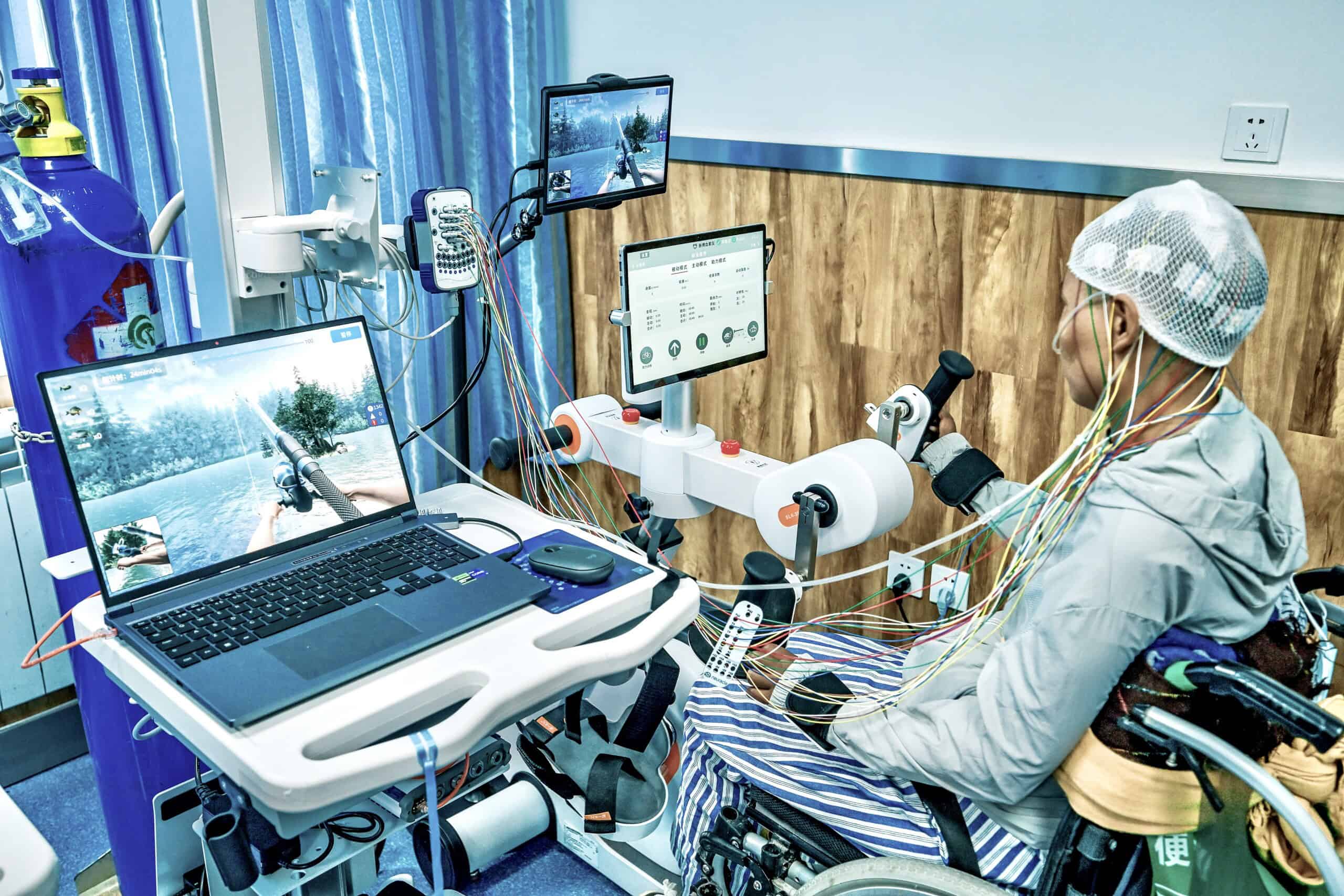
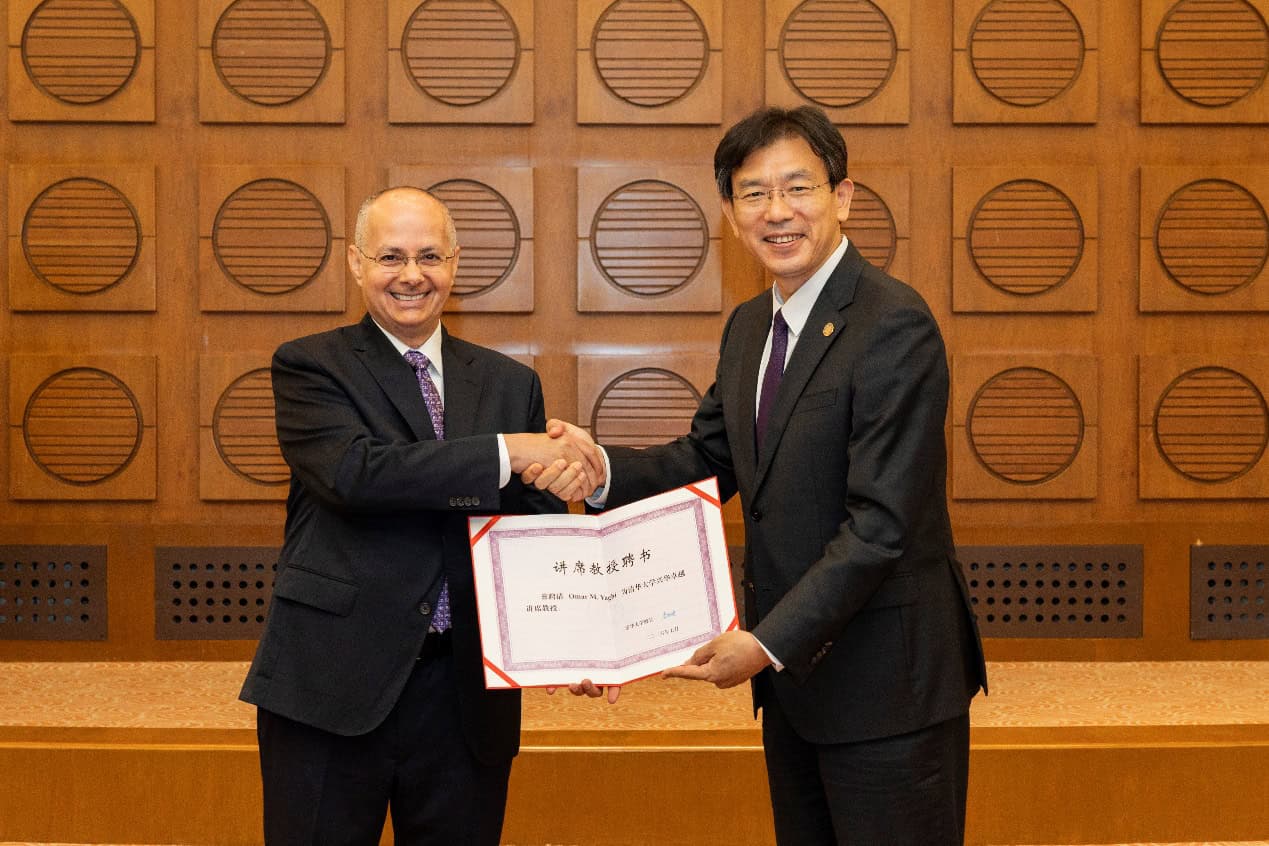
Among several recent high-profile moves of scientists from the United States to posts in China, one this month has stood out: On July 3, it was announced that Omar Yaghi, one of last year’s Nobel Prize winners in chemistry, had left UC Berkeley and joined Tsinghua University in Beijing, to lead its new AI Chemistry and Materials Research Institute.
The elite Tsinghua University is an attractive destination for AI research for many reasons. Its researchers and professors dominate recent AI patent filings and academic paper publications globally, and it has long been a top destination for Beijing-backed AI investment.
In this week’s Big Picture, The Wire China profiles Tsinghua University’s AI leadership as part of a series on the institutions behind Beijing’s science and technology ambitions. Our previous profile covered the Chinese Academy of Sciences.
THE TALENT PIPELINE
Tsinghua University, founded in 1911, leads China’s university rankings alongside its neighboring Peking University, and has become known as China’s MIT. It is part of the Double First-Class University scheme, a Chinese government program launched in 2015 to promote the development of Chinese education, and is Xi Jinping’s alma mater — the Chinese leader studied chemical engineering there in the 1970s.
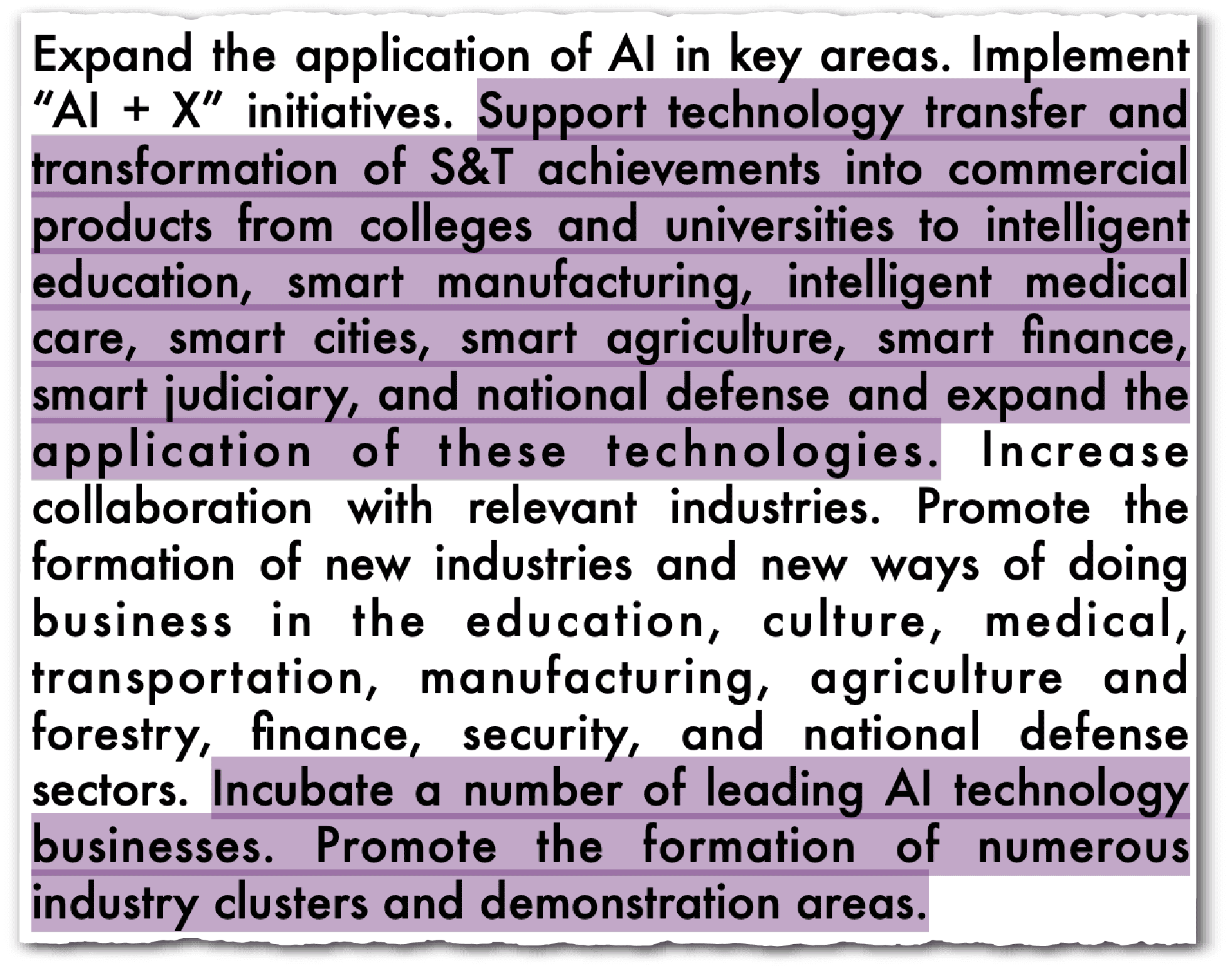
Institutions of Higher Education’. Translation via CSET.
Located in Zhongguancun, an area in northwest Beijing dubbed China’s Silicon Valley, Tsinghua has long trained graduates at the epicenter of the country’s tech boom.
A set of 2018 guidelines from China’s Ministry of Education sharpened Tsinghua’s AI focus. The guidelines called for universities to incubate AI business, set up industry clusters, and transfer technologies from the lab to the production line — giving them official backing to build a classroom-to-startup innovation pipeline.
Tsinghua moved quickly. Though the university has had strong AI research departments for decades, in the past six years it launched three new dedicated AI research institutions — not including Yaghi’s new institute.
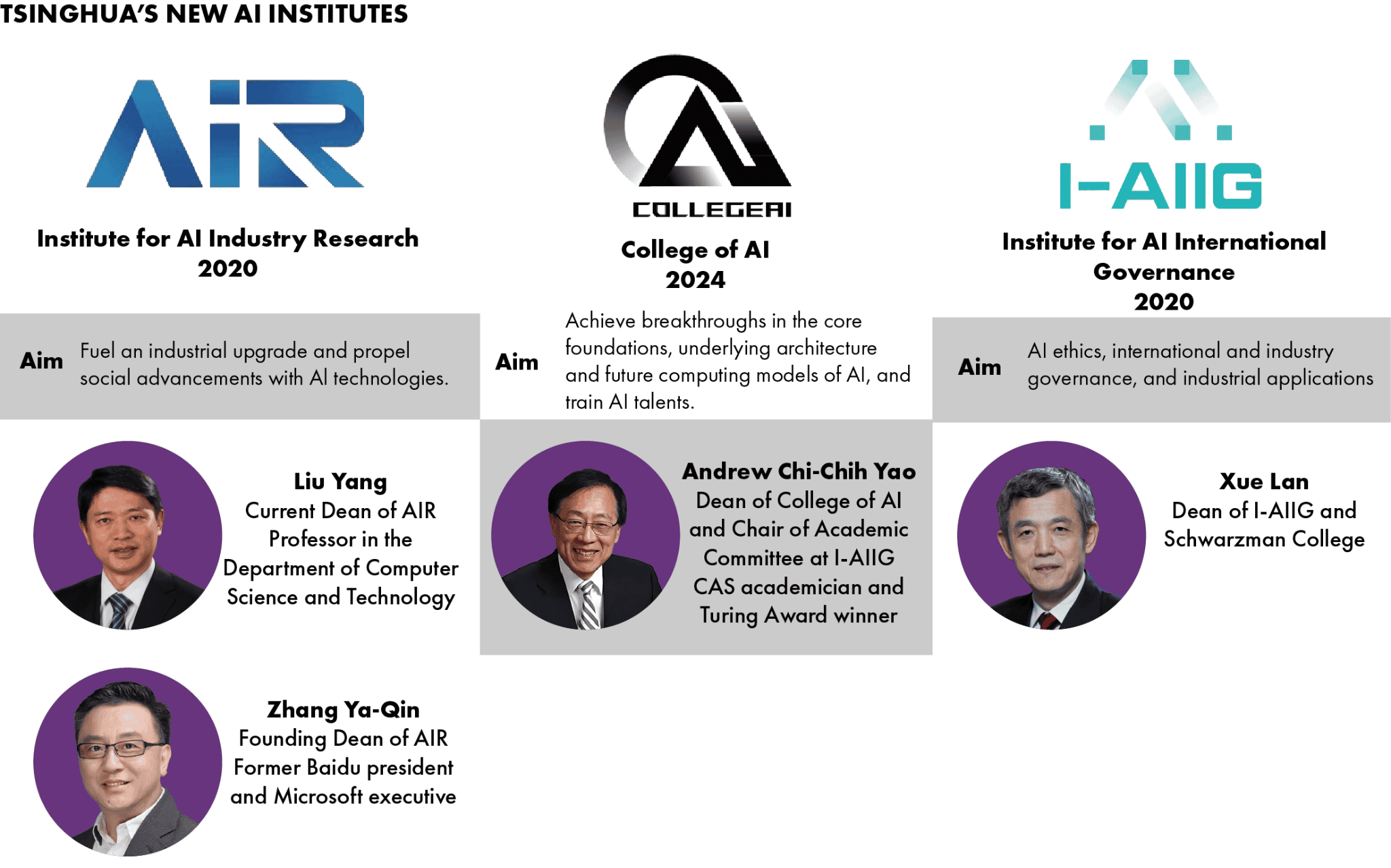
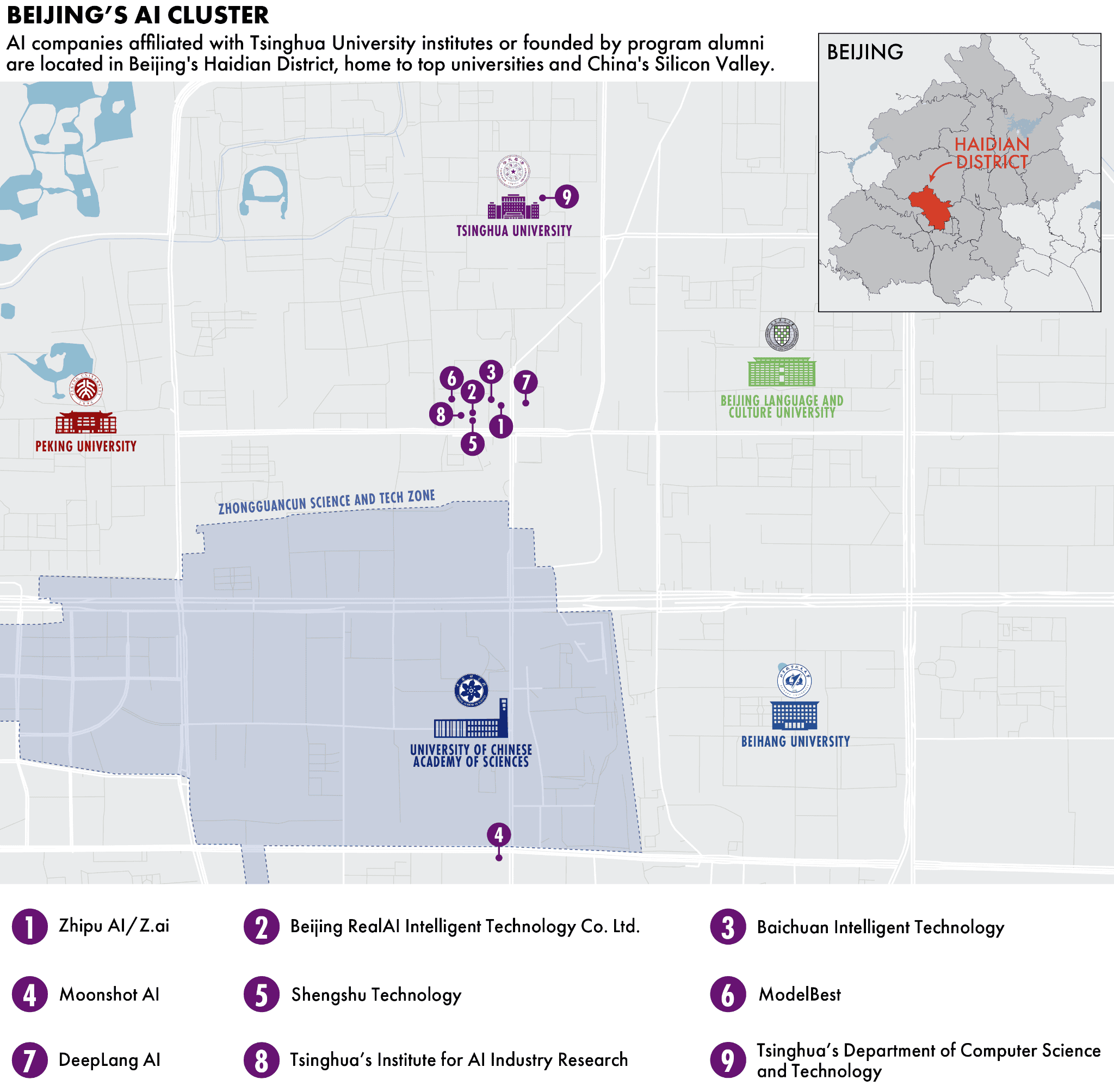
Those institutes have in turn incubated several high-profile AI companies including Zhipu AI, the company behind the high-performing GLM open-source AI models; and DeepLang AI, which aims to build a new generation of text processing engine. The founders of these companies, alumni or professors of Tsinghua’s AI institutes, have each commercialized the models they developed in the university’s labs.

Tsinghua’s role as a pipeline churning out innovative AI research is apparent just by looking at a map. Several AI companies founded by Tsinghua researchers are clustered right on the edge of its campus.
“Tsinghua University has become renowned as a hub for top AI start-ups founded by its faculty and alumni,” a World economic Forum report noted last year. “More broadly, China’s emphasis on AI clustering strengthens its talent pipeline by creating hubs of excellence centered around leading universities and research institutions.”
Tsinghua has also been supporting China’s AI drive by attempting to procure advanced chips from Nvidia, according to a recent report from WireScreen. Between November 2025 and May 2026, WireScreen identified 54 procurement records in which Tsinghua sought high-end Nvidia chips, the majority of which are export controlled. The U.S. has been trying to limit the flow of chips from Nvidia to Chinese AI labs like those at Tsinghua.
One of Tsinghua’s most famous AI exports is the “Yao Class,” an experimental computer science and AI undergraduate program founded in 2005 by Tsinghua professor and College of AI dean Andrew Chi-Chih Yao. Yao Class graduates stack the ranks of global tech firms including Meta and Google, according to Chinese media reports and the Yao Class’s own graduate lists. Chinese tech firms Megvii and Pony.ai were also founded by alumni from Yao’s rigorous program.
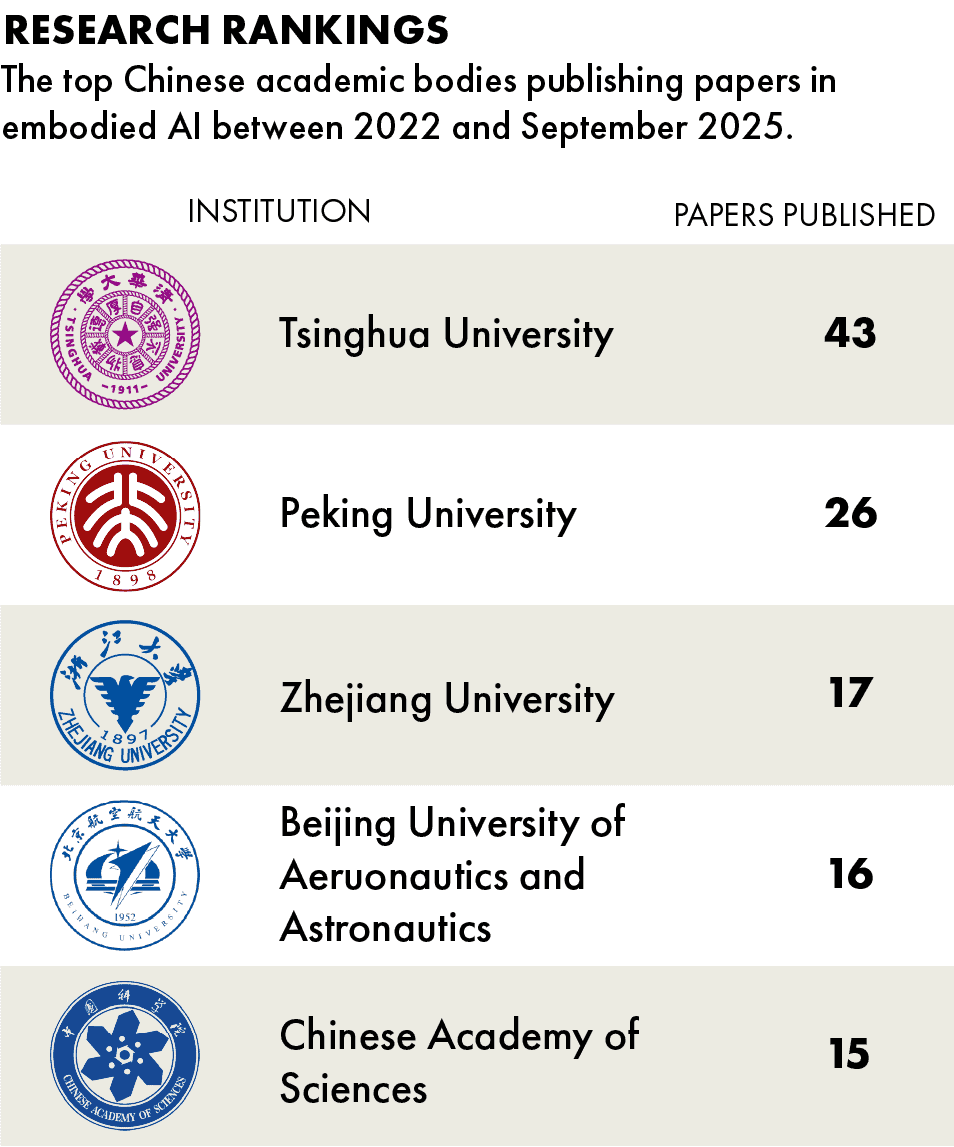
Another of Tsinghua’s strengths lies in embodied AI research, the field of study that connects AI models with the physical world through computer vision, machine learning, and hardware like robotics.
In 1988, China’s government chose Tsinghua as the site of the State Key Laboratory of Intelligent Technology and Systems, which has focused on embodied technologies. Today, Tsinghua hosts a municipal-level key lab for embodied intelligence as well, launched in 2025.
By 2025, Tsinghua alumni had founded 18 embodied AI companies, according to a 2025 report by Washington-based think tank CSET, including firms like Mech-Mind Robotics and Robot Era.
IP POWER
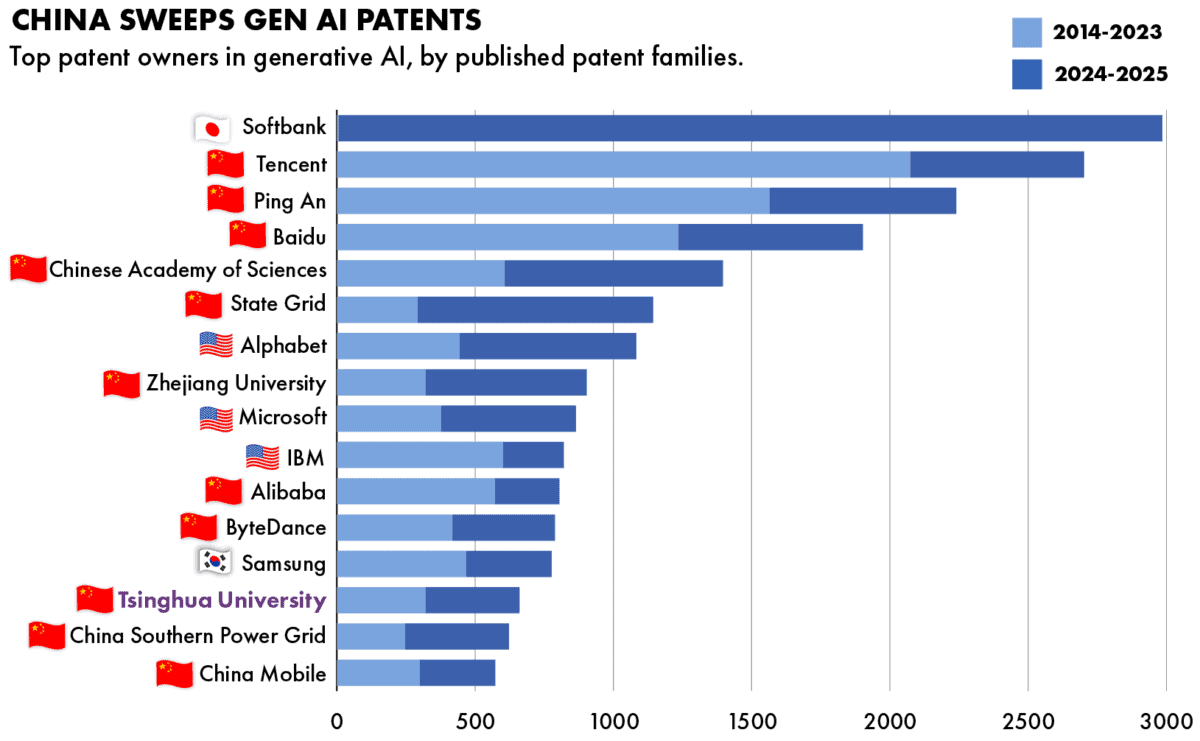
Tsinghua is also beefing up its intellectual property leadership in breakthrough AI technologies, though in this domain it has stiff competition from Zhejiang University, another hub for AI research in southern China’s Hangzhou.
Tsinghua University is the fourteenth largest holder of generative AI patents in the world, according to the World Intellectual Property Organization (WIPO). More than half of Tsinghua’s 660 gen AI patents were filed in 2024 and 2025 alone, compared to the same number filed over the decade from 2014 to 2023.
Yet while China leads in research, the United States still dominates in development. American researchers produced 59 notable models in 2025 to China’s 35, according to this year’s AI Index Report published by the Stanford Institute for Human-Centered Artificial Intelligence.

Savannah Billman is a Staff Writer for The Wire China based in NYC. She previously worked at the National Committee on U.S.-China Relations.