On India’s southern coast, in a workshop that would not look out of place in an American suburban garage, we recently watched a three-year-old company build drones by hand. The founders were engineers in their twenties. Their airframes were assembled from commercial components. Their software stack was written in-house. The drones they were building, prototypes with military applications, cost pennies on the dollar compared to anything the Pentagon buys for the same mission.

India has hundreds of companies like it, and the number is growing. The country has set a defense export target of roughly $6 billion by 2029, up from around $80 million a decade ago. Prime Minister Narendra Modi’s Atmanirbhar Bharat [self-reliance] policy has stood up industrial corridors, raised foreign investment caps, and seeded a defense-tech startup ecosystem that is already exporting. The capacity is real and growing.
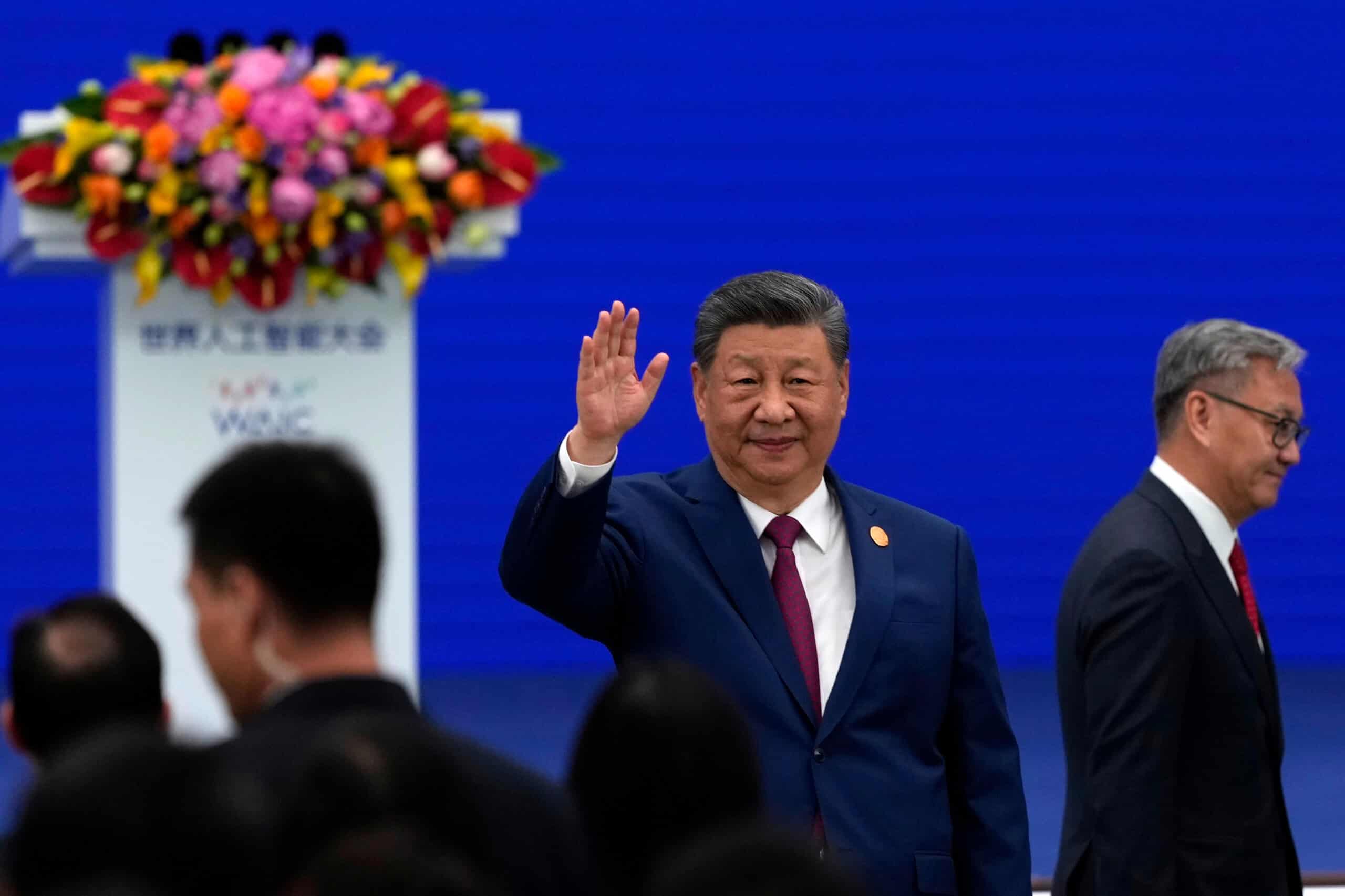
Last week, President Trump sat across from Xi Jinping in Beijing. For Washington, the summit was another reminder of an industrial arithmetic that still does not work in America’s favor. China’s manufacturing base is now larger than those of the United States, Japan, and Germany combined. Even the United States and Europe together cannot match China’s industrial scale: India is the only way the math begins to work. That is not a matter of preference, but strategic necessity. It also aligns with India’s own threat perceptions: a country shaped by sustained Chinese pressure along its northern border, with defense modernization increasingly organized around that reality.
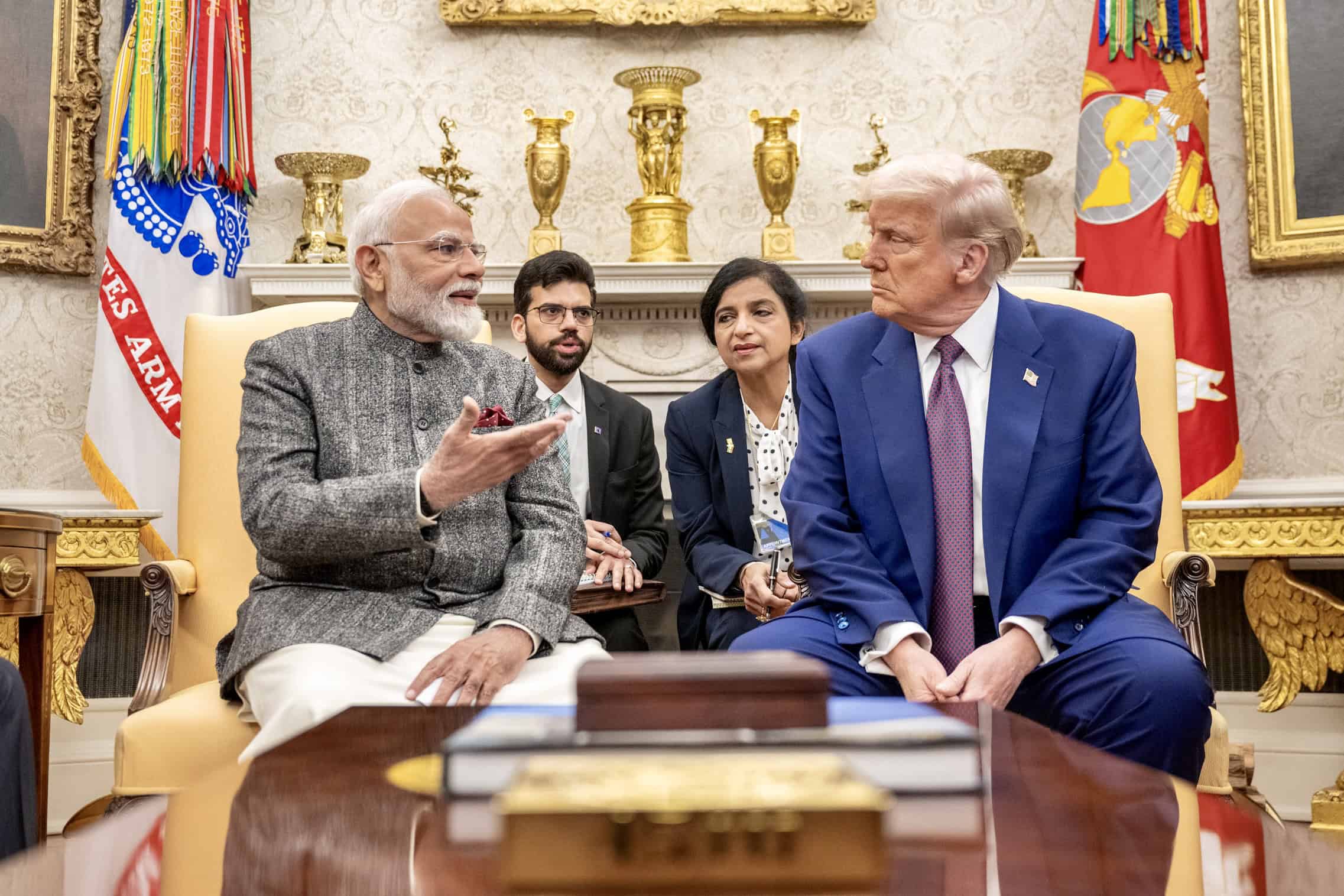
The U.S. and India have been signing the right documents. Last October, the two nations agreed to a roadmap covering joint research, co-development, supply security, and innovation bridges between American and Indian defense startups, building on years of bipartisan effort. In 2023, then-Senate Majority Leader Chuck Schumer used the Munich Security Conference to argue that the United States and Europe could not outcompete China alone, and that India had to be at the center of the answer.
Congress codified Schumer’s logic in the Defense Authorization Act. Then-Senator Marco Rubio, now Secretary of State, advanced the argument, introducing legislation to give India statutory treatment on par with treaty allies for defense technology transfers. This coordination has been, and continues to be, deeply bipartisan.
But Indian readers know what we know. Signing more documents while the system that governs how the United States shares defense technology with its partners stays the same is not a fix. The frustration in Indian commentary, that bilateral activity has accelerated while access to the underlying technologies that matter has not, is well justified. The strategic argument for a deeper and more meaningful U.S.-India partnership has been settled in Washington for three years, but the architecture has not moved. That is not principally a failure on India’s side of the table; it is ours.

The conversation in Washington has long pointed to Indian bureaucracy as the binding constraint. That is convenient, and not without truth, but it shifts considerable blame from where U.S. policymakers should be focused. The U.S.’s licensing system is a critical obstacle, and it sits in Washington. It is a maze of license requirements, exemption regimes, and excluded-technology lists written for a different century. The drone we watched being built was made of components anyone can buy. The control point is now firmly in the wrong place.
The bottleneck increasingly sits in Washington: export-control regimes, byzantine procurement rules, financing tools, and technology-sharing frameworks built for a different era and a different strategic environment.
The Arms Export Control Act (AECA), which created the International Traffic in Arms Regulations (ITAR) and was signed nearly 50 years ago, was built on two assumptions that no longer hold.
The first was that defense innovation drove commercial technology. In 1976, that was largely true. Today, the technologies that decide battlefield outcomes are commercial-first by default: autonomy, AI, drones, sensing, additive manufacturing, communications.

The second was that the adversary was economically isolated. That described the Soviet Union. It does not describe China, the central node of global manufacturing and a key cog in nearly every important western supply chain. An export-control regime built for one century is being asked to govern the technologies of the next.

AUKUS, the trilateral defense agreement between the U.S., UK and Australia, shows that the architecture can change. The State Department’s exemption for AUKUS partners, finalized in December and operational since September 2024, allows roughly 70 percent of U.S.-Australia defense trade subject to ITAR to move without a license. But the State Department wrote that rule only because Congress amended the AECA in 2023. The architectural change came first; the regulatory change followed.
India deserves the same type of fix, sized to the partnership we actually have, not a copy-paste of AUKUS. The Framework operationalized the strategic direction Congress had already set. Statute will write the legal authority that carries it the rest of the way, the way it did for AUKUS in 2023.
Moving forward, there is already a model worth studying. India and Israel jointly developed the Barak-8 surface-to-air missile system, a sophisticated defense platform now operational with both militaries and exported abroad. Israel is hardly known for casual technology transfer. The framework that made Barak-8 possible — government-backed coordination, clearly defined industrial responsibilities, and layered protections for sensitive technologies — is precisely the kind of architecture the United States should be building with India.
And the time is now. The industrial base on India’s southern coast is already expanding. The companies are already exporting. The drones are already flying. The strategic logic of deeper U.S.-India industrial cooperation was settled years ago, across administrations and across parties.
What has lagged is not intent, but execution. The bottleneck increasingly sits in Washington: export-control regimes, byzantine procurement rules, financing tools, and technology-sharing frameworks built for a different era and a different strategic environment. Until that architecture changes, the partnership will continue to operate below its potential. Every year that gap persists is another year in which Beijing consolidates its industrial and technological advantage.

Mike Kuiken is a Distinguished Visiting Fellow at the Hoover Institution at Stanford University, Vice Chair of the U.S.-China Economic and Security Review Commission, and Managing Member of Silver Valley Strategies.

Leland Miller is CEO of China Beige Book, and a Commissioner on the U.S.-China Economic and Security Review Commission.