Xi Jinping is a prophet.
Five years ago, the Chinese president warned in a lecture to regional officials that “blockages in economic circulation” would cause a host of maladies: sluggish growth, rising unemployment, industrial overcapacity, shrinking corporate profit margins and falling household incomes.

His foresight was uncanny. In the years since, each of these problems has emerged to trouble China’s economy.
Xi, of course, was at the time determined to avoid such a dire future. Instead he steered the country straight into it. The same economic logic that drove him then still underpins China’s policymaking today. It runs through the country’s 15th Five-Year Plan, approved by its legislature in March. Understanding this logic may help those once again anticipating a “historic change” in China towards a consumption-driven economy to finally let go of such a fantasy.
Xi’s prophetic speech in 2021 was meant to launch a “new development paradigm.” He instructed his Communist Party cadres to maintain the smooth circulation of the economy by cultivating “strong effective supply capacity.” A virtuous cycle would take hold, he argued, with robust supply removing bottlenecks, creating jobs and generating income, which in turn would boost demand and ultimately “achieve a high-level dynamic balance in the economy.”

China’s central authorities quickly followed up with a “strategic plan” to boost demand through 2035. Its central doctrine is straightforward and even elegant: produce more goods, better goods, a wider variety of goods, while expanding the logistics networks needed to deliver them faster — and consumers will splurge.
Call it Xi’s abundance strategy. As a remedy for an economy marked by persistent supply excess and demand shortfall, it is perhaps a bit perplexing. It starts to make sense, however, when one thinks like a Marxist developmentalist.
Marxism is enshrined in China’s constitution as a foundational ideology and the new Five-Year Plan duly cites it as “a guiding thought” for economic development. China’s economic policymakers are not just paying lip service to core Marxist economic tenets, but organizing the country’s economic activities around them.
Liberal economics treats the consumer as king. It holds that individual preferences on goods and services, mediated by prices, guide companies to meet demand and in turn drive resource allocation. Marxism, by contrast, venerates productive forces as the engine of historical change, propelling economic growth, technological advancement, political evolution and civilizational progress. For a developmentalist, the state must actively guide the upgrading of productive capacity.
Simply put, the ultimate objective of liberal economic policy is to increase households’ consumption potential. For a Marxist developmentalist like Xi, it is to maximize the economy’s productive prowess.
Marxism teaches that whoever controls the means of production holds the key to power. The Chinese Communist Party — the self-appointed representative of the country’s “advanced productive forces” — will never leave the stewardship of productive capacity to the whims of individual consumers.

A Marxist developmentalist cares about demand too, but it has to serve — as Xi has decreed — “modern science, technology and the means of production.” Demand generated by building factories, purchasing machinery, constructing roads, and adding data centers is therefore prioritized over household consumption. That is why China’s post-pandemic demand stimulus efforts have been centered on giving subsidies to factories to upgrade their equipment, and vouchers to consumers to trade in worn out durable goods for new ones. The former boosts industrial production directly. The latter does so via a detour.
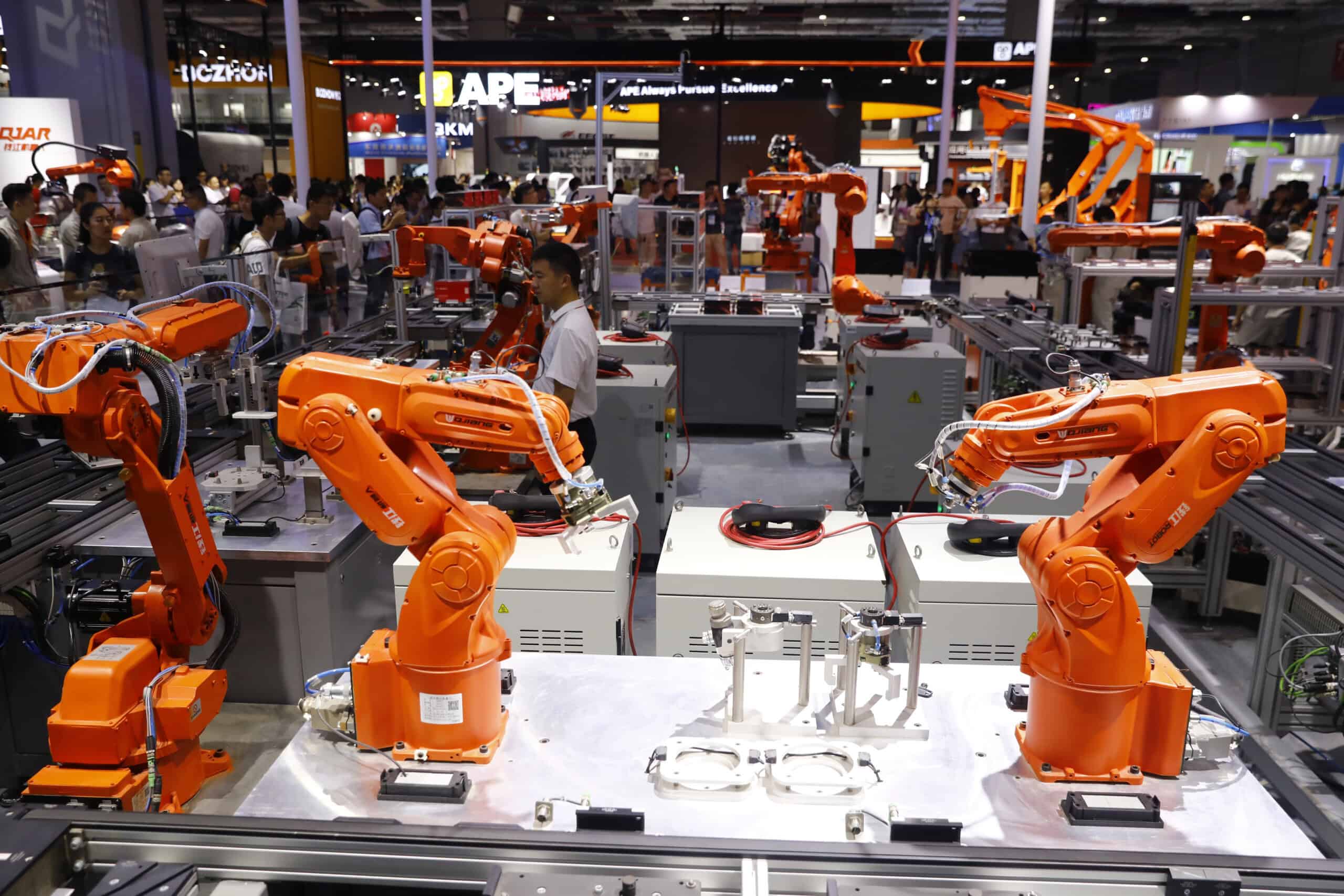
The new Five-Year Plan likewise describes “boosting domestic demand as the strategic cornerstone.” But far more prominently, it instructs the party-state to pursue a full-spectrum techno-industrial transformation: upgrading traditional industries such as metals, textiles, and appliances; strengthening emerging sectors including electric vehicles, batteries, and biomedicine; and accelerating deployment of frontier technologies like quantum computing, fusion energy, and embodied AI.
If China continues pursuing productive grandeur regardless of consumers’ preferences, the world’s leading industrial nation will get stuck with a lopsided economy that becomes ever harder to rebalance.
To a Marxist developmentalist, individuals are workers before they are consumers. Their capacity to consume must be grounded in earned income rather than fiscal redistribution. The Five-Year Plan’s primary prescription for boosting consumption is therefore to raise employment and compensation from work, rather than building the sort of welfare system economists outside China have long urged on the government. And when consumers are not buying goods to support industrial production, their spending has to be guided towards “developmental” services — education, training and sports — to make them more skilled and heartier workers.

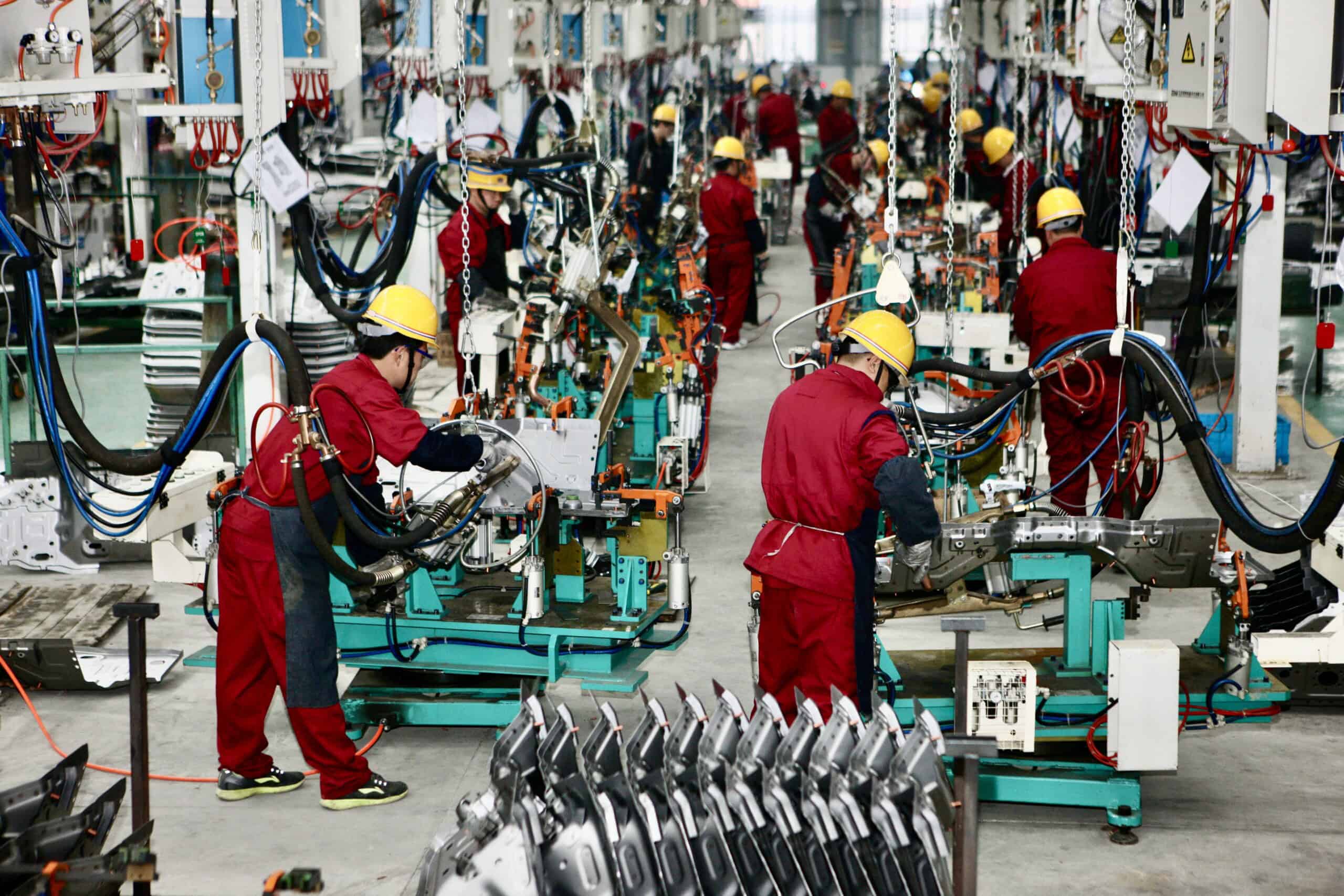
China’s assiduous investment in supply-side capacity has paid off spectacularly. Its industrial firms continue to move up the value chain, its exports steadily capture global markets, and its tech companies increasingly set global trends.
Despite these techno-industrial triumphs, the economic maladies Xi warned of five years ago have only become more entrenched.
China’s Marxist developmentalist policymakers might argue that patience and determination are required. They may believe that their relentless cultivation of the country’s productive forces will eventually set off a positive feedback loop of industrial transformation, skills upgrading, rising incomes, and expanding consumption.
Yet the danger is that a vicious cycle instead takes hold, in which chronic excess supply crushes corporate profits, depresses wages and discourages consumer spending — leading Chinese companies to seek to export ever more to markets that are becoming unwilling to absorb its excess capacity. The fixation on production may harden, rather than dissolve, the economic blockages that have so concerned Xi, as the state and the consumer do not always have the same priorities.
Chinese state media has been hailing 2026 as the “auspicious inaugural year” for commercial spaceflight, for example. A central government “action plan,” issued in November, has prompted half of the country’s provinces to begin incubating industrial clusters to make satellites, rockets, and spacecraft. More than 600 space companies have emerged, several of them developing space tourism.
Chinese officials envision “an era of mass consumption” of space travel. But a population grappling with job insecurity, stagnating income and contracting wealth is probably not going to prioritize sightseeing in outer space.
Though economic liberalism seems to be going out of fashion, perhaps ignoring individual agency still has a cost. If China continues pursuing productive grandeur regardless of consumers’ preferences, the world’s leading industrial nation will get stuck with a lopsided economy that becomes ever harder to rebalance.

Yanmei Xie is a senior TOY fellow at the Asia Society Switzerland, and senior associate fellow at the Mercator Institute for China Studies.