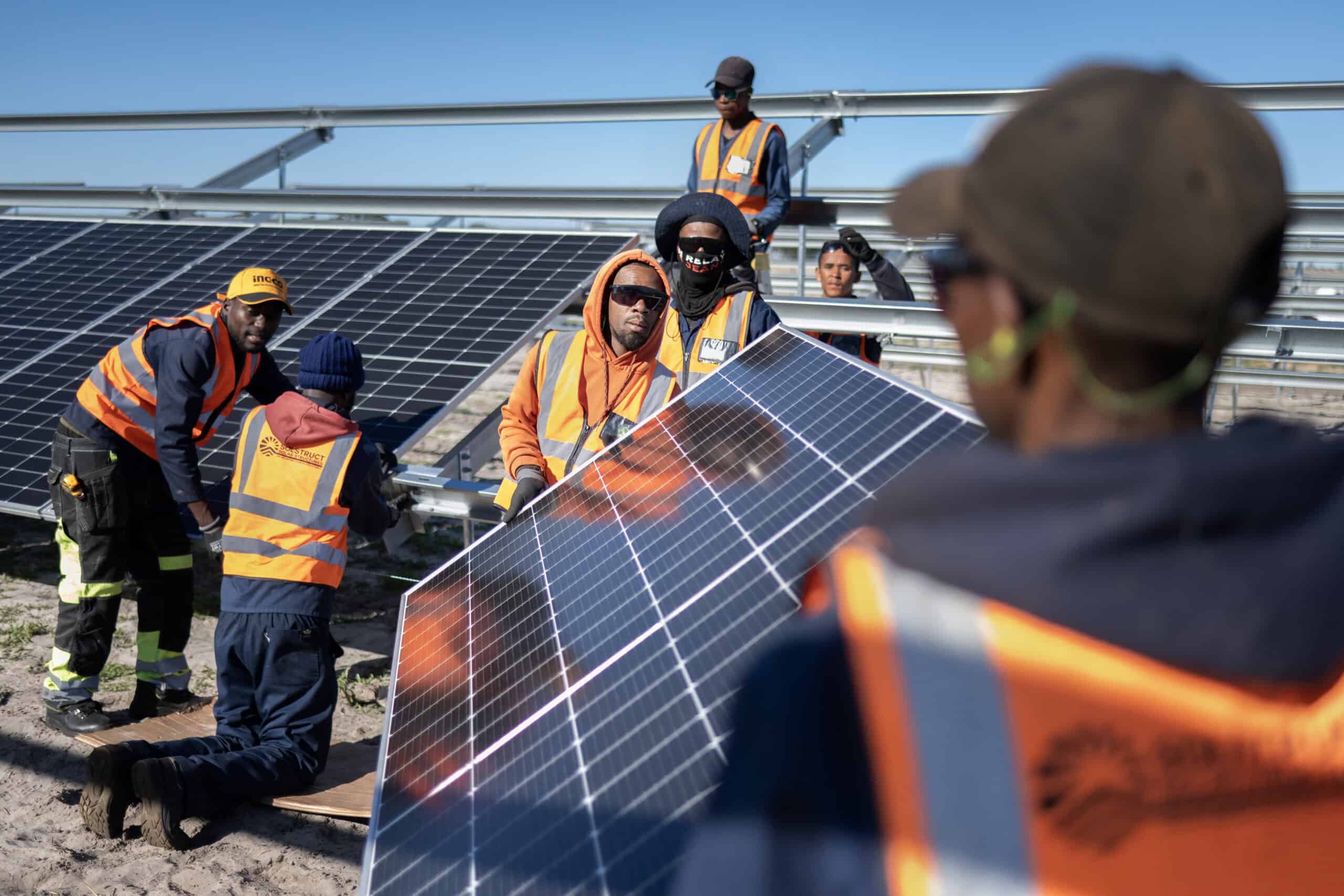
Africa is the sunniest continent on the planet. But despite its abundance of natural light it generates less than five percent of its electricity from solar energy.
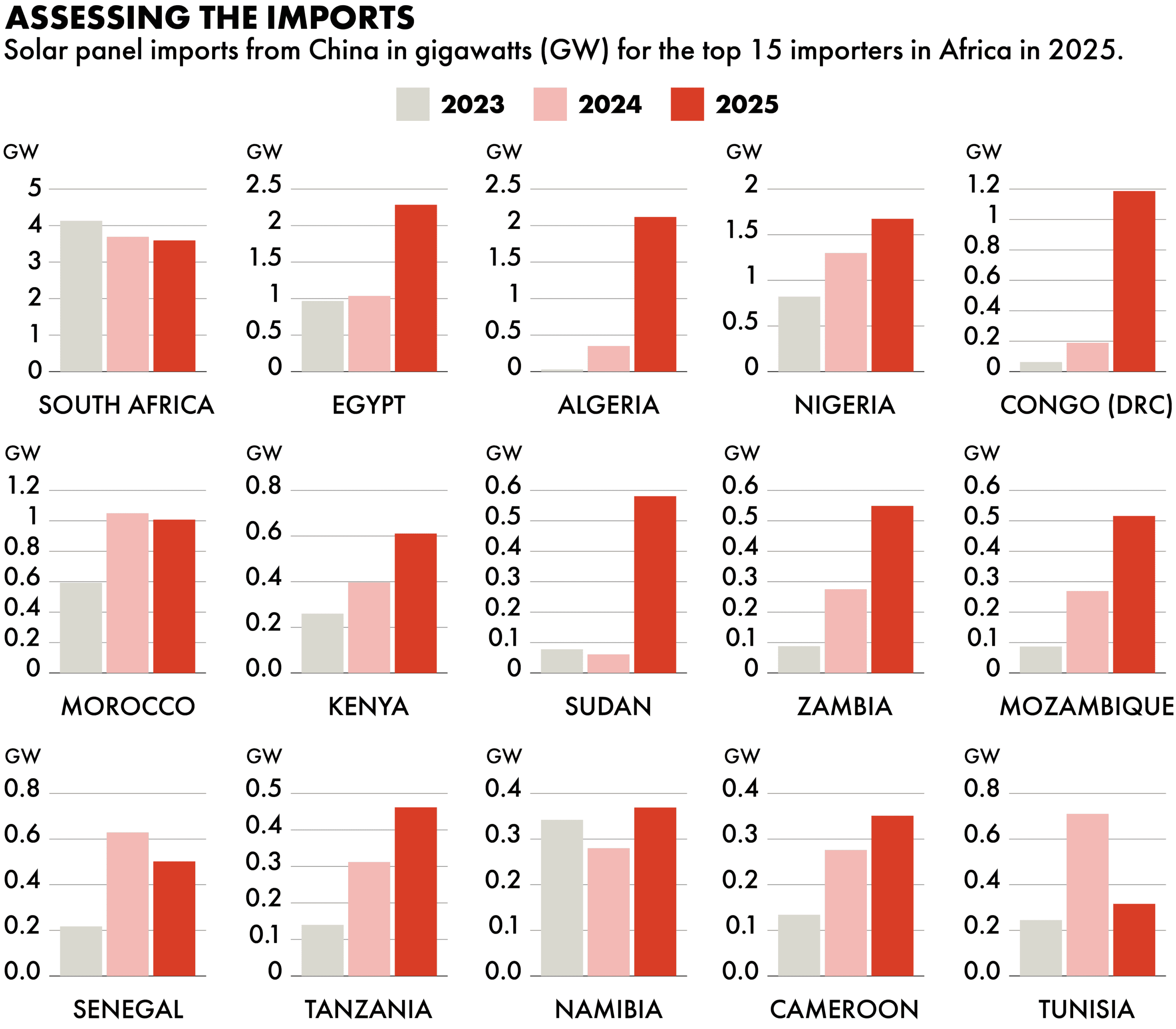
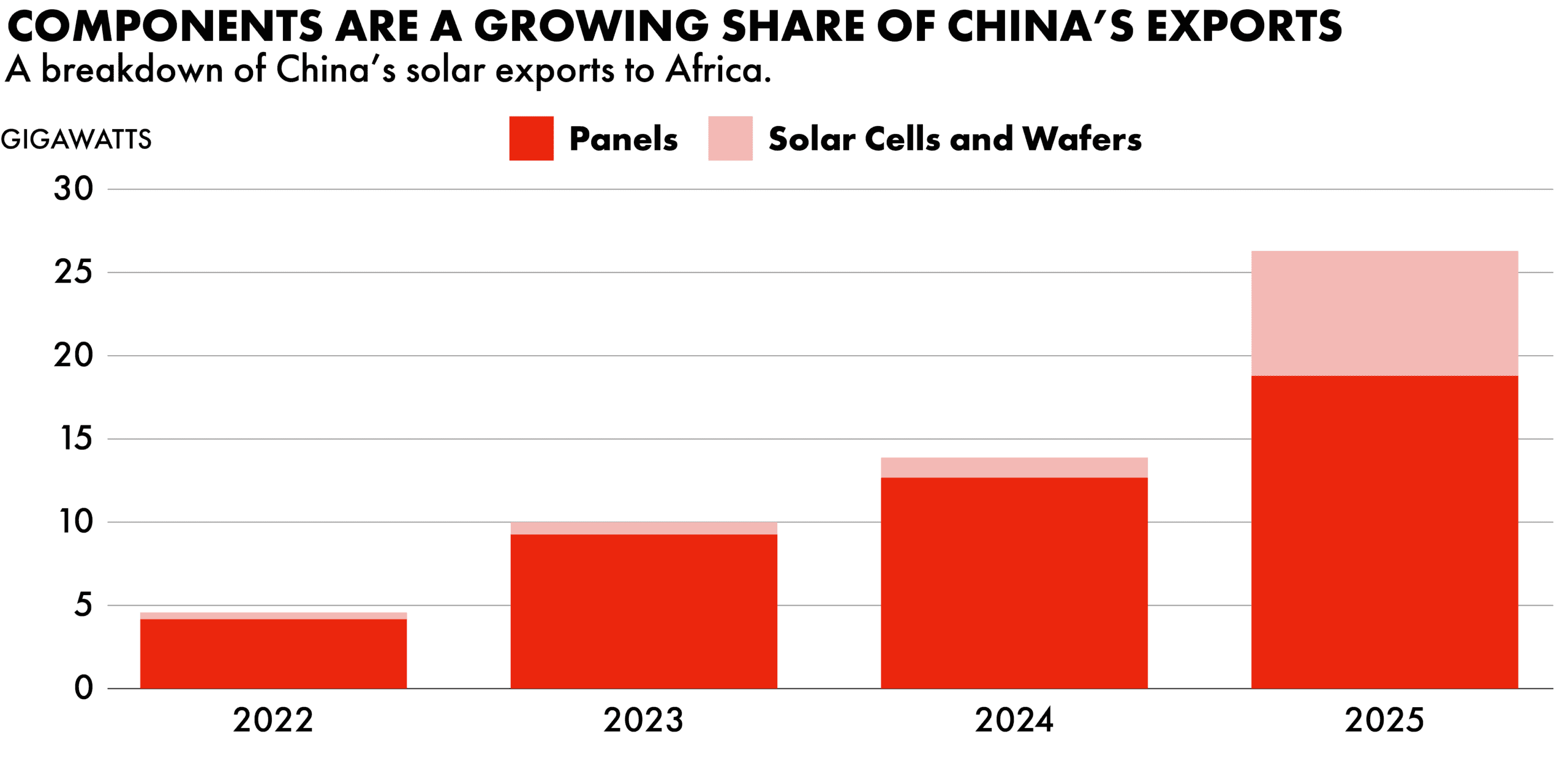
China’s surging exports of solar panels could change that. Chinese manufacturers shipped 18.8 gigawatts worth of solar panels to African nations last year, 48 percent more than in 2024, according to an analysis of Chinese export data by British energy tracking firm Ember. That is equivalent to more than three times the capacity of the Grand Ethiopian Renaissance Dam, the continent’s largest hydropower project.
“To see every country in Africa suddenly explode at the same point,” says Dave Jones, chief analyst at Ember, “it feels like there’s a real moment in it.”
If sales to Africa continue to grow at the same pace, calculations by The Wire show that by the end of the decade China will have become a critical supplier of energy infrastructure to the continent, where almost 600 million people still lack electricity. The electrification gap creates huge potential demand for renewable energy infrastructure like solar panels.
As a result Africa, with vast unmet demand and few trade barriers, has become a more compelling market for a Chinese industry being squeezed out of the United States and Europe.
Yet as China sells more to the continent, it risks creating the same trade imbalances that have led policymakers in Western markets to grow wary of Chinese exports.
Chinese solar companies “are betting a lot on Africa right now,” says John van Zuylen, chief executive of the Rwanda-based Africa Solar Industry Association. “There is a lot less reticence compared to what you may see from Europe and the U.S.”
African countries [are] regarding China as their savior. China is regarding African countries as a dumping ground.
Marvellous Ngundu, a research consultant at the Pretoria-based Institute for Security Studies
A decade ago Africa generated hardly any of its power from solar. But adoption has spread as countries import more solar panels from China, where fierce competition has led to overcapacity and lower prices, forcing firms to seek new markets overseas. Chinese firms dominate global solar equipment manufacturing, producing 86 percent of the world’s solar panels as of 2024, according to the China Photovoltaic Industry Association.
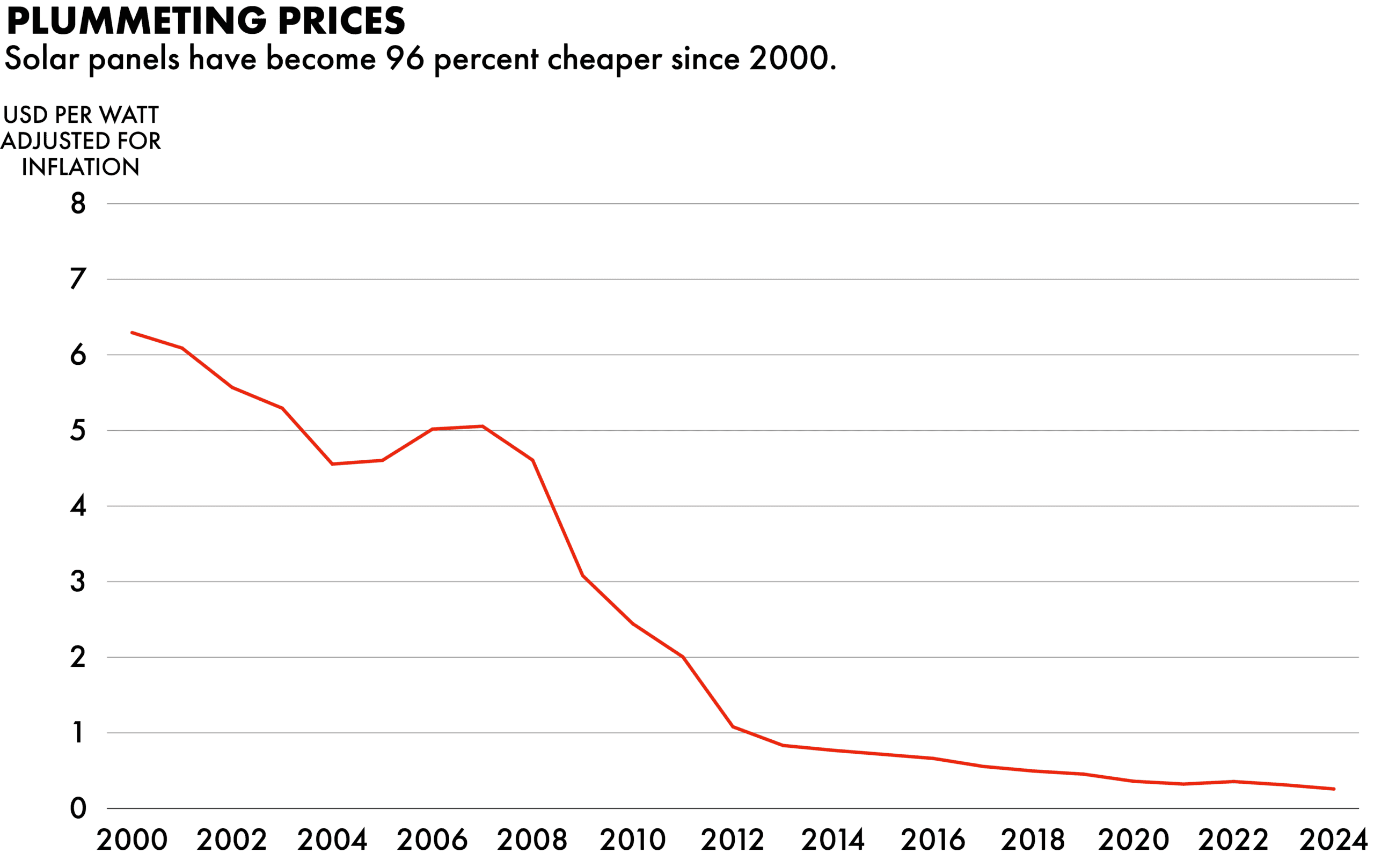
The top tier Chinese solar panels are typically between 20 and 30 percent cheaper than comparable products made by other Asian exporters, according to Terje Osmundsen, chief executive of Empower Energy, a Norwegian company that builds solar plants in Africa. He adds that U.S. and European solar panels are “niche products with a higher premium.”
Wealthy countries have met China’s dominance with protectionist measures. The United States has slapped high tariffs on Chinese solar panels. The European solar industry has lobbied for similar protections, while Brussels has imposed several measures short of tariffs that have made it harder to buy Chinese solar panels.
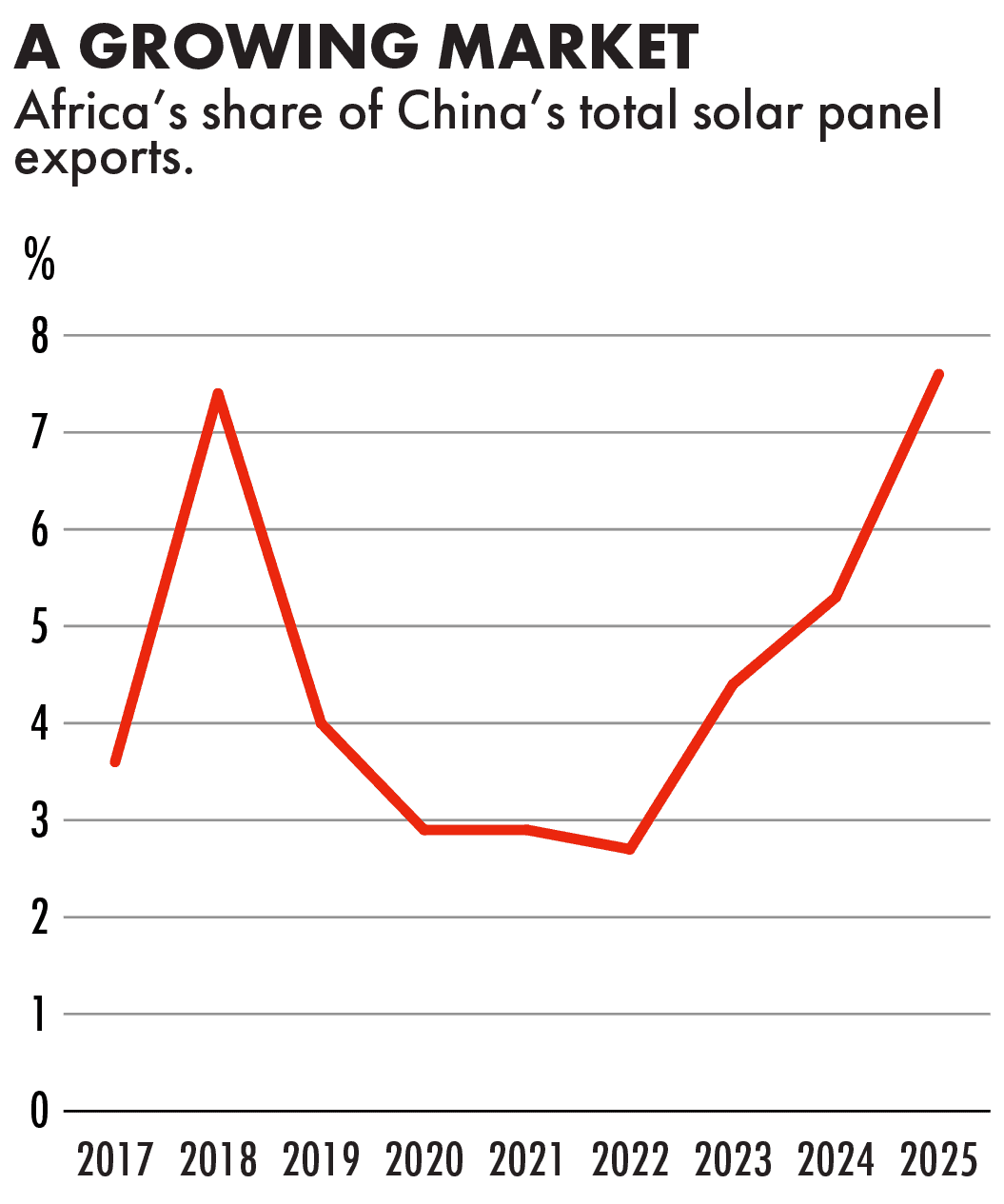
That has added pressure on Chinese solar firms to diversify their exports to new regions such as Africa. China’s exports there are growing faster than to any other continent, although they still make up a relatively small share of the overall total.
“We should be thankful to China’s aggressive industrial strategy to scale up [solar] manufacturing because the dramatic drop in the module prices has been the main driver behind the accelerated growth in solar that we’ve seen the last year across Africa,” Osmundsen says.
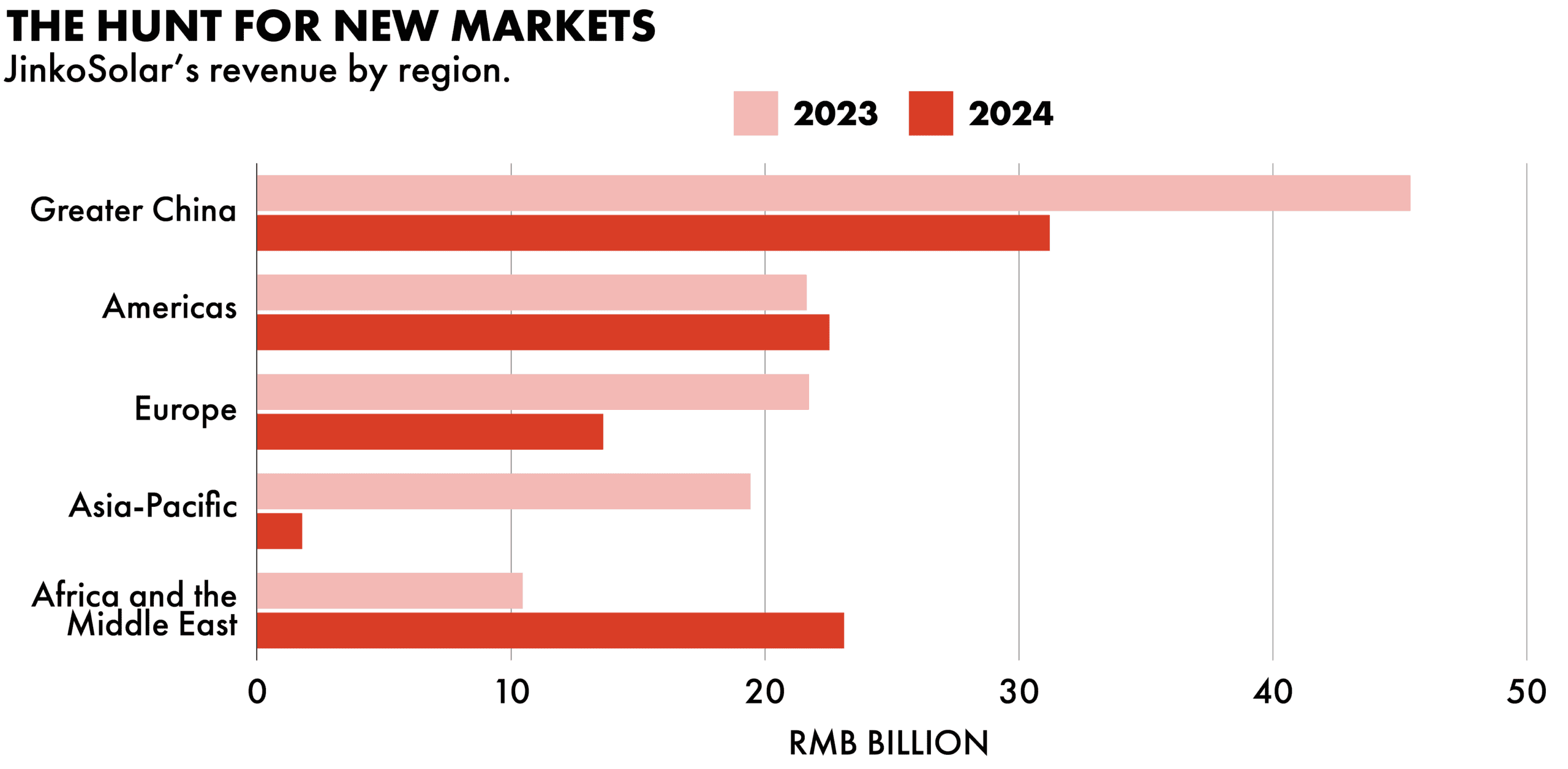
Take JinkoSolar, a Shanghai-based company that is one of the world’s largest solar manufacturers. While its domestic revenue declined by a third in 2024, according to its most recent annual report, its sales to Africa and the Middle East more than doubled to a quarter of the company’s total.
In South Africa, the largest importer of Chinese solar panels in Africa, solar grew from having a negligible share of total electricity-generating capacity ten years ago to around 10 percent in 2024, according to the government-backed Council for Scientific and Industrial Research. Households often install panels without connecting them to South Africa’s grid, insulating them against national power outages that have become common in recent years.
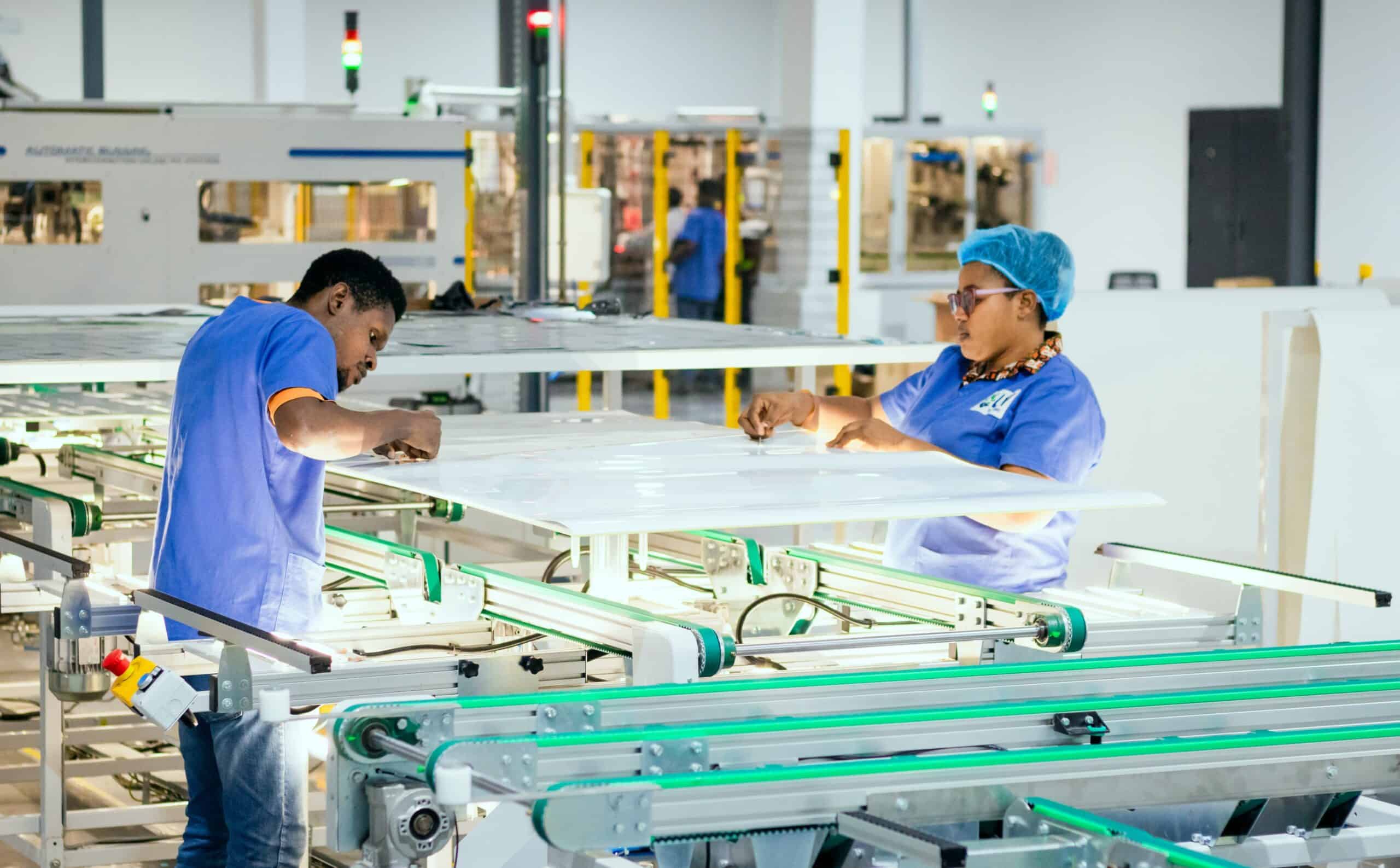
But some in the country are beginning to worry that getting hooked on cheap Chinese solar panels will stifle its efforts to develop its own solar industry.
“The dependency syndrome is already being created,” says Marvellous Ngundu, a research consultant at the Pretoria-based Institute for Security Studies. “It’s a matter of economic concern.”
Energy experts say that dominance in solar manufacturing does not confer the same geopolitical leverage for a country as oil and gas production, however. Buying a panel is often a one-time transaction, and the seller does not usually continue to operate it. In many African countries, local companies handle the distribution of electricity generated by Chinese solar panels.
“Chinese leverage for solar is based in the products being inexpensive, working well and delivered fast, not an ongoing maintenance relationship,” says David Fishman, a Shanghai-based principal at the Lantau Group, an energy consultancy. “The systems are dead simple.”
A more pressing concern is the solar industry’s role in a trading relationship between China and Africa that is becoming ever more one-sided. Chinese customs statistics show that China’s goods trade surplus with Africa reached its highest level on record at $102 billion in 2025, 65 percent wider than the year before. In a bid both to boost further bilateral trade and to show it is aware of such worries, China is set to drop its tariffs on goods imports from 53 African countries to zero from May.
Ngundu, of the Institute for Security Studies in South Africa, views the tariff cut as a “strategic headline.” China’s primary imports from Africa are natural resources, some of which are extracted by Chinese companies. China’s exports to Africa, by contrast, are primarily manufactured products.
“African countries [are] regarding China as their savior,” Ngundu says. “China is regarding African countries as a dumping ground.”
To avoid being shut out of Africa’s largest economies, Chinese solar firms should invest in local manufacturing, says Kevin Gallagher, professor of global development policy at Boston University.
The real concern for Africa is price. Nobody will be worried it comes from China.
Dereje Woregna, the former chief executive of the Ethiopian Solar Energy Development Association
The continent’s larger economies are already seeking to build more solar panels at home, though they are still importing Chinese inputs. Ethiopia, for example, bought 3.4 gigawatts worth of solar cells and wafers last year, Ember data shows. For context, Ethiopian Electric Power, the state-owned grid operator, says it has a total generation capacity of 8.1 gigawatts.
Many of those imported components will likely become manufactured products that are exported to the United States and Europe, says Dereje Woregna, the former chief executive of the Ethiopian Solar Energy Development Association. Toyo, a Nasdaq-listed Japanese company, started making solar cells in Ethiopia last year to meet the needs of external customers and its panel manufacturing facility in Texas. It plans to roughly double production to 4 gigawatts annually.
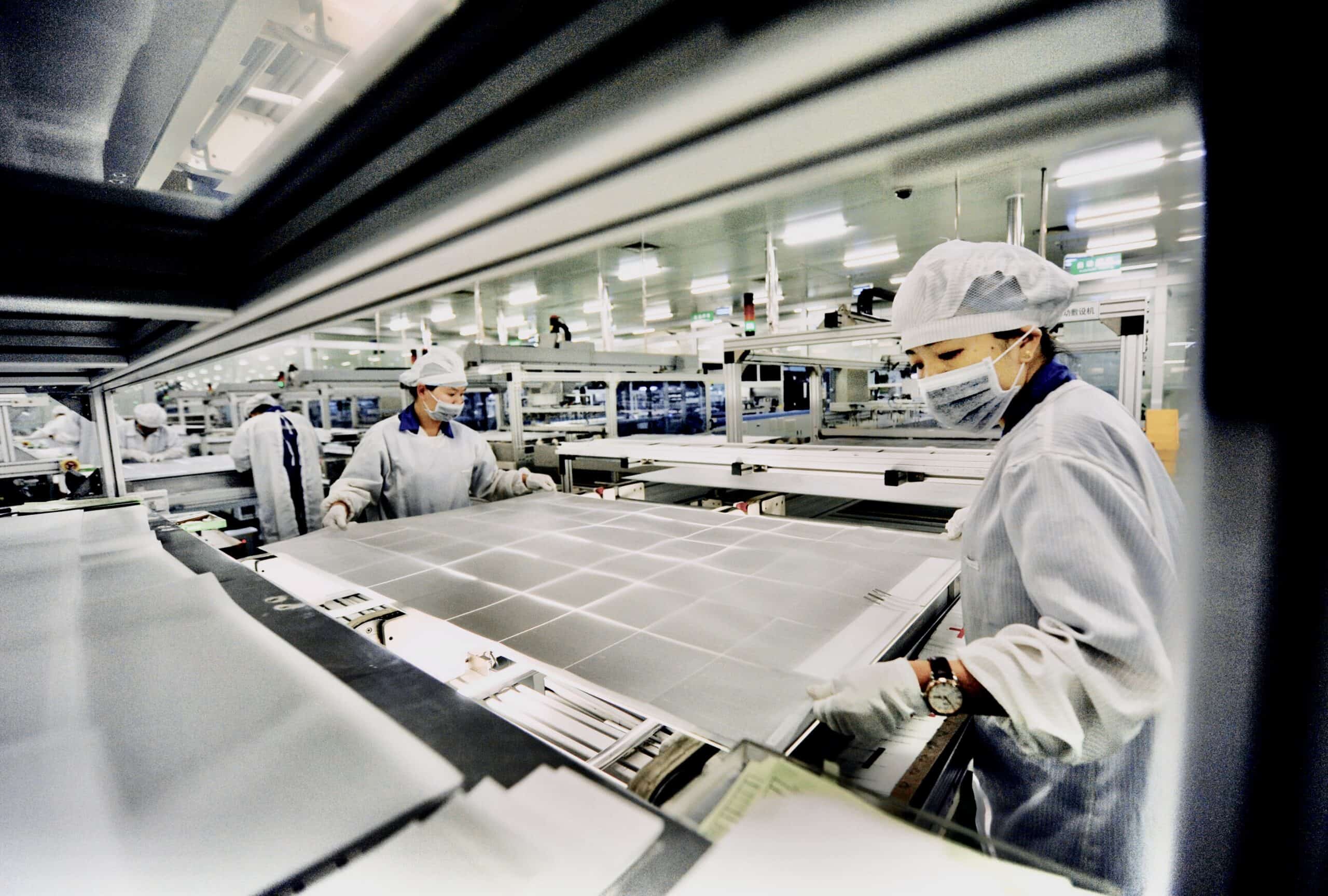
Some in the industry say Africa will be happy to keep buying from China as long as the costs remain low and the quality high.
“The real concern for Africa,” Woregna says, “is price. Nobody will be worried it comes from China.”
There is no evidence yet that the tide of Chinese solar exports is slowing. In gigawatt terms, they rose another 35 percent year-over-year in the first two months of 2026, according to Ember.
Chinese solar technology may be the best and cheapest in the world, Gallagher says. But in Africa, Chinese companies “can’t make the same miscalculation that they made in the West,” he adds. “After the Global South, there’s nowhere else to go.”

Noah Berman is a staff writer for The Wire based in New York. He previously wrote about economics and technology at the Council on Foreign Relations. His work has appeared in the Boston Globe and PBS News. He graduated from Georgetown University.