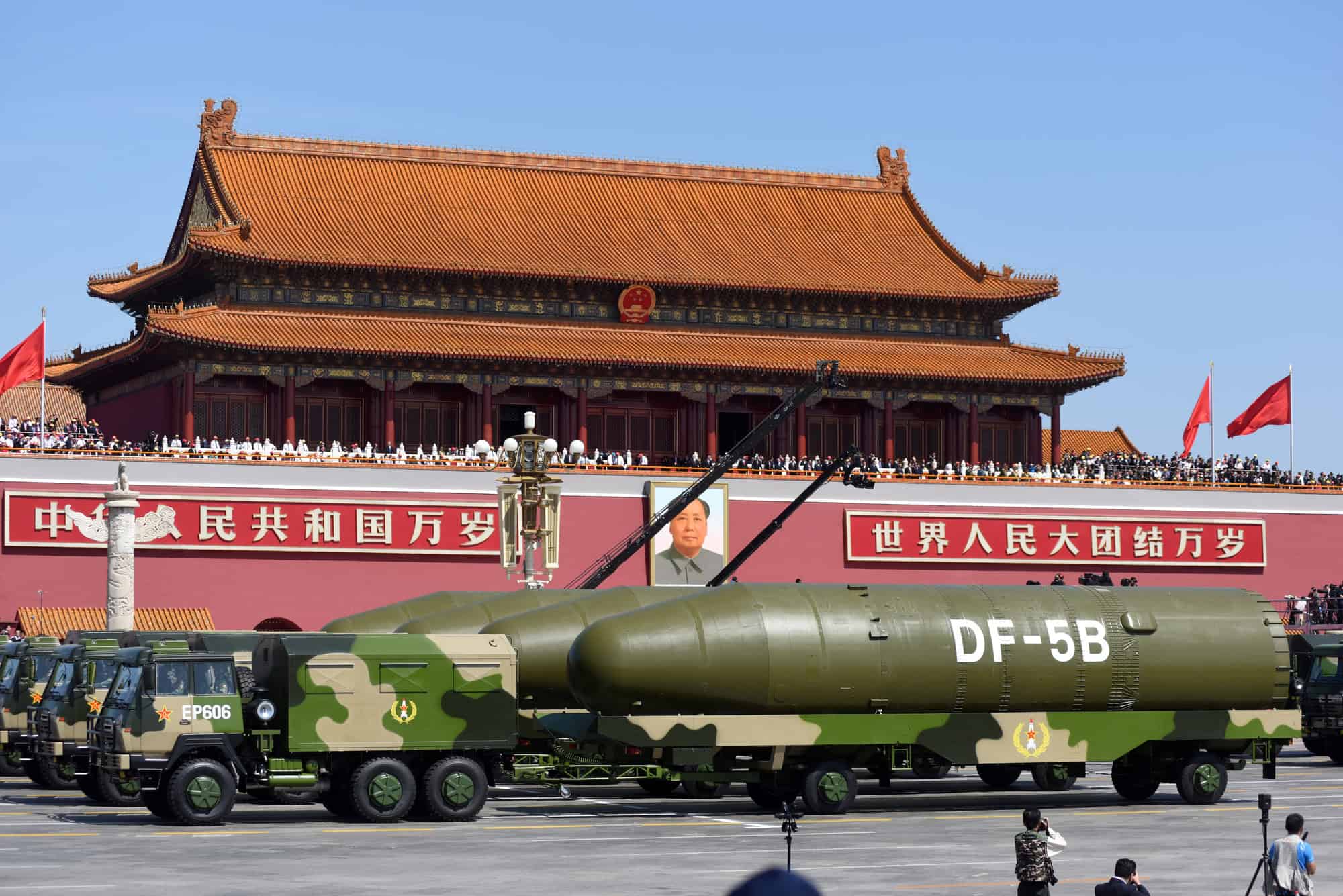
Washington has begun to grasp that artificial intelligence is a strategic technology. What it has not yet fully absorbed is that AI’s decisive impact will not be confined to software. The real competition with China will unfold in the physical world through robots that manufacture goods, move supplies, care for aging populations, surveil oceans, and fight wars. Beijing understands this distinction clearly. Washington, so far, does not.
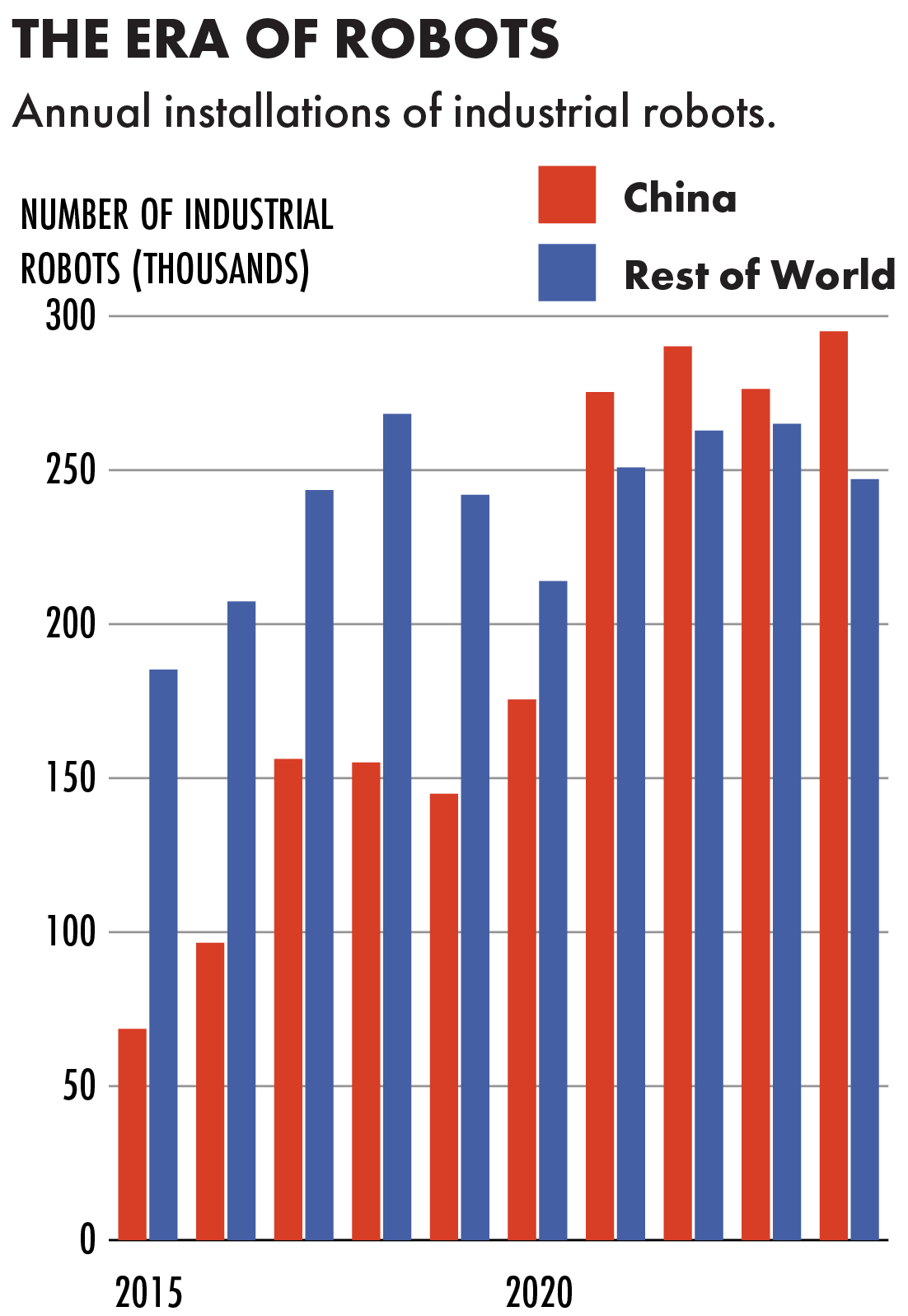
China’s advantage in robotics is not simply a matter of scale, although the scale is striking. By installation volume alone, China now accounts for more than half of all new industrial robot installations globally each year, and its installed base exceeds two million operational factory robots. But Beijing’s edge also lies in how deliberately it has pushed robots into real-world use, turning deployment itself into a source of advantage.
Across China’s major cities, robots have moved well beyond factory floors. They are increasingly deployed in elderly care facilities to assist with mobility, monitoring, and routine tasks; in hospitals to transport supplies and reduce staff workloads; in warehouses and ports to automate logistics; and in public security and military-adjacent services to conduct patrols, inspections, and operational support.
These are not peripheral experiments:they are central to how China accelerates and dominates what its officials call “embodied intelligence” in the latest 15th Five-Year Plan. Particularly, humanoid and other embodied intelligent systems are being employed to unleash Chinese economic power and future technological dominance.
Major provincial and municipal governments, including Shanghai, Shenzhen, Hangzhou, and Guangzhou, have been providing subsidies, tax rebates, and pilot-zone privileges to firms that adopt robotic systems. In some cases, local governments reimburse a portion of robot procurement costs, or tie electricity and land-use discounts directly to automation targets.
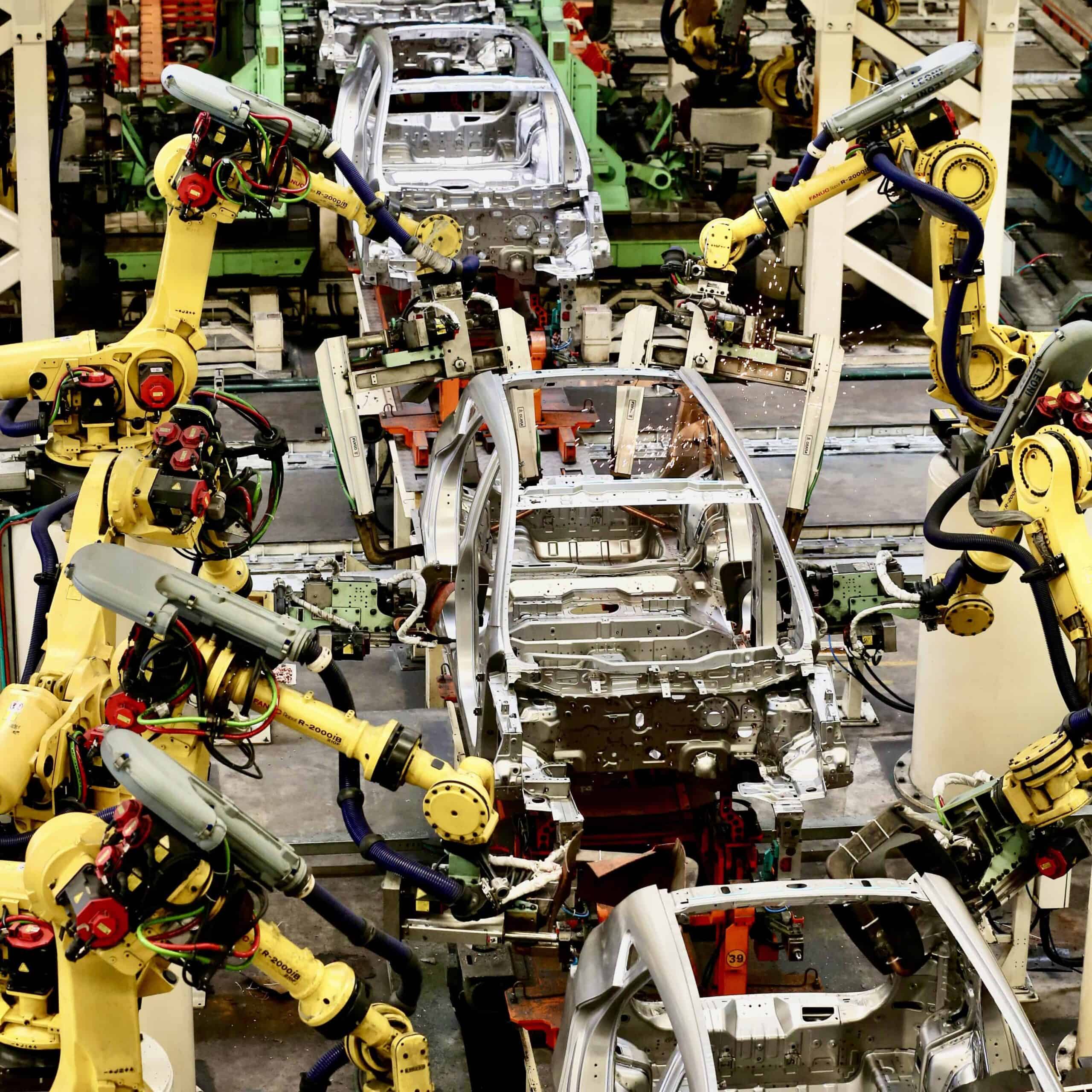
The goal is not only to address China’s aging population and labor shortages, or to improve efficiency at factories. It is to expose robots to complex environments, exactly the conditions in which autonomy, perception, and manipulation improve through repeated use.
Quantitative indicators reinforce how far this approach has carried China. Robot density, which is measured as robots per 10,000 manufacturing workers, has risen rapidly, allowing China to surpass the U.S. and narrow the gap with traditional automation leaders such as Germany and Japan.
This deployment-first approach produces compounding advantages. Every robot installed becomes a sensor platform and training instrument. Operational data strengthens the feedback loop and improves AI models’ performance significantly. Manufacturers move down learning curves, improving reliability while lowering unit costs. In robotics, deployment itself becomes a strategic asset.
This scale advantage is being reinforced by China’s growing cohort of national champions. Industrial robotics firms such as Midea Group continue to expand both domestically and internationally, turning into one of the largest industrial robotics players following its 2016 acquisition of Germany’s KUKA. In service and humanoid robotics, companies including UBTech, Agibot and Unitree benefit from guaranteed home-market demand and policy-backed financing.
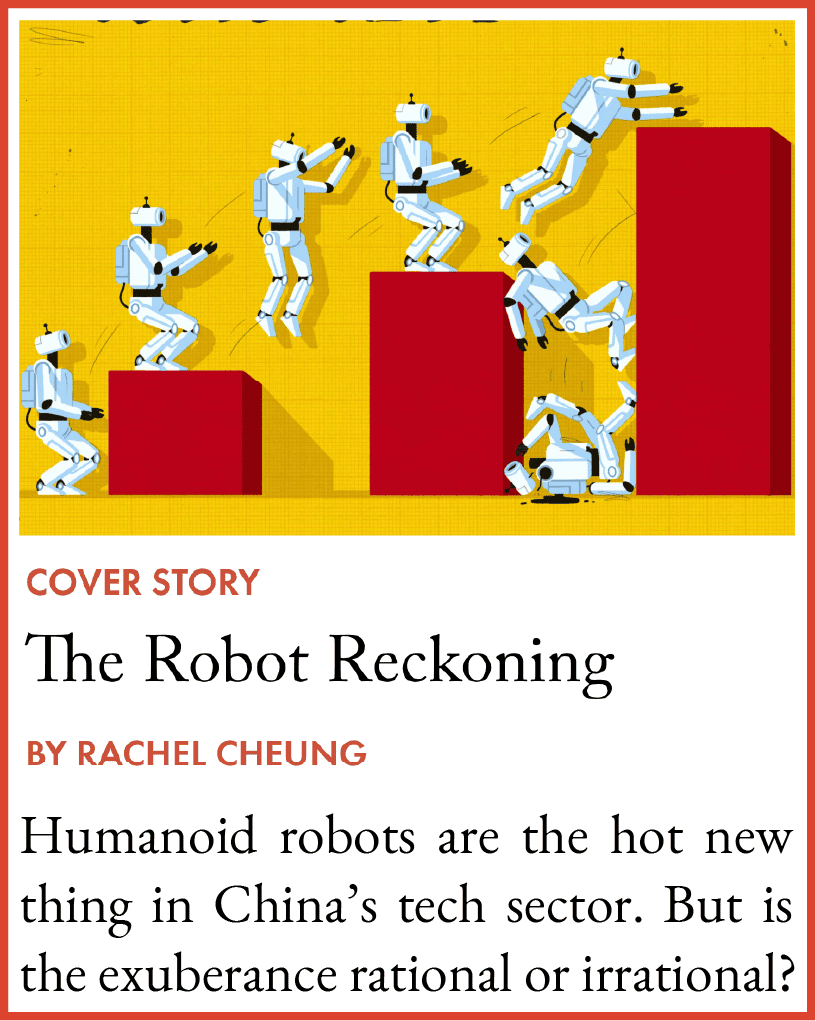
The national security implications are also substantial. By the end of last year, China had established a national humanoid robotics committee to coordinate long-term development through a unified national roadmap.
Notably, the committee includes not only leading robotics companies such as Unitree and UBTech, but also U.S.-restricted firms including SenseTime and Huawei as well as PLA-linked universities. This reflects a reality that civilian systems can and should be adapted for security and military purposes with minimal modification.
In fact, Chinese military planners increasingly view autonomous and robotic systems as decisive enablers of future warfare, particularly in the maritime and aerospace domains most relevant to a Taiwan or broader Indo-Pacific contingency. The PLA has closely studied Russia’s invasion of Ukraine, drawing lessons about the battlefield value of inexpensive, attritable unmanned systems and the importance of mass over exquisite performance.
Robotics is no longer simply a matter of innovation or efficiency. It is a question of whether a state can translate artificial intelligence into physical capacity at scale, in both peace and war. China is already positioning itself to answer that question.
As a result, PLA doctrine and experimentation emphasize “intelligentized warfare”, a key concept developed by the PLA over the past decade. Drone swarms, uncrewed surface vessels, and autonomous undersea systems are essential for surveillance, strike support, and asymmetric naval operations. China’s dominance in commercial drone manufacturing, led by firms such as DJI, poses grave security concerns as it provides a foundation for rapid adaptation, scale and control over global supply chains. These airborne robotics platforms promise persistent presence while reducing risks to personnel in the battlefield.
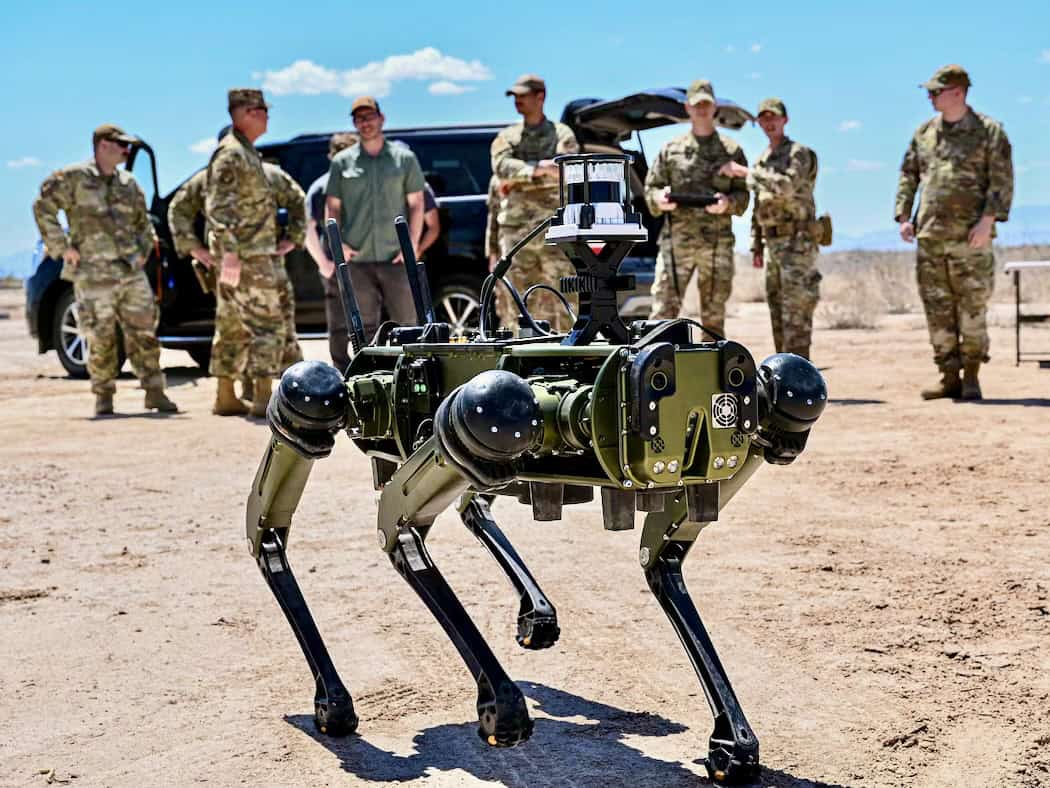
Ground robotics are part of this evolution. The PLA has experimented with quadruped robotic platforms, including commercially derived robotic dogs produced by Unitree, for logistics, reconnaissance, and base security. While these systems still remain limited in combat roles today, their adoption reflects the boundary between civilian and military robotics is intentionally porous.
Supply chains sit at the center of this competition. Despite China’s dominance in deployment and key components such as rare-earth magnets, it continues to rely on foreign suppliers for certain high-end components, including precision reducers, advanced servo motors, and high-performance ball screws. These components are critical for humanoid robots, aerospace manufacturing, and advanced machine tools and remain dominated by firms in Japan and Germany, such as Harmonic Drive, Nabtesco, and Schaeffler.
China is building national training infrastructure to overcome one of the central bottlenecks in embodied intelligence: data. To generate the vast quantities of real and synthetic interaction data required for robotics training, authorities have begun standing up dedicated facilities. By contrast, the U.S., despite leading in advanced physics simulation platforms created by Google and Nvidia which major Chinese robotics companies themselves are also using, has yet to articulate a coordinated effort to build comparable robotics training infrastructure.
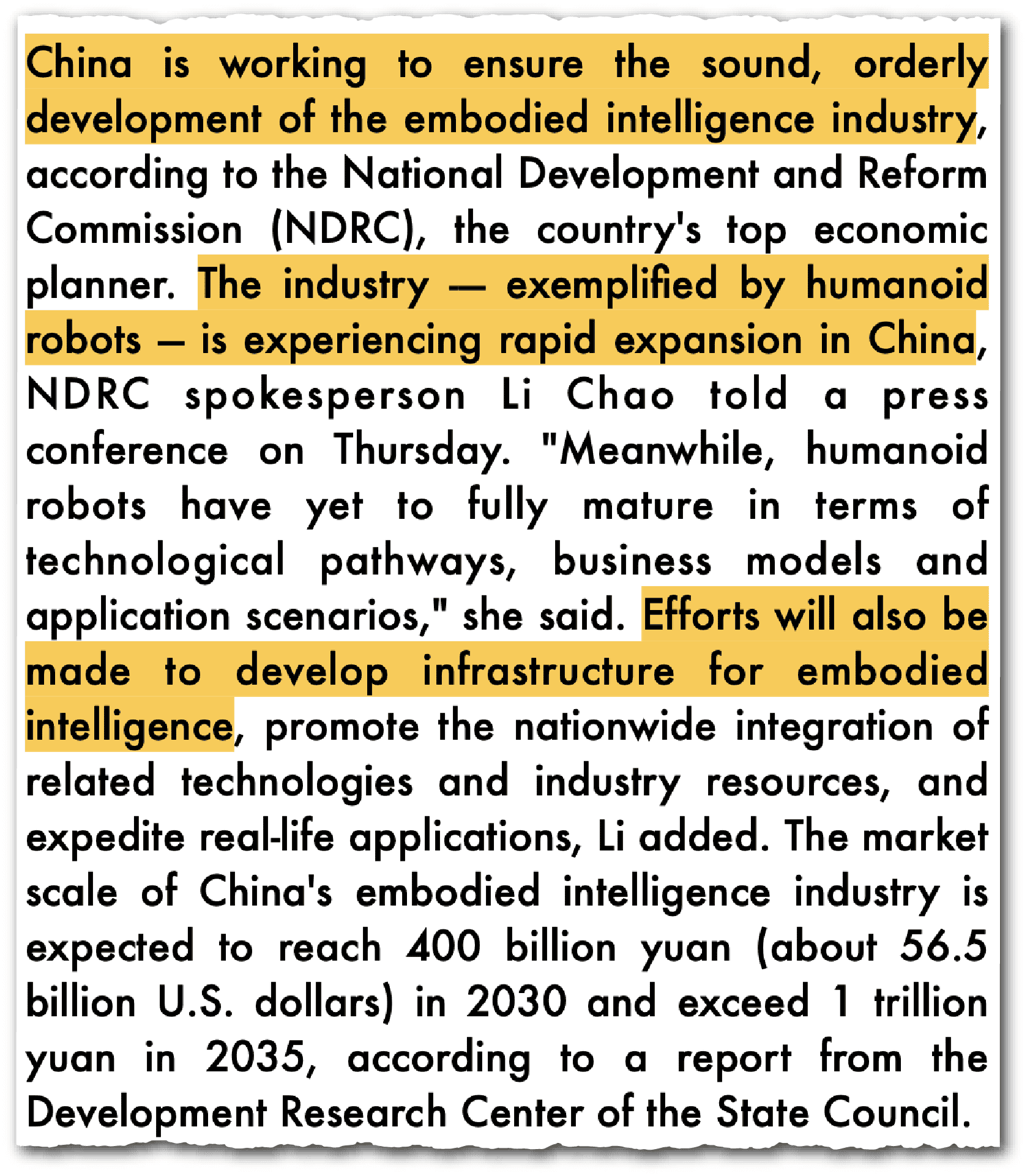
Beijing views these dependencies, from hardware, software to data, as considerable vulnerabilities. It is evident that China has launched targeted campaigns to close them, pairing state funding with guaranteed demand from state-owned enterprises and defense-linked programs. Once these gaps are narrowed, advantages will compound even more quickly. Experts believe that in the coming 5-10 years, China can harness and commercialize embodied intelligence fully.
By contrast, Washington’s approach remains reactive. The U.S. has world-class research and experiments with autonomous systems in defense contexts, but it lacks a national framework aligning public and private sectors. Robotics policy is currently scattered across agencies and programs.
What the U.S. needs is a national robotics strategy, one that recognizes robotics as a strategic domain on par with energy, biotechnology and artificial intelligence. As Jensen Huang, the CEO of Nvidia, has said “the ChatGPT moment for robotics is here.”
Such a strategy is long overdue. To succeed, it will require sustained institutional leadership. Washington should establish a national robotics coordinating body at the White House level, with the authority to align federal agencies, mobilize state and local governments, and engage industry around shared objectives.
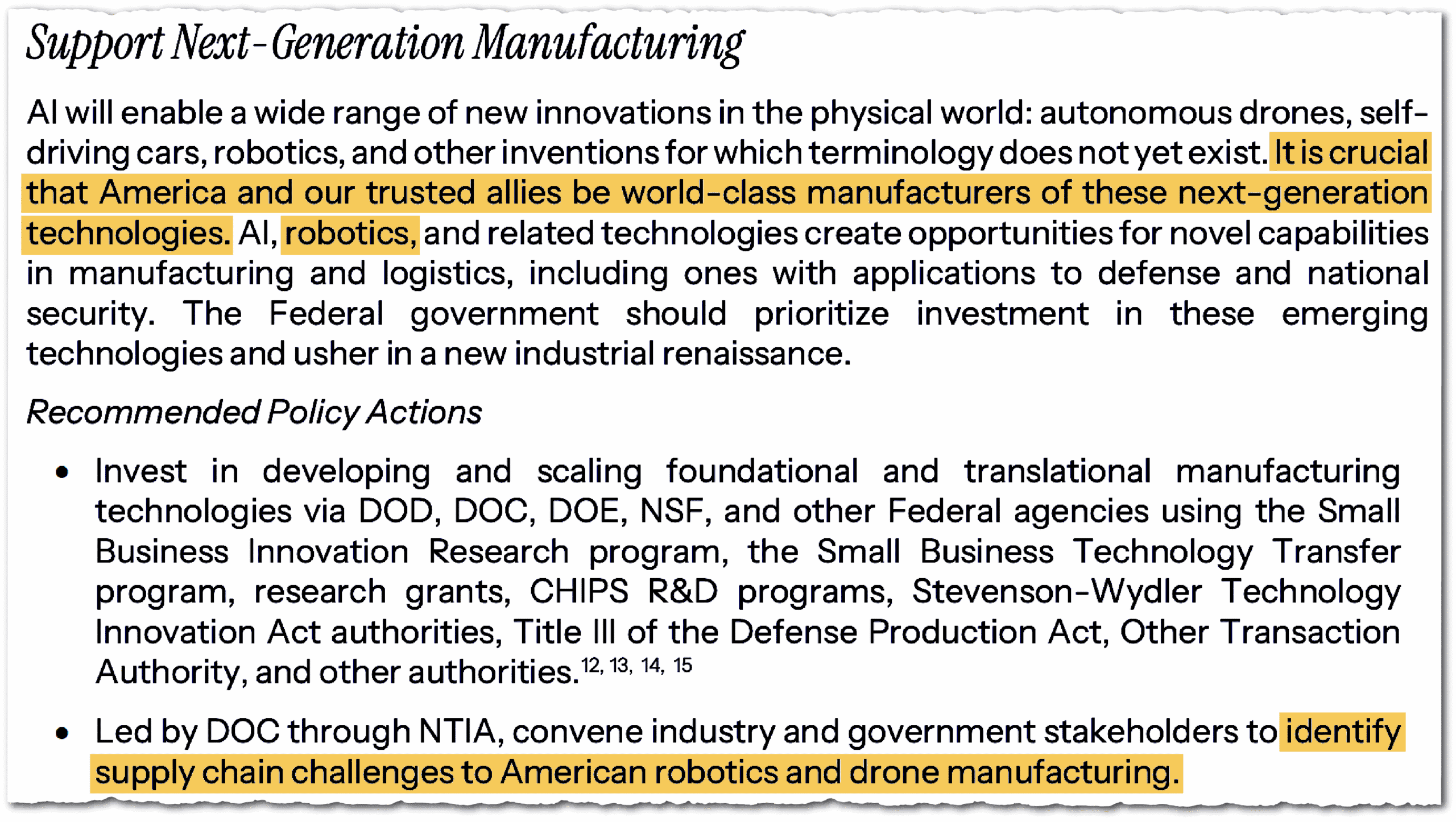
A serious strategy would also focus on deployment, not just invention. Federal and state procurement, targeted incentives, and demonstration programs could accelerate commercial adoption in manufacturing, logistics, healthcare, and infrastructure, especially in sectors critical to national resilience.
Defense policy must evolve in parallel. Autonomous and robotic systems should be treated as production and sustainment challenges, not boutique research efforts. Speed, scale, and rapid deployment matter more than perfection. Deterrence in the Indo-Pacific and Taiwan Strait will depend less on a handful of conventional, huge platforms than on the asymmetric advantage derived from the ability to deploy, replace, and sustain large numbers of autonomous systems under contested conditions.
Finally, any U.S. robotics strategy must be deployed in partnership with allies. No single country controls the full robotics stack. Coordinated investment with partners such as Japan, South Korea, Taiwan and European countries, particularly in critical components, can preserve shared advantages. Taiwan, for example, has a lead in developing a “non-red” supply chain for autonomous platforms. By working with allies, the U.S. can prevent China from exploiting gaps between partner economies while securing affordable and trusted components both at home and abroad.
The central risk for Washington is temporal. Robotics is still often framed as a future concern, something to be addressed once advances in LLM and data infrastructure mature. In contrast, Beijing is actively focused on contemporary initiatives through the advancement and implementation of robotics, as well as the efficient closure of supply chain gaps. Robotics is no longer simply a matter of innovation or efficiency. It is a question of whether a state can translate artificial intelligence into physical capacity at scale, in both peace and war. China is already positioning itself to answer that question. Whether the U.S. can do the same will shape the next phase of great-power competition.

Sunny Cheung is a Global Fellow at the Research Institute for Democracy, Society and Emerging Technology (DSET). He is also a Fellow for China Studies at The Jamestown Foundation. He specializes in Chinese politics, cross-strait relations, emerging technologies, and security issues. Mr. Cheung has testified before the US Congress, UK Parliament, and Taiwan Legislative Yuan.

Nathanael Cheng is a Policy Analyst with the Economic Security Research Program at DSET. His research focuses on critical and emerging technologies including semiconductors and advanced robotics, with expertise in export controls, trade policy, resilient supply chains, and economic statecraft. Before joining DSET, he worked in the U.S. Department of Commerce.