Over 40 years at a sprawling ammunition factory in northern Denmark, there were few positions Ole Jakobsen did not hold.
Rummaging through a tray of discarded bullets at his kitchen table in the nearby village of Elling, Jakobsen recalls how, early on in his long tenure, he operated a large hydraulic pressing machine to punch cartridge casings out of small brass discs.

He then moved to artillery shell production, manning a lathe to hone their precise cylindrical shapes. Following that, Jakobsen loaded explosives and propellant charges into finished shells. With his accumulated experience, he went on to become maintenance manager for the entire site of fifty buildings.
In 2020, the factory closed. The Danish government had initially sold it to the Spanish ammunition manufacturer Expal in 2008. Yet after several years of losses, the company announced a complete shutdown.
Local politicians and management urged the Ministry of Defense to repurchase the factory, which was the last remaining domestic ammunition supplier for the Danish armed forces.
Defense officials in Copenhagen rebuffed the idea. So after a history dating back to the late 17th century, when King Christian V needed armaments for his expansionist ambitions over southern Sweden, Jakobsen and the entire workforce were laid off.

“Someone in the ministry of defense decided that ammunition had become a commodity — that you could just buy it off-the-shelf whenever you wanted,” Jakobsen explains. “But it turns out they were wrong.”
In February 2022, Russia’s full-scale invasion of Ukraine led to a surge in demand for defense materials. “Suddenly,” says Jakobsen, “everyone wanted ammunition, and everything became hard and very expensive to get.”
Denmark’s national supplies were already running low before the conflict began. After providing much of its remaining stocks and military hardware to Ukraine, the Danish armed forces faced such severe shortages that, rather than fire real bullets, soldiers were instructed to yell “bang bang” in training exercises.
In October 2023, with the Ukrainian military desperate for artillery shells, the Danish government announced plans to reopen the factory.
A comedy sketch on Denmark’s DR2 TV network about the “just in time” principle for ammunition. Credit: DR2
But restarting production proved far more difficult than stopping it. Jakobsen and other critics argue that political wrangling over tendering and lengthy legal and environmental evaluations put the new factory more than two years behind schedule. Production is not slated to begin until the second half of 2027.
“It was not wise to depart with the capacity we had in Elling,” Troels Lund Poulsen, Denmark’s defense minister, told journalists last February. “We need to move faster.”
Speaking at the same media event, Prime Minister Mette Frederiksen instructed Denmark’s defense chief, General Michael Wiggers Hyldgaard, to “buy, buy, buy” military arms with haste.
Joining a new NATO commitment to raise defense and security expenditures to 5 percent of total GDP by 2035, the Danish government allocated billions of euros for military hardware, including orders for American F-35 fighter jets and European ground-based air defense systems, as well as support for the new ammunition factory in Elling.

Last year, the Danish parliament also passed a law allowing new strategic defense industrial projects to bypass the regulatory evaluations that slowed reconstruction of the Elling factory.
Denmark is not alone. Over the past three years, defense spending by the EU’s 27 member nations rose more than 45 percent to an estimated $450 billion.
After allowing their defense industries to atrophy for decades, Europe’s rearmament is now in full swing.
CHINA’S SHADOW
There is, however, a looming challenge for Denmark and other European countries as they race to re-arm: China.
China’s long-held monopoly over the mining and processing of rare earth elements necessary for high-end military hardware, such as precision-guided missiles and fighter jets, is well known. But rare earths are just the tip of the military industrial complex’s critical minerals iceberg. China controls many of the mineral supply chains that underpin the global defense industry.
At the very moment that Europe finds the courage to ramp up defense spending to build a credible deterrence against Russia, China comes along to pull the raw materials rug from under our feet.
Stefan Steinicke, Senior Manager for International Cooperation, Security, Raw materials and Space at the Federation of German Industries
Of the 12 raw materials NATO says are integral to the manufacture of advanced defense systems and equipment needed to maintain the alliance’s technological edge and operational readiness, China dominates the supply of ten of them. In terms of the extraction or processing — or both — of these ten raw materials, China accounts 60 per cent or more of their global supply.

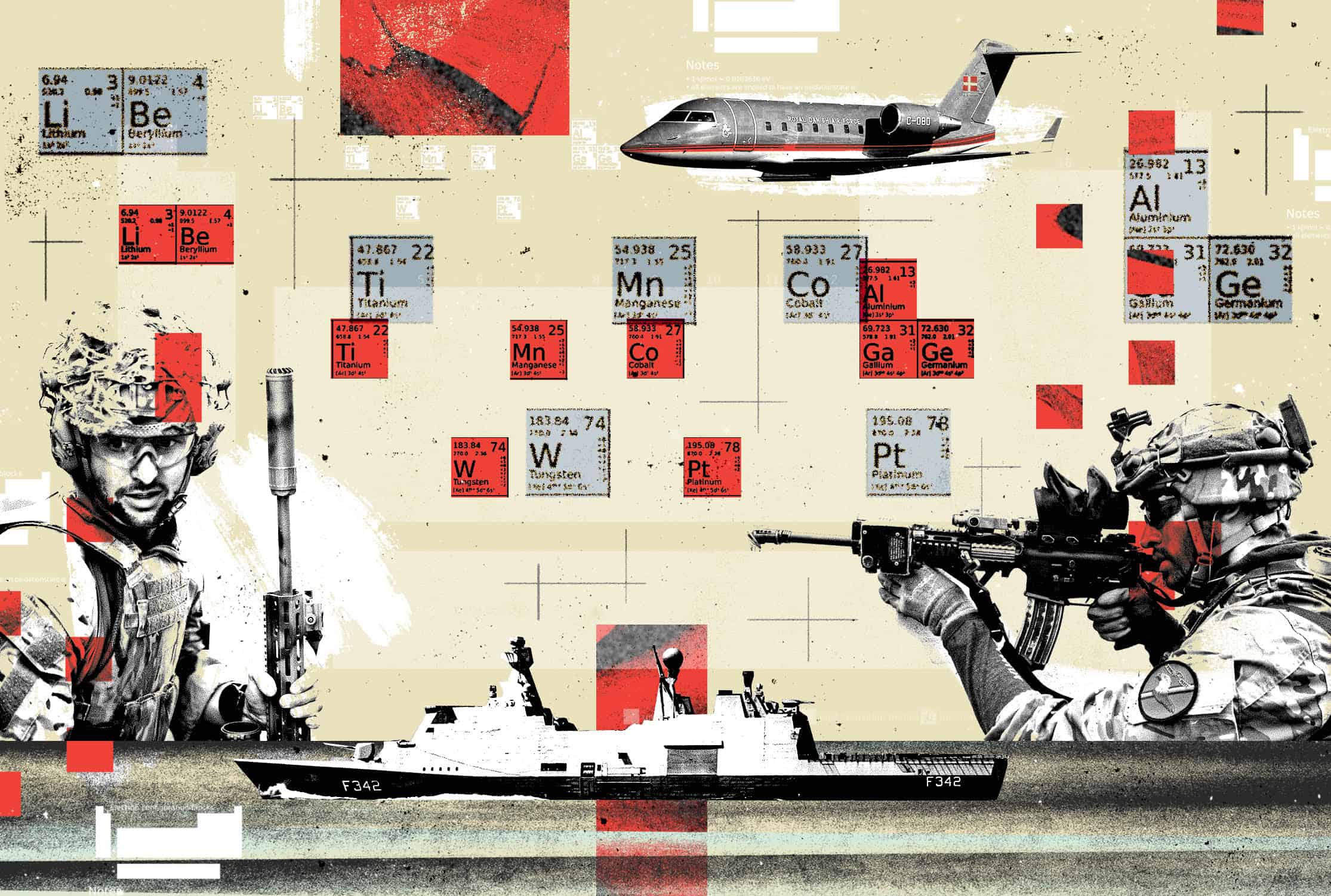
These include tungsten for armor-piercing bullets and shells, manganese for high-strength alloys in tanks and naval vessels; lithium for high-density, low-weight batteries in radios, drones and other military hardware; and gallium in durable semiconductor chips for advanced radar systems, missile defense and electronic warfare.
Industry experts say another key China exposure is the use of tungsten in the production machinery necessary to manufacture a vast array of ammunition and military hardware.

“It requires an awful lot of machining to make a tank. You’re turning, drilling, milling and welding huge pieces of metal,” explains William Parry-Jones, founder of Wolfram Advisory, a London-based consultancy.
Even arms factories such as Jakobsen’s former workplace in Elling, producing standard infantry ammunition and artillery shells, typically rely on tungsten tools and dies.
“Tungsten may not be in the finished product, but the finished product needs to be made using a tungsten carbide cutting tool,” says Parry-Jones.
Policy and business decision-makers across the world are scrambling to understand these strategic dependencies.
“The nexus between defense and raw materials is really something that keeps me up at night.” says Stefan Steinicke, Senior Manager for International Cooperation, Security, Raw Materials and Space at the Federation of German Industries.
“These days I learn about new raw materials all the time because companies keep calling me saying they are not sure they will receive licenses or shipments from China that are necessary for their business,” he says.
Beijing has long restricted access to rare earths, as well as tungsten, gallium, germanium, manganese and other critical raw materials.
From 1999 on, often citing environmental reasons, China largely switched from promoting its critical mineral exports to limiting overseas sales via quotas and other measures.
Even though the EU, Japan, the U.S. and other countries successfully litigated some of these practices at the World Trade Organization in the 2010s, China shrugged off the complaints and pivoted to an export licensing system to cement its dominance over critical minerals. Then in 2023, in response to American restrictions on the semiconductor industry, Chinese authorities imposed new export licensing requirements on a growing list of critical minerals for defense and other strategic industries. Beijing did so by using a 2020 export control law that it said was necessary for national security.
Although the U.S. military and its suppliers are Beijing’s main targets, Chinese critical mineral controls have also caused supply uncertainty, price spikes and long production delays for Europe.

“Secure supply chains are a major priority at our company,” says Jerry Gustavsson, Denmark managing director for Nammo. Nammo, controlled by the Norwegian and Finnish governments, won the bid to operate the new ammunition factory in Elling.
The arms maker can very likely source the iron ore used in steel projectiles, and the copper and zinc necessary to alloy brass casings, from the Nordic region. But Gustavsson adds that “some challenges remain.”
“There is an urgent task to re-arm as fast as possible, but at the same time the security of supply for all the ingredients Europe needs to do that is threatened as never before,” says Steinicke. “At the very moment that Europe finds the courage to ramp up defense spending to build a credible deterrence against Russia, China comes along to pull the raw materials rug from under our feet.”
BAD CHEMISTRY STUDENTS
It was Beijing’s brief but jarring export ban directed at Japan in 2010 that first brought global attention to the significance of Chinese dominance over rare earths indispensable in defense, clean tech and other strategic industries.

Tatsuya Terazawa, director of the Institute of Energy Economics in Tokyo, says that episode taught Japanese policymakers several important lessons, including the necessity of looking beyond mining to understand the entire supply chain for rare earths. At the time of the 2010 ban, Terazawa was head of economic and industrial policy at the Ministry of Economy, Trade and Industry.
Over the past decade, according to the U.S. Geological Survey, the output of American and other producers have reduced China’s share of total global rare earth extraction from 85 percent in 2014 to an estimated 69 percent in 2024.

But the real bottleneck is the processing, metallization, alloying and other intermediate activities necessary in the manufacture of rare earth products, such as permanent magnets, in which China commands more than 90 percent of global capacity.
And Terazawa says, there was more: “It was not just rare earths. China has kept hitting us and the world on other critical minerals. Every time it comes as a surprise when we discover there is another strange material from China which we are dependent on. We have not been good chemistry students.”
According to a recent International Energy Agency study, China holds an average market share of around 70 percent in refining capacities for many strategic minerals.
If China decides to cut off the tap, you can survive on inventories and secondary materials for a certain period, but not forever. Eventually it is going to hit a crunch point when you no longer have units coming in.
William Parry-Jones, founder of Wolfram Advisory, a London-based consultancy
“For any mineral to become a usable product, there is a very high likelihood that it is going to go through China,” says Bradley Martin, a senior policy researcher at RAND and former U.S. Navy surface warfare captain.
So even if the Trump administration is able to realize its aspirations to control Greenland and exploit the island’s untapped critical-mineral-potential — a costly and risky endeavor in itself — the majority of the output from new critical mineral extraction would likely still need to be exported to China for processing.

“W” IS FOR TUNGSTEN
Over recent centuries critical raw materials have shaped geopolitics, trade, the environment and even the direction of war.
For the global defense industry, tungsten (atomic number 74 and chemical symbol “W” because it is also known as wolfram) is an extraordinary metal.
Extremely dense, with the highest melting point of any element, tungsten is needed for “kinetic energy penetrators” such as armor-piercing bullets, artillery shells and missiles, and is also essential in composite armor for tanks.

During World War II, German tungsten-cored rounds and shells shocked allied forces when they ripped through the heavy armor plates of Russian tanks on the Eastern Front and helped Germany achieve early advances over the British in North Africa.
Later in the war, the allies fought tungsten with tungsten, using tungsten armor-piercing bullets. But the role of high-speed tungsten carbide machine cutting tools for making ammunition, tanks and aircraft was ultimately more influential on the war’s outcome.
The U.S. and Britain used diplomatic and economic pressure on Spain and Portugal — the Nazi regime’s main tungsten suppliers — to limit Germany’s access to the metal. Constrained supplies slowed German production of the powerful cutting tools and, consequently, its entire industrial military complex.

At the same time, tungsten extraction at Idaho’s Stibnite Mining District significantly boosted American productivity in churning out military hardware. The U.S. Munitions Board said the mine’s production shortened World War II by at least a year and saved the lives of one million American soldiers.
In today’s conflicts, tungsten continues to be put to deadly use.
Ukraine’s American-made HIMARS (High Mobility Artillery Rocket Systems) use tungsten balls to maximize their destructive force. Russian Shahed-136 drones — already full of Chinese components — have also been packed with tungsten fragments. When they explode, they scatter the tungsten shrapnel with devastating effects on Ukrainian military and civilian targets.
The only problem with tungsten from the perspective of the Europe and U.S. defense industries is that, as Parry-Jones puts it, “the vast majority of tungsten today is mined in China.”
China is home to more than half of the world’s tungsten reserves; in 2024 it accounted for over 80 percent of tungsten mined.
The U.S. is racing to reopen long-shuttered tungsten mines at home and strike new mineral deals overseas in Kazakhstan and elsewhere.
Mining companies in Spain, Portugal, and Austria are also still digging up tungsten, but account for only three percent of global extraction. And as with many other minerals, China wields strong influence over international prices for tungsten and its derivatives.
Since China placed new export controls on tungsten and other critical minerals last February, tungsten prices more than doubled to 300,000 yuan a ton — a 12-year high.
Ultimately, China accounts for nearly one-third of European imports of refined tungsten — and more than one-quarter of America’s.

Further down the supply chain, Europe boasts some of the world’s leading precision-engineering companies for high-end tungsten carbide cutting tools, including Sweden’s Sandvik and Germany’s Gühring. While China lags behind in this sector, its latest Five-Year Plan calls for “decisive breakthroughs” and “high-level self-sufficiency” in machine tools and high-end precision instruments.

Sandvik says it is actively working to reduce supply chain vulnerabilities. In Austria it owns the Mittersill tungsten mine and Wolfram Bergbau und Hütten AG, a processor.
But Parry-Jones argues that, with a ceiling on recycling, the present situation of high prices and limited supplies in Europe can only go on for so long. If not remedied, the effects will ripple through supply chains and undermine defense and other strategic industries.
“If China decides to cut off the tap, you can survive on inventories and secondary materials for a certain period, but not forever,” he says. “Eventually it is going to hit a crunch point when you no longer have units coming in.
“The Chinese have stated for a long time that they want to go downstream into the value add, but what they really want is to keep the entire global tungsten industry domestically. That’s the play China is executing beautifully.”
To solve the critical minerals issue, we need a much more expansive protectionist regime with demand-side tools like price floors to protect the market against non-market prices from China.
Camille Boullenois, an associate director at Rhodium Group
As with tungsten, so with gallium, which is on NATO’s critical raw materials list for its use in specialised military chips. China accounts for close to 70 percent of the EU’s refined gallium.
After Beijing imposed new export controls on gallium and other critical minerals in 2023, European buyers rushed to stockpile it, leading to a 365 percent price surge.

European arms makers are also rushing to build new capacity for — and stockpile — nitrocellulose, the main propellent for artillery shells and other projectiles. The same is true of the explosive trinitrotoluene — better known as TNT.
“Europe’s rearmament problem is about acquiring military-grade nitrocellulose at scale … [But] ramping up capacity is slow, highly regulated and capital-intensive,” says Chris Kremidas-Courtney, senior visiting policy fellow on defense and security at the European Policy Centre.

Europe, Kremidas-Courtney adds, must “be prepared for surge scenarios, not just for quarterly volatility — demand is no longer a smooth curve; instead, it spikes with each big new order”.
RAND’s Martin says that one of the main lessons from Russia’s invasion of Ukraine is that expenditures on defense materials are going to be considerably higher than expected: “Thinking needs to shift from what it takes to keep a factory open to what it takes to handle a sudden spike in demand.”
A NEW DEFENSE POSTURE
China’s grip on tungsten, gallium and other essential military metals has been tightening at a historic juncture in Europe’s defense posture.
Germany, the world’s third largest economy, pushed through historic constitutional reforms that released its longstanding “debt brake”, paving the way for a $545 billion special fund for massive new defense and infrastructure spending.

For its part, the European Commission — the EU’s executive branch — launched a major policy initiative, ReArm Europe, to mobilize over $940 billion in defense spending by 2030. A core pillar of that plan, $180 billion in EU-backed loans, were oversubscribed by member states within a few months.
Russia’s full-scale invasion of Ukraine, coupled with the Trump administration’s on again, off again support for Kyiv, stirred the Europeans into action.
Donald Trump’s now open hostility to allies in Europe, particularly his recent demands that Denmark surrender Greenland to the U.S., has turned the world upside-down for European leaders as their long-standing ally morphs into a threat.
German Chancellor Friedrich Merz, who wants to turn Germany’s Bundeswehr into the EU’s strongest military, said in a speech late last year that Europe must adapt to a post-Pax Americana world where rather than uphold global peace and security, Washington “very ruthlessly pursues its interests.”

“The U.S. is no longer really on our side and therefore it makes no sense to rely on U.S. armaments. That is why it is important to strengthen our own European capabilities,” says Roderich Kiesewetter, a former Bundeswehr general staff officer and Christian Democratic Union politician. Kiesewetter has served in the German Bundestag since 2009, including in key foreign and security policy roles.
While some American defense companies are cashing-in new orders from Europe, new EU backed loans stipulate that 65 percent of the components for military end products must originate from member states or associated European partners, such as Norway and Ukraine.

As a result, orders, revenues and stock prices of European defense companies are soaring. In 2024 Nammo’s order book increased nearly 60 per cent.
Overall, over the past three years the STOXX Europe Total Market Defense Capped index, comprised of Europe’s largest publicly-shared defense contractors including Rheinmetall, Thales, and Leonardo, rose by more than 220 percent.
But without reliable supply chains, Europe’s growing industrial defense capacities can come to a grinding halt.
WHILE EUROPE SLEPT
Even before he first entered the White House in 2017, President Trump echoed a longtime complaint of U.S. presidents that America’s NATO allies were not meeting their defense commitments. The U.S. still makes up over 60 percent of the security alliance’s total defense expenditures, compared to almost 70 percent in 2017.

Over two-thirds of Europe’s spending increase came after Russia’s invasion of Ukraine in 2022, which stunned many European leaders into making lofty new defense commitments.
In February that year, three days after the invasion, then German Chancellor Olaf Scholz gave a landmark speech calling for a Zeitenwende (sea change) in his country’s post-war security policy.
It is not like we can just call up Russia or China and ask for what we need. We have to do something about it — and it has to be now.
Ole Jakobsen, a retired Danish munitions worker
Yet despite launching a €100 billion special fund for defense, an evaluation by the German Council on Foreign Relations argues that Germany has fallen well-short in its support of Ukraine and well-behind in its ambitions to make the German armed forces “war ready” within five years.

Although European NATO members committed to spending 5 percent of GDP on defense and security expenditures by 2035, critics argue that pensions still make up a disproportionate amount of European defense spending (as much as 20 percent for some members).
Kiesewetter, the German parliamentarian from Chancellor Merz’s CDU party, says the Scholz government’s peace-movement roots delayed Germany’s rearmament, in part by refusing to closely engage with the German arms industry.
“I’m a vegetarian, but I still speak to the butcher in my electoral district,” he says. “It takes political will and a strategic mindset to build a defense industry, and in Germany we are still lacking that. We were too used to a very stable environment. We were too used to appeasement. There is no sense of urgency because we don’t confront Germans with the severity of our security situation.”
He now fears the same sentiment will derail efforts to lower critical raw material dependencies on China.

“Some of my colleagues will deliberately misinterpret Europe’s dependence on critical minerals. Instead of diversifying, they will want to work even more closely with the Chinese,” he says. “China is using the critical minerals threat to undermine Europe’s defense capabilities and make us vulnerable to blackmail.”
The EU has long been aware of its critical raw materials problem. In 2008 it launched its first initiative recognizing their importance to defense and the risks of relying on China and other non-market economies.
But it was only in 2024 that the EU passed the Critical Raw Materials Act, which set targets for increasing European mining, processing and recycling by 2030, as well as caps on third-country dependencies.
The EU has also established 60 strategic projects in Europe and abroad, including efforts to revitalize Spain’s tungsten production, that can qualify for fast permitting and access to finance.
Last year, as China tightened export controls, the EU committed to mobilize some $3.5 billion during 2026 to “swiftly reduce” dependencies in critical raw material value chains including for military purposes.
These measures are not enough. Steinicke and others warn that similar to the energy crisis Europe faced after Russia’s invasion of Ukraine, the EU now has a “metals crisis” on its hands.
“There is a realization that for military capability you need secure supply chains. But all the measures that have been taken so far are not sufficient to tackle the size of the challenge,” he says.
“The EU is making the right noises, but it has been far too slow to act,” adds Wolfram Advisory’s Parry-Jones. “It is necessary to go toe-to-toe with the Chinese because they have been hand-holding their mining industry for a long time.”
Camille Boullenois, an associate director at Rhodium Group, notes that China can undermine Europe’s mineral investments by flooding markets with low-cost exports — a tactic it has previously directed against rare earth producers in the U.S. It is estimated that China’s stockpile of gallium is larger than the rest of the world’s annual production capacity.
“To solve the critical minerals issue,” Boullenois says, “we need a much more expansive protectionist regime with demand-side tools like price floors to protect the market against non-market prices from China.”
“Our one-sided dependencies don’t stop at the mine,” adds Steinicke. “It is not only the raw materials that Europe is dependent on but also the semi-finished products and components – the batteries, magnets, semiconductors – that represent the backbone of the industrial military capacity.”
Beijing has already moved to consolidate its competitiveness beyond the mine by requiring a bewildering number of licenses for oxides, alloys, magnets and other intermediate materials and components. It has also moved to restrict the technologies and production equipment necessary to make products that require critical minerals, such as lithium batteries.
THE U.S. WAKES UP

BDI’s Steinicke says that unlike the EU, the Trump administration is “laser-focused on the role of critical raw materials for defense purposes”.
Building on support offered during Trump’s first term, and under President Biden, the “One Big Beautiful Bill Act” passed last July allocated $7.5 billion in direct funding to the Department of Defense for critical mineral investments, stockpiling, loans and guarantees.
The Pentagon also bought a 15 percent equity stake in U.S. rare earth miner MP Materials last year for $400 million and the Trump White House plans to invest in more critical mineral companies in the years to come.
At the same time, beginning in 2027 the U.S. National Defense Authorization Act will place a comprehensive ban on defense industry contracts that use China, Russia, Iran or North Korea for any part of the production process for many critical minerals, including tungsten.
While waivers are still possible, experts argue the new rules clinch the business case for developing critical mineral supply chains in the U.S.
Such tight restrictions will force defense firms to examine their supply chains with extreme care.
In Europe, says Irina Patrahau, a strategic analyst at the Hague Centre for Strategic Studies, many defense firms have supply-chain blindspots. According to a 2024 report on the supply chain for a Dutch frigate, the Dutch Ministry of Defense and its defense industry partners knew relatively little about where tier-one suppliers sourced their materials and components from.

“We thought the defense sector would have all the material passports and extensive Excel spreadsheets covering the locations of all their suppliers,” Patrahau says. “Even though more resilient mechanisms are being put in place now, the industry is still playing catch up.”
In the race to secure non-Chinese critical minerals, Europe also has to contend with an hostile rival in its own backyard — the U.S.
For example, the American government’s export-import bank, U.S. EXIM, wants to lock in supplies from the UK’s Hemerdon tungsten mine, which has been designated a Strategic Project under the EU’s Critical Raw Materials Act.
“Private companies with prospective tungsten projects are looking for money from the U.S.,” says Parry-Jones. “There is far more depth and liquidity there than anywhere in the EU. The U.S. is a buyer and has money to pay today, not tomorrow like in the EU.”
Back at Ole Jakobsen’s kitchen table in northern Denmark, the retired munitions worker sees a greater sense of urgency building in Europe. Last year, construction finally began on the long-delayed new ammunition factory.
But whether the future production site in Elling, and others like it across Europe, will secure the necessary supplies to maintain operations remains an open question.
“It is not like we can just call up Russia or China and ask for what we need,” says Jakobsen. “We have to do something about it — and it has to be now.”

Luke Patey is a senior researcher at the Danish Institute for International Studies. He is author of How China Loses: The Pushback Against China’s Global Ambitions. His work has been published in The New York Times, Financial Times, The Guardian, The Hindu, Foreign Affairs and Foreign Policy. @LukePatey