Laura Murphy is a leading researcher on how goods made with forced labor in Xinjiang make their way into global supply chains. A professor of human rights at Sheffield Hallam University in the United Kingdom, she transformed the university into a powerhouse in open source research on the region, where the UN describes China’s mass internment and forced labor as a ‘crime against humanity.’
After Congress passed the Uyghur Forced Labor Prevention Act (UFLPA) in 2022, imposing a ban on the import of Xinjiang-made goods, Murphy’s reports on forced labor in the apparel, solar and automotive supply chains helped set the U.S. government’s early enforcement agenda. She served as a senior policy advisor to the Department of Homeland Security (DHS) from 2023 to 2025.
In this lightly edited Q&A, we discussed her entryway into studying Xinjiang and supply chains, how the U.S. government enforces the UFLPA, the clean energy sector’s entanglement with Uyghur forced labor, and the state of human rights in Xinjiang today.

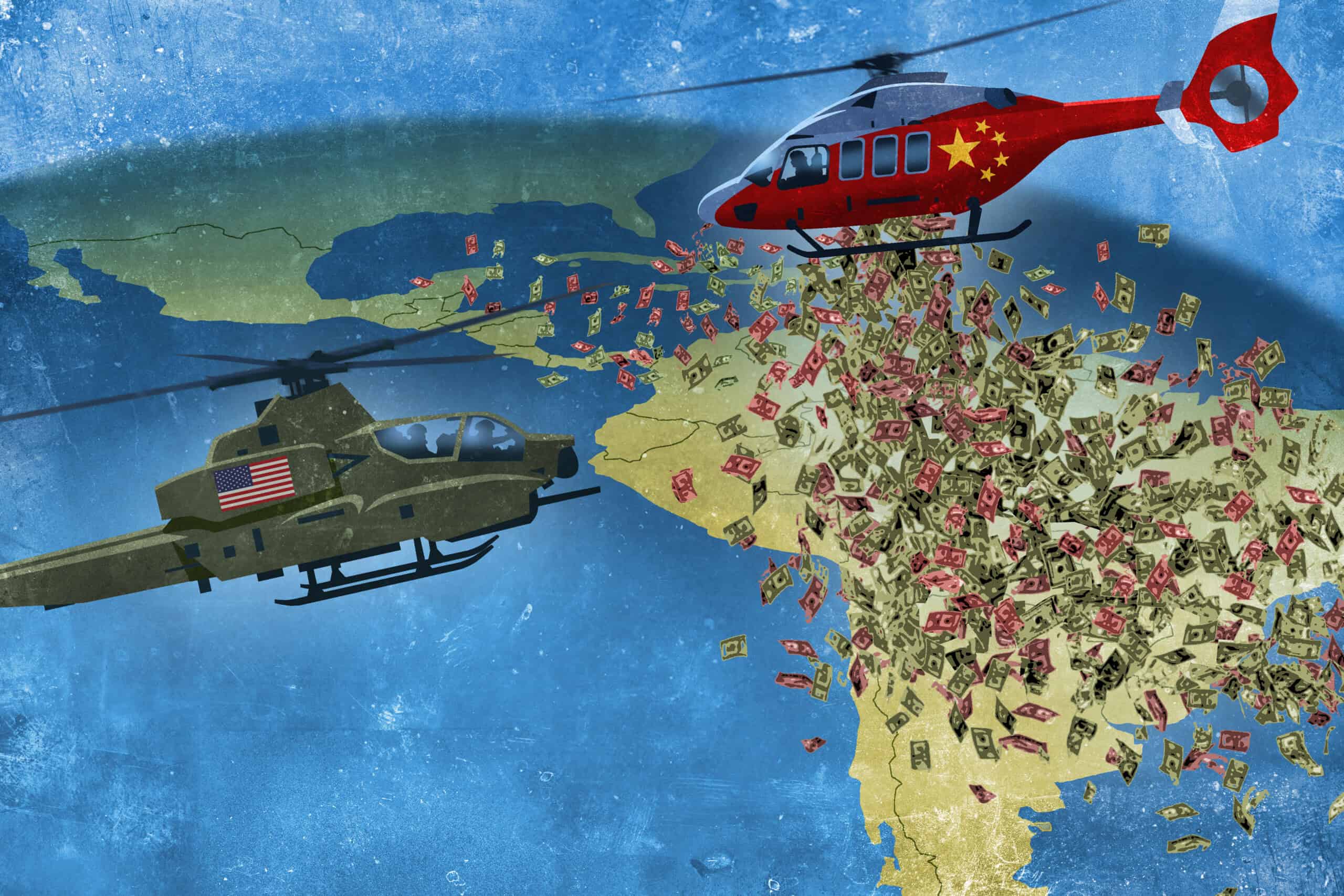
Illustration by Lauren Crow
Q: You’re one of the foremost experts on forced labor in the Uyghur region [Xinjiang], but it was not your original area of study as an academic. Tell us about your path to studying this topic.
A: I have been doing research on forced labor globally since 2004, initially working on historical forms of slavery. My research quickly pivoted to working on contemporary forms of forced labor.
I had spent significant time in China, and in particular in the Uyghur region, in 2004 and 2005 and several times after that. So when the crisis in the Uyghur region exploded, I was helping on the sidelines with advocacy regarding the internment camps, but then when it turned out that forced labor was endemic to the system of oppression that the PRC government was inflicting on the Uyghur people, I saw I was in a unique position to apply my knowledge of forced labor to this particular situation where a genocide is happening to a group of people that most people didn’t know much about.
The PRC had always been a colonial presence in that region, and that was really palpable on the ground. You could see the tensions between Han people and Uyghur people. We knew people who’d had their passports confiscated, people who hadn’t been able to get promotions in academia or business. The internment camps really started to kick off significantly in 2016 and 2017. By the end of 2018, we started getting the first reports of the systematic use of forced labor in the camps. Soon thereafter, we realized that the PRC government had created a labor transfer program where people who aren’t even in internment camps are also forced to work. Around that time, I started asking people to train me on how to do supply chain tracing. I talked to people who had done research tracing North Korean products that are imported to China and then sold onwards, or products where North Koreans had been moved to China to work in Chinese factories. That’s what inspired the series of reports that we did with Sheffield Hallam University.
| BIO AT A GLANCE | |
|---|---|
| AGE | 51 |
| CURRENT POSITIONS | Professor of Human Rights and Contemporary Slavery, Sheffield Hallam University; Senior Associate, Center for Strategic and International Studies (CSIS); Fellow, Harvard University John F. Kennedy School of Government Carr-Ryan Center |
Your research on forced labor in Xinjiang factories has been hugely influential on the U.S. government’s enforcement priorities and reshaping global supply chains. How did you decide which industries to focus on in your reports?
A lot of people ask me why we chose those industries — especially people in the industries that we wrote about. That’s a fair question, but it’s a question they should have the answer to already, because really the Chinese government has chosen the industries for us. We simply looked at which industries the Chinese government had invested in or were expanding in the Uyghur region.
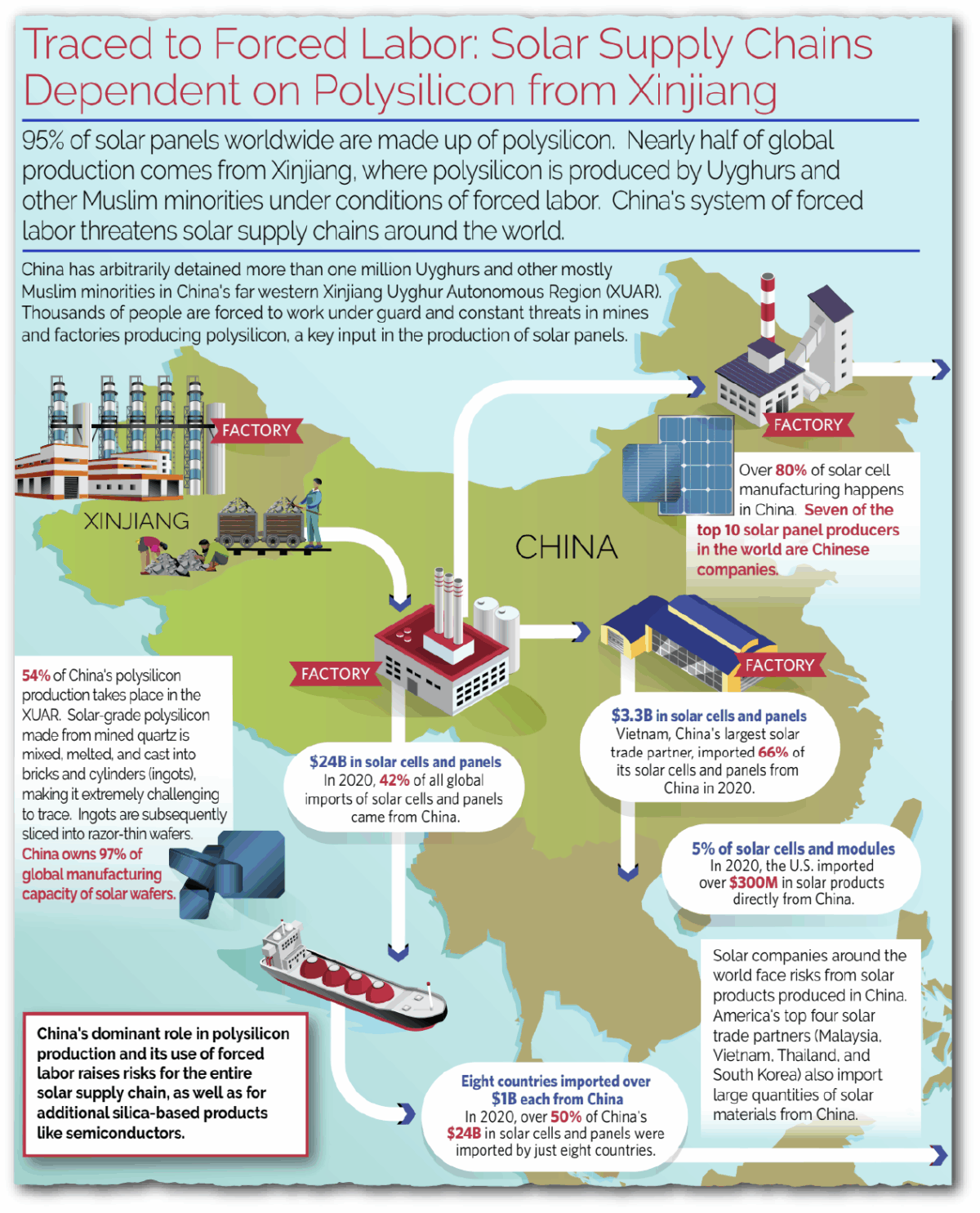
The solar industry, for instance, was a no brainer. The industry knew that they had significant exposure to the Uyghur region in 2021, as 45 percent of the world’s solar-grade polysilicon was made there. It was the product that was most exposed in the world to Uyghur forced labor, and there were explicit announcements by the companies in that sector saying, we are very committed to the government’s labor transfer programs. Industry leaders openly said in the media that they recognized the problem and needed to know more. We answered their questions, though many in the industry may not have been as pleased to know those answers as they had led on.
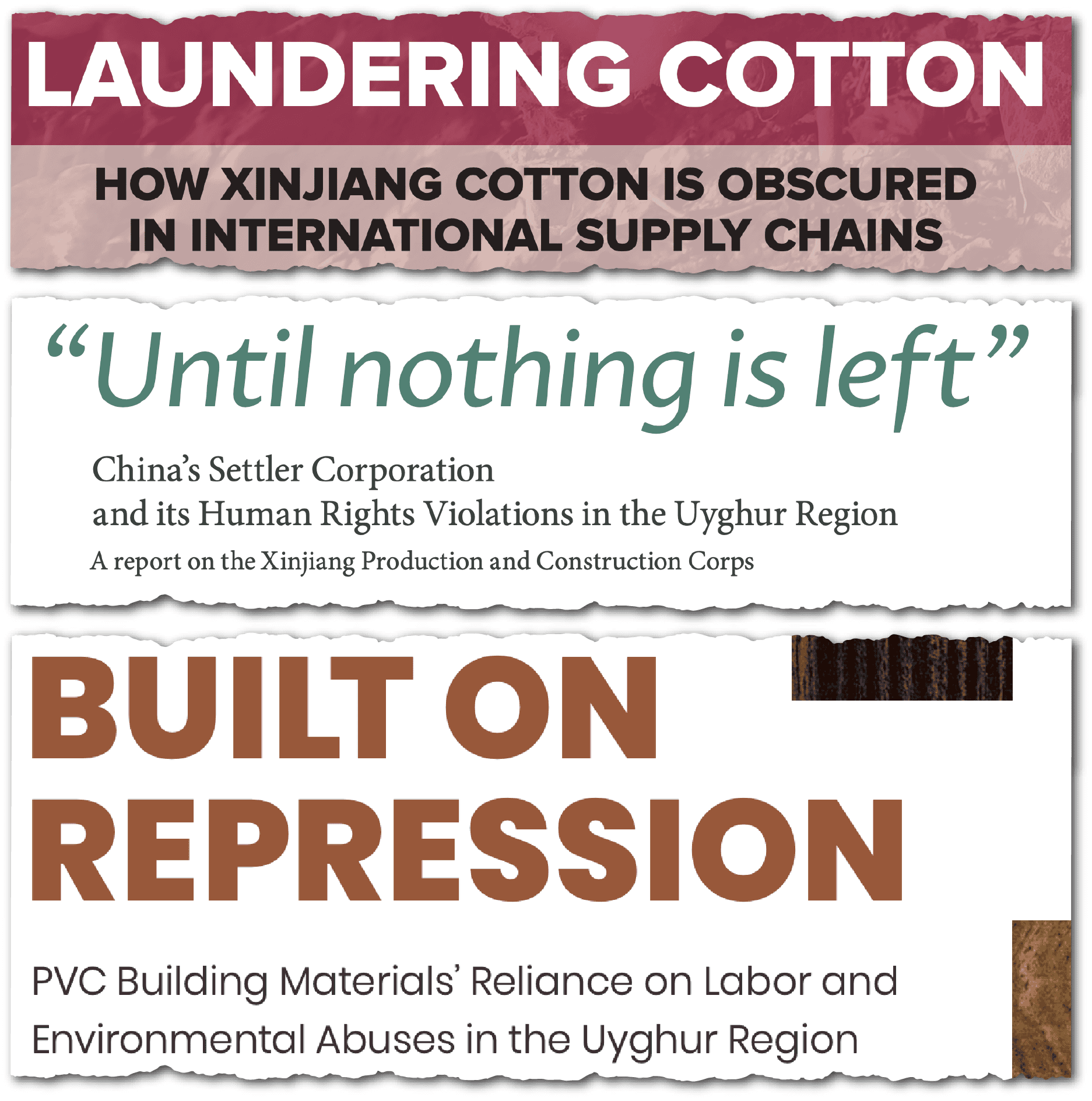
Right after that, we did a report on cotton and cotton apparel, because 80 percent of China’s cotton at the time was grown in the Uyghur region. Now it’s actually 92 percent. So we know that if you’re getting Chinese cotton, you’re almost certainly getting Xinjiang cotton. We followed on with PVC flooring, a look at the Xinjiang Production and Construction Corps, and tomatoes, because something like 70 percent of China’s tomatoes that are made into paste comes from Xinjiang. We looked at automotive parts because the Chinese government had explicitly said they were moving automotive supply chains to the Uyghur region. That report also looked at critical minerals including copper and lithium that the PRC government and corporations had invested in expanding.
These days, I worry that we’re seeing the movement of lithium extraction and lithium battery making to the Uyghur region, in a similar manner to what we saw with solar grade polysilicon. The pace at which the Chinese government is moving lithium battery manufacturing, from mining to finished product out to the Uyghur region is so fast that we could end up in a situation where we’re being held captive yet again in another segment of our green technology.
What are the incentives for moving these industries out west?
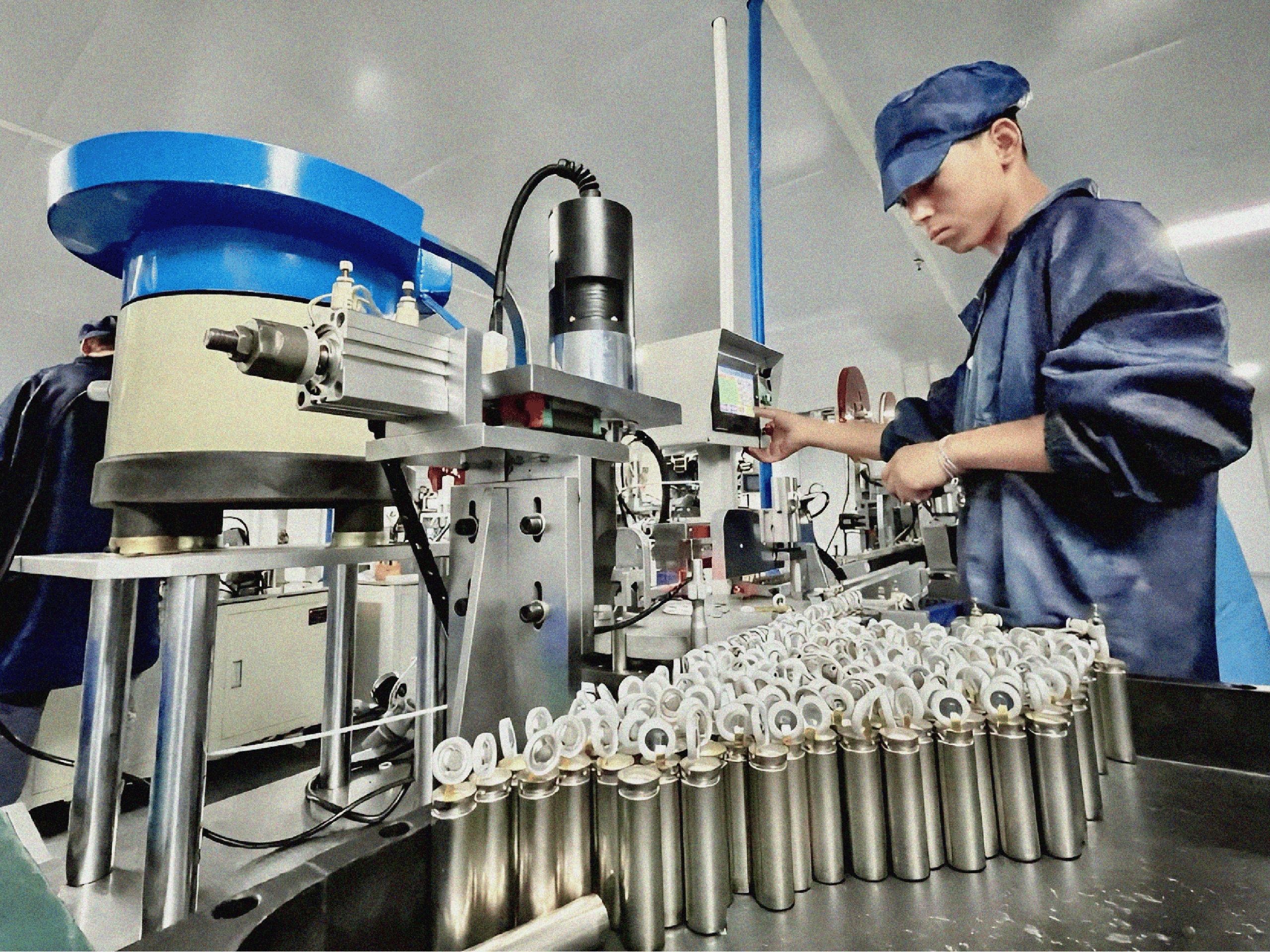
Coal. That’s not the answer for all of it, but a major one is that for energy intensive processes, they use coal-based energy. 40 percent of China’s coal reserves are in the Uyghur region, and so tons of manufacturing has moved out to that region along one big desert area that is very coal rich.
The second reason is, of course, labor policy. The amount companies have to pay Uyghur people is a fraction of what they have to pay other people. More companies are willing to go out there, now that the Chinese government has promised them docile workers, because they’ve been disciplining them through internment camps and oppressive policies.
There are also practically no environmental standards being imposed on companies operating in the Uyghur Region. If there’s a process that has been outlawed in the rest of China, they turn a blind eye to it [in Xinjiang]. We’ve seen evidence of factories that are leaching mercury and lead, poisoning neighboring villages. These things are overlooked in the Uyghur region. That deadly combination essentially is what allows China to undercut the price of goods that are made with fair labor and environmental standards.
The UFLPA Entity List is an unfunded mandate of Congress. They have to put out the list and add high priority sectors for CBP to enforce against, yet there’s zero funding for it. We could have hundreds if not thousands more companies on that list if there was more capacity.
There are also massive corporate incentives to operate in the Uyghur region. The Chinese government provides subsidies from free rent, to no taxes for five years, buildings, chairs, computers. Companies are also now connected with a convenient logistics system of railways through to Kazakhstan, Kyrgyzstan, and onto Europe.
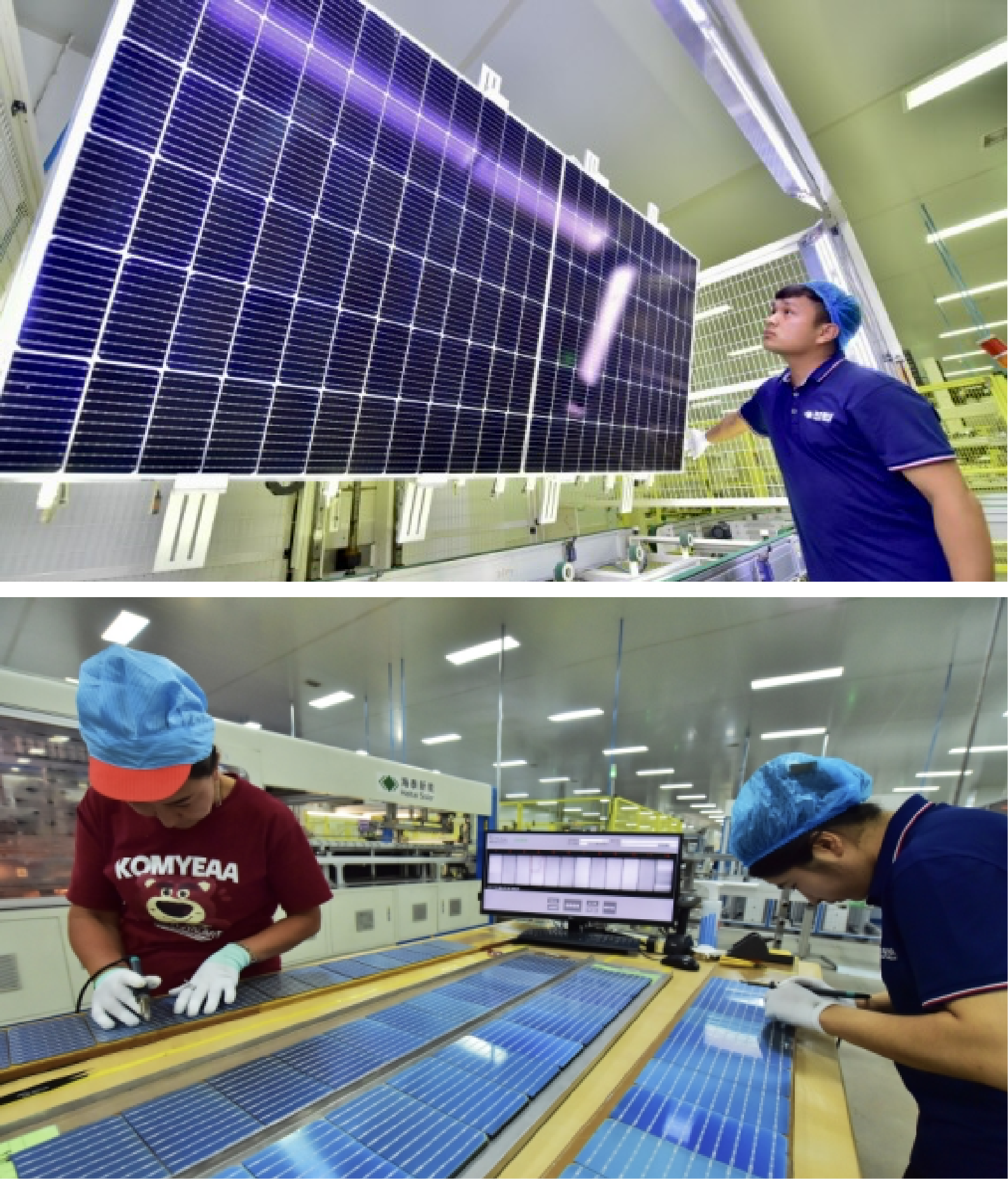
So a lot of these clean energy companies are actually, ironically, consuming fossil fuels?
Yes. When we first published our solar report, a lot of people were concerned that if we paid too much attention to the human rights abuses in the Uyghur region, we would undermine the global race to meet our climate goals. But I think there are two points that are important in countering that way of thinking. The first is that all of these products are being made with coal energy. The solar modules that are based on Uyghur Region inputs have the highest carbon footprint of any in the world. That’s not really helping us meet our climate goals the way we want to.
And secondly, since 2021, when we released our report, the world has been producing more solar modules than even the most optimistic projections had predicted back then. People thought banning the use of Uyghur forced labor would shut down solar panel production. But in fact, companies have very rapidly pivoted to sites in other parts of China where they’re not using coal energy or forced labor, or outside of China altogether. Other countries have been able to enter the market where they couldn’t before because the price was through the floor. We’re seeing a ton of diversification of the supply chain and increase in innovation that is going to serve us well, and move us towards our climate goals much more quickly than we’d expected.
Early on, when DHS first began enforcing the UFLPA, it seemed to rely heavily on outside research by researchers such as yourself to dictate its initial priorities. Is that still the case?
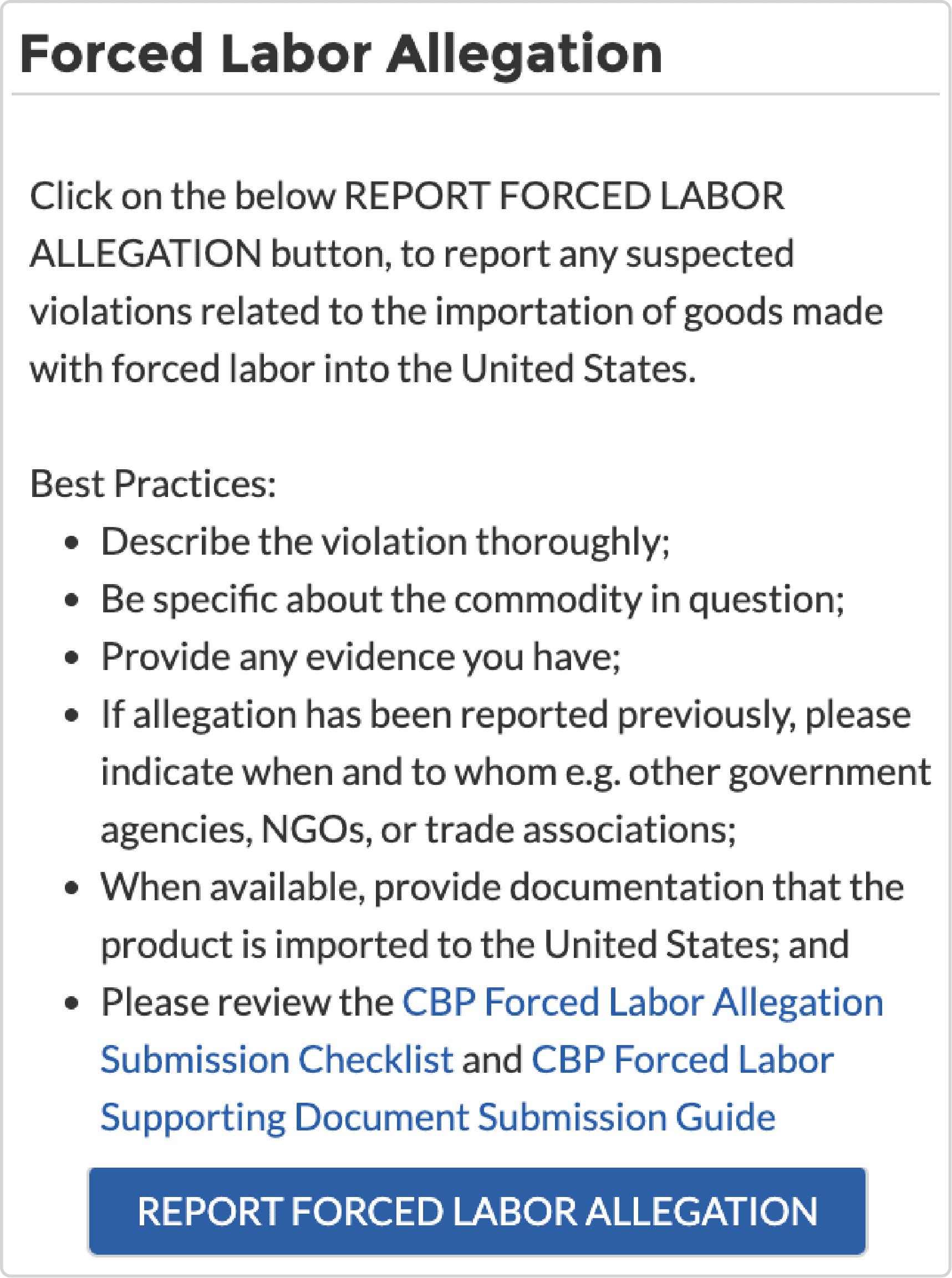
Yes, but not entirely. Customs and Border Protection (CBP) and the DHS-led Forced Labor Enforcement Task Force (FLETF) don’t consider it a secret that they are interested in the research nonprofit organizations and academic research institutions are putting out. They openly solicit allegations. The CBP has a portal where anyone can go in and say: I think this might be a product made with forced labor, whether in Xinjiang or elsewhere.
Part of that is a capacity issue. But they also know that there are people who are on the ground (in cases of forced labor outside of the Uyghur Region) and who are closer to the issue, or closer to the people who are most affected. Working with civil society organizations and academic institutions allows them to have a connection and insights that they might not otherwise have.
In the last three years, since the UFLPA has been implemented, both CBP and DHS and the seven member agencies of the FLETF have all ramped up their capacity. They’ve hired people to investigate cases. On the CBP side, they’ve hired people to do investigations on imports, and to do primary research on entities that might be appropriate for the UFLPA Entity List.
The UFLPA Entity List is an unfunded mandate of Congress. They have to put out the list and add high priority sectors for CBP to enforce against, yet there’s zero funding for it. We could have hundreds if not thousands more companies on that list if there was more capacity.
The concern is that as priorities shift, the mandates that are unfunded will get less priority. Political will is critical to ensuring that the UFLPA continues to be enforced. When I was there, under the Biden administration, [Homeland Security] Secretary [Alejandro] Mayorkas and Under Secretary Rob Silvers were extremely committed to leading the task force and making the UFLPA work.
How have those priorities changed with the new administration?
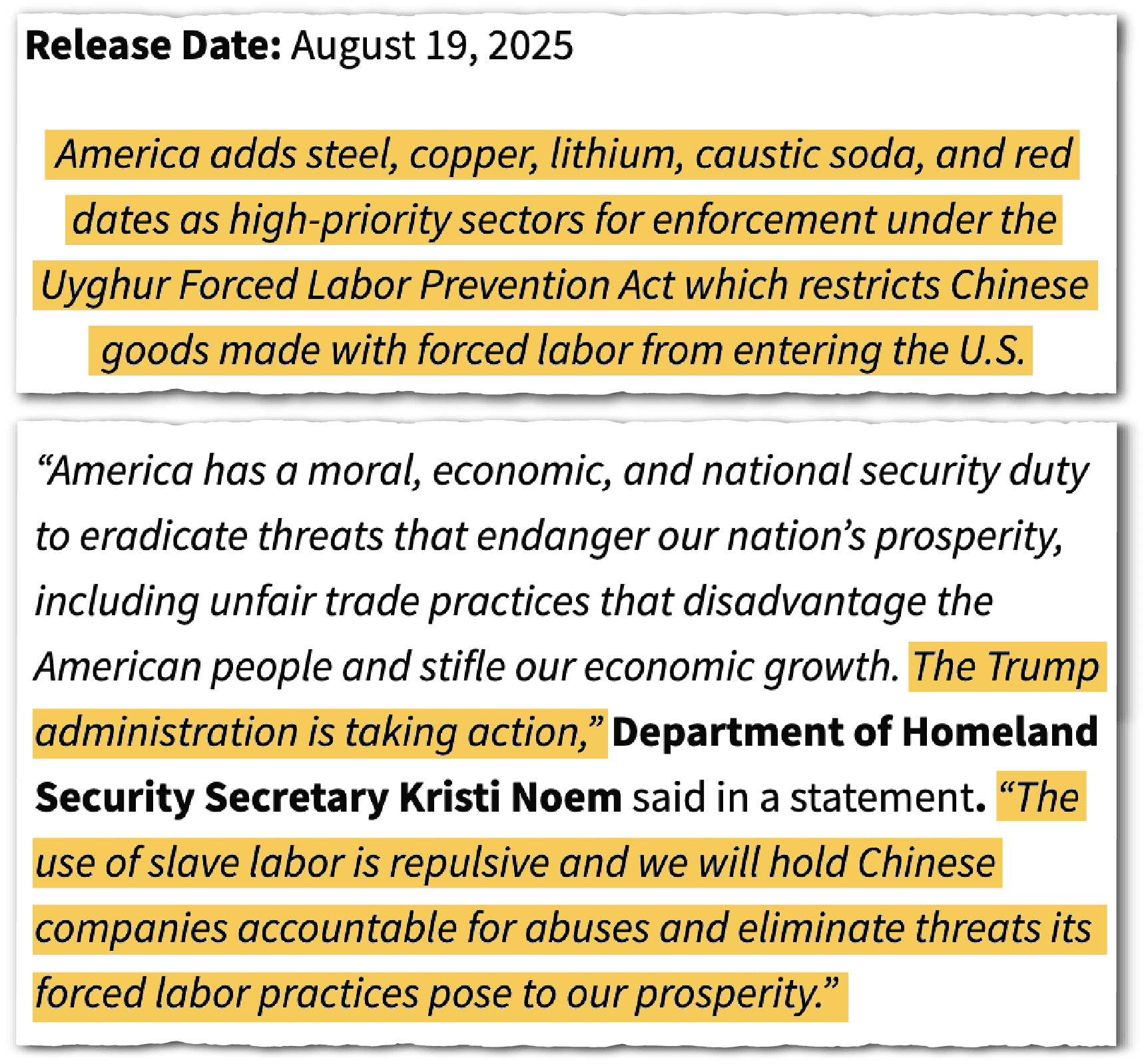
Despite the fact that we haven’t seen any new entities added to the UFLPA Entity List, and we’ve seen a significant decline in the number of shipments that CBP is stopping, I don’t know that we can say definitively that the administration has de-prioritized the UFLPA. Probably what’s happening is that the transition created many new priorities, and tariffs are at the top of that. All these folks who are working on trade and economic security across government are now focused on how to manage tariffs, and perhaps less on the UFLPA.
I know for certain that there are people at desks who continue to work on UFLPA, but to my mind, it’s not fast enough. If we want companies and importers to take the UFLPA seriously, there has to be a steady beat of enforcement action and it has to hit diverse sectors. It can’t simply be hitting a couple of companies we already know have to be excluded from our supply chains.
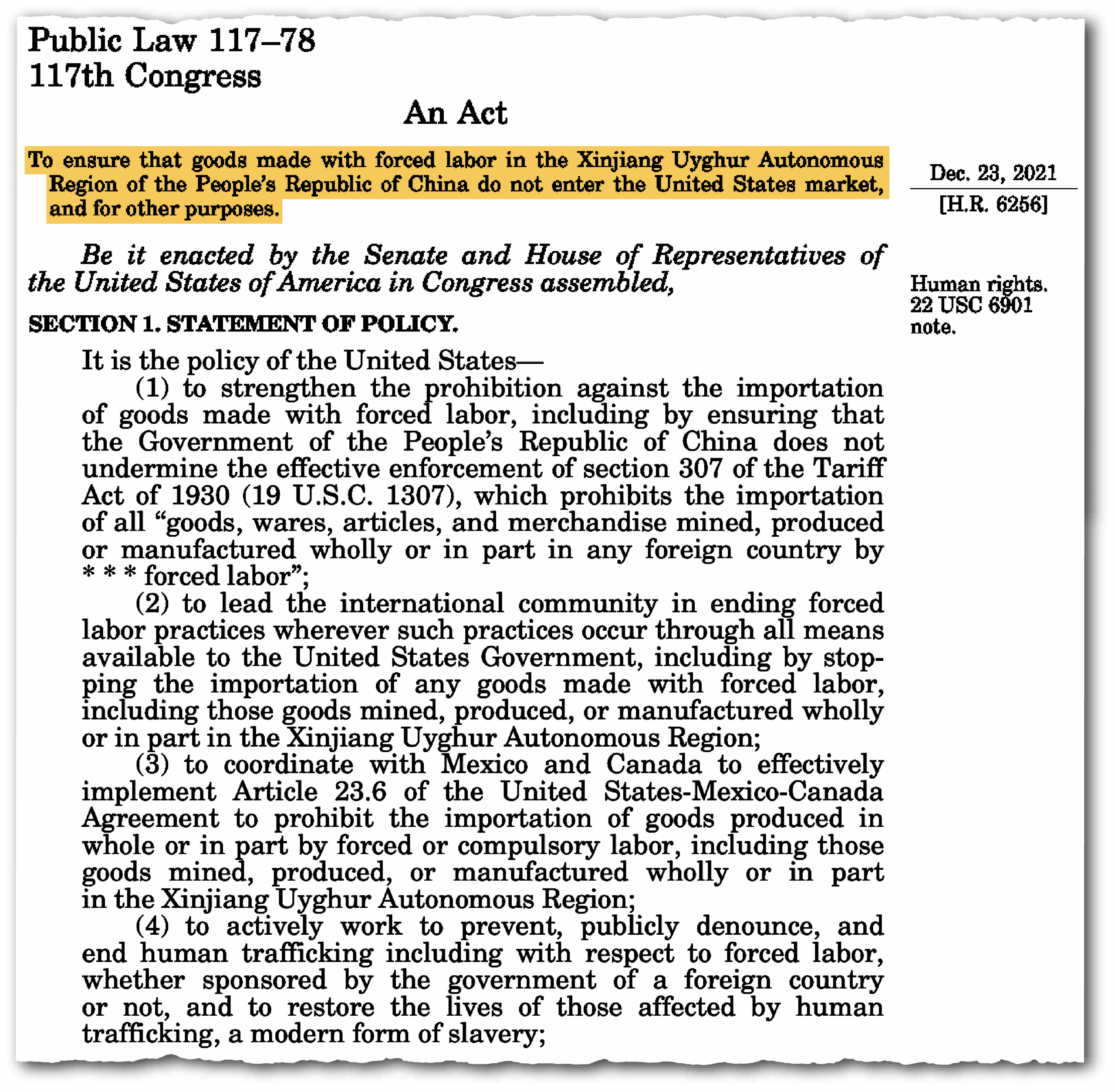
It probably even needs to be surprising sometimes, hitting companies and sectors that are definitely affected but not yet targeted for enforcement. A lot of companies are still, after three years, keeping their heads in the sand and hoping that they won’t get enforced against.
The UFLPA Entity List, which right now has 144 companies on it, is a starting point for looking at the wide range of products that can and should be stopped by CBP at ports. I do think, as these tariff and trade negotiations wind up, the administration will begin looking towards the tools they have to enforce those agreements, and UFLPA is one of the strongest ones they have. So my hope is they’ll come back to it.
What are some of the new technologies or skillsets that CBP has brought on to enforce the UFLPA?
When the UFLPA was passed, I wanted it to be enforced immediately and robustly. I said in a congressional hearing that we should have 50,000 companies on the Entity List. I still think that’s mostly true.
UFLPA Entity List entities “working with the government of Xinjiang to recruit, transport, transfer, harbor or receive forced labor or Uyghurs, Kazakhs, Kyrgyz, or members of other persecuted groups out of Xinjiang.” Credit: DHS
But once I entered government, a year and a half into the UFLPA being implemented, I saw what it takes to get lawyers across seven agencies to agree. Just having a process by which the Entity List gets implemented is an extraordinary accomplishment, especially seeing as it involved agencies that have widely divergent mandates. Commerce cares about different things than Treasury or DHS or DOJ cares about. Then on the CBP side, getting people schooled in what Uyghur forced labor is and how these supply chains work — all of that got done in six months. It was extraordinarily fast for a government process.
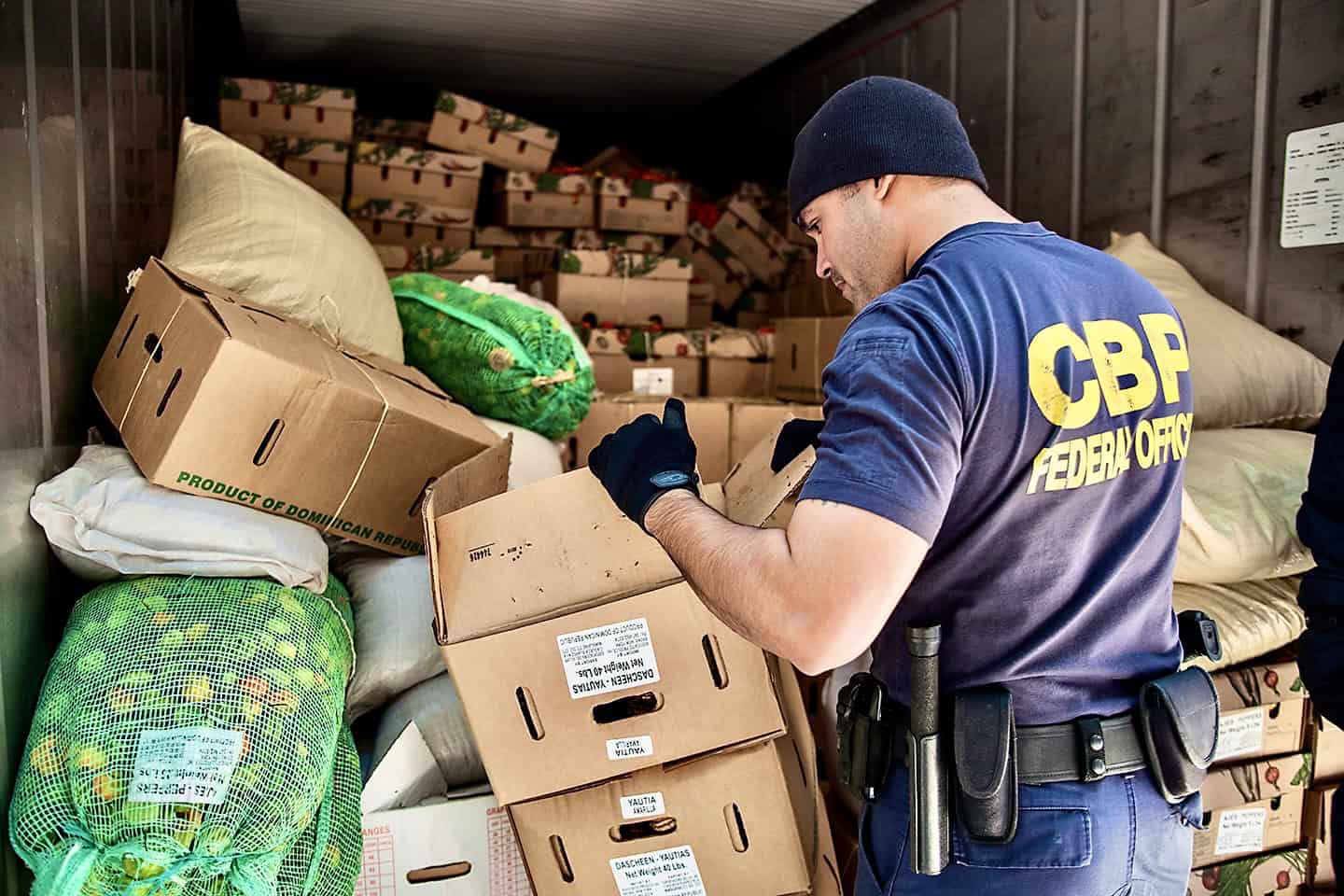
What was interesting, especially in CBP, is that they leaned on skills they already had. People who were tracing counterfeits and understood apparel or luxury goods supply chains, people who were looking at trans-shipment for different goods — they applied their expertise with a Uyghur forced labor lens to the work that they were doing. That was critical to be able to hit the ground running.
What CBP and DHS have been able to do since then is get several isotopic testing [a laboratory process that looks at the atomic structure of materials to confirm their geographic origin] facilities online. They’ve trained new customs experts on how we can trace Uyghur forced labor, and how we can look at the documents that companies give us that show their entire supply chains and zoom in on the non-compliant parts. They’ve hired Chinese language experts in trade who’ve been able to do more interesting things with identifying companies that are non-compliant. So, all these things together mean that the talent and the skills are there, and we just need to make sure that the political will is behind them.
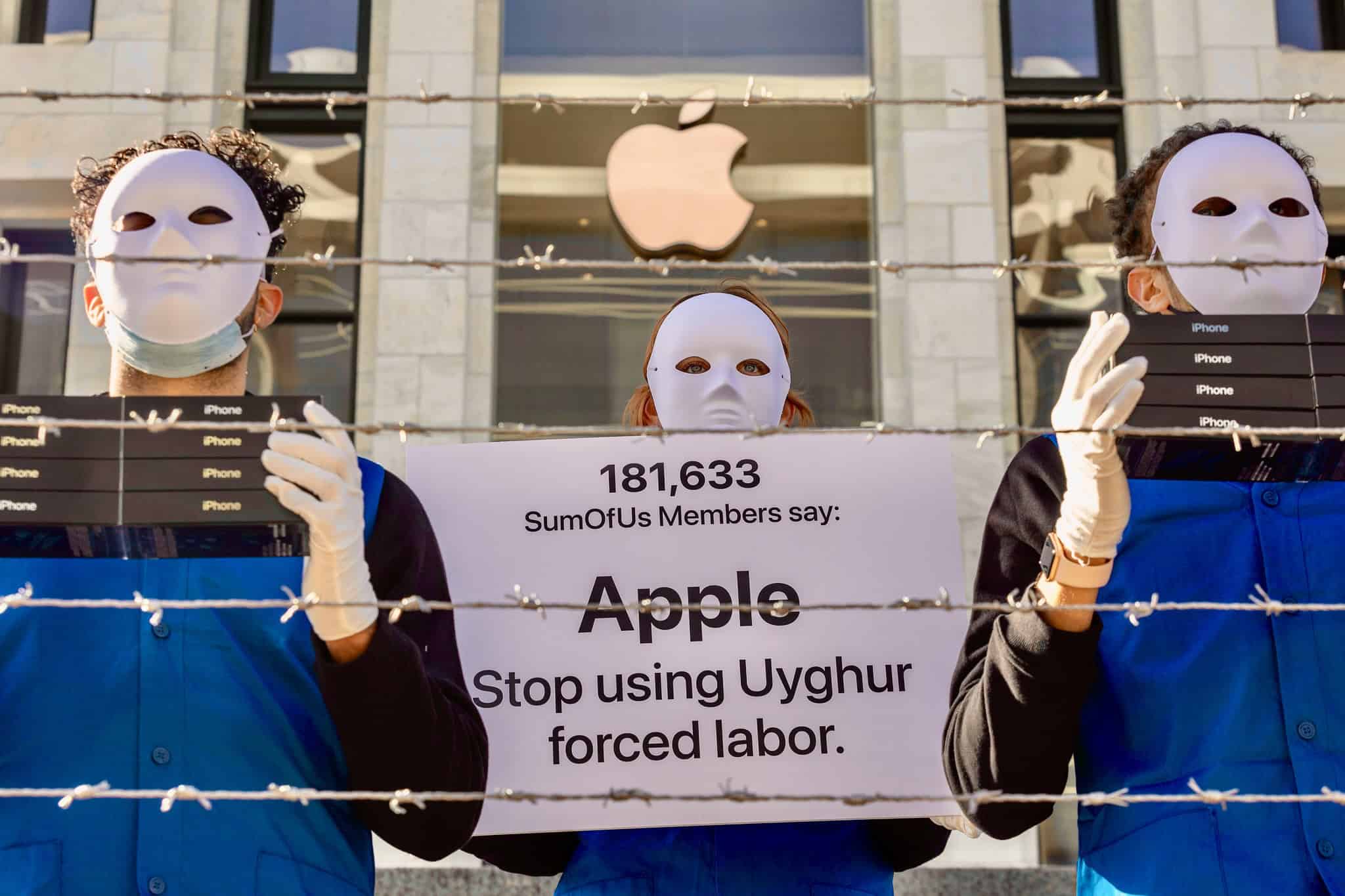
Has the UFLPA changed how companies behave?
It’s safe to say that a wide swath of companies across many different sectors have made massive changes in their supply chains to try to exclude the Uyghur region. There are some companies that have kept their heads in the sand, but a lot of major importers to the United States have recognized that there’s enormous legal and financial risk in being non-compliant.
One of the things that, as a researcher, always disappoints me, is that I can put out a report about a product or a particular company with dozens of footnotes showing that a company in China is definitely engaged in state-imposed labor transfers or coercive labor. And I know that major corporations will see the report because I send it to them directly, and they show up at industry events where they hear me speak. Yet they don’t eliminate that supplier from their supply chains. However, when that supplier shows up on the Entity List, all of a sudden they are very concerned and ready to act.
…we know more and more people every year are being subject to labor transfer programs. Companies are admitting that they’re participating. We have no reason to think that there are companies that have stopped participating in these programs if they cannot show us the receipts.
I’d like to see companies take action immediately upon learning that their suppliers are engaged in these horrific programs. But it’s clear that the most effective incentive to driving compliance is seeing an entity get on the Entity List.
I often speak to compliance officers and people who are working in sustainability or procurement offices, and they say, look, I really want my company to not source from the Uyghur region. And I’m constantly showing them information that would help them to do that. But what really gets the C-suite moving is an enforcement action. That’s when they finally say we really do have to do something. This is where collaboration between academics who are producing this knowledge, and the government coming behind and identifying what of that research meets the statutory requirements is really working well, and is moving the needle on supply chains.
One of the defining features of the UFLPA is the ‘rebuttable presumption,’ which puts the onus on importers to prove that, if they source something from Xinjiang, that product is made without forced labor. Some people argue that it’s impossible to meet the U.S. government’s standard, and that the UFLPA is therefore a de facto avoid-Xinjiang bill. Is that true?
I think that is entirely the intent of the rebuttal presumption. Congress understood that it is impossible to do a legitimate audit in the Uyghur region and talk to Uyghur workers without them feeling unable to speak freely without any fear of retaliation. We have to assume that the goods that are made there are made with forced labor. We make it rebuttable, because there may be a ‘Schindler’s List’ case out there, where there’s a company that is somehow protecting Uyghurs, and we want to be open minded. If you can prove that to us, then great, but we haven’t seen any evidence of anything like that yet.
No company working in China has been willing, if they are doing good in the Uyghur region, to come out and say that’s what they are doing, for fear of the Chinese government. This environment of total intimidation and coercion across China for manufacturers has made it so that we can’t know what’s going on there.
Meanwhile, we know more and more people every year are being subject to labor transfer programs. Companies are admitting that they’re participating. We have no reason to think that there are companies that have stopped participating in these programs if they cannot show us the receipts.
| MISCELLANEA | |
|---|---|
| RECENTLY READ | I’ve finally just started Edward Wong’s At the Edge of Empire, and I’m loving it. I also recommend Eva Dou’s House of Huawei and Chris Miller’s Chip War to everyone. |
| FAVORITE MUSIC | I typically listen to 60s jazz, 70s soul, and 90s/2000s “alternative” music, but on days like we’ve been having lately, I will admit that I listen to death metal. |
Since the UFLPA passed, the situation in Xinjiang has changed. Where is the Uyghur human rights crisis most concerning now?
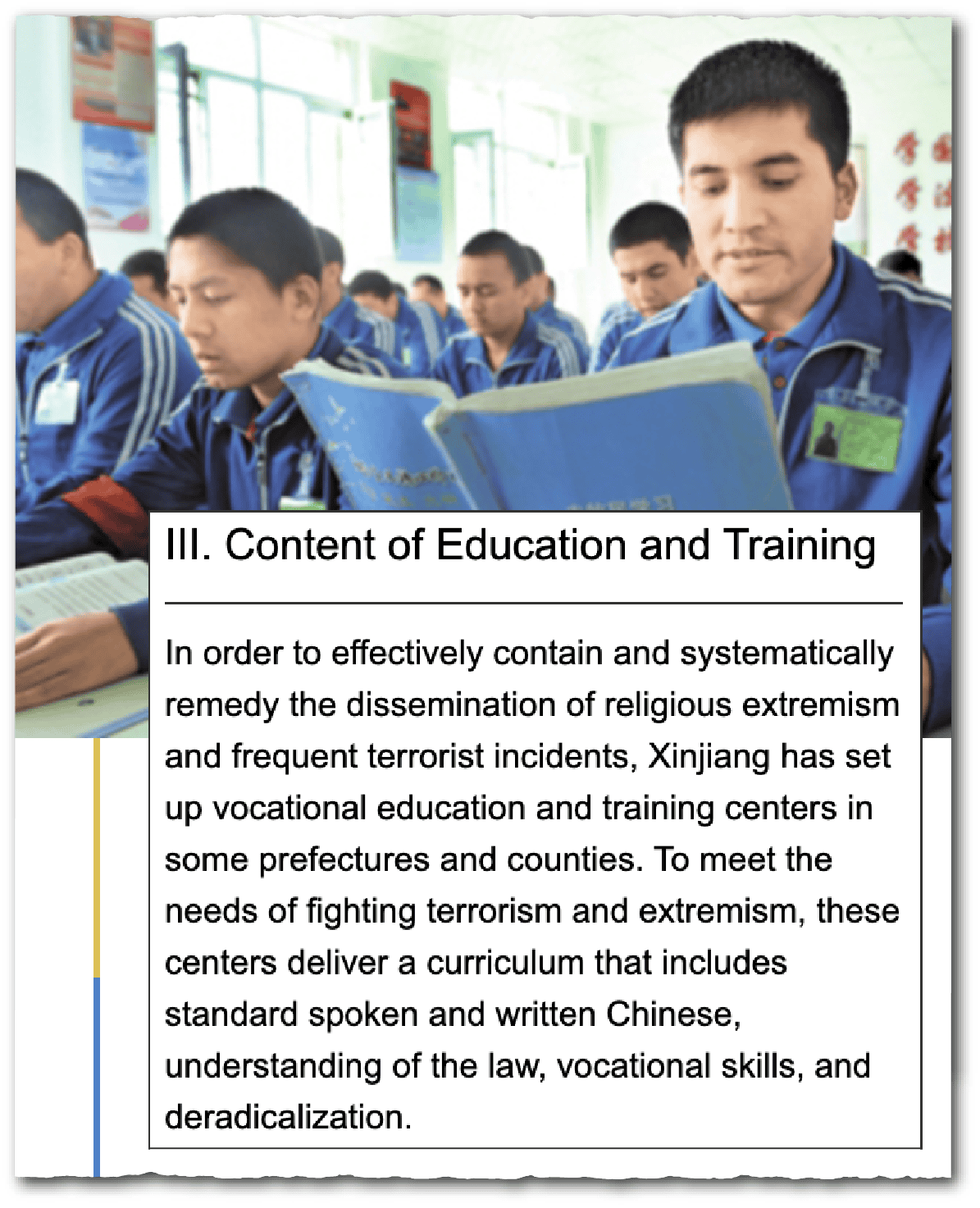
In 2018 or 2019, I would have told you that the most critical mechanism of oppression being used in the region is the system of internment. At that time, there were probably a million or more people out of a population of 12 million people who had been put in extra-judicial internment camps. It seems at this point that many of those camps have closed.
However, over 600,000 people have been put into another form of mass arbitrary detention that goes by the name of “prison.’ People have been moved through extrajudicial means, without a fair trial, for “crimes” that are not officially illegal, into prisons. I think it’s meant to have the sheen of legitimacy, because all countries in the world have prisons. China is able to say, look, you have mass incarceration in the U.S.. We have a little bit of mass incarceration over here in the Uyghur region. Who are you to critique that?
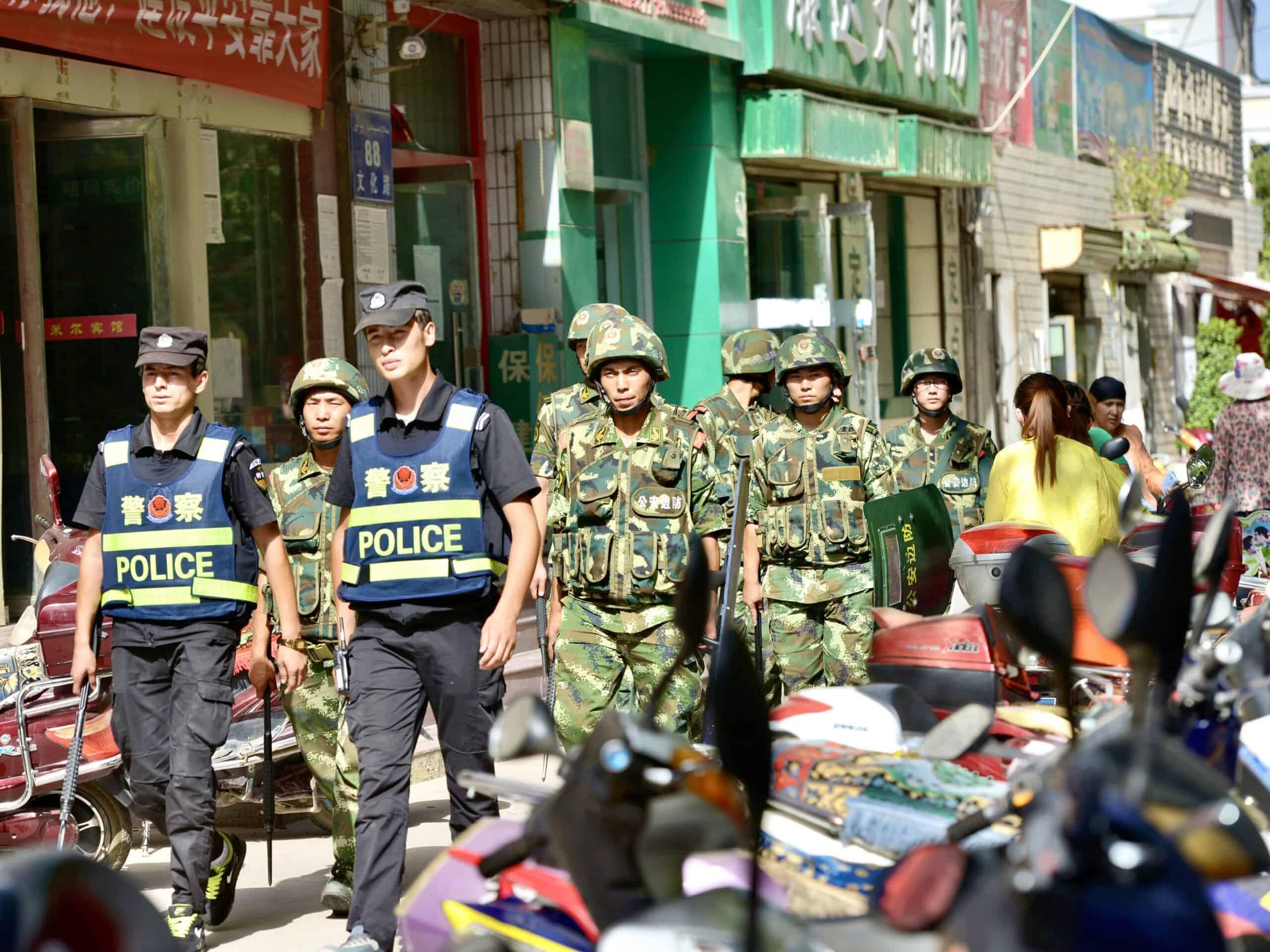
I think we still should. We should be critiquing mass incarceration in the United States, and we should do so in China. In the case of Uyghur incarceration in China, though, it’s not simply mass incarceration: It is a system of mass arbitrary detention. These are folks who are being put away for life for being an anthropologist, for going to a sermon, for being at a party where there were religious events happening. The system of mass arbitrary detention continues, and it remains the backdrop for everything else that happens in Uyghur life at this moment.
That includes these labor transfers, where the government comes to a person’s house, knocks on their door and says the government would really like it if you stopped raising sheep and started working in a shoe factory. There are clear directives in the Uyghur region alone, not anywhere else in China, that if a person were to refuse participation in these programs, they can be punished with detention. Everyone knows that if they say no to the government, the risk is that they’re going to end up in one of these camps or prisons.
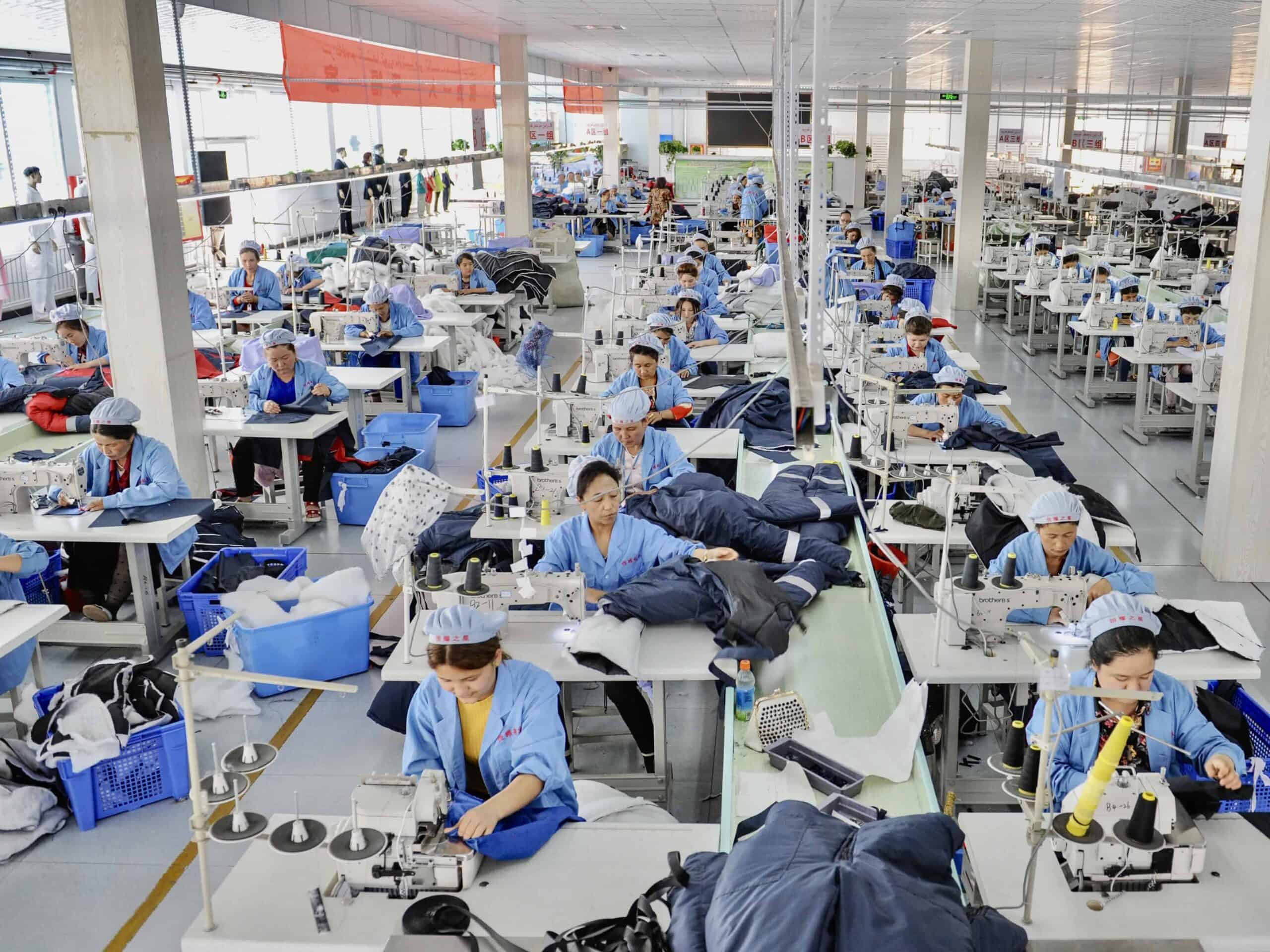
Where the crux of the PRC’s crimes against humanity against the Uyghurs is happening now is in the factories. They are the epicenter for the genocide now, because when the Chinese government moves a person into a factory, they forcibly migrate them. Sometimes they migrate them up to 3,000 miles. There’s family separation, there’s mandatory boarding school for all middle school aged children only in Xinjiang, not in other parts of China. They’re moving kids out of their family’s homes into boarding schools where they’re only allowed to get Chinese language instruction and Chinese cultural instruction. Then they say, don’t worry about your farms, we’re going to co-opt them. So they’re taking people off their land and dispossessing them, separating their families, moving them to factories by forcible migration.
And then in the factories, they’re told, you cannot practice your religion, you cannot speak your language, and you cannot contact your family. You cannot go home, except for when we allow you to. The factories are often gender divided. So the factory, or the mine or the field becomes that center for complete control of the Uyghur population. If you’re separating families, you’re lowering the birth rate. You’re stopping young women from meeting young men, so they’re not making families. It’s an abusive system of control that’s being operated through the labor transfer programs.
As these abuses have moved away from the Uyghur region into the factories, which as you say, could be all over China, is the UFLPA still the right tool to address this issue?
The UFLPA is just one tool, albeit a powerful one, in addressing forced labor. There is no law in the world that’s going to stop Xi Jinping from being dead set on his racist policies towards Uyghur people.
That doesn’t mean we throw that law out the window. We’re seeing significant losses accrued by companies that operate in the Uyghur region. And the hope is that then the corporate elite will start to push back and say, look, we’re suffering all these losses. The goal isn’t to starve the Uyghurs, which is what the Chinese government will tell you. The goal is to starve forced labor and to make it unprofitable, to make it so that companies don’t want to participate in these state run programs that oppress Uyghur people.
Legislators themselves are appalled to find out this is a blind spot, and the crisis in the Uyghur region has really put a fine point on just how pervasive forced labor made goods can be, and how critical it is that we use our economic levers to address human rights issues…
When we see fair labor recruitment in the Uyghur region and changes to the way they recruit workers, then we can pull back on the UFLPA, but in the meantime, what we need is other countries to adopt similar kinds of laws. I see this happening. The EU just adopted a forced labor regulation. I hear whispers that the UK is considering one. Japan is considering one.
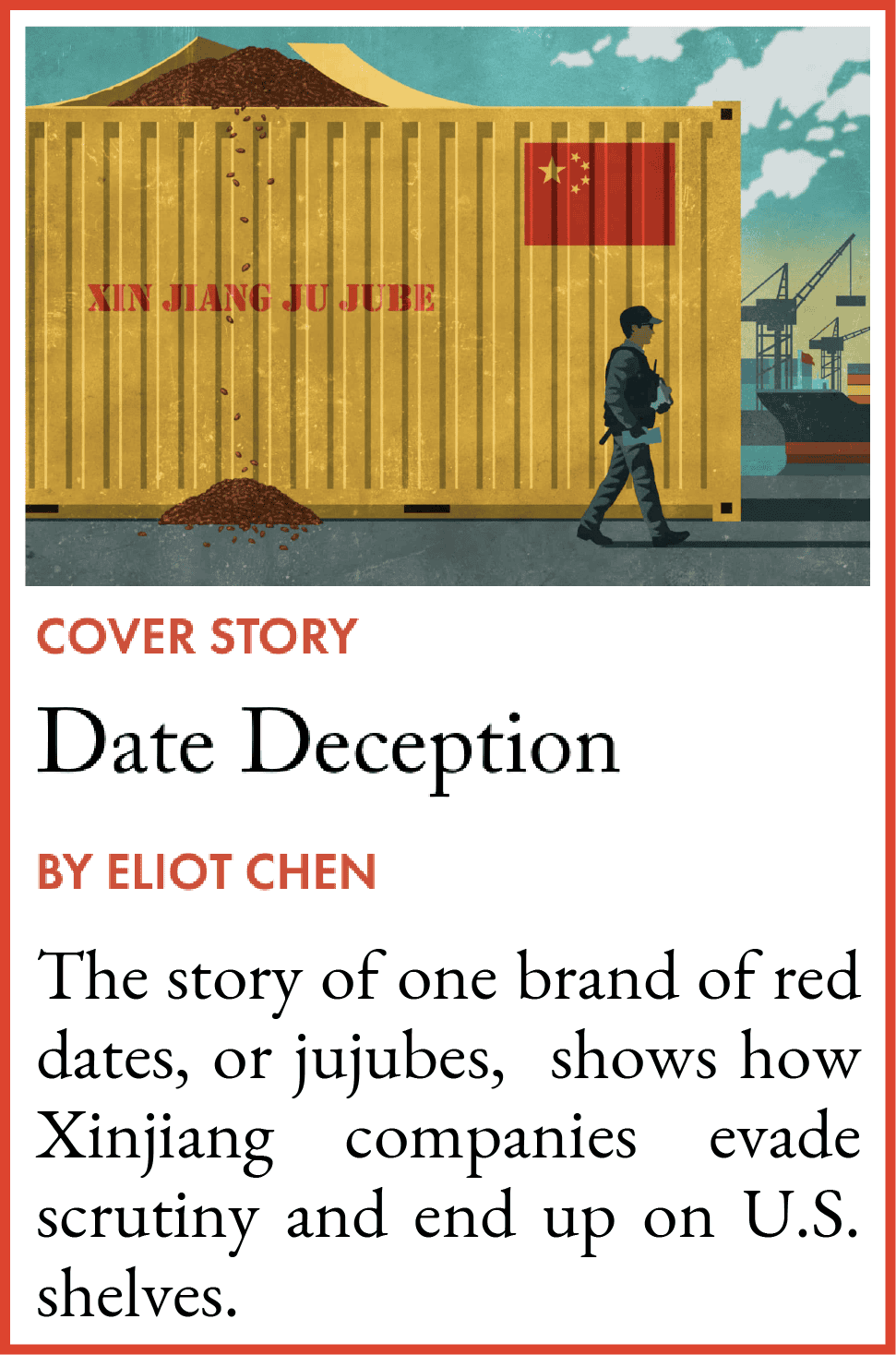
Two years ago, we published an investigation into how products made by the sanctioned Xinjiang Production and Construction Corps were ending up on U.S. supermarket shelves. These days, I can go to the supermarket in Toronto, Canada, where I live, and still routinely see these goods. What do you think about the pace at which other Western countries have moved on cracking down on Uyghur forced labor?
I have the same experience as you. The Chinese grocery store in Manchester, where I live, sells XPCC dates and raisins. I just found the same in Brussels when I visited there last week. It blows my mind. It’s disturbing that we still haven’t been able to even get the products that explicitly say “Made in Xinjiang” off the shelves.
But, I am optimistic that we’re going to see more legislation come out to address this. In general, most citizens of the world believe that their countries don’t allow the import of known slave-made goods. As they are increasingly made aware that they don’t have laws that prohibit that and protect them from purchasing goods made with forced labor, more people are getting on board. Legislators themselves are appalled to find out this is a blind spot, and the crisis in the Uyghur region has really put a fine point on just how pervasive forced labor made goods can be, and how critical it is that we use our economic levers to address human rights issues — or at the very least to protect our consumers from being complicit in those human rights abuses.
| MISCELLANEA | |
|---|---|
| MOST ADMIRED | I admire, and am most inspired by, survivors of forced labor and other human rights abuses, who speak out about their experiences. |
Also, a lot of countries and manufacturers are realizing that forced labor is undercutting their ability to continue manufacturing. You’re seeing your own steel or solar companies lose market share or close altogether. That’s not because of fair or free trade but because of unfair trade practices that are not being stopped because people are afraid of repercussions. Governments are realizing they’ve got to use whatever mechanisms they have to fight it.
The biggest impediment is fear of reprisals from China. One of the answers to that is that the more countries do it, the less China is able to have individual reprisals against each one of these countries. We need to band together.

Eliot Chen is a Toronto-based staff writer at The Wire. Previously, he was a researcher at the Center for Strategic and International Studies’ Human Rights Initiative and MacroPolo. @eliotcxchen