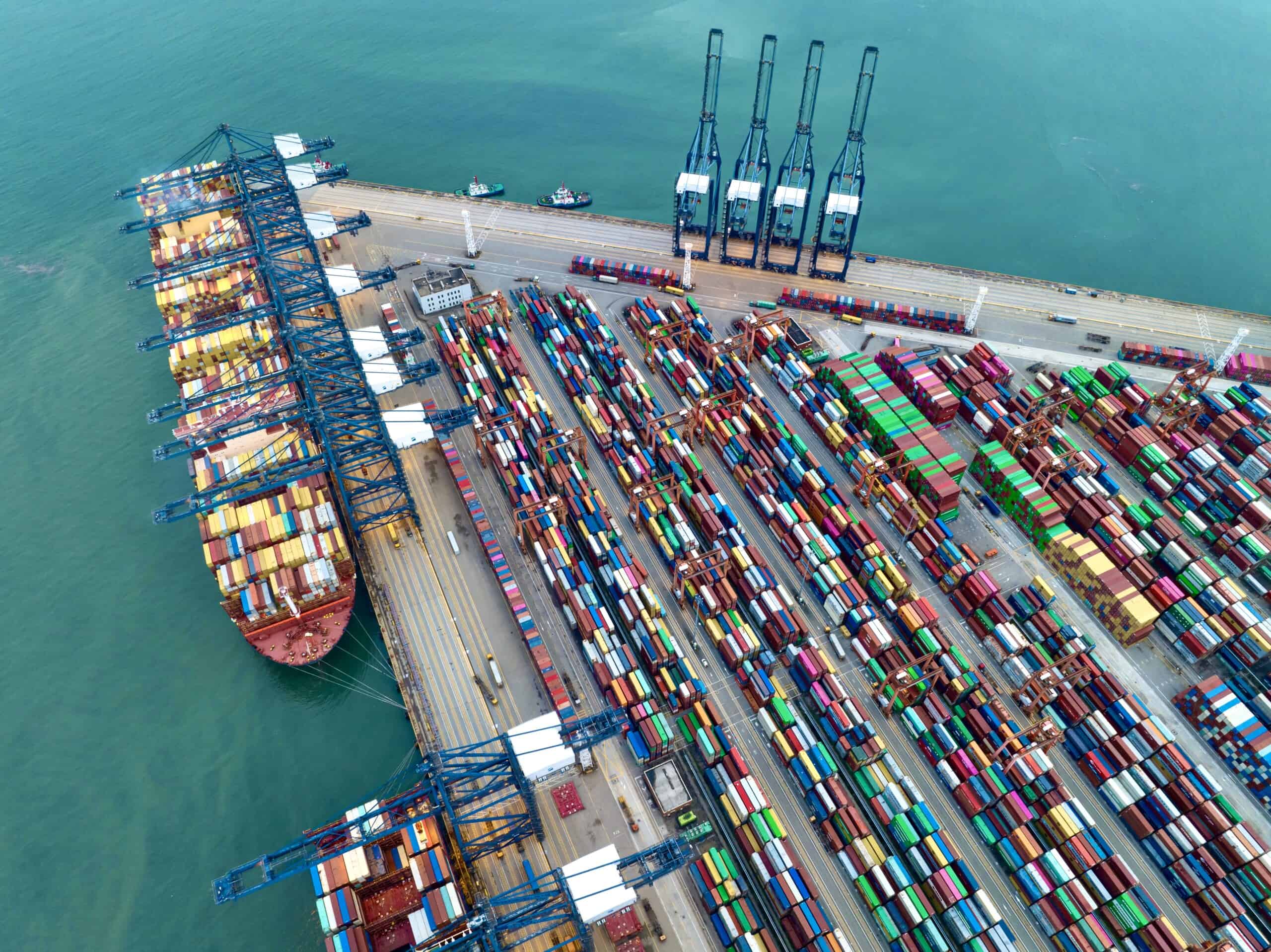
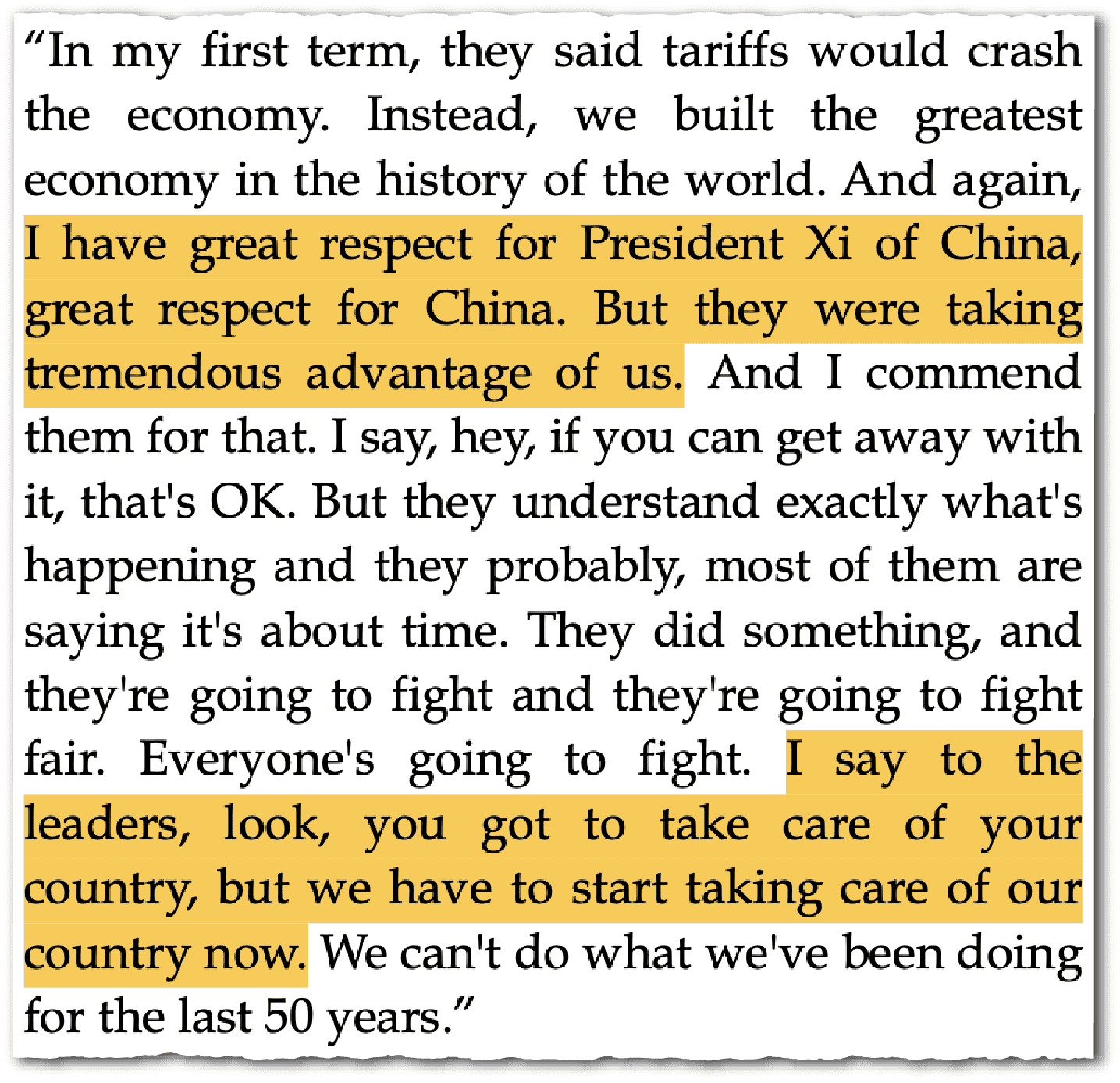
When President Trump speaks about trade deficits, he knows who to blame. China has eaten our lunch, he argues, flooding U.S. markets with cheap goods.
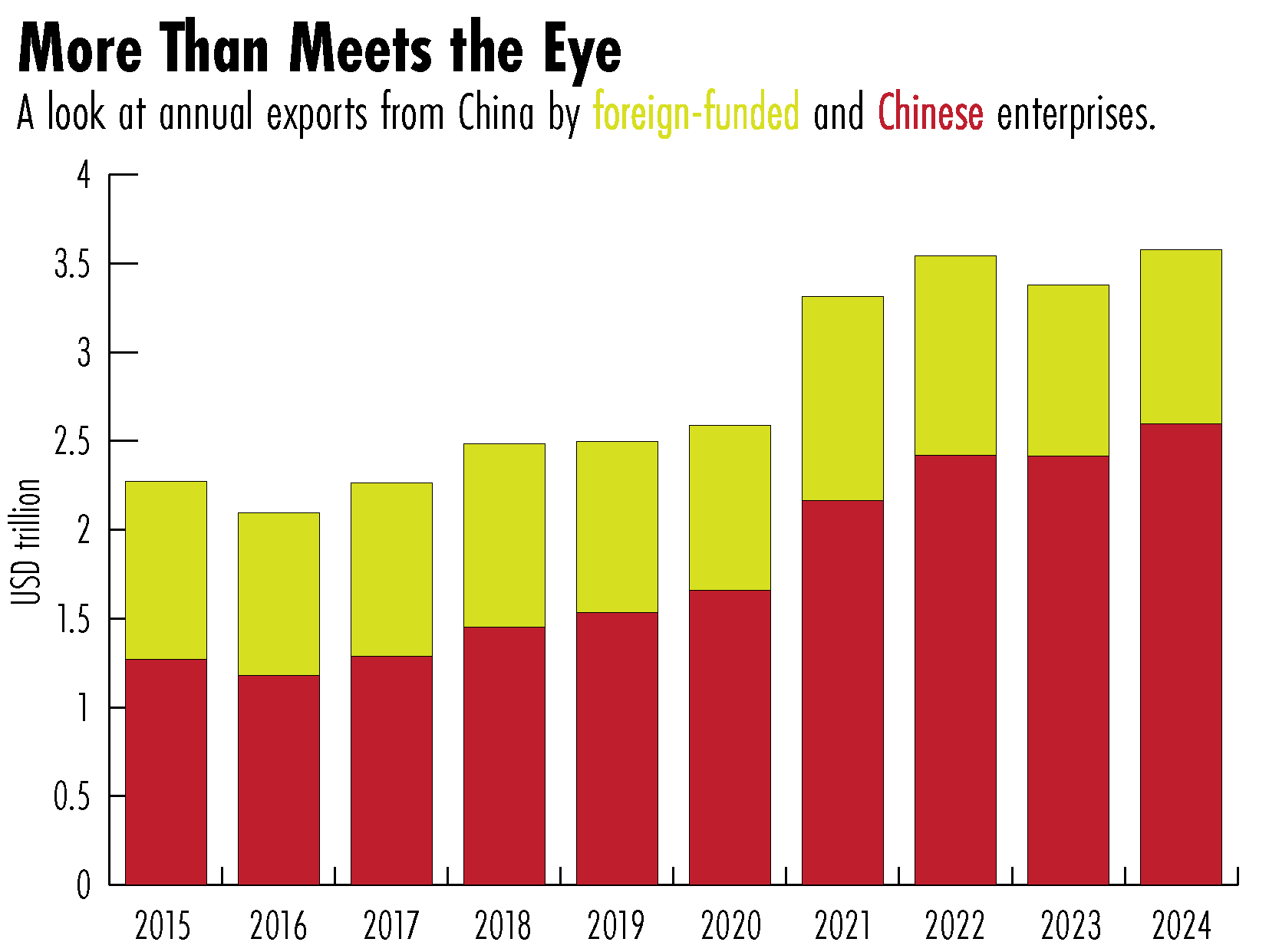
But for years foreign firms from Apple suppliers to Tesla have been responsible for an outsized share of China’s exports. This means that multinationals in China — including many American companies — may find themselves not only on the importing side of Trump’s tariffs, but on the exporting side as well.
Altogether, foreign-invested enterprises accounted for 27.4 percent of China’s overall exports last year, according to Chinese Customs data. That was down from 44 percent a decade ago, but still a significant share.
By comparison, U.S. subsidiaries of foreign companies accounted for 22.5 percent of American exports in 2022, the most recent year with data available, according to the U.S. Bureau of Economic Analysis. More than half of that trade was with the exporter’s foreign parent group, BEA data shows.
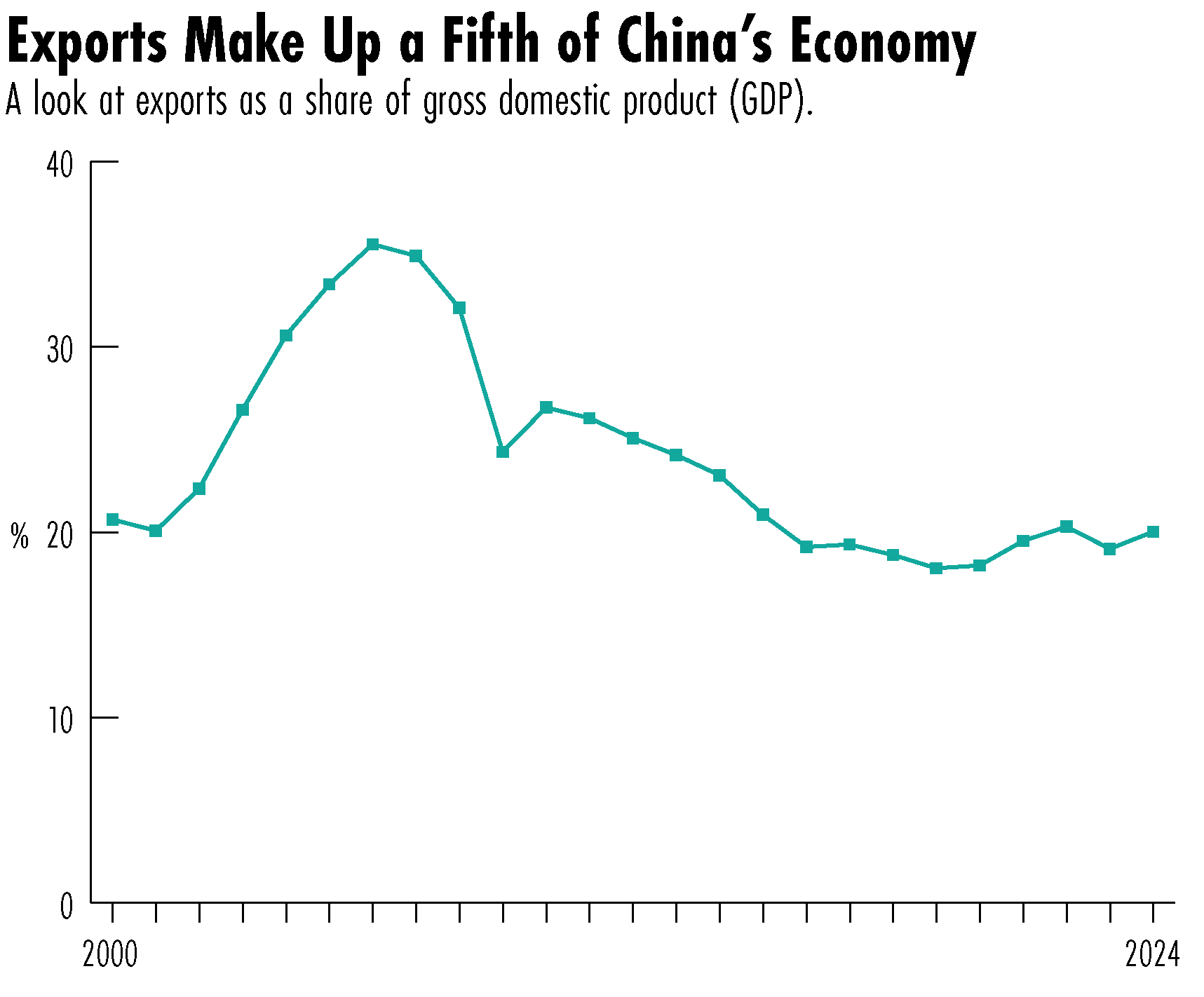
Foreign-firms’ share of China’s exports show how multinationals continue to underpin a vibrant sector of China’s economy, which is otherwise showing signs of duress. The property sector in particular continues to creak, underscored by the delisting of one-time giant Evergrande from the Hong Kong stock exchange last month.
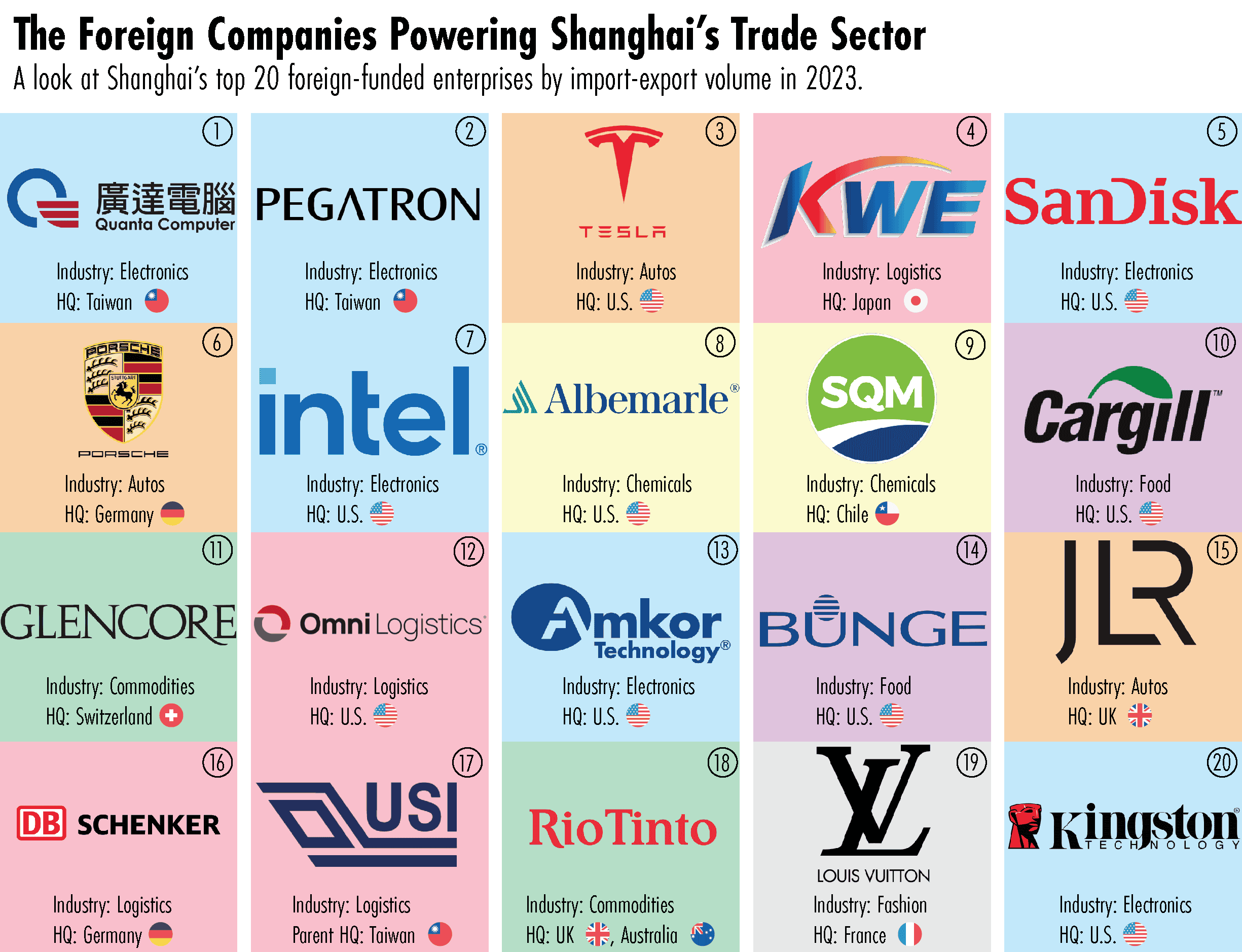
A look at Shanghai, an economic hub, offers insight into some of the companies responsible for driving China’s export sector. Each year the Shanghai Foreign Investment Association, a trade group, publishes a list of the top 100 foreign-invested enterprises in the city by overall trade.
Companies will stay as long as they can and adjust as much as they can until they are shown the door. If the China market loses its luster in terms of profits, you’re going to see more multinationals look for opportunities elsewhere.
Scott Kennedy, trustee chair in Chinese business and economics at the Center for Strategic and International Studies
The table below shows the top 20 in 2023, the most recent year for which data was available. It combines exports and imports — a list solely of exporters is not available — meaning soybean trader Bunge, likely a major importer, appears alongside Apple supplier Pegatron, which helps China export iPhones. The list also counts overall exports, not just those to the U.S.
U.S. tariffs may do little to dissuade companies with major China operations to change course. They could continue to use the country as an export hub for the world outside the United States, or absorb the now-smaller difference in tariff between China and the rest of the world to take advantage of Chinese manufacturing expertise.
“The notion that somehow a particular supply chain is going to pick up and leave China is not very realistic,” says Ken Jarrett, a senior advisor at the Albright Stonebridge Group who was formerly president of the American Chamber of Commerce in Shanghai. “For products destined for Chinese consumers, if anything, what we’ve seen is a tendency to further concentrate the supply chain in China.”
Indeed, international firms have been saying for years that they are in China to serve the domestic market of 1.4 billion people. “Since the first Trump administration, the mantra among foreign multinationals is ‘in China, for China,’” says Andrew Polk, co-founder of economic advisory firm Trivium.
But concentration is a double-edged sword. It means companies are not inured to the ails facing the Chinese economy, which are being compounded by ongoing tensions between the governments in Washington and Beijing. Multinationals also face growing competition from Chinese firms, which have moved up the value chain to make competitive products like electric vehicles.
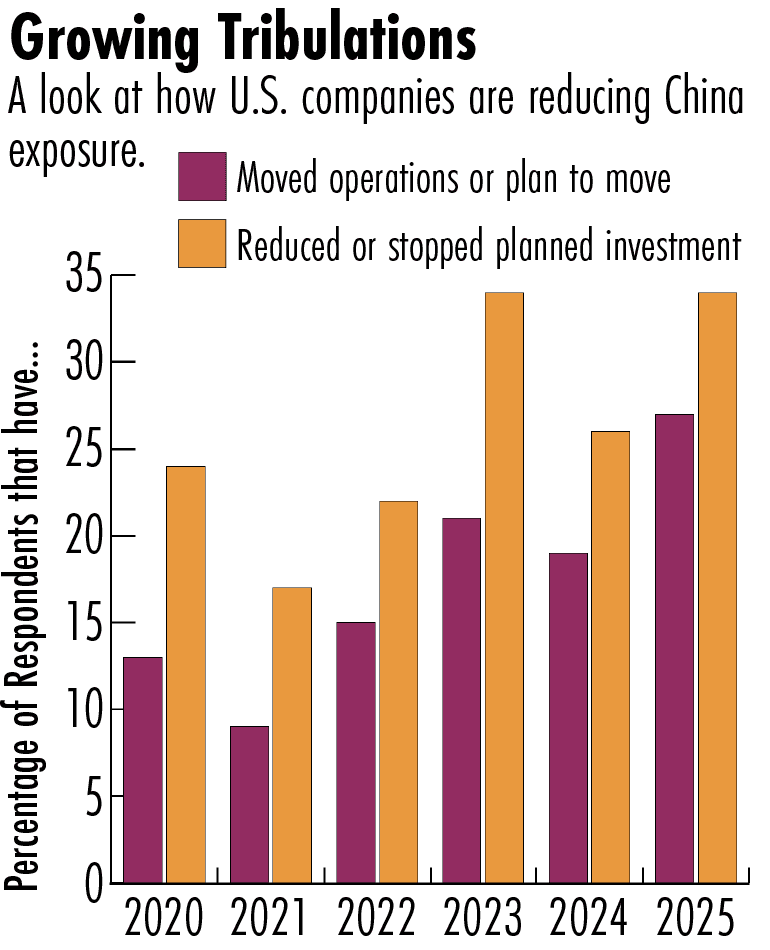
“Everyone is quite aware of the deeper frictions between the U.S. and China, and then there’s the fact of the slowing economy and pressure on margins. It’s just harder for companies to perform well,” Jarrett says.
Ultimately, deciding whether to stay in China will be a function of the bottom line, says Scott Kennedy, trustee chair in Chinese business and economics at the Center for Strategic and International Studies.
“Companies will stay as long as they can and adjust as much as they can until they are shown the door,” he says. “If the China market loses its luster in terms of profits, you’re going to see more multinationals look for opportunities elsewhere.”

Noah Berman is a staff writer for The Wire based in New York. He previously wrote about economics and technology at the Council on Foreign Relations. His work has appeared in the Boston Globe and PBS News. He graduated from Georgetown University.