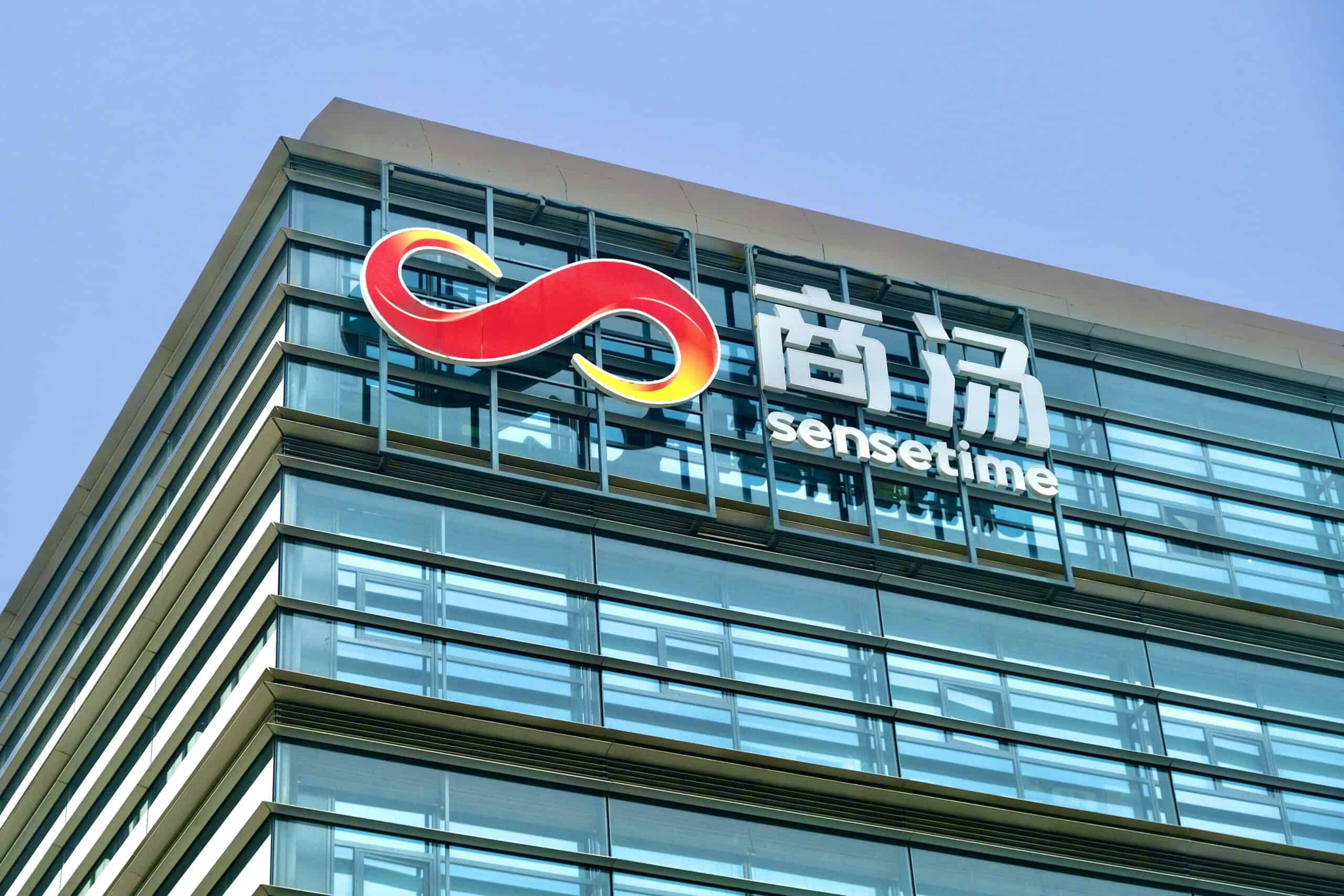
When Chinese leader Xi Jinping last met with leading entrepreneurs in the country in 2018, Tang Xiao’ou, the charismatic founder of SenseTime — the world’s most valuable AI startup at the time — sat front and center.

In a sign of how far SenseTime has fallen, its executives were nowhere to be seen when Xi chaired the latest such meeting in February.
SenseTime, best known for its facial recognition technology, has faced several setbacks in recent years. The first Trump administration sanctioned the company in 2019, accusing it of enabling China’s human rights abuse on ethnic minorities in Xinjiang. It lost ground as the AI industry’s frontier shifted away from its speciality in machine perception, to generative AI, which involves training large language models. Tang’s death in late 2023, aged 55, was another major blow.

Now, after consecutive years of losses and a painful restructuring, SenseTime is trying to make a comeback. It has shifted its core business to generative AI, while spinning off other operations, such as healthcare and chipmaking, into new units. At the World AI Conference in Shanghai last week, the company released an embodied AI platform — called Wuneng — that helps robots navigate real environments.
Despite external pressures, [SenseTime] seem[s] focused and clear on what they can deliver. The team came across as pragmatic and relentless, very much a ‘survival of the fittest’ mentality.
Rui Ma, a veteran investor and a founder of the research firm Tech Buzz China
The question is whether the pivot is sufficient to turn things around for the onetime tech darling.
A video highlighting the capabilities of the “Wu Neng” embodied AI platform. Credit: SenseTime
“The rise of Gen AI forced a strategic shift, and for a company of this size, that’s no small feat,” says Rui Ma, a veteran investor and a founder of the research firm Tech Buzz China, who recently visited SenseTime’s office in Shanghai. “Despite external pressures, they seem focused and clear on what they can deliver. The team came across as pragmatic and relentless, very much a ‘survival of the fittest’ mentality.”
Tang, a prominent scientist who graduated from Massachusetts Institute of Technology, founded SenseTime in 2014 along with three protégés in Hong Kong. Tang stressed the need for original innovation in China, instead of copying foreign tech giants like Google. True to his vision, the company’s cutting edge research in the field of computer vision received global recognition, with prestigious journals often featuring its papers.

SenseTime’s advances in facial recognition earned it Chinese government subsidies and contracts, and it raised HK$5.78 billion ($740 million) via an initial public offering in Hong Kong in 2021. However, its U.S. blacklisting has limited the company’s ability to raise capital from American investors. Others point to SenseTime’s over-reliance on support from Beijing.
“You can only survive on government procurement for so long when it comes to computer vision applications,” says Jeffrey Ding, an assistant professor of political science at George Washington University. “At some point, there needs to be diversification to diffuse and implement AI across all these different application sectors beyond surveillance.”
SenseTime has tried to move into areas with broader appeal. By the time it was listed, its operations spanned from autonomous driving solutions and traffic management to medical image analysis and quality inspections in factories. That expansion also spread the company thin.

“For each application, the company needs to come up with different models,” says Tony Peng, founder of the newsletter Recode China AI. “There isn’t a general purpose, universal solution that can solve all of these problems, which means the cost of developing a solution is high.”

As a result, SenseTime has struggled to turn its academic prowess into commercial success. It has been bleeding cash since 2018, racking up a net loss of 4.3 billion yuan ($600 million) last year. Its workforce has shrunk by 40 percent since 2021, following several rounds of layoffs.
SenseTime is part of a cohort of computer vision companies — including Megvii from Beijing and Yitu and Cloudwalk from Shanghai — that were once collectively known as China’s four Tigers of AI, but have largely faded out of the picture as the hype around that part of the industry subsided.
Their rise and fall highlights how early is the development of AI, and the many more cycles that could come. “You can’t just call a winner at this stage,” says Grace Shao, founder of AI Proem, an industry newsletter.
Shao says that makes it premature to count SenseTime out. “It’s really harsh to say they’re irrelevant now because they have strengths that others don’t have,” she says, pointing to the application of computer vision in healthcare imaging, for instance.

As an early investor in infrastructure, SenseTime has built large data centers in Shenzhen as well as Shanghai, and has hoarded 40,000 chips from Nvidia over the past decade, one of the co-founders Xu Bing told Bloomberg last year. Thanks to its experience working with enterprises from various sectors, the company has also accumulated a wealth of data, which could be used to train AI models.
These strengths have paved the way for SenseTime’s transition to generative AI. The company rolled out its first foundation model, SenseNova, in April 2023. A year on, it launched its fifth iteration, which it claimed to have outperformed the GPT-4 Turbo released by OpenAI in late 2023.
…all these different startups, established giants released different large language models, and now we’re starting to see the pruning and the strongest come to the top. It’ll be a challenge for SenseTime to [make a] breakthrough in this space, given how competitive the landscape is.
Jeffrey Ding, an assistant professor of political science at George Washington University
“We are at one of the best starting points in history, riding on what could be the biggest technology wave ever,” Xu, the co-founder, said at a conference in Hong Kong last year. The risk of missing out on the opportunities far outweighs the initial investment costs in AI infrastructure, he added.
A video demonstrating Raccoon’s ability to give intelligent coding assistance. Credit: SenseTime
Besides chatbots, SenseTime has introduced services such as Raccoon, an office tool that can read excel spreadsheets and write codes. It has also launched hardware, such as a 350,000-yuan ($49,000) device that government agencies and financial institutions can install on their own premises to run AI systems without worrying about data leaks.
Above all, SenseTime runs a cloud platform, which companies can leverage to train their models more efficiently or access other large language models, including DeepSeek.
“SenseTime is in full rebuild mode. They’ve cut legacy products and doubled down on efficiency, and applied a ton of AI internally,” says Ma, of Tech Buzz China.

Some of the efforts have borne fruit. China Mobile, car manufacturer Leapmotor and laptop maker Lenovo are among companies that have adopted SenseTime’s AI office tools. Generative AI accounted for nearly two-thirds of SenseTime’s 3.77 billion yuan ($525 million) revenue last year, up from 10 percent in 2022, per its annual reports.
SenseTime points to this as evidence of its successful transformation. A business that earns the majority of its revenue from generative AI is “a very rare occurrence in China right now,” a company spokesperson told The Wire China.
Still, SenseTime is a latecomer to the crowded market, where a price war has already emerged.
“There was the hundred model war, where all these different startups, established giants released different large language models, and now we’re starting to see the pruning and the strongest come to the top,” says Ding. “It’ll be a challenge for SenseTime to [make a] breakthrough in this space, given how competitive the landscape is.”
“The challenge with running a true cloud-based AI business is about scale. The more clients you have, the easier for a company to spread out the costs and make money over the margins,” Lian Jye Su, a chief analyst at tech research firm Omdia. On the flipside, without sufficient scale, a company would struggle to cover the hefty investment required, he warns.
Instead of going head to head with hyperscalers with deeper coffers, such as Alibaba Cloud and Tencent, Su says SenseTime’s best bet is to develop a niche, whether it is leaning on its strength in computer vision or tapping its existing customers.
“Their emergence was based on the fact that they are able to address use cases in other domains,” Su says. “As long as they can articulate a good solution, they’ll always stand a chance.”

Rachel Cheung is a staff writer for The Wire China based in Hong Kong. She previously worked at VICE World News and South China Morning Post, where she won a SOPA Award for Excellence in Arts and Culture Reporting. Her work has appeared in The Washington Post, Los Angeles Times, Columbia Journalism Review and The Atlantic, among other outlets.