As China tightens control over critical minerals exports, strives for self-sufficiency in key technologies, and places “exit bans” on some foreign workers, it is simultaneously rolling out policies to welcome in more foreign visitors. Inbound tourism development has become a national priority.

China was among the hardest hit by the global tourism collapse during Covid. The World Economic Forum ranked it the fourth-most economically exposed country based on the sector’s share of GDP. The pandemic’s impact was exacerbated by negative rhetoric around the world about the virus’ origin and Beijing’s strict zero-Covid response.
Since then, China’s international tourism sector has clawed its way back. Inbound visits to China — which include Hong Kong, Macau, and Taiwan — are likely to meet or exceed pre-pandemic levels in 2025.
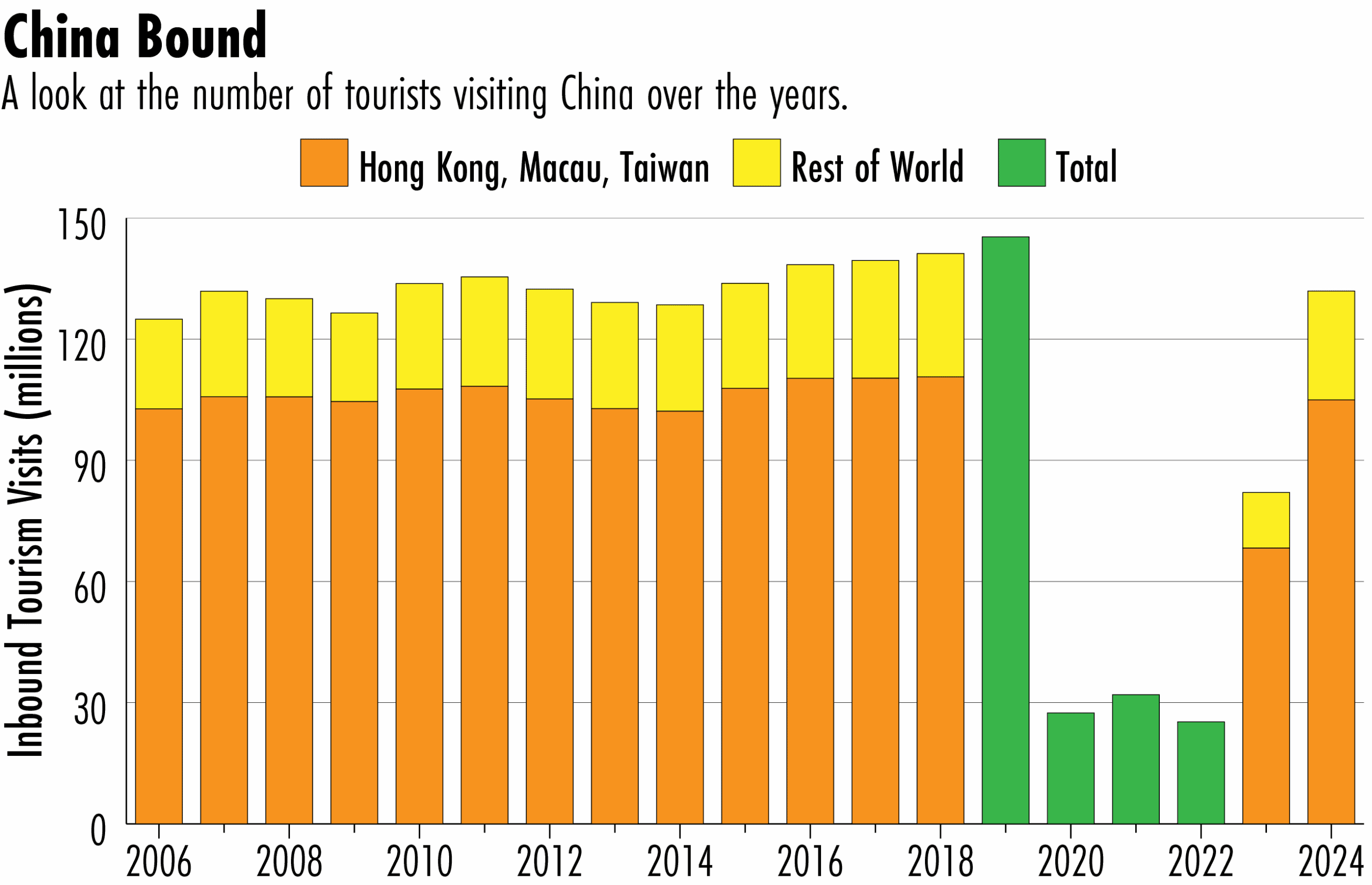
The Ministry of Culture and Tourism did not publish detailed breakdowns of inbound tourism between 2019 and 2022.

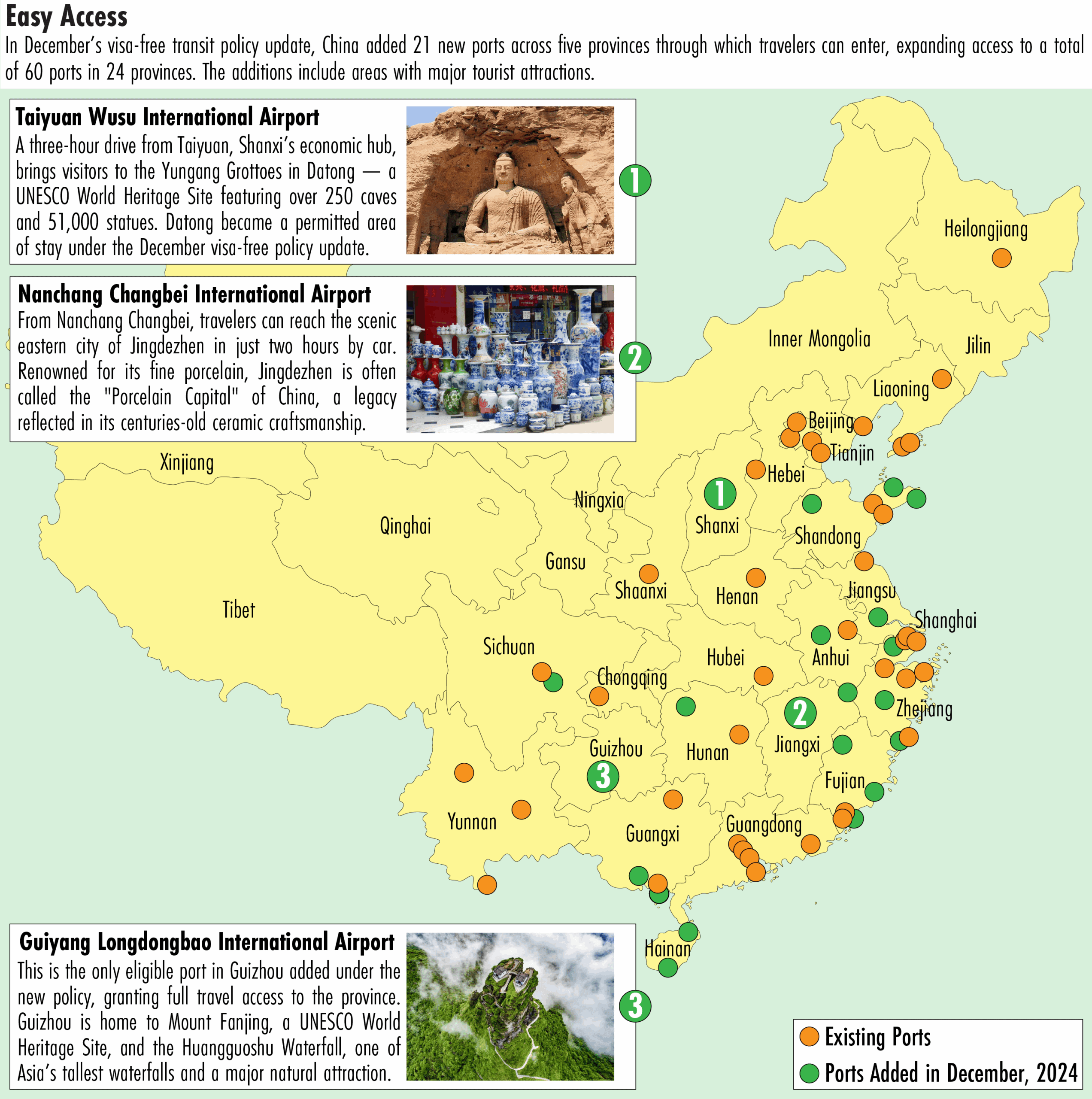
China’s new visa-free policies — for both standard and transit visitors — have been a key driver of the recovery in inbound tourism. On December 17, 2024, China extended its visa-free transit policy to 240 hours, up from 72 or 144 hours, for travelers from 54 countries, adding Indonesia in June to bring the total to 55. Around three-quarters of the countries included are European, with 11 percent each from the Americas and Asia. Travelers must hold a valid ticket to a third country within the 10-day window.
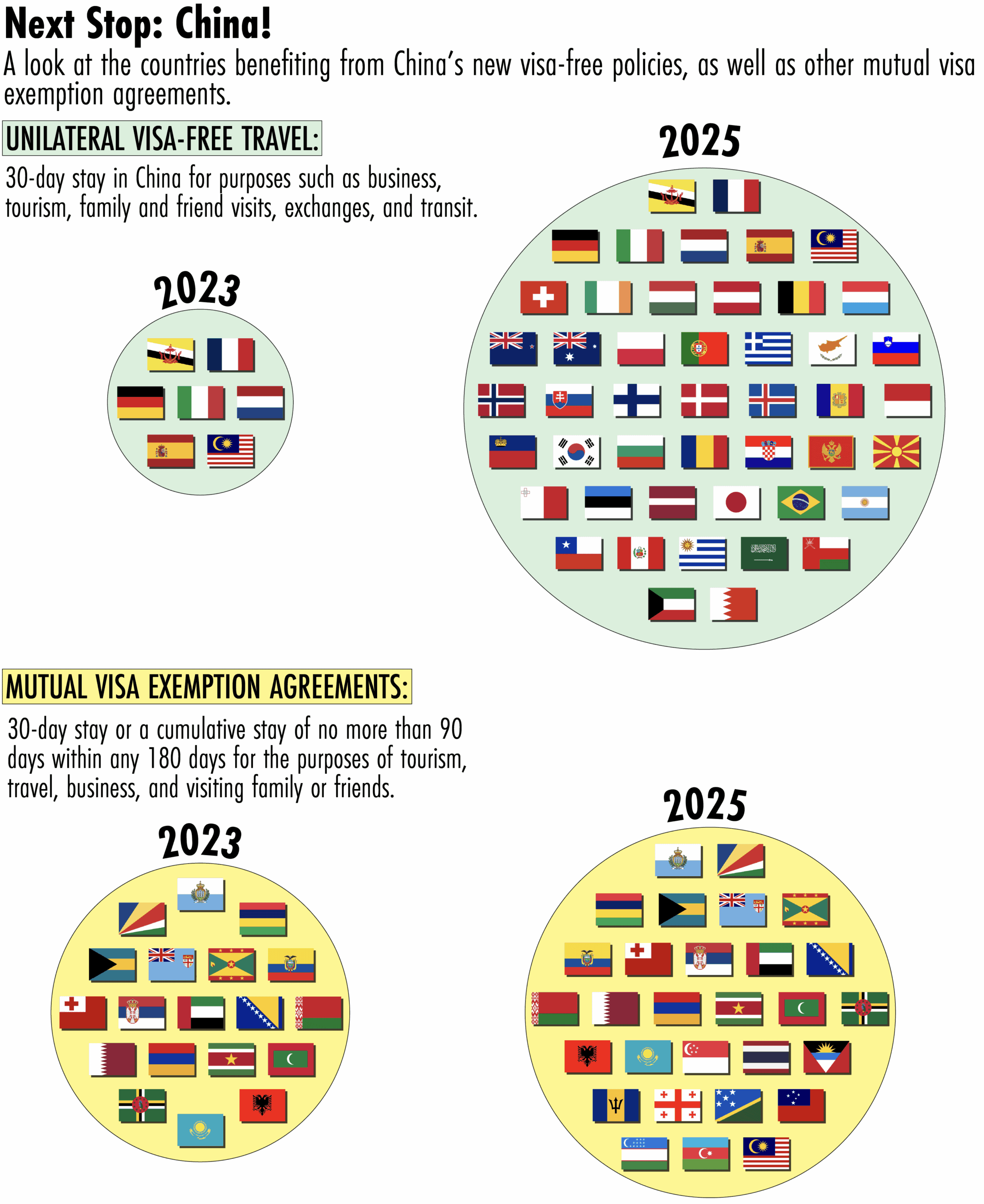
In recent years, China has prioritized unilateral visa-free policies, allowing foreign nationals to enter China without securing reciprocal access for Chinese citizens abroad. This move represents a targeted effort to boost inbound tourism amid geopolitical tensions and economic headwinds.
The main interest has been to generate hard-currency income and to influence visitors positively.That is not in contradiction to supporting self-reliance.
Wolfgang Georg Arlt, chief executive of the China Outbound Tourism Research Institute
“The easing of visa requirements is a significant step in making inbound tourism more accessible for our clients,” says Natalie Kidd, managing director of Asia for Australian travel company Intrepid Travel. “Our 2025 [bookings for trips to China] are now showing us 15 percent up on pre-pandemic levels and a significant 70 percent increase year on year.”
Overall, nearly three-quarters of the 19 million foreign entries into China in the first half of 2025 were made under visa-free policies, according to China’s National Immigration Administration. NIA does not publish breakdowns by country of origin.
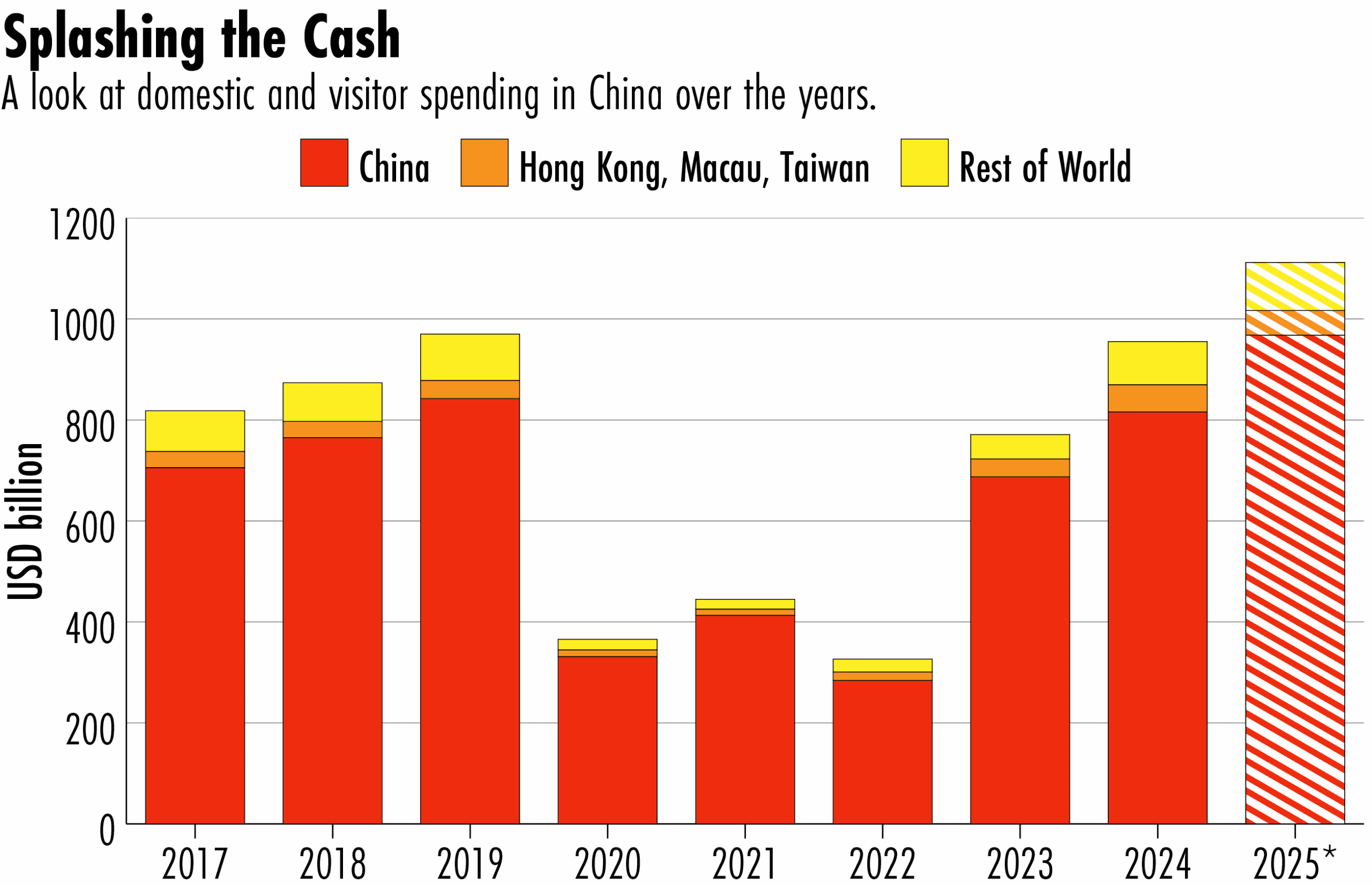
According to the World Travel & Tourism Council, annual international visitor spending in China has already surpassed 2019 levels and is projected to continue rising.
Such figures suggest China’s relaxation of its visa-free travel rules is working even as it works elsewhere to make its economy less reliant on the global economy. “The main interest has been to generate hard-currency income and to influence visitors positively,” says Wolfgang Georg Arlt, chief executive of the China Outbound Tourism Research Institute. “That is not in contradiction to supporting self-reliance.”
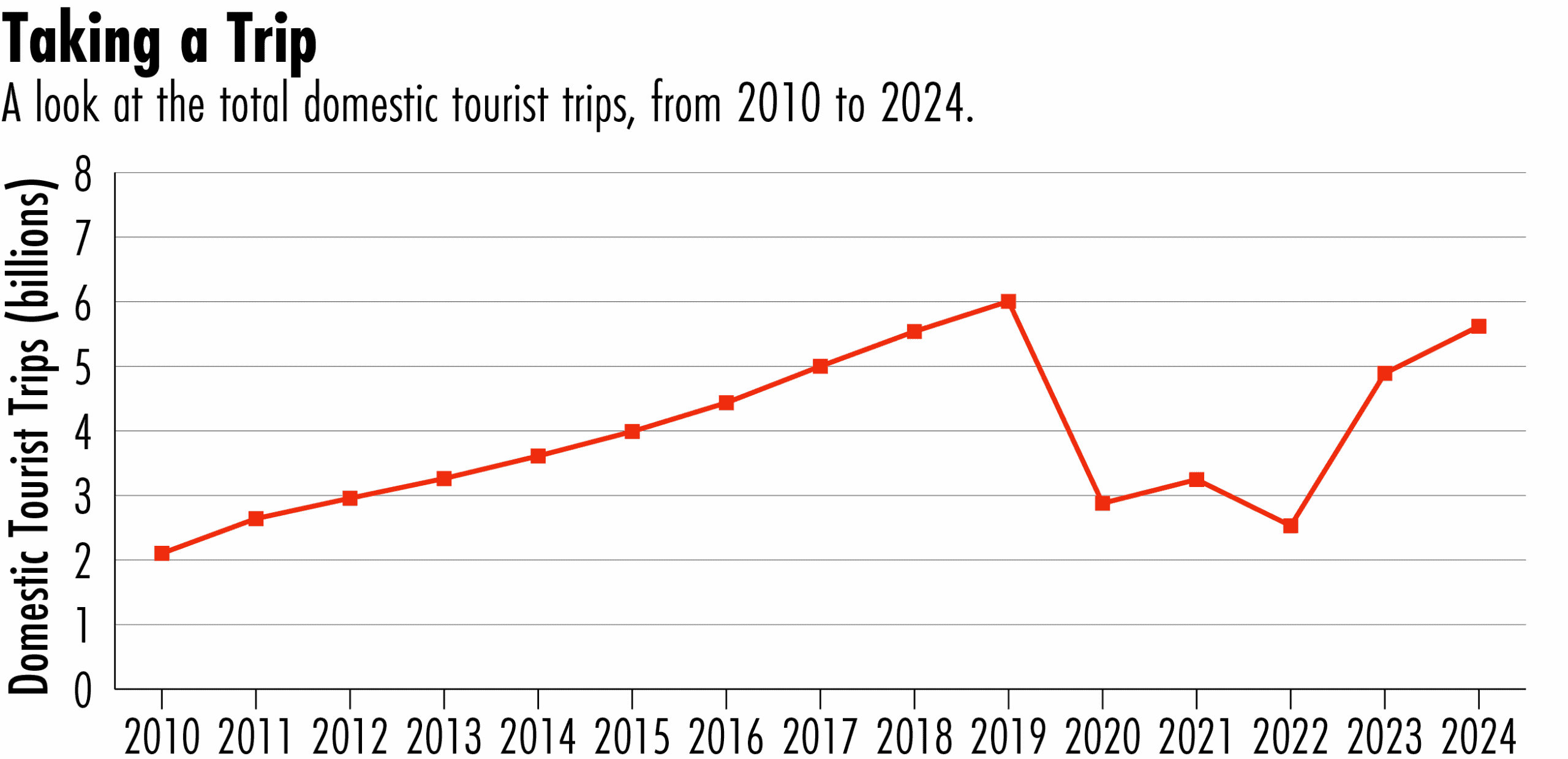
Even so, China’s tourism sector remains overwhelmingly domestic.
Some observers are skeptical of China’s inbound tourism prospects. “China is too expensive compared to Southeast Asian destinations, too overcrowded with domestic tourists, [and] too difficult for non-Chinese speakers outside the big cities,” says Arlt. “The industry is not very interested in a handful of low-paying, hard to manage, non-Chinese speaking, non-Chinese App savvy foreigners when they can have 10,000 domestic customers which are easy to handle.”

Others are more hopeful, particularly in light of recent policy changes. “With language being a barrier, domestic tourism is often seen as easier,” says Kidd. “However, the recent steps taken to ease visa requirements, more accessible payment options and opening of accommodation options for international visitors are increasing our optimism for the future.”

Dean Minello was a summer staff writer for The Wire based in New York. He is a junior at Princeton University studying Public & International Affairs with a minor in East Asian Studies, and does research at Princeton’s Center for Contemporary China. Proficient in Mandarin, Dean is interested in authoritarian politics, human rights, and U.S.-China relations.