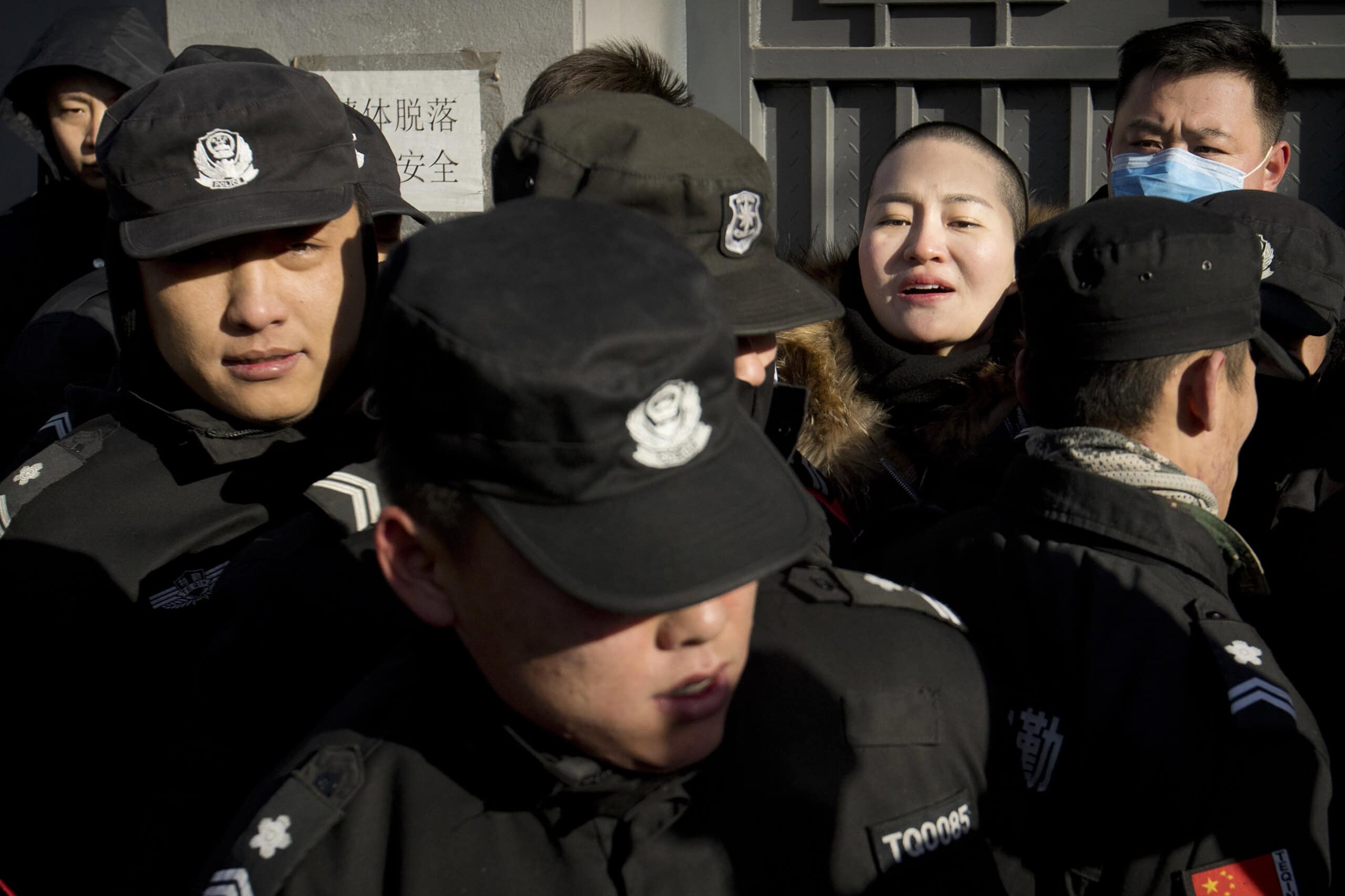
Ten years ago, on July 9, 2015, China launched an unprecedented nationwide assault on its bravest legal professionals. In what came to be known as the “709 Crackdown”, hundreds of human rights lawyers, legal assistants, and activists were detained, disappeared, interrogated, and tortured. Their crime? Daring to believe that the Chinese constitution and law should apply equally to all citizens — including the government and the Chinese Communist Party.
A decade later, the memory of 709 remains a grim milestone in the CCP’s war on the rule of law. But it also remains a testament to the courage and resistance of those who fight for justice and rule of law inside a dictatorial system.
LAWYERS ON THE FRONTLINE OF RESISTANCE
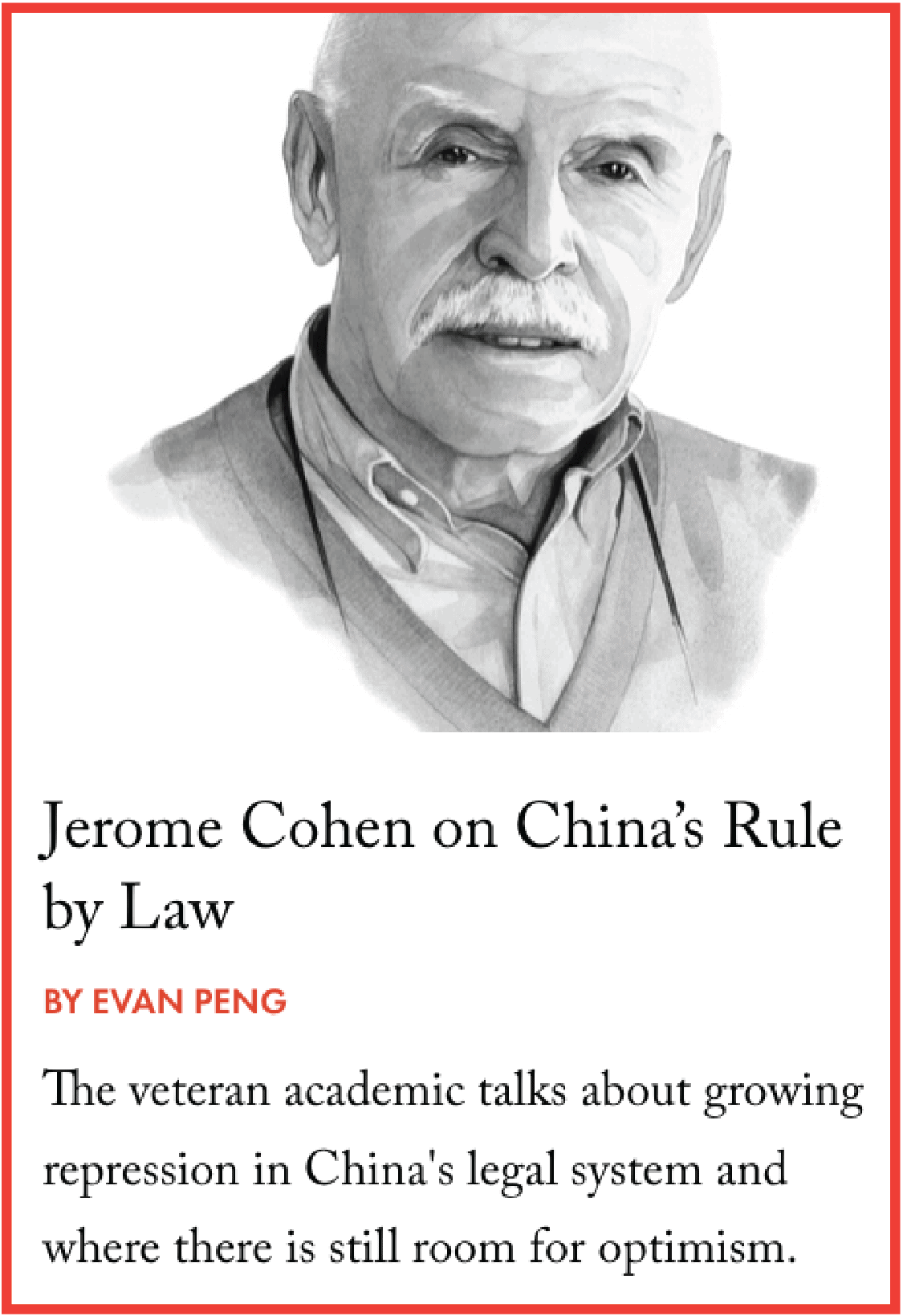
In 1957, China’s lawyer system was completely dismantled. For a full 22 years, there was not a single practicing lawyer in the People’s Republic of China. In 1979, amid a painful reckoning with the chaos of the Cultural Revolution, the Communist Party reinstated the judicial system. Dogmatic ideology and total control began to loosen, giving rise to new discourses on the rule of law and civil rights. As one of the earliest western scholars to study the PRC law — and as someone who had met with Zhou Enlai and Deng Xiaoping — Professor Jerome Cohen, one of the authors of this article, personally witnessed and participated in the gradual restoration of China’s legal institutions.
Several years after the bloody suppression of the 1989 pro-democracy movement, the CCP continued its market-oriented reforms under one-party rule, while Chinese liberals pushed forward the causes of legal reform and civil liberties. Despite censorship, the rise of the internet enlightened the public and enhanced the mobilization capacity of civil society. Despite lack of free elections, economic development still provided greater resources for grassroots activism. And despite the many flaws of the engagement policy, which has now been rejected by the United States, China’s increasing openness to the international community immensely empowered its civil society. It was within this context that the group of “rights defense” or weiquan lawyers emerged on the historical stage.
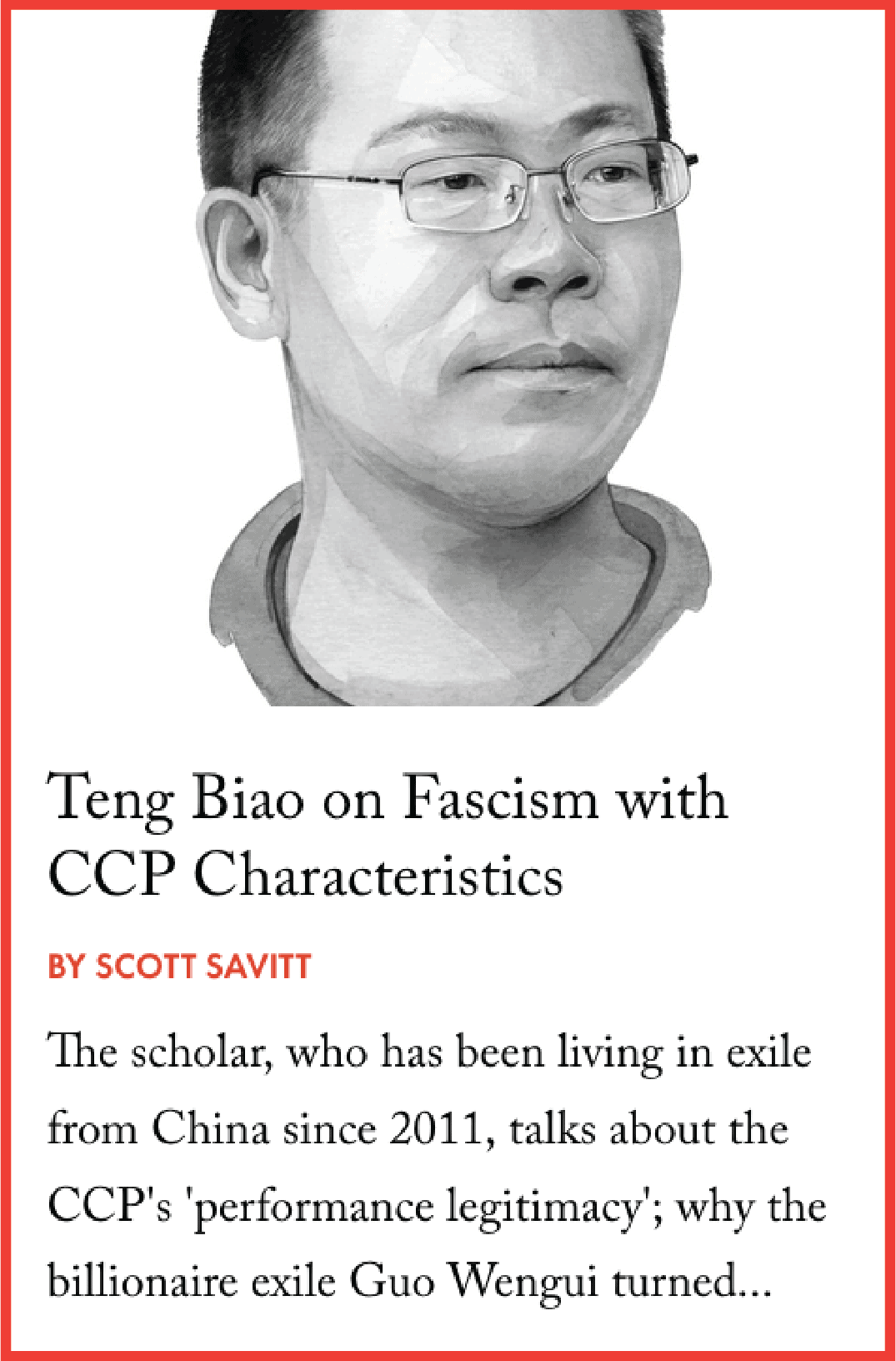
Rights defense lawyers took up the “weapon of law” to demand that the government abide by the laws they themselves had made. The Sun Zhigang incident in 2003 is widely regarded as the beginning of the rights defense movement. The death of Sun, a young designer, sparked public outrage against the “custody and repatriation” system — one of many extra-judicial detention mechanisms in China. Three scholars, including the co-author of this article Teng Biao, publicly called on the National People’s Congress to conduct a constitutional review of the system. The “custody and repatriation” system was soon abolished.
More and more lawyers, intellectuals and activists joined the rights defense movement. Case by case, they called on the government to respect freedom of speech, religious freedom, personal liberty, and property rights. They pushed the judiciary to redress wrongful criminal convictions. They documented abuses, mobilized public opinion, engaged with international institutions, and mentored a new generation of rights defenders. They demanded the disclosure of officials’ assets. They ran as independent candidates in local elections and encouraged others to do the same. They called for the abolition of the one-child policy and of the apartheid-like household registration (hukou) system. They served as the connective tissue between grassroots grievances and the universal ideals of justice and dignity.
When Professor Cohen met this group of human rights lawyers in 2006, they were full of hopeful expectations that China would eventually realize rule of law and democracy — a moment reminiscent of the optimism that followed the reforms of 1979.
XI JINPING’S WAR ON LAW
Because the demands of the rights defense movement conflicted with the Communist Party’s goal of maintaining stability, it faced suppression from the moment it emerged. However, government repression only made rights defenders more united, earned them greater public recognition, and helped them accumulate moral resources and influence. Before the brutal crackdown in 2015, the movement continued to grow; it even showed signs of becoming more organized, politicized, street-oriented, and internationalized. However, its achievements became the very reason it was subjected to even harsher repression.
By the time Xi Jinping came to power, the CCP was already facing a multifaceted crisis. Its ideology had lost its appeal. The internet had greatly undermined the effectiveness of censorship and propaganda. Environmental degradation, unrest in border regions, and public dissatisfaction with the system had been building for decades. Most fundamentally and seriously, the economy had begun to slow down, worsening China’s socio-political problems.
In the face of these mounting crises, the Communist Party’s fear of a “color revolution” inevitably intensified. In the eyes of Xi Jinping and the Party leadership, the previous level of repression was no longer sufficient to stop civil society from posing a direct threat to the regime. The new model of suppression was not reactive, but planned and systematic; it did not target just those who crossed red lines but aimed at wiping out civil society as a whole, and destroying the capacity for collective resistance.
Xi Jinping abolished the two-term limit for the presidency, intensified censorship on the internet, media and in schools, shut down thousands of NGOs, persecuted religious groups, arrested entrepreneurs, journalists, artists, academics and anyone who disobeyed its dictates. By implementing the National Security Law in Hong Kong in 2020, the CCP brazenly and deliberately destroyed Hong Kong’s freedom. Since 2017, between one and three million Uyghurs, Kazaks and other Turkic people in Xinjiang (East Turkestan) have been detained in concentration camps. Tibet’s index of freedom is now lower than North Korea, as reported by the Freedom House. As part of this political purge, the 709 Crackdown sent a clear message: what the CCP wants is not rule of law, but rule by fear.
Today, the Chinese government has established an unprecedented high-tech dystopia, having strengthened its totalitarian surveillance during the Covid pandemic. The government’s goal is to maximize its capacity to monitor everyone’s every movement, in every corner, and at every moment. In one terrifying case from 2021, two lawyers were prohibited from traveling to meet their client, a citizen journalist who had been imprisoned her exposing the truth of the pandemic. The authorities’ excuse was the lawyers’ “health code turning red”, which was of course manipulated for political purposes.
A decade later, the memory of 709 remains a grim milestone in the CCP’s war on the rule of law. But it also remains a testament to the courage and resistance of those who fight for justice and rule of law inside a dictatorial system.
SILENCE IS COMPLICITY
In the ten years that have passed since the 709 crackdown, the repression of human rights lawyers has not ceased. The 11-year-old son of Wang Quanzhang, a lawyer who forcibly disappeared for three years during the 709 Crackdown, was banned from going to school. Gao Zhisheng, a leading human rights lawyer, has been forcibly disappeared for 8 years. Around a hundred lawyers have been disbarred because of their activism. Thousands of rights activists, including prominent human rights lawyers, are still languishing in jail in China.
Even from behind bars, these human rights lawyers remind us that the law can be a weapon of resistance as well as repression. Their legacy is not one of defeat, but of defiance. They demonstrate that even in a system designed to crush dissent, people of conscience can push back. A decade after 709, the resistance continues — and fighting for one country’s freedom is fighting for everyone’s freedom. The world should honor the courageous lawyers who have sacrificed so much to build a democratic and free China, and we should recognize that economic benefits and political considerations cannot come at the cost of silence over human dignity.
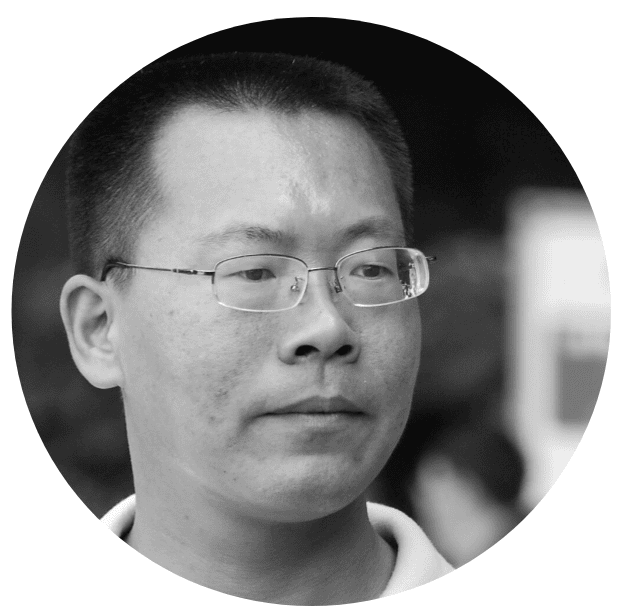
Teng Biao is a human rights lawyer and Hauser Human Rights Scholar at the City University of New York. His research focuses on China’s criminal justice, human rights, social movements, political transition, and transnational repression. @tengbiao

Jerome A. Cohen is the senior American expert on East Asian law, and currently an adjunct senior fellow for Asia at the Council on Foreign Relations. @jeromeacohen