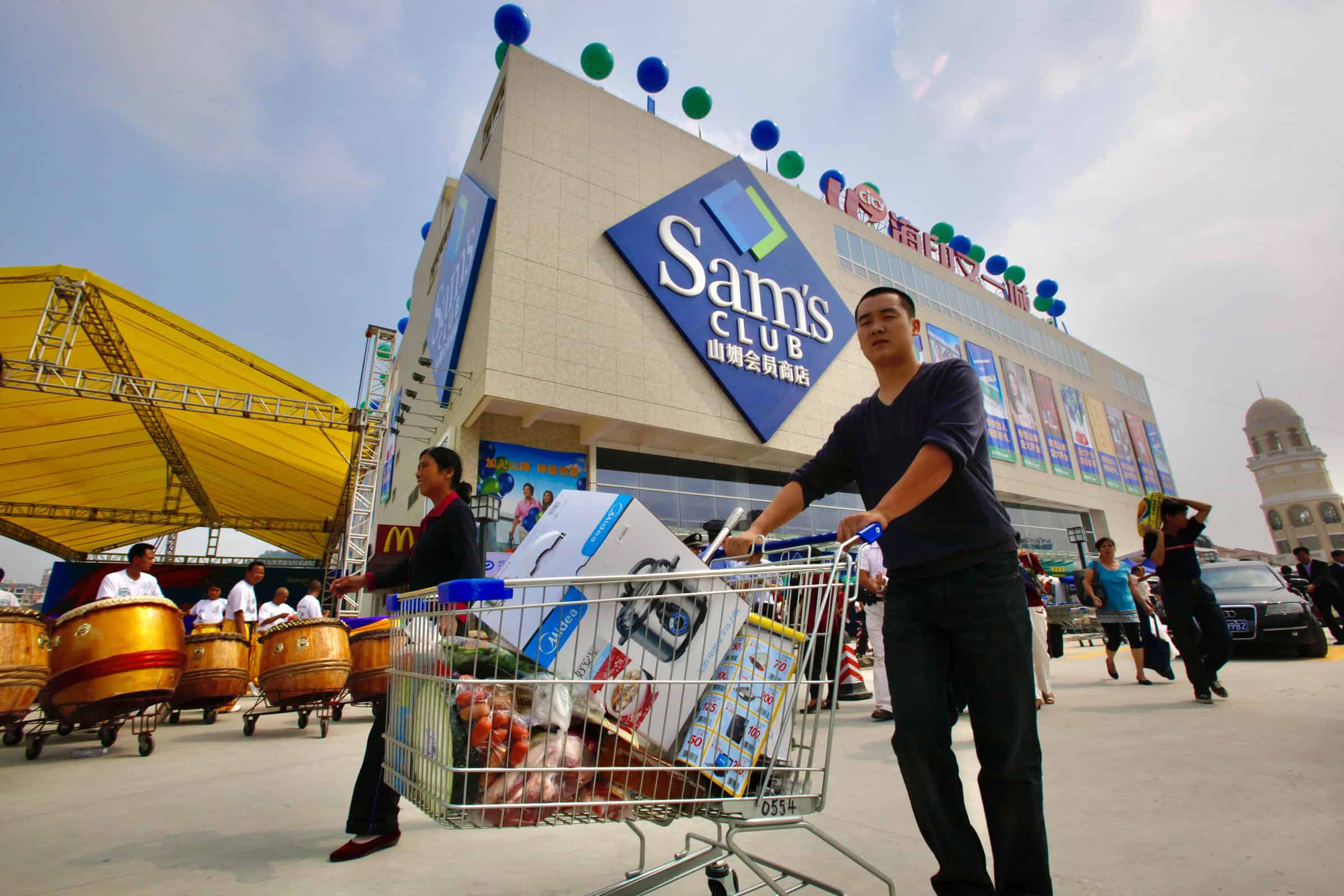
Tu Ma, a Hangzhou housewife, changed her consumption habits after having a baby in 2018. She began paying more attention to the safety and nutrition labels on food and household products, and was impressed by those available at the Sam’s Club warehouse chain operated by Walmart. “There were many instances when I bought similar products from other places and when I compared them, those from Sam’s Club were indeed higher standard and offered better value for money,” says Tu, who signed up as a premium member.

Her son is now a toddler and Tu visits the Sam’s Club outlet near her home at least once a week to stock up on groceries and supplies for her household of five, which also includes two grandparents. She spends some 10,000 yuan ($1,390) a month — one fifth of their household’s income — at the retailer and shares videos and product reviews with her 10,800 followers on the social media platform Xiaohongshu. She does not receive any money from Sam’s Club for her social media activity.
Tu Ma is one of around 8.6 million consumers in China who are card-carrying Sam’s Club members. Their enthusiasm for its products — such as a durian crepe cake that went viral in 2023 to a carton of 30 eggs costing just 19.9 yuan ($2.77) — accounted for at least 100 billion yuan ($13.9 billion), or 75 percent of Walmart’s China revenues last year.
Thanks to its Sam’s Clubs, the American retail giant has enjoyed a remarkable turnaround in China. After entering the country in 1996, it opened more than 400 Walmart superstores. But within 20 years, too many of these were loss-making. It has since closed more than one-quarter of them and shifted its focus to Sam’s Club, which is named after Walmart founder Sam Walton. Some of Walmart’s most profitable stores today are Sam’s Club outlets in China. It now operates 56 of them in China, eight of which are expected to rake in sales of $500 million each this year.
As a result, Walmart stands out as a rare multinational that has realised not just one but two China dreams.

Walmart is making money in China’s domestic market — and doing so in a sector where many of its peers, foreign and domestic, have failed or are failing. It has also integrated China’s manufacturing and supply chain strengths into its global operations. Walmart’s sourcing operations in the country are the foundation of its $680 billion a year business empire.
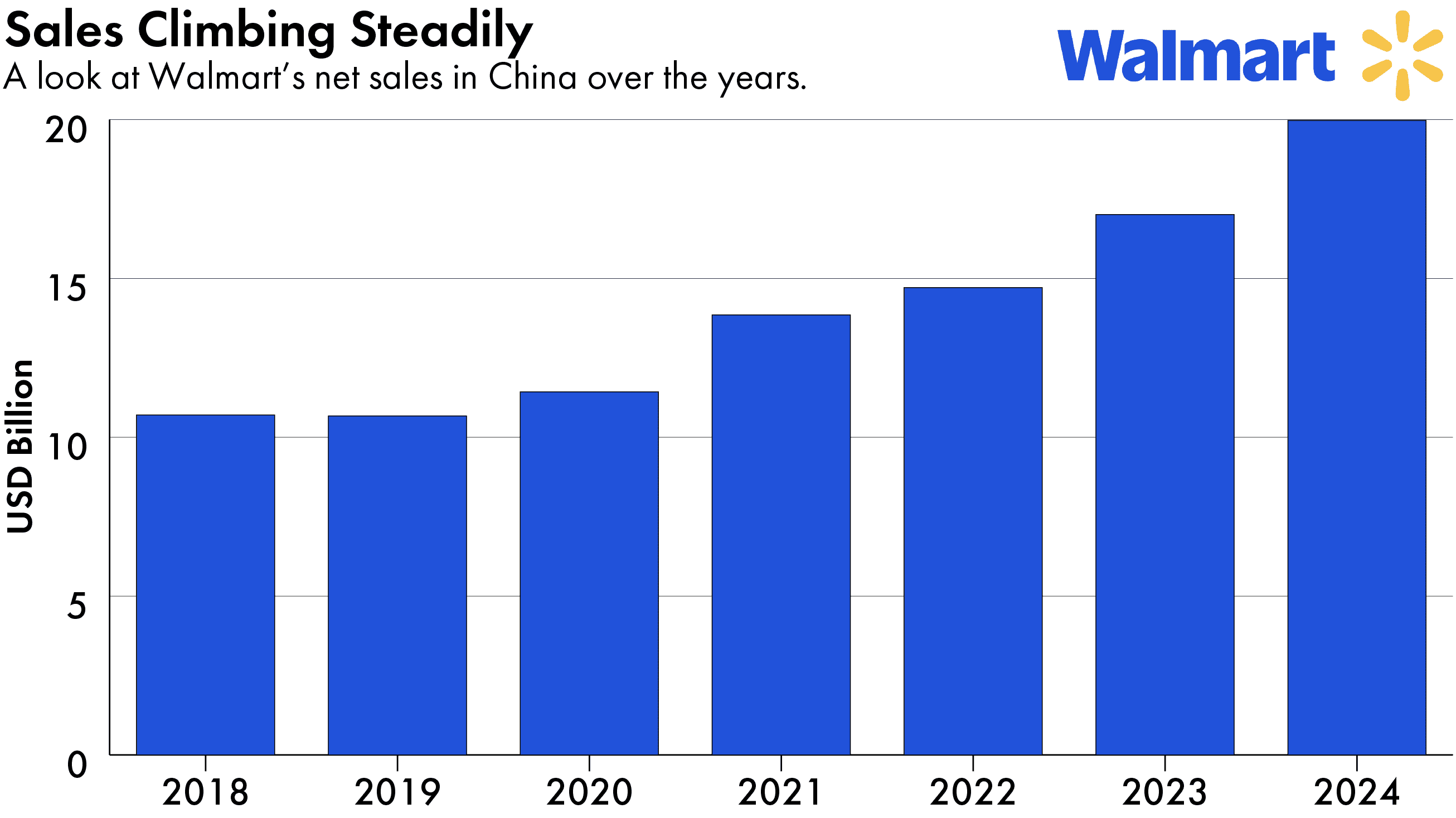
In the 12 months ending on January 31, 2025, Walmart’s net China sales totalled $20 billion. By comparison, Nike and Nestle had China revenues of, respectively, $7.5 billion and $6.8 billion in 2024. Walmart typically sources about $50 billion worth of goods from China annually. At least half of what Walmart imports into the U.S. comes from China, according to data from ImportYeti, which tracks bill of lading records.
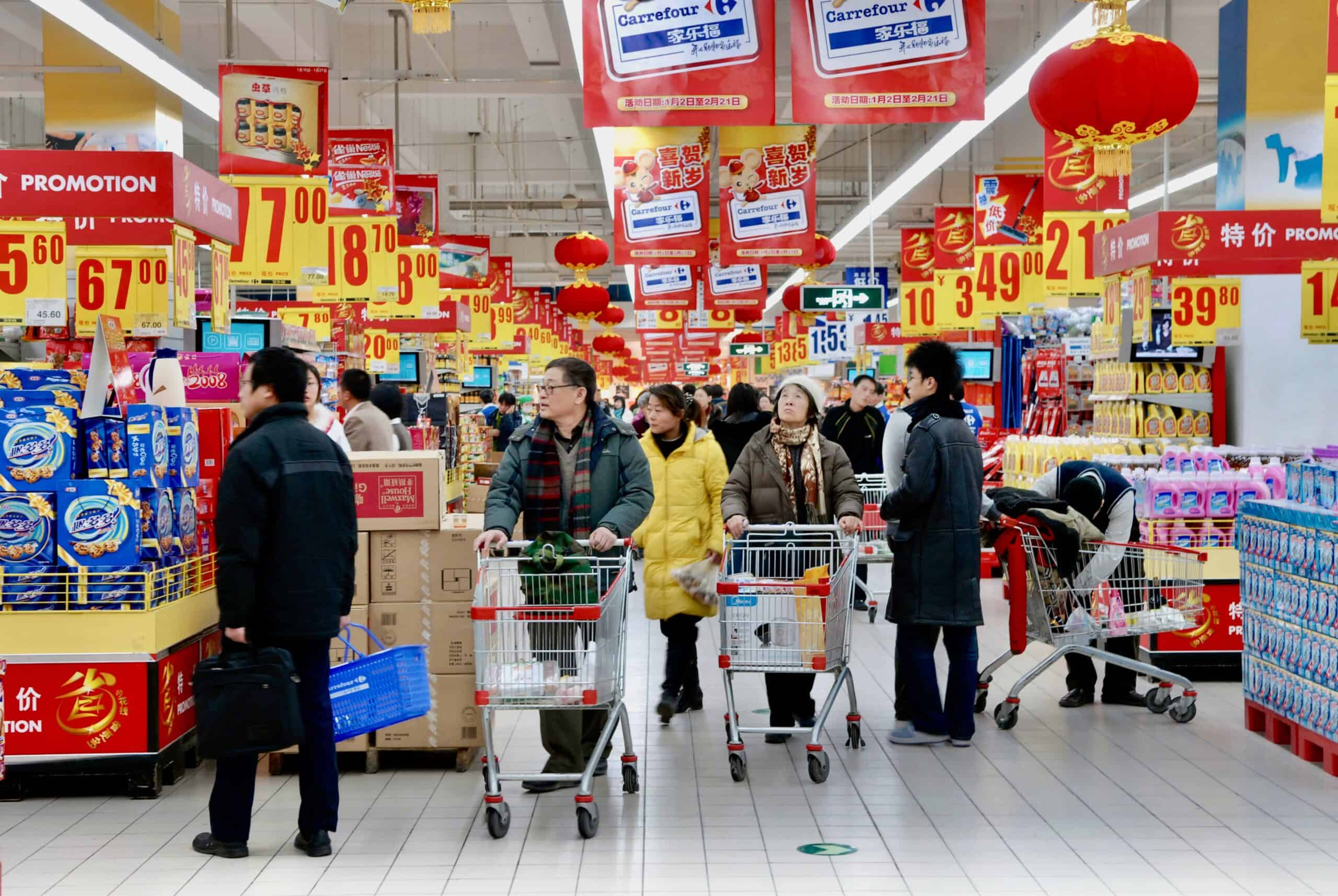
At its peak, the French food retailer Carrefour had more than 300 stores in China before it sold them to Nanjing-based Suning International Group in 2019. Today just four of them survive and are so indebted that Suning recently sold them to a consortium of asset management companies for one yuan (14 U.S. cents) each. In 2020, after expanding too fast, the German wholesaler Metro sold a majority stake in its Chinese stores to local rival Wumei, which shut a handful of them last year.
Of the 13 publicly traded Chinese supermarket operators, six lost money in 2024. Last year the largest, Fuzhou-based Yonghui, recorded a loss of 1.47 billion yuan ($203 million) and closed nearly a quarter of its 1,000 supermarkets.
Even if Sam’s Club were to be the ultimate success story — to defy the Starbucks of the world crushed by Chinese competitors — they are still susceptible to being taken out by Beijing as part of the geopolitical war.
Leland Miller, co-founder of China Beige Book
“Walmart is probably the only international retailer [in the sector] that is performing well,” says Jason Yu, managing director of CTR Research, a market research firm in Beijing. “Everybody complains about the macro environment. But if you are really distinguished in terms of your product offer, your experiences, and the way you maintain your customer base, you can continue to thrive in a difficult time.”

While China accounted for only 16 percent of Walmart’s $122 billion in international sales last year, the country is one of its fastest growing markets. (Total sales were $675 billion.)
The retailer also booked a record $6.7 billion in net sales in China in the first quarter ending in April, a 22.5 percent year-on-year surge. The membership income for Sam’s Club alone rose more than 40 percent.
But Walmart’s dependence on China for sourcing has exposed it to risks in the new geopolitical climate arising from Donald Trump’s return to the White House this year.
“One of the ultimate leverage points that Beijing will always have over the U.S. is the ability to affect U.S. businesses in China,” says Leland Miller, co-founder of China Beige Book. “Even if Sam’s Club were to be the ultimate success story — to defy the Starbucks of the world crushed by Chinese competitors — they are still susceptible to being taken out by Beijing as part of the geopolitical war.”
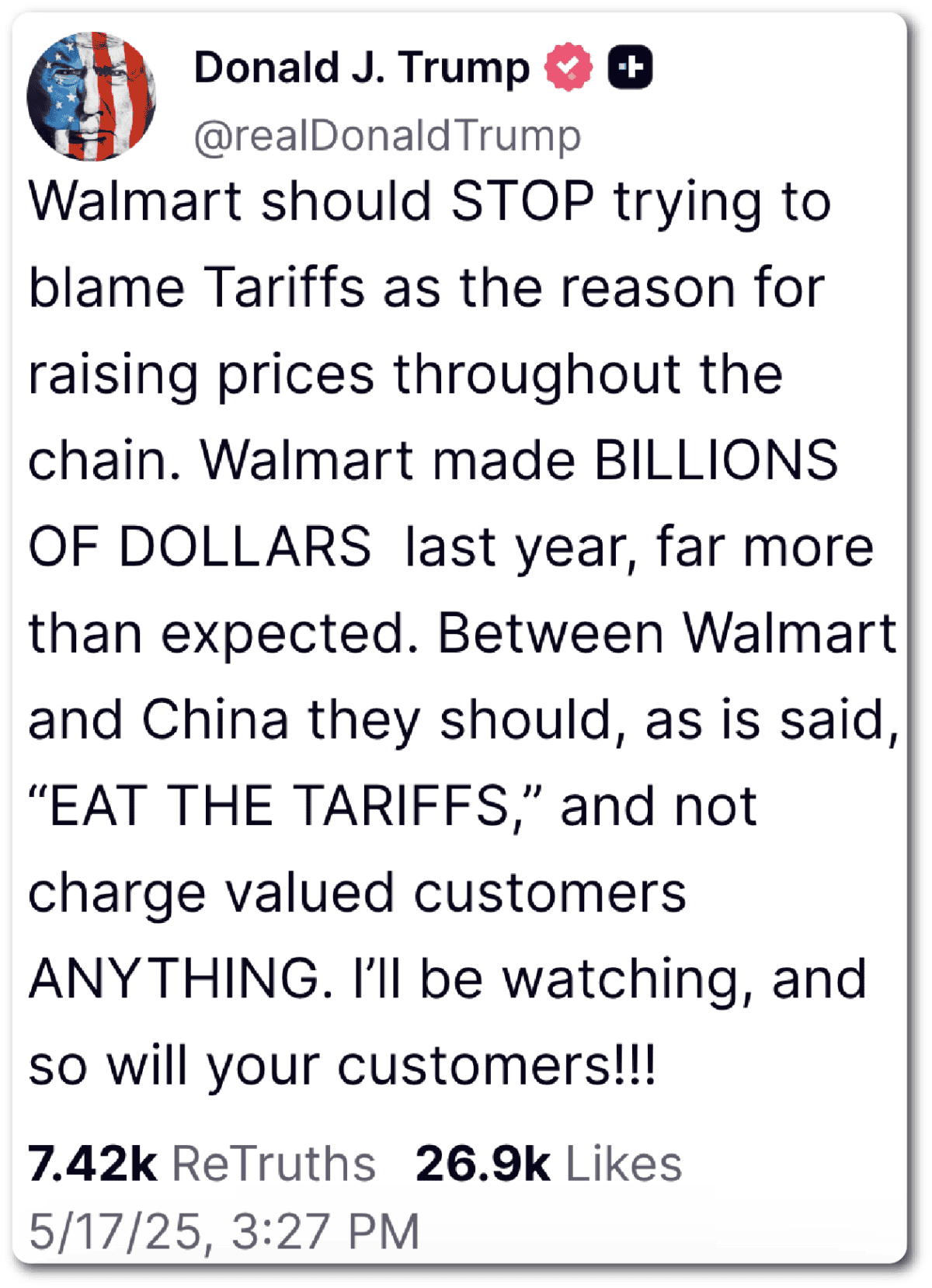
In March commerce ministry officials summoned Walmart executives for a struggle session after receiving complaints from Chinese suppliers that the retailer was pressuring them to cut prices. On the other side of the Pacific, U.S. President Donald Trump told Walmart to “eat the tariffs” after the company warned in May that it would have to raise prices for American consumers.
Walmart declined to comment on its interactions with either China’s commerce ministry or the Trump administration. It said that it sources products from more than 70 countries around the world and “help[s] spur job creation, promote supplier development and fuel local economies.”
THE MAKEOVER
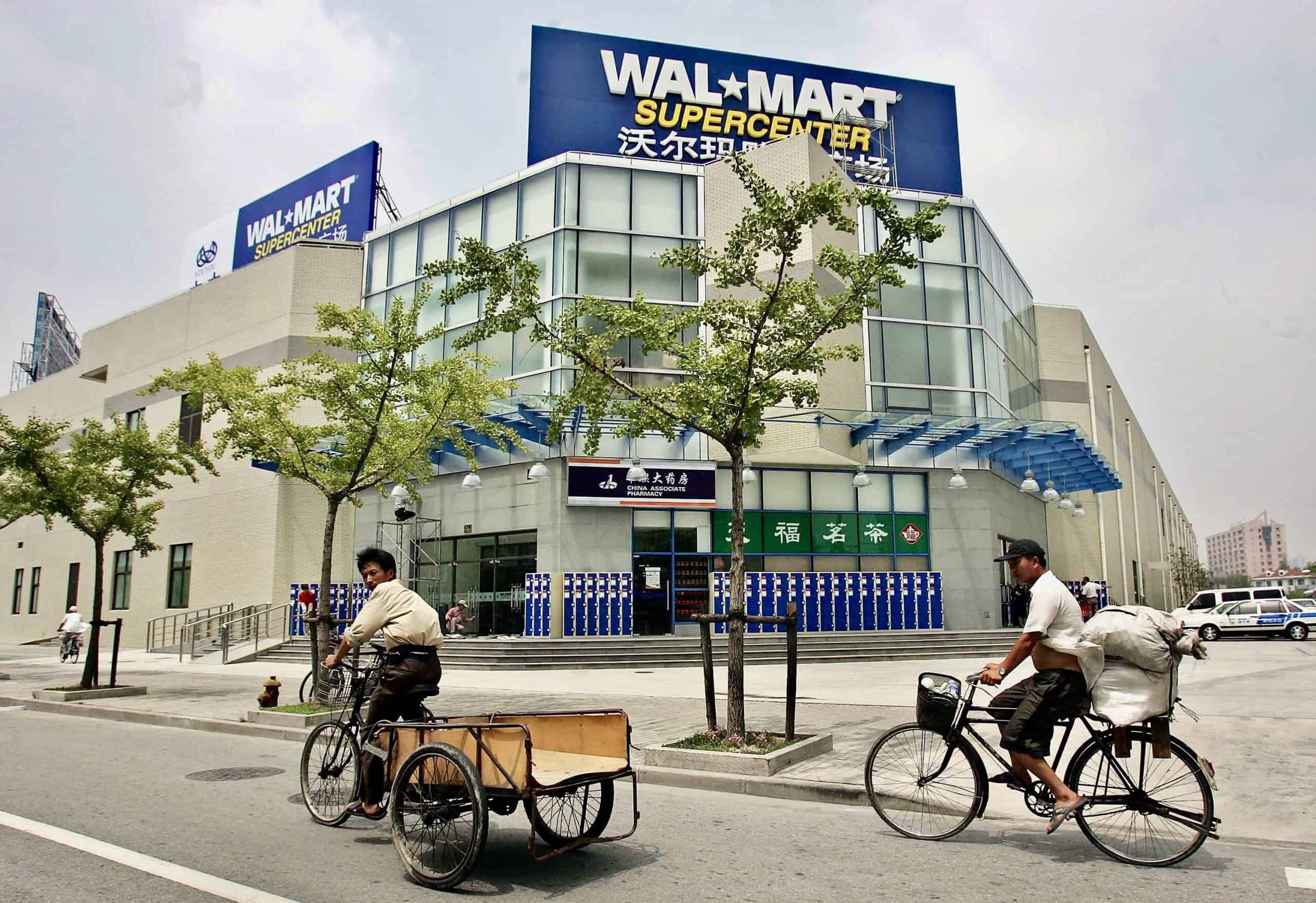
Walmart helped bring modern retail stores to China when it opened its first superstore in 1996 in Shenzhen, the special economic zone bordering Hong Kong. Ling Jie, a resident who lived nearby throughout the 2000s, remembers how popular it was. “No market in all of Shenzhen was as well-stocked,” she recalls. “Families and workers would hang out there during the weekends.”
Fast forward twenty years and the lifestyle of China’s urban population has completely changed. The rise of e-commerce, led by local heroes such as Alibaba’s Taobao and JD.com, has upended traditional retail and supermarkets are no exception. Like her neighbors and friends, Ling rarely leaves home to buy groceries. She orders on her phone and has everything delivered to her doorstep within hours.
Walmart had tried to stay on top of these trends by taking stakes in JD.com as well as the Chinese delivery company Dada, but offloaded those investments last year.
More importantly, it brought in Andrew Miles, a former executive at the Li Ka-shing’s Watsons drugstore chain, in 2012. Miles, who stepped down as president of Sam’s Club China operations earlier this year, led the efforts to transform the warehouses.
Until his recent retirement, Miles was a steady presence at Walmart China; it cycled through five different country CEOs during his time at Sam’s Club. As Miles saw it, Sam’s Club’s business model was fundamentally different from Walmart’s superstores because its revenues are driven by membership fees.
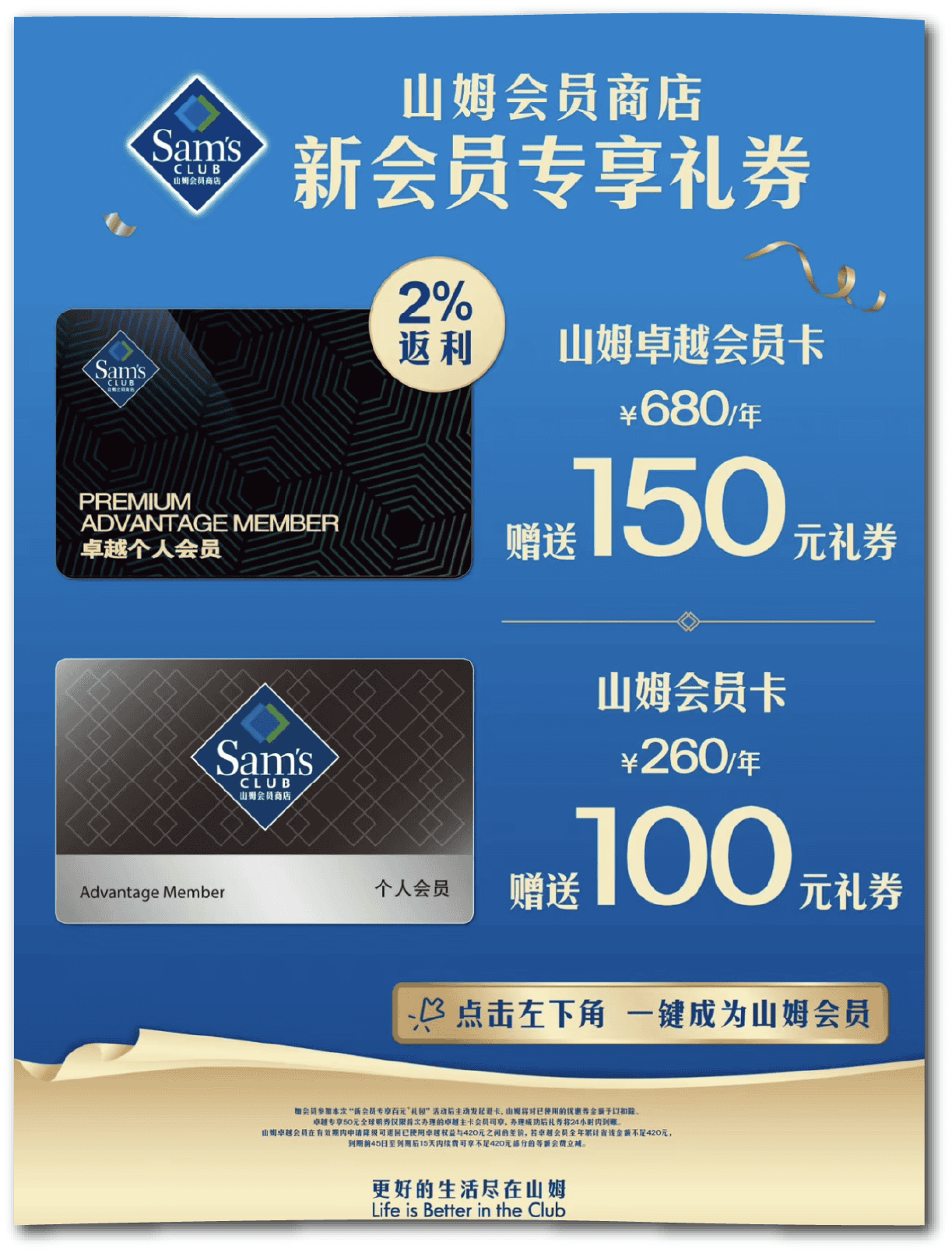
Convinced that a higher annual fee would not deter upper middle class shoppers, Miles raised the cost of a basic membership from 150 yuan ($21) to 260 yuan ($36) in 2016 despite internal pushback. He also slashed the number of products on offer by half. In return, Sam’s Club promised members lower prices than they could find anywhere else.
Ordinary members get to shop at Sam’s Clubs. Premium members, like Tu Ma in Hangzhou, get two percent cash back on the value of their purchases, capped at a certain amount, and other benefits such as free home delivery.
“[Sam’s Club] basically got all of the major product categories but instead of ten choices, members just have two,” says Ed Sander, an analyst with Tech Buzz China, a research firm. “Because of that, Walmart can get much better prices from their suppliers as they ask for more volume.”
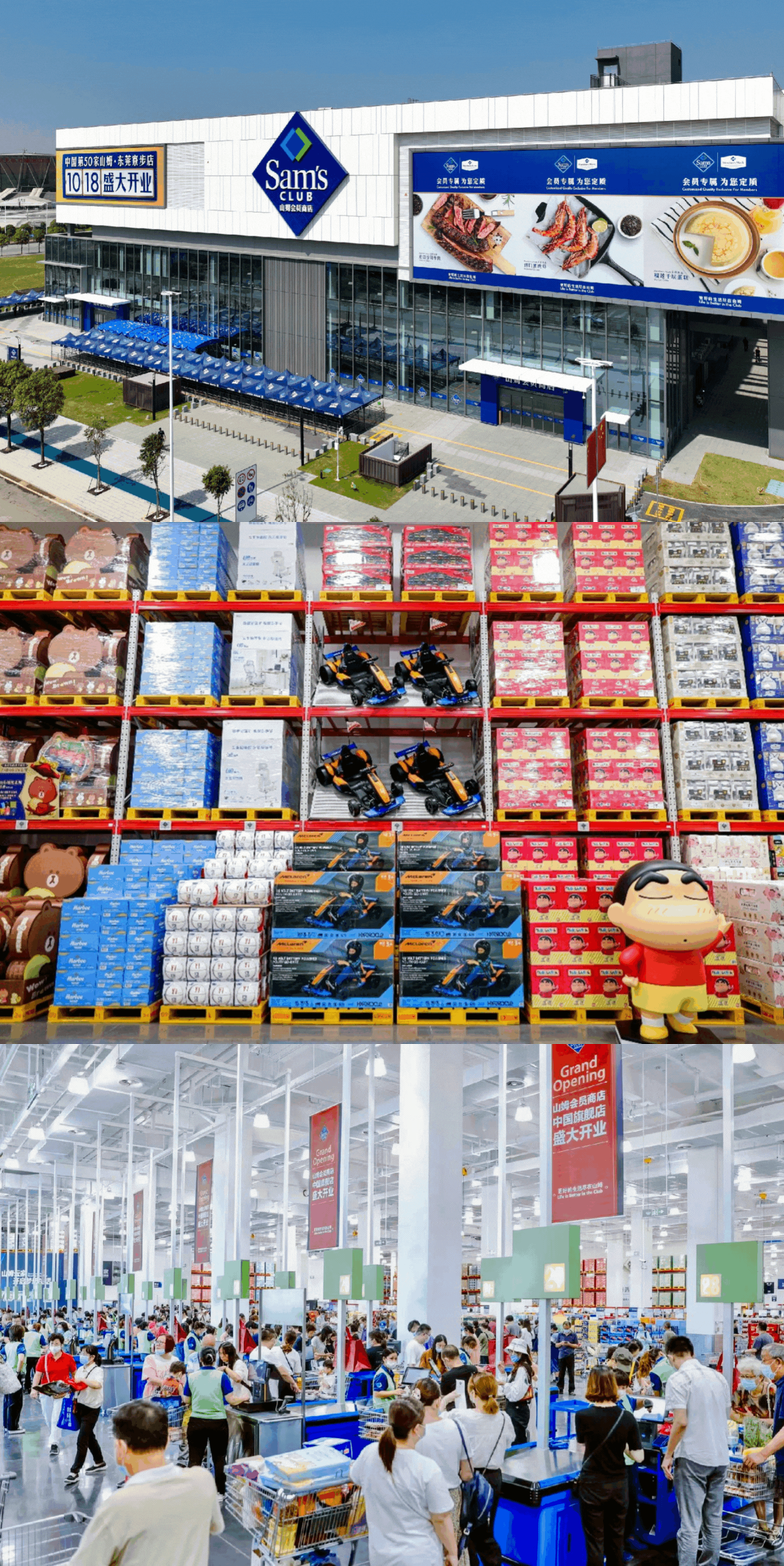
Miles also preached the idea of the “purple cow” — the concept, from author and marketing expert Seth Godin, that a good product should be remarkable. The trick to achieving this is not giving customers what they want, but giving them what they “haven’t even thought about,” Miles told Southern People Weekly , a Chinese media outlet, in 2019.
Under Miles’ leadership, goods sold under Sam’s Club’s own private label — Member’s Mark — jumped from one percent of total sales to 30 percent. Many were products its members probably hadn’t thought about before, such as wasabi-flavoured macadamia nuts, calamansi juice and green bean cake with osmanthus (a flowering plant) that leapt off the shelves.
LESS BRICKS LESS MORTAR
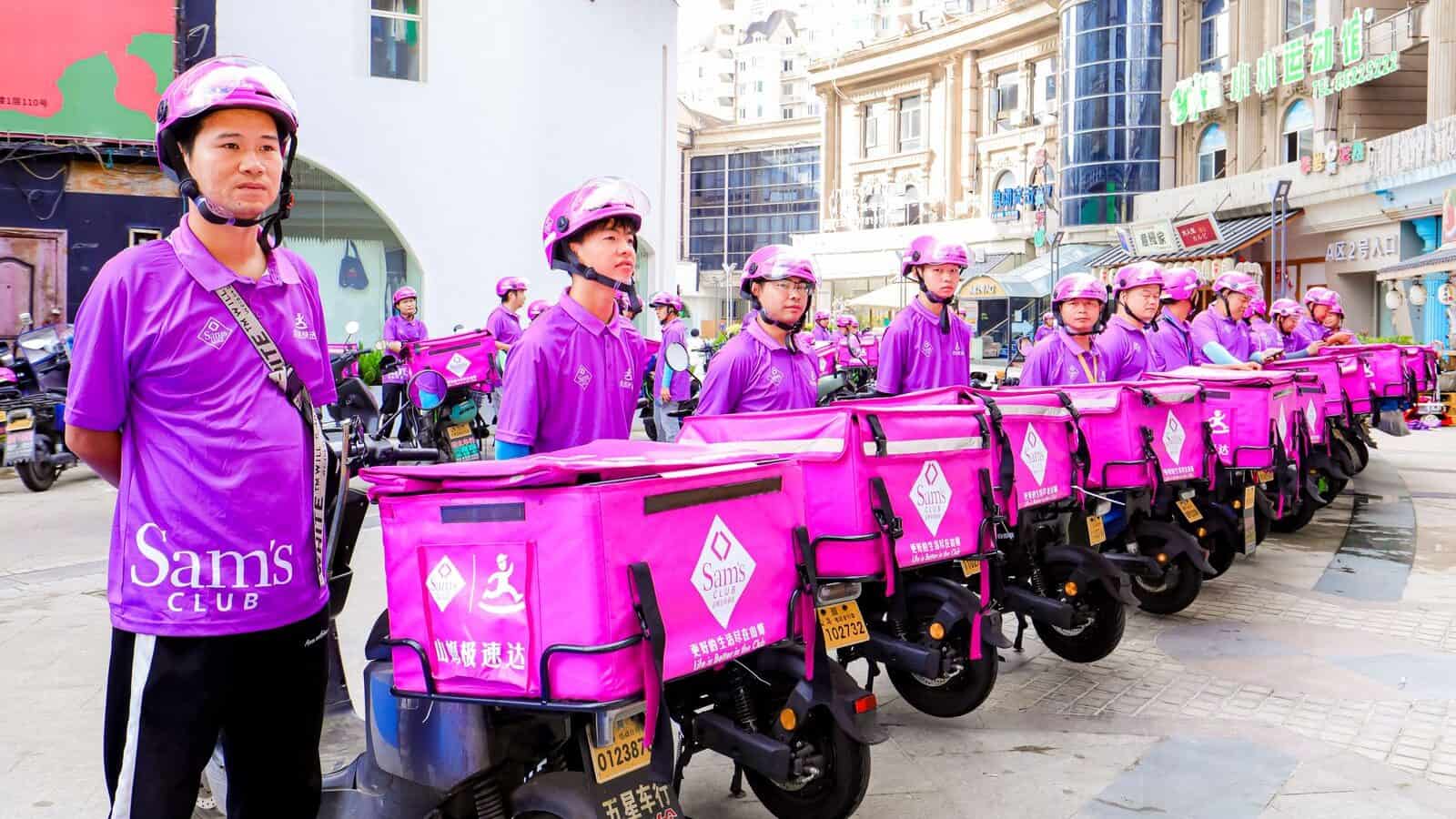
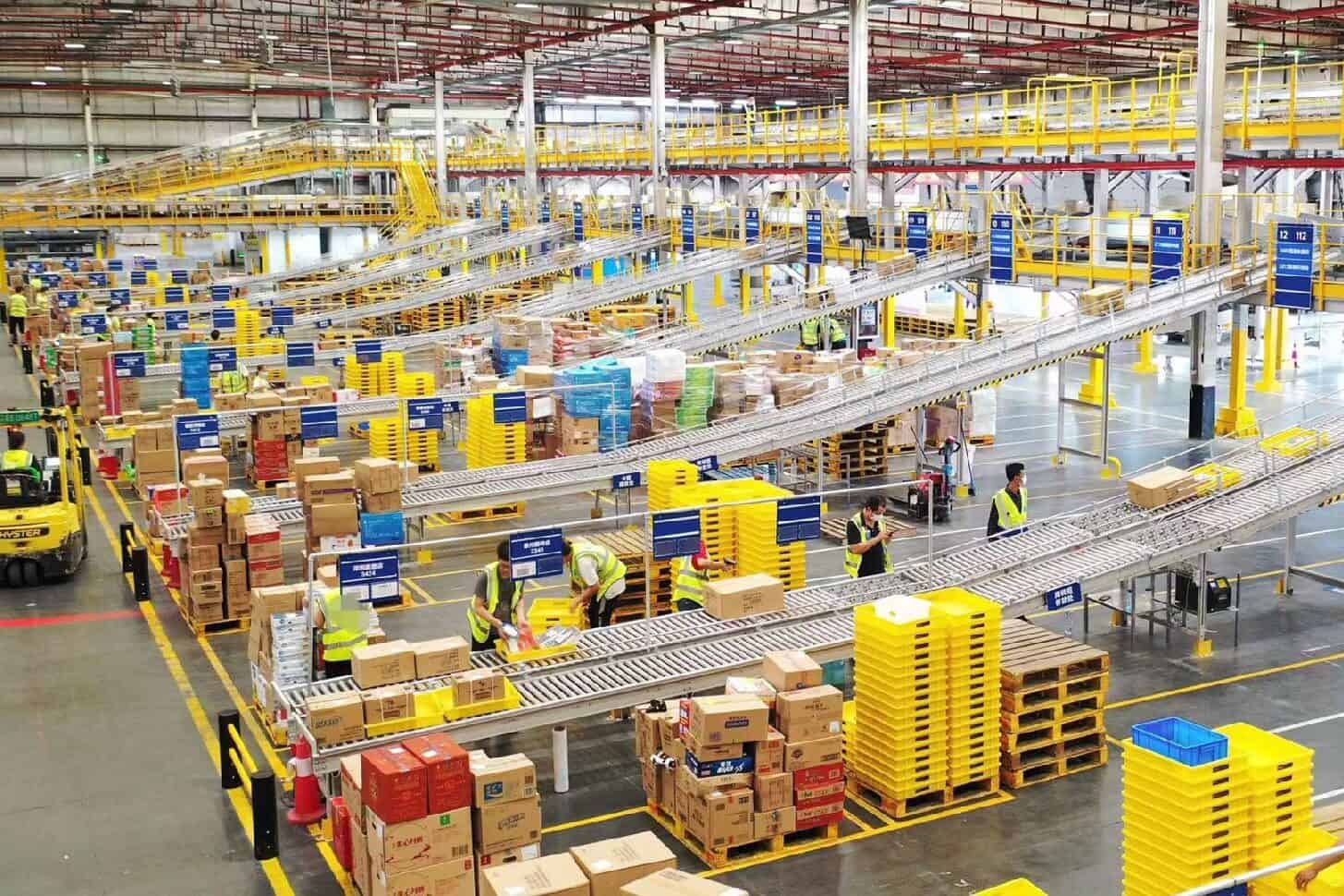
Another crucial factor fueling Sam’s Club’s success has been its embrace of quick e-commerce, also referred to as “instant retail”. Each club is surrounded by eight to fifteen fulfillment centers, from which online orders are packaged, collected and delivered by couriers on delivery bikes.
This network of so-called dark stores — dark because they are for fulfillment only and can’t be visited by customers — serves online shoppers. They also save on costs because they can be located in non-descript premises in out-of-the-way areas.

“Instant retail is a business segment that is really booming, especially since the COVID years when everybody started to order home delivery,” says Sander. “A lot of people don’t want to go back to the stores.” Last year, more than half of Sam’s Club’s sales were placed online and 80 percent of orders were delivered within an hour.
Kathryn McLay, head of Walmart International, said at an industry conference in May that “really high-quality assortment at disruptive prices” was “the magic of Sam’s Club”. “The convenience of one-hour delivery has really positioned it as a brand that’s very much within reach.”
Walmart is trying to apply some of the lessons learnt from Sam’s Club to revive its struggling superstores, having closed about 140 of them since 2018. Instead of just offering the traditional large one-stop-shops, the retailer is experimenting with new formats such as smaller neighborhood stores that are closer to customers.

But it will take more to set the superstores apart. “Walmart [hypermarkets are] operating in a very competitive environment, where a lot of local retailers offer similar products and shopping experiences and share the same customer base,” says Yu, at CTR Research. “So they have a much tougher challenge.”
TARIFF TROUBLES
An even greater challenge is navigating the gathering geopolitical storm.
Miller, at China Beige Book, says the “great naivete” of multinationals in non-sensitive sectors such as retail and consumer goods is thinking they are off the geopolitical hook, thanks to the Chinese government’s appreciation of the jobs they create, the taxes they pay and the value they offer to Chinese consumers. “The reality is that nobody’s safe at this point. The big card that China is waiting to play has been cracking down on U.S. companies in China.”
In their March summoning of Walmart executives, government officials warned the retailer that Chinese consumers could find alternatives, the Wall Street Journal reported.
We lowered to help Walmart at the beginning and when it got to a point where we would lose money, we obviously had to stop.
Jacob Rothman, founder of a China-based Walmart supplier, Velong Enterprises
“They’re a very big player on the sourcing side so that gives them leverage with the Chinese government,” says Kenneth Jarrett, a former U.S. diplomat and former president of the American Chamber of Commerce in Shanghai. But that cuts both ways, he adds. “What’s at stake for Walmart is their ability to continue to have China as a major component of the supply chain, which is valuable because it’s a reliable provider with reliable quality at a price that is attractive to Walmart’s consumers.”
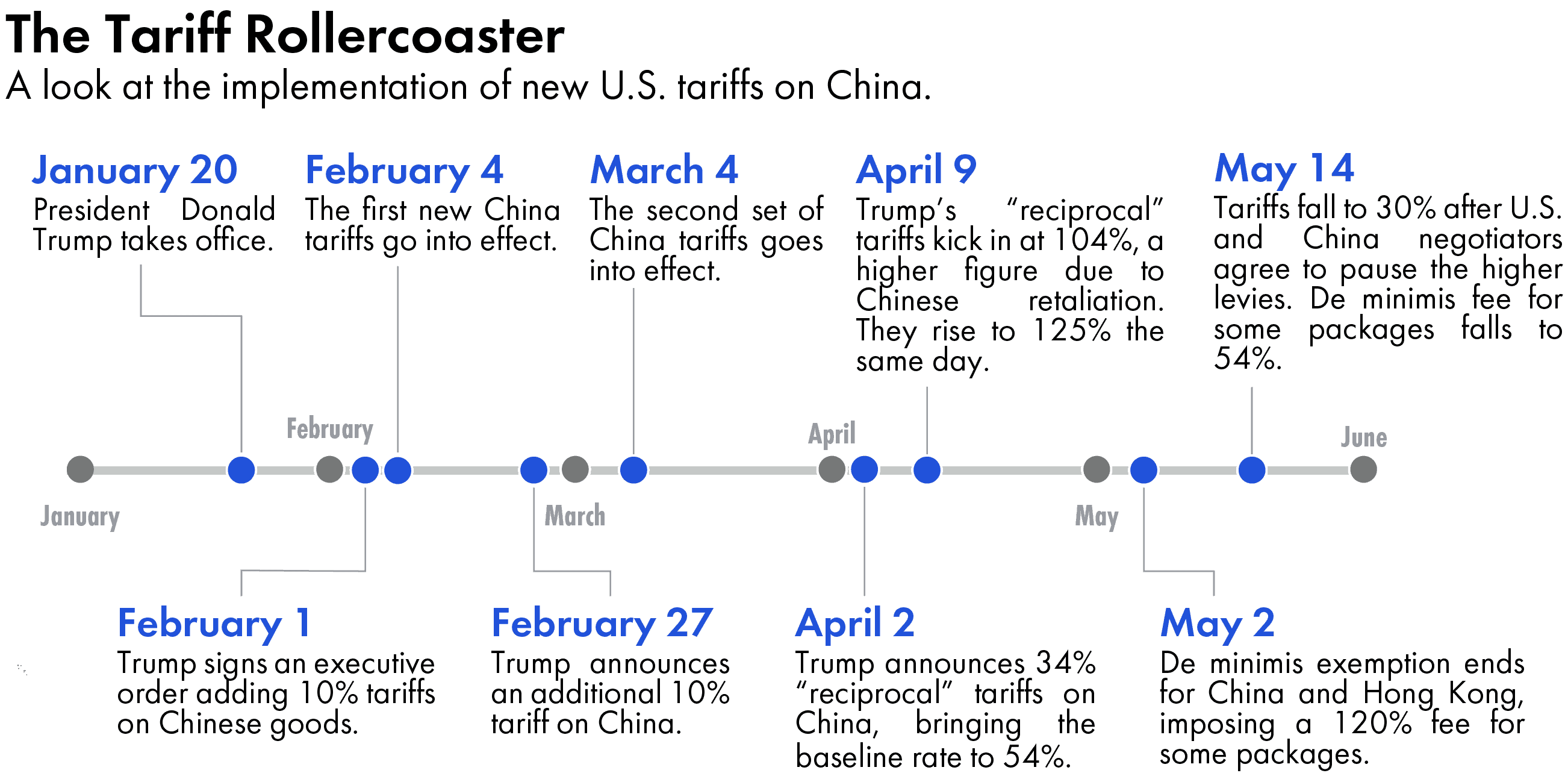
Trump had only been back in the Oval Office for 12 days when he imposed 10 percent tariffs on imports from China. As he upped the stakes with one executive order after another, panic spread.
Walmart first began to reconfigure its supply chain during Trump’s first term. It encouraged Chinese suppliers to establish new operations across Southeast Asia. It also sought out new sourcing partners in Vietnam and other countries.
“Walmart is definitely a forerunner,” says a former manager at the retailer’s global sourcing operations, who asked not to be identified. The company, she says, is three to five years ahead of its competitors when it comes to geographical diversification and has leveraged its buying power with suppliers to hasten the transition. “The strategy,” she adds, “has proved to be prescient.”
On one of McLay’s recent trips to Asia, a supplier thanked Walmart for telling it to diversify its manufacturing base five years ago. “Now they have pivoted their business so the China businesses manufacture for our China retail, and Vietnam and Cambodia are manufacturing for the U.S.,” the Walmart executive recalled at the May industry conference.
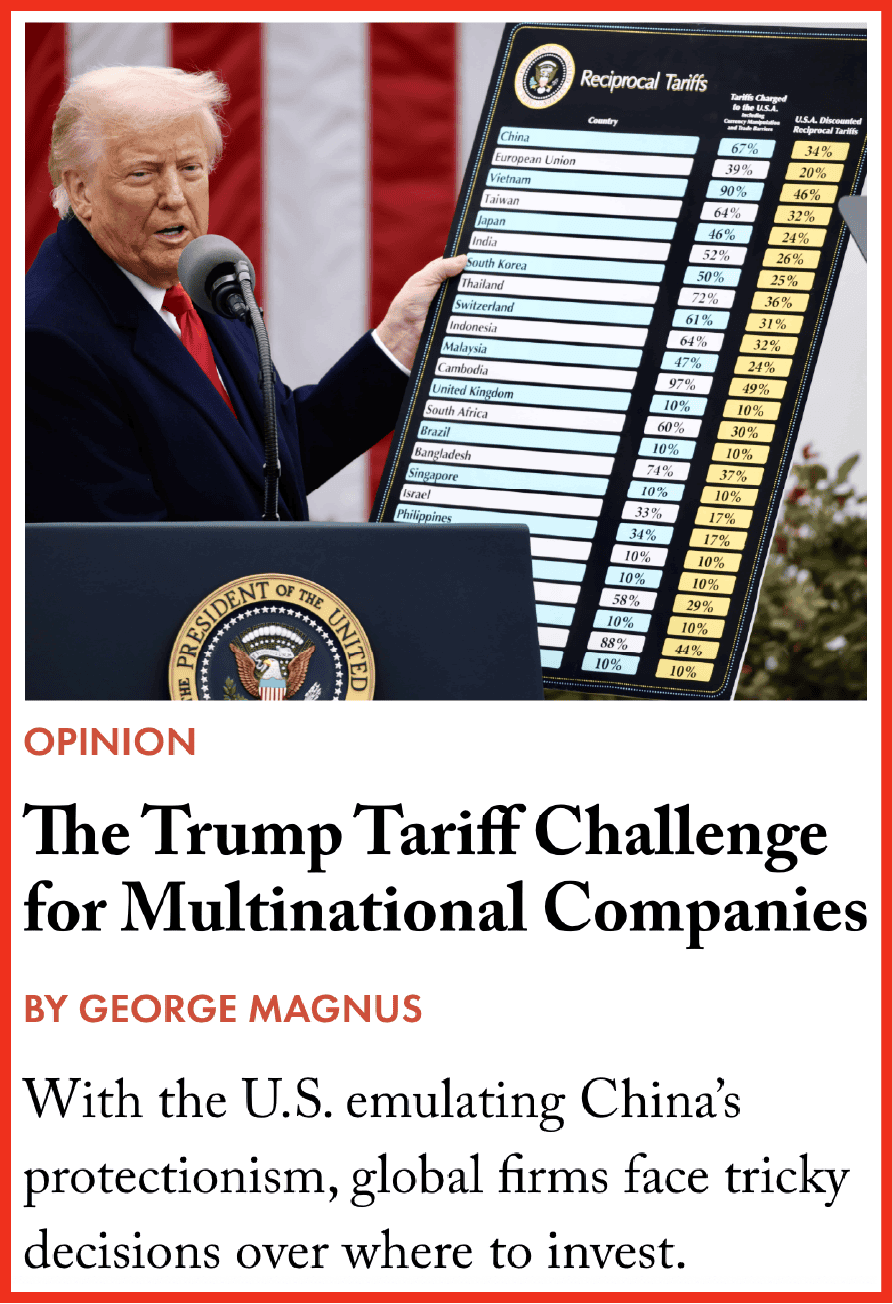
But no amount of restructuring could have insulated the retailer from the blanket global tariffs Trump announced on April 2, which the president proclaimed as “Liberation Day.” Southeast Asia was particularly hard-hit. Cambodia and Vietnam were slapped with tariffs of 49 and 46 percent respectively, among the highest. China’s later soared to 245 percent before being reduced to 55 percent amid bilateral trade negotiations.
Walmart executives are frank about the challenges. “We aren’t able to absorb all the pressure given the reality of narrow retail margins,” Doug McMillon, Walmart’s chief executive officer, said during an earnings call in May. “Even at the reduced levels, the higher tariffs will result in higher prices.”
“[Walmart’s] target customers [in the U.S.] are low to middle income groups, which are very price-sensitive,” adds the former sourcing manager. “An increase in prices would directly affect its sales.”
Jacob Rothman, founder of a China-based Walmart supplier, Velong Enterprises, says that the retailer’s “first reflex was to try to see what [help] was available with the vendor pool”. Rothman’s company, Velong Enterprises, operates out of Yangjiang, Guangdong and manufactures grilling tools and kitchen products. According to media reports in March, Walmart asked some suppliers for up to 10 percent price cuts each time Trump raised China’s tariff level.
But there is a limit to what Walmart’s suppliers can absorb. Velong’s margins are only about 15 percent. As tariff levels went through the roof, Rothman says Walmart stopped squeezing. “We lowered to help Walmart at the beginning and when it got to a point where we would lose money, we obviously had to stop,” he told The Wire China.
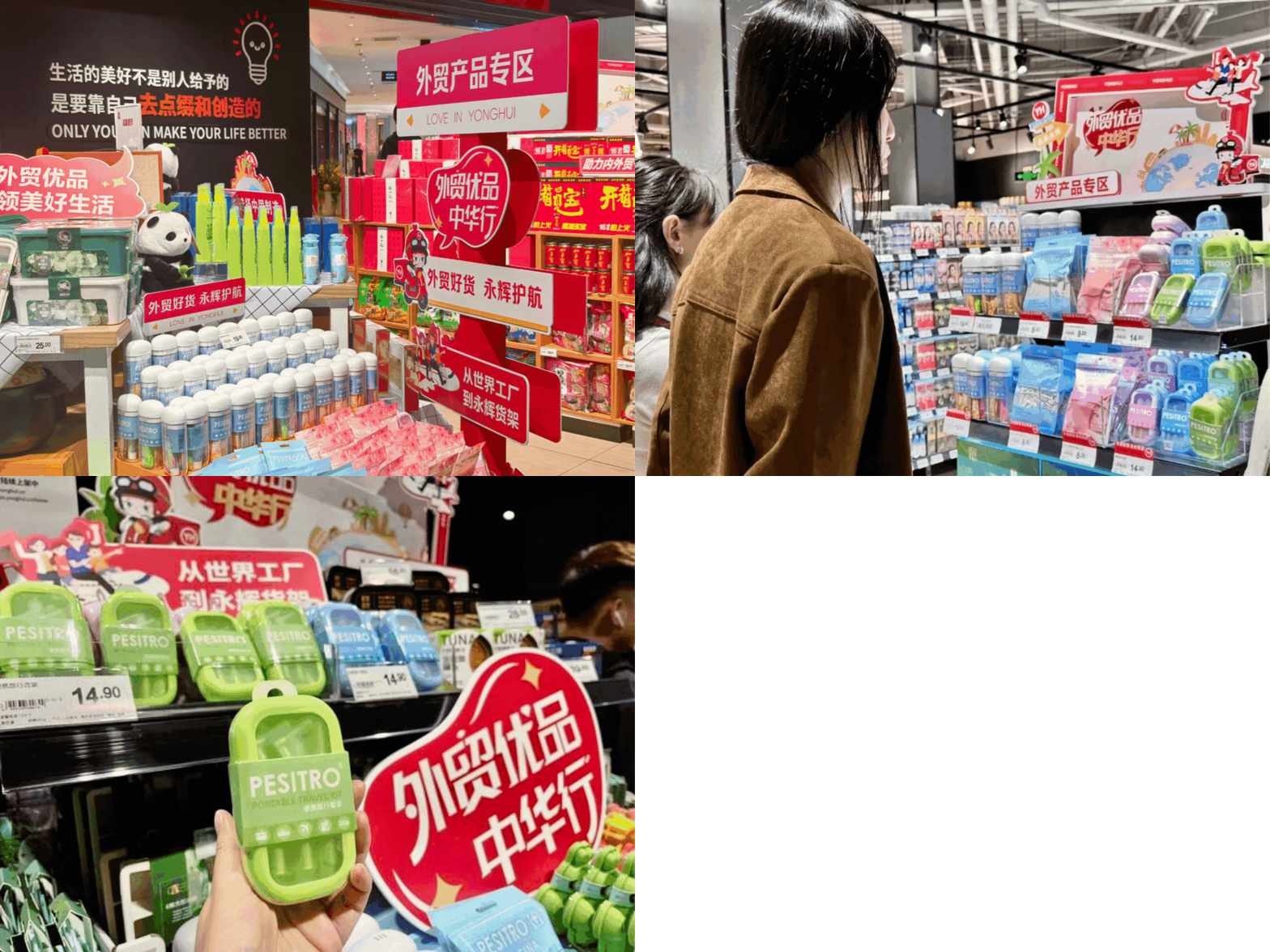
Pesitro, a manufacturer of toothbrushes and other dental products in Jiangsu province, faced potential losses of up to 50 million yuan ($7 million) as Walmart and other American firms halted orders in March.
But Chinese retailers have come to its rescue, its managing director, Mu Longsheng, told China Central Television in May. Pesitro swapped English packaging designed for the U.S. market with Chinese labels. Its products are now proudly displayed at Yonghui, which has dedicated an entire section to goods initially produced for foreign markets.
Pivoting to the domestic market isn’t an option for everyone, however. Shanghai-based Bestway has supplied paddling pools and pool floats to Costco, Walmart and other American retailers for more than a decade, and the U.S. market accounts for half of the company’s sales.
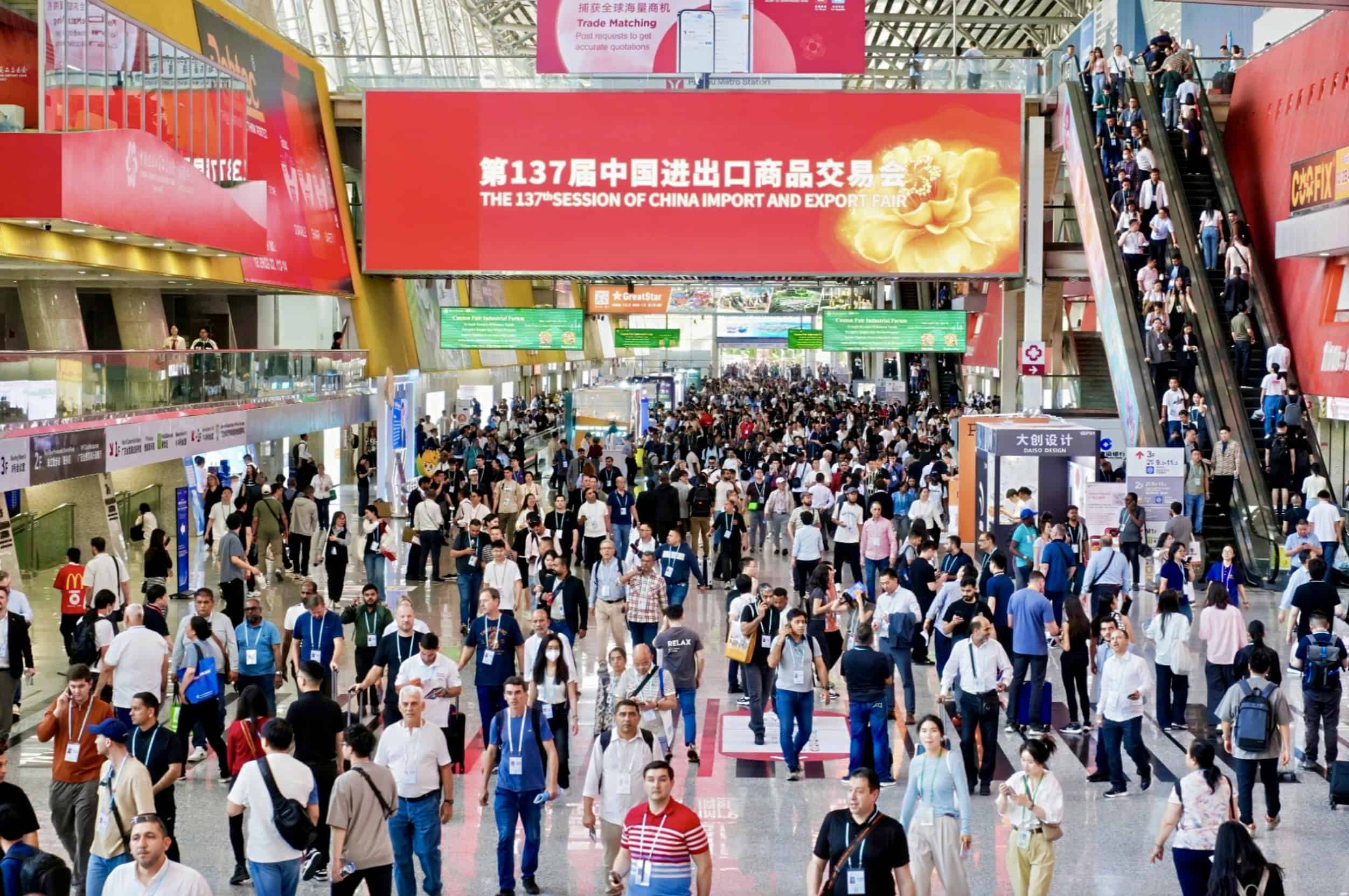
American clients paused new orders for next year amid the trade uncertainty, a Bestway executive said in May. With hardly any demand for its products at home, the company hopes to work with Chinese electric vehicle makers to develop new products such as inflatable camping beds designed to fit in car interiors.
Companies that are intent on maintaining long-term relationships with Walmart are accelerating overseas expansion plans.
For Hangzhou GreatStar Industrial, a leading manufacturer of professional hand tools, China contributed less than 5 percent of its $2.4 billion revenue last year. The U.S., its largest market, accounted for nearly two-thirds.
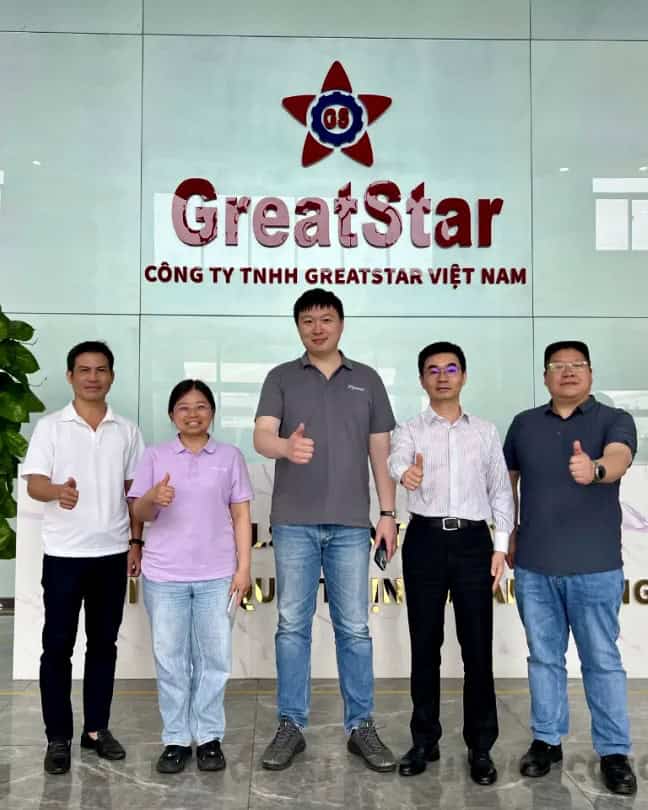
To keep its U.S. clients and market share, GreatStar has been expanding its manufacturing base beyond China for years. More than half of its production is now located abroad, especially in Thailand and Cambodia, the company recently told investors. According to a corporate post on WeChat, a GreatStar executive and Walmart engineers recently visited Vietnam to inspect its new lithium battery facility, which was ramping up production to meet new demand.
GreatStar also has manufacturing operations in U.S states including California, New Jersey and Pennsylvania, but they only manufacture about $100 million worth of tools and are reliant on imported parts hit by Trump’s tariffs. So the company is also considering moving manufacturing to Singapore, Malaysia and Mexico, according to its annual report.
Even so, it can take years to set up a new factory in a new country — and even longer to get them to match the cost, quality, and efficiency of their Chinese counterparts.
Velong Enterprises started setting up factories outside China in 2020 and is on track to move 60 percent of its production to India and Cambodia. India, in particular, is seen as a promising alternative thanks to its young and large workforce, the availability of raw materials and heavy investment in infrastructure.
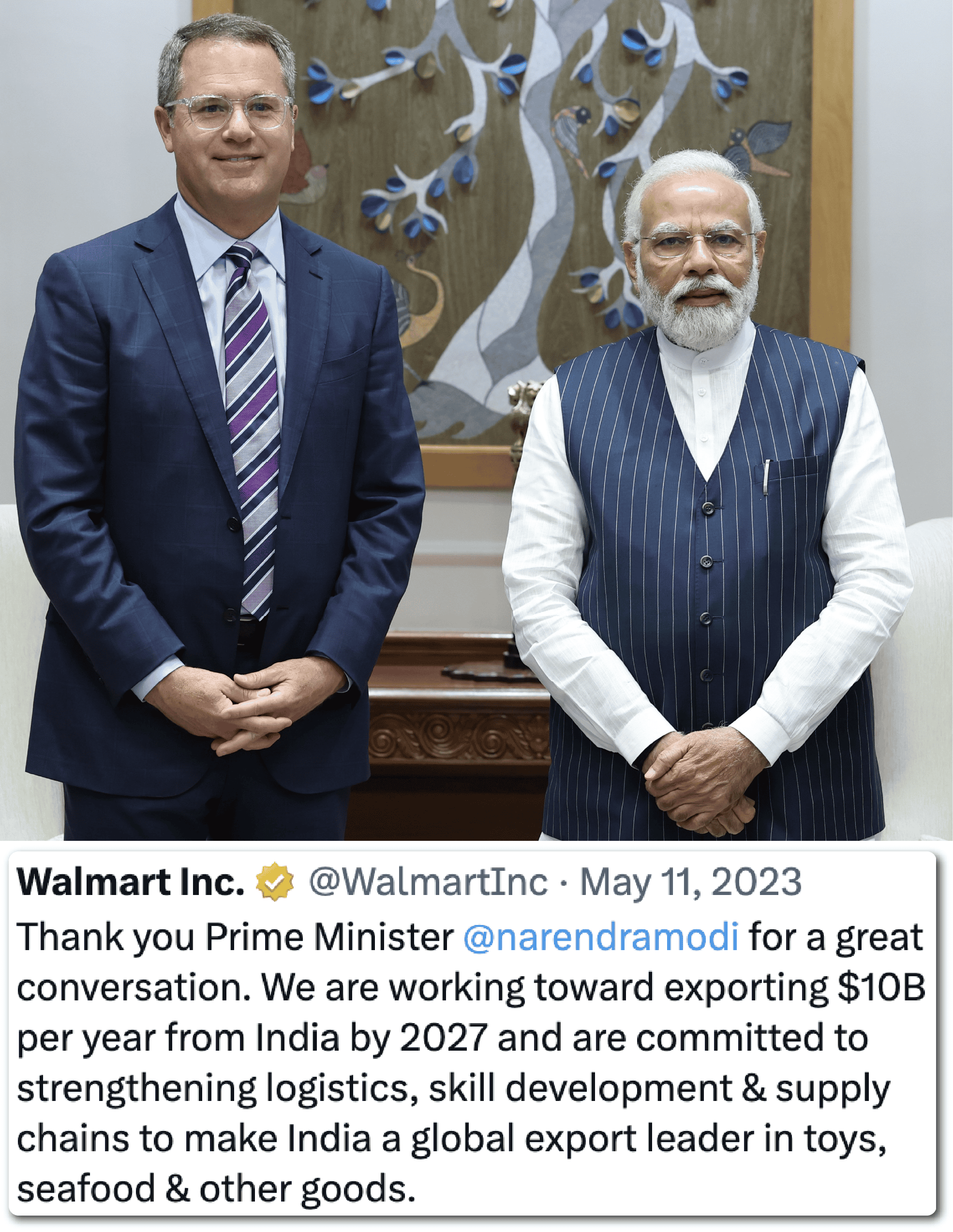
During a recent visit to India, McMillon met with Prime Minister Narendra Modi and reiterated the company’s pledge to source $10 billion in goods annually from the South Asian country by 2027.
But China’s would-be manufacturing rival is “just not ready,” adds Rothman of Velong Enterprises. “India still uses four to five times more people than China does for the same task.”
Even in Vietnam and Cambodia, says the former Walmart sourcing executive, the average cost of production is 10 to 15 percent higher than in China initially. She adds that it typically takes two to three years to optimize operations and bring the costs down to China’s level.
For such reasons, many analysts believe Walmart will depend substantially on sourcing from the country for at least another decade. Data from ImportYeti shows that China’s share of Walmart’s imports is dropping, but slowly, from 72 percent in 2019 to 62 percent in 2023. (Import data from December 2023 onwards is not fully available as Walmart has requested suppliers not to share their manifests, which contain customs data.)
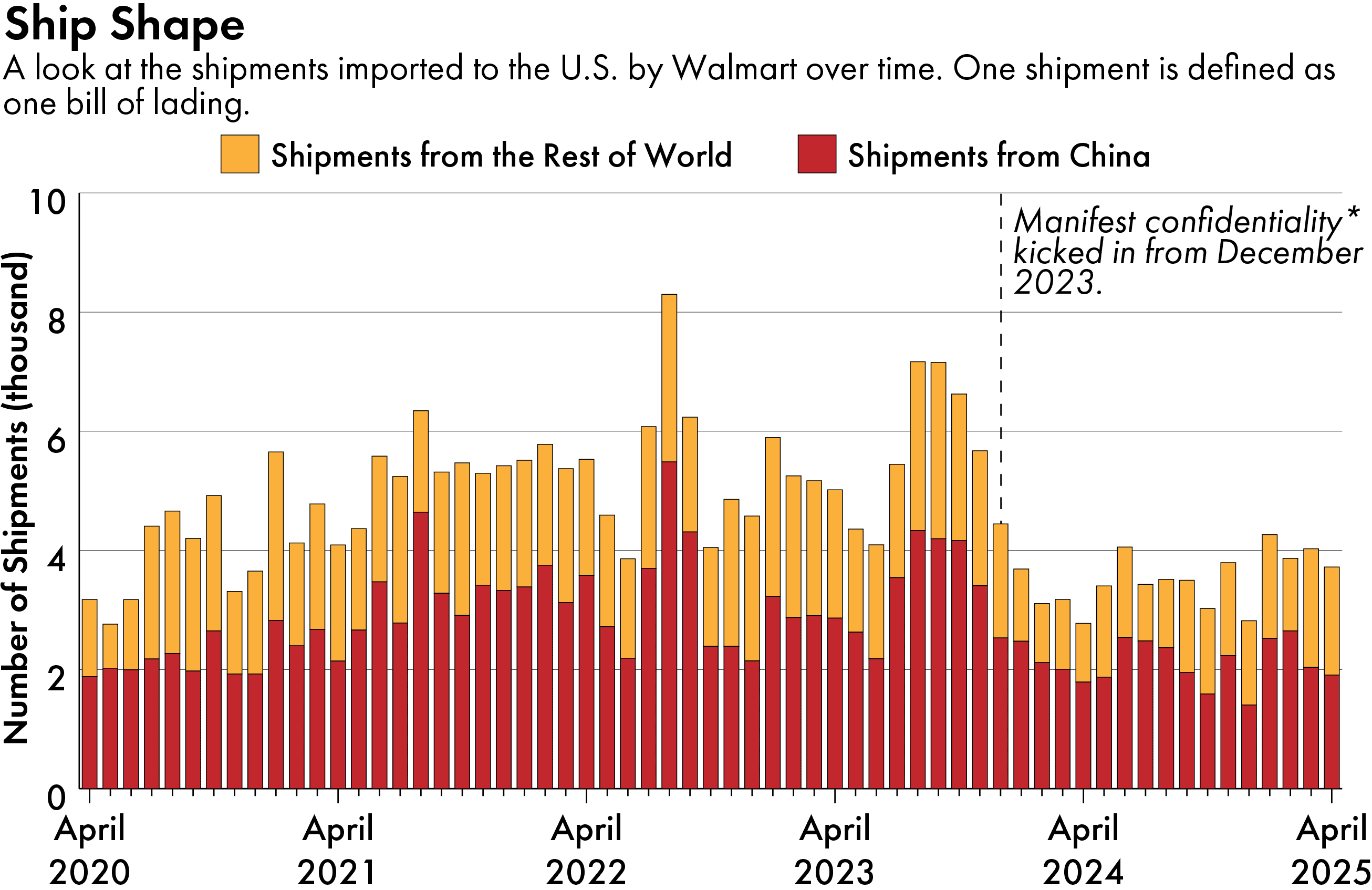
Walmart’s reliance on China is even bigger when taking indirect sourcing into consideration. While Walmart executives like to say that more than two-thirds of what it sells in the U.S. is “made, assembled, or grown” locally, its U.S. suppliers rely on Chinese suppliers. The share of products on Walmart’s online marketplace sold by third-party Chinese vendors is also increasing.
The United States and China have both benefited unbelievably over the last 30 years of being business partners. And Walmart is one of the biggest benefactors of that beautiful relationship.
Joe Jurken at The ABC Group, a supply chain advisory
“The idea that two thirds of the millions of products on Walmart’s site could be produced in America is just a fantasy,” says Ben Donovan, an analyst with Marketplace Pulse, which tracks e-commerce data.
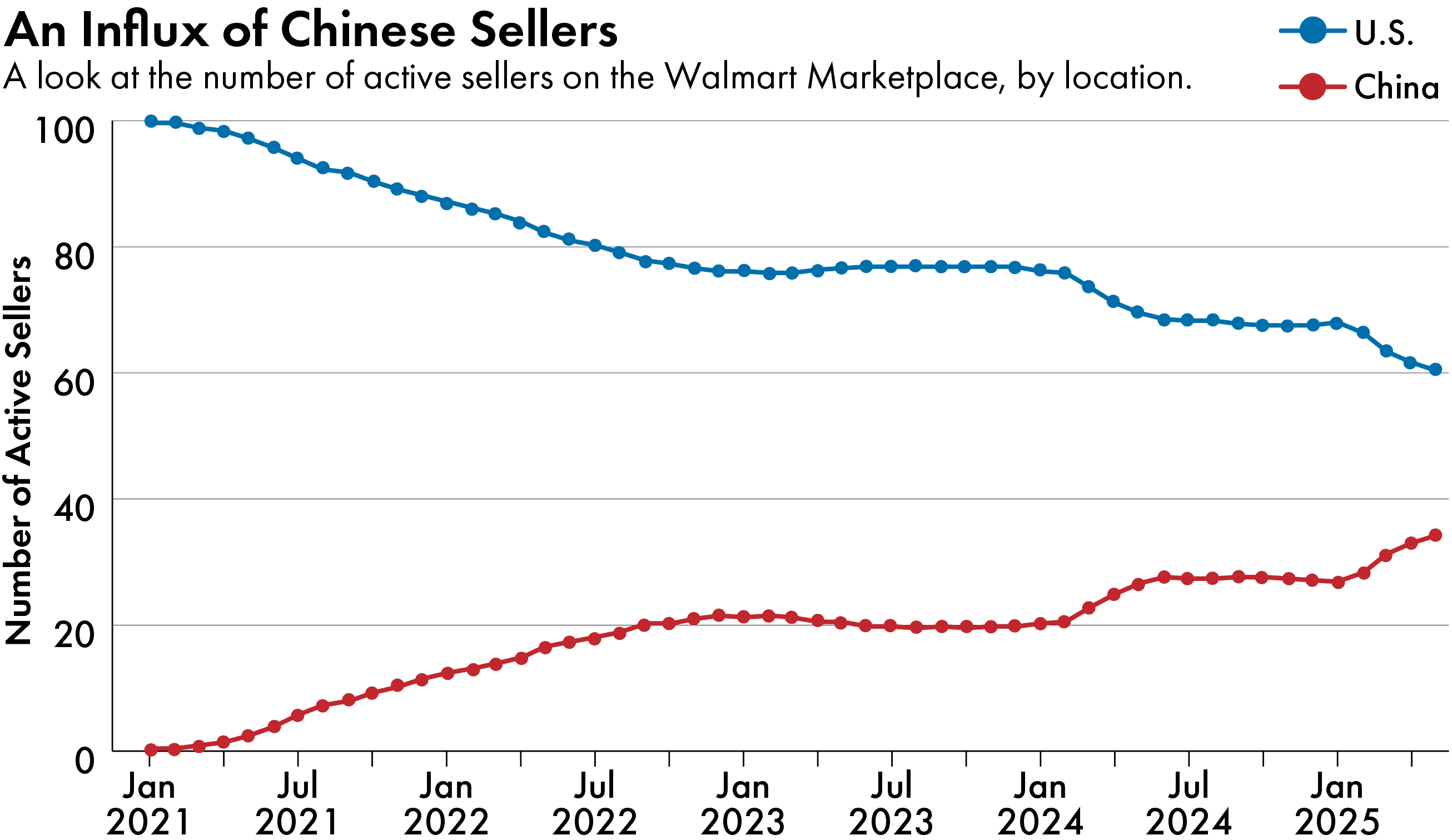
Learning from Amazon, Walmart also opened its e-commerce platform to international sellers in 2021. Four years later, China-based vendors account for one-third of the 200,000 active sellers on Walmart’s online marketplace. “A third-party marketplace alleviates a lot of those pressures because the responsibility of tariffs is not on Walmart, but on the third-party seller,” Donovan says.
Whatever form it takes, Walmart’s reliance on Chinese suppliers will continue.
“The United States and China have both benefited unbelievably over the last 30 years of being business partners. And Walmart is one of the biggest benefactors of that beautiful relationship,” says Joe Jurken at The ABC Group, a supply chain advisory.
“Nobody can afford to leave China, not today and not in the foreseeable future.”

Rachel Cheung is a staff writer for The Wire China based in Hong Kong. She previously worked at VICE World News and South China Morning Post, where she won a SOPA Award for Excellence in Arts and Culture Reporting. Her work has appeared in The Washington Post, Los Angeles Times, Columbia Journalism Review and The Atlantic, among other outlets.