The era of ultracheap goods flowing from Chinese factories to U.S. ports may be over, but the headaches for those who have to implement America’s new tariff regime have only just begun.

Last Friday, President Donald Trump scratched the so-called de minimis exemption for China and Hong Kong, which allowed most goods costing less than $800 to enter the United States duty-free. Previously exempt packages delivered by the U.S. Postal Service will now accrue a duty of either 120 percent or $100; most other goods imported from China face a 145 percent tariff, the highest in more than a century. [Editor’s note: This story was published before the U.S. agreed to reduce its tariff for most goods on China to 30 percent, at least temporarily.]
The new system’s arrival follows clashes between officials at U.S. Customs and Border Protection, a federal agency under the Department of Homeland Security that implements tariffs, and the Department of Commerce, according to a person familiar with the matter. While CBP had pushed for a flat fee on packages handled by USPS, Commerce favored including a percentage option.

CBP and the Department of Commerce did not respond to requests for comment.
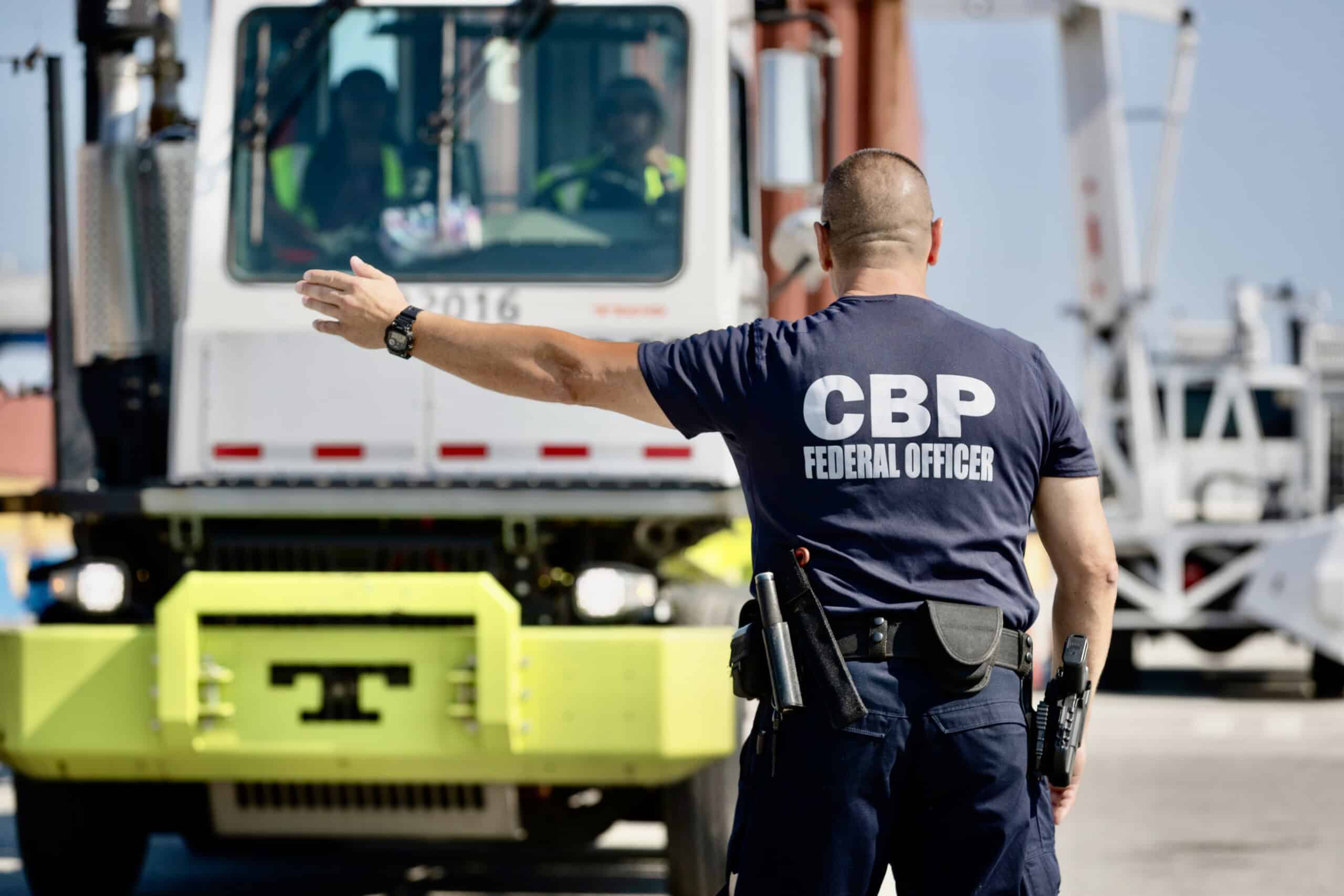
That result leaves understaffed CBP personnel working at American depots with the task of enforcing complex rules over the close to 4 million low-value packages which arrive each day in the United States. The extra workload comes as the constantly evolving nature of the China tariffs has already injected an unpredictability into CBP’s work that could make it much harder for these officials to implement one of Trump’s signature policies.
“The difference now is the sheer speed and volume of changes that have occurred in the last two months,” says John Leonard, a former senior CBP trade official. “You wouldn’t see that amount of changes in a normal eight-year presidency.”

Importers, or customs brokers acting on their behalf, generally file forms with CBP before bringing goods into the United States, including information like the product’s value and country of origin. It is customs officers’ job to clear packages once they arrive at a U.S. port of entry; sometimes agents open parcels or inspect them with X-Ray machines.
Tariff fees are typically due from importing companies or individuals within a month of their clearance by Customs. In April, as CBP began implementing Trump’s vision for the global economy, the agency collected 80 percent more revenue than it had the month prior, according to official data.
Customs paperwork is automated, meaning that the CBP’s software can absorb simple changes like tariff rates going up. What the system cannot calculate so easily is the portion of an imported toy car, for example, that contains steel subject to commodity tariffs.
“There’s almost no way to automate that,” says Cindy Allen, chief executive of trade and customs consultancy TradeForce Multiplier. She adds that the CBP’s 25-year-old automated system cannot calculate more than two stacked duties on a particular item, even though a made-in-China product like a polyester dress may be subject to multiple separate tariffs — including those applied to textiles, so-called fentanyl duties, and the “reciprocal” levies on China.

Another major challenge is that many goods do not publicly display the country of origin for each of their component parts. That means importers, or the customs brokers they hire as intermediaries, may have to call suppliers — or their suppliers’ suppliers and on up the chain — to determine how much duty they really owe. Without a scientific method to calculate the correct proportions, importers sometimes just have to estimate.
“Those types of gray areas will be difficult to enforce,” says Lucas Rock, an international trade lawyer at ArentFoxSchiff. “With each new announcement, new questions arise. There’s no clear cut rule.”
The changes have already caused U.S. businesses to adjust. Some are deciding it’s easier to halt imports from China entirely.
The difference now is the sheer speed and volume of changes that have occurred in the last two months. You wouldn’t see that amount of changes in a normal eight-year presidency.
John Leonard, a former senior CBP trade official
Aaron Rubin, the owner of a Jiu Jitsu apparel company based in New York, used to ship goods like duffel bags and rash guards from China to Canada before bringing them across the U.S. border under the de minimis exemption. He’s now letting merchandise stockpile at a warehouse in Toronto.
“We’re taking a wait-and-see approach,” he says. “It’s better to just not sell those goods cross-border right now.”

Rubin worries that his overseas competitors, including Chinese companies who sell their wares on sites like Amazon, may obfuscate the market value of their goods to pay lower tariffs, or transship them through foreign ports. “You can get away with it 99 percent of the time, but the 1 percent of the time you get caught, the punishment is so high that you don’t do it,” he says, referring to easier-to-audit U.S. companies. “However, if you’re a Chinese entity, nothing’s going to happen.”
Major Chinese e-commerce companies have made post-de minimis adjustments. Temu, which built its business model around shipping goods in small packages directly from Chinese warehouses to U.S. households, announced last week that it would stop doing so.
A decrease in volume of de minimis packages will make enforcement smoother, says Leonard, the former senior CBP official, a shift he thinks is likely. “The economics of it don’t make sense right now,” he says.

The big question hanging over importers and Customs officials alike is whether the China tariffs will even last. Trump has said that the levies will “come down substantially, but it won’t be zero.”
Their legality is also in question. The highest tariffs the Trump administration has imposed on China and others rely on an interpretation of a 1977 law that allows the president to regulate economic policy during a national emergency.
New York and 11 other states are already challenging the use of the law in court, alleging that it violates the Constitution. At an event last month at the Council on Foreign Relations, former U.S. Trade Representative Robert Lighthizer, who supports tariffs, said there is a “reasonable chance” that the emergency authority will not stand up to court scrutiny.
Grady McGregor contributed to this story.

Noah Berman is a staff writer for The Wire based in New York. He previously wrote about economics and technology at the Council on Foreign Relations. His work has appeared in the Boston Globe and PBS News. He graduated from Georgetown University.